
Hosta Foliar Nematodes: Brown Stripes Between the Veins

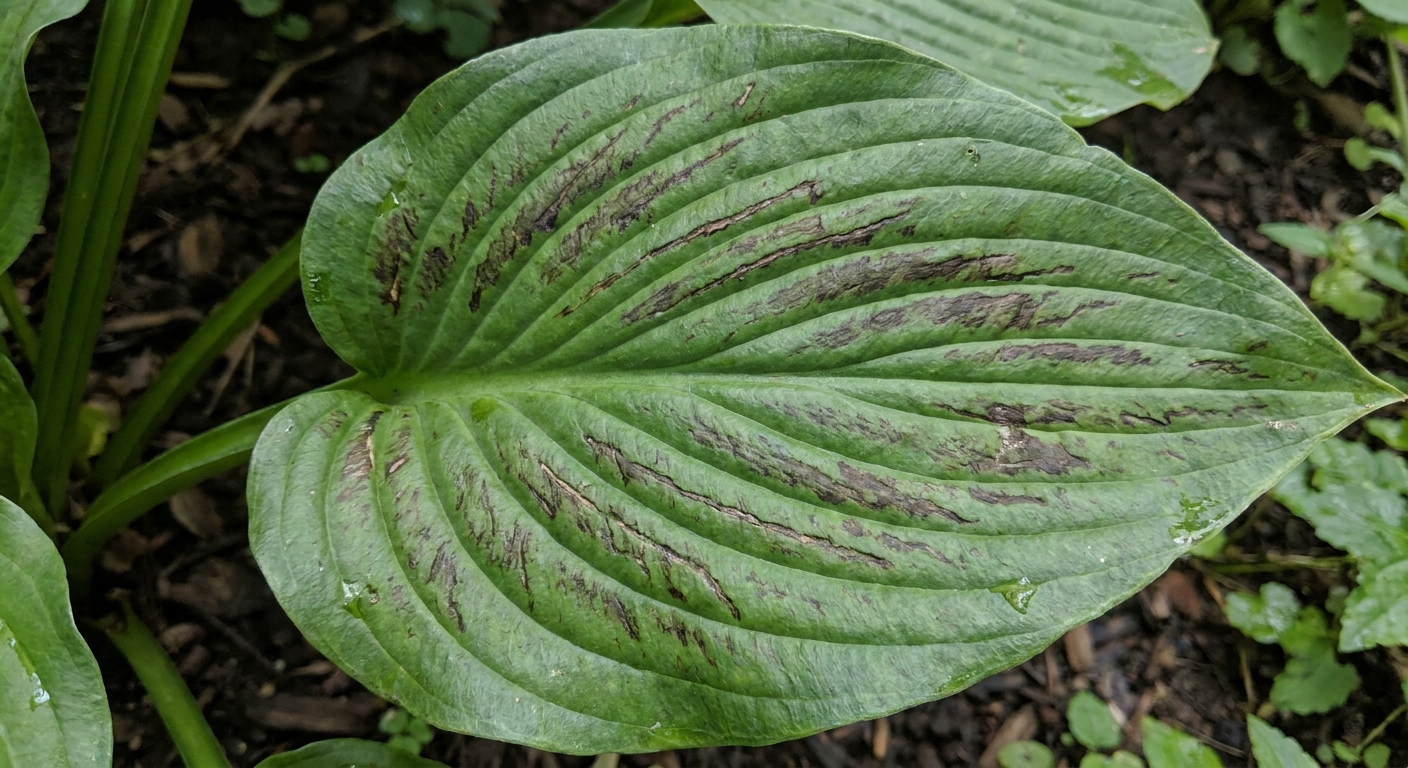
The first time I saw it, I blamed myself. I had a hosta that looked like it had been painted with rusty brown brushstrokes, but only in tidy lanes between the veins. I adjusted watering. I fussed with shade. I even apologized to the plant (I talk to my ferns too, so yes, this tracks). Nothing helped. That neat, vein-bounded browning is one of those hosta problems that is less about “care” and more about containment.
If your hosta has brown tissue that seems trapped between leaf veins like it cannot cross the green lines, foliar nematodes belong high on your suspect list.

What it looks like
Foliar nematodes are microscopic roundworms (often Aphelenchoides species) associated with several shade plants, including hostas. They need moisture to get around. They can persist in plant debris and protected parts of the plant, then move in thin films of water on leaves and enter leaf tissue through natural openings or tiny wounds.
On hostas, the damage has a look that is oddly organized.
Classic clue: brown boxed in by veins
Most leaf diseases spread in fuzzy circles or irregular patches. Foliar nematode injury often shows up as:
- Tan to brown streaks or blotches between veins
- Angular shapes because the veins act like fences
- Striping that follows the leaf’s length, often starting near the leaf base or midrib and extending outward
- Areas that look water soaked at first, then dry, papery, and brown
As it progresses, leaves can look scorched, tattered, or prematurely tired, even if the plant is otherwise in a good spot.
When symptoms show up
Foliar nematodes tend to become noticeable in warm weather, especially during rainy stretches or when foliage stays wet for long periods. Overhead watering, splashy rain, leaf-to-leaf contact, and dense clumps all make it easier for nematodes to move from leaf to leaf.
Not sun scorch
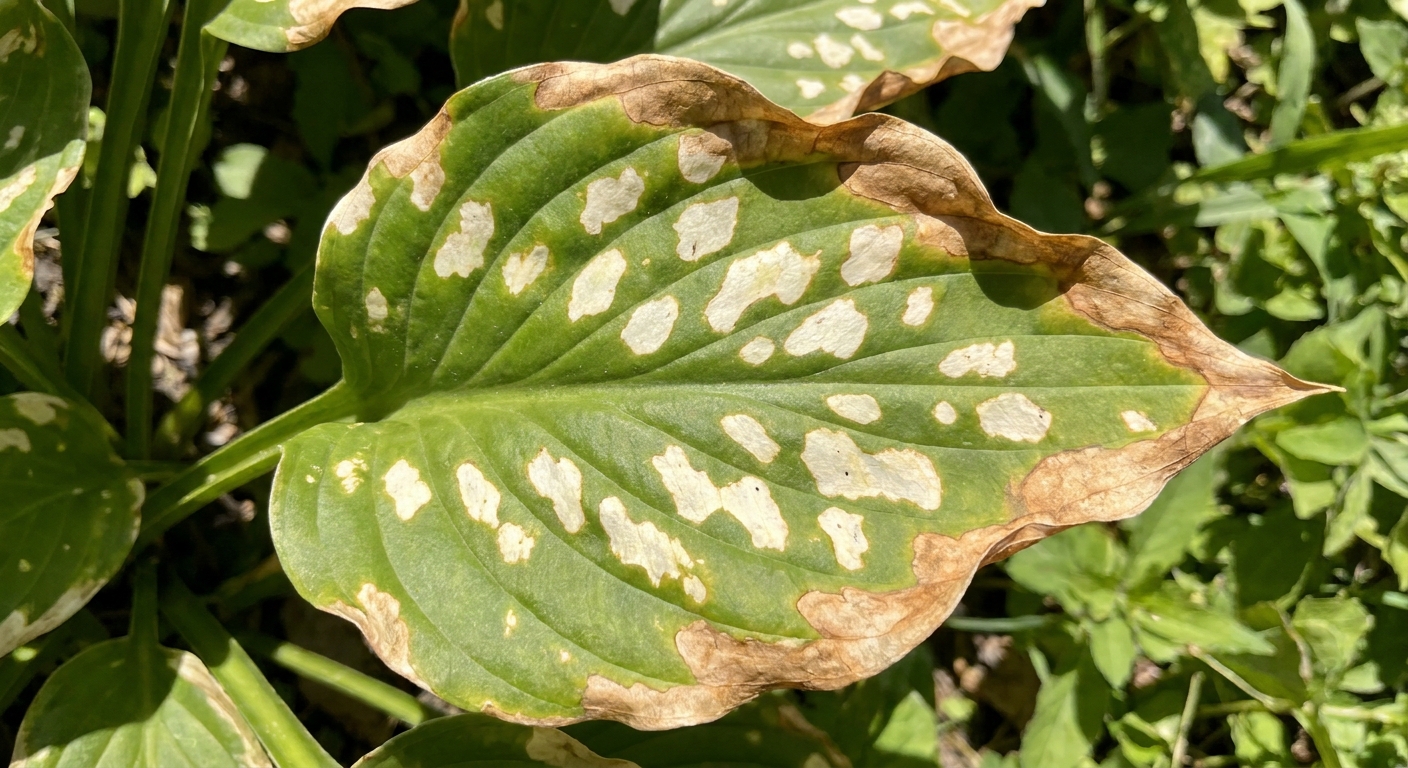
Sun scorch is common and frustrating, but it does not usually respect vein boundaries the way nematode damage tends to.
Sun scorch tends to look like
- Bleached, faded, or yellowed areas that can later turn brown
- Browning on leaf edges and tips, especially on lighter, thinner-leaved varieties
- Large, irregular patches that are not confined between veins
Scorch often lines up with a clear cause like sudden heat, afternoon sun, reflected glare off a wall, drought stress, or a newly planted hosta that has not rooted in yet.
Foliar nematodes tend to look like
- Brown “lanes” between green veins
- Angular blocks of dead tissue that stop at veins
- Damage scattered across the leaf blade, not just the sunniest side
Not HVX
Hosta Virus X (HVX) is another issue that can make gardeners’ stomachs drop, and it is worth separating the two because they behave differently and look different up close.
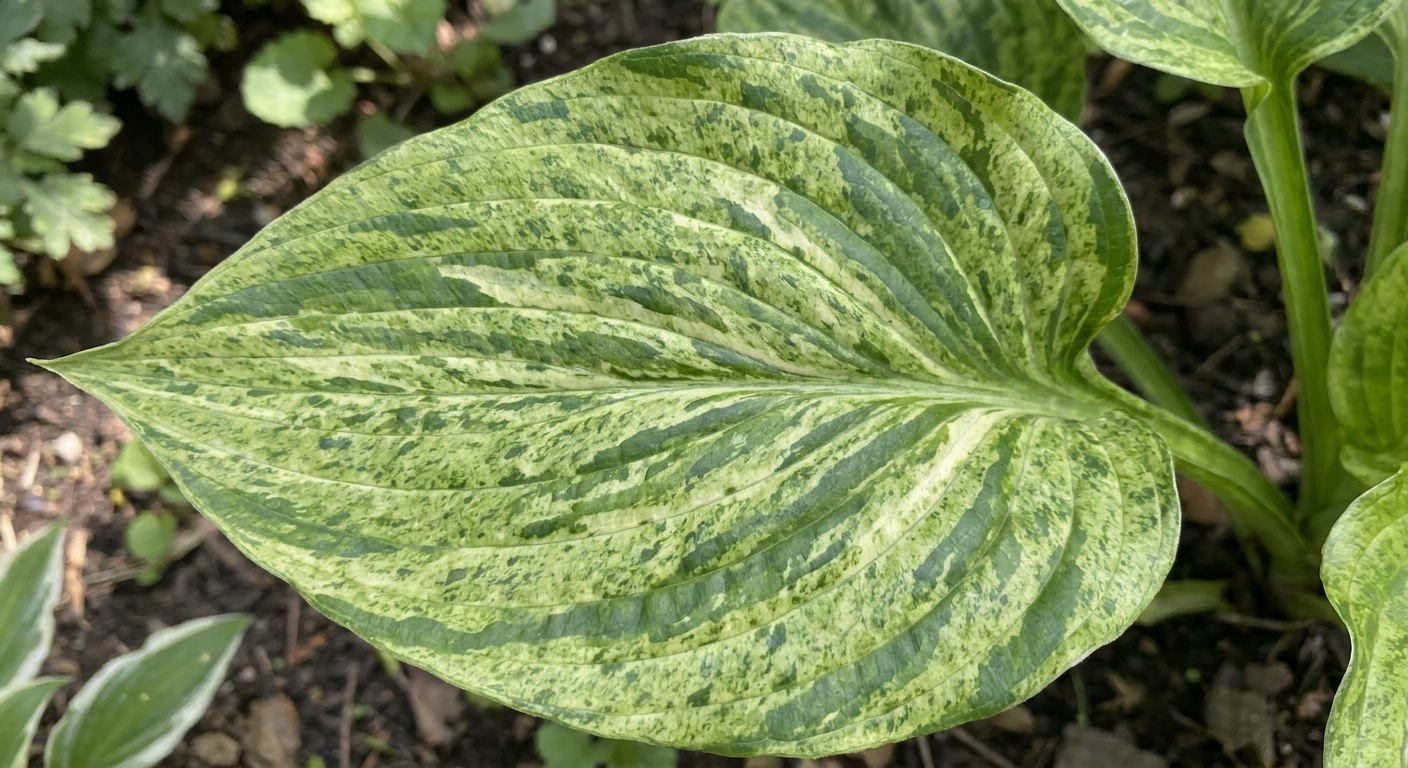
HVX is about mottling
HVX symptoms often involve color and pattern more than crisp dead stripes. Watch for:
- Mottled, patchy light and dark green that looks “printed” into the leaf
- Feathering where darker green seems to bleed into lighter tissue
- Twisting, puckering, or distorted leaves in some cases
- Symptoms that persist year to year, often worsening as the clump grows
HVX can sometimes include necrosis, but the hallmark is that strange mosaic and bleeding pattern. Foliar nematodes, in contrast, are notorious for brown necrotic tissue tightly limited by veins.
If you suspect HVX, consider professional lab testing through local extension services or a plant diagnostic lab. For nematodes, lab identification is also the most definitive route when you need certainty.
Other lookalikes
Because veins create natural “lines,” a few other problems can look more angular than you would expect, especially in wet years. Certain fungal leaf spots (including anthracnose-type issues) and bacterial leaf streak can sometimes make blocky lesions too. The vein-bounded striping pattern is a strong clue for foliar nematodes, but if you are on the fence, a diagnostic lab can save you from guessing.
Do not divide or share
This is the part that feels harsh, especially if the hosta is a favorite. But if foliar nematodes are involved, dividing spreads the problem.
Foliar nematodes can hitchhike when:
- You split and handle the crown and leaves, moving contaminated moisture and plant bits from one piece to another
- You transplant pieces to new beds, bringing infected foliage and splash-prone debris along for the ride
- You share divisions with friends, unintentionally exporting the nematodes to someone else’s garden
Even when only a portion of the clump looks affected, the rest of the plant may still harbor nematodes. Dividing is like making multiple copies of a problem.
If you love being the neighborhood hosta fairy, I get it. Just be the kind that passes along clean plants only.
What to do now
Controls for foliar nematodes are limited for home gardeners. Curative options are rare and inconsistent, so management is mostly about reducing spread and deciding whether the plant is worth isolating.
Step 1: Keep leaves dry
Nematodes need water films to move. Switch to watering at the soil line, and aim for mornings so any incidental splash dries quickly.
Step 2: Remove the worst leaves
On a dry day:
- Snip off heavily affected leaves near the base.
- Bag them immediately.
- Do not compost them.
This does not cure the plant, but it can reduce the amount of infected tissue and improve appearance.
Step 3: Improve airflow
Thin surrounding plants if the area stays damp. Crowded shade beds are cozy, but foliar nematodes love cozy.
Step 4: Be smart about sanitation
Most spread is about water splash and leaf contact, but wet hands and tools can move plant residue around. If you are cutting multiple hostas, it is worth treating it like a hygiene moment.
- Wipe tools between plants with 70% isopropyl alcohol, or use a labeled tool disinfectant.
- If tools are dirty, wash first. Gunk blocks disinfectants.
- Let disinfectants sit briefly, then air dry if possible.
Soap and water are helpful for cleaning, but do not always do the full job on their own.
Step 5: Decide whether to remove the clump
If the plant is declining year after year, or if you have many hostas nearby, removal is often the cleanest option. Dig the clump, bag it, and dispose of it according to local guidance. Policies vary. In many areas, bagging and trash disposal where allowed is the safest route. Avoid relocating it to a “back corner” where it can still splash onto other shade plants.
An at-home check
If you are the kind of gardener who likes a little detective work, you can try a basic observation test. It is not perfect, but it can support your suspicion.
Soak and watch
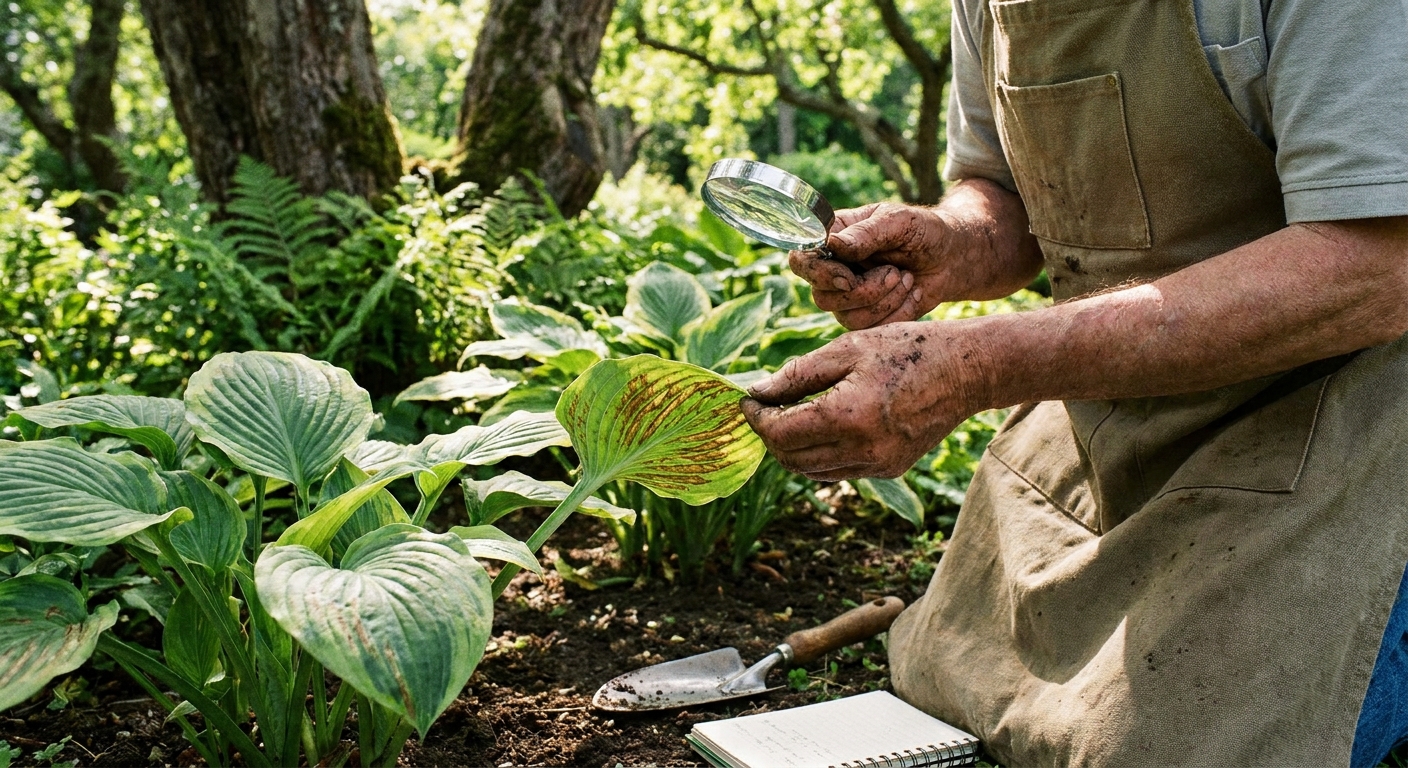
Take a symptomatic leaf and place it in a clear container with water, then leave it for several hours to overnight. With very bright light and strong magnification (a hand lens helps, but a basic microscope works better), you may be able to spot tiny, threadlike nematodes that have moved into the water.
Important: Not seeing anything does not rule nematodes out, and plenty of harmless garden life can look like “tiny threads.” If the decision is whether to remove a prized plant, lab confirmation through a diagnostic service is the surest call.
Lab confirmation
If you want a real answer, your local extension office or a plant diagnostic lab can often help. In general, they will want fresh symptomatic material, kept cool, sealed in a bag, and delivered or shipped promptly so it arrives in good condition. Check your local lab’s instructions before you cut anything, since submission rules vary.
How it spreads
Foliar nematodes do not leap through the air on their own. They travel with moisture and plant material.
- Splashing water from rain or overhead irrigation can move them from leaf to leaf.
- Dense plantings allow leaves to touch, especially after rain when everything is pressed together.
- Moving divisions and shared plants spread them long distance, fast.
- Wet hands and tools can play a supporting role when you are cutting and handling plants.
This is why “I will just divide the healthy looking side” is such a tempting but risky idea.
Prevention that helps
I am not a fan of perfectionism in the garden, but I am a big fan of small routines that keep problems from becoming traditions.
- Water at soil level instead of spraying foliage.
- Mulch to reduce splash and keep soil from bouncing onto leaves during storms.
- Space hostas for airflow so leaves dry faster.
- Quarantine new plants when possible, especially bargain hostas of unknown history.
- Sanitize tools when cutting back or dividing shade perennials.
These practices are gentle, sustainable, and do not require turning your garden into a chemistry set.
FAQ
Will it recover next year?
You may see a hosta leaf out looking fine in spring and then develop symptoms again as the season warms and moisture increases. That repeat pattern is common with foliar nematodes. The plant might limp along for years, but it often continues to look progressively rough by midsummer.
Can I treat foliar nematodes with beneficial nematodes?
Not in the way people hope. Beneficial nematodes sold for soil-dwelling pests are not a reliable fix for foliar nematodes associated with leaf tissue. Different nematodes, different habitat, different outcome.
Should I cut the whole plant to the ground?
Cutting back can reduce the amount of infected foliage, but it is not a guaranteed cure. Midseason cutbacks sometimes lead to regrowth that still shows symptoms later if conditions stay wet. End-of-season cleanup can help reduce infected debris. In both cases, bag and discard leaves, keep tools clean, and focus on keeping future foliage dry.
Is it safe to compost the leaves?
I do not recommend composting symptomatic leaves. Home compost piles often do not heat evenly enough to be confident you are eliminating pests and pathogens.
Could this be a nutrient deficiency instead?
Nutrient issues generally cause more diffuse yellowing, overall pallor, or edge burn patterns. The sharply vein-bounded brown striping is what pushes foliar nematodes to the top of the list.
Bottom line
When brown damage on a hosta leaf is neatly trapped between veins, think foliar nematodes first. It is not a shade mistake, and it is not something to fix with extra fertilizer or a pep talk.
Your best next steps are containment: keep leaves dry, remove the worst foliage, avoid spreading it with division or sharing, and consider removal if the clump is repeatedly affected. It is never fun to retire a beloved hosta, but protecting the rest of your shade garden is an act of care too.