
Why Peace Lily Flowers Turn Brown

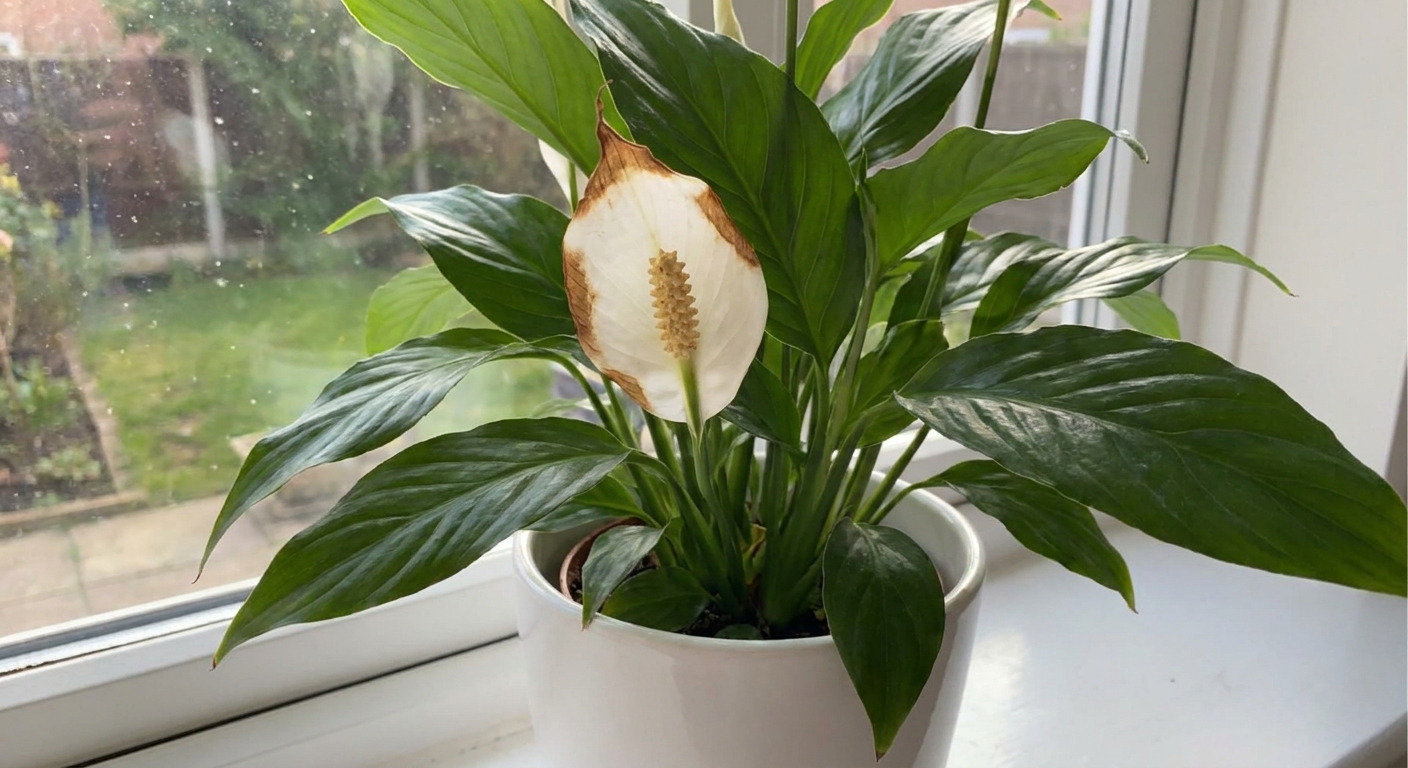
The first time one of my peace lily “flowers” turned brown, I was convinced I had done something terribly wrong. I hovered, I fussed, I adjusted the blinds like I was tuning a radio. Then I learned the calming truth: a peace lily bloom is not a forever-white flag. It is a living structure, and it ages.
Most of the time, a peace lily flower turning green or brown is simply the bloom finishing its natural run. The trick is knowing what “normal fading” looks like, when it is time to snip, and how long it typically takes for your plant to send up a fresh spathe.

First, what you are seeing
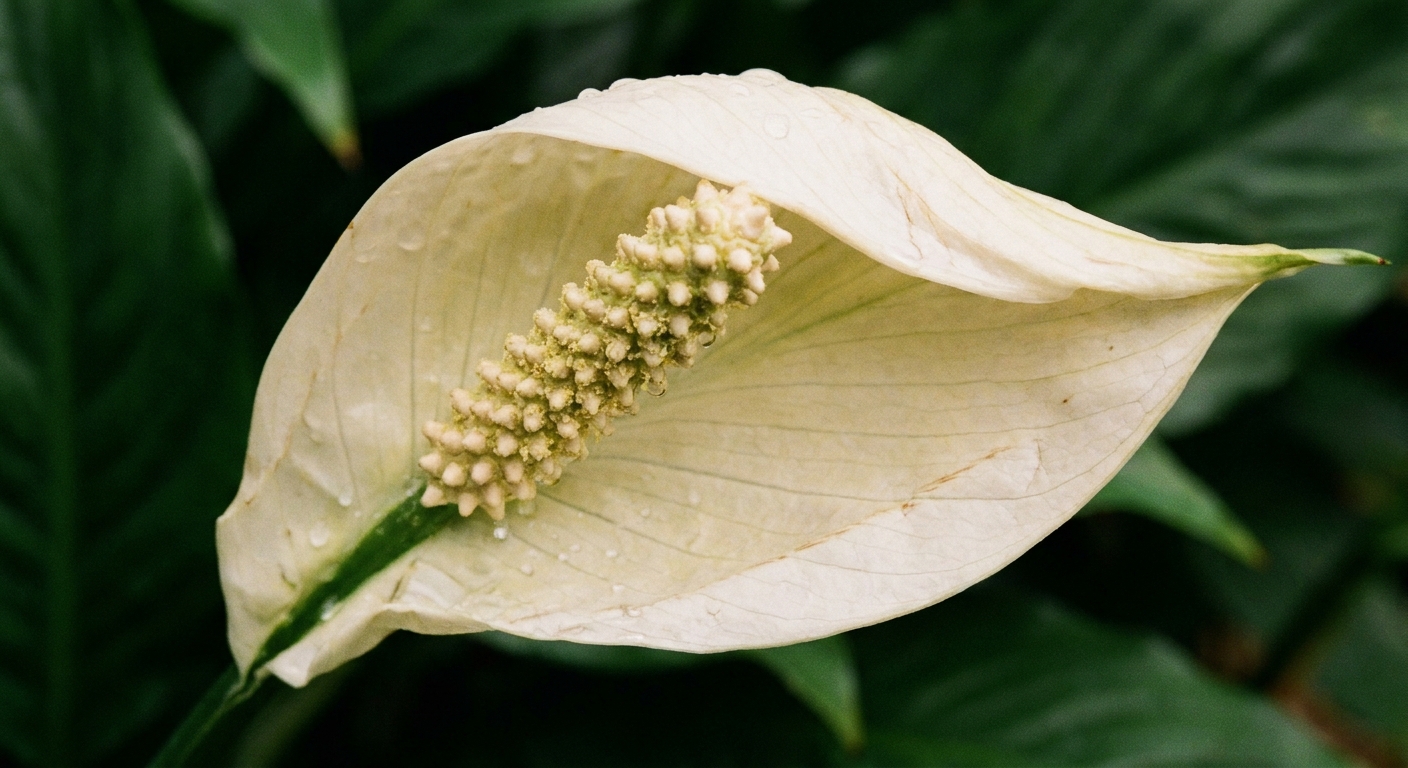
Peace lilies (Spathiphyllum) have a bloom made of two main parts:
The spathe: the showy white (later greenish) “petal” that looks like a sail.
The spadix: the bumpy central spike where the tiny true flowers live.
That white spathe is modified leaf tissue, so it behaves a lot like a leaf: it can age, discolor, and eventually dry out.
Is green then brown normal?
Yes. A very common sequence looks like this:
Fresh bloom: spathe is bright white, smooth, and slightly glossy.
Maturing bloom: spathe often shifts from white to pale green. This is normal and can last a while.
Spent bloom: spathe dulls, develops tan or brown patches, and eventually turns papery.
In a healthy plant, the leaves can look perfectly fine while the spathe fades. That is your biggest clue it is simply bloom age, not a whole-plant problem.
How long do blooms last?
Indoors, an individual peace lily bloom often looks good for a couple of weeks to over a month. Some fade sooner, some hang on longer. Light levels, temperature, humidity, and even the specific cultivar all make a difference.
If yours goes green and stays green for a while, that can be part of a long, normal bloom life, not a problem.
What makes blooms brown faster
Even when the fade is normal, a few conditions can shorten the life of a spathe:
Direct sun on the spathe: peace lilies like bright, indirect light. Direct sun can scorch a bloom and speed browning.
Dry indoor air: low humidity can crisp spathes sooner, especially near heating or air-conditioning.
Frequent environment changes: moving a blooming peace lily around can expose it to new light, drafts, and temperature swings that shorten bloom life.
Hard water residue: if water sits on the spathe, minerals can leave marks that later brown. I try to water at soil level rather than splashing the bloom.
None of these automatically means your plant is unhealthy. They just mean the bloom is living its shorter, faster life.
When to cut a spent flower
I prune a bloom when it has clearly crossed into “done” territory, usually when:
The spathe is mostly brown or papery
The spadix is browning and drying
The bloom is drooping and no longer decorative
Leaving a spent bloom on the plant will not usually harm anything, but removing it keeps the plant from supporting dying tissue and tidies the look. It may also modestly encourage the plant to put its effort back into new growth.
How to cut the stalk
Here is my simple routine:
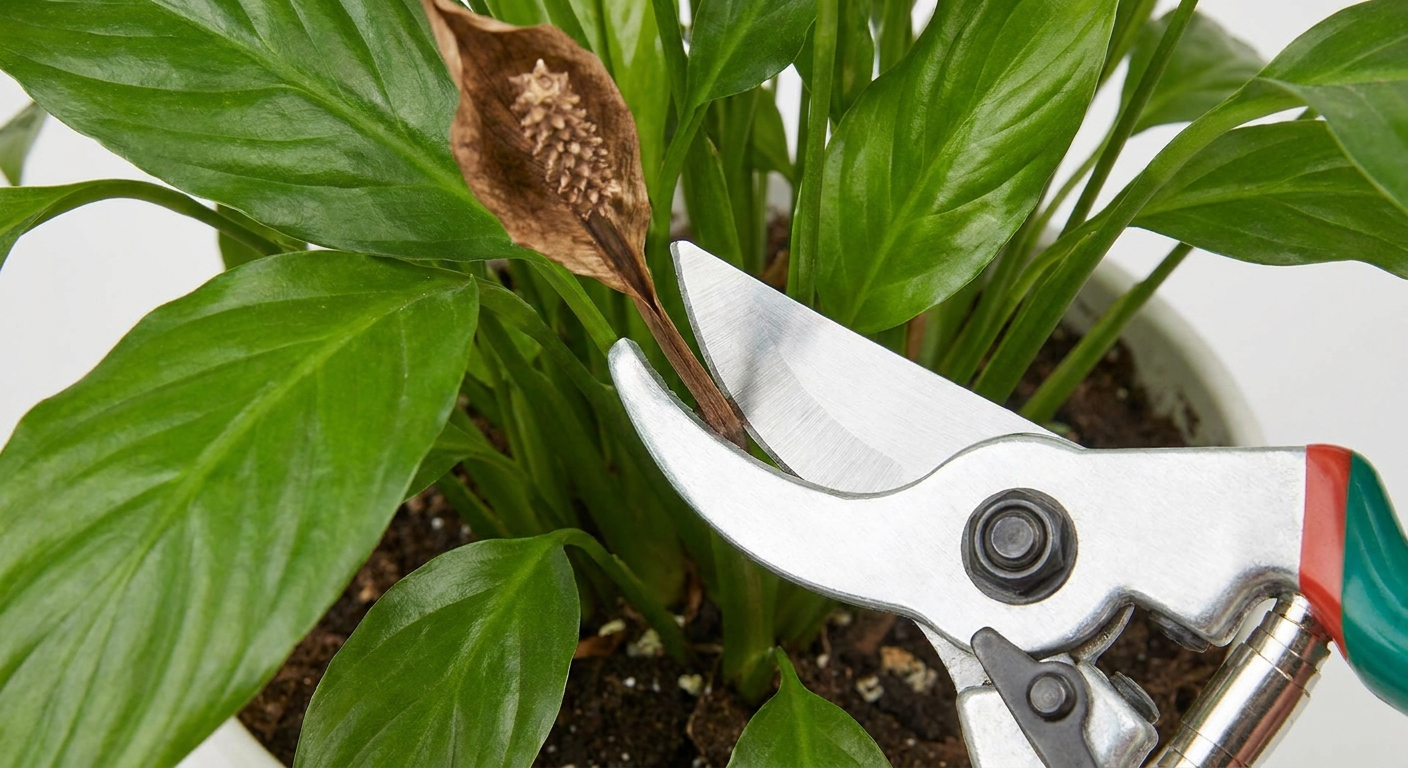
Sanitize your snips with rubbing alcohol or soap and hot water, then dry them.
Follow the flower stalk down through the leaves to where it emerges from the base of the plant.
Support the stalk with one hand and aim for one clean cut, rather than tugging or tearing.
Cut low, as close to the base as you can without nicking nearby stems.
Remove the whole stalk. Do not just trim the brown tip off the spathe, because the stalk will still slowly die back.
If you accidentally cut a leaf stem, do not panic. Peace lilies are forgiving. Keep the cut clean and let the plant move on.
How long until a new bloom?
This depends on the plant’s maturity and growing conditions, but for many indoor peace lilies:
From cutting a spent bloom to seeing a new flower spike: often several weeks to a couple of months, sometimes longer in low light or winter.
From spike to an open spathe: commonly around 2 to 4 weeks once you can clearly see the bud forming.
If you want more blooms, focus on the basics that actually move the needle: bright, indirect light, steady watering, and (during active growth) light, occasional fertilizing according to the product label. I think of blooming as a bonus that tends to follow good, boring consistency.
If it browns right away
If the bloom browned very quickly (within days of opening) or looks blotchy early on, think “environment” first. A quick check:
Light: move it out of direct sun. Bright, indirect light is ideal.
Watering rhythm: keep soil evenly moist, not soggy. Let the top inch or so dry, then water thoroughly and let excess drain.
Drafts: keep blooms away from heating vents, radiators, and cold window drafts.
Also: peace lilies are often encouraged to bloom under ideal greenhouse conditions before they reach the sales floor. A flower that fades soon after you bring it home is common. Your job is to help the plant settle in, not to “fix” that first bloom.
Do not mix up lookalikes
This page is about a spathe that is already open and fading. If what you are seeing is different, it likely belongs in a different troubleshooting lane.
Brown tips on leaves
Brown leaf tips are usually about watering practices, mineral buildup, or low humidity. If your leaves are browning but your flowers are fine (or you have no flowers), you are dealing with leaf care, not spent-bloom care.
Yellow leaves
Yellowing is often tied to overwatering, poor drainage, low light, or natural leaf aging. A fading flower can happen alongside yellow leaves, but one does not automatically explain the other.
A peace lily that never blooms
If your plant has not produced a spathe at all in a long time, that is a separate issue. Blooming is strongly influenced by light levels, maturity, and consistent care.
Quick comfort checklist
In most homes, a bloom is probably just “done” if:
The plant’s leaves look healthy and firm
The spathe has gradually shifted from white to green to brown
The bloom is older than a couple of weeks
Only the flower is fading, not the entire plant
If that sounds like your situation, you are not failing your peace lily. You are witnessing a normal life cycle. Give the spent bloom a clean snip, keep the care steady, and let your plant gather itself for the next round.
FAQ
Should I cut off a green peace lily flower?
Not necessarily. Green is often a normal stage of a mature bloom. If it still looks fresh and you like it, leave it. Cut when it is browning, papery, or no longer attractive.
Can a browned spathe turn white again?
No. Once the spathe has browned, it will not revert. The plant’s next bloom will be a new spathe on a new stalk.
Is it bad to leave dead blooms on a peace lily?
It is not usually “bad,” but it can look messy and it keeps the plant supporting tissue that is finished. I prefer to remove spent flowers cleanly at the base.
My bloom has brown spots but the spathe is still mostly white. What now?
Check for direct sun hitting the bloom and for drafts from vents or windows. If the plant is otherwise healthy, you can leave the bloom until it finishes and then prune it.
Do I need to worry about sap or pets?
Yes, it is worth being careful. Peace lilies can irritate skin, and they are toxic if chewed by pets or children. I wash my hands after pruning and keep trimmings out of reach.