
Peace Lily Leaves Turning Yellow

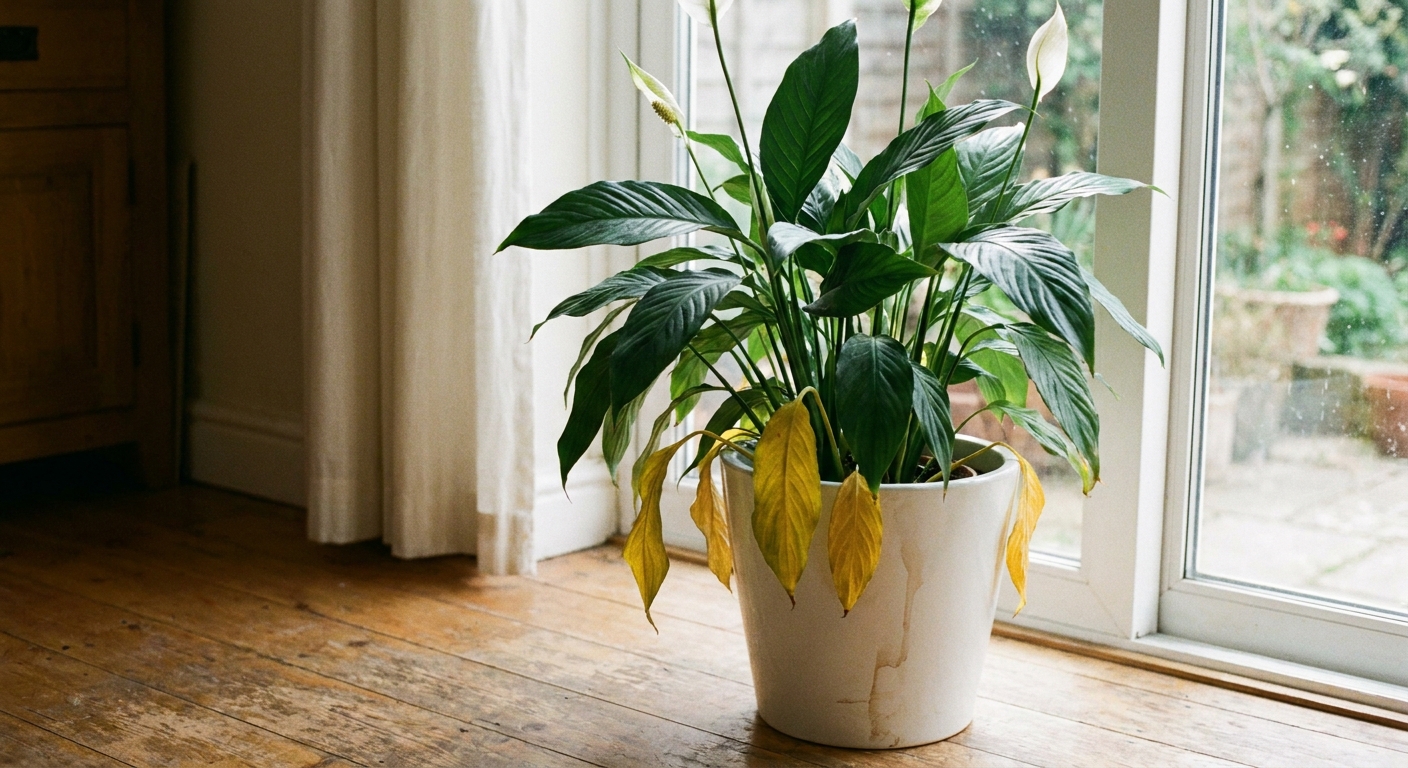
Peace lilies (Spathiphyllum) have a way of looking perfectly glossy one week and then suddenly tossing out a yellow leaf like it is filing a complaint. The good news is that yellowing is usually a care clue, not a death sentence. The trick is separating normal lower-leaf aging from stress yellowing caused by water, light, salts, pests, nutrients, or roots.
Below is a peace-lily-specific breakdown of the most common causes, what the yellow pattern is trying to tell you, and exactly what to do next.

First: normal or a problem?
Peace lilies naturally retire their oldest leaves. If the plant is otherwise growing and perky, a little yellow at the bottom can be totally normal.
Usually normal aging
- Only 1 to 2 of the oldest, lowest leaves yellow at a time.
- The rest of the plant stays deep green.
- You see new leaves emerging from the center.
- The yellow leaf gradually fades over 1 to 3 weeks, then browns and dries.
What to do: Wait until the leaf is mostly yellow, then snip it close to the base with clean scissors. Avoid removing green leaves unless they are badly damaged, since that steals energy the plant needs to recover.
Action needed
- Multiple leaves yellowing in a short time.
- Yellowing shows up on newer leaves or across the whole plant.
- Yellow plus brown tips, droop , mushy stems, or pests.
If that sounds like your situation, use the decision flow below.
Quick decision flow
Think of this as your yellow-leaf triage. Follow the first statement that matches what you see.
- If the yellow leaf is only on the lowest tier and the plant is otherwise healthy, it is likely normal aging. Remove the leaf when mostly yellow.
- If the soil is wet or sour-smelling, or the plant droops even though the soil is damp, suspect overwatering or poor drainage.
- If the soil is bone dry and the leaf yellowed fast after wilting, suspect underwatering or a watering swing.
- If the plant sits in strong sun and yellowing looks washed-out or patchy, suspect too much light.
- If you recently fertilized and tips are crispy or leaves yellow with brown edges, suspect fertilizer burn or mineral salt buildup.
- If you see stippling, webbing, sticky residue, or tiny bumps, suspect pests.
- If roots are circling the pot or water runs straight through, suspect root binding and a repot is due.
Now let's match the most common causes to symptoms and fixes.
Cause #1: Watering swings
Peace lilies are dramatic, but not mysterious. They like evenly moist soil, not swampy soil and not a desert. Yellow leaves often happen after the plant cycles between too wet and too dry.
What it looks like
- Leaves droop, you water, then a few days later yellowing starts.
- Several leaves yellow at once, often starting lower but not always.
- Soil alternates between soggy and dry, or the pot has no drainage.
Why it happens
When roots are stressed, they cannot move water and nutrients efficiently. The plant sheds leaves it cannot afford to keep.
Fix it
- Check drainage: Use a pot with a drainage hole. Empty any saucer after watering.
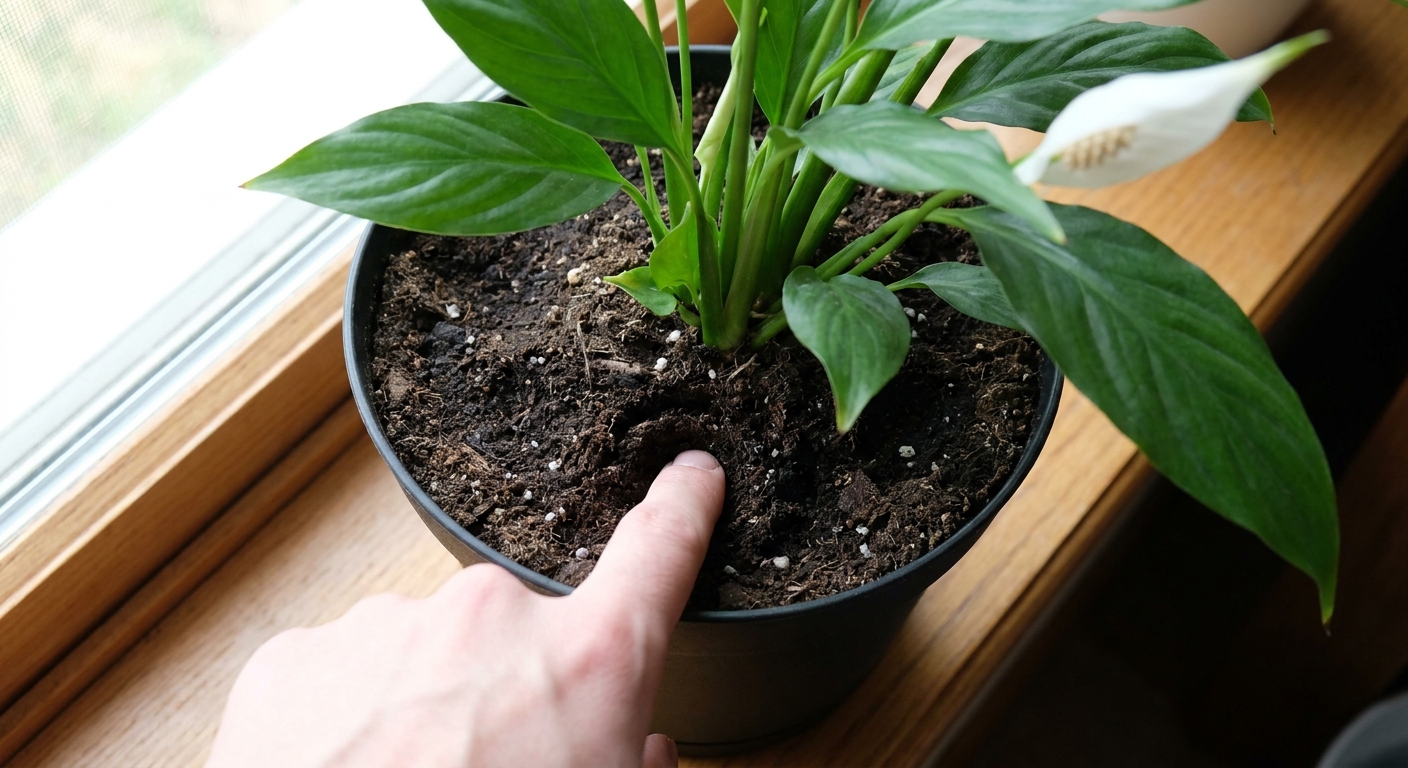
- Reset your watering rhythm: In most homes, water when the top inch feels dry and the pot feels noticeably lighter, then water thoroughly until excess drains out. In low light or cool rooms, that may be less frequent.
- Use the lift test: Learn the weight of the pot when freshly watered versus when it is time to water again.
- Trim yellow leaves: They will not turn green again.
If the plant is drooping and the soil is wet: skip watering and move to the overwatering section below.
Cause #2: Overwatering
A peace lily can tolerate slightly damp soil, but constant wetness suffocates roots. Yellow leaves are often the first visible sign.
What it looks like
- Soil stays wet for many days.
- Leaves yellow and feel a bit soft, not crisp.
- Plant may droop even though the soil is damp.
- Musty smell, fungus gnats, or blackened petioles near the base.
Fix it
- Pause watering until the top layer dries and the pot lightens.
- Increase airflow and light: Bright, indirect light helps the pot dry more predictably.
- Check the potting mix: If it is heavy and stays wet, repot into a chunkier mix (see prevention below).
- Inspect roots if decline is fast: Slide the plant out. Healthy roots are firm and pale. Rotten roots are brown, mushy, and may smell bad. Trim rot with clean snips and repot into fresh mix.
- Avoid overpotting: A pot that is too large stays wet longer. Size up only 1 to 2 inches wider than the old pot.
Cause #3: Underwatering
Peace lilies bounce back after a dry spell, but repeated wilting is stressful. Those stress events often show up as yellow leaves a few days later.
What it looks like
- Plant wilts dramatically, then perks up after watering.
- Leaves yellow soon after, sometimes with crispy edges.
- Soil pulls away from the pot edges and water rushes through.
Fix it
- Rehydrate fully: Water slowly until the mix is evenly moist. If water runs through instantly, bottom-water for 20 to 30 minutes, then drain well.
- Adjust timing: Water when the top inch is dry and the pot feels lighter, not when the whole pot is dust-dry.
- Consider a repot if the mix has become hydrophobic or the plant is root bound.
Cause #4: Too much light
Peace lilies are low-light tolerant, not sun lovers. Direct sun can bleach chlorophyll and leave leaves looking pale or yellow.
What it looks like
- Yellowing is more common on the side facing the window.
- Color looks faded rather than speckled from pests.
- You may see tan, papery scorch patches if sun is intense.
Fix it
- Move the plant to bright, indirect light , like a few feet back from a south or west window, or near an east window.
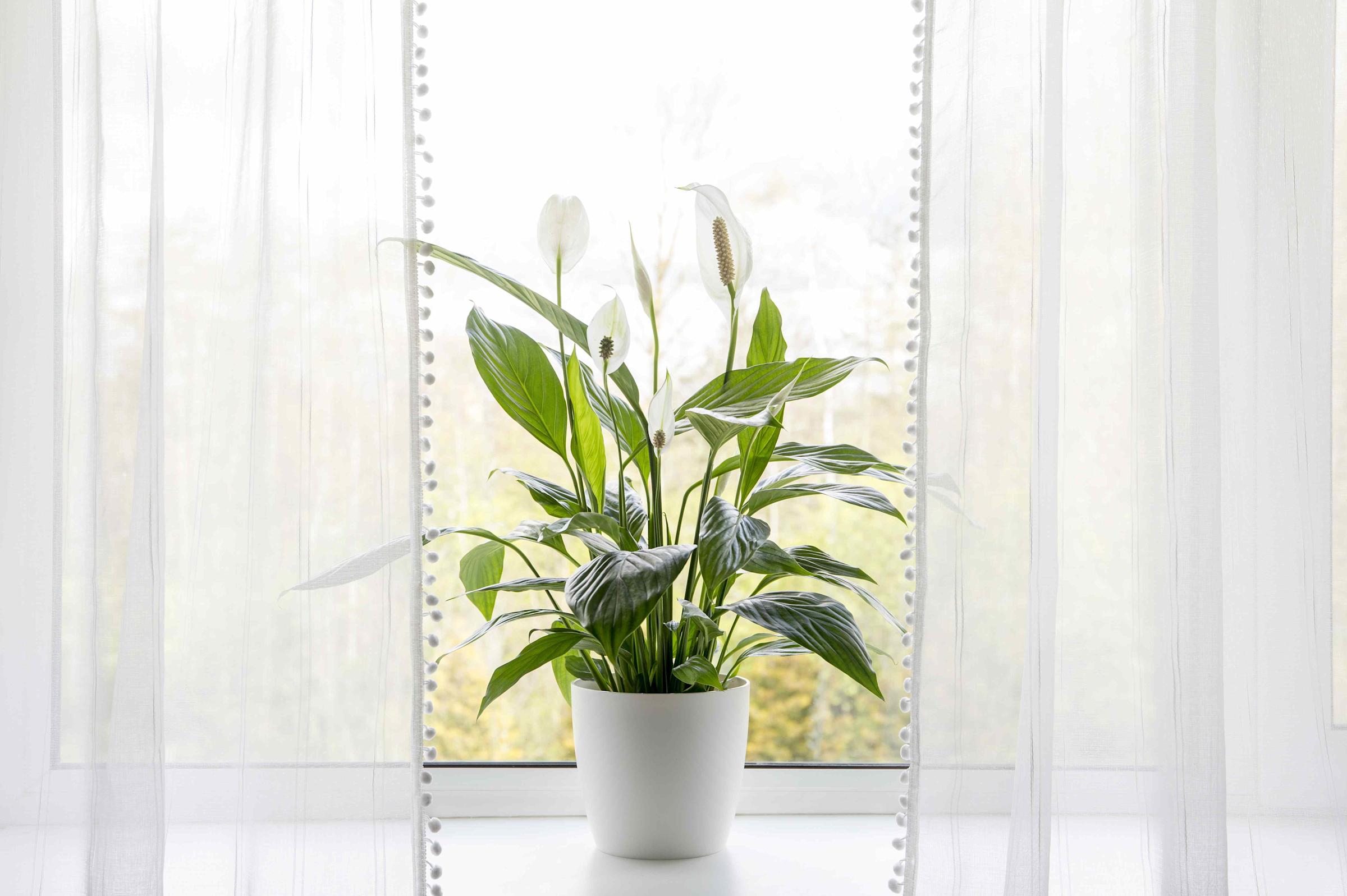
- Use a sheer curtain if the only spot is sunny.
- Rotate the pot weekly so growth stays even.
Cause #5: Fertilizer and salt buildup
Peace lilies do not need heavy feeding. Too much fertilizer, or frequent fertilizing in winter, can cause salts to build up in the soil. That stresses roots and triggers yellowing, often with browned tips.
What it looks like
- Leaf tips turn brown and crispy, then leaves yellow.
- A whitish crust on the soil surface or pot rim.
- Yellowing starts after a recent feeding.
Fix it
- Flush the soil: Run room-temperature water through the pot equal to about 2 to 4 times the pot volume, letting it drain fully. Do this in a sink or tub.
- Pause fertilizer for 4 to 6 weeks.
- Switch to gentle feeding: Use a balanced houseplant fertilizer at 1/4 to 1/2 strength every 4 to 6 weeks during spring and summer only.
Quick reality check: More fertilizer does not equal more flowers. With peace lilies, it usually equals more problems.
Cause #6: Pests
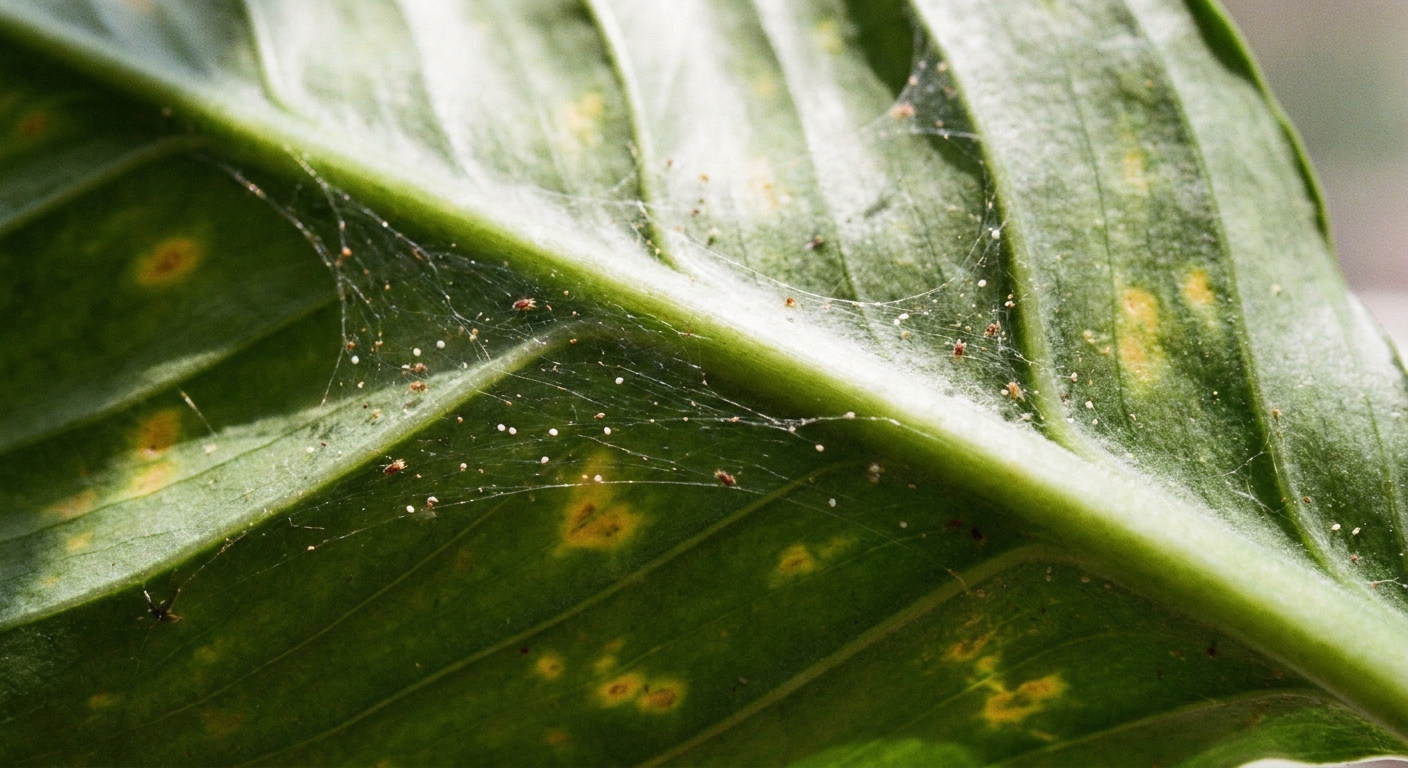
Pest damage can look like yellowing because leaves lose chlorophyll where insects feed. Peace lilies are most commonly bothered by spider mites, mealybugs, scale, and thrips.
What it looks like
- Spider mites: Fine webbing, dusty stippling, yellow speckles that merge into pale leaves.
- Mealybugs: White cottony clusters in leaf joints and along stems.
- Scale: Small brown bumps on stems or leaf undersides, sometimes sticky residue.
- Thrips: Silvery streaks or scarring, distorted new leaves, tiny black specks.
Fix it
- Isolate the plant from your other houseplants.
- Rinse thoroughly in the shower, focusing on leaf undersides.
- Treat: Wipe leaves with a soft cloth and insecticidal soap, or use neem oil if you tolerate the smell. Repeat every 7 to 10 days for 3 to 4 rounds.
- Go stronger if needed: For heavy infestations, use an indoor insecticide labeled for houseplants and the specific pest, and follow the label exactly.
Other quick checks
Root bound plants
If water rushes through and the plant dries out too fast, your peace lily may be pot-bound.
- Check: Roots circling the bottom or pushing up the plant.
- Fix: Repot 1 to 2 inches wider in fresh mix. Keep the crown at the same height.
Cold drafts or heat blasts
Yellowing can follow a night near a cold window or a spot beside a heating vent.
- Fix: Keep temps roughly 65 to 85°F (18 to 29°C) and avoid direct airflow.
Water quality
Peace lilies can be sensitive. While this more often shows as brown tips, chronic stress can contribute to yellowing.
- Fix: If your tap water is very hard, try filtered water. Letting water sit out overnight helps with chlorine, but not reliably with chloramine, and it does not remove fluoride or hardness. Periodically flush the pot to prevent buildup.
Less common: nutrient deficiency
Not the most common indoor issue, but it happens, especially in very old mix or if the plant has not been fed in 6 to 12 months.
- Clue: Pale overall color or slow growth, or newer leaves that look lighter than they should.
- Fix: Refresh the potting mix or resume a gentle, balanced fertilizer in spring and summer at 1/4 strength. If new leaves show strong interveinal yellowing (yellow leaf with greener veins), a micronutrient-inclusive fertilizer can help.
Step-by-step recovery
- Remove yellow leaves: Cut at the base with clean scissors once they are mostly yellow. Yellow tissue will not turn green again.
- Check soil moisture correctly: Finger test about 1 inch down, or use a wooden skewer to see if it comes out damp.
- Adjust watering: Aim for evenly moist soil with full drainage, guided by soil feel plus pot weight.
- Confirm light: Bright, indirect light is the sweet spot.
- Pause fertilizer if you recently fed, then restart gently in the growing season.
- Inspect for pests: Especially leaf undersides and stem joints.
- Consider repotting if the mix is old, compacted, staying wet too long, or the roots are crowded. Avoid upsizing too much.
After corrections, watch the new leaves. Old damage does not reverse, but healthy new growth is your real sign that you nailed the fix.
Prevention
Watering
- Water when the top inch feels dry and the pot is lighter.
- Use a pot with a drainage hole and empty the saucer.
- Avoid repeated full wilts. Occasional drama happens, repeated drama causes yellowing.
Light
- Bright, indirect light is ideal.
- Low light is tolerated but can slow growth and make watering trickier because the pot dries more slowly.
Soil and pot
- Use a well-draining indoor mix. I like a blend that includes potting soil plus perlite and a bit of bark for air pockets.
- Repot every 1 to 2 years, or sooner if it is root bound. Size up modestly to avoid a pot that stays wet too long.
Fertilizer
- Feed lightly in spring and summer only, 1/4 to 1/2 strength.
- Flush the pot every couple of months if you fertilize regularly.
Plant hygiene
- Wipe leaves occasionally so they can photosynthesize efficiently.
- Quarantine new plants for a couple of weeks to avoid pest hitchhikers.
When to act fast
Most yellowing is fixable, but a few scenarios call for quick intervention:
- Yellowing plus a mushy base or a foul smell: possible root rot. Check roots and repot immediately.
- Rapid yellowing across the plant in days: likely severe watering issue, root damage, or pest outbreak.
- Yellow leaves with lots of tiny moving dots, webbing, or sticky residue: treat pests promptly and isolate.
If you are stuck, take a clear photo of the whole plant, the soil surface, and a close-up of a yellow leaf (top and underside). In peace lily troubleshooting, patterns tell the story.