Why Are My Bigleaf Hydrangea Flowers Turning Brown?


The first time my bigleaf hydrangea blooms went brown, I took it personally. These plants have a way of making you feel like you either nailed summer or completely missed it. The good news is browning flower heads usually comes down to a handful of very fixable causes, and sometimes it is not a problem at all. It is just the bloom aging into that vintage, papery “antique” stage.
Let’s figure out which kind of brown you are looking at, then we will talk about the fastest, kindest way to get your hydrangea back to its lush self.

Quick diagnosis: what does the brown look like?
If you only remember one thing, remember this: weather damage usually looks sudden and patchy, while natural aging looks slow and even.
- Brown, crispy edges on the sun-facing side: sun scorch and heat, often paired with drought stress.
- Whole flower head turns tan and papery over time: normal aging and “antique” color shift, especially late summer into fall.
- Brown spots that spread, petals get mushy, gray fuzz in humid weather: botrytis blight (gray mold).
- Blooms brown fast right after overhead watering or heavy rain: petals can bruise and rot when they stay wet, and botrytis risk goes up, especially when humidity is high and temperatures are mild.
Now let’s break down the big three: scorch, drought, and botrytis. Then we will cover the “this is normal” antique phase.
Cause #1: Sun scorch and heat stress
Bigleaf hydrangeas (Hydrangea macrophylla) are famous for wanting morning sun and afternoon shade. That is the sweet spot for many gardens, especially in hot inland climates. In cooler, coastal, or cloudier areas, some plants can handle more sun, but intense afternoon rays still tend to brown blooms first.
Signs it is sun scorch
- Brown, crisp petals, often starting at the top or the side that faces the hottest sun.
- Damage appears quickly after a heat wave.
- Leaves may look a bit limp in the afternoon, even if they perk up at night.
What to do
- Give afternoon relief. If you can, move container hydrangeas to a spot with shade after 1 or 2 pm. For in-ground shrubs, a shade cloth during extreme heat can prevent repeat scorching.
- Mulch like you mean it. Add 2 to 3 inches of organic mulch (shredded leaves, pine fines, bark) to keep roots cooler and moisture steadier. Keep mulch a few inches away from the stems.
- Water early, at the base. Morning watering reduces stress and keeps flower heads drier than evening watering.
Scorched blooms will not recover. Those petals will not “green back up,” even if the plant perks up. You can leave the flower heads for texture, or snip them off if you prefer a tidier look.
Cause #2: Drought stress (even if you watered)
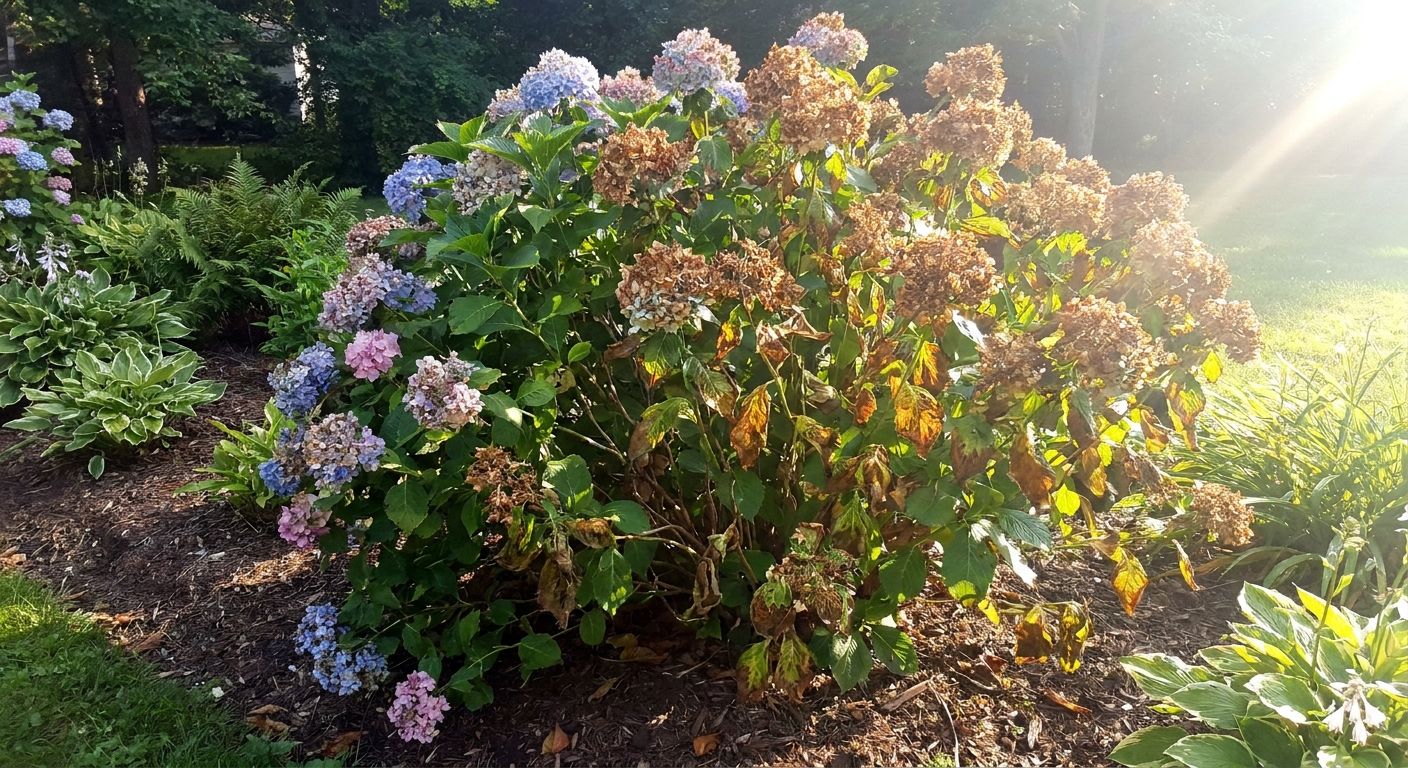
Hydrangeas are thirsty shrubs with shallow roots. When the soil swings from soaked to dry, the plant can struggle to keep those big, showy flower heads hydrated. Blooms can brown from the edges inward, or the entire head can fade and crisp.
Signs it is drought stress
- Flower heads feel dry and papery early in the season, not just late summer.
- Leaves may droop during the day and look tired overall.
- Soil is dry 2 to 4 inches down, even if the surface looks damp.
- Container plants dry out dramatically faster than in-ground plants.
Fix your watering so it actually helps
Here is my no-drama approach for bigleaf hydrangeas.
- Check depth, not the surface. Stick your finger into the soil 2 to 4 inches. If it is dry there, it is time to water.
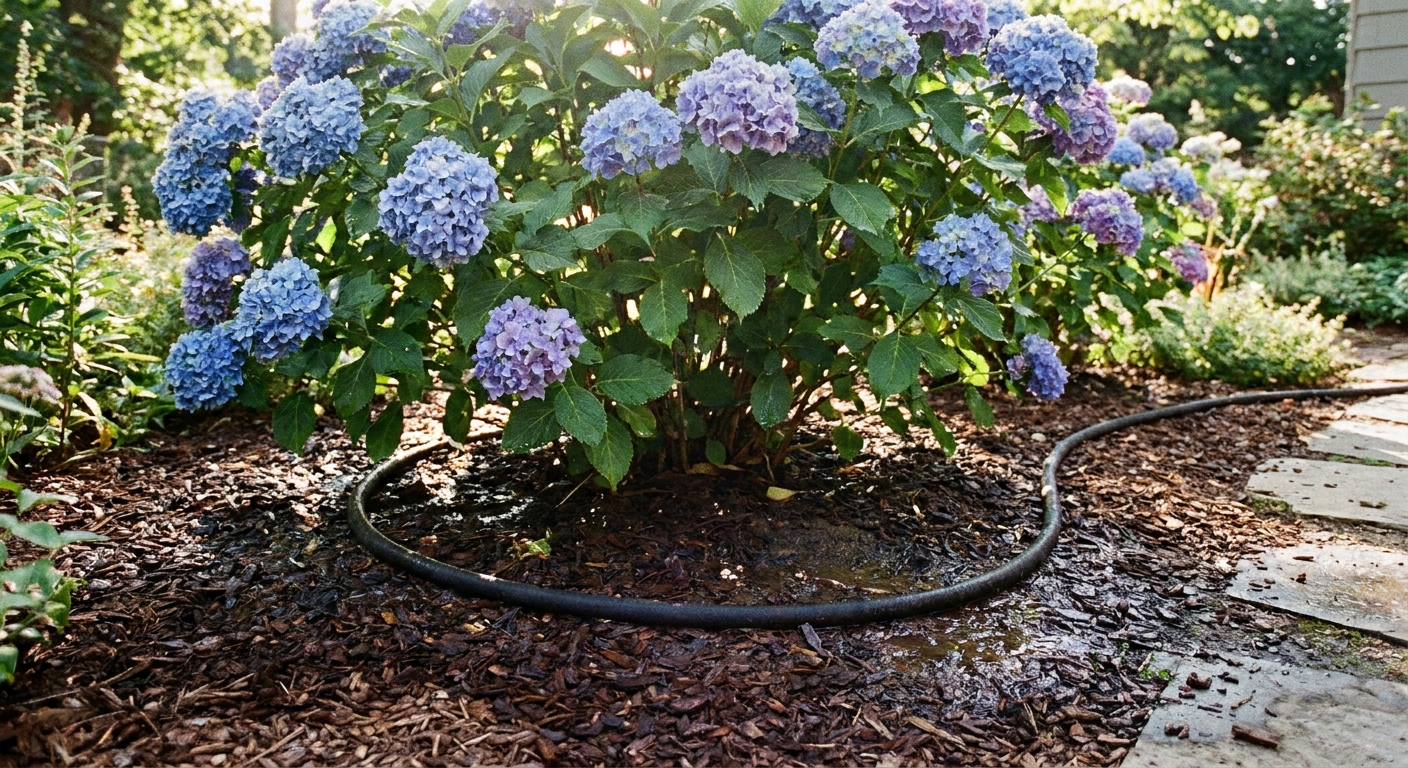
- Soak slowly. A slow trickle at the base or a soaker hose is ideal. Quick splashes do not reach the full root zone.
- Aim for deep watering 1 to 2 times a week in warm weather, and more often during extreme heat or for pots. The exact schedule depends on your soil and climate, so let the soil test be the boss.
- Water the soil, not the flowers. Wet flower heads are more likely to spot, brown, and rot.
If your soil dries out too fast
- Build organic matter. Topdress with compost and mulch. Over time, this helps sandy soils hold moisture and helps clay drain more evenly.
- Consider microclimate. Against a south-facing wall, soil heats up and dries out faster. A small location tweak can make a huge difference.
Cause #3: Wet-weather botrytis blight (gray mold)
If your hydrangea flower heads turn brown after long rainy spells, humid days, or frequent overhead watering, botrytis blight is a prime suspect. Botrytis cinerea is a common fungus that thrives when petals stay wet for long stretches. It often flares in cool to mild conditions, but it can also show up in warmer, humid weather depending on local patterns.
Signs it is botrytis
- Brown spots or blotches that expand across petals.
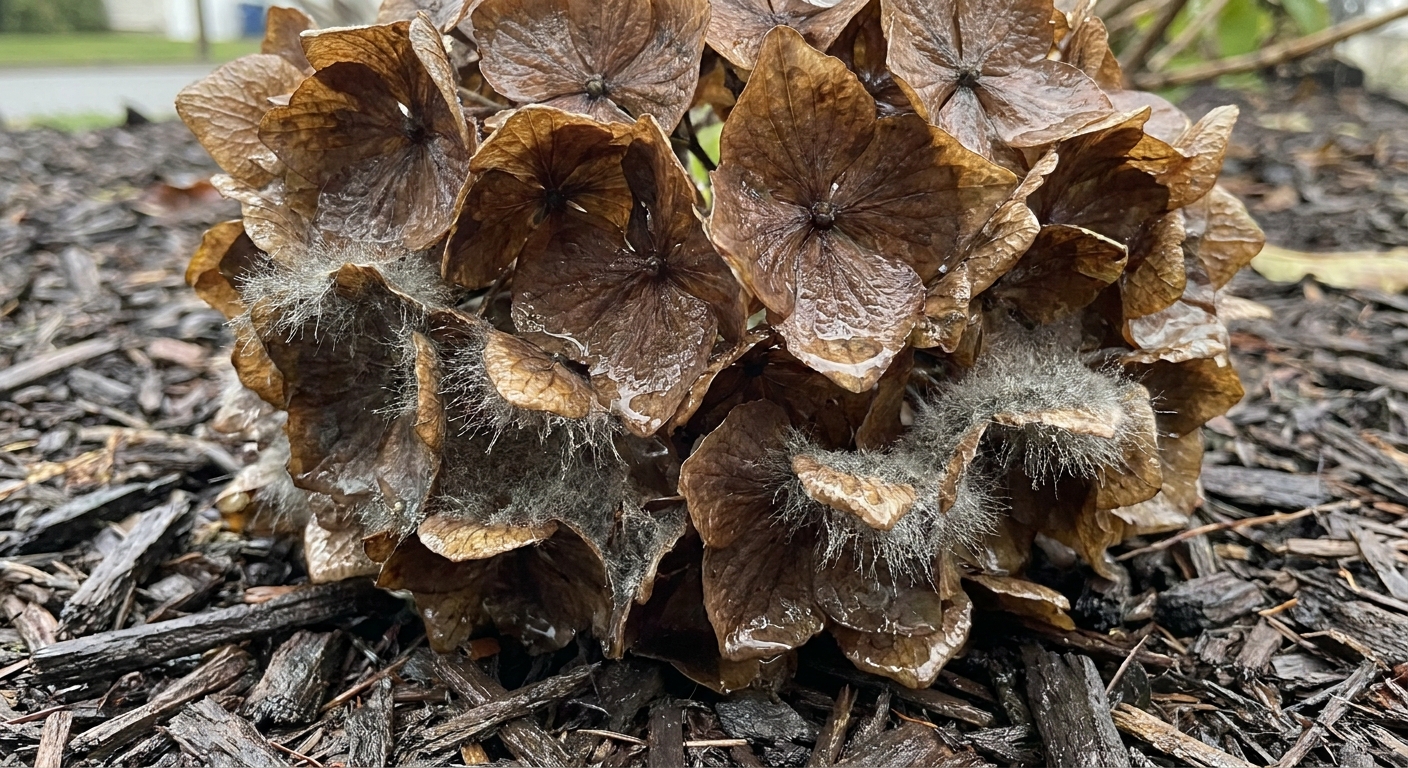
- Petals turn mushy or slimy instead of crisp.
- A fuzzy gray growth on fading petals, especially in damp conditions.
- Flower heads collapse or look “dirty” and decomposed quickly.
What to do right away
- Remove infected flower heads. Use clean, sharp pruners. Snip off the flower head with a short stem, and do not compost visibly infected blooms if you can avoid it.
- Clean up fallen petals and plant debris. Botrytis can persist on dead tissue and keep reinfecting what is nearby.
- Increase airflow. Thin a little surrounding crowding from nearby plants, and avoid letting hydrangeas press tightly against walls or dense shrubs.
- Stop overhead watering. Water at soil level.
Should you use a fungicide?
In many home gardens, sanitation and better airflow are enough. If botrytis is a repeat, severe problem in your area, a labeled fungicide for ornamentals can help as a preventative during extended wet weather. Always follow label directions, and focus on prevention rather than trying to “cure” already-browned petals.
When browning is normal: the late-season antique phase
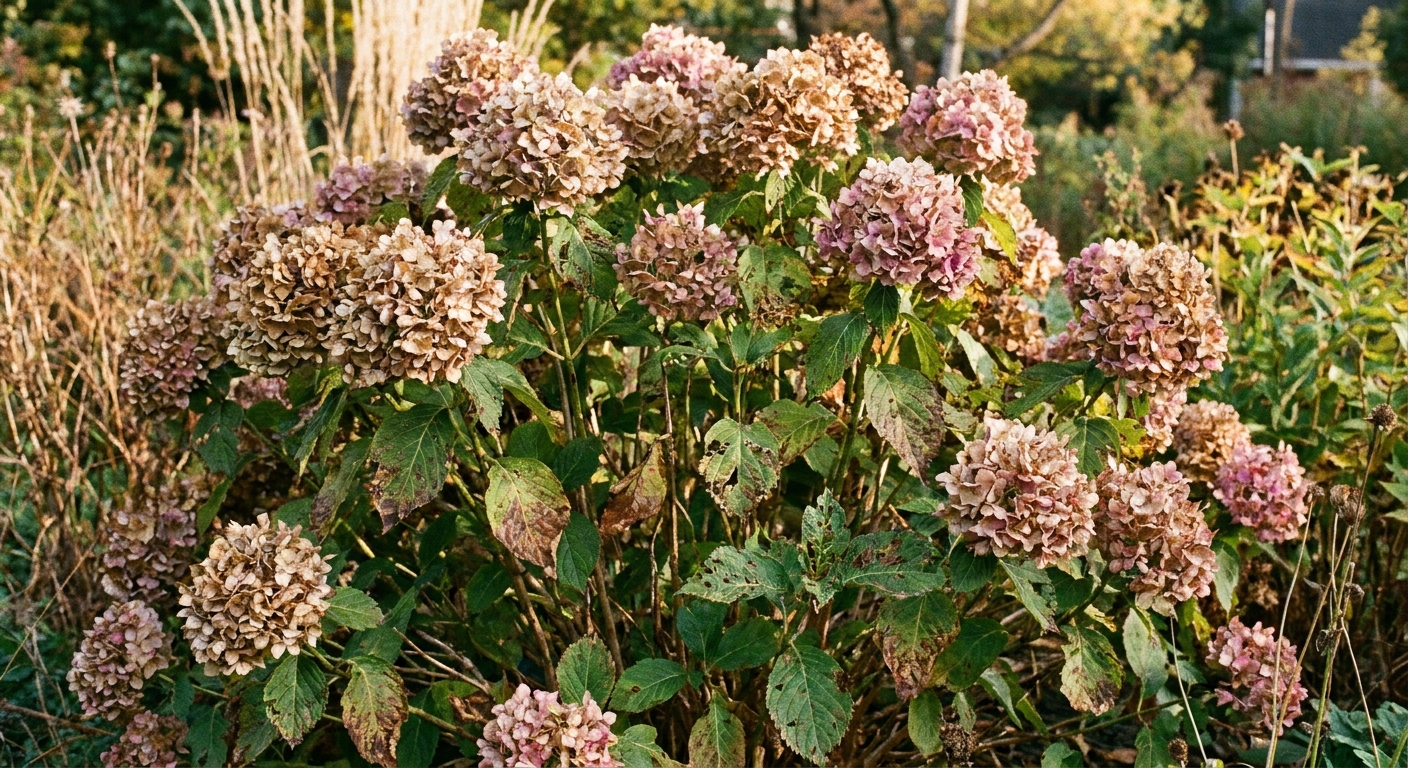
Sometimes the flower head is simply finishing its story. Bigleaf hydrangea flowers are actually showy sepals, and as they age, they often shift color and develop papery texture. Blues can fade toward dusty green or parchment. Pinks can deepen to rosy beige. Whites often go creamy, then tan.
Signs your bloom is just aging
- Color change happens gradually over weeks.
- The whole flower head changes fairly evenly.
- The plant and leaves otherwise look healthy and well hydrated.
- It is late summer or early fall, depending on your climate.
If you love that vintage look, you can leave the blooms on the plant for garden texture. I do this all the time. They look especially dreamy in morning light, like little paper lanterns.
Other causes to consider
If none of the big three fits, here are a few other very real culprits that can brown flower heads.
Cold snaps and late frost
A surprise cold night can brown tender petals, especially on newly opened flower heads. Damage often looks like sudden browning after an otherwise normal day.
Fertilizer and salt stress
Overfertilizing (or runoff from lawn fertilizer) can push lots of soft growth and increase overall stress during heat. In containers, built-up salts from fertilizer or hard water can also contribute to crispy edges. If you suspect this, water deeply to flush the pot, and ease up on feeding until the plant is steady again.
Thrips and other petal feeders
In some regions, thrips can cause browning or bronzing on petals, sometimes with a slightly streaked or “scuffed” look. You may also see tiny insects tucked inside the flower head.
If leaves look spotted too
If you are also seeing leaf spotting or lots of browning on foliage, you may be dealing with something separate (like Cercospora leaf spot or a bacterial issue) rather than a flower-only problem. In that case, focus on keeping foliage dry, improving airflow, and removing heavily affected leaves.
What to do with brown hydrangea flowers
This is the part where gardeners often get tangled up, especially with bigleaf hydrangeas: pruning at the wrong time can reduce next year’s blooms. So let’s keep it simple and safe.
Deadheading vs pruning
Deadheading is removing the spent flower head. Pruning is removing stems and shaping the shrub. With bigleaf hydrangeas, heavy pruning at the wrong time can remove next season’s flower buds because many varieties bloom on older wood. If you have a reblooming type (often sold as “remontant” or in series like Endless Summer), it can bloom on old and new wood, so it is more forgiving, but cautious cuts are still the safest habit.
How to remove browned flower heads safely
- For a quick tidy-up: snip just below the flower head, leaving as much stem as possible. This is the most cautious option.
- If you want longer vase stems: cut down to the first set of healthy, full leaves below the bloom.
- If you suspect botrytis: cut a bit farther down into healthy tissue, and disinfect pruners between cuts with rubbing alcohol or a disinfecting wipe.
If you are unsure how your specific hydrangea sets buds, err on the side of minimal cuts in summer and fall. You can always do more later, but you cannot un-cut a flower bud.
If you want a deeper walkthrough on timing and technique, see our guide on how to prune hydrangeas on Leafy Zen.
Prevention: keep blooms fresh longer next season
I think of bigleaf hydrangeas as plants that like consistency. They do not want dramatic swings.
My bloom-saving checklist
- Site for morning sun, afternoon shade whenever possible, adjusting for your climate.
- Water deeply and evenly so the plant never fully dries out during flowering.
- Mulch every year to buffer moisture and temperature.
- Avoid overhead watering, especially when flower heads are open.
- Give airflow by spacing plants properly and not crowding them with fast-growing neighbors.
- Clean up spent flower heads and fallen petals during wet spells to reduce fungal issues.
And a little reassurance, because we all need it sometimes: if your foliage looks healthy and you are seeing new buds and steady growth, a rough patch of browned flowers this season does not mean your hydrangea is doomed. Most of the time, it is a weather story, not a character flaw.
FAQ
Will brown hydrangea flowers turn blue or pink again?
No. Once a flower head browns from scorch, drought, cold damage, or disease, it will not return to its original color. Your goal is to protect new growth and keep the rest of the plant healthy.
Should I cut off all the brown blooms?
You can, especially if they are ugly or diseased. If they are simply aged and you like the antique look, you can leave them for texture. If you do remove them, make small cuts just below the flower head to avoid accidentally removing future buds.
Why are my lacecap edges browning first?
On lacecaps, the showy outer florets tend to take the brunt of sun, wind, and drying. Browning around the edges is common with heat and inconsistent moisture.
Do coffee grounds help hydrangea blooms stay blue?
Coffee grounds are not a reliable way to change hydrangea color. Bloom color is more about soil pH and aluminum availability. If your blooms are browning, focus first on siting, steady moisture, and keeping flower heads dry to prevent disease.