Frost-Damaged Plants: Helping Trees, Shrubs, and Perennials Recover

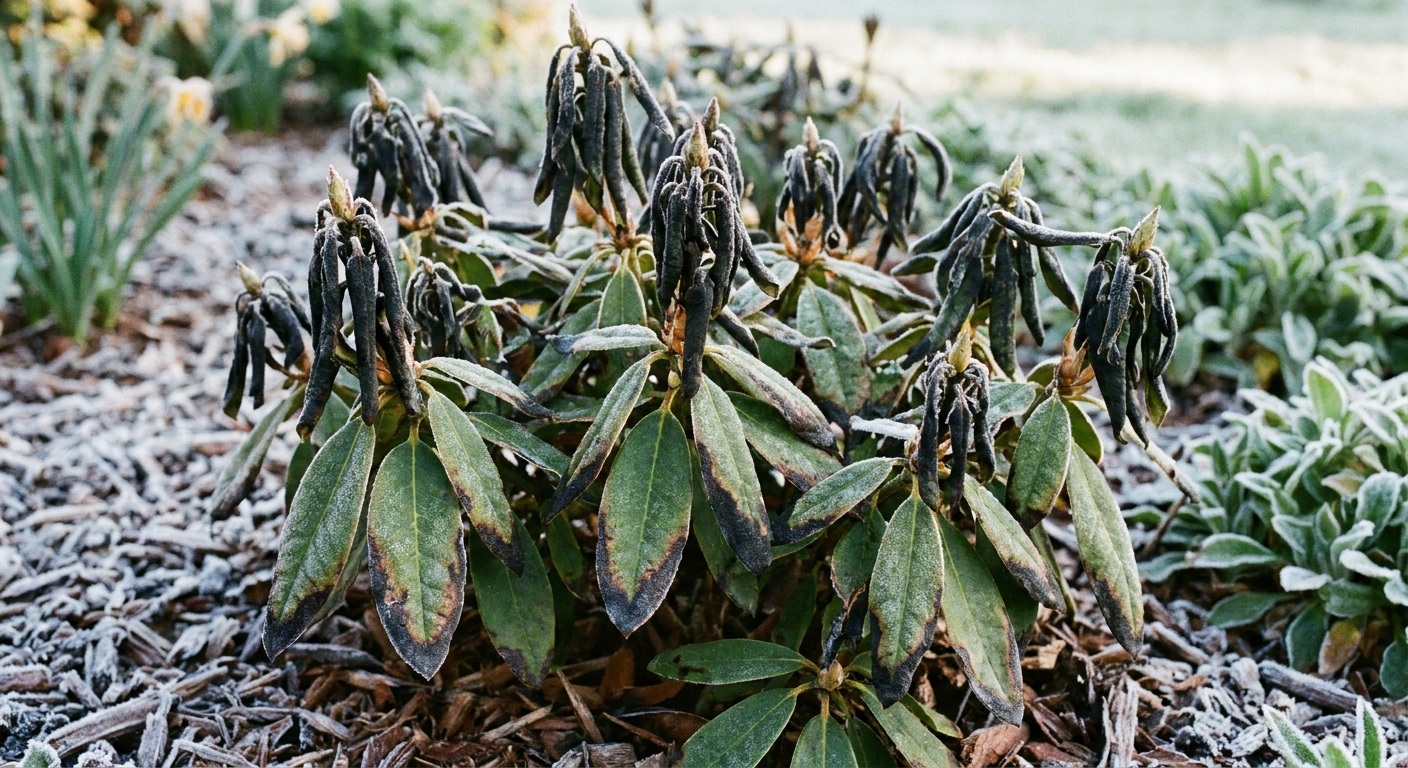
A late spring frost can make a healthy garden look like it got the wind knocked out of it overnight. Leaves turn black, buds droop, and tender new growth goes limp like cooked spinach. If you are staring at that mess and wondering whether to prune, fertilize, or panic, take a breath. Frost damage is often cosmetic at first, and many trees, shrubs, and perennials can rebound beautifully if you give them a little time and the right kind of help.
This page walks you through a simple recovery timeline, what to leave alone until you see new growth, and how to prune selectively on a few common favorites like roses, hydrangeas, and evergreens. We will also talk about watering, why early fertilizer can backfire, how to tell the difference between a true loss and a plant that is just slow to leaf out, and the quick difference between a light frost and a hard freeze.

Frost vs hard freeze
Gardeners (and weather apps) toss these words around like they mean the same thing, but the details matter.
- Frost: often happens on clear, calm nights when surfaces cool and you get ice crystals. Some plants look rough the next morning, but woody tissues may be fine.
- Hard freeze: air temperatures drop well below freezing for longer. That is when you are more likely to see deeper damage to buds, stems, and sometimes cambium on young or tender plants.
Duration matters, too. Two hours near 31°F is a different event than eight hours at 25°F. That is why the timeline below uses plant signals (bud swell, new shoots, green tissue) as the real trigger, not the calendar.
What frost damage actually does
Frost damages plants when water inside tender cells freezes and expands, rupturing cell walls. The newest growth is usually the first to suffer because it is thin-walled, water-rich, and not hardened off.
- Most vulnerable: fresh leaf flushes, flower buds, soft stems, newly planted perennials, and container plants.
- Usually tougher: established woody stems, dormant buds, crowns and roots, and hardened evergreen needles.
Here is the tricky part. The ugliest-looking damage is not always the most serious. A plant can look scorched and still have healthy dormant buds tucked safely behind the scenes.
Also, damage is often patchy. Low spots collect cold air, windy corners dry tissues faster, and walls and fences can create little microclimates where one side of a shrub looks fine and the other side looks fried.
Your recovery timeline
Quick reality check: timing varies by species, your region, how cold it got, and how long it stayed there. Use the windows below as a guide, but let regrowth be the decider on when to prune.
Right away: first 24 to 48 hours
- Do not prune yet. Damaged foliage can sometimes provide a bit of protection from sun and wind, but mainly it helps you see exactly how far dieback traveled down a stem.
- Water if the soil is dry. Frozen nights are often followed by bright, drying days. Aim for evenly moist soil, not soggy.
- Protect from the next cold night. If another freeze is forecast, cover plants at dusk with frost cloth, an old sheet, or a light blanket. Remove in the morning once temperatures rise above freezing.
Days 3 to 7: observe and wait
This is when gardeners tend to overhelp. Resist it. Let the plant show you where it is alive.
- Look for: swelling buds, tiny green nubs at leaf nodes, and new shoots emerging from the base or crown.
- Expect: flowers and tender leaf tips to fail first, while stems and dormant buds may stay viable.
- Know this: some herbaceous plants look fine for a few days, then collapse as damaged tissues dry out. That lag is normal.
Weeks 2 to 4: prune selectively
Once you can clearly see which buds are pushing and which stems are staying brown and lifeless, it is safe to tidy up with selective pruning. This is also when some woody plants finally decide to leaf out, especially after a stressful cold snap.
Weeks 4 to 8: support recovery
- Mulch lightly to stabilize soil moisture and temperature.
- Keep watering consistent through dry spells.
- Hold off on heavy feeding until the plant is actively growing again and the cold risk is low.
What to leave alone
If you remember one rule, make it this: do not prune blind. Frost can kill the tips of stems while leaving lower buds alive. Early pruning can remove those living buds and set the plant back further.
Leave these alone for now:
- Brown or blackened leaves on perennials and shrubs, until you see new growth starting elsewhere.
- Soft, bent new shoots on woody plants, until you can trace where firmness returns.
- Evergreen browning unless needles are clearly dead and the plant has begun pushing new growth.
The exception is safety. If a branch is broken, split, or hanging, go ahead and remove it cleanly right away.
How to assess damage
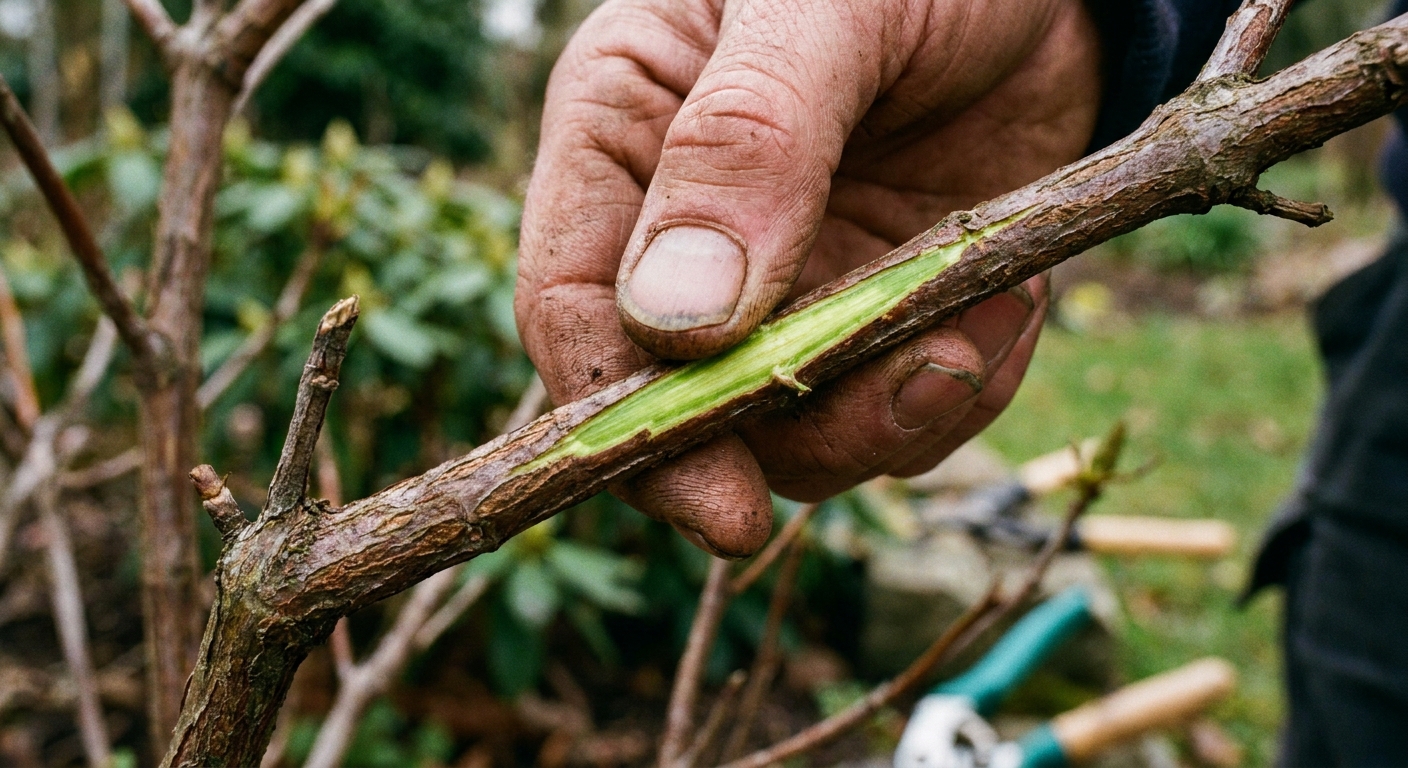
Scratch test for woody stems
On shrubs and young trees, use your fingernail to gently scratch a small spot on the bark.
- Green and moist underneath: tissue is alive.
- Tan, brown, or dry: that section is dead.
Start near the tip and work downward until you find green. That is usually where you will prune back to, once the plant has had time to declare itself.
Check buds, not just leaves
Leaves can look terrible while buds stay viable. Plump buds that look firm often mean the plant is still in the game.
Crowns and roots matter
Many perennials recover from the crown even when top growth is toast. If the crown is firm and you see new shoots at the base within a couple weeks (sometimes longer in cool springs), you likely avoided a total loss.
Pruning after frost
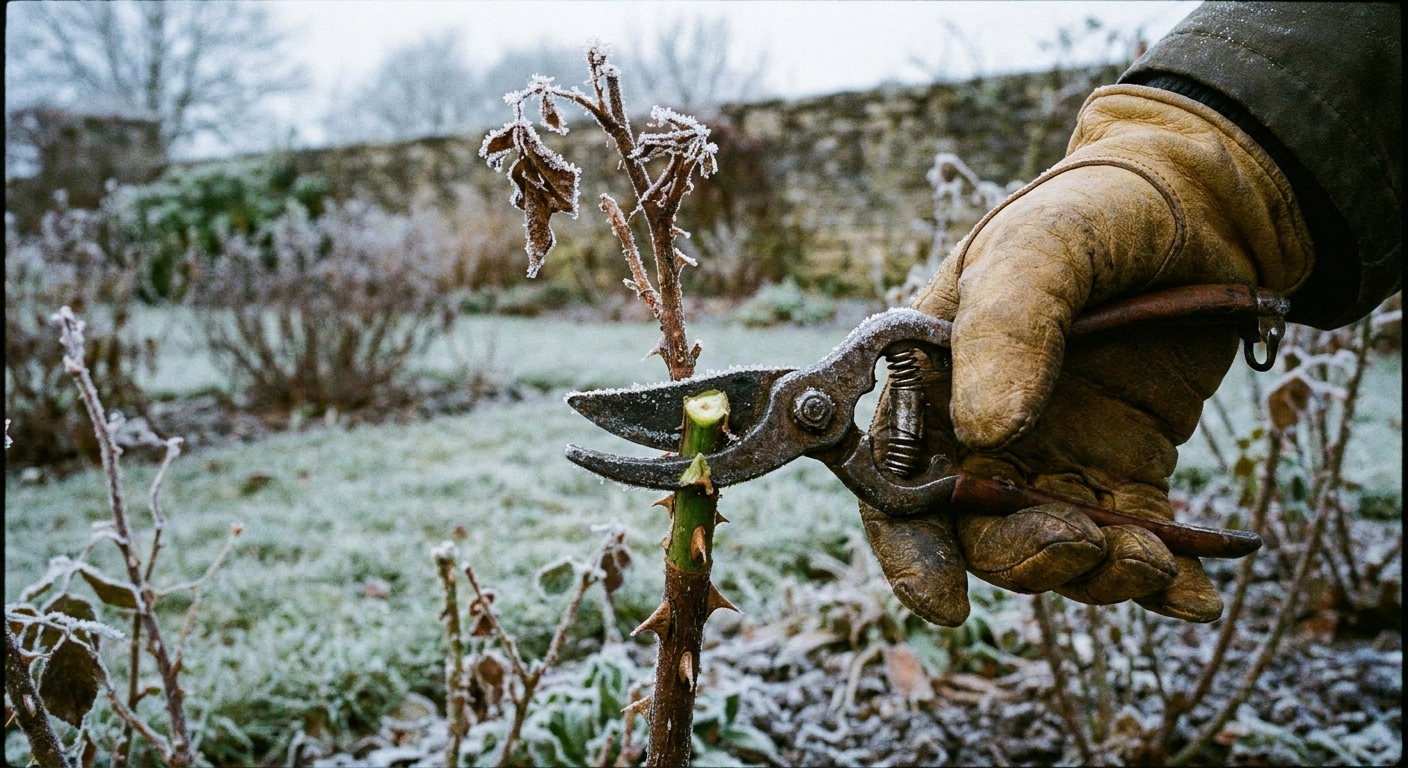
When it is time to prune, think like a plant doctor, not a hairstylist. You are removing what is truly dead, making clean cuts, and keeping as much living tissue as possible.
- Use sharp, clean pruners. A quick wipe with rubbing alcohol between plants helps prevent disease spread.
- Cut back to living tissue. Make the cut just above a healthy bud or side branch.
- Do not shear. Shearing removes good buds along with bad and can stimulate weak, crowded regrowth.
Roses
Roses are dramatic, but they are also resilient. Frost often zaps the newest leaves and buds, especially on early-flushing varieties.
When to prune
Wait until you see buds swelling and new shoots starting. Then prune back to firm, green stems.
How to prune
- Remove blackened, mushy tips back to healthy, green wood.
- Cut at a slight angle just above an outward-facing bud.
- If a cane is brown all the way down, remove it at the base.
Note: If your rose had leafed out and then got hit hard, it may push a second flush from lower buds. That takes energy, so keep watering steady and skip strong fertilizer until growth is underway and nights are consistently above freezing.
Hydrangeas
Hydrangeas are where frost confusion goes to party. Some bloom on old wood, some on new wood, and some do both. A late freeze can damage developing flower buds without killing the whole shrub.
Know your type (and when in doubt, go gentle)
- Bigleaf and lacecap (Hydrangea macrophylla): many bloom on old wood, and many modern varieties bloom on old and new wood. After frost, buds may be lost even if stems live.
- Oakleaf (Hydrangea quercifolia): blooms on old wood, buds are vulnerable.
- Panicle (Hydrangea paniculata) and smooth (Hydrangea arborescens): bloom on new wood and are generally more forgiving.
If you are not sure what you have, default to minimal pruning until you see leaf-out. It is the safest choice for protecting potential flower buds.
How to prune after frost
- Bigleaf and oakleaf: wait until you see where buds are leafing out. Remove only dead tips and obviously dead stems. Avoid hard pruning unless you are sure the stems are dead.
- Panicle and smooth: once the worst cold has passed and buds are moving, you can prune dead tips and shape lightly. These can still bloom well even if frost damaged early growth.
If your bigleaf hydrangea looks alive but you get fewer flowers this year, it is often because the flower buds were the casualty, not the plant.
Evergreens
Evergreens can fool you. Some frost damage shows immediately as browning tips, but a lot of it appears later as needles fade and drop over a few weeks.
What to do
- Wait before major pruning. Give it time, often 3 to 6 weeks, depending on weather and how quickly new growth starts.
- Snip only clearly dead tips once new growth begins, often visible as lighter green candles on pines or fresh tufts on spruce and fir.
- Be careful with conifers. Most conifers (especially pines, spruce, and fir) do not reliably regrow from old brown wood with no needles, so do not cut back past green growth. Some types (like yews and arborvitae) can regenerate more than pines, but patience still pays.
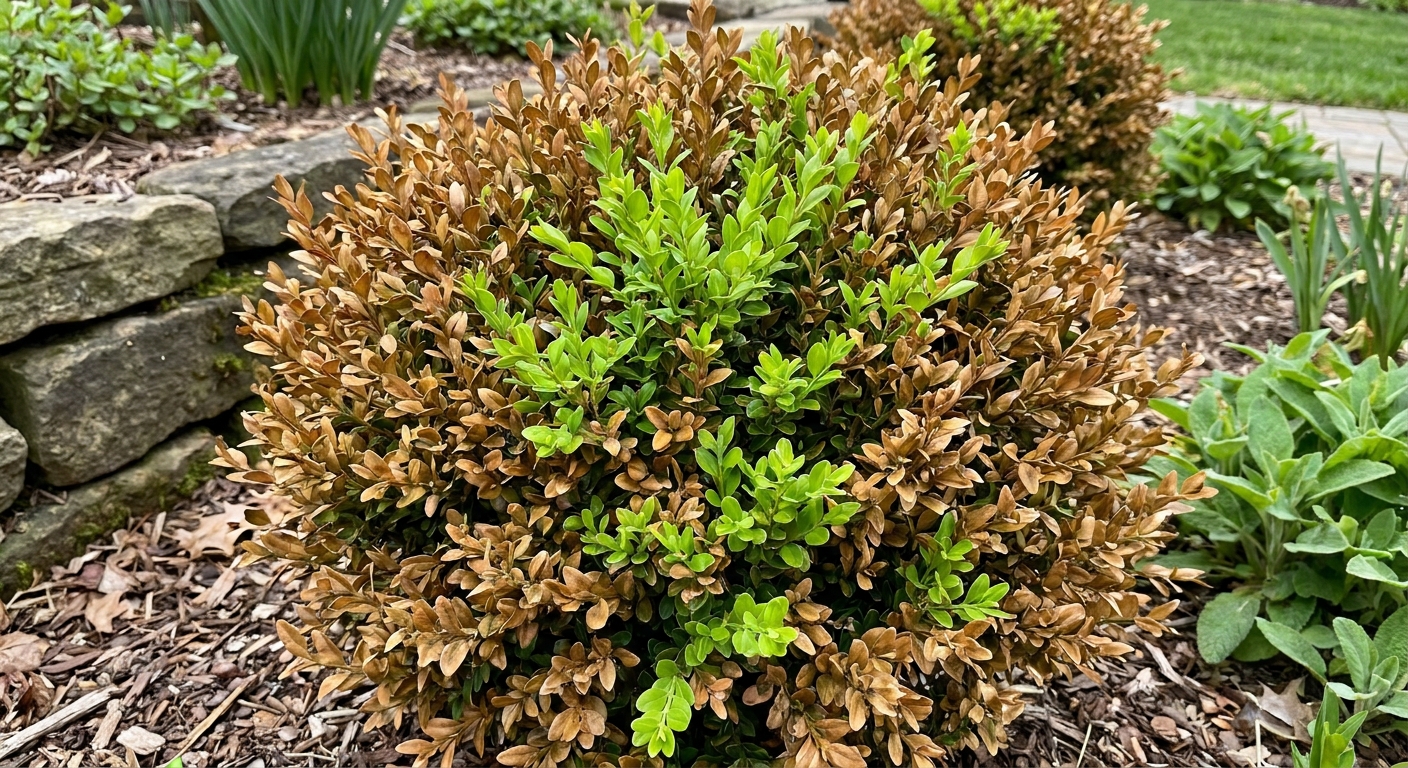
Broadleaf evergreens like boxwood and holly can often sprout new leaves from latent buds, but they still appreciate patience. Let them leaf out, then prune lightly to shape and remove dead ends.
Watering after frost
After a freeze, roots still need oxygen and moisture to support new growth. Think steady, not extreme.
- Water deeply when the top couple inches of soil are dry.
- Avoid waterlogging. Soggy soil slows root recovery and invites rot.
- Containers dry fast. Pots exposed to wind and sun may need more frequent checks.
A 2 to 3 inch layer of organic mulch, kept a few inches away from trunks and crowns, helps maintain that even moisture that plants love.
Fertilizer timing
It is tempting to fertilize right away, but strong fertilizer can push tender new growth that is extra vulnerable if more cold weather rolls in. It can also stress a plant that is still trying to rebuild roots and repair damaged tissues.
Instead:
- Wait for active new growth and for nights to stay reliably above freezing.
- Use gentle nutrition if needed, like compost top-dressing or a mild organic fertilizer at label rates.
- Skip high-nitrogen blasts right after damage.
If you already fertilized and then got hit by frost, do not add more. Focus on watering and patience.
Also, be skeptical of miracle tonics and anti-transpirant sprays after a freeze. They rarely fix tissue that is already damaged. Your best tools are time, steady moisture, and careful pruning when the plant is ready.
Annuals vs woody plants
Annuals are often a true loss
Most annuals are not built for frost. If they turned to mush, collapsed at the base, or have water-soaked stems, they are usually done.
- Pull and compost them if they are fully mushy.
- Replant once your region is past its typical last frost date, or keep frost cloth handy for the next cold dip.
Woody plants can be delayed
Trees and shrubs may leaf out late after a freeze, especially if they were just starting to wake up when the cold hit. Some species also naturally leaf out later, even in normal years.
Signs to wait longer:
- Buds are present and firm.
- Scratch test shows green tissue lower on stems.
- You see tiny shoots at the base or along branches.
As a rule, give woody plants at least 2 to 4 weeks after the freeze to show signs of life, and longer for some trees, especially if the weather stays cool. If nothing changes and scratch tests show brown all the way down, it may be time to consider replacement.
Common mistakes
- Pruning immediately before the plant shows what is alive.
- Overfertilizing in an attempt to fix it fast.
- Overwatering because the top growth looks thirsty, even when the soil is already wet.
- Assuming no leaves means no life on trees and shrubs that are simply delayed.
- Shearing evergreens and cutting into old wood that cannot resprout.
When to call it
I am all for giving plants time, but there are a few signs that the kindest move is to let go and replant.
- No new growth after 4 to 8 weeks of suitable weather.
- Scratch test shows brown, dry tissue all the way down main stems.
- Trunk or crown tissue is soft, cracked, or smells fermented.
- Branches are brittle and snap cleanly with no bend.
If you are unsure, wait a little longer on valuable woody plants. I have seen shrubs surprise everyone in early summer, especially after a rough spring.
Quick checklist
- Wait a few days before pruning anything that is not broken.
- Use the scratch test and bud check to find living tissue.
- Prune selectively once new growth is visible.
- Water consistently, mulch lightly, and avoid soggy soil.
- Hold fertilizer until active growth resumes and frost risk is low.
- Replant annuals if they are mushy and collapsed.
If you want, take a few photos today and again in two weeks. Frost recovery is easier to see when you can compare. And if you catch me out there murmuring encouragement to my ferns, no you did not.