
Hydrangeas in Pots: Watering and Winter Storage

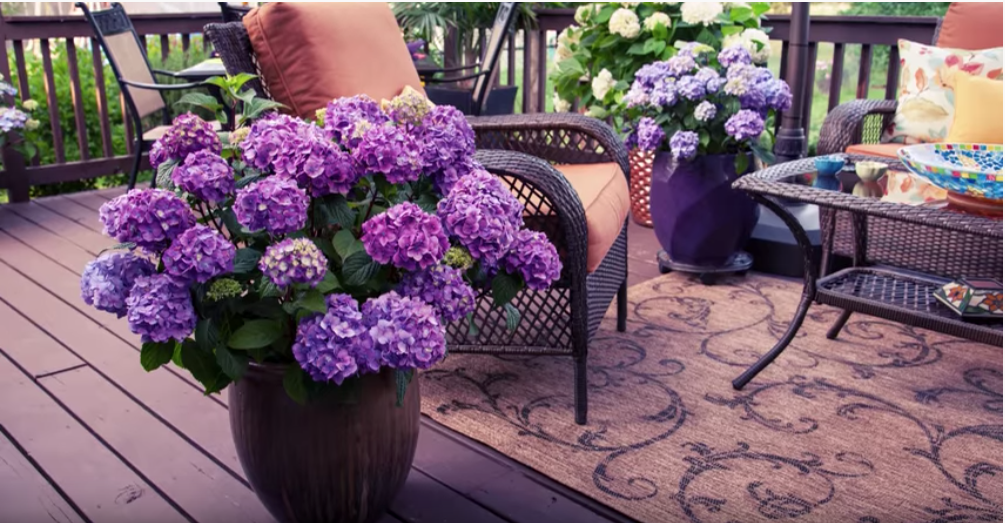
Hydrangeas in pots are a little like toddlers in fancy shoes. Gorgeous, dramatic, and surprisingly fast to fall apart if you ignore them for a day in hot weather. I love growing them in containers for patios and balconies, but the care is different from an in-ground shrub, especially when it comes to water and winter root protection.
This page is all about the practical container realities: choosing a pot size that does not set you up for daily panic-watering, keeping a steady routine in summer heat, and getting that root ball through winter when a pot can freeze solid long before garden soil does.

Why potted hydrangeas need different care
In the ground, hydrangea roots can roam, find moisture pockets, and ride out temperature swings because the earth insulates them. In a pot, the root system is confined, and the potting mix heats up and dries out quickly. In winter, that same exposed root ball is far more likely to freeze, thaw, and freeze again, which is rough on roots.
So if your container hydrangea looks perfect one evening and wilted by lunchtime the next day, you are not failing. You are seeing container physics in action.
Pot size: the secret to easier watering
If you want a hydrangea in a pot to feel low-stress, start with a container that holds enough soil to buffer heat and moisture loss. Tiny pots make everything harder.
Good starting sizes
- Small hydrangea (nursery pot 1 to 2 gallons): moving up to a container at least 12 to 14 inches wide often works well, ideally larger.
- Medium hydrangea (3 to 5 gallons): a 16 to 20 inch wide container is a comfortable home for most.
- Large hydrangea (7 gallons and up): plan on 20 to 24 inches wide, and a pot that is heavy enough not to tip.
Also, those are starting points, not a lifetime promise. Many mature cultivars eventually do better in larger tubs (think 20 to 24 inches and up) if you want fewer wilting dramas and better blooming.
Depth matters too, but width is often the bigger limiter since many feeder roots live in the upper portion of the mix. More volume means slower drying and steadier growth.
Drainage and saucers
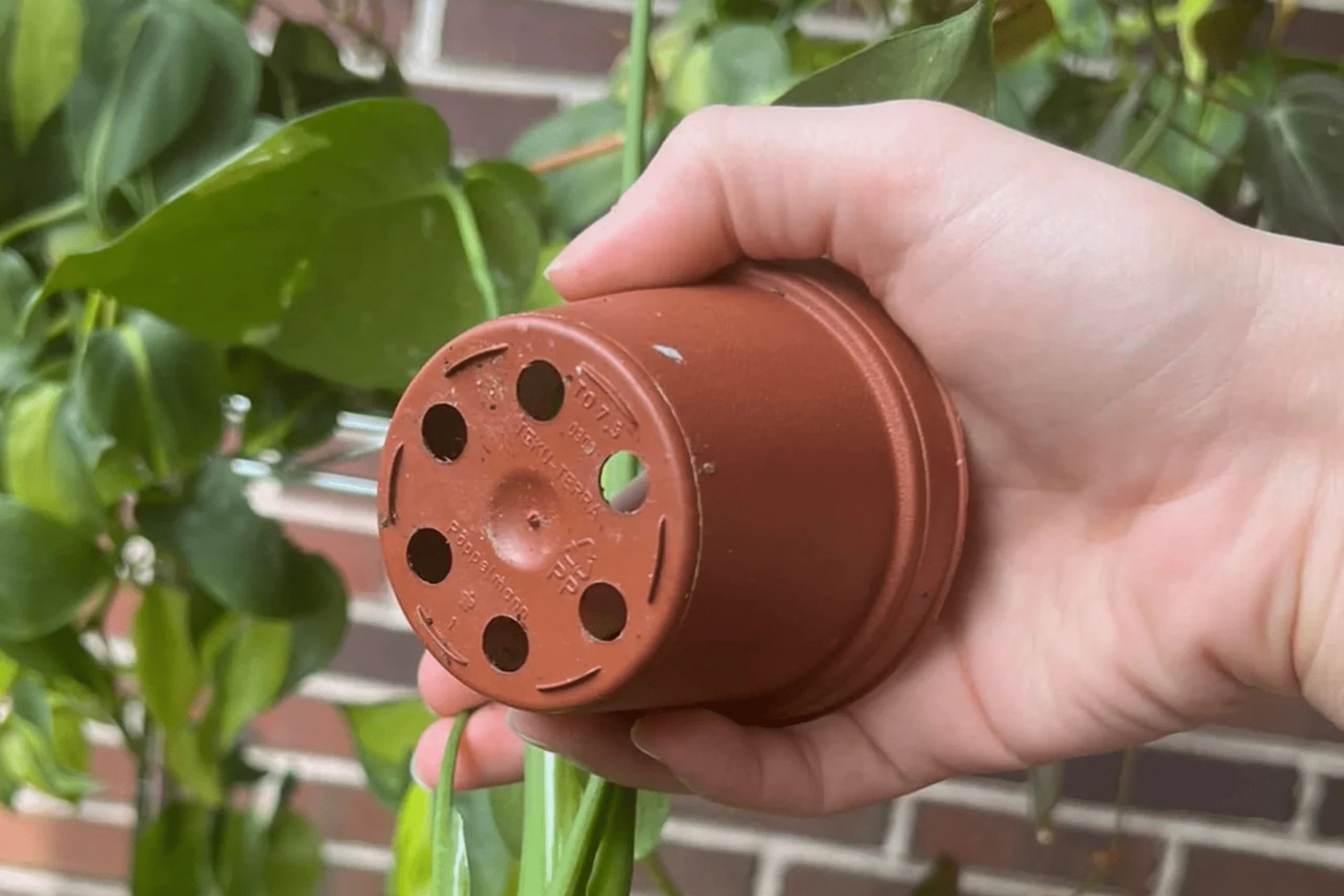
Make sure the pot has drainage holes. Hydrangeas love moisture, but they hate sitting in stagnant water. If you use a saucer to protect a patio, empty it after deep watering so it does not sit in water for hours.
Soil and potting mix: moisture holding, not mud
A container hydrangea does best in a high-quality potting mix that holds moisture evenly while still draining well. Garden soil is too heavy for pots and tends to compact, starving roots of oxygen.
My favorite texture goal is what I call “wrung-out sponge.” It should absorb water readily, not repel it, and it should not turn into a swamp.
- Choose: a potting mix labeled for containers, often with peat or coir plus perlite or bark for structure.
- Avoid: mixes that are mostly fine peat with little structure, which can shrink and become hard to re-wet once it dries.
Watering hydrangeas in pots: the routine that works
Hydrangeas are thirsty plants, and containers magnify that thirst. The trick is consistent moisture, not wild swings between bone-dry and flooded.
How to check if it needs water
- Finger test: stick your finger 1 to 2 inches into the mix. If it feels dry at that depth, water.
- Lift test: learn the weight of your pot when it is freshly watered. A light pot usually means it is time.
- Leaf cues: mild afternoon droop during intense heat can happen even with decent moisture. Persistent wilting into evening usually means the root ball is dry.
How to water correctly in a container
A quick splash on top is not enough, especially once roots fill the pot. You want to wet the entire root ball.
- Water slowly until you see a steady trickle from the drainage holes.
- Pause 2 to 5 minutes.
- Water again to fully saturate any dry pockets.
- Empty saucers after the pot finishes draining.
Daily watering in summer heat: what to expect
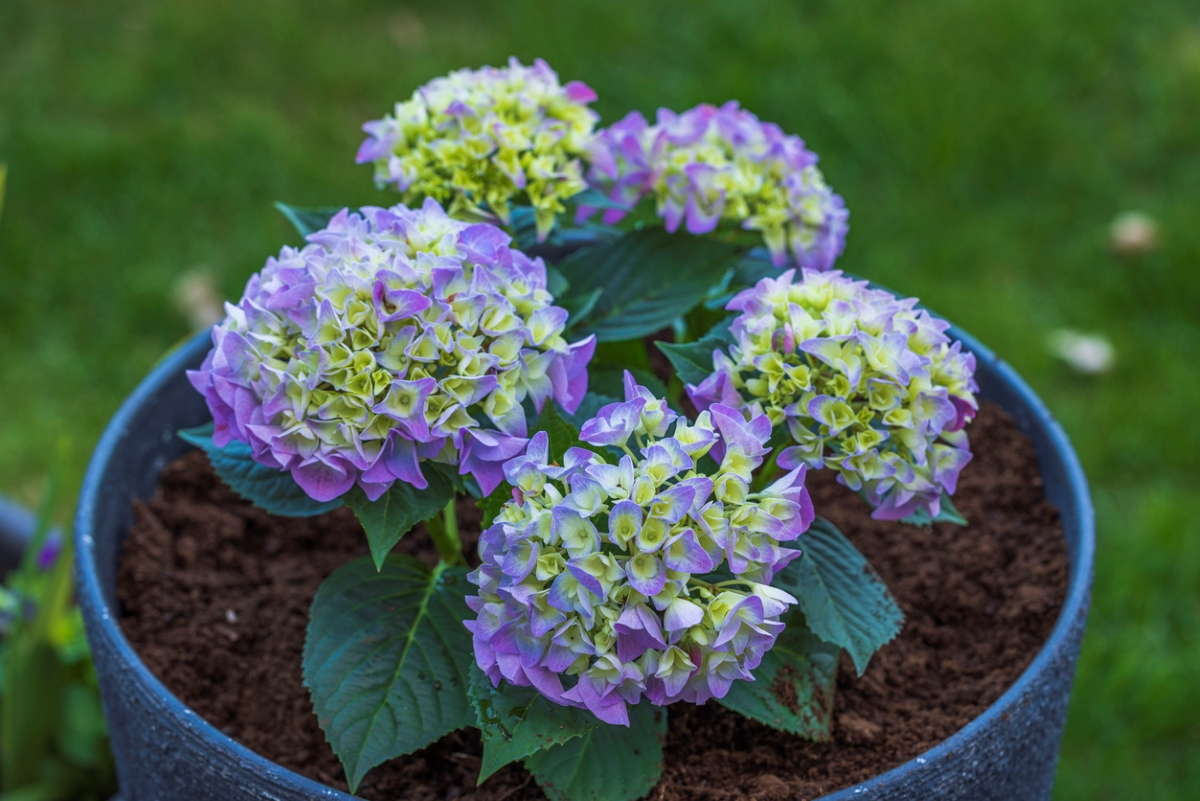
In hot spells, container hydrangeas often need water every day. On very hot, windy days, a smaller pot can need water twice a day, especially if it sits in afternoon sun.
Factors that increase watering frequency
- Smaller pot: less soil volume dries faster.
- Terracotta: porous pots lose moisture through the sides.
- Full sun and reflected heat: patios, driveways, and south-facing walls can cook a container.
- Wind: dries leaves and potting mix quickly.
- Root-bound plants: dense roots leave less room for water-holding soil.
My heat-wave strategy
- Water in the morning: it sets the plant up for the day.
- Give afternoon shade if possible: even moving a pot a few feet can reduce stress.
- Check again mid to late afternoon: if the mix is drying fast, a second watering can prevent wilt and bud drop.
If you routinely cannot keep up with watering, that is your sign to size up the container or shift the plant to a spot with gentler afternoon sun.
Hydrangea types: quick container notes
A quick reality check: “hydrangea” covers a lot of different plants, and container life can look a little different depending on what you are growing.
- Bigleaf hydrangea (Hydrangea macrophylla): the classic mophead or lacecap. Often happiest with morning sun and afternoon shade in pots. Many varieties set next year’s flower buds on old wood, so winter stem damage can mean fewer blooms even if the plant survives.
- Panicle hydrangea (Hydrangea paniculata): generally more sun-tolerant and blooms on new wood, which makes it more forgiving if winter or pruning knocks stems back.
- Smooth hydrangea (Hydrangea arborescens): also blooms on new wood and is usually pretty resilient, but still needs steady moisture in a container.
Signs you are overwatering or underwatering
Underwatering signs
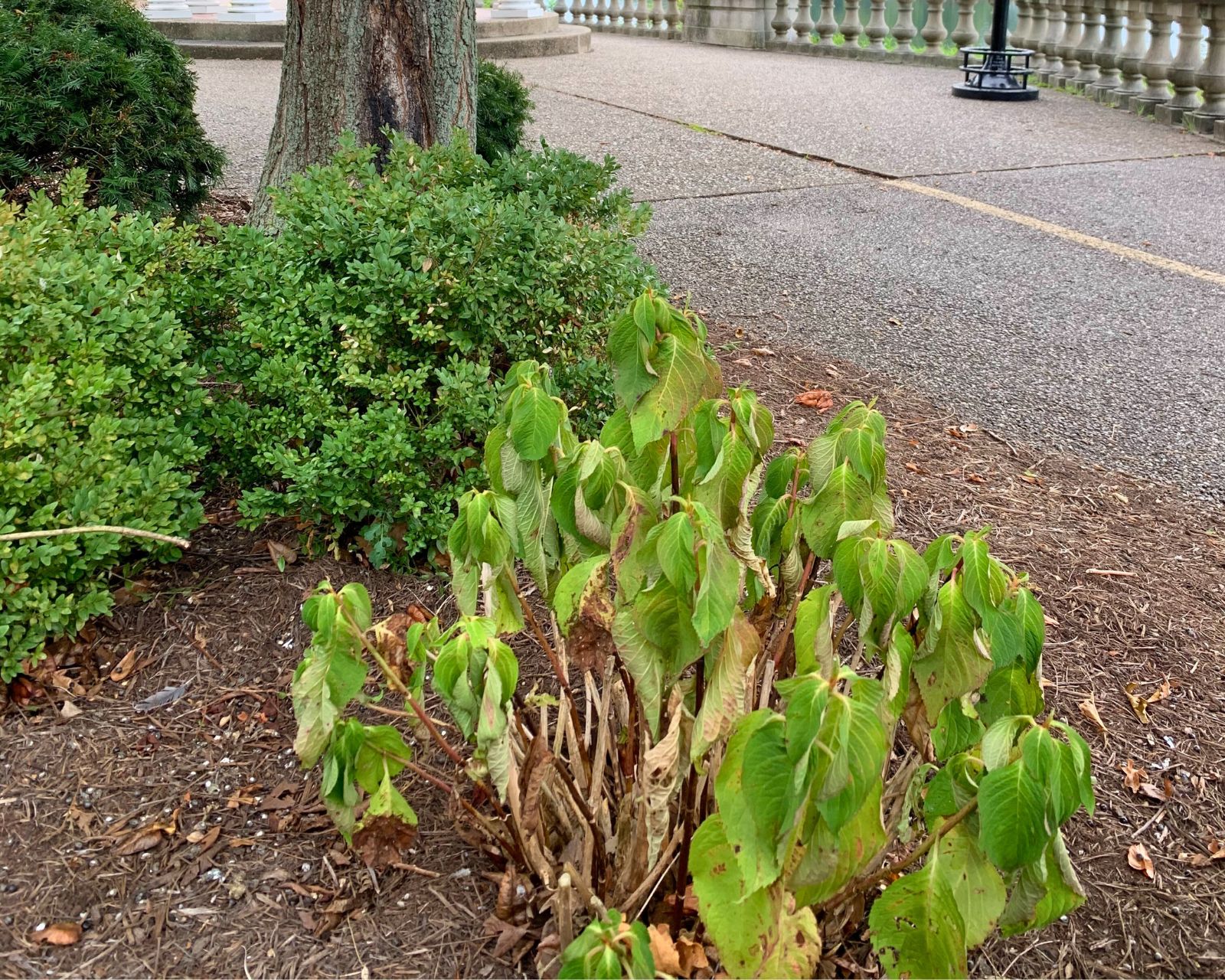
- Leaves droop and feel thin or papery
- Soil pulls away from the sides of the pot and becomes hard to wet
- Flower buds shrivel or drop
Overwatering signs
- Leaves yellow, especially lower leaves, while soil stays wet for days
- New growth looks weak and soft
- Musty smell from the potting mix
One important note: underwatering can also cause yellowing. If you are not sure, check the soil moisture 2 inches down before changing your routine.
Fertilizer and watering: keep it gentle in pots
Container plants are more sensitive to fertilizer salts because everything is concentrated in a small soil volume. If you fertilize, follow label rates carefully and water well afterward.
- During active growth: a slow-release fertilizer formulated for flowering shrubs can be convenient.
- In heat waves: skip feeding when the plant is stressed and drinking heavily.
- Flush periodically: during active growth, water deeply enough that plenty drains out the bottom to help rinse built-up salts. Every 4 to 6 weeks is plenty for most pots, and less often may be fine if you are not feeding much.
Winter reality: pots freeze harder than the ground
Here is the big difference that surprises people. An in-ground hydrangea benefits from the earth’s insulation. A hydrangea in a pot has its roots surrounded by cold air on all sides. In prolonged cold, a container can freeze solid, which can kill roots even if the top growth looks fine for a while.
Your goal in winter is not tropical warmth. It is keeping the root ball from repeated deep freezing and protecting the plant from drying winds while it is dormant.
If you live where pots routinely freeze solid for long stretches, garage or shed storage is strongly recommended. Outdoor wrapping can work in milder winters, but there is less margin for error when temperatures plunge.
When to prep a potted hydrangea for winter
Wait until the plant has naturally gone dormant. After a few frosts, leaves will drop and the plant will slow down. That is your cue to switch from “growing season care” to “storage care.”
Avoid moving the pot into warm indoor living spaces. Hydrangeas are not houseplants, and warmth plus low indoor light can confuse dormancy.
Best winter storage options for container hydrangeas
Pick the option that matches your winter temperatures and your space. The colder your winter, the more the root ball needs shelter.
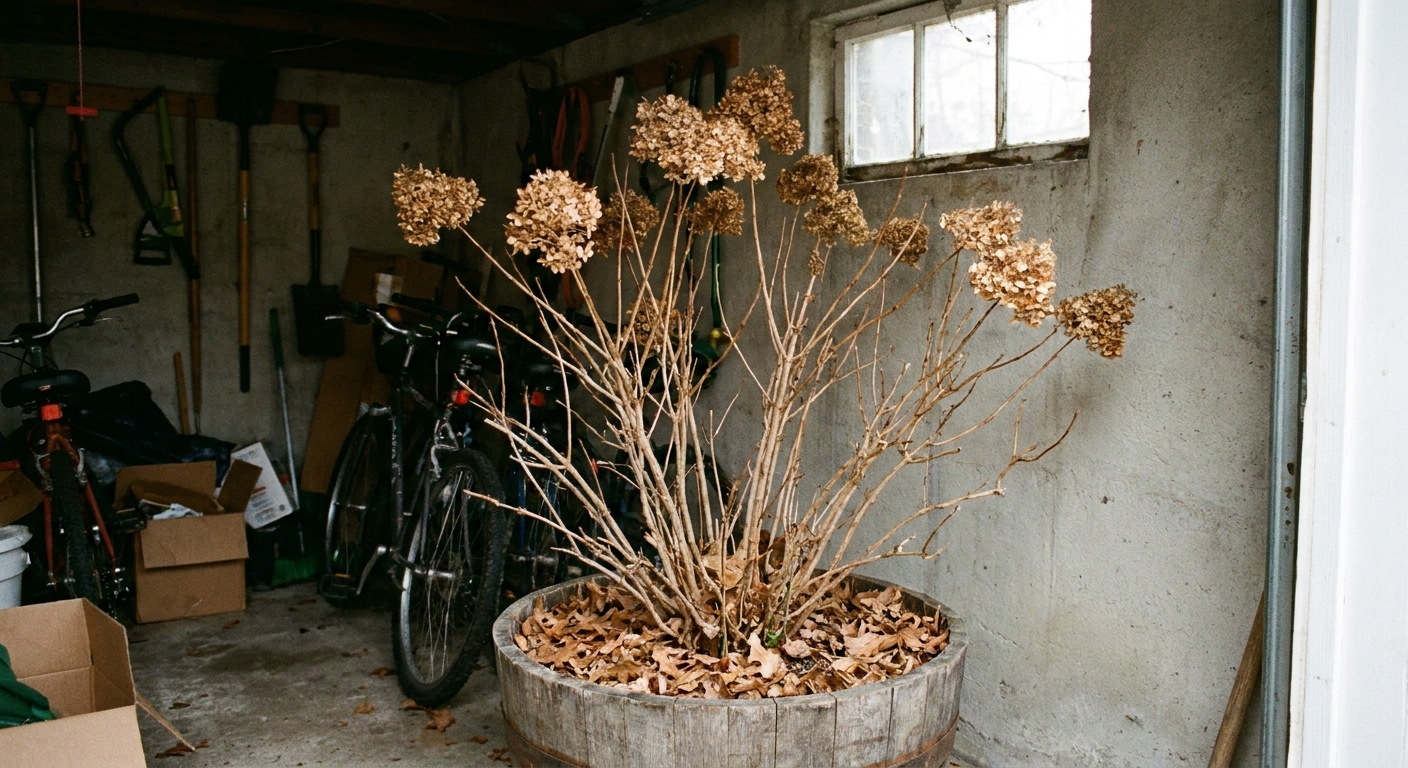
Option 1: Unheated garage or shed
This is my favorite if you have it. An unheated garage stays cold enough to keep the plant dormant but buffers brutal wind and extreme lows.
- Move the pot in after the plant goes dormant.
- Place it near an interior wall if possible, away from heating vents.
- Check moisture monthly. The soil should be barely moist, not dusty dry.
Option 2: Protected outdoor corner with wrap insulation
If you cannot bring it inside, give the pot its own winter coat. Remember, this is about protecting the roots, not the stems.
- Choose a sheltered spot out of wind, such as a corner by the house.
- Wrap the pot sides with insulating material like bubble wrap or thick blankets, then secure with twine.
- Keep the wrap around the container, not tight against the stems.
- Elevate slightly if water tends to pool, but avoid a windy exposed stand.
Container plants often need this kind of root protection that in-ground shrubs simply do not, because the ground itself does the insulating job.
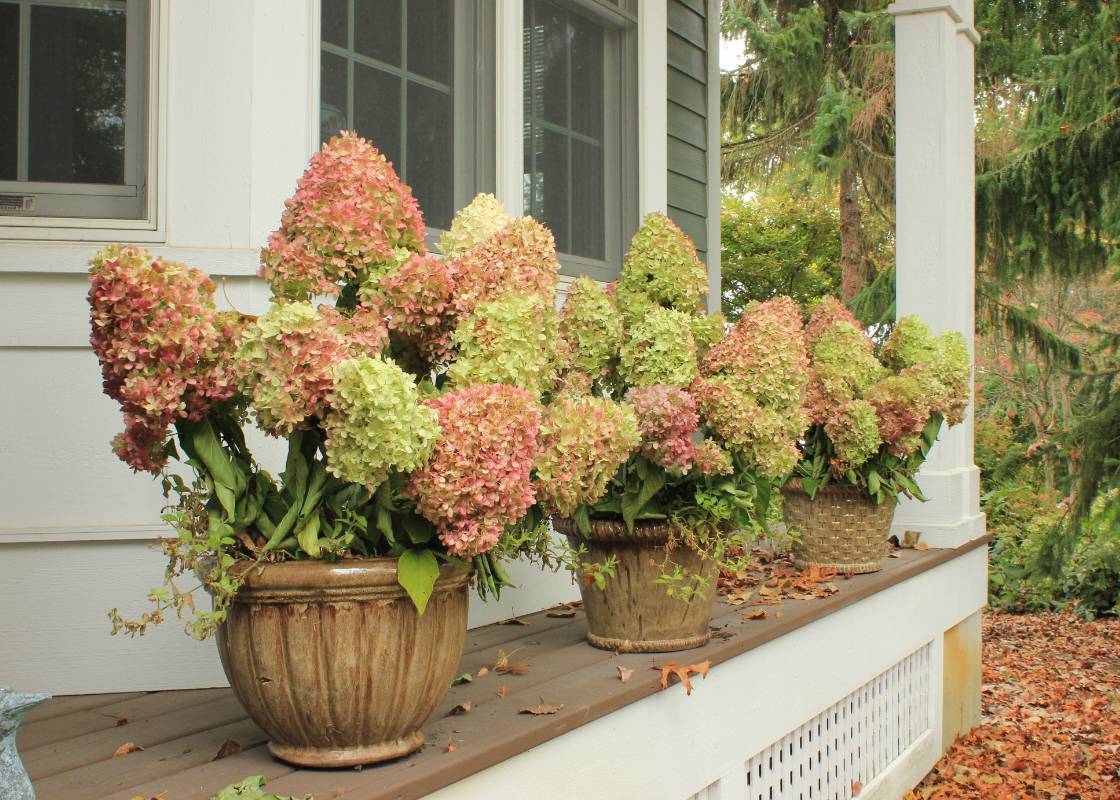
Option 3: Cold but sheltered porch
A covered porch can work in milder climates, especially if it blocks wind and ice. The risk is that pots on porches can still freeze hard in extended cold snaps, so keep an eye on forecasts and be ready to move the pot into a garage if a deep freeze is coming.
Winter watering for stored hydrangeas
Even dormant hydrangeas should not be allowed to desiccate completely. But they also should not sit wet in cold conditions.
- In an unheated garage: check monthly. Water lightly only if the mix is dry a couple inches down.
- Stored outdoors: winter rain or snowmelt may handle moisture. Check during dry stretches or if the pot is sheltered from precipitation.
If the soil is frozen, do not force water into it. Wait until it thaws during a warmer spell, then water modestly.
Spring wake-up: bringing your pot back to life
When temperatures begin to stabilize above freezing, you can gradually reintroduce your hydrangea to outdoor life.
- Move it to a protected spot outdoors for a few days, then to its regular location.
- Resume normal watering as buds swell and growth starts.
- Watch for late frosts. Tender new growth in pots can be more exposed than shrubs in the ground.
If you see dieback on stems in spring, do not panic. Focus first on whether the plant is pushing new growth from lower buds. One important nuance: a hydrangea can “bounce back” with leaves and stems but still bloom lightly, especially bigleaf types that lost flower buds over winter.
Troubleshooting: quick fixes for common container problems
“My hydrangea wilts every day even though I water”
- Check if it is root-bound. If roots are circling densely, it may need a bigger pot.
- Make sure water is soaking the whole root ball, not running down the sides.
- Give afternoon shade during the hottest weeks.
“Water runs straight through the pot”
- The mix may be too dry and hydrophobic. Water slowly, pause, then water again.
- Bottom-watering can help rehydrate. Set the pot in a tub of water for 20 to 30 minutes, then drain well.
“Leaves are yellowing in midsummer”
- First check moisture. Container hydrangeas often yellow from stress, both too dry and too wet.
- If moisture is steady, consider whether the plant has been in the same mix for years. Old potting mix can lose structure and nutrients.
FAQ
Can hydrangeas live in pots long-term?
Yes, as long as they have enough pot volume, consistent moisture, and occasional refreshing of the potting mix. Many do best with periodic upsizing or root pruning and repotting over the years.
Do potted hydrangeas need daily watering?
In warm weather, often yes. In extreme heat or wind, some containers need watering twice a day. Larger pots and partial shade reduce how often you have to water.
Do I need to bring my potted hydrangea into the garage for winter?
In many climates, it is the safest way to protect the root ball from deep freezes. Containers are much more vulnerable to root damage than hydrangeas planted in the ground, especially in areas where pots freeze solid.
Can I store a hydrangea indoors for winter?
A heated indoor space is usually not a good idea. It can break dormancy and stress the plant due to low light and dry air. An unheated garage or similar cold, sheltered spot is a better match for dormancy.