
When to Cut Back Bearded Iris Leaves

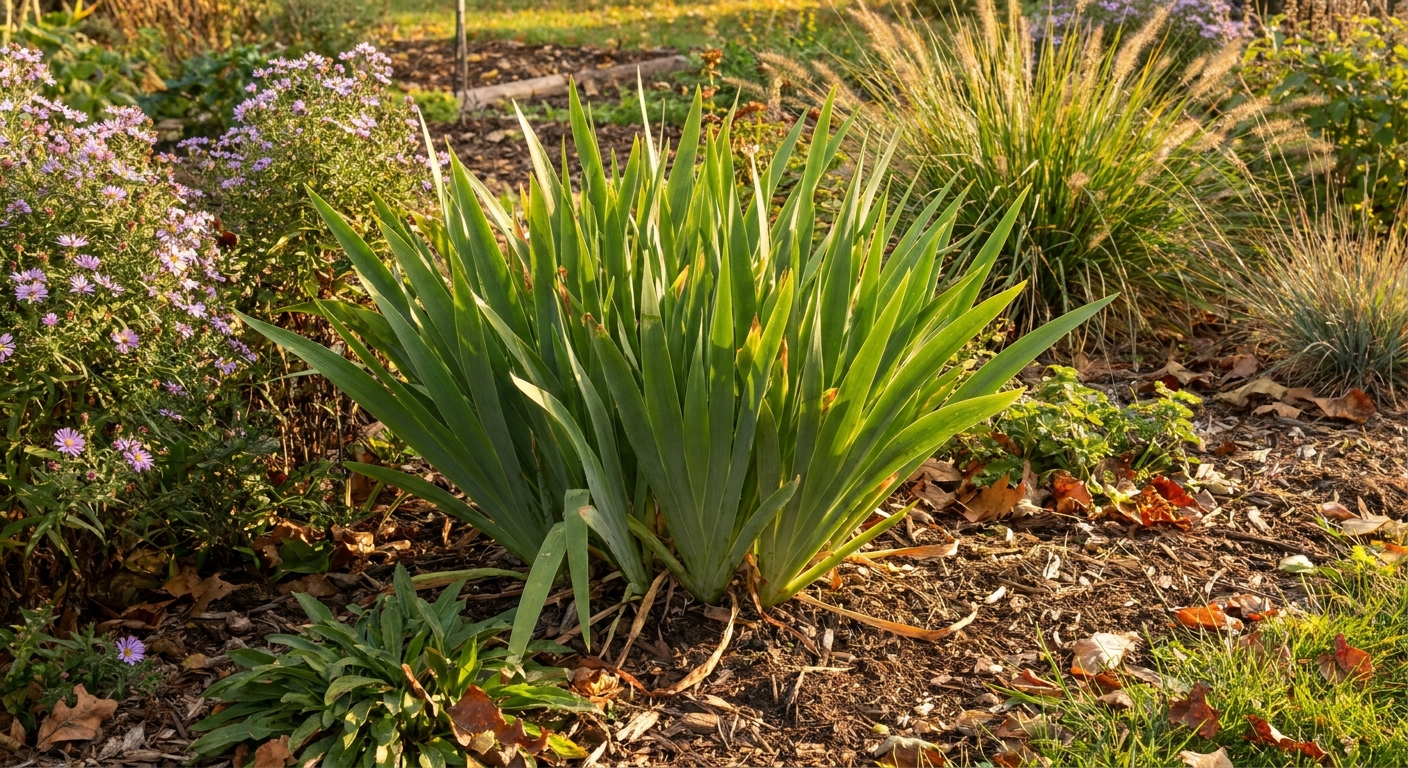
The first time I “tidied up” my bearded irises in midsummer, I felt very proud of myself. Neat fans, clean lines, everything looking freshly groomed. The next spring, those same clumps gave me a whole lot of leaves and not much flower. That was my lesson: with bearded irises, leaf trimming is not just cosmetic. Timing matters because those sword-like green fans are busy fueling next year’s bloom.
This page is about healthy bearded iris clumps that are staying right where they are. No digging, no dividing. Just the smart, seasonal trim and the quick cleanup you do when you spot trouble.
Quick note: This advice is for bearded irises (the ones with rhizomes sitting near the soil surface). Siberian, Japanese, and Louisiana irises have different growth habits and cleanup timing, so do not automatically treat them the same way.

The best time to cut back healthy bearded iris leaves
If your bearded iris clump is healthy and you are leaving it in the ground, the ideal time for a real cutback is fall, after the heat of summer has eased and the plant has had months to photosynthesize and store energy.
A simple timing window that works in most gardens
- Early to mid-fall: When nights cool down and the garden shifts into its slower season. In many areas, that is roughly September through October.
- Before hard winter weather: Try to finish trimming before repeated hard freezes or heavy snow arrives, especially in colder zones where flattened foliage can stay wet for long stretches.
Fall trimming is a balance. You are cleaning up the plant for winter and reducing disease and pest hideouts, but you are also leaving enough foliage to keep photosynthesizing a little longer and to protect the crown area as the weather turns.
How much leaf to leave in a fall fan trim
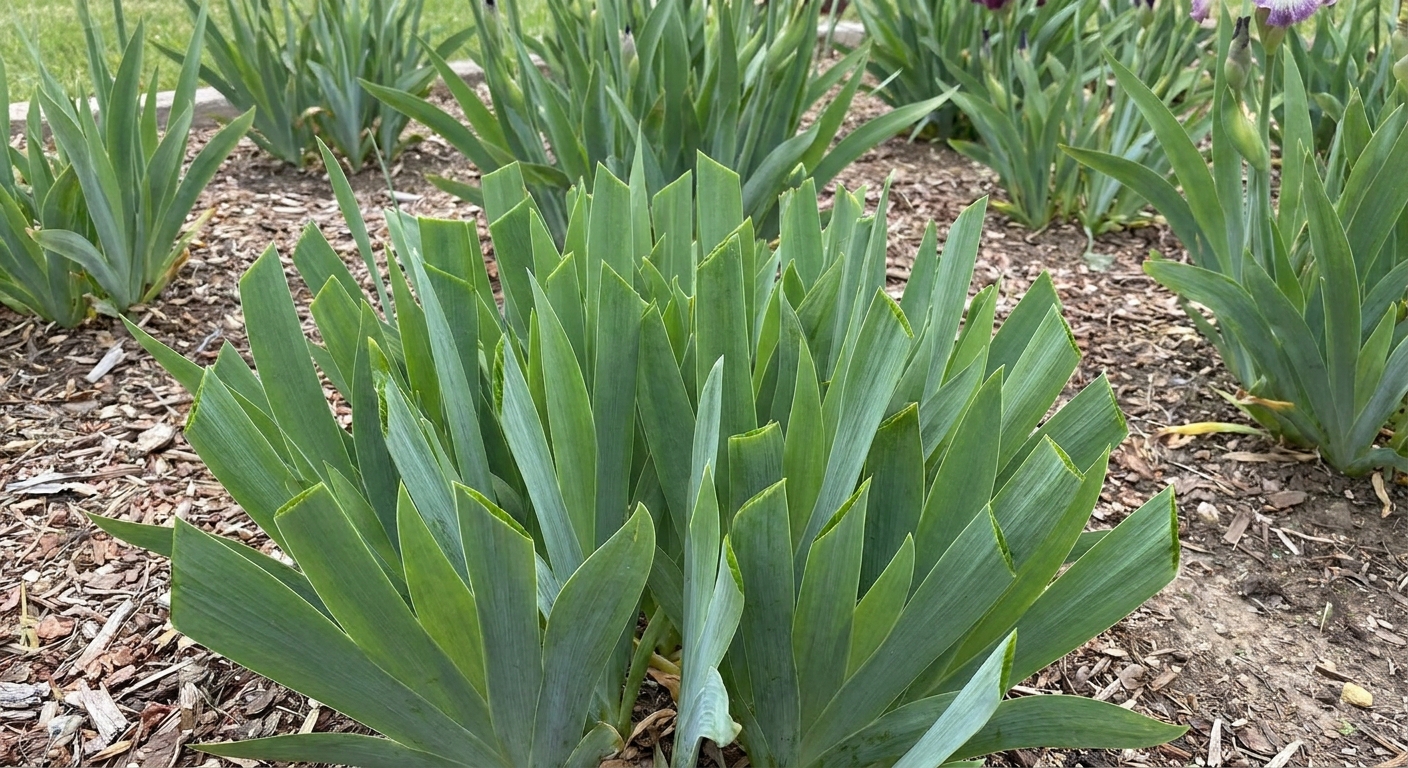
For a healthy clump, you do not want to shave the plant down to the rhizome. The classic, gardener-approved approach is to reduce the height while keeping a sturdy green “solar panel” in place.
The easiest rule to remember
- Trim fans to about 4 to 8 inches tall. In colder climates, many gardeners land closer to 6 to 8 inches. In milder winters, a lighter trim can be fine. Local recommendations vary, so do not be afraid to adjust.
- Keep the fan shape. Make angled cuts so the fan forms a soft “V” or wedge, not a flat-topped crew cut.
That angled cut is not just for looks. It helps rain and irrigation shed off the leaves instead of collecting in a little trough, which can encourage leaf issues as the weather cools.
How to do it without stressing the plant
- Use clean, sharp pruners or garden shears.
- Gather a fan in one hand, then cut the whole bundle at once to your target height.
- Avoid nicking the rhizome or cutting so low that you remove the inner, newest leaves.
Leave the newest growth if you can. Those inner leaves are the plant’s current engine. Older outer leaves are the ones most likely to yellow, flop, or show spots first.
Why a summer haircut can cost next year’s bloom
Bearded irises build next season’s bloom by using their leaves to manufacture and store energy in the rhizome. When you remove too much leaf too early, you shorten that energy-gathering season.
What the leaves are doing after flowering
- Refueling the rhizome: The rhizome is a storage organ, and it needs a full pantry to produce strong bloom stalks next year.
- Setting up next year’s flower buds: Bud initiation typically happens in summer after bloom, but timing can vary by cultivar and climate.
- Growing new increases: Many clumps are also expanding, which costs energy.
So if you give healthy fans a major haircut in summer, the plant often responds with reduced bloom, smaller bloom stalks, or fewer flowers the next spring. You might still get flowers, but you are essentially asking the plant to do the same job with less fuel.
If your irises look a bit ragged in summer, I get it. But for healthy clumps, the most bloom-friendly approach is to remove only what truly needs removing and save the real trim for fall.
Fall trimming vs damaged leaf removal
Here is the key distinction I want you to keep in your back pocket:
- Fall fan trim: A planned, whole-clump tidy where you shorten most healthy leaves to a consistent height.
- Targeted removal: A year-round cleanup where you remove only the leaves or fans that are clearly compromised.
Targeted removal is the “snip with intention” approach. It keeps the plant looking better and can reduce spread of problems, while still protecting next year’s bloom by leaving healthy foliage in place.
When to cut flower stalks and seed pods
Right after bloom, I do one thing almost on autopilot: I remove the spent flower stalk.
- Cut the flower stalk down at the base once flowering is finished. (If you let it form a seed pod, the plant puts energy into seed instead of the rhizome.)
- If you notice seed pods forming, you can clip them off too, unless you are intentionally saving seed.
When to remove spotted leaves (and how)
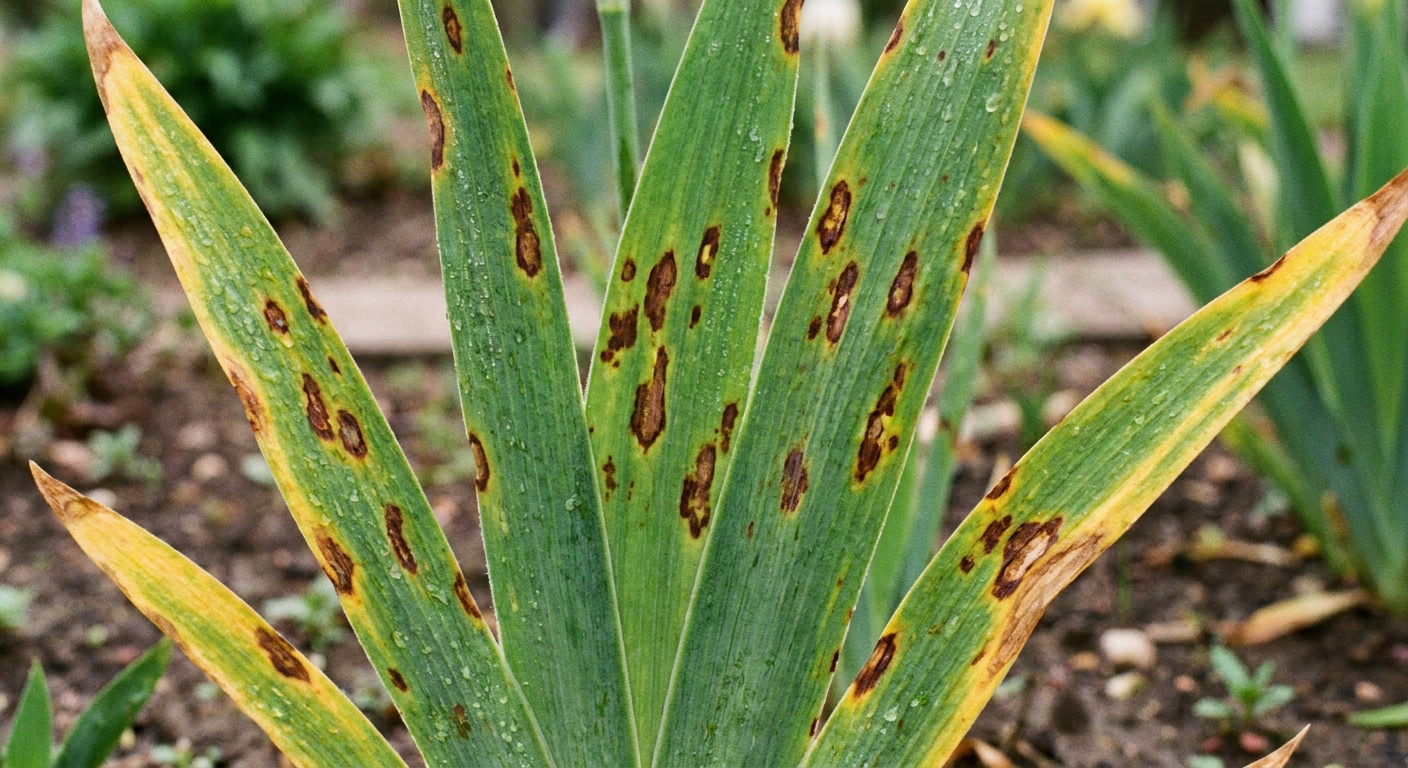
If you see leaf spotting, you do not need to mow the whole clump down in summer. Instead, remove the worst leaves and keep the healthiest fans working.
What to do when you see spots
- Cut off heavily spotted leaves at the base (as low as you can without damaging the rhizome).
- If only the tips are spotted, you can trim just the affected portion and keep the rest of the leaf.
- Do not home-compost suspicious foliage unless you reliably hot-compost. Otherwise, bag it or dispose of it to reduce reinfection.
- Improve airflow by removing dead debris around the clump and avoiding overhead watering late in the day.
Spots are a signal to clean up and reduce leaf wetness, not an automatic order to give your irises a full summer haircut.
When to remove borer-damaged fans
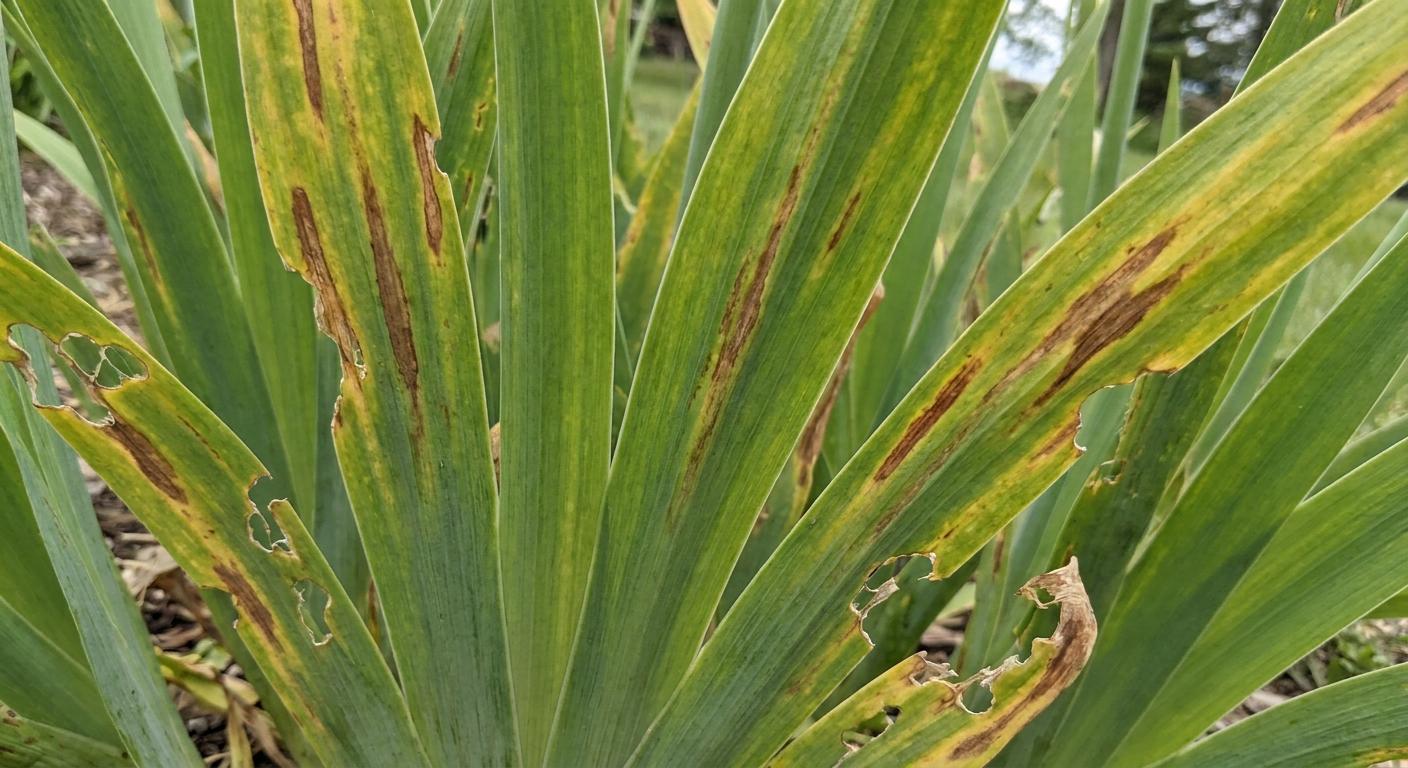
Iris borer damage is different from simple cosmetic wear, but it is also easy to misdiagnose. A mined fan often looks streaked, water-soaked, or ragged, and the leaf may collapse or pull away oddly.
One important caveat: torn or notched leaves can also come from slugs, hail, pets, or mower mishaps. If you are not sure it is borer, look for true tunneling before you assume the worst.
Signs a fan should come out
- Brown streaking or tunneling running lengthwise down the leaf
- A collapsing fan that yellows and loosens in a way that feels more like failure than normal aging
- Soft spots at the base or a sour smell that suggests rot is following damage
How to check before you call it borer
- Split the leaf or fan and look for tunnels and frass (that sawdust-like mess).
- If the fan pulls away easily, take a look at the rhizome for mushy areas.
- Keep in mind borers are regional. Some gardeners never see them. Others fight them yearly.
Targeted cleanup for suspected mining
- Remove the damaged fan down near its base.
- Dispose of it in the trash, not the compost, to avoid carrying pests forward.
- Keep the rest of the healthy fans standing whenever possible.
This is one of those moments where selective pruning is your friend. You are reducing pest pressure without taking away the clump’s ability to recharge.
Fall trim step by step
If your clump is healthy and you are doing the once-a-year fall fan trim, here is the routine I use.
- Wait for fall weather. Pick a dry day so cuts dry quickly.
- Pull away loose, dead leaves first. If it comes away with a gentle tug, it was ready.
- Trim the remaining healthy fans to about 4 to 8 inches. Keep the angled fan shape.
- Rake out leaf litter and old mulch touching the rhizomes. Good airflow around the crown area matters.
- Sanitize tools between clumps if you are seeing any spotting or suspicious damage. A quick wipe or spray with 70% isopropyl alcohol works well.
The goal is a clump that is cleaner, shorter, and less likely to flop into a damp pile, but still green enough to finish the season with strength.
If you garden where winters are mild and growth keeps going, you can often trim later and a bit lighter. I still focus on the same priorities: airflow, cleanliness, and leaving enough healthy leaf to keep the plant strong.
What not to do
- Do not cut healthy clumps down hard in summer just to make the bed look tidy.
- Do not scalp fans to the rhizome in fall unless the foliage is truly collapsing or you are removing specific damaged fans.
- Do not leave piles of trimmed leaves sitting around the clump. Cleanliness is half the point of trimming.
FAQ
Should I cut back bearded iris leaves after they bloom?
After bloom, remove the spent flower stalk, but leave healthy green fans alone. If you see damaged or spotted leaves, remove only those. Save the overall cutback for fall.
Can I cut iris leaves to the ground in fall?
For healthy clumps, it is usually better to leave a few inches of leaf, often around 4 to 8 inches. Cutting to the ground removes more photosynthetic surface than necessary and can stress the plant going into winter.
My iris leaves are flopping over in late summer. Should I trim them?
If the clump is healthy, I would resist a full haircut. You can remove the worst, broken outer leaves and let the upright inner fans keep working until fall trimming time.
Do I need to trim bearded iris leaves every year?
Not always, but many gardeners find a yearly fall trim helps with winter cleanup and reduces overwintering debris. If your clump stays clean and upright, you can keep it lighter and focus on removing only dead or damaged leaves.