
What Do Mushrooms in Garden Mulch Mean?
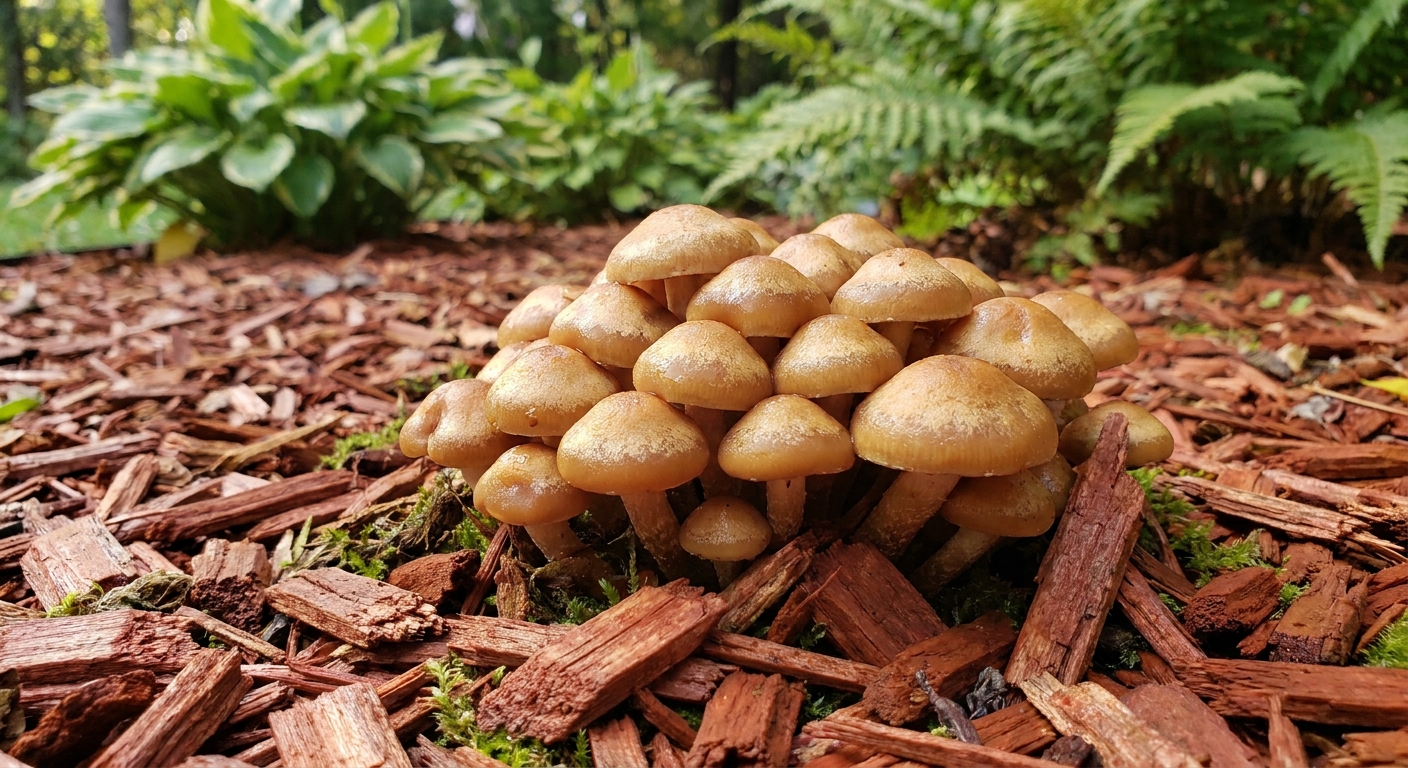
The first time mushrooms appeared in my fresh wood-chip mulch, I panicked a little. I had just finished tucking in my perennials like they were going to sleep, and then suddenly little umbrellas popped up like uninvited guests. But here is the reassuring truth: mushrooms in garden mulch are usually a sign that your mulch is breaking down the way it is supposed to.
One quick caveat up front: mushrooms can also show up when mulch stays consistently damp. The mushrooms themselves are not usually the problem, but they can be a hint to check drainage and watering.

In mulch beds, fungi are almost always working as decomposers, breaking down wood and bark into richer organic matter. That can look messy for a few days, but it is often excellent news for your soil. And since some mulch-bed mushrooms can be toxic if eaten, I treat any unknown mushroom as look-only, especially around kids and pets.
What mushrooms in mulch usually mean
Most mulch-bed mushrooms mean there is active fungal life breaking down the mulch. Think of fungi as the tiny recycling crew of the garden. Wood chips and bark are carbon-rich, and fungi are especially good at breaking down lignin-rich, woody material.
Those mushrooms you see are only the “fruiting bodies” of the fungus, the part that makes spores. The real organism is a web of threadlike growth called mycelium, and it is usually already woven through the mulch long before you spot a single cap.
Why they pop up after rain or irrigation
Fungi fruit when conditions are right, especially when mulch stays moist and temperatures are mild. That is why you might notice mushrooms:
- After a soaking rain
- During humid stretches
- In heavily irrigated beds
- In shaded areas where mulch dries slowly
What the white “webbing” in mulch is
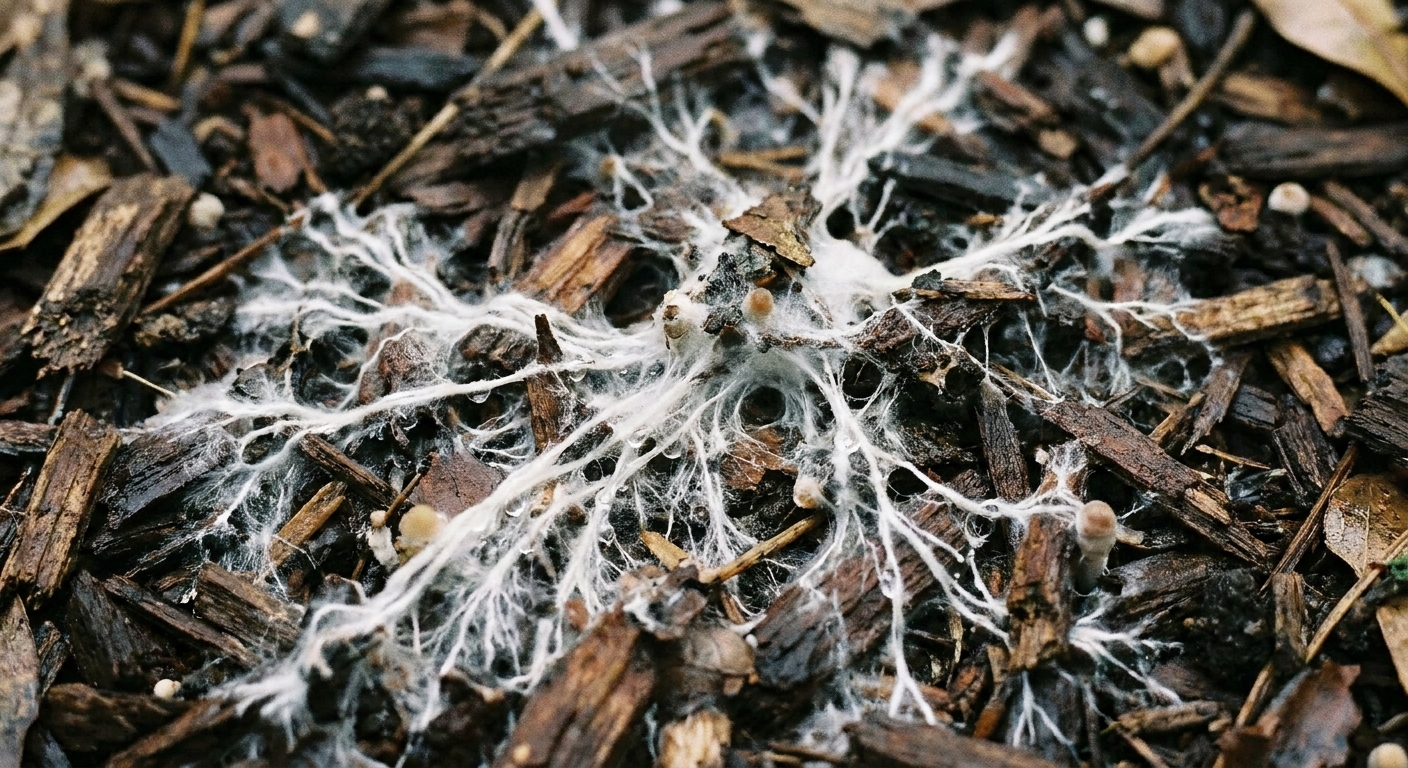
If you pull mulch aside and see white strings or cottony patches, that is typically mycelium. In a mulch bed, that is usually a good sign of decomposition underway, not a plant disease.
Not mushrooms? It might be slime mold
Mulch beds also sometimes get slime molds (often nicknamed “dog vomit slime mold”). They can look alarming, but they are generally harmless to plants and tend to dry up and disappear.
Do mulch mushrooms harm nearby plants?
In most home garden beds, mushrooms growing in mulch do not hurt your plants. They are generally feeding on the mulch itself, not living roots. In fact, fungal activity tends to improve soil over time by:
- Helping convert mulch into humus and organic matter
- Supporting soil structure and water retention
- Feeding beneficial soil life that plants depend on
The main indirect issue to know
Fresh wood chips and bark are carbon-heavy. While microbes break them down, they can temporarily “borrow” nitrogen right at the surface. This is called nitrogen immobilization.
For most established beds, it is minor because chips are sitting on top of the soil, and plant roots are feeding deeper. It is more likely to matter if you mix fresh wood chips into soil, or if you are trying to seed or plant into a layer of fresh chips.
If you see pale growth or slow plants in a heavily mulched bed, consider:
- Keeping mulch at a practical depth (generally 2 to 4 inches)
- Topdressing with compost around heavy feeders
- Using an organic, balanced fertilizer for hungry annuals
When to worry
It is worth a closer look if you also notice:
- Wilting that does not improve with watering
- Soft, dark, collapsing stems at the soil line
- A sour, anaerobic smell from the bed
- Mulch that stays saturated or you see standing water after irrigation or rain
Those symptoms are more often about waterlogged soil, poor drainage, or stem rot than the mushrooms themselves. Mushrooms may simply be taking advantage of the moisture.
Why mulch attracts mushrooms
Mulch is basically a buffet for decomposers. Fungi love it because it offers:
- Food: lignin and cellulose in wood and bark
- Moisture: mulch holds water and reduces evaporation
- Shade: chips protect fungal networks from sun and wind
- Stable temperatures: more temperature-stable than bare soil
Did they come from the mulch?
Sometimes yes. Spores are everywhere, but mulch can also arrive with fungal fragments already present, especially wood chips that sat damp for a while. That does not mean the mulch is “bad.” It usually means it is starting to compost, which is what we want, just not always what we want to look at.
A note on artillery fungus
One mulch-related nuisance worth knowing: artillery fungus can shoot tiny, sticky dark spots onto siding, decks, and cars. It is not common everywhere, but if you see tar-like specks that are hard to scrub off near mulched areas, it is worth looking into and adjusting mulch placement and type near buildings.
Should you remove mushrooms?
This is one of those gardening moments where your goal matters. If your main concern is plant health, you can usually leave them alone. If your concern is pets, kids, guests, or simple aesthetics, you may want to tidy them up.
Leave them if:
- You do not have pets or small children tempted to taste-test
- The mushrooms are few and not in a high-traffic area
- You are happy letting nature do its soil-building thing
Remove them if:
- You have dogs that eat random yard “snacks”
- The mushrooms are slimy, smelly, or attracting flies
- You are hosting people and do not want the look
- They are popping up daily and you want fewer visible mushrooms
How to remove mushrooms safely
You do not need anything fancy. Here is my simple approach:
- Wear gloves if you have sensitive skin.
- Pluck or scoop mushrooms at the base as you notice them.
- Bag and trash them if pet safety is a concern. Avoid tossing them into areas pets can access.
- Rake lightly to disturb the surface and help it dry.
Will they come back?
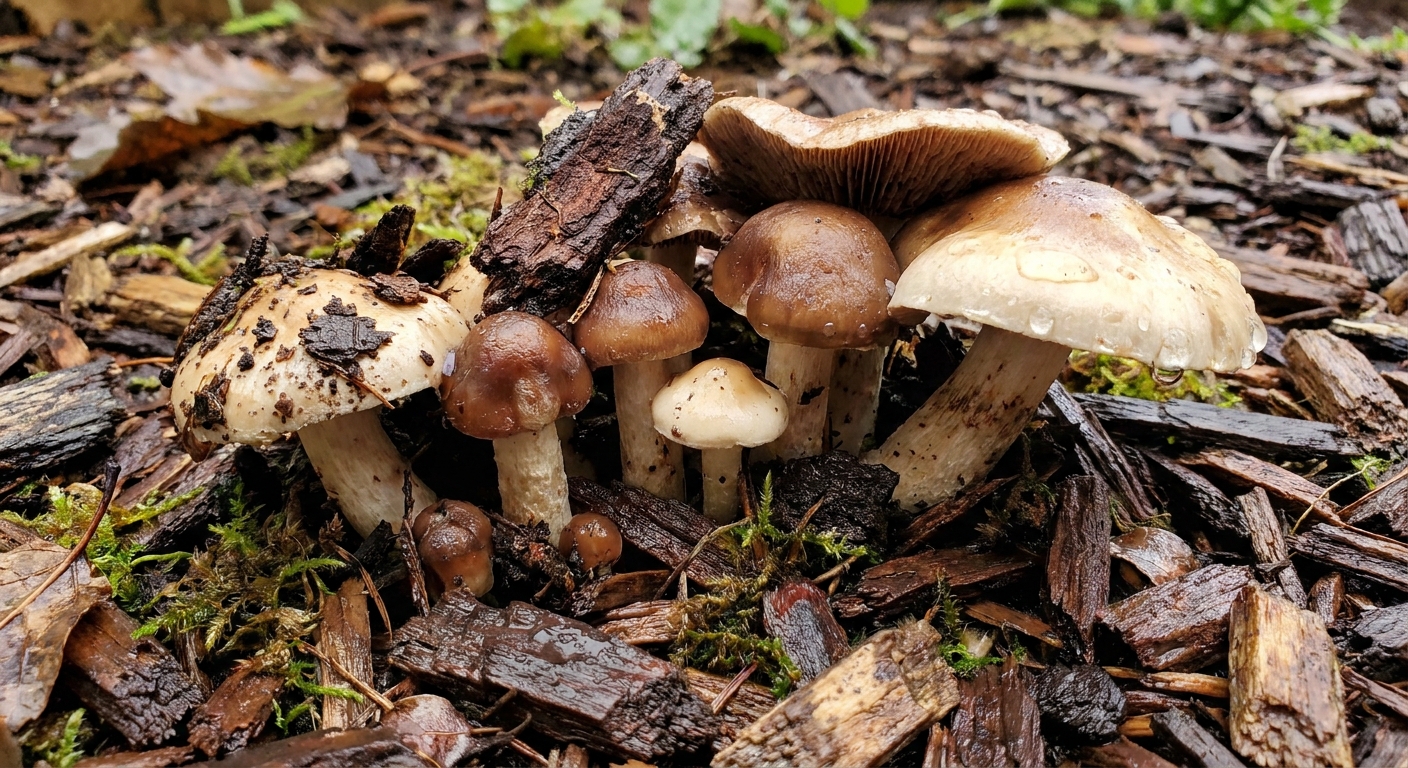
Possibly, especially during wet weather. Removing the mushrooms does not remove the mycelium in the mulch, and spores are everywhere. Think of removal as a way to reduce what you see and, locally, reduce spore release, not as a permanent fix.
Pet and kid safety
Because many mushrooms are hard to identify and some are toxic, I treat unknown mushrooms the same way I treat unknown berries: do not eat, and do not let pets eat them either.
If you have a dog that eats everything
If your dog is a joyful, indiscriminate forager, it is safest to remove mushrooms as soon as you see them. Also consider these practical steps:
- Supervise outdoor time during rainy weeks when mushrooms flush.
- Fence off fresh mulch in tempting areas until it settles.
- Keep mulch pulled back from paths where dogs sniff constantly.
If ingestion happens
If a pet eats an unknown mushroom, contact your veterinarian or a pet poison hotline promptly. If you can do so safely, take a clear photo of the mushroom and note where it was growing. Do not delay seeking help while trying to identify it yourself.
Reduce mushrooms gently
You cannot sterilize an outdoor bed, and you would not want to. But you can make conditions less “mushroom perfect.” The goal is not to eliminate fungi, it is to reduce the fruiting bodies.
Let the surface dry
- Water in the morning so the surface dries during the day.
- Avoid frequent shallow watering. Water deeply, less often, when your plants need it.
- Improve drainage if the bed stays soggy for days.
Refresh mulch the right way
- Rake compacted mulch to increase airflow.
- If mulch is matted and constantly wet, thin it to a more breathable layer.
- Keep mulch a couple inches away from plant bases, and avoid mulch volcanoes around shrubs and trees.
Consider mulch type
Wood chips and bark are naturally fungus-friendly. That is not a flaw. But if mushrooms bother you year after year, you might sometimes see fewer fruiting bodies with:
- A slightly coarser chip that dries faster at the surface
- Mulch that is not already heavily decomposed when you apply it
Skip fungicides for this
Fungicides are rarely appropriate for decomposer mushrooms in mulch. They do not fix the underlying moisture and airflow conditions, and they can disrupt beneficial soil life. Targeted fungicide use is best reserved for managing specific plant diseases, not routine mulch mushrooms.
Common mulch-bed fungi
I am not going to play armchair mushroom ID with your garden, because visual ID can be tricky and mistakes matter. But it helps to know the broad categories gardeners commonly see in mulch beds:
- Small brown or tan caps: very common decomposers in chips and bark, usually short-lived.
- Inky, dissolving caps: mushrooms that seem to melt into black goo as they age.
- Bright yellow or orange clusters: can look dramatic in mulch, still often decomposers.
- Stinky, odd shapes: some fungi smell foul to attract flies that spread spores.
If you need certainty because of pet exposure, consider reaching out to a local extension office or mycology group with clear photos and your region.
Quick checklist
- Meaning: Your wood or bark mulch is breaking down, which is normal and often beneficial.
- Plant risk: Usually low. Mushrooms in mulch rarely harm established plants.
- Remove or not: Remove for pet safety or aesthetics. Otherwise, leaving them is fine.
- Reduce: Let the surface dry between waterings, fluff compacted mulch, avoid overly thick layers, and keep mulch off stems and trunks.
FAQ
Do mushrooms mean my mulch is rotten?
Not in a bad way. It usually means the mulch is decomposing, which is what turns wood into soil-building organic matter. If the mulch smells sour and stays slimy, that points more to waterlogging than “rot.”
Should I replace the mulch if mushrooms keep coming back?
Usually no. Replacing mulch rarely solves it long-term because spores are everywhere and fungi will return when conditions are moist. Instead, focus on watering practices, mulch depth, and airflow at the surface.
Are mulch mushrooms a sign of overwatering?
They can be. Mushrooms are more likely when the mulch stays consistently moist. But they can also appear during rainy periods even if your watering habits are perfect.
Can I compost the mushrooms I pull up?
If pets and kids cannot access your compost pile, it is generally fine to compost them. If pet safety is a concern, I recommend bagging and trashing them so they do not become a tempting snack.
Will mushrooms damage landscape fabric?
Fungi can grow on organic debris that collects above fabric, but they are not typically eating the plastic itself. That said, landscape fabric can trap moisture and debris, creating conditions that encourage fungi. In garden beds, I prefer breathable, soil-friendly approaches like cardboard sheet mulching under chips when appropriate.