
Dog Vomit Slime Mold in the Lawn

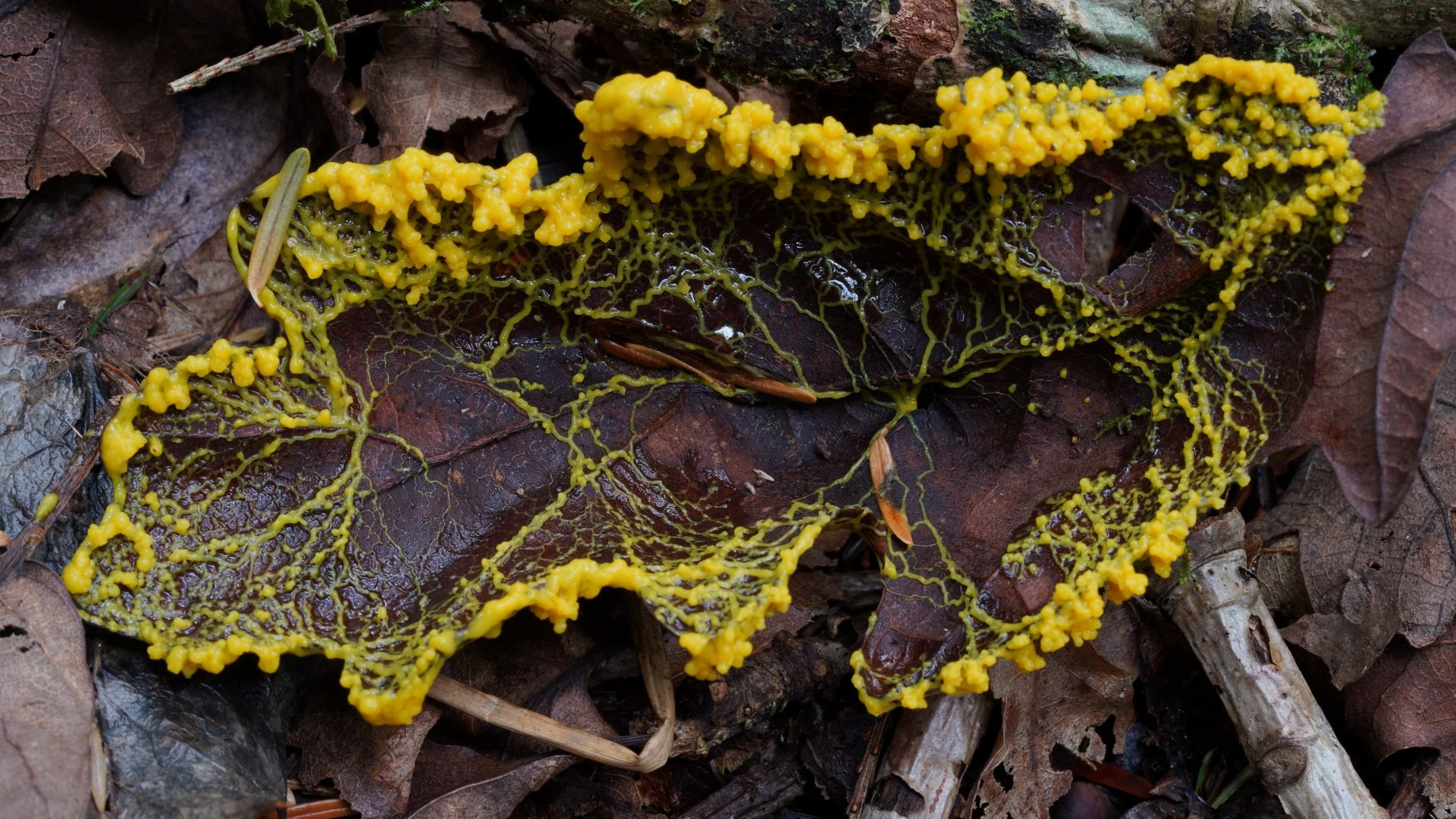
The first time I saw it, I honestly thought a neighborhood dog had been having a rough morning in my yard. Overnight, a weirdly bright yellow, foamy looking patch appeared like someone spilled scrambled eggs on the grass. If you are staring at something similar right now, take a breath. You are probably looking at dog vomit slime mold, most commonly Fuligo septica.
Despite the nickname, this is not dog related, and it is not a mushroom. It is a quirky little visitor that tends to show up right after warm rain or heavy irrigation, then disappears as quickly as it arrived.

What it is
Fuligo septica is a slime mold, which means it is not a fungus and not a plant. Slime molds are in a different group of organisms entirely and behave more like tiny roaming recyclers than like mushrooms.
When conditions are moist, slime molds can form a visible, spreading mass called a plasmodium. It creeps slowly across whatever surface is handy, grass blades, mulch, leaf litter, even patio edges, feeding on microbes such as bacteria, yeasts, and other microorganisms living in decaying organic material.
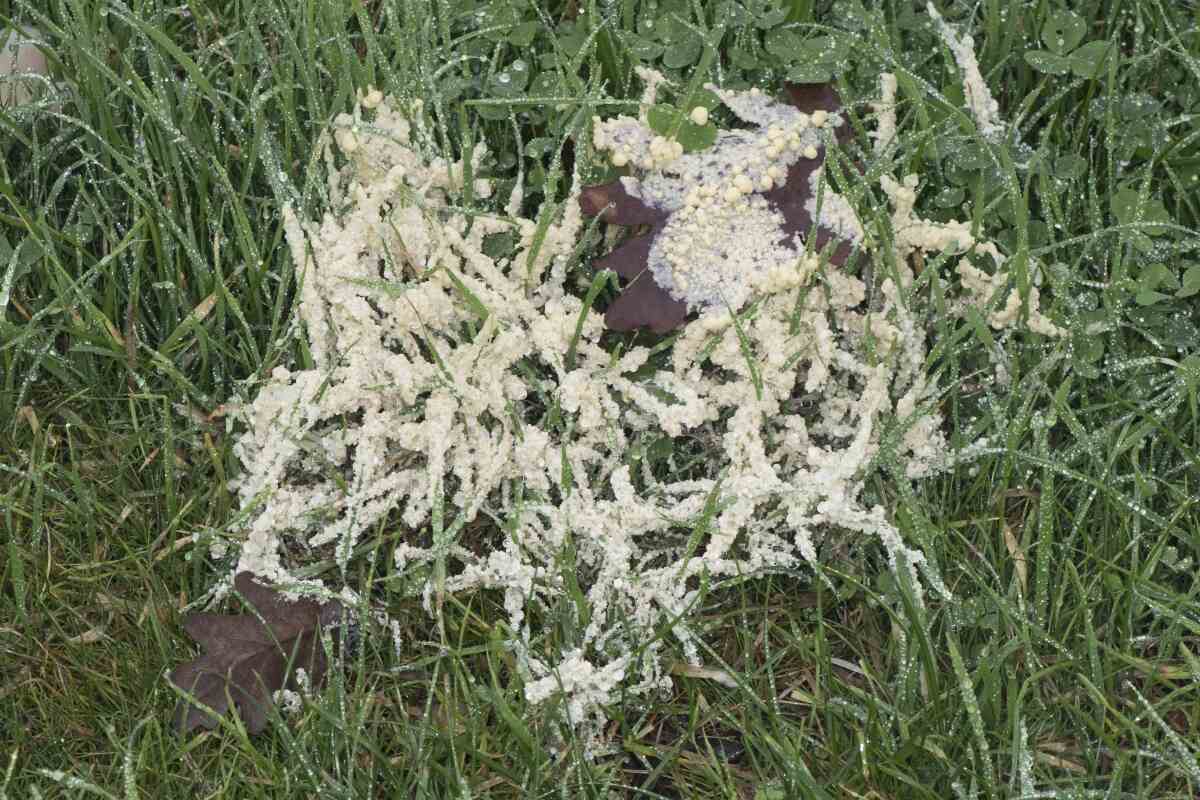
Then, as things dry out, it shifts into a powdery, crusty stage that produces spores. That is often when it looks tan, beige, or dull yellow and more like a dried sponge than a foamy blob.
How to spot it
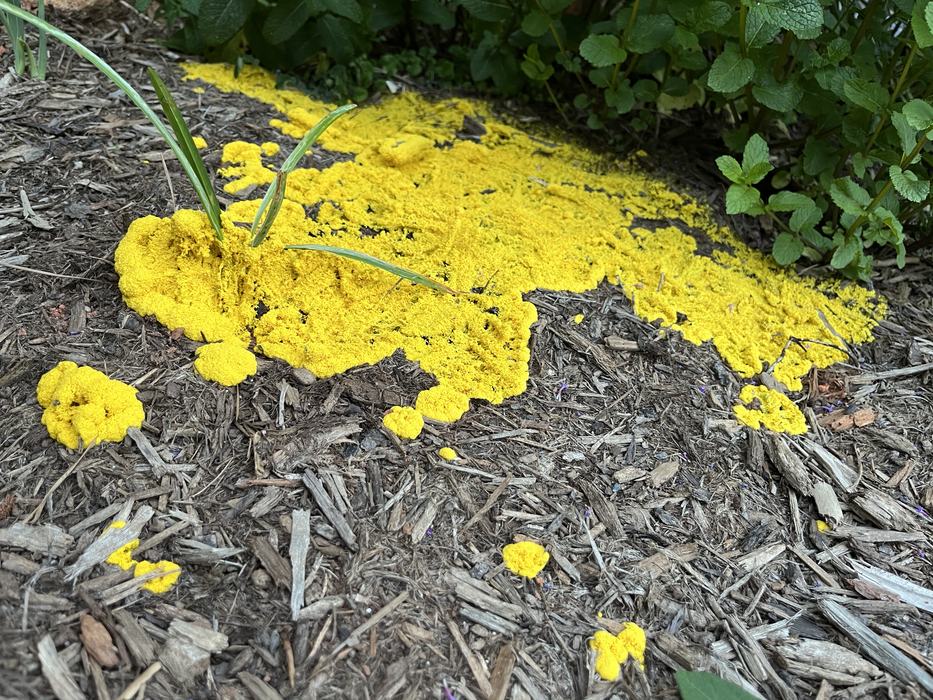
Dog vomit slime mold is famous for being startlingly visible, especially on a neatly mowed lawn.
- Color: bright yellow to mustard, sometimes cream or tan as it ages
- Texture: foamy, lumpy, or like a splattered omelet when fresh, then crusty or powdery later
- Timing: often appears after wet weather, humid nights, or frequent irrigation
- Location: commonly on lawns near mulch beds, rotting wood, thick thatch, or shady moist spots
- Speed: seems to “appear overnight” because the visible stage develops quickly
Does it hurt grass?
In most cases, no. Dog vomit slime mold is generally considered harmless to turf because it is not feeding on the grass itself. It is using the lawn surface as a temporary stage while it consumes microbes associated with organic debris.
That said, it can smother grass blades briefly if the patch is thick and the weather stays damp. You might see the grass underneath look flattened or slightly yellowed for a short time. Once the slime mold dries up and is broken apart, the grass typically recovers with normal sun and airflow.
Is it risky for pets or kids?
Slime molds like Fuligo septica are not usually a serious hazard in a yard, but I treat them the way I treat anything unknown and spore producing in the garden: avoid direct contact and especially ingestion.
Simple safety steps
- Keep curious dogs from eating it. The biggest risk is a pet who decides this odd blob is a snack.
- Supervise kids. Little hands love weird textures, and then those hands go straight to faces.
- Wear gloves if you handle it. Mainly to avoid irritation and to keep spores off your skin.
- Wash hands after yard work. Always a good habit, slime mold or not.
If your dog did eat some and now seems unwell, call your veterinarian for guidance. Most dogs that mouth it will be fine, but it is worth checking in if there is vomiting, drooling, lethargy, or any unusual symptoms.
How to get rid of it
My favorite “treatment” is also the simplest: dry it out and break it up. Because it is a temporary organism responding to moisture, you usually do not need any sprays.
Step by step
- Wait for a drier moment if you can. If the patch is very wet and gooey, it is messier to move around.
- Gently break it up. Use a rake, a broom, or even a stick to crumble it and spread it thin so it dries faster.
- Optional: lift and toss. If you want it gone immediately, scoop the bulk into a bag and dispose of it. (Avoid shaking it around once it is powdery.)
- Rinse grass blades. A light spray of water can knock residue off, but do not soak the area again. The goal is drying and airflow.
- Mow later, not immediately. If the slime mold is in the spore stage, mowing right away can puff spores into the air and spread them around. Wait until it is mostly gone or scoop first.
Will it come back?
It might, especially in warm, humid stretches. Slime molds pop up when the micro conditions are right: moisture plus organic matter. Even if you remove the visible patch, spores can be present in the environment already.
The good news is that repeat appearances still do not usually mean your lawn is doomed. It is more like nature reminding us that lawns, mulch, and soil are living systems.
What it says about your yard
When dog vomit slime mold shows up, it is often a sign of plentiful organic material and consistent moisture at the surface. Common contributors include:
- mulch nearby that stays damp
- tiny bits of leaf litter tucked into the turf
- thicker thatch that holds moisture
- shaded areas that dry slowly
I do not consider it a “lawn problem” so much as a “yard ecology moment.” It is part of the decomposition crew, visiting briefly and moving on.
FAQ
Is dog vomit slime mold a fungus?
No. It is a slime mold, which is different from fungi. It can look fungus-like because it produces spores, but it is not a mushroom and does not behave like typical lawn fungi.
Do I need fungicide?
Usually, no. Fungicides are not typically helpful here, and most patches resolve with drying and gentle physical removal.
Can it stain sidewalks or mulch?
It can leave a bit of residue when it dries, especially on light surfaces. A stiff brush and water usually takes care of it. Try to scrub gently so you do not grind spores into porous concrete.
How long does it last?
Often just a few days, sometimes less, depending on weather. Once it dries, it stops “traveling” and breaks apart easily.
My take as an organic gardener
If you are used to thinking “yellow patch equals disease,” this one can really spook you. But dog vomit slime mold is one of those odd backyard visitors that looks far worse than it is. Keep pets from snacking on it, break it up, let the sun do its thing, and your lawn should bounce right back.
And if you catch me in the yard talking to my ferns while I rake up a mustard-colored blob, just know this is perfectly normal behavior in my garden universe.