Tomato Sunscald: White Patches on Green Fruit

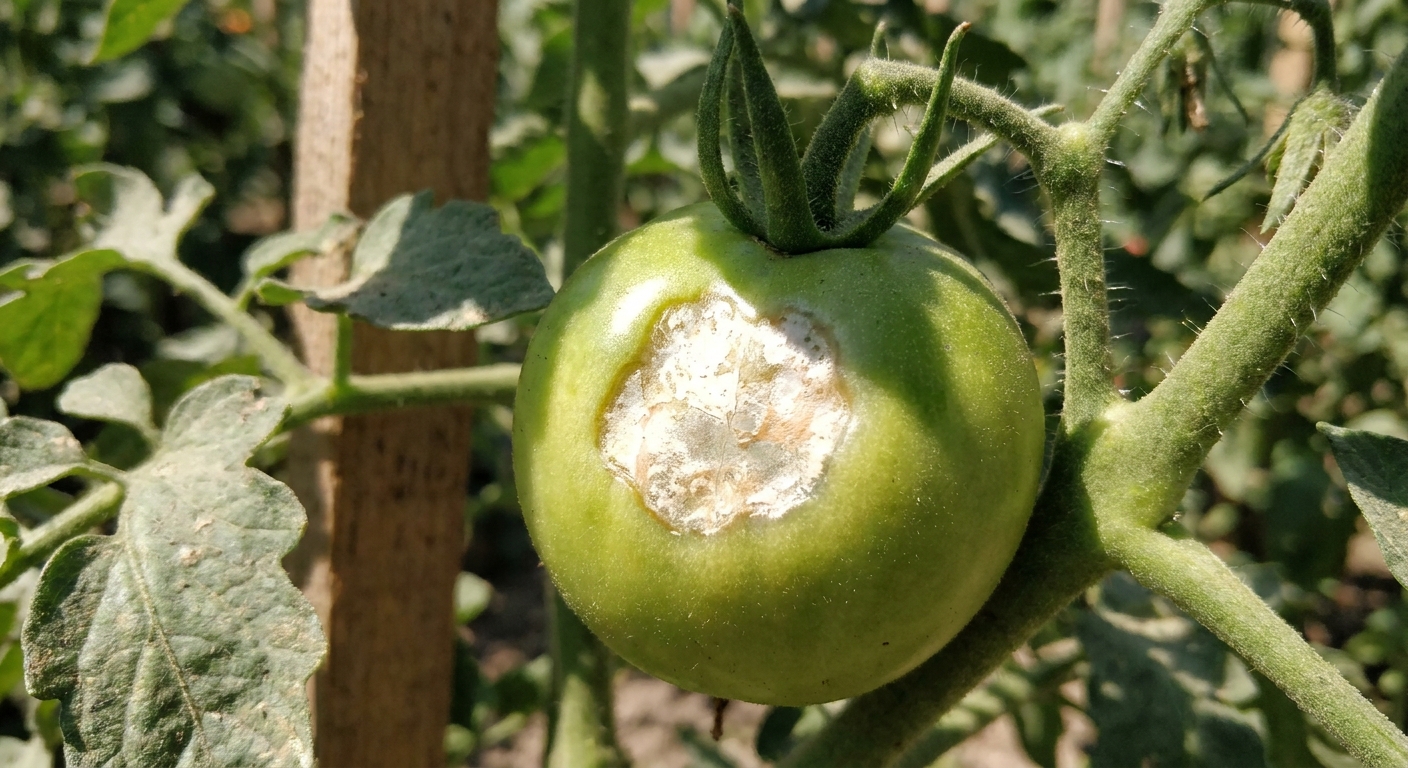
The first time I saw it, I thought a bird had pecked my tomatoes and left a weird bleached bruise behind. Instead, it was something far less dramatic and way more common: sunscald, basically a tomato sunburn. It often shows up as a white to tan patch on the sun-facing side of green fruit, especially right after a heat wave or after you have lost a chunk of leafy cover.

What sunscald looks like
Tomato sunscald usually appears on fruit that is still on the plant, often when it is green or just starting to blush. Classic signs include:
- A pale patch that starts white or light yellow on the side that gets the most direct sun.
- The spot can turn tan, papery, or leathery over time.
- The area may become slightly sunken and feel tougher than the surrounding skin.
- In severe cases, the damaged tissue later becomes a soft entry point for mold or rot.
That “leathery patch on the sunny side” detail matters. Sunscald is less about the whole plant and more about a specific fruit surface getting too much direct radiation and heat.
Why it happens
Tomatoes are sun lovers, but the fruit itself prefers a bit of leafy shade. Sunscald happens when fruit that developed under canopy cover suddenly gets exposed.
Common ways that canopy disappears:
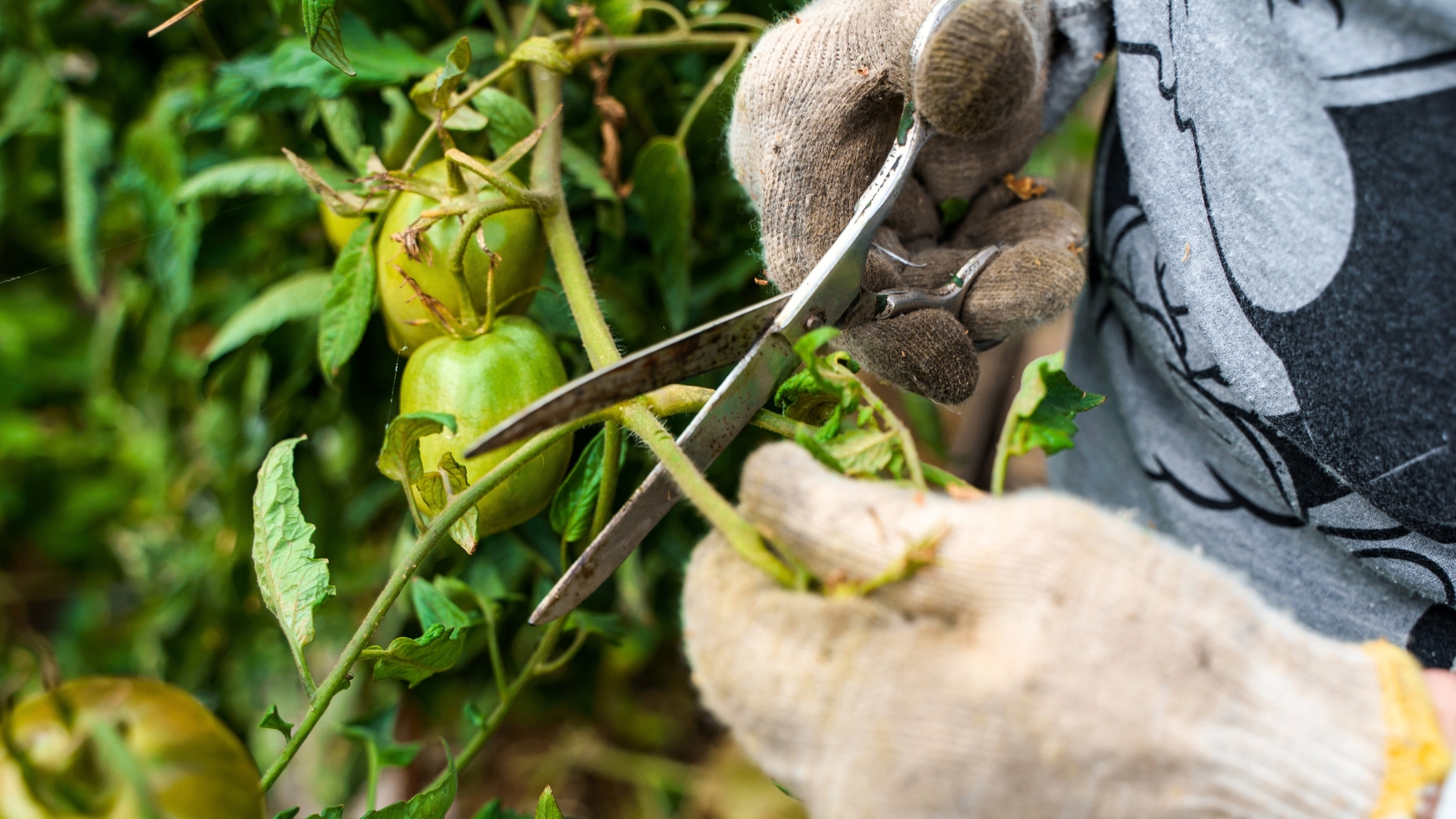
- Over-pruning, especially removing lots of foliage around fruit clusters. This is a common issue on fast-growing indeterminate tomatoes when you get a little too enthusiastic midseason.
- Diseases that cause defoliation, like early blight or septoria leaf spot.
- Insect pressure that strips leaves or weakens the plant.
- Storm or wind damage that snaps stems and removes cover.
- Natural leaf drop on stressed plants during hot, dry spells.
Once the fruit is exposed, a string of bright, high-UV days can bleach and damage the skin and underlying cells. That patch will not return to normal.
Can they still ripen?
Sometimes yes, and sometimes the best answer is “ripen, but trim.” Here is how I decide what to do.
Fruit that can ripen
If the tomato is otherwise firm and healthy, it can often finish ripening, especially when:
- The sunscald patch is small.
- The tomato is mature-green, meaning it is full size and glossy, with seeds developed inside. At this stage it usually ripens well off the vine.
- There is no softness, leaking, fuzzy mold, or bad smell.
When it is ripe, you can usually cut away the tough or discolored area and eat the rest. The flavor may be slightly flatter near the damaged tissue, but the unaffected flesh is typically fine.
Fruit to remove
Compost or discard tomatoes that have:
- A large patch that is deeply sunken or cracking open.
- Softening or water-soaked tissue around the pale spot.
- Mold growth or secondary rot setting in.
Food-safety note: if there is mold or soft rot, I do not try to trim around it. I toss it.
One practical tip: picking sunscalded fruit a bit earlier than you normally would, once it reaches mature-green or first blush, often helps reduce the chances of that damaged patch turning into a rot spot. It will not reverse the burn, but it can keep the worst of the heat off the injured area.
Sunscald vs. lookalikes
These problems get mixed up constantly because they can all show up in the same hot, stressful weather. Here is how to tell them apart in the garden.
Sunscald
- Where: On the sun-facing side of the fruit.
- Look: A white to tan bleached patch that can become leathery.
- Cause: Fruit exposure after leaf loss plus intense sun and heat.
Cracking
- Where: Often around the shoulders near the stem (concentric rings) or as radial cracks from the stem outward.
- Look: Splits in the skin, not bleached patches.
- Cause: Rapid swelling from irregular watering or big rain after dry soil.
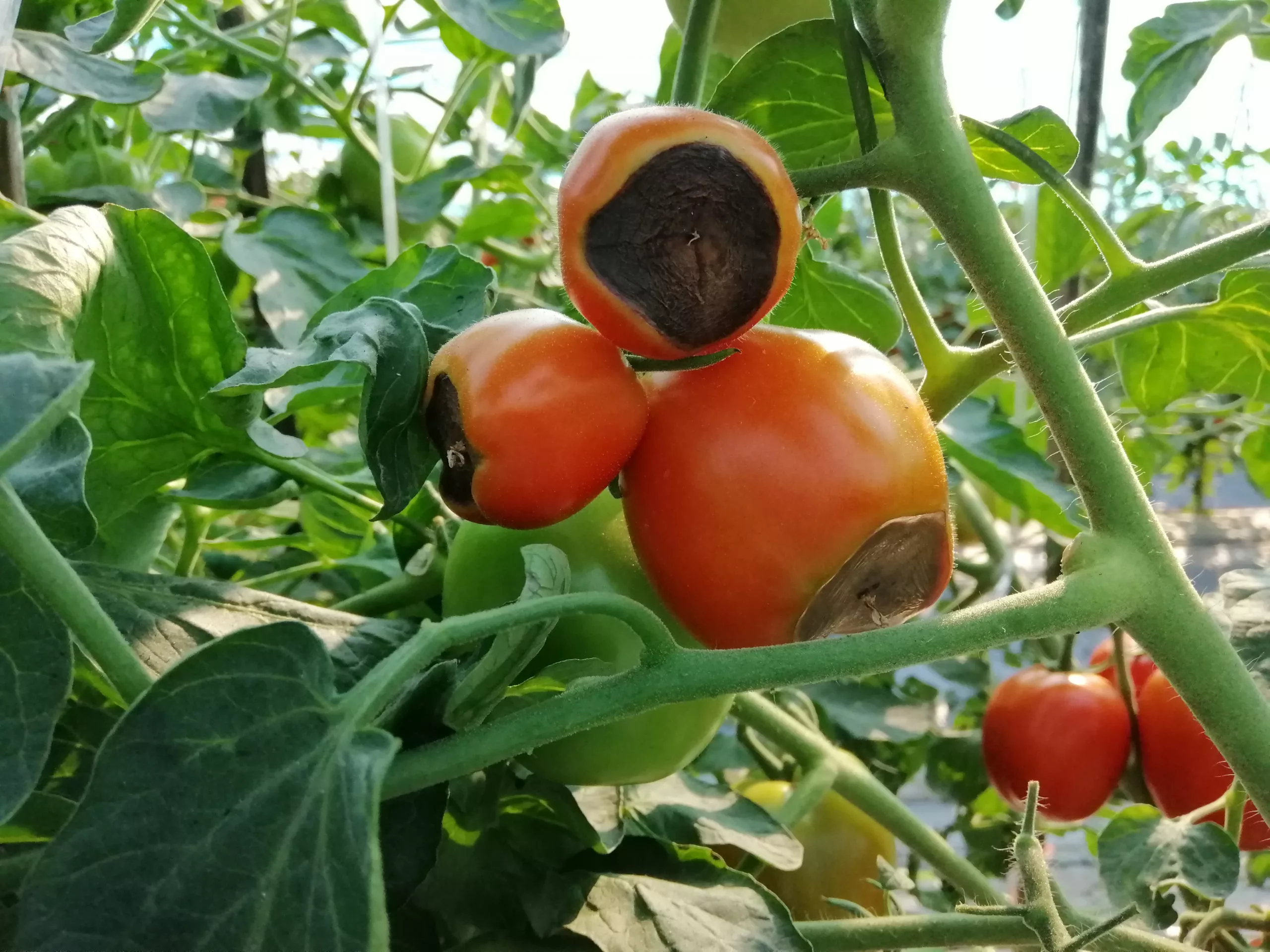
Blossom end rot
- Where: On the bottom of the fruit, opposite the stem.
- Look: A dark, sunken spot that starts leathery and can turn black.
- Cause: Calcium uptake disruption, usually triggered by uneven moisture, root stress, or excessive nitrogen.
Leaf scorch
- Where: On the leaves, not the fruit.
- Look: Browned, crispy edges or patches, sometimes after heat, wind, or drought stress.
- Cause: The leaf tissue dries out faster than the plant can supply water.
If the damage you are worried about is on the fruit itself, and it is pale and on the side getting the most sun, sunscald rises to the top of the suspect list.
What to do now
Once a tomato has sunscald, the spot will not return to normal. The goal is to protect the rest of the crop and prevent secondary rot.
1) Add shade again
- Stop heavy pruning during hot weather.
- If you must prune for airflow, do it gradually and leave fruit clusters some cover.
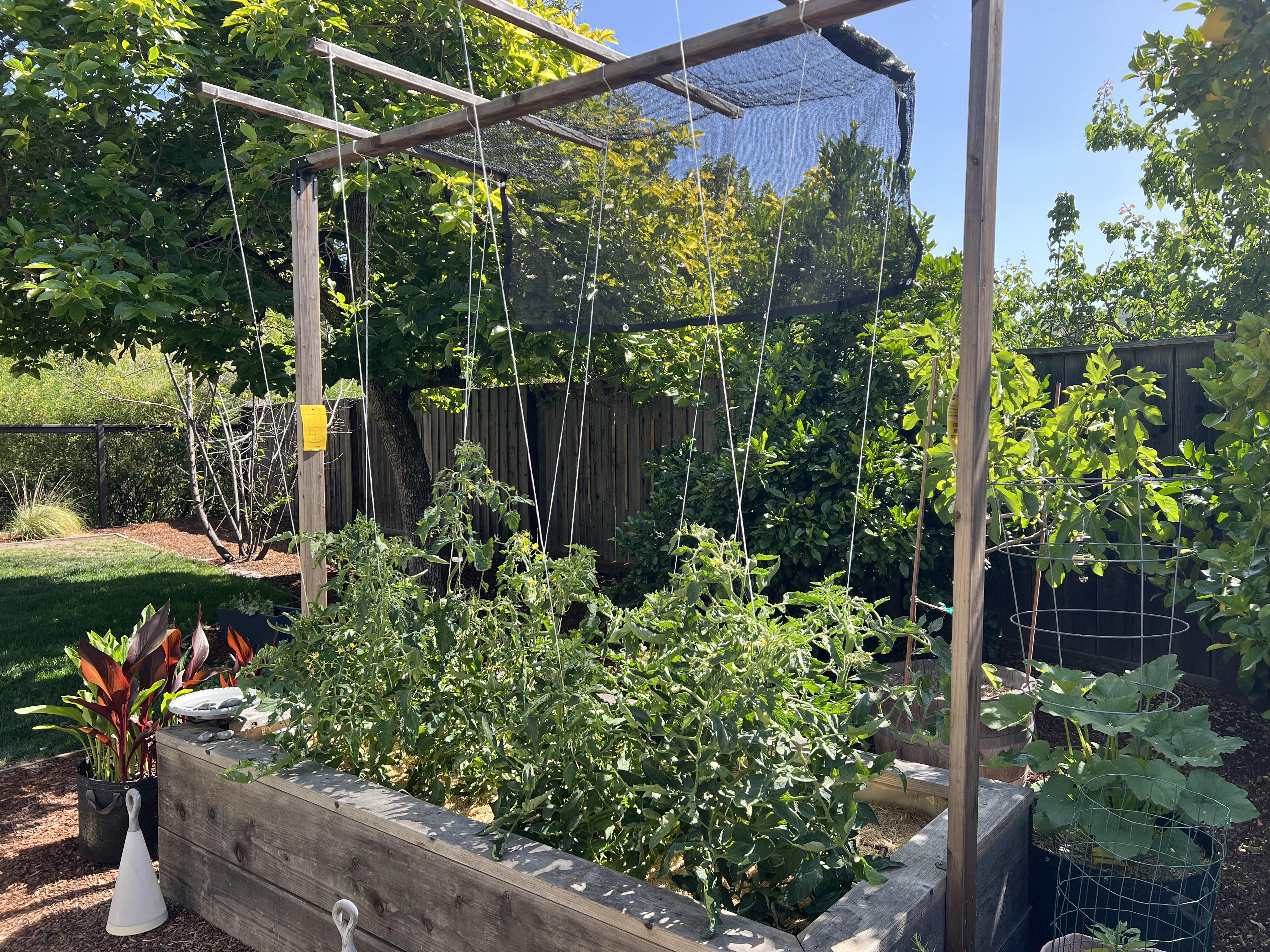
- For exposed clusters, you can use shade cloth or a light fabric temporarily, as long as air can still move. In extreme heat, 30 to 40 percent shade cloth is a common sweet spot for tomatoes in many gardens.
- Avoid wrapping fabric directly against leaves or fruit. Trapped humidity can invite disease.
2) Keep the plant steady
- Water deeply and consistently so the plant can support its canopy.
- Mulch helps keep roots cooler and moisture more even.
- If you are fertilizing, avoid pushing a lot of quick nitrogen during heat stress. Steady growth and steady moisture do more for canopy protection than a growth spurt.
3) Harvest strategically
- Pick fruit at mature-green or first blush if it is badly exposed and more intense heat is coming.
- Sort tomatoes as you pick. Set aside sunscalded ones to use first, since they are more likely to rot.
If you are bringing sound, mature-green tomatoes indoors to finish ripening, handle them gently and keep an eye on any damaged patches. Sunscald itself is not contagious, but it can invite spoilage organisms once the tissue breaks down.
How to prevent it
Prevention is mostly about keeping a healthy leaf umbrella over your fruit and avoiding sudden exposure.
- Prune with a light hand. I like to remove only what is necessary for airflow and disease management, and I avoid stripping the south and west sides of the plant in hot climates.
- Support plants early. Cages, stakes, or trellises keep stems from flopping and snapping, which can suddenly expose clusters.
- Keep moisture and fertility consistent. Mulch, deep watering, and moderate feeding help plants hold onto their leaves through stress. If you are seeing lots of tender, lush growth with weak leaf cover, back off excess nitrogen.
- Choose varieties with good foliage cover. Some cultivars naturally shade their fruit better than others, and sparse-leaf types tend to show sunscald faster.
And if you are gardening where summers are truly fierce, a simple seasonal habit helps: plan a bit of afternoon protection for tomatoes. Morning sun plus a touch of afternoon shade can still give you a big harvest with fewer sunburned shoulders.
Quick FAQ
Is sunscald a disease?
No. It is physical sun and heat damage to fruit tissue. However, the damaged area can later rot, which can look like disease moving in.
Should I remove sunscalded tomatoes?
If they are mature-green or starting to blush, picking them can help prevent the patch from getting worse and reduce rot risk. If they are very immature and badly damaged, they often do not develop well and are usually not worth the space.
Will it spread?
No, but the conditions that caused it can affect more fruit. If the canopy is thin and the sun is intense, additional clusters can burn too.