
How to Ripen Green Tomatoes Indoors

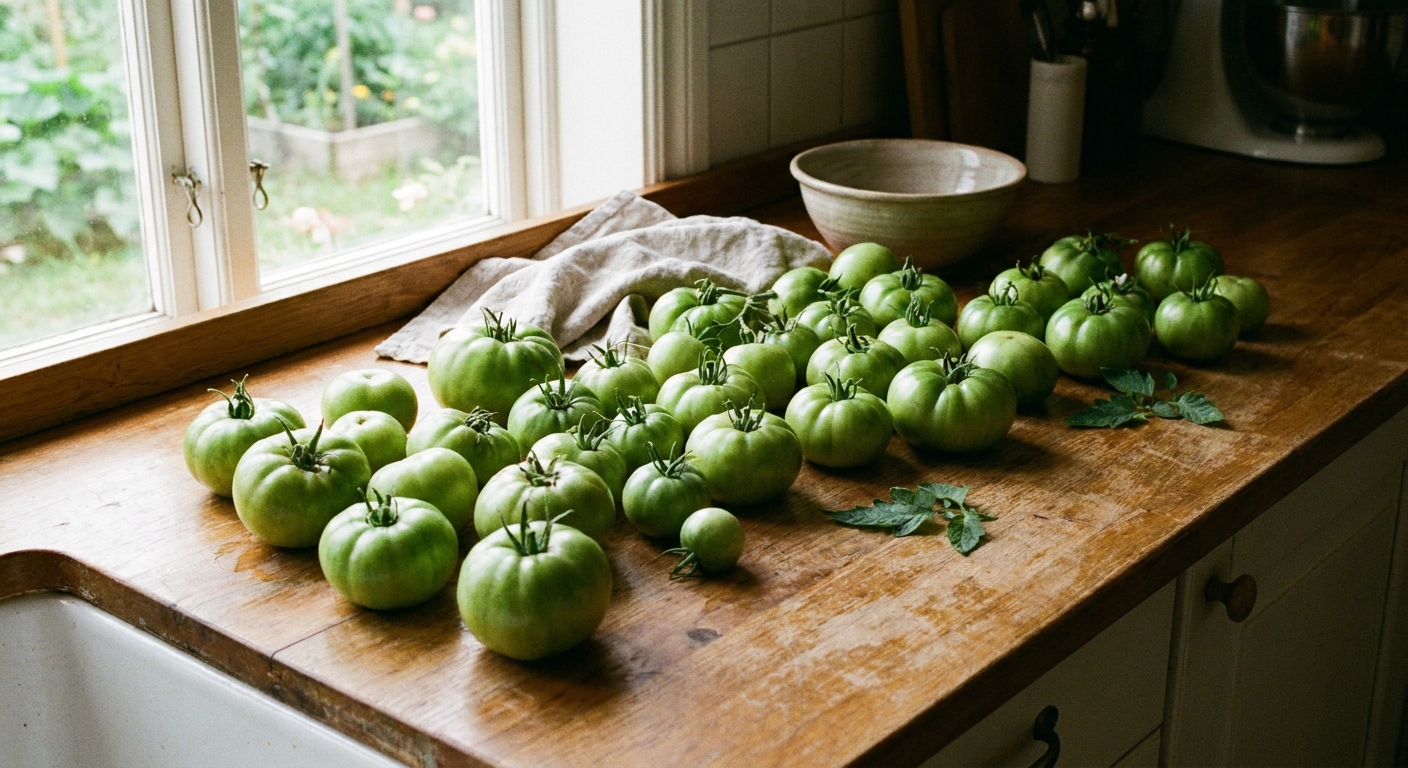
Every fall, I end up with a bowl of green tomatoes that look like they are daring me to give up. I never do. The good news is that tomatoes are climacteric fruit, which means they can keep ripening after you pick them, as long as they are mature enough. Your job indoors is to give them the right conditions: gentle warmth, decent airflow, and just enough humidity control to avoid condensation while you let ethylene do its thing.
Let’s walk through which green tomatoes will ripen, the best indoor ripening methods (including the paper bag and the banana trick), what temperatures actually work, and the storage mistakes that turn a hopeful harvest into a soggy science project.

First, decide if they can ripen
Not all green tomatoes are created equal. The key factor is maturity, not size alone.
Green tomatoes that usually will ripen indoors
- Full-sized, firm tomatoes that look like they reached their normal variety size, even if they are still green.
- Tomatoes showing a slight “blush” or a pale shift from bright green to a duller green, creamy green, or faint yellow at the blossom end.
- Fruit that has started to feel slightly less rock-hard, while still being firm.
Green tomatoes that usually will not ripen well
- Tiny, very hard fruit that clearly never sized up.
- Tomatoes that are injured: deep cracks, holes, insect damage, or bruises.
- Fruit with freeze damage (watery patches, glassy skin, or soft areas). Once tomato cells freeze, they collapse, and ripening turns into rotting.
- Fruit with disease spots (especially late blight style dark, greasy-looking lesions). Do not try to “save” those indoors. They tend to spread and break down fast.
If you are unsure, pick a couple and try ripening them. If they stay stubbornly green and start to shrivel after a couple of weeks, they were likely immature.
When to harvest for cold weather
If cold weather is in the forecast, timing matters more than perfection.
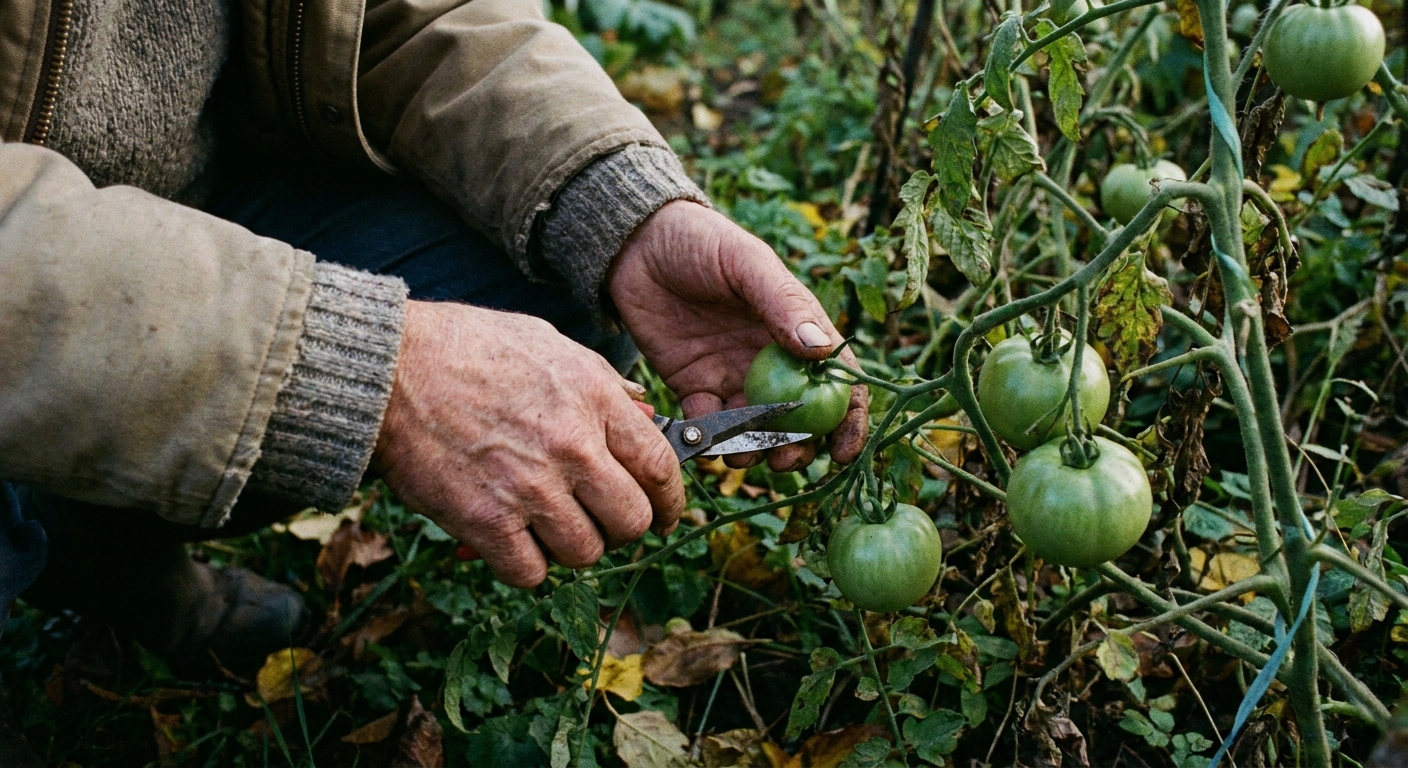
- When overnight lows are forecast near 32°F: Harvest any tomatoes that are full-sized and firm, even if they are fully green. Frost can form on plants even when the air temperature is a hair above freezing in the right conditions.
- Before a hard freeze (below 32°F for hours): Harvest everything worth saving. After a freeze, the fruit often turns water-soaked and will break down quickly indoors.
My personal rule: if nighttime temperatures are dipping into the low 40s consistently and the plant has slowed down, I start bringing in the best candidates. Also worth knowing: tomatoes can get chilling injury from prolonged cool temps (often below about 50°F to 55°F) even without a frost, which can lead to bland flavor and weird texture later.
Best indoor conditions
Tomatoes ripen best with a little warmth and breathable airflow. Too cold and they stall. Too hot and ripening can stall too, plus the flavor can get flat and the texture can turn mealy.
Temperature cheat sheet
- Best range: 65°F to 75°F
- Okay but slower: 60°F to 65°F
- Expect stalling: below about 60°F (and quality can really suffer if they sit below about 55°F for long)
- Too hot: above about 85°F (color development can stall)
Light myth buster: Tomatoes do not need sunlight to ripen. In fact, direct sun on a windowsill can overheat one side and cause soft spots. I like a countertop, a table, or a pantry shelf where the temperature stays steady.
Humidity rule of thumb: aim for dry surfaces and no condensation. If you see moisture beading up in a bag or container, it is too wet. Open it up and increase airflow.
Method 1: Counter ripening
This is the lowest-effort method, and it works beautifully for tomatoes that are already close to turning.
How to do it
- Gently wipe off dirt with a dry cloth. If you rinse, dry them completely.
- Set tomatoes in a single layer, not piled.
- Keep them in the 65°F to 75°F range, out of direct sunlight.
- Check every day or two and remove any fruit that develops soft spots.
Tip: Some gardeners find setting tomatoes stem-side down reduces moisture loss around the stem scar and helps limit shriveling. It is not magic, but it is an easy tweak to try.
Method 2: Paper bag ripening
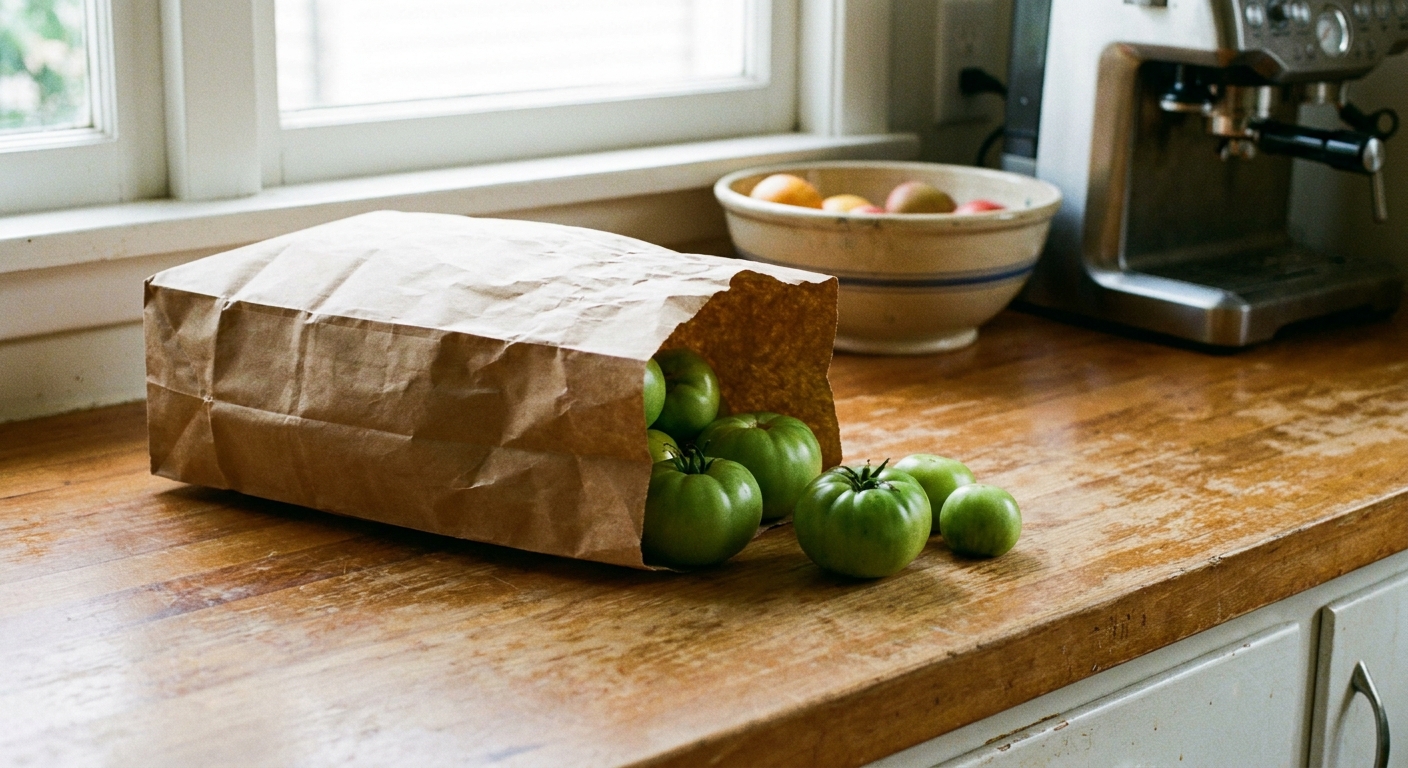
If counter ripening feels too slow, a paper bag speeds things up by trapping ethylene gas. Tomatoes naturally produce ethylene as they mature, and that gas triggers ripening in nearby fruit.
How to do it
- Place 2 to 6 tomatoes in a paper bag. Do not overload it.
- Fold the top closed loosely so a little air still moves.
- Store in the 65°F to 75°F range.
- Open and check daily for softness, color change, or condensation.
Bag rules
- Use paper, not plastic. Plastic traps too much moisture and encourages mold.
- If you see condensation, open the bag and let it air out for a few hours.
- Remove any tomato that starts to soften too fast. One rotting tomato can spoil the batch.
Method 3: Add a banana or apple
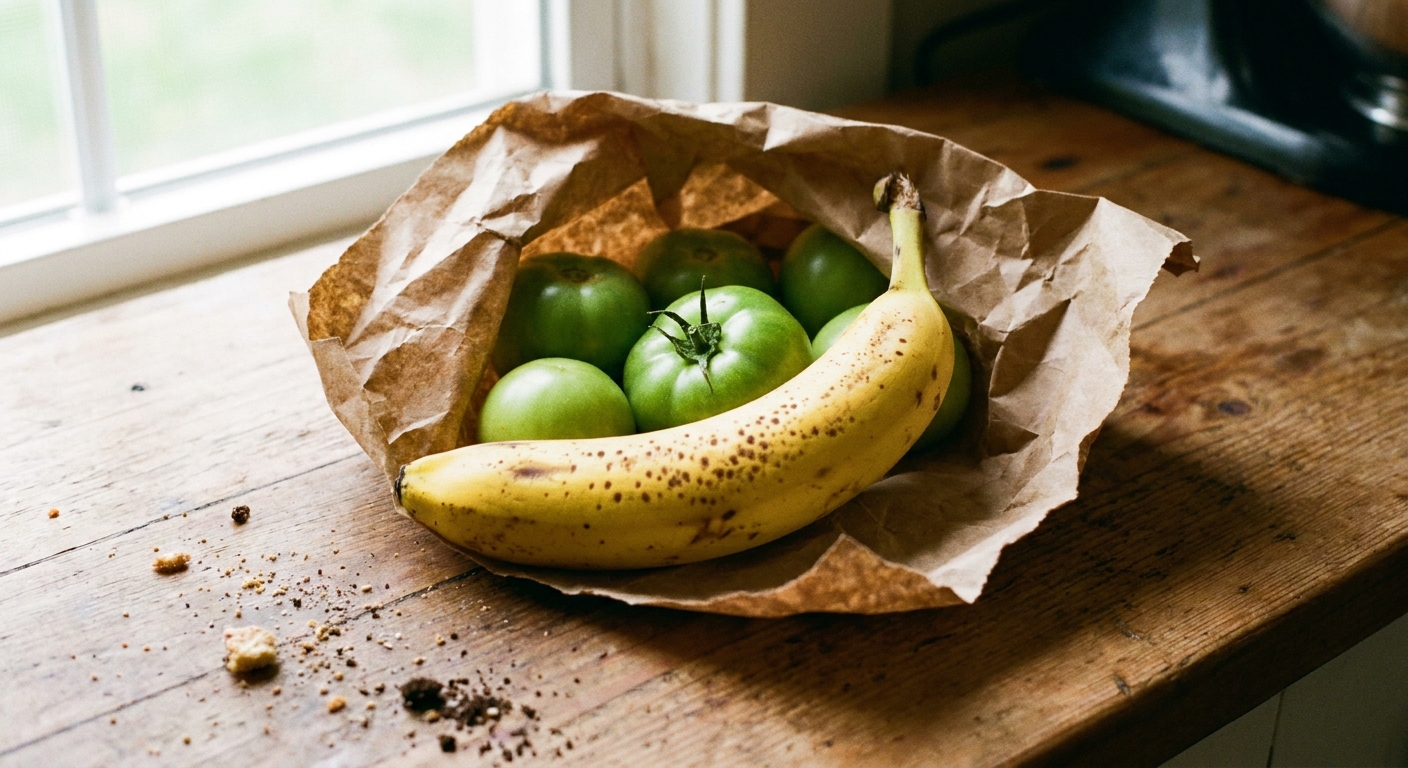
If you want to nudge the process along, add a ripe banana or apple to the bag with your tomatoes. These fruits release ethylene and can shave days off the wait.
How to do it
- Put 1 ripe banana or 1 ripe apple in the paper bag with 2 to 6 green tomatoes.
- Fold the bag closed loosely.
- Check daily. This method can go from “nothing happening” to “suddenly ripe” quickly.
My quirky-but-true observation: Bananas often seem to work a bit faster than apples in my kitchen, but it depends on ripeness and the individual fruit. If the banana gets mushy, swap it for a fresh ripe one so you do not create a fruit fly party.
Other ways to finish the season
If you are swimming in green tomatoes, you have a couple of other classic options:
- Box-and-paper method: Place tomatoes in a single layer in a ventilated cardboard box, then lay a sheet of newspaper or paper towel over them and close the lid loosely. Check every few days.
- Whole plant hang method: If you have room, pull up the entire tomato plant (roots and all), shake off excess soil, and hang it upside down in a cool, dry spot that stays above about 55°F. The plant will not perform miracles, but mature fruit often colors up more evenly this way.
How long it takes
Ripening time depends on maturity, temperature, and variety.
- Breaker stage (just starting to blush): often 3 to 7 days
- Mature green: often 1 to 3 weeks
- Very immature green: may never ripen properly and can shrivel
Indoor-ripened tomatoes will usually taste best if you let them reach full color, then give them another day or two at room temperature before slicing. It helps the texture relax and the flavor round out.
Storage mistakes that cause rot
Most indoor ripening failures come down to moisture, crowding, and one sneaky bad tomato in the pile.
Mistake 1: Washing and not drying well
Water lingering on the skin invites mold. If you wash tomatoes, dry them thoroughly and let them sit on a towel for a while before bagging.
Mistake 2: Storing them too cold
The refrigerator is a ripening stop sign. Cold temperatures slow the enzymes that create aroma and flavor, and it can leave you with bland, mealy tomatoes. Ripen first, then refrigerate only if you must hold them for a couple of days.
Mistake 3: Using plastic bags or sealed containers
Sealed plastic traps humidity, and humidity plus a tiny blemish equals rot. Paper breathes. Cardboard boxes with ventilation also work well.
Mistake 4: Piling tomatoes together
Crowding creates pressure points and bruises. Those bruises become soft spots, and soft spots become rot. Ripen in a single layer whenever possible.
Mistake 5: Not checking often enough
Ripening tomatoes change fast. Check daily or every other day, especially if you are using a banana or apple helper.
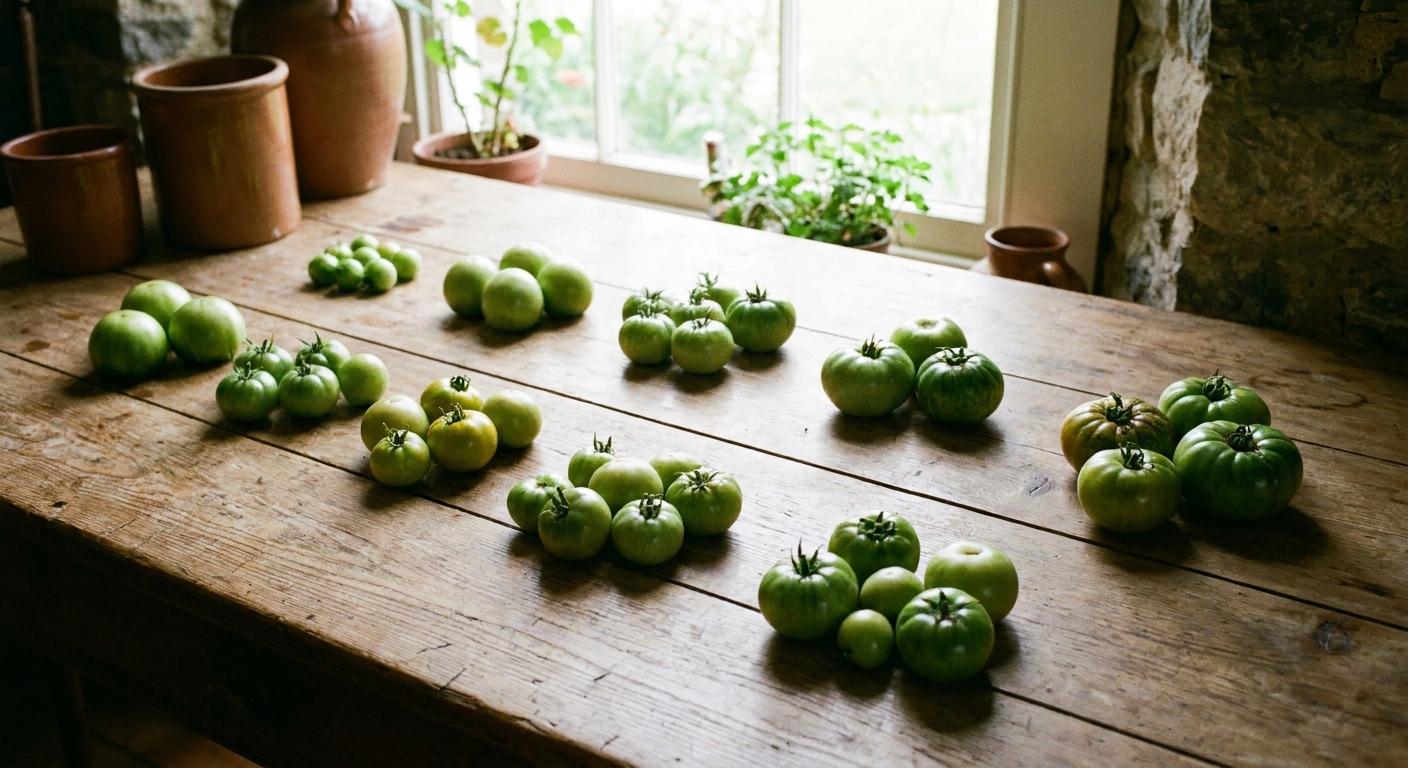
A simple sorting routine
If you have a lot of green tomatoes, sorting saves you time and heartache.
- Group A: Tomatoes with a blush or pale color shift. Put these on the counter.
- Group B: Mature green and firm. Put these in paper bags, 2 to 6 per bag.
- Group C: Small, hard, damaged, or questionable. Use these for fried green tomatoes, relish, chutney, or pickling.
This way you are not waiting on the slowest fruit while your almost-ripe tomatoes go mushy in a bag.
Quick troubleshooting
They are turning soft but not changing color
Often too warm, too humid, or the fruit was damaged. Move them to a spot around 65°F, increase airflow (open tray, single layer), and remove any tomatoes with bruises or spots. If you were bagging, loosen the fold and check for condensation.
They are wrinkling and shriveling
They may be immature, or the air is very dry. Try the paper bag method (paper, not plastic), keep the batch small so ethylene builds up, and move them away from vents or a wood stove that is drying out the room.
They smell fermented or look fuzzy
That is rot or mold. Toss affected fruit immediately, wipe down the surface where it sat, and replace the bag or paper liner if you were using one.
When to refrigerate
Keep tomatoes at room temperature while they ripen. Once ripe, you have options:
- Best flavor: Keep ripe tomatoes on the counter and use within 2 to 3 days.
- Need to pause them: Refrigerate ripe tomatoes to slow deterioration, then bring them back to room temperature before eating for better flavor and texture.
One last reminder
Ripening green tomatoes indoors is not cheating. It is simply working with plant biology. Ethylene is the quiet little messenger that tells fruit, “Hey, it’s time.” Your job is to give it a warm, breathable space and a watchful eye.
If you want tailored advice, leave a comment below with what stage your tomatoes are at (mature green, slight blush, etc.) and about what temperature your kitchen or pantry stays, and I will point you to the fastest method with the least risk of rot.