
Stinkhorn Mushrooms in the Lawn

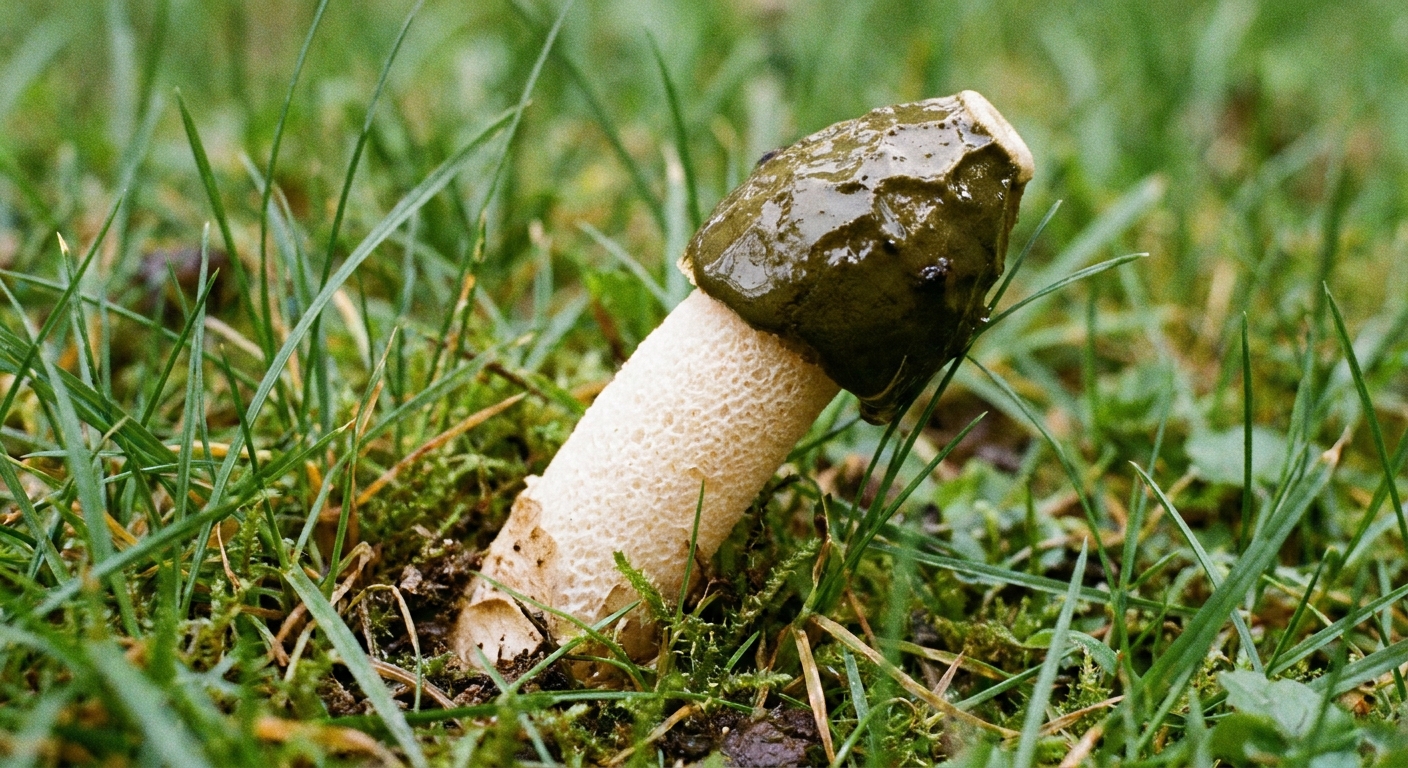
The first time I met a stinkhorn in a lawn, I found it with my nose before my eyes. A sharp, rotten smell that did not belong in a tidy patch of grass. If you are here because you have the same experience, take a breath through your mouth and let me reassure you: stinkhorn mushrooms look alarming and smell worse, but they are usually not “killing” your lawn. They are typically doing what fungi do best, breaking down buried organic matter like old roots, mulch, or a forgotten chunk of wood.

What stinkhorn mushrooms are doing
Stinkhorns are a group of fungi (several genera, including Phallus and Mutinus) that fruit quickly when conditions are right. The part you see in the lawn is the fruiting body, basically the fungal version of a brief pop-up event. The main organism is a network of fungal threads in the soil, feeding on decaying organic material.
In turf, that food source is often:
- Buried wood from old trees or removed shrubs
- Decaying roots under a lawn that was established after clearing
- Wood chips, stump grindings, or sawdust that got mixed into soil
- Thick layers of mulch nearby that wash into the grass
So if your grass looks a little stressed around the mushrooms, it is usually because the soil is staying moist and rich in decomposing material, not because the stinkhorn is “infecting” healthy grass blades. Heavy, repeated fruiting can also coincide with turf thinning because the underlying conditions that make stinkhorns happy (constant moisture, compaction, lots of buried debris) can make grass roots unhappy.
How to identify stinkhorns
Stinkhorn identification is refreshingly straightforward because they have a signature combination: foul odor, slimy spore mass (called gleba), and an odd shape. Not every stinkhorn looks identical, but these traits are common.
Key ID features
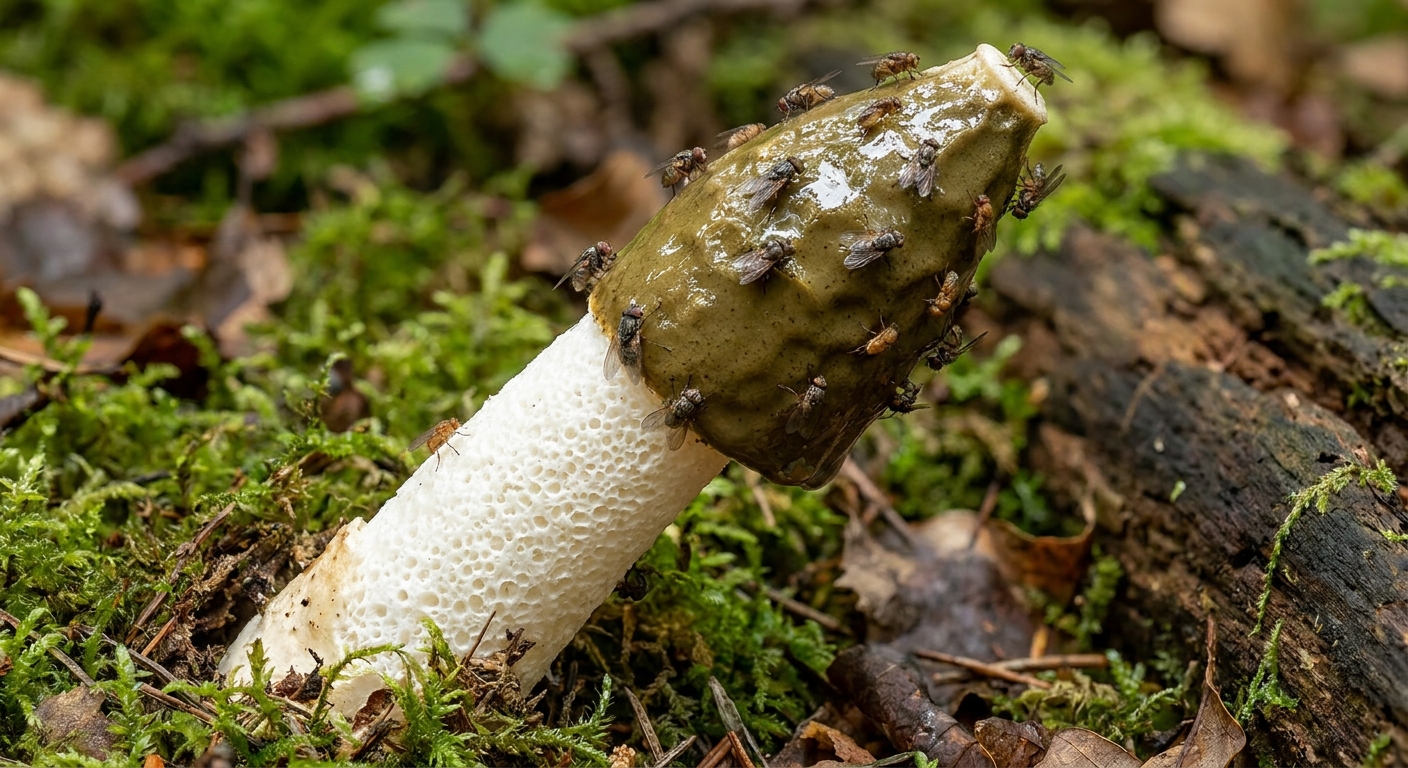
- Smell: Often described as rotting meat, sewage, or a dead animal. The odor is there to attract flies.
- Gleba: A sticky, olive-brown to dark brown slime on the cap or tip. This is where the spores are.
- Shape: Many look like a finger, horn, or spongy column. Some have a distinct cap.
- Fast appearance: They can pop up seemingly overnight, especially after rain or irrigation.
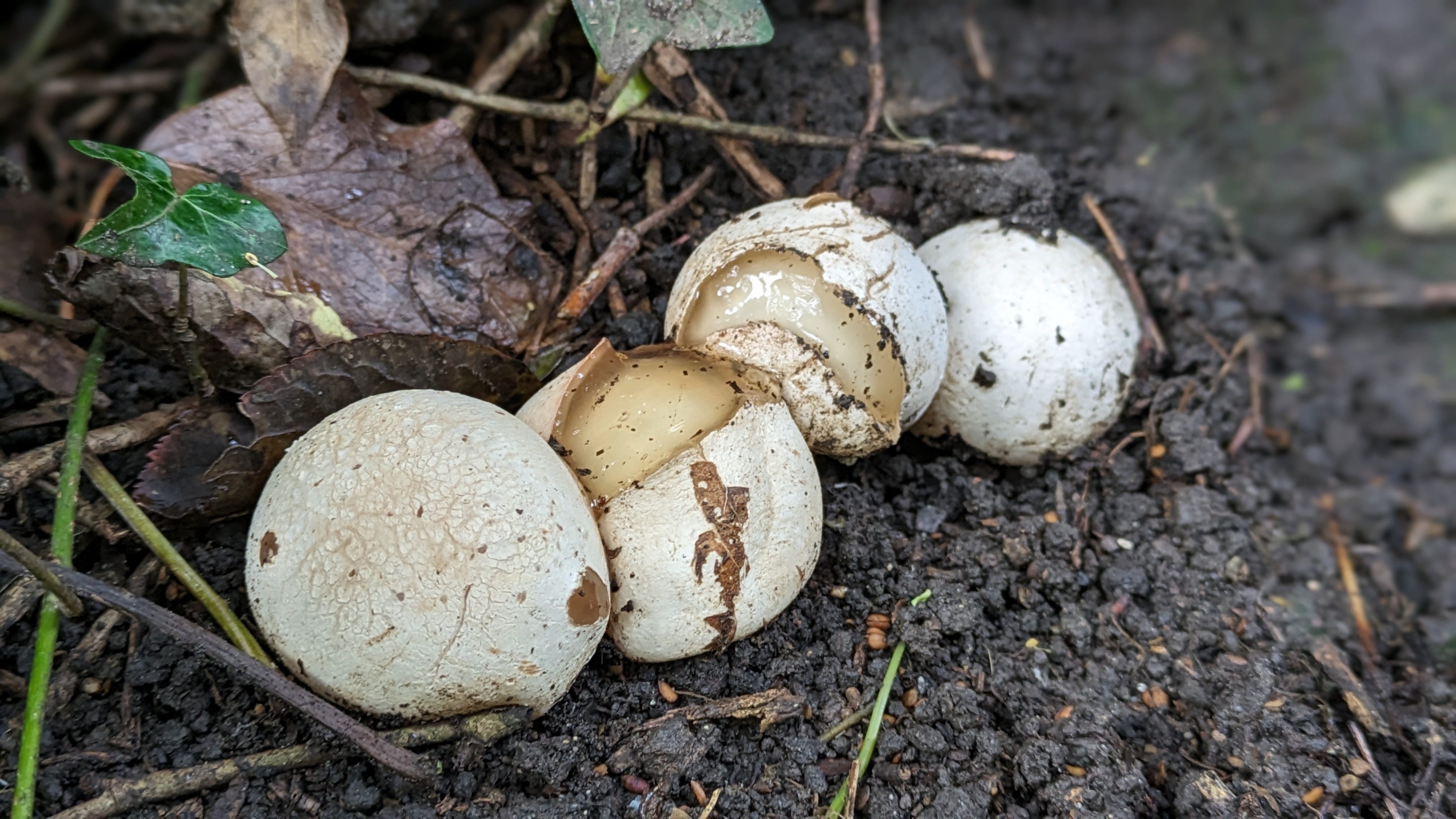
- “Egg” stage: Before emerging, many stinkhorns start as a whitish or tan egg-like blob at soil level.
Are stinkhorn mushrooms harming my grass?
In most lawns, no. Stinkhorns are primarily decomposers, not turf pathogens. They feed on dead organic matter already in the soil.
That said, their presence can point to lawn conditions that can stress grass if they are extreme:
- Overwatering or poor drainage keeping the root zone constantly wet
- Compaction that prevents oxygen from reaching roots
- Excess thatch or buried wood that holds moisture
If your lawn has thinning, yellowing, or mushy spots alongside mushrooms, treat it like a turf health issue first: drainage, watering habits, and soil structure. Also know this: the slime can temporarily discolor blades where it lands, and dense clusters can smother a small patch of grass for a day or two. That looks dramatic, but it is usually short-lived once conditions dry out.
What to do now
If the smell is the main problem, you can remove stinkhorn fruiting bodies. This does not “cure” the fungus underground, but it does cut down the odor and gets the spore-laden slime out of your lawn so kids, pets, and mower blades are less likely to get into it.
Step-by-step
- Put on gloves. The slime is messy and the smell clings.
- Avoid touching your face. Treat it like you would any unknown fungus. When you are done, wash hands well.
- Scoop the mushroom and any egg-stage blobs. Use a small shovel or thick paper towel.
- Bag it tightly and trash it. If repeat outbreaks or odor bother you, I would not compost stinkhorns. Home compost piles may not reliably break down spores, and compost can spread contaminated bits of wood or debris to new areas. Removing fruiting bodies will not eliminate the fungus if the buried food source remains, but it does keep the mess and smell contained.
- Rake lightly. If there is visible slime on grass, remove the top layer of affected clippings and dispose of them.
- Wash tools. Hot soapy water helps with odor.
A quick yard tip from my own trial and error: if you leave even a bit of slimy cap behind, it can keep smelling. Be thorough, then hose the area lightly to dilute any residue.
Long-term prevention
You cannot always prevent fungi from fruiting, especially after rainy stretches, but you can make stinkhorns less likely to show up repeatedly in the same spot.
1) Water smarter
- Water early in the morning so the surface dries faster.
- Aim for deep, infrequent watering rather than daily sprinkles.
- Reduce irrigation after heavy rain.
2) Improve drainage and airflow
- Aerate compacted lawns so water and oxygen move through the soil.
- Topdress with a thin layer of compost to encourage healthier soil structure over time.
- Address low spots where water pools.
3) Reduce hidden wood
If stinkhorns appear in the same place every year, there may be buried wood or old roots. You do not need to excavate your whole yard, but if you are already digging for a bed edge, irrigation repair, or tree planting, you may find:
- Old stump grindings mixed into backfill
- Buried lumber scraps
- Thick mats of dead roots
Removing what you can and backfilling with clean soil can reduce recurring outbreaks.
4) Skip routine fungicide
Fungicides are rarely effective for lawn mushrooms long-term because the fungus is spread through the soil and the fruiting bodies are temporary. Plus, broad fungicide use can disrupt beneficial soil life. In an organic garden mindset, I save fungicides for true plant disease problems, not decomposers doing cleanup work. If you do choose a product for any lawn issue, follow the label exactly and use only what is approved for your grass type and region.
Do stinkhorns attract flies?
Yes, and that is exactly the point. Stinkhorns use odor to lure flies and other insects, which then pick up spores in the gleba and spread them around. If you remove the mushrooms promptly, you usually reduce the fly party in that area, even though you cannot control where insects have already been.
Pets and kids
I treat all unknown mushrooms as “hands off” in family spaces. Many common stinkhorns are not known for severe toxicity, but species vary, and ingestion can still cause drooling, vomiting, or diarrhea. In other words, do not assume they are safe.
- For dogs: Some dogs are drawn to the smell and may roll in them or eat them. Remove fruiting bodies quickly.
- For kids: Teach a simple rule: we do not touch mushrooms in the yard.
If you suspect a pet has eaten any mushroom or is acting unwell, call your vet or an animal poison control resource right away. If you can do so safely, take a clear photo of the mushroom for identification.
Lookalikes to avoid
This is where a lot of well-meaning lawn “treatment” goes sideways. Stinkhorns are one thing. Fairy rings are another. Dog-vomit slime mold is not even a mushroom. Here is how to tell them apart so you do not fight the wrong organism.
Stinkhorn vs. fairy-ring mushrooms
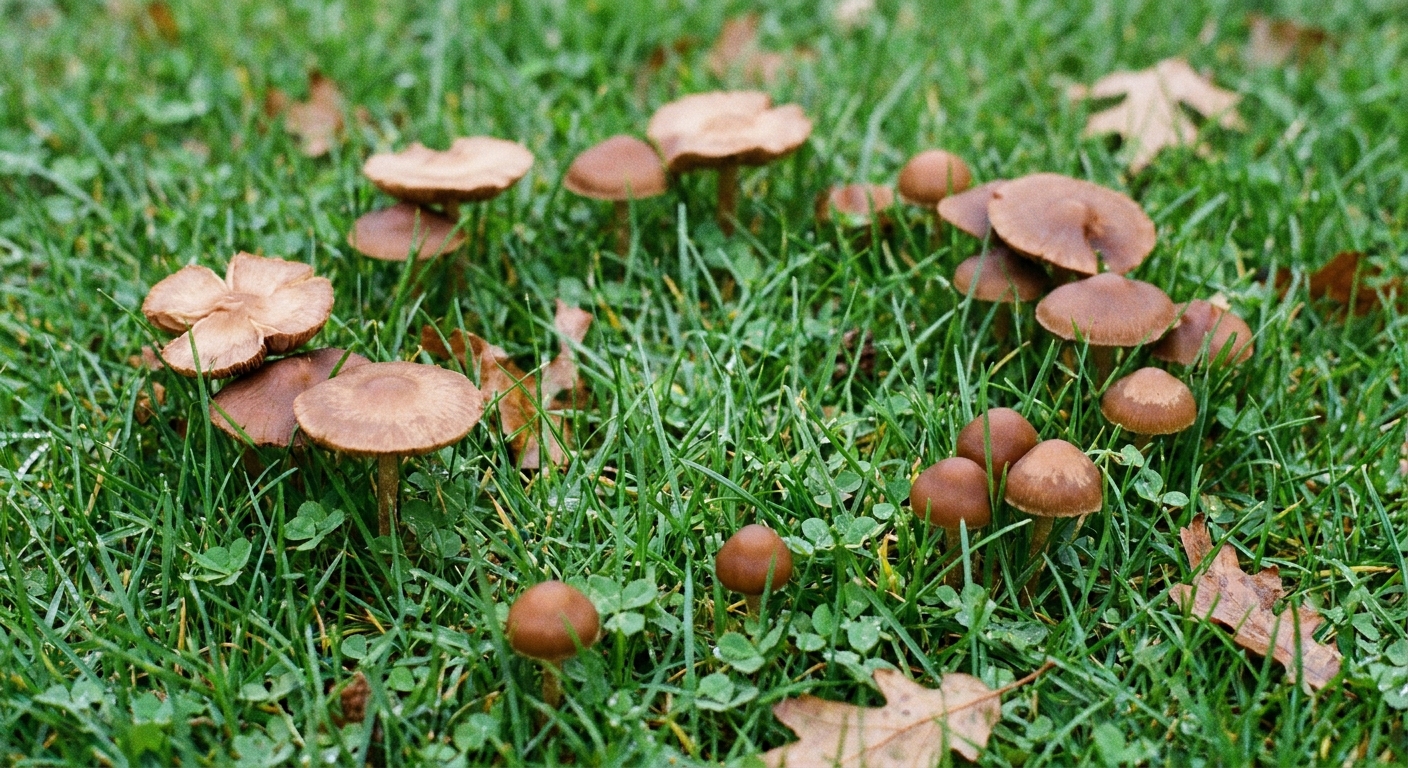
Fairy rings are usually clusters or arcs of typical cap-and-stem mushrooms (or just a ring of greener grass). They may show up as a circle or partial circle.
- Fairy ring look: Ring or arc pattern, multiple mushrooms, classic umbrella caps.
- Smell: Usually mild, mushroomy, not rotten.
- Lawn effect: Can cause dark green rings or sometimes brown, dry rings due to water movement and dense fungal mats.
- Cause: Fungal growth moving outward through soil organic matter.
Stinkhorn look: Single or scattered weird columns or horns with slime. The smell is the headline.
Stinkhorn vs. dog-vomit slime mold
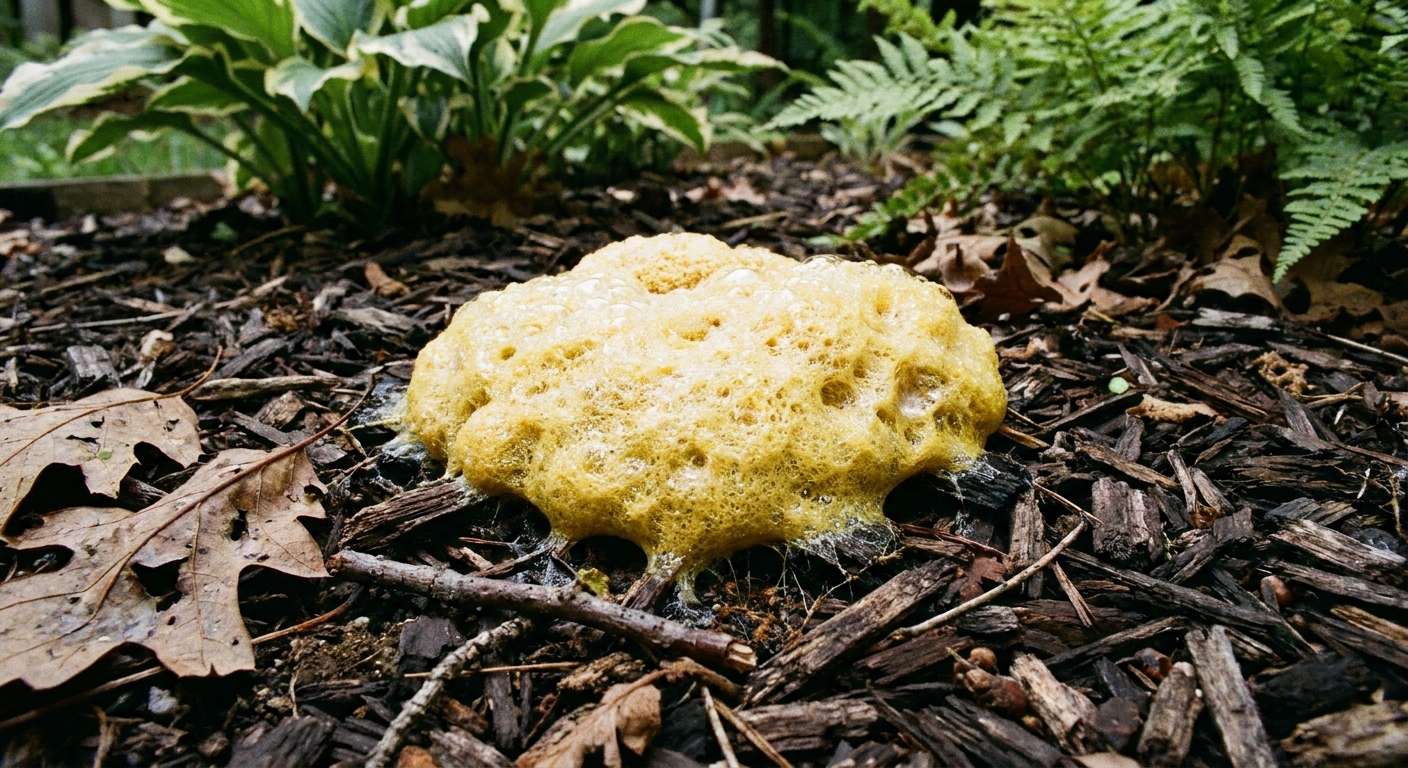
Dog-vomit slime mold is the nickname for a common slime mold (often Fuligo septica). It shows up as a foamy, blobby mass that can be yellow, tan, or beige. It can look like someone spilled scrambled eggs on mulch.
- Dog-vomit slime mold look: Irregular blob or crust on mulch, grass, or logs. No stalk, no cap.
- Smell: Not typically like rotting meat. It may smell earthy or slightly musty, or have little odor.
- What it is doing: Feeding on microbes in decaying material. It does not infect plants.
- What to do: Usually you can let it dry up and disappear, or gently rake it out.
Stinkhorn look: Distinct structure that emerges from an egg stage, often with slimy spore coating and a powerful odor.
When to look closer
Most of the time, stinkhorns are just a smelly surprise. I would investigate a bit more if:
- You see frequent fruiting in the same spot over many weeks, suggesting a large buried wood source
- The area is constantly soggy, hinting at drainage issues or a leaking irrigation line
- Your lawn has expanding dead patches that do not green up with better watering practices
In those cases, treat the lawn like a soil and water puzzle: check irrigation run times, look for low spots, consider aeration, and if you are up for a little digging, hunt for buried wood.
If you are unsure whether you are dealing with mushrooms, a turf disease, or an irrigation problem, it is worth calling in a local lawn pro or your county extension office. And if there is any chance a child or pet ingested a mushroom, getting a fast ID from a local expert can be very helpful.
Quick FAQ
How long do stinkhorn mushrooms last?
The visible mushrooms often collapse within a day or two, especially in hot weather. You may see new ones pop up after rain until the fungus has less food or the weather dries out.
Will mowing get rid of them?
Mowing can smear the gleba and spread odor across your yard. If you can, pick them up first, bag them, then mow.
Should I lime my lawn to stop stinkhorns?
Lime changes soil pH, and pH should be adjusted based on a soil test, not mushrooms. Stinkhorns are more about moisture and decaying organic matter than pH.
Are stinkhorns a sign of healthy soil?
They are a sign of active decomposition and plenty of organic material. That is not automatically bad. It just becomes unpleasant when the smell is in a high-traffic area.
A gardener’s bottom line
If your lawn smells like something crawled under the grass and gave up, and you find a slimy, bizarre little “horn” nearby, you are probably dealing with a stinkhorn. Remove the fruiting bodies for comfort, then zoom out and look at moisture and buried organic matter. Most lawns do not need chemical intervention. They need a little less sogginess, a little more airflow in the soil, and a little patience while nature finishes breaking down what is buried below.