
Red Spots on Peony Leaves: What They Mean

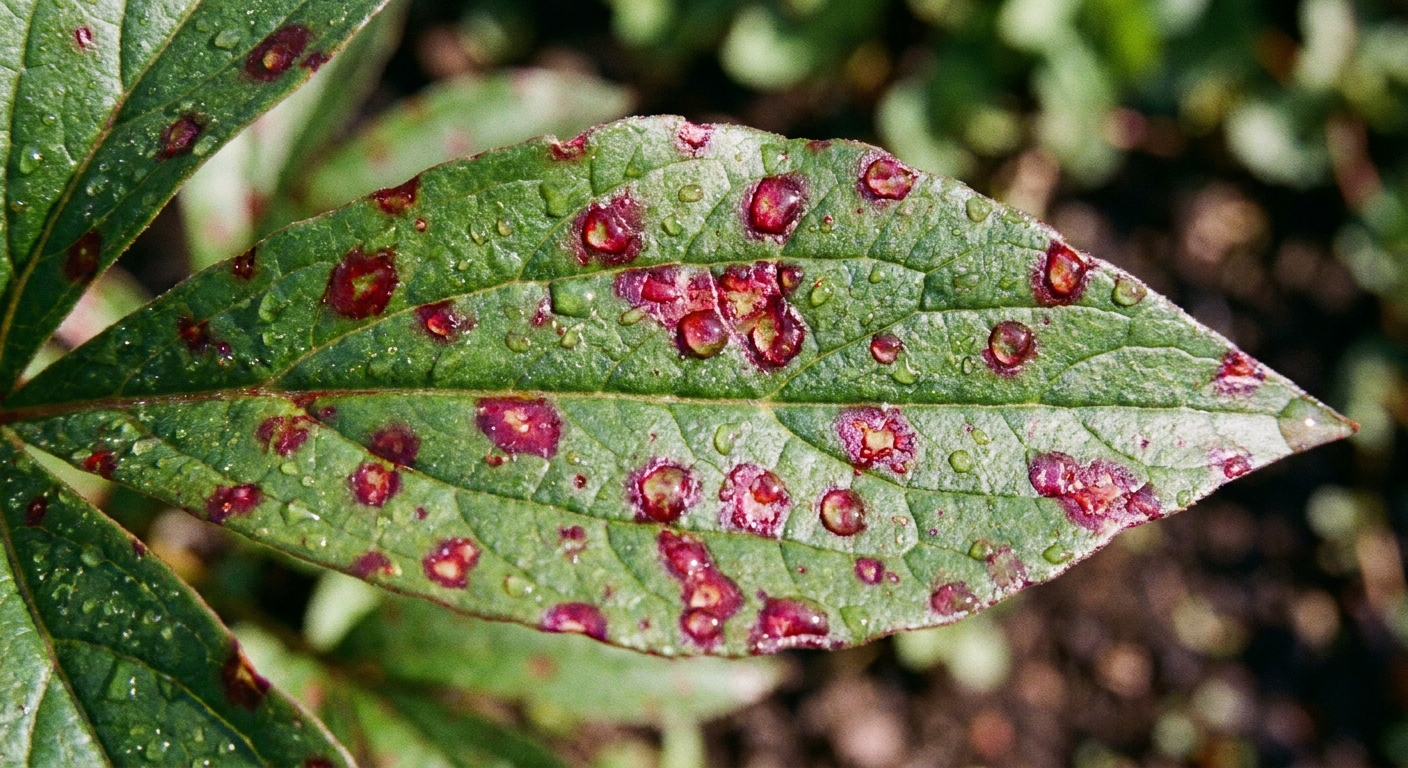
The first time I noticed red speckles creeping across my peony leaves, I did what every gardener does when a beloved plant looks a little off: I leaned in way too close, squinted, and tried to bargain with it. “If you stop doing that, I will give you compost.”
If your peony foliage is developing red spots, you are usually dealing with a common fungal issue called peony leaf blotch, also nicknamed red measles. The good news is that it is rarely fatal on established plants. The better news is that a few simple habits, especially end-of-season cleanup and improved airflow, can dramatically reduce it next year.

Most likely culprit: Peony leaf blotch (red measles)
Peony leaf blotch is caused by a fungus often listed as Cladosporium paeoniae (you may also see Graphiopsis chlorocephala listed as a synonym, depending on the source). It tends to show up after bloom or in mid-season, especially during stretches of humid weather, frequent rain, overhead watering, or crowded plantings where leaves stay damp.
What it looks like
- Small, glossy spots that start reddish-purple, maroon, or burgundy
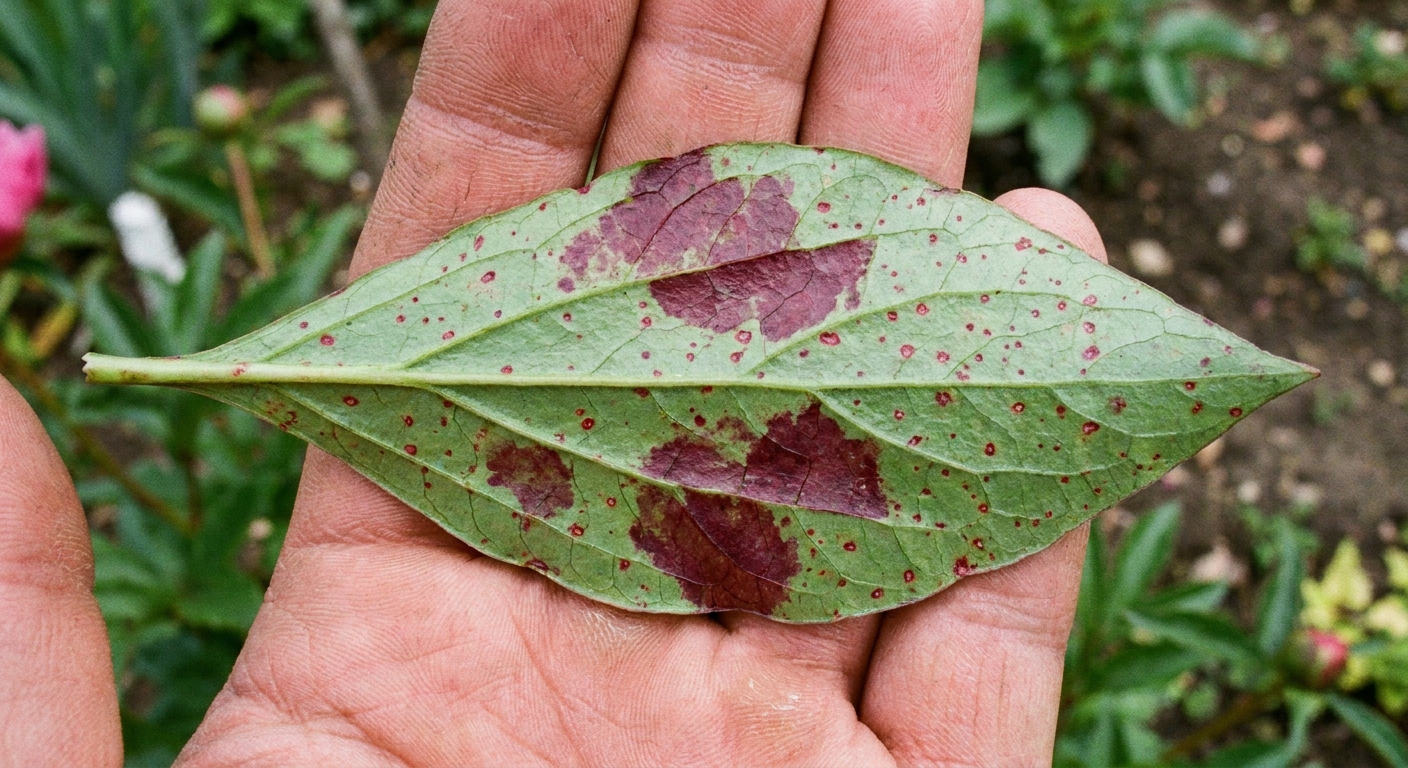
- Spots can expand into irregular blotches, sometimes with darker centers
- Leaves may look a bit shiny or lacquered where spotting is heaviest
- In more advanced cases, leaves can yellow or look tired earlier than normal
Leaf blotch is often mostly cosmetic in the moment. The bigger issue is that the fungus can overwinter on infected leaves and stems, then return strongly the following spring and summer.
How it differs from botrytis
Red spots on leaves send many people down the botrytis rabbit hole, but the symptoms and timing are usually different.
Botrytis blight usually hits early
- Common timing: cool, wet spring weather
- Where it shows: buds, stems, young shoots, sometimes flowers
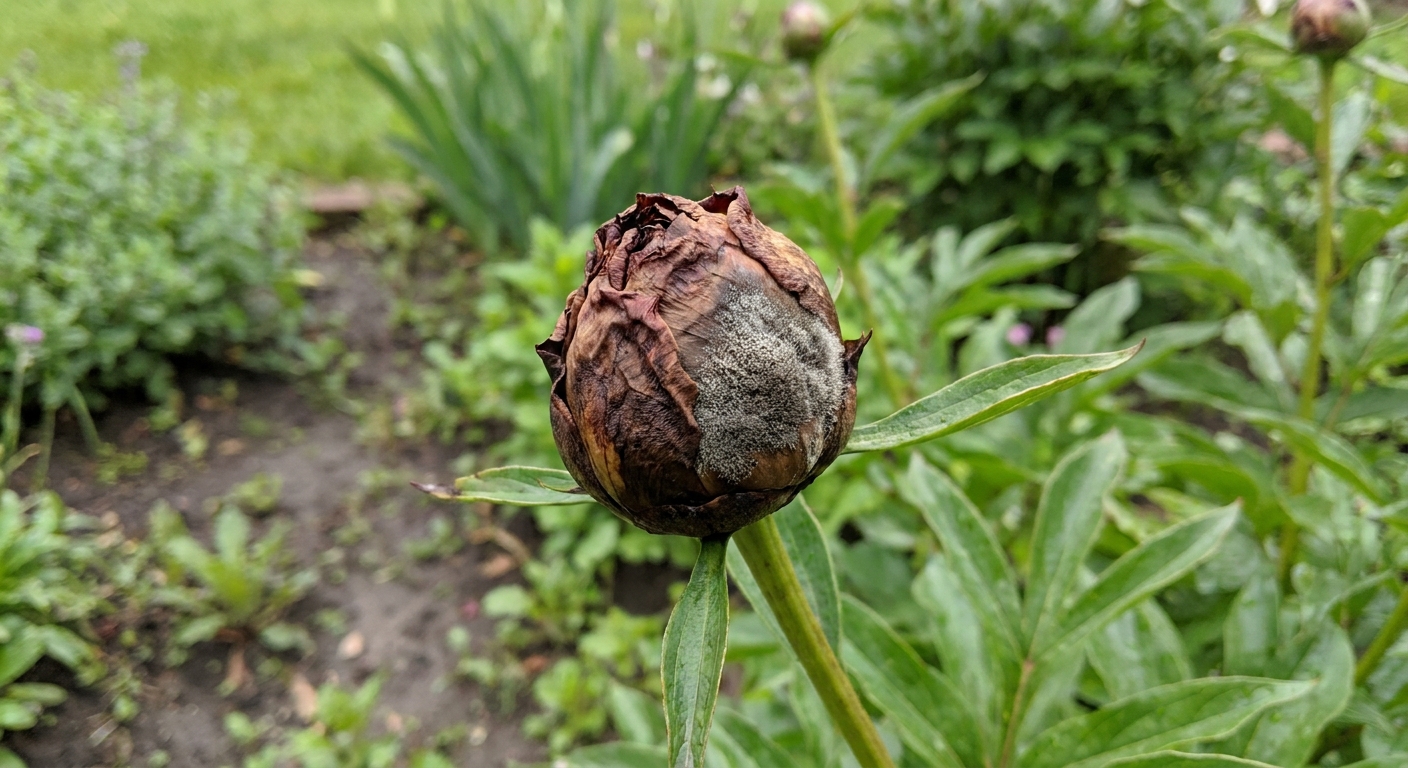
- Classic signs: buds that turn brown or black and fail to open, soft or collapsing stems, and sometimes a fuzzy gray mold in damp conditions
Botrytis is the one behind the heartbreaking scene where a peony bud looks fine, then suddenly goes mushy or black and never opens.
Leaf blotch is usually a mid- to late-season leaf problem
- Common timing: after bloom, as the plant is leafed out
- Where it shows: mostly foliage
- Classic signs: reddish-purple spotting that turns into blotches
You can have both in the same garden over the course of a year, but if your main symptom is red spotting on leaves rather than bud rot, leaf blotch is the more likely match.
Is peony leaf blotch serious?
Most established peonies will live a long, happy life even if leaf blotch shows up every summer. That said, it can still matter.
When it is mostly cosmetic
- Spots are scattered, leaves remain mostly green
- The plant blooms well and keeps a decent canopy through summer
When it becomes a bigger problem
- Spotting is heavy enough that large sections of foliage yellow or drop early
- The peony looks weak going into late summer
- You see the same issue intensifying year after year
Peonies build next year’s strength with this year’s leaves. If disease causes early defoliation year after year, the plant may store less energy in its roots, which can mean fewer blooms over time.
Quick checklist: Confirm leaf blotch
Before you treat anything, do a two-minute inspection.
- Look at the pattern: leaf blotch is usually scattered spotting and irregular blotches, not neat “bullseye” rings (ringed spots can point to other leaf spot fungi).
- Check the buds and stems: if buds are blackening, stems are collapsing, or you see gray fuzz, botrytis may be involved too.
- Flip a leaf over: sometimes fungal issues show slightly different texture or discoloration on the underside.
- Consider weather and watering: prolonged dampness and overhead watering strongly encourage fungal leaf diseases.
If you are unsure, snap a few clear photos in good light, including the whole plant and close-ups of the spots. Many local extension offices and Master Gardener helplines can help confirm an ID from photos.
When to escalate: if you see rapid decline, severe distortion, black streaking on stems, or widespread collapse, get local eyes on it. An extension office can help you rule out other problems beyond leaf blotch.
What to do right now (mid-season)
Once leaf blotch is visible, you can slow it down, but you cannot erase existing spots. The goal is to reduce spread and keep the plant photosynthesizing well.
1) Keep foliage dry
Water at the soil line, not from above. If you use sprinklers, consider switching to a soaker hose or drip line around peonies.
2) Improve airflow fast
- Gently thin surrounding plants that are smothering the peony
- Stake floppy peonies so leaves are not layered in a damp pile
- Pull weeds and clear dense groundcover right around the crown
3) Remove the worst leaves, sparingly
If a few leaves are heavily covered, you can clip them off and bag them. Do not strip the whole plant in summer unless it is truly severe. Peonies need those leaves to feed the roots.
Sanitation tip: wipe pruners with alcohol or a disinfecting wipe between plants, especially if you are moving through a peony bed.
4) Mulch thoughtfully
A thin layer of clean mulch can reduce soil splash that spreads spores onto leaves. Keep mulch pulled back an inch or two from the crown to avoid staying too wet at the base.

The real fix: Cleanup and airflow
Leaf blotch is a repeat offender because the fungus can survive on infected plant debris. That is why fall cleanup and smart spacing are so powerful.
Fall cleanup that makes a difference
- Wait for frost or natural dieback: once foliage yellows and flops, it has done most of its work for the season.
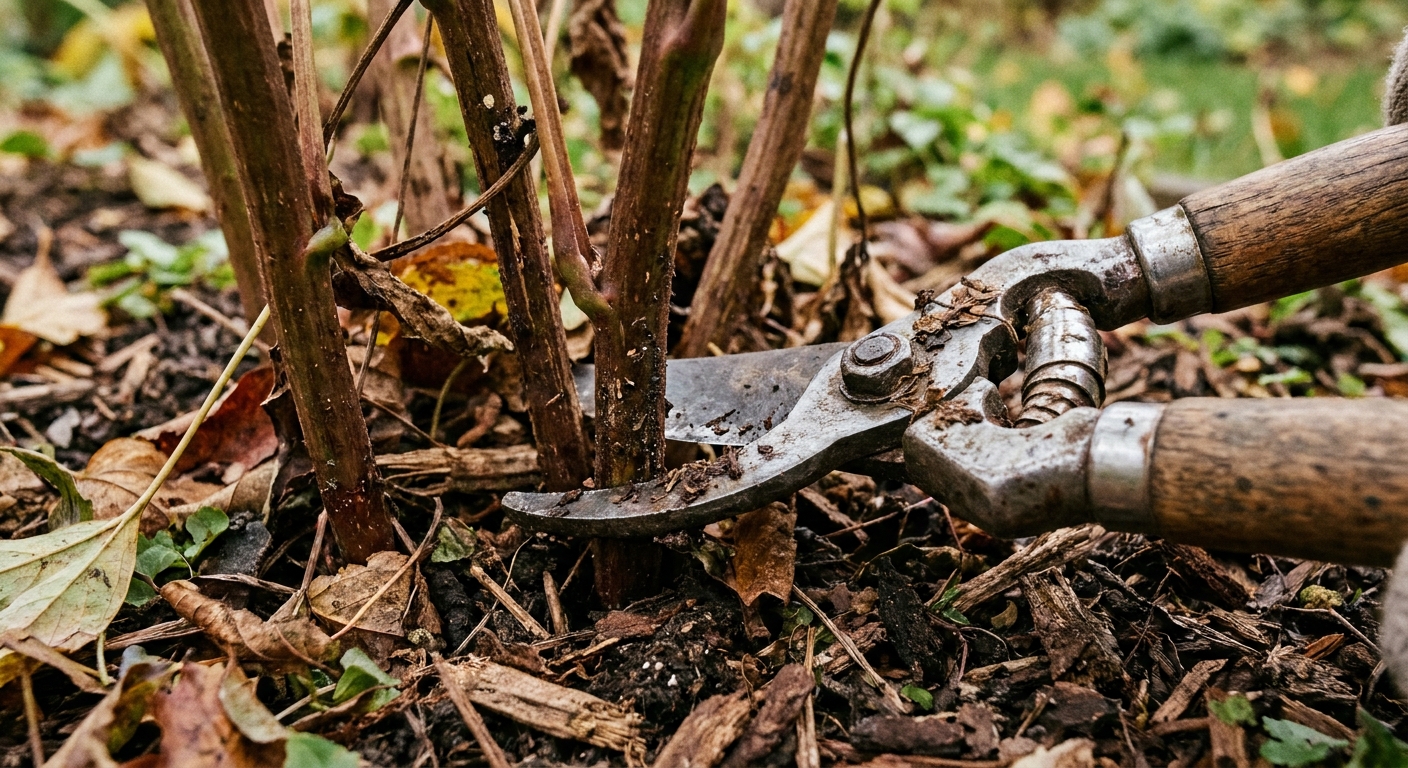
- Cut stems down low: trim herbaceous peony stems to near ground level, leaving a small stub.
- Remove every leaf and stem piece: rake thoroughly under and around the plant.
- Bag and discard infected debris: do not compost it if you routinely get leaf blotch or other peony fungal problems.
- Clean up nearby litter: fallen leaves from trees and other debris can trap moisture and shelter spores.
If you are a compost devotee like I am, I know it hurts a little to throw plant material away. But diseased peony foliage is one of those times when your future blooms will thank you for being ruthless.
Quick note on tree peonies and Itoh peonies: the “cut to the ground” advice is for herbaceous peonies. Tree peonies are woody and should not be cut down the same way. With tree peonies, focus on removing and discarding infected leaves and any clearly diseased tips, and follow good sanitation.
Spacing tweaks for next season
- Give peonies room: avoid crowding them with tall perennials that block breezes.
- Full sun helps: morning sun is especially helpful because it dries dew quickly.
- Stake early: keeping the canopy upright reduces leaf-on-leaf dampness.
- Avoid heavy nitrogen: overly lush, soft growth stays wetter longer and can be more disease-prone.
Should you use a fungicide?
Many home gardeners can manage peony leaf blotch with sanitation and airflow alone. Fungicides are typically most effective when used preventatively, before symptoms are widespread, and results can be limited once infection is established.
If leaf blotch is severe every year and cleanup has not helped, you can consider a fungicide labeled for ornamental leaf spot on peonies. Options vary by region and product label. Some gardeners use copper or sulfur products, while many extension resources also mention protectant fungicides such as chlorothalonil or mancozeb where permitted. Whatever you choose, timing and coverage matter at least as much as the product.
- Spray early (often starting as shoots emerge and continuing per label during wet periods)
- Spray to coat both upper and lower leaf surfaces
- Do not spray in high heat or full sun unless the label allows it
Important: use only products labeled for peonies or ornamentals in your area, and follow all label directions exactly.
If you decide to spray, treat it as one tool in a bigger plan. Cleanup and airflow are what lower disease pressure long-term.
Common lookalikes
Sun scorch or heat stress
This usually shows as bleached patches or crispy brown edges, not glossy maroon spots. It is also more common after a sudden heat wave or drought stress.
Nutrient issues
Nutrient deficiencies tend to cause overall yellowing or interveinal chlorosis rather than discrete red-purple spotting. (Peonies can get reddish tints in cool weather, but that is different from spotty lesions.)
Rust
Rust often shows orange or rusty pustules, especially on the undersides of leaves. Leaf blotch is more of a flat spot-and-blotch pattern.
FAQ
Will my peony still bloom next year if it has red spots now?
Usually, yes. If the plant keeps most of its leaves through summer and you do good fall cleanup, blooms next year are likely fine. Severe early leaf loss, especially if it repeats, can reduce flowering over time, but one spotty season is not a disaster.
Can I compost spotted peony leaves?
If you have leaf blotch regularly, I recommend bagging and discarding infected peony debris. Many home compost piles do not get hot enough, consistently enough, to kill fungal spores.
Should I cut my peony back right now?
Not in mid-season unless the disease is so severe that the plant is collapsing. Peonies rely on their foliage to store energy. Instead, remove only the worst leaves, keep foliage dry, and plan for thorough fall cleanup.
Do red spots spread to other plants?
Peony leaf blotch spores can blow or splash around the garden, but the disease mainly infects peonies rather than unrelated ornamentals. Still, sanitation and avoiding overhead watering improve overall garden health.
A calm next step
If your peony is otherwise standing tall and the spots are mostly cosmetic, take a breath. Focus on the simple wins: keep leaves dry, open up airflow, and do a truly thorough cleanup when the season ends. Next spring, your peony will come up fresh, and with less old fungal baggage in the bed, there is a good chance you will see fewer of those glossy red freckles.