
Propagate Wisteria From Cuttings or Layering

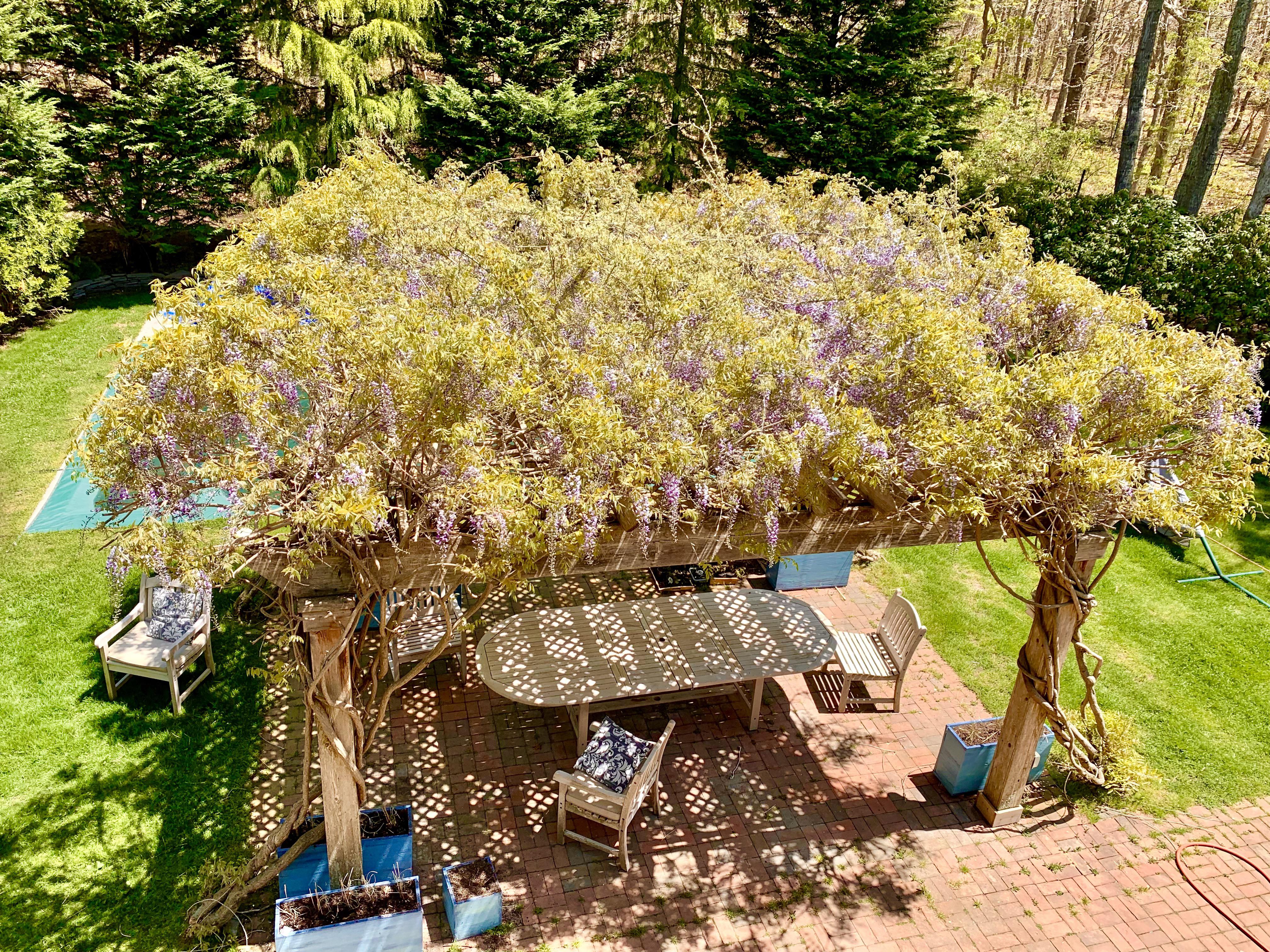
A little green. A lot of curiosity.
Wisteria can be a showstopper, but it is also one of those vines that makes you earn the flowers. If you want more wisteria without gambling on seeds, propagation is the calmer path. Layering and cuttings let you clone the plant you already love, which means you keep its flower color and bloom habits instead of rolling the dice.

Before you start: a few wisteria realities
Cuttings and layering make a clone
When you propagate from a cutting or by layering, you are making a genetic copy of the parent plant. That matters because named cultivars are chosen for flower color, fragrance, and more reliable blooming. Cloning keeps those traits.
Seed-grown wisteria can take years to bloom
Wisteria grown from seed often stays in a juvenile phase for a long time. It is not unusual for seed-grown plants to take many years to flower, and the blooms may not match the parent plant. Seeds are fine for experimentation, but they are not the shortcut most gardeners hope for.
Know what you are growing
Some wisterias are more aggressive than others, especially in regions where they spread readily. Propagation is powerful, so make sure you have a sturdy support and a plan for pruning before you multiply vines.
If you garden in North America, it is also worth a quick species reality check: Chinese wisteria (Wisteria sinensis) and Japanese wisteria (Wisteria floribunda) are considered invasive in many areas. American wisteria (Wisteria frutescens) and Kentucky wisteria (Wisteria macrostachya) are often recommended alternatives. Before you propagate, check local guidance so your “one more vine” does not become everyone’s problem.
Safety note
Wisteria is considered toxic, especially the seeds and pods. Sap can also irritate sensitive skin. Gloves are a good idea, especially when working with cut stems, and keep pods away from kids and pets.
Best method for most gardeners: layering
If you want the highest success rate with the least fuss, choose layering. The stem stays attached to the mother plant while it forms roots, so it can feed itself the whole time. That is very wisteria-friendly.
When to layer wisteria
- Spring through early summer is ideal, when stems are flexible and growth is active.
- Late summer can also work, but rooting may be slower as the season winds down.
What you will need
- A healthy, flexible stem that can reach the ground
- Hand pruners or a clean knife
- A U-shaped landscape pin, bent wire, or a small rock
- Potting mix or garden soil you can loosen and amend
- An optional small pot (helpful if you want a tidy rooted plant)
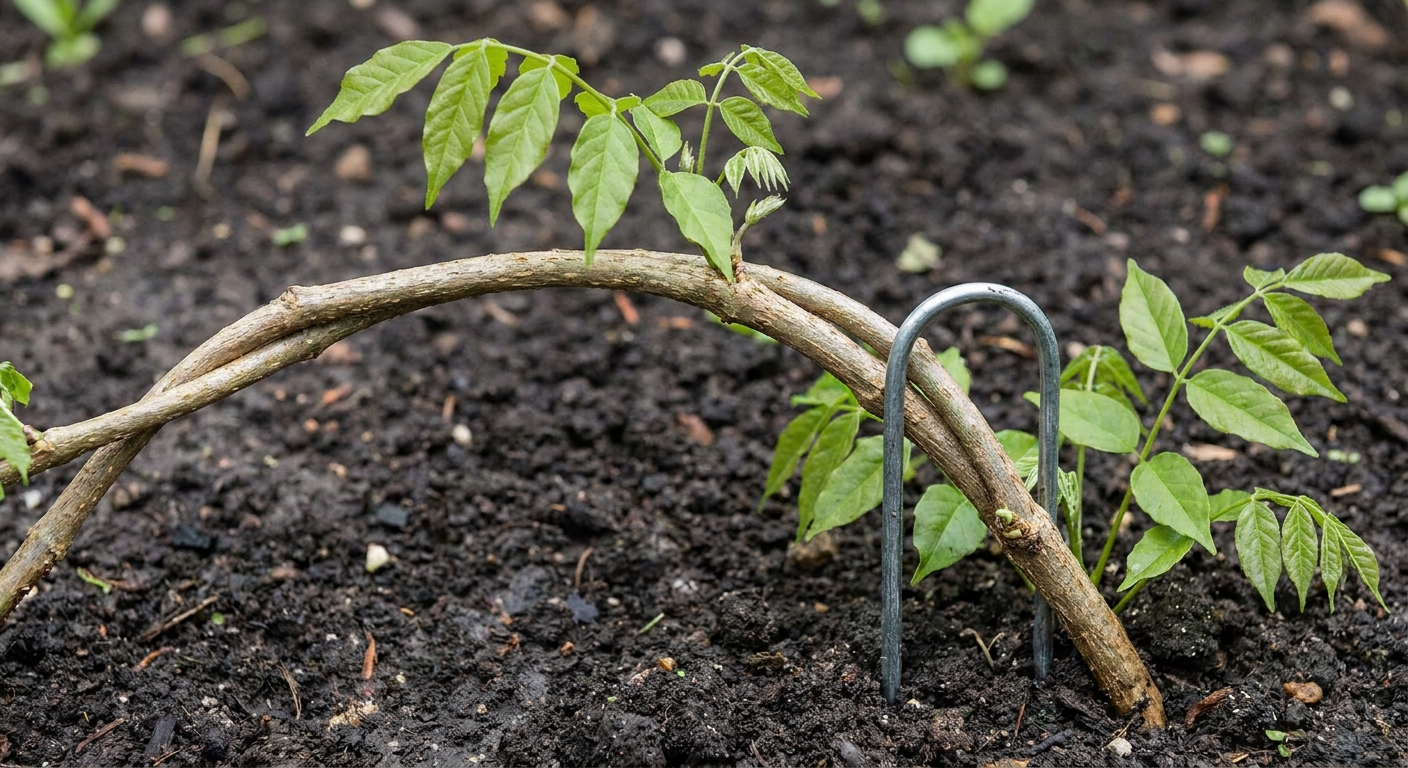
Simple ground layering: step-by-step
- Pick the right stem. Choose a young, pencil-thickness stem that bends without cracking. Avoid old, brittle wood.
- Choose a rooting spot. Loosen the soil where the stem will touch down. Mix in a little compost or potting mix to keep it crumbly and evenly moist.
- Wound the stem lightly. On the underside of the stem where it will be buried, make a small shallow scrape, or remove a thin sliver of bark about 1 inch long. This encourages rooting. Do not girdle the stem.
- Pin and bury. Press the wounded section into the soil, pin it down, and cover it with 2 to 3 inches of soil. Leave the tip of the stem and its leaves above the soil.
- Water and wait. Keep the area lightly moist. A little mulch over the spot helps hold moisture.
Pot layering (tidier option)
Instead of burying the stem in the ground, sink a pot filled with potting mix next to the vine and pin the stem into the pot. This makes it easier to lift the rooted plant later with minimal disturbance.
How long does layering take?
Rooting often takes a few months. Many gardeners separate the new plant in fall or wait until the following spring for a stronger root system.
How to tell when it is ready
- New growth looks perky and steady, not dependent on frequent watering.
- A gentle tug meets resistance, as if the stem is anchored.
- If you used a pot, you may see roots at the drainage holes.
Separating and planting the new vine
Once rooted, snip the new plant free from the parent vine a few inches behind the rooted section. Plant it in the ground or into a nursery pot with a well-draining mix. Water deeply and provide support early, since young vines love to flop around like they are auditioning for a tangle.
Propagating wisteria from softwood cuttings
Softwood cuttings are taken from fresh, green growth. They can root well, but they need higher humidity and steadier moisture than layering.
Best timing for softwood cuttings
Take softwood cuttings in late spring through early summer, when new growth is firm enough to snap rather than fold, but not woody.
What you will need
- Clean pruners
- Small pots or cell trays with drainage
- Rooting medium: perlite and peat/coir mix, or a seed-starting mix
- Optional rooting hormone (often helpful with wisteria)
- Clear plastic bag or humidity dome
- Bright, indirect light (no hot direct sun)
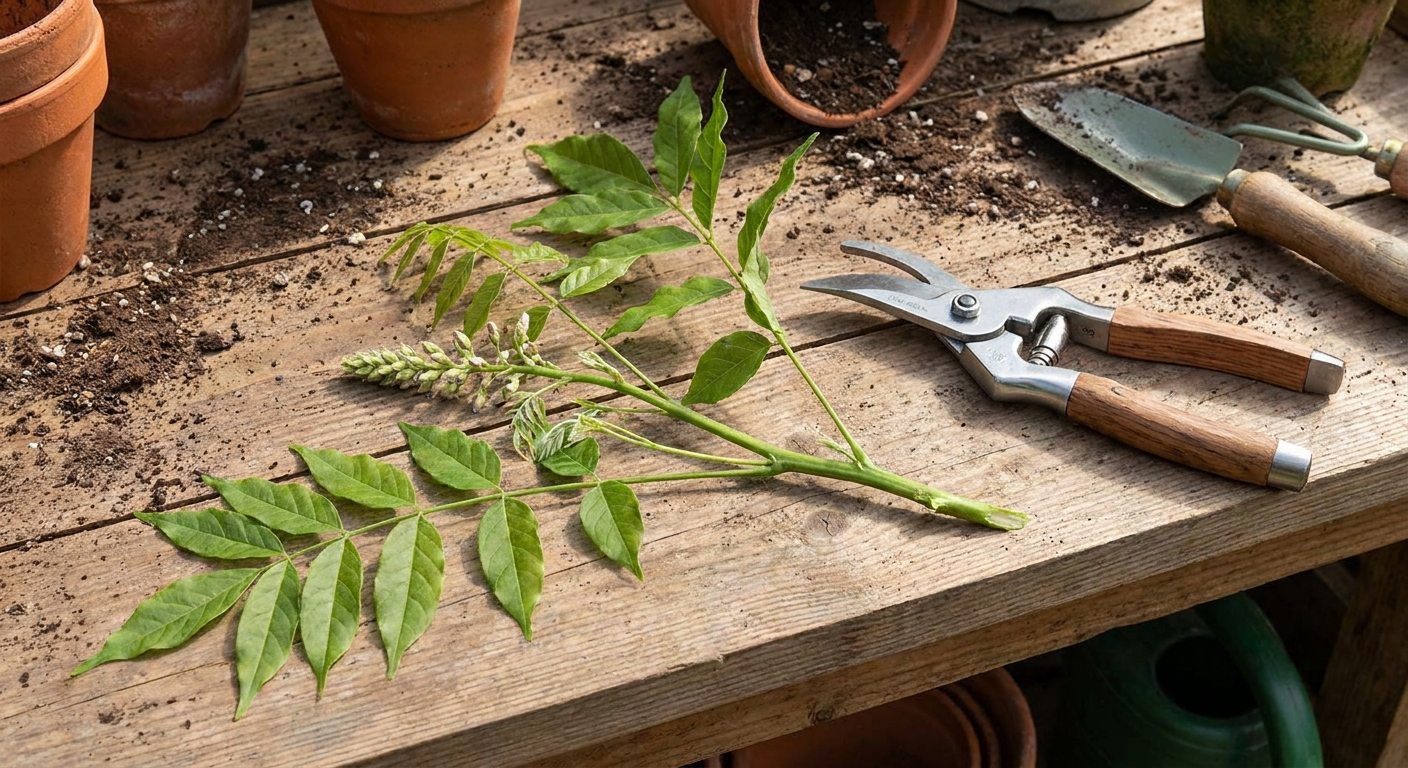
Step-by-step: softwood cuttings
- Choose healthy growth. Pick non-flowering shoots that look vigorous and free of pests.
- Cut a 4 to 6 inch piece. Make the cut just below a node, since nodes are prime rooting zones.
- Strip lower leaves. Remove leaves from the bottom half. Keep 1 to 2 sets of leaves at the top. If leaves are large, you can cut them in half to reduce moisture loss.
- Optional: apply rooting hormone. If you use one, look for an IBA-based product and follow the label rate for softwood or semi-softwood cuttings. Dip the cut end, then tap off excess.
- Stick into moist rooting mix. Insert the cutting so at least one node is buried. Firm the mix around it.
- Create humidity. Cover with a clear bag or dome. Keep the plastic from touching the leaves by using a simple stake if needed.
- Place in bright, indirect light. Warmth helps. Avoid baking the cuttings in direct sun.
- Keep evenly moist. Aim for consistently damp mix, not soggy.
How long do softwood cuttings take to root?
Expect rooting in roughly 4 to 10 weeks, depending on warmth, light, and the parent plant’s vigor. Tug very gently to check for resistance.
Potting up after rooting
Once you feel resistance and see fresh growth, gradually reduce humidity over several days. Then pot the cutting into a richer, well-draining potting mix. Keep it shaded from intense sun for a week or two while it adjusts.
Propagating wisteria from root cuttings
Root cuttings are an old-school method that can work well for wisteria. You harvest small sections of root while the plant is dormant, then coax them to sprout.
When to take root cuttings
Take root cuttings in late winter or early spring before active growth starts, when the plant is dormant and energy is stored in the roots.
What you will need
- A spade or trowel
- Clean pruners or a knife
- Pots and a well-draining potting mix
- Plant labels (root pieces look identical once planted)
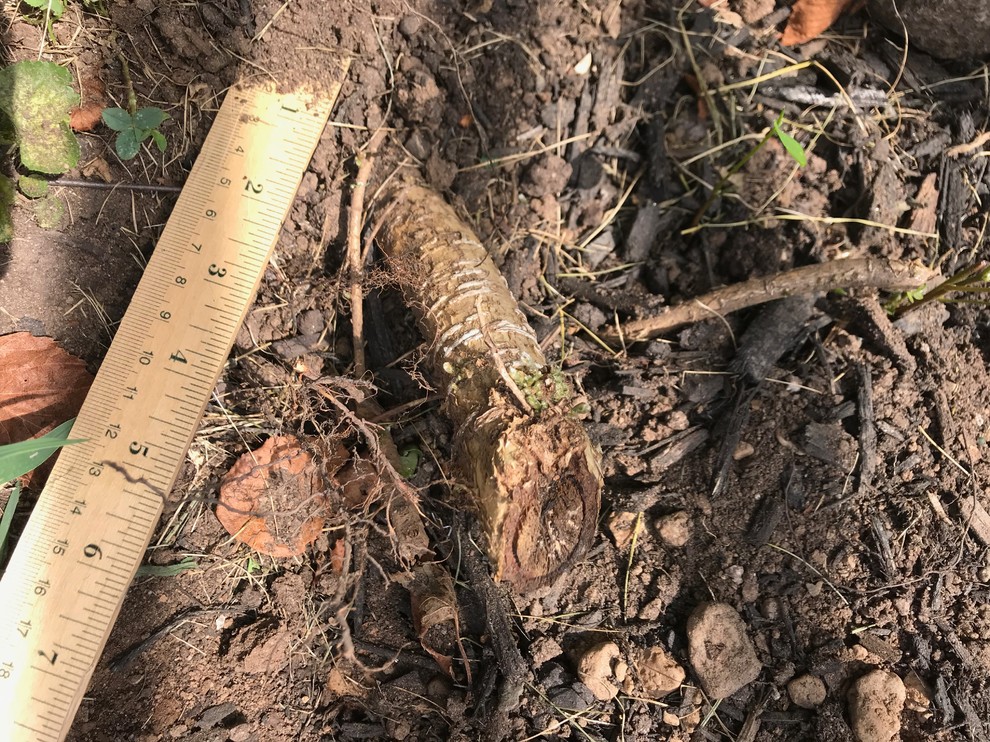
Step-by-step: root cuttings
- Expose a few roots. Dig carefully a short distance from the trunk to avoid damaging the main crown.
- Select pencil-thick roots. Choose healthy, firm roots. Avoid soft, dark, or hollow sections.
- Cut sections 2 to 4 inches long. Make clean cuts. Keep track of which end was closer to the plant (the proximal end). A quick trick is to cut the proximal end square and the far end at a slight angle, so you can tell them apart later.
- Plant with orientation in mind. For best consistency, plant root cuttings vertically with the proximal end up, just below the surface of the mix. (If you plant upside down, they may fail.)
- Water and keep steady. Keep the potting mix lightly moist. Bright, indirect light and gentle warmth help encourage sprouting.
What to expect
Root cuttings can take several weeks to a few months to send up shoots. Once a shoot appears, treat it like a young plant and keep conditions steady. Resist overpotting early.
Rooting setup tips
Use a fast-draining medium
Wisteria cuttings dislike sitting in wet mix. A light blend with perlite helps prevent rot while still holding enough moisture to root.
Warmth and light, not harsh sun
Bright shade or indirect light is the sweet spot. Too little light slows rooting, but direct sun can cook cuttings under plastic.
Humidity matters for softwood cuttings
If leaves wilt constantly, humidity is too low or the cutting is too warm. If stems blacken at the base, humidity may be too high or the mix may be staying too wet.
Clean tools reduce failure
Clean pruners and fresh potting mix help prevent fungal issues. Propagation is already a waiting game, so it helps to remove avoidable setbacks.
Aftercare: the first year
Harden off gently
If your new plant has been living under a dome or bag, ease it into normal humidity over a week. Sudden exposure is a classic way to turn a proud new cutting into a sulking stick.
Pot first if you are unsure
If roots are still modest, let the plant grow in a nursery pot for a season. It is easier to control moisture, and you can protect it from extremes.
Protect a fresh start from hard cold
Newly rooted plants are tougher than they look, but their root systems are small. If a hard freeze is coming and your plant is in a pot, tuck it into an unheated garage or sheltered spot.
Train early
Give the vine a support and choose a main leader. Tie it in loosely. A little training now saves a lot of wrestling later.
How long until propagated wisteria blooms?
Bloom timing depends on the method, the cultivar, and how quickly the plant settles in. Even a clone can take its time, especially if it is shaded, overfed with nitrogen, or pruned at the wrong time. (And yes, some grafted nursery plants bloom sooner because they start life on mature rootstock.)
- Layering: Often among the fastest routes to a flowering-size plant because the new vine is supported while it roots. In good conditions, it may bloom in about 2 to 3 years, sometimes sooner, sometimes later.
- Softwood cuttings: Often bloom in about 2 to 5 years, depending on growth rate and care.
- Root cuttings: Commonly about 3 to 5 years to settle and bloom.
- Seeds: Commonly many years, and results vary widely.
Wisteria likes sun, patience, and a little respectful firmness.
Common propagation problems and quick fixes
Cuttings wilt within a day
- Move to brighter shade and cooler temperatures.
- Increase humidity with a bag or dome.
- Reduce leaf area by trimming large leaves.
Cuttings turn black or mushy at the base
- Use a faster-draining mix and a pot with excellent drainage.
- Water less often and let the surface dry slightly between waterings.
- Start with firmer softwood, not very tender tips.
Layered stem rots where buried
- Bury more shallowly and avoid heavy, wet soil.
- Loosen and amend the soil before pinning the stem down.
- Try pot layering with a lighter mix.
Root cuttings do nothing
- Give them more time and gentle warmth.
- Make sure the mix stays lightly moist, not bone dry.
- Check that you planted with the proximal end up.
FAQ
Can I propagate wisteria in water?
It is possible for some cuttings to form roots in water, but it is less reliable for wisteria than using a proper rooting mix. Water rooting can also produce fragile roots that struggle when transferred to soil. If you want the simplest method with the best odds, layering wins.
Do I need rooting hormone?
You do not strictly need it for layering. For softwood cuttings, rooting hormone can improve success, especially if conditions are not perfectly warm and humid.
Can I take hardwood cuttings?
Hardwood cuttings can work for some woody plants, but wisteria is often propagated more successfully by layering, softwood cuttings, or root cuttings. If you try hardwood cuttings, expect slower rooting and a lower hit rate.
Will my propagated wisteria stay small?
No. If it is happy, it will grow like wisteria. Plan for strong support, regular pruning, and enough space from gutters and siding.
A gentle wrap-up
If you have one good wisteria, you have the start of many. Layering is the low-stress route. Softwood cuttings are great if you enjoy a bit of greenhouse-like tending. Root cuttings are for the patient winter gardener with a trowel and a label.
Whichever method you choose, keep the goal in mind: not just a new vine, but a vine that is settled, trained, and ready to bloom without taking over the zip code.