
When to Prune Wisteria (and the Two Cuts That Matter Most)

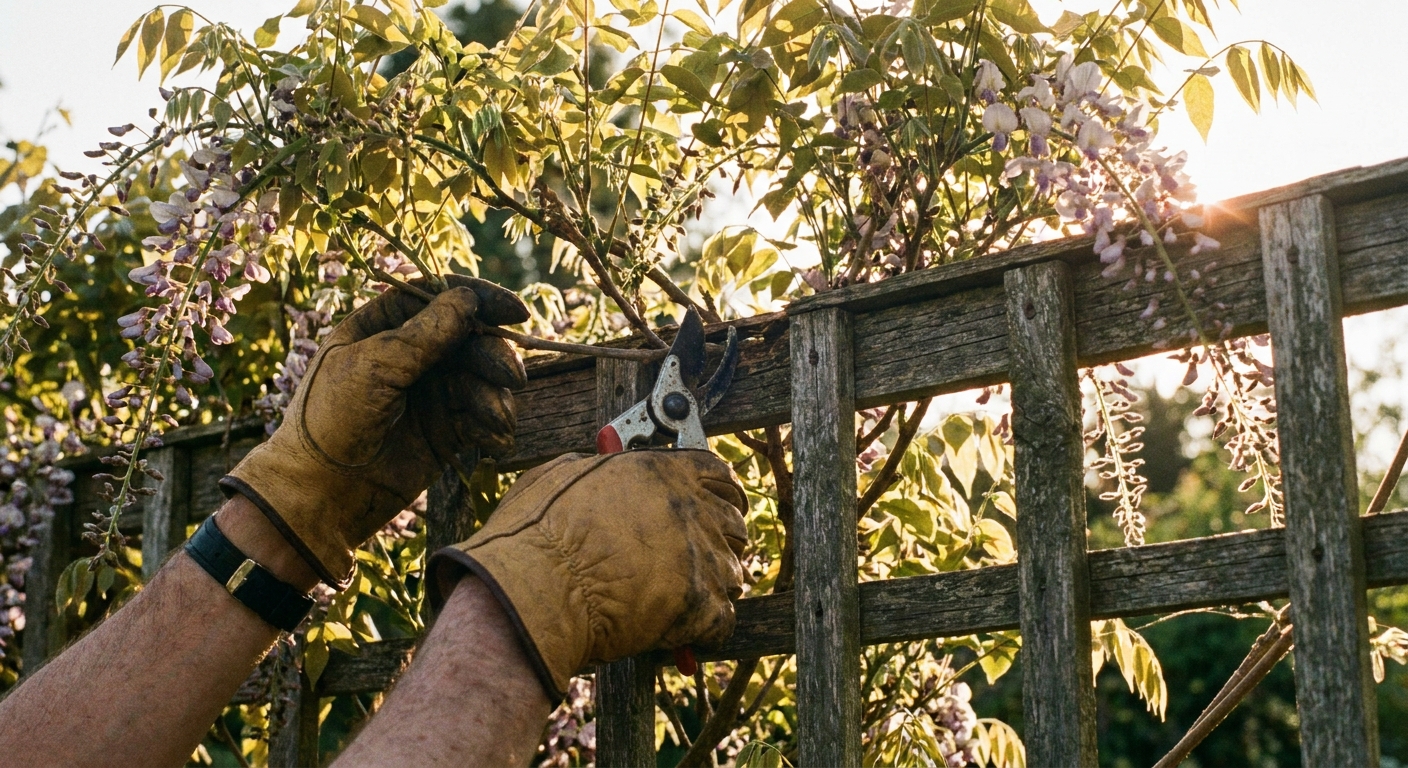
Wisteria is one of those vines that can make you feel like you are either a garden wizard or a complete plant menace, depending on the week. If your vine grows like it is trying to take over the neighborhood but flowers sparsely, pruning timing is usually the missing piece.
The win here is that wisteria does not need constant trimming. It needs two well-timed cuts that do two different jobs. One cut reins in the wild growth and encourages short spur growth where flower buds form. The other cut is the tidy, confidence-building finish that concentrates bloom right where you can enjoy it.
Quick reality check: Pruning helps a lot, but it cannot fix everything. Sun, vine age, nitrogen-heavy fertilizer, and whether your plant was seed-grown versus grafted can all affect flowering.

The two cuts that matter most
Cut 1: Summer pruning
When: After the main flush of flowering finishes and the vine starts throwing long, whippy shoots. For many gardens this is mid-summer, often late June through August depending on climate.
Goal: Stop the vine from spending all its energy on leafy length and redirect it into short spur growth where next year’s flower buds tend to form.
- What you cut: The long green runners (sometimes called water shoots) that rocket out from the framework stems.
- How much: Shorten those new shoots to about 5 to 7 leaves from the base. On many vines that ends up around 6 to 8 inches, but leaf count is the better target.
- What you leave: The main structural arms you are training along your trellis or pergola.
Think of summer pruning as the vine’s gentle but firm reminder: “We are here for flowers, not a 30-foot sprint.”
Cut 2: Winter pruning
When: During dormancy, after leaves drop but before spring growth starts. In many areas this is late winter, often January through early March.
Goal: Concentrate bloom by shortening the spurs you created in summer and cleaning up clutter so light and air can reach the flowering points.
- What you cut: The same shoots you shortened in summer, plus any extra tangles that formed.
- How much: Reduce those short shoots again to 2 to 3 buds from their base.
- Bonus: Remove dead, damaged, or rubbing wood and any shoots heading into gutters, shingles, or siding.
If you can only manage one pruning, late winter is usually the easiest and clearest time to do it because the framework is visible. But if your vine is very vigorous and stingy with flowers, the summer cut is often the one that most improves blooming by encouraging spur formation.
When to prune wisteria
Most “when do I trim wisteria?” advice is technically correct but still frustrating, because timing shifts a bit by species and by how aggressively the vine grows in your climate. Use this calendar as your baseline, then adjust by what your plant is doing.
Asian wisteria
Includes: Wisteria sinensis (Chinese) and Wisteria floribunda (Japanese)
Growth habit: Very vigorous, often needs more regular pruning to keep blooms and prevent a green takeover.
- Late spring to early summer: Enjoy blooms. Right after flowering is when you start watching for long new shoots.
- Mid-summer: Do Cut 1 once the new growth is long enough to manage. If your vine is extremely vigorous, you can do a light second pass 4 to 6 weeks later.
- Late winter: Do Cut 2 to 2 to 3 buds.
American wisteria
Includes: Wisteria frutescens and Wisteria macrostachya (Kentucky wisteria)
Growth habit: Typically less aggressive than Asian types and often easier to keep within bounds.
- After flowering: Do a lighter version of Cut 1. You may not need to shorten every shoot, just the ones shading the framework or shooting into chaos.
- Late winter: Do Cut 2 to clean up and set bloom positions.
One practical rule: If your American wisteria is blooming nicely and behaving, prune lightly. If it is leafy and stingy with flowers, follow the same two-cut method more strictly.
Summer vs winter pruning
Summer pruning manages energy
In summer, wisteria is in full “grow mode.” If you let it, it will keep producing long shoots that shade the inner vine and delay spur development. Shortening those shoots reduces shading and encourages short spurs.
Winter pruning focuses bloom
In winter, you can clearly see the framework. This is when you decide where the flowers will sit next season. Cutting back to 2 or 3 buds concentrates the plant’s spring push into fewer, stronger flowering points instead of lots of leafy extension.
If your goal is a curtain of blooms on a pergola instead of a tangle of stems, you need both steps working together.
Flower buds vs growth buds
This is the part that makes people freeze with pruners in hand. I get it. Nobody wants to accidentally snip off next year’s flowers.
Here is what to look for on established wisteria spurs during winter pruning:
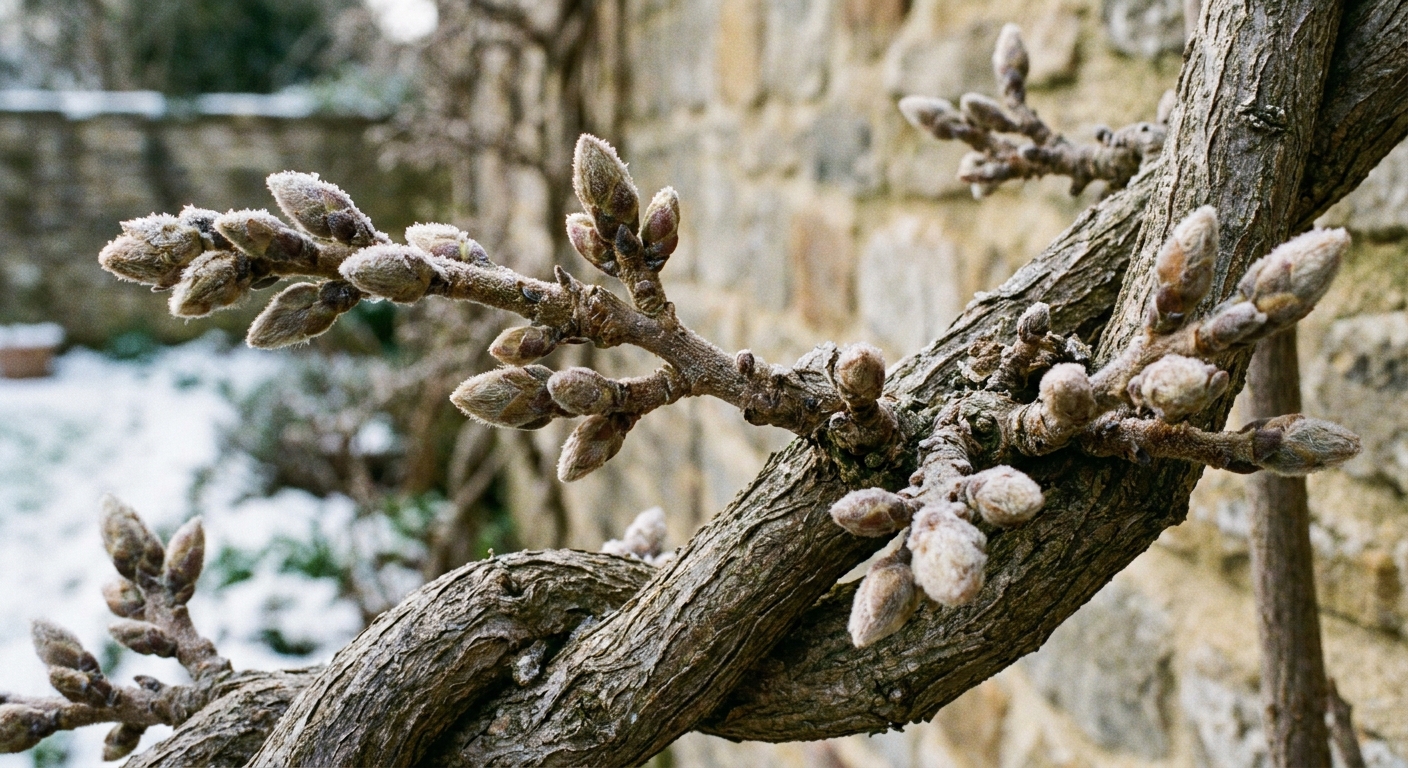
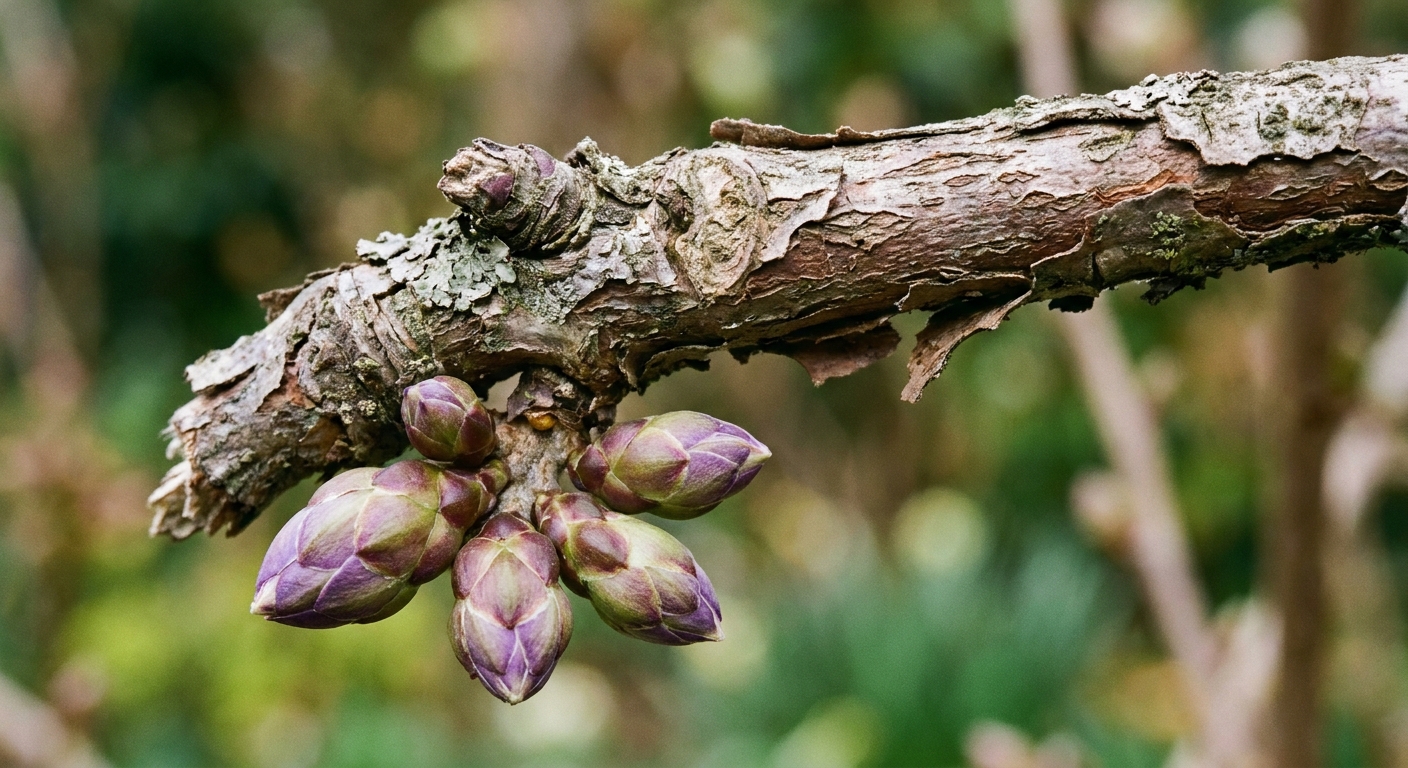
- Flower buds: Usually plumper and rounder, often set on short spurs close to the main framework. They look a bit like tiny fat buttons.
- Growth buds: Typically narrower and more pointed, often sitting along longer shoots that want to extend outward.
My “thumb test” tip: Without squeezing hard, gently roll the bud between your fingers. Flower buds often feel fuller and more substantial. Growth buds often feel slimmer and sharper. Not foolproof, though, because bud shape can vary by cultivar and conditions.
The more reliable clue: Flower buds are more common on older wood and spur growth. If you are looking at a long, new, pencil-thin whip, it is mostly future leafy growth unless you cut it back and let it mature into a spur.
How to prune wisteria
Tools and prep
- Sharp hand pruners for most cuts
- Loppers for thicker stems
- Gloves and long sleeves, especially for older vines with rough bark
- Disinfectant wipe or spray if you are moving between plants
Wisteria is tough, but clean cuts heal faster and look nicer.
Safety and supports
Wisteria is also heavy. Make sure your trellis or pergola is robust, and avoid risky ladder work. If a vine is wrapped into wiring, gutters, or a roofline, it can be smarter to call in help than to wrestle it solo.
Summer pruning steps (Cut 1)
- Stand back first. Identify your main framework stems that you are training along the support.
- Find the long whips. These are the fast-growing green shoots extending beyond the shape you want.
- Shorten each whip. Cut back to about 5 to 7 leaves from the base.
- Remove obvious troublemakers. Anything wrapping tightly around posts, wires, downspouts, or other plants should be redirected or removed.
- Tie in what you keep. If a long shoot is in a useful direction for filling a bare area of trellis, do not automatically chop it off. Train it instead.
Winter pruning steps (Cut 2)
- Locate summer-pruned shoots. They will be short spurs sticking off the main arms.
- Cut each spur back again. Leave 2 to 3 buds from the base of that spur.
- Thin congestion. Remove spurs that are crossing, rubbing, or crowding so tightly that air cannot move through.
- Check the structure. If a main arm is growing where you do not want it, winter is the time for a bigger structural cut.
New vines vs established vines
If your wisteria is newly planted, do not expect it to behave like an old, flowering curtain right away.
- Years 1 to 2 (training years): Focus on choosing and tying in a few main leaders to build the framework. Prune lightly, mostly to remove badly placed shoots and keep growth directed.
- Established vines: Once the framework is in place, the summer-and-winter routine is what keeps it blooming and civilized.
Training on trellises and pergolas
Wisteria is not just a plant you prune. It is a plant you coach. Training is what turns that chaos into a flowering canopy.
Choose a few main leaders
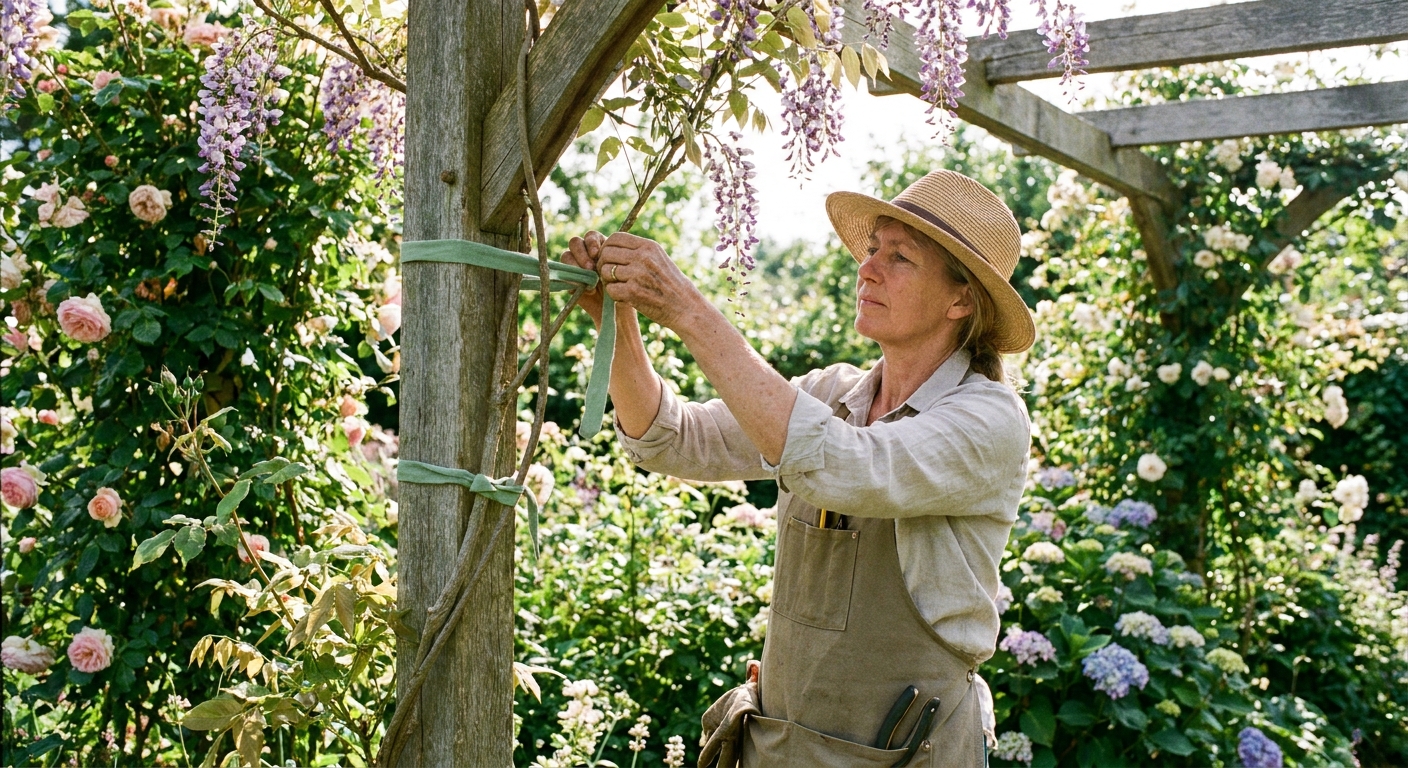
Pick 1 to 3 strong stems to become your permanent framework on a trellis or pergola. Tie them in loosely with soft plant ties.
- Do not use thin wire directly on stems, it can bite in as the vine thickens.
- Leave a little slack in each tie so the vine can expand.
Wrap direction
Different species tend to twine in different directions, and forcing the wrong twist can snap stems. If you are unsure, gently guide a young stem and see which way it naturally wants to coil. Then support that direction rather than fighting it.
Use pruning to set the framework
Once your leaders reach the space you want to cover, stop letting them run endlessly. Summer prune side shoots to create spurs, and winter prune those spurs to keep flowers close to the structure instead of dangling from a jungle of stems.
Common timing mistakes
Pruning hard in early spring
Early spring pruning often removes the very buds you were hoping would bloom. If you must prune in spring due to damage or safety issues, do it lightly and focus on removing only what is necessary.
Skipping summer pruning
On vigorous vines, skipping the summer cut is one of the fastest ways to end up with lots of leaves and fewer flowers. Remember, summer pruning is how you encourage spur formation.
Letting vines wrap tightly
Wisteria can girdle posts and even distort railings as it thickens. If you see tight coils, unwind and redirect young stems, or remove them before they become woody cables.
If it still won’t flower
If your pruning is on point but the blooms are still stingy, these are the usual suspects:
- Not enough sun: Wisteria generally flowers best in full sun.
- Too much nitrogen: Lawn fertilizer drift and high-nitrogen feeds push leaves at the expense of flowers.
- The plant is still young: Seed-grown vines can take many years to bloom.
- Bud damage: Late frosts can knock out developing flower buds in some years.
- Accidental spring bud removal: A hard spring prune can erase the show.
Neglected wisteria
If your vine is a dense, woody snarl, you can renovate it, but go slow. In late winter, remove dead wood and a few of the oldest, most problematic stems first, then rebuild the framework over a season or two. A hard one-time hack job can trigger a flood of leafy regrowth with even fewer flowers.
Quick reference
- After flowering (summer cut): Shorten long new shoots to 5 to 7 leaves from the base.
- Late winter (winter cut): Shorten those shoots again to 2 to 3 buds.
- American wisteria: Often needs a lighter touch, but the timing stays similar.
- Asian wisteria: Usually benefits from consistent summer plus winter pruning.
If you want to keep troubleshooting bloom issues, you will get the most useful clues by pairing your pruning calendar with what your vine is doing right now: how much sun it gets, how old it is, and whether it has been fertilized heavily with nitrogen. This page stays focused on timing and technique so you can make the right cuts with confidence, season after season.