How to Train Clematis Up a Trellis or Fence
A little green. A lot of curiosity.
Clematis is a climber with big dreams and surprisingly delicate manners. It wants to go up, but it will not muscle its way there like ivy. Training is mostly you, gently guiding new growth so it can grab on and settle in.

How clematis climbs
Many popular garden clematis climb using leaf petioles, the slender little stalks that connect each leaf to the stem. Those petioles wrap around thin supports like string, wire, twigs, or narrow lattice pieces. They do not naturally grip thick fence boards or chunky posts.
Some clematis are more scrambling or herbaceous and need more tying than twining, but the same approach still works: give the plant something it can hold, and guide fresh growth while it is flexible.
Pick the right support
You can train clematis onto trellises, fences, arbors, obelisks, or wires. The best choice depends on two things: how heavy your clematis will get, and how wide the openings are.
Best support options
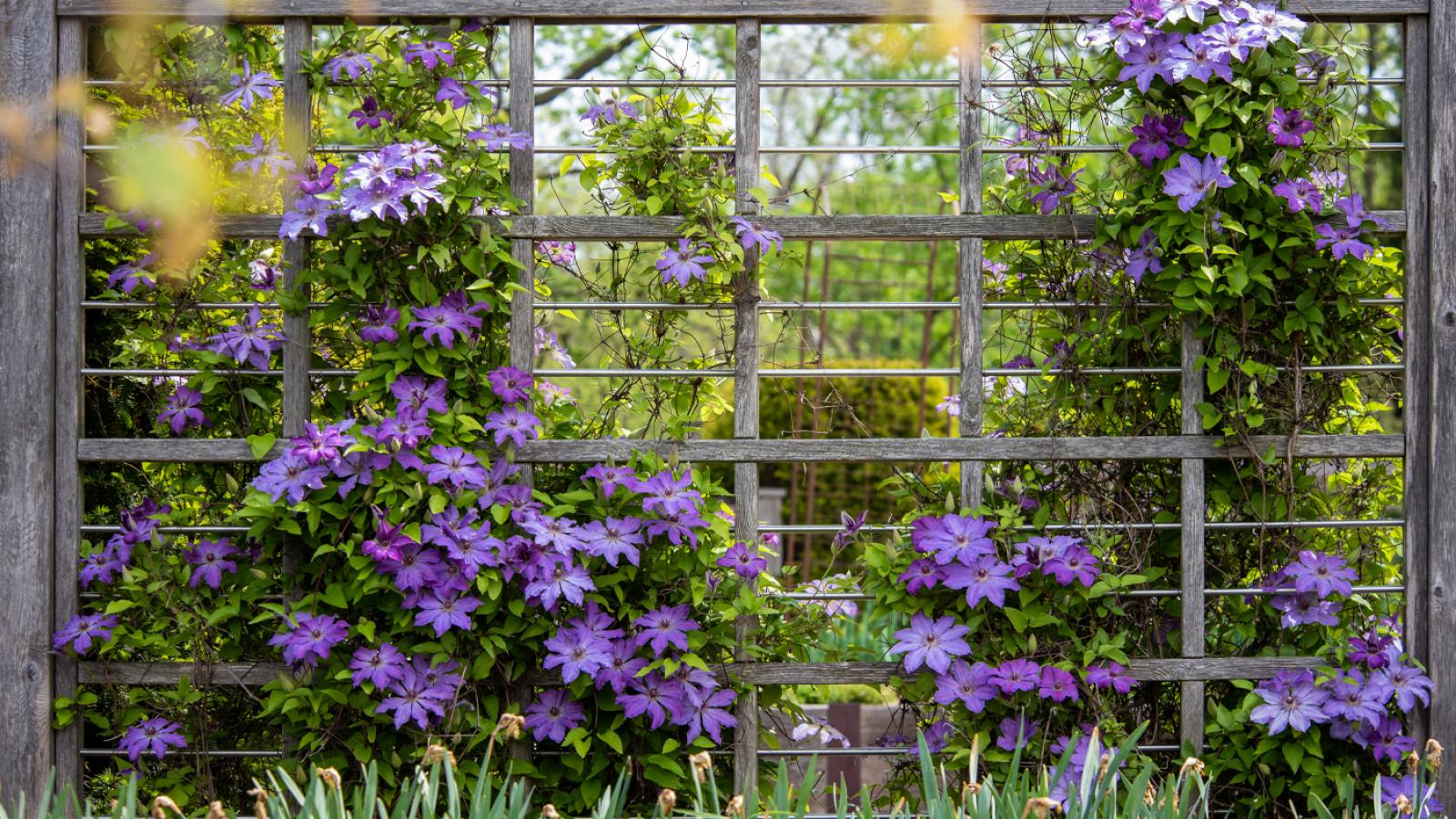
- Lattice trellis (wood or metal): Great all-around choice. Look for narrow slats or add twine to create smaller grip points.
- Wire panel or cattle panel: Strong for vigorous varieties, and easy for petioles to grab.
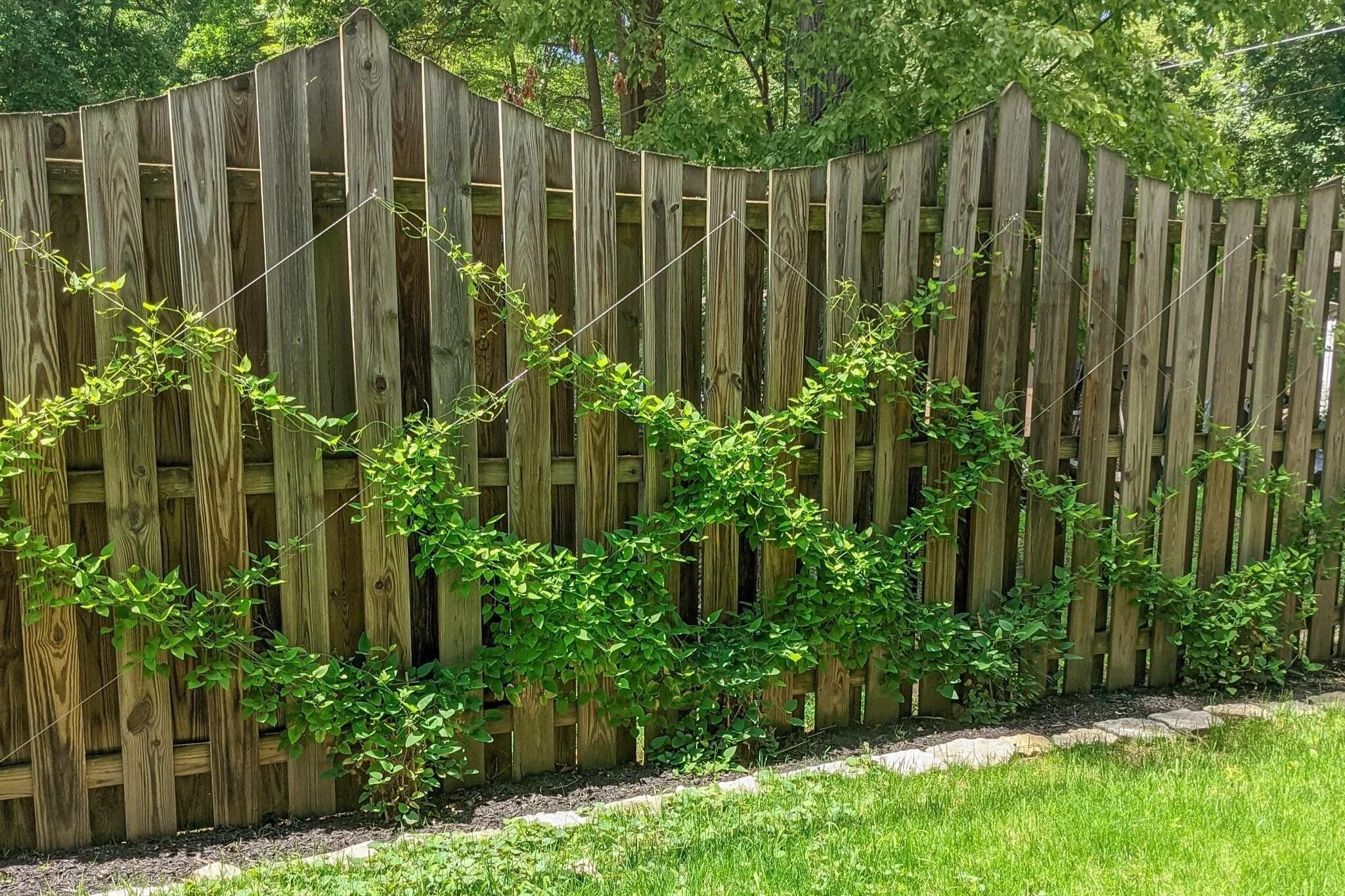
- Horizontal tension wires on a fence: Perfect for board fences that are otherwise too flat and thick to cling to.
- Garden netting (temporary): Useful for the first season while the plant finds its direction, especially on wide-open fences.
- Obelisk or tripod: Good in beds and large containers. Add extra strings if gaps are wide.
If your fence is solid boards
A clematis on a flat privacy fence often struggles because there is nothing to wrap around. The fix is simple: run horizontal wires (or sturdy garden twine) as a starting point about 8 to 12 inches apart, anchored with eye screws. Adjust spacing based on your vine and wind exposure. Now the vine has something to hold, and you can tie stems to the wires as they grow.
Ties: what to use
Clematis stems can snap easily in wind or during a well-meaning tug. Your tie choice matters.
Good tie materials
- Soft plant ties (foam-coated wire, rubberized ties, or soft tape)
- Jute twine (gentle, easy to replace, best for light support)
- Velcro garden tie tape (adjustable as stems thicken)
- Green stretch tie (helpful on windy sites)
Avoid these common stem-snappers
- Thin wire directly on stems (it can cut in as the vine grows)
- Zip ties (too rigid, can pinch and rub)
- Tight knots (clematis thickens and the tie becomes a tourniquet)
If you only remember one rule: tie loose enough to slide a finger under. You are guiding, not strapping it down.
How to attach stems
Training clematis is easiest when stems are young, flexible, and still reaching. Once they harden off, they bend less and break more.
Step by step
- Find the newest growth. Look for tender tips and bright green stems.
- Lay the stem against the support. Put it close to a thin slat, wire, or string so the leaf petioles can wrap.
- Add a loose tie below a leaf joint (node). Tie around the stem and support in a soft loop. Placing ties near leaf joints helps prevent sliding and reduces stress on the stem.
- Angle the stem for coverage. Do not send everything straight up. Fan stems out sideways too, so you get flowers across the whole trellis, not just at the top.
- Check again after wind. Clematis can get whipped around. A quick retie after storms prevents major breaks.
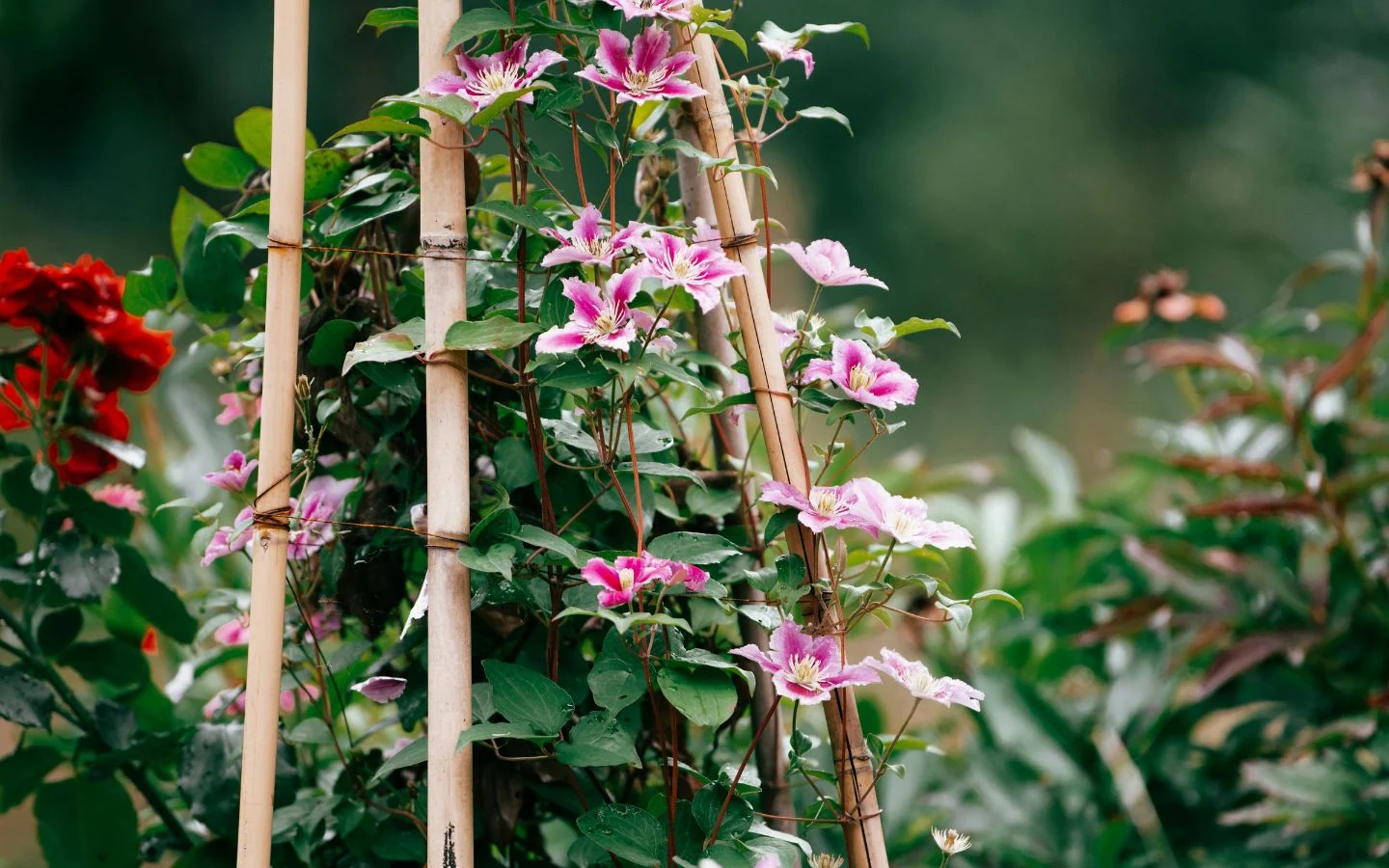
How far apart to tie
There is no single perfect number, but there is a reliable rhythm. Think of these as good starting points, then adjust for your site and your vine.
- For young, tender stems: often every 6 to 8 inches, especially in windy spots.
- For more established, woody stems: often every 10 to 12 inches, using ties mostly to keep stems positioned where you want coverage.
- Near corners, ends, and new turns: add an extra tie to reduce leverage and whipping.
When in doubt, use more ties, looser, rather than fewer ties pulled tight. Tight ties cause damage. Extra gentle ties prevent it.
Guide new growth gently
Clematis breaks most often when you try to bend a stem that has already stiffened. Timing and technique are your best tools.
Do this
- Train weekly during peak growth (spring and early summer for most varieties). A quick check prevents a tangled knot later.
- Support the stem with one hand while you position it with the other. Think “steady the base, guide the tip.”
- Make wide, gentle curves instead of sharp bends.
- Fan stems out across the support so you get better flowering coverage, even if total bloom count depends on the variety and pruning approach.
Not this
- Do not unwind wrapped petioles. Those leaf stalks can tear easily. If the vine grabbed the wrong place, guide newer growth in the right direction instead.
- Do not force a brittle stem. If it resists, tie it where it is and redirect the next shoot.
- Do not wait until it is a windblown braid. Untangling late usually costs a stem or two.
Support by growth habit
“Clematis” covers everything from politely sized patio vines to enthusiastic climbers. Training principles are the same, but support scale matters.
Large-flowered hybrids (often 6 to 10 feet)
- Use a sturdy trellis or wire panel.
- Provide lots of thin grab points. Add twine in a loose grid if the trellis openings are wide.
- Fan stems early so flowers appear across the trellis, not just in a vertical column.
Vigorous types (10 to 20+ feet)
- Choose heavy-duty support and solid anchors. These vines can become surprisingly weighty once in leaf.
- Plan for reach. Install support to the height and width you want covered before the vine takes off.
- Expect to tie more often early in the season to prevent wind damage.
Scrambling or herbaceous types
- These may not clasp strongly. They often do best with a pea fence, small grid panel, or several thin stakes.
- Use more ties, spaced closer, because the plant will not always hold itself up.
If you are not sure what you have, watch the leaves. If petioles are actively wrapping thin support, it is ready to climb. If it just leans and flops, treat it like a scrambler and tie it in place.
Mistakes that cause breaks
Let’s keep your vine in one piece. These are the most common training missteps that cause snaps, splits, and setbacks.
- Handling stems on a windy day. Wind turns training into tug-of-war. Choose a calm time if you can.
- Pulling stems away from the support to reposition. Clematis often breaks at a joint when tugged outward.
- Using rigid ties. Stems need a little give. Rigid ties create a hard pinch point that snaps when the vine moves.
- Tying too tight. Even if it does not break today, it can girdle later as the stem thickens.
- Training too late. Mature stems are less flexible. Early guidance is gentler than late correction.
- Letting one main stem do all the work. A single stem trained straight up is a lever in the wind. Spreading stems distributes stress.
Aftercare
Once your clematis is attached and heading in the right direction, your job becomes light maintenance.
- Check ties every few weeks. Loosen or replace anything that looks snug.
- Add new ties as fresh growth appears. Young stems are easiest to guide.
- Keep the base comfortable. Many clematis appreciate cool roots. A light mulch layer or nearby low plants can help shade the soil surface.
- Prune with the plant’s group in mind. Different clematis bloom on different wood. Following your variety’s pruning group helps you avoid cutting off this season’s flowers.
And then, the fun part: stand back and let it climb. Clematis is at its happiest when it has a path upward and a little gentle coaching.
Quick FAQ
Can I train clematis on a chain-link fence?
Yes. Chain-link is one of the easiest fences for clematis because it offers lots of thin grab points. You may still want a few ties early on to get stems started in the right direction.
Should I tie clematis tightly so it won’t move?
No. A little movement is normal. Tight ties can cut into stems and make snapping more likely during gusts. Use soft ties and keep them loose.
Why does my clematis keep falling off the trellis?
Usually the openings are too wide or the support is too thick for petioles to wrap. Add horizontal wires, twine, or netting to create thinner, closer grip points, then tie young stems until they latch on.
What if I accidentally broke a stem?
It happens. Cleanly remove the broken piece if it is dangling, then focus on training the remaining shoots. Clematis often responds by sending new growth from lower joints, especially during the active season.