
Clematis Wilt

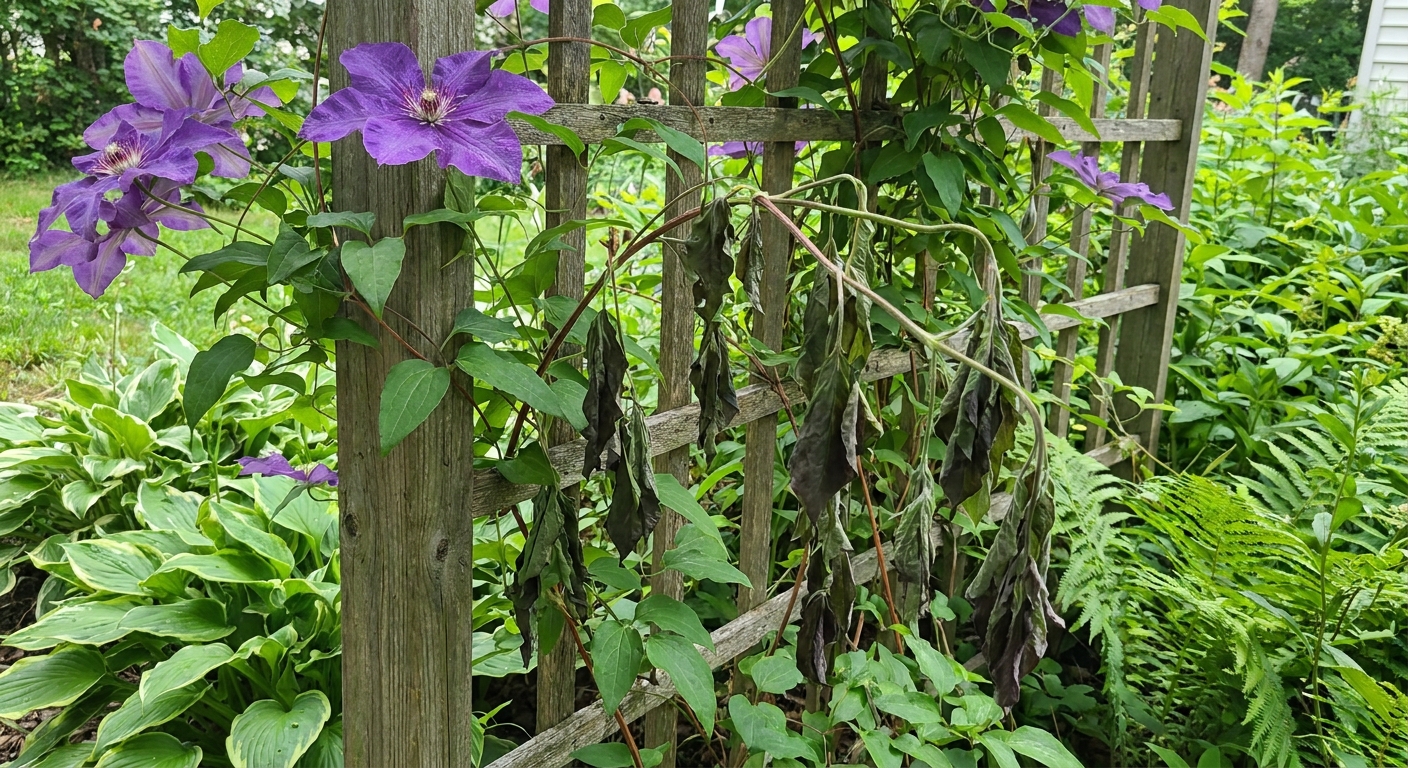
If you have ever walked outside and found your clematis looking like it fainted overnight, you are not alone. Clematis wilt is one of the most dramatic garden problems I know. It can turn a thriving, twining vine into a limp mess in a single day. The good news is this: many clematis survive wilt and rebound beautifully, especially when you act quickly and keep the plant’s crown healthy.
Let’s sort out what clematis wilt is, how to tell it apart from plain old mechanical damage, and exactly what to do next. I will also point you to our pruning-groups guide so you can get long-term structure right without me repeating that entire system here.

What clematis wilt is
“Clematis wilt” is a catch-all name gardeners use for a rapid collapse of stems, most often caused by fungal pathogens that invade the vine’s tissues and disrupt water flow. In many gardens, the usual culprit is a fungus often reported as Ascochyta clematidina (syn. Phoma clematidina in older horticultural literature). Other opportunistic fungi can also take advantage of stress or wounds.
Two things can be true at once:
- The top growth can look “dead” fast, because the affected stem can no longer move water.
- The roots and crown can still be alive, meaning your plant may resprout from the base if you prune correctly and reduce stress.
Wilt is most common on large-flowered hybrid clematis. Many viticella types tend to be less prone, although no clematis is completely immune if conditions line up just wrong.
Wilt vs mechanical damage
Before you declare war on fungi, do a quick detective check. A surprising number of “wilt” cases are actually a snapped stem, a pet yanking incident, wind whip, or a lawnmower or string trimmer nick at the base. Here is how I tell them apart in the garden.
Signs that point to clematis wilt
- Sudden collapse of one or several stems, often within 24 to 48 hours.
- Leaves and flowers droop even though the soil is not bone dry.
- Dark streaking or lesions on the affected stem, sometimes near a node or lower down.
- Stem looks pinched or rotted in one section rather than cleanly broken.
Signs that point to mechanical damage
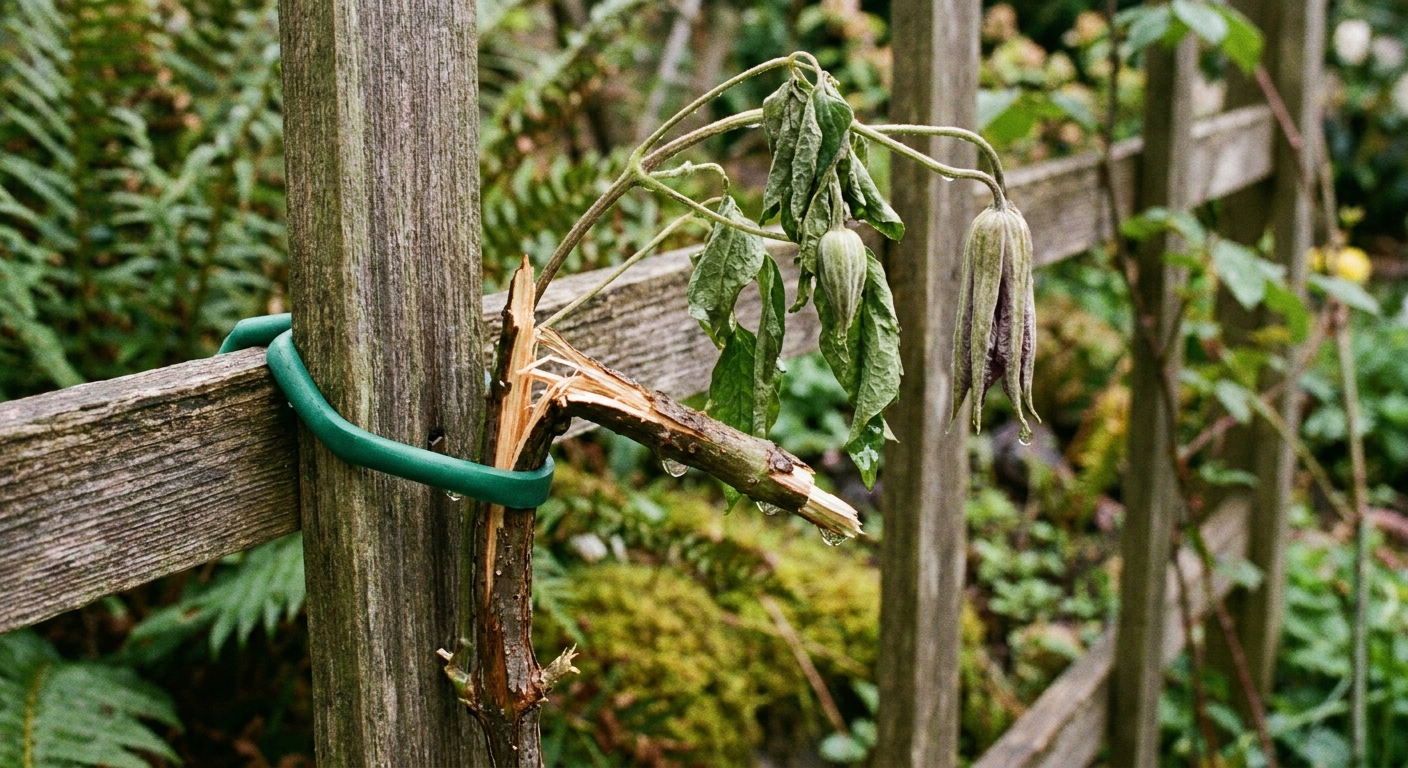
- A clear break or kink, especially where the vine was tied, trained, or rubbed.
- Only the growth above the injury wilts, while stems elsewhere look totally fine.
- Recent storm or handling, or the stem is dangling by a “string” of tissue.
If you are unsure, treat it like wilt anyway. The response begins the same way: remove affected stems cleanly and reduce stress at the crown (the point where stems emerge from the soil).
Fast action checklist (same day)
When a clematis collapses, timely action helps remove infected tissue and can help limit further dieback. Here is my calm, practical triage routine.
- Step 1: Follow the wilted stem down. Track it to where it still looks firm and healthy.
- Step 2: Prune below the damage. Cut the stem down to healthy tissue. If you see darkened pith or a brown ring inside the stem, cut lower.
- Step 3: Bag and remove debris. Do not compost wilted stems and leaves in a home compost pile. Put them in the trash, or use municipal green waste only where accepted and processed hot enough to kill pathogens. If you are unsure, trash is simplest.
- Step 4: Sanitize pruners between cuts. Wipe blades with 70 percent isopropyl alcohol or a disinfectant wipe, especially if you are making multiple cuts. (If you use bleach, use a properly diluted solution, rinse, and dry to reduce corrosion.)
- Step 5: Water the root zone. Not a swamp, just a deep drink if soil is dry, because stressed plants are easier targets.
How far to prune
This is the moment most gardeners freeze. I get it. Clematis pruning already feels like a choose-your-own-adventure book, and wilt shows up like a plot twist.
Here is the simplest rule that works in real gardens:
- If only one stem is affected: prune out just that stem down to healthy tissue, and leave the rest of the vine intact.
- If multiple stems are affected or you cannot find healthy tissue: prune the whole plant down hard, often to 6 to 12 inches from the soil line, sometimes right to the crown if needed.
Yes, that can mean sacrificing this season’s blooms. But saving the plant is the priority. Many clematis will resprout from dormant buds at or below the soil line.
How pruning groups fit in
Your clematis pruning group matters for shaping and bloom timing in normal years. During a wilt emergency, you prune for plant survival first and bloom schedules second.
Once your plant stabilizes and you are back to routine maintenance, use our pruning-groups guide to decide when and how to prune for structure and flowers: Clematis Pruning Groups: When and How to Prune.
If you had to cut a Group 2 or Group 1 clematis down hard because of wilt, it may bloom later or less the next season. That is normal. Think of it as rehab, not failure.
The crown matters
Clematis have a vulnerable “crown” area where stems emerge from the soil. Many wilt pathogens are opportunists, entering through tiny wounds or stressed tissue near the base. Your goal is to keep the crown cool, protected, and not constantly wet.
Common ground-level risks
- Stem injury at the base from wind movement, tight ties, pets, or weed trimmers.
- Wet feet from heavy soil, poor drainage, or irrigation that keeps the crown soggy.
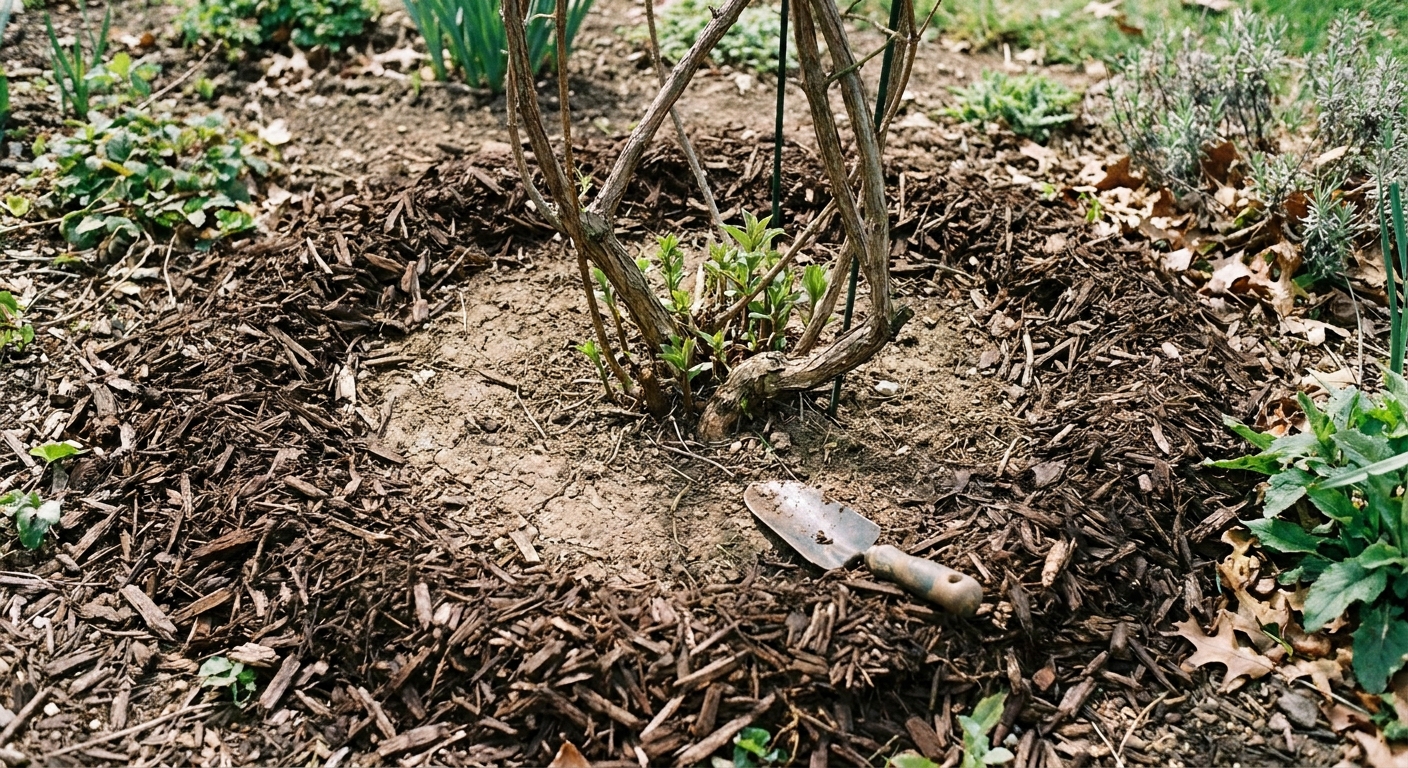
- Mulch piled against stems which traps moisture and can encourage rot.
- Heat stress when the root zone bakes while the vine is expected to perform.
- Planting too shallow for vulnerable hybrids, leaving fewer below-soil buds to resprout from.
What to do at ground level now
- Pull mulch back so it is a donut, not a volcano. Keep a few inches of bare space around stems.
- Check drainage. If water puddles, consider gently improving the area with compost, or plan a future move to a better-drained spot.
- Stabilize stems. Use soft ties and avoid letting vines whip in wind, which creates the kind of micro-wounds fungi love.
What else it could be
Not every collapsing clematis is classic wilt. If the symptoms do not quite match, consider these common look-alikes:
- Drought or heat stress: the whole plant flags during hot afternoons, then perks up overnight. Leaf edges may scorch.
- Waterlogging and crown or root rot: yellowing, slow decline, and a crown that turns soft or smells foul. This one is strongly tied to poor drainage.
- Rodent or root damage: sudden collapse with disturbed soil or tunneling (voles are not subtle).
- Stem borer or chewing pests (regional): hollowed stems, frass, or a small entry hole.
- Mechanical injury: a clean snap, nick, or abrasion near the base that cuts off water flow above it.
If you keep seeing the same pattern year after year, a local extension office or an experienced independent nursery can help confirm the cause and suggest region-appropriate fixes.
Recovery care (2 to 6 weeks)
After pruning, your job is to help the plant regrow without forcing it. Think steady support, not a growth-spurt pep talk.
Watering
Keep soil evenly moist, especially during warm spells, but never saturated. Deep water at the root zone and avoid splashing the foliage if you can.
Feeding
Hold off on strong, fast-release fertilizer right after a major cutback. Instead:
- Top-dress with compost or worm castings.
- If you want to feed, use a gentle, balanced organic fertilizer at a light rate once you see new growth.
Mulching and shade
Once you have kept the crown clear, use mulch to keep the root zone cool and moisture-stable. Many clematis appreciate “cool feet.” A small neighboring perennial can also shade the soil without smothering the crown.
Training new shoots
When new growth appears, train it early. Young clematis stems are flexible, then suddenly they are not. Use soft ties and give them a support they can grab.
What to expect next
- Resprouting timing: some plants push new shoots within 1 to 3 weeks, others take longer, especially if nights are cool.
- Do you strip remaining leaves? No. If a stem is healthy, let it photosynthesize. If a stem is collapsed, remove it.
- When to feed normally again: once you have several inches of new growth and the plant is clearly moving, you can return to your usual light feeding routine.
Should you use a fungicide?
In home gardens, fungicides are a mixed bag for clematis wilt. Once a stem is infected and collapsed, sprays do not “uncollapse” it. Pruning out affected tissue is the most effective step.
Fungicides, when used, are generally preventative or protectant, not curative. Product choice, timing, and local regulations matter. If you go this route:
- Use a product labeled for clematis and for the disease you are targeting.
- Follow label directions exactly, including reapplication intervals and protective equipment.
- Prioritize cultural fixes first: airflow, avoiding crown wetness, reducing stem injury, and sanitation.
If wilt happens repeatedly year after year, it is worth talking to a local extension office or a knowledgeable independent nursery. They can help confirm whether you are dealing with wilt pathogens, crown rot, or something else entirely.
When to replant
This is the hardest question emotionally, because clematis feel like garden companions. Here is my honest rule of thumb.
Do not replant yet if
- Your clematis was healthy before the incident and this is the first wilt event.
- You can see live buds or new shoots emerging from the base.
- The crown is firm and not foul-smelling or mushy.
Give it time. Some clematis resprout weeks later, especially when the weather warms.
Consider replanting if
- The crown is clearly rotting, soft, or hollow.
- No new growth appears after a full growing season, despite good care.
- Wilt is recurring and severe, and the site has chronic issues like poor drainage or repeated stem injury.
If you replant, lower the odds next time
- Choose a better spot with good drainage and morning sun if possible.
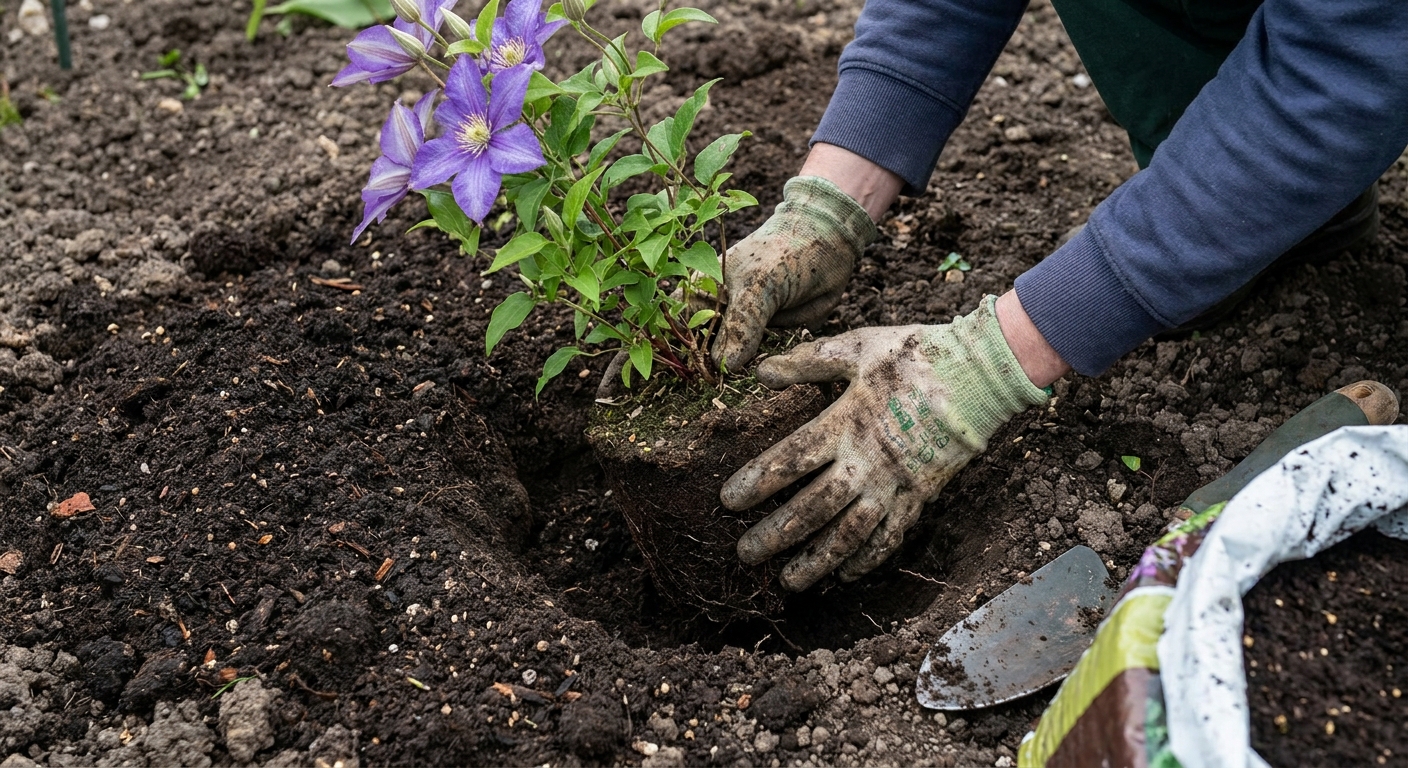
- Plant a little deeper (when drainage is good). For many large-flowered hybrids, setting the crown about 2 to 3 inches (5 to 7 cm) below soil level can encourage below-soil buds that help the plant resprout after damage. If your soil is heavy or stays wet, focus on drainage first, because planting deep in soggy conditions can backfire.
- Improve soil structure with compost, and avoid overwatering.
- Support first, plant second. Install a sturdy trellis so stems do not whip around.
How to prevent wilt
You cannot make your garden sterile, and you would not want to. But you can make it harder for wilt to take hold.
- Handle stems gently. Many infections start with stress or wounds.
- Keep airflow around the vine. Avoid dense tangles and let leaves dry quickly after rain.
- Water at the base. Drip irrigation or a careful watering can beats overhead watering in humid climates.
- Sanitize tools. Especially after you prune a sick plant.
- Keep the crown dry-ish. Mulch around, not against, the stems.
- Prune with purpose. Routine pruning supports vigor and reduces weak, crowded growth. Use our guide to keep your pruning aligned with your clematis type: Clematis Pruning Groups: When and How to Prune.
Quick symptom checker
If you are standing in the garden right now, use this mini checklist.
- Wilted stems, soil moist, no obvious break: treat as wilt, prune affected stems down to healthy tissue.
- Single stem collapsed with a clear snap: remove the broken stem, secure remaining growth, and monitor.
- Whole plant collapsing with a mushy base: suspect crown or root rot, improve drainage and consider replacing if no recovery begins.
If you want, take a close look at the stem near the soil line with a flashlight. The story is usually written right there.