
How to Train a Climbing Rose on a Trellis or Fence
A little green. A lot of curiosity.
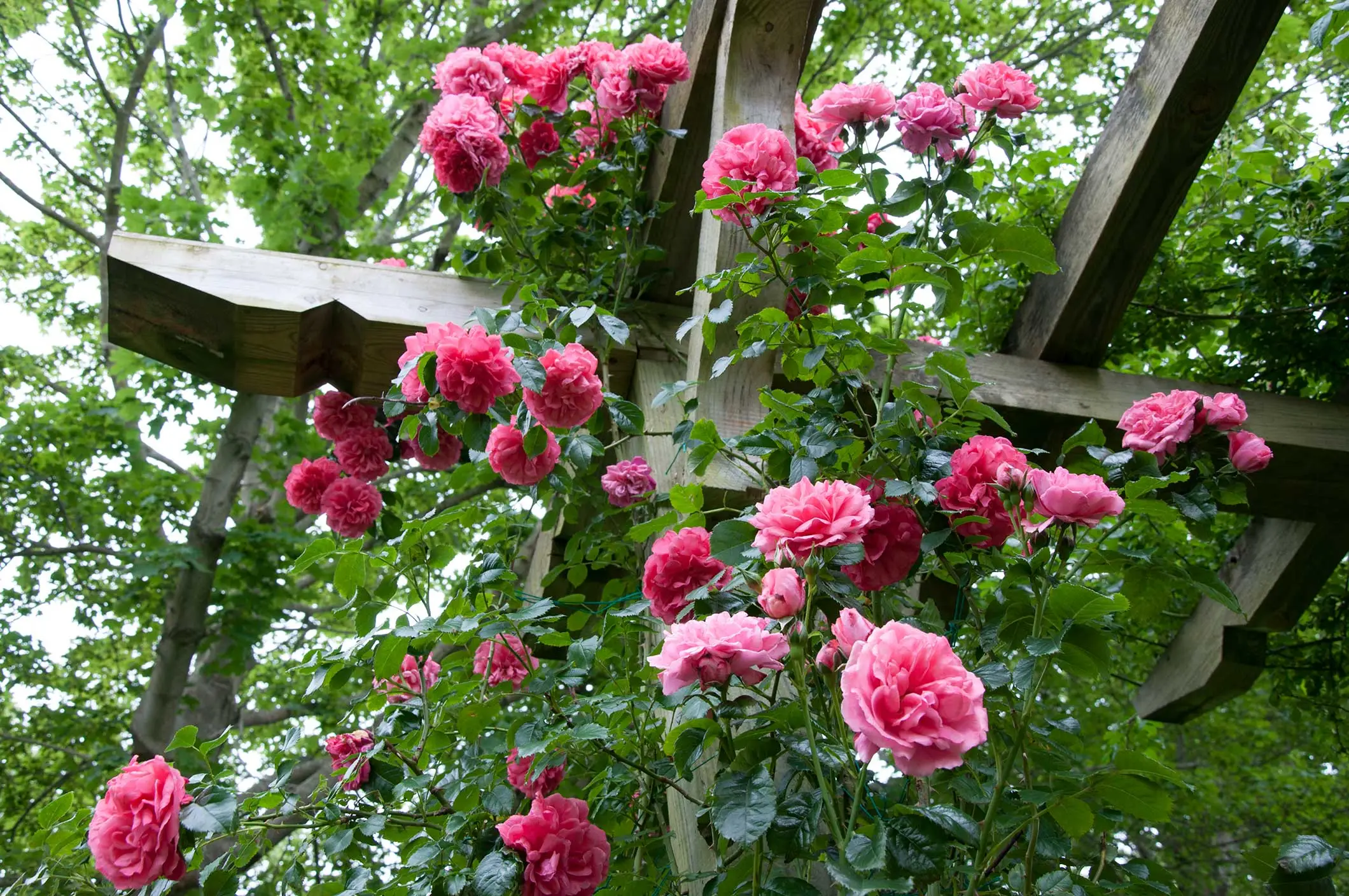
Climbing roses do not really “climb” like ivy. They make long canes, and you decide where those canes go. The magic trick is simple: instead of letting canes shoot straight up, you spread them out and tie them in place, especially in a more sideways position. That encourages lots of flowering side shoots, which means more blooms and better coverage on your trellis or fence.

Why sideways canes mean more flowers
Here is the rose rule that makes training worth the effort: upright canes tend to keep growing upright, putting most blooms near the top. When you arc or tie a cane closer to horizontal, the plant responds by pushing lots of new side shoots along that cane. Those side shoots are where clusters of flowers form.
Think “fan-shaped” or “ladder-like” rather than “beanstalk.” Your goal is a framework of main canes (the thick, long ones) positioned across the structure, then you let the shorter flowering laterals fill in.
Before you start: what type of rose is it
“Climbing rose” can mean different things at the garden center, and labels vary by seller. Training is easiest when you know what you are working with, but you do not need a perfect ID to get good results.
- Climbers typically have thicker canes and many varieties repeat bloom. When young, even stiff types can be surprisingly flexible. They respond well to fanning canes across a trellis or fence.
- Ramblers often make very long, more pliable canes and many bloom once in a big flush, though some can repeat. They can cover a structure fast, but pruning timing differs.
If you are not sure, do not sweat it. The training basics in this guide still apply. Just be extra gentle with very long new canes and avoid heavy pruning at the wrong time for once-bloomers.
Pick the right support
A climbing rose can get heavy, especially after rain. Choose a support that can handle years of growth.
Trellis options that work
- Sturdy wood or metal trellis anchored to posts or a wall.
- Wire system on a fence or wall, using horizontal wires spaced several inches apart.
- Fence panels with enough gaps to weave and tie canes.
Leave a little space
If you are training against a solid wall or tight fence, try to keep the canes a few inches away from the surface so air can move through. Better airflow helps reduce mildew and black spot pressure and makes tying and checking canes much easier.
Tools and ties
You do not need fancy gear. You do need gentle, flexible ties that will not cut into canes as they thicken.
Best tie choices
- Soft plant tie tape or stretchy garden tie.
- Jute twine (works well, just check it occasionally so it does not bite in).
- Rubber-coated wire designed for plants.
Skip these
- Thin wire directly on canes (it can girdle them).
- Zip ties pulled tight (they do not give as the cane expands).
- Rough string that rubs and damages bark in wind.
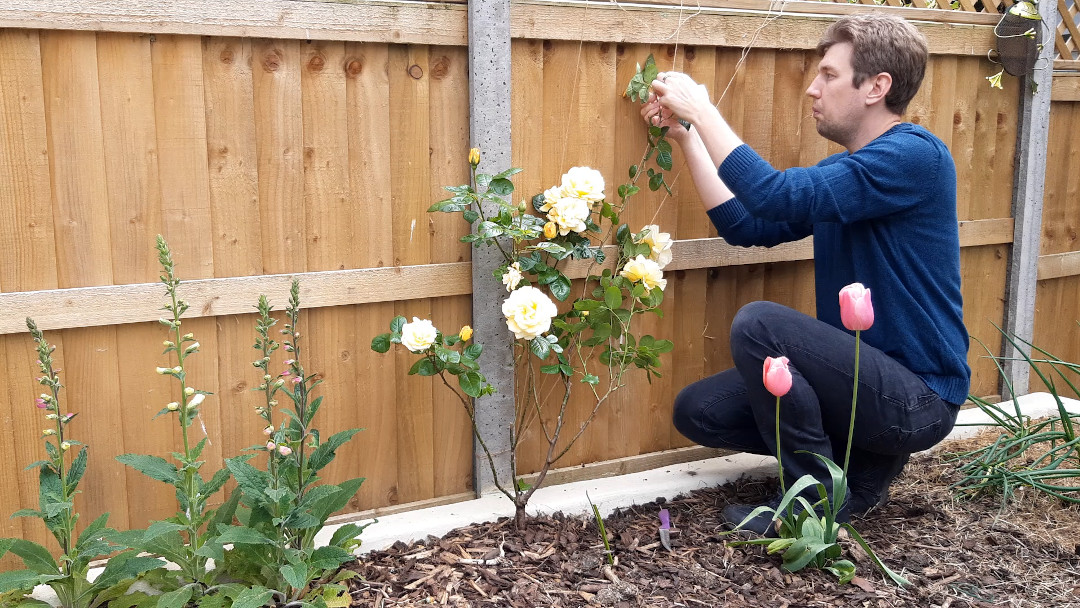
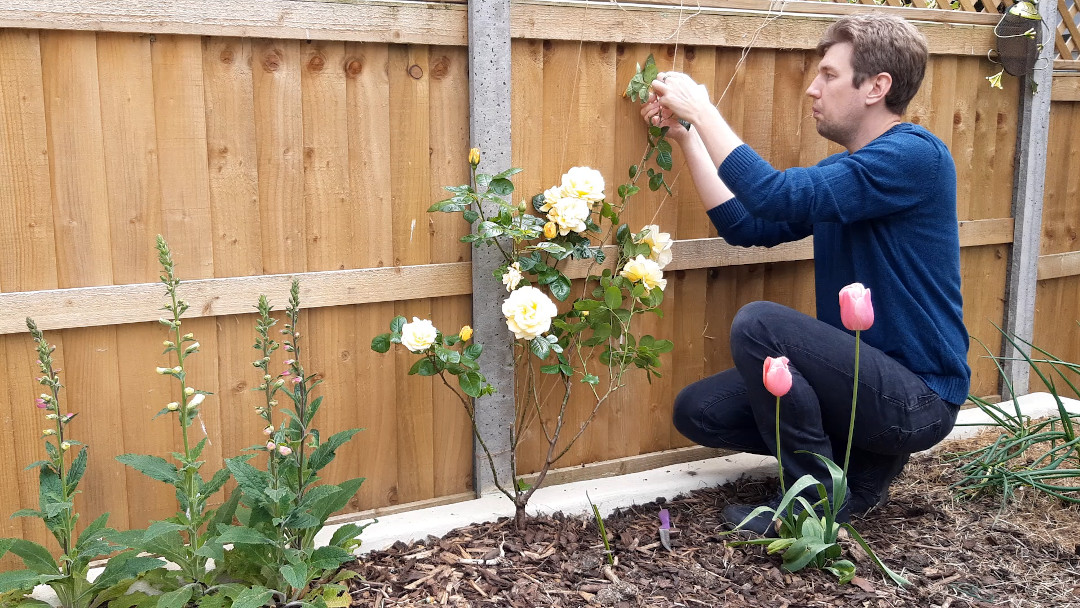
Whatever you use, tie in a way that allows slight movement and room for growth. A loose figure-eight style tie is ideal: one loop around the support, one loop around the cane.
Quick safety note
Wear tough gloves, long sleeves, and consider eye protection if you are working overhead. If you make any cuts, use sharp pruners and wipe the blades clean between plants, especially if disease has been an issue.
Step by step: train on a trellis or fence
1) Start with the main canes
Main canes are the long, thicker canes that form the “skeleton” of your rose. Choose several healthy canes and plan how they will cover the space. You do not need to use every cane, especially if they cross, crowd, or point in awkward directions.
2) Bend slowly
Canes are most flexible when they are young. If a cane feels stiff, do not force it in one go. Instead:
- Work on a mild day (cold canes snap more easily).
- Bend a little, tie, then come back in a week and bend a bit more.
- Aim for a gentle arc, not a sharp angle.
3) Tie canes as sideways as you can
On a fence, that often means running canes left and right along rails or wires. On a trellis, you can fan canes diagonally left and right like a hand-held fan.
Spacing tip: Leave room between canes so light can reach leaves and laterals, and so you can get your hands in for tying and pruning later.
4) Weave and fan for coverage
If your trellis has gaps, you can weave a cane through sections for stability, then add ties where needed. On a wire system, tie the cane to each wire run as it crosses.
Your goal is to spread growth across the entire support rather than stacking everything in one vertical clump.
New canes during the season
Training is not a one-day project. A climbing rose will keep sending out new shoots, especially in spring and early summer. The best time to guide them is while they are still pliable.
When a new long cane appears
- Do not cut it off just because it is “messy.” New canes are future flowering power.
- Watch the direction for a few days so you can guide it before it hardens.
- Choose a path along an open section of fence or trellis.
- Arc and tie it in gradually, aiming for sideways or diagonal.
When you get lots of side shoots
Those are your flowering laterals. You can let many of them bloom, then tidy later. If the center gets crowded, thin a few laterals so air can move and leaves dry faster after rain or watering.
After a flush of flowers
Deadheading is optional on many climbers. On repeat-blooming types, removing spent blooms can encourage more flowers. On once-blooming types, deadheading is mostly for looks and tidiness. Either way, try to avoid cutting back your main trained canes unless you are doing planned pruning. The main canes are your structure.
Pruning and training work together
Training sets the framework. Pruning keeps that framework productive and manageable.
- Repeat-blooming climbers are often pruned in late winter or early spring. Many gardeners shorten flowering laterals back to a few buds, then keep the main canes and tie in new replacements where needed.
- Once-blooming ramblers are usually pruned right after they flower, because they bloom on older wood. In that case, save major removals for after the show, then train the fresh new canes that will flower next year.
If you are unsure which you have, go lighter: focus on tying in new canes and only remove what is clearly dead, damaged, or dangerously tangled.
Training patterns
Fan shape
Spread main canes from the base outward and upward like ribs of a fan. This fills a trellis evenly and keeps the center from becoming a dense knot.
Horizontal tiers
Run one or more main canes left and right at different heights, like rungs on a ladder. This is one of the best bloom-boosting setups because it creates lots of flowering laterals along each tier.
Arches and doorways
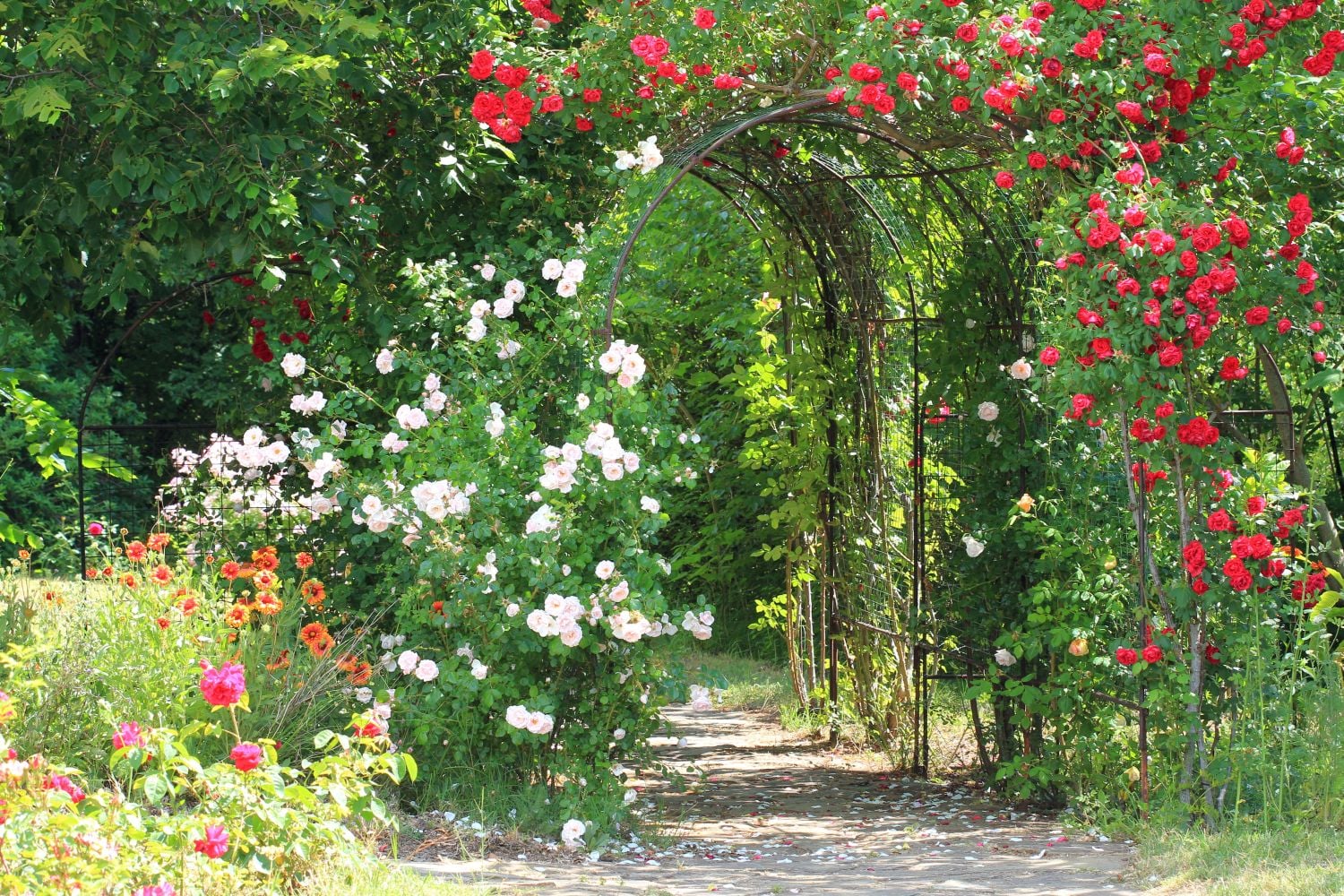
Train canes up one side, then curve them over and tie along the top. Blooms tend to hang beautifully from the arch. The top of an arch also encourages side shoots, so it can become the showiest part.
Common mistakes
Mistake: Letting everything grow straight up
What happens: Tall, leafy growth with blooms mostly near the top.
Fix: Pick a few strong canes and start pulling them sideways or diagonally, tying as you go. Even shifting from vertical to a 45-degree angle helps.
Mistake: Tying too tight
What happens: The cane thickens and the tie cuts in, weakening or damaging the cane.
Fix: Retie with a looser loop and use softer material. Check ties a couple times per season.
Mistake: Forcing stiff canes
What happens: A split or broken cane, especially on older wood.
Fix: Bend in stages over days or weeks. If a cane is truly rigid, train newer canes instead and remove the uncooperative one during your normal pruning window.
Mistake: Crowding the center
What happens: Poor airflow, more disease pressure, and a tangled mess that is hard to manage.
Fix: Space main canes apart. If you already have a knot, choose a few best main canes to keep and redirect them, then remove a couple of the most congesting canes later when you prune.
Mistake: Training onto weak supports
What happens: Sagging trellis, torn fence panels, or canes pulled down in wind.
Fix: Reinforce now rather than later. Add a stronger trellis, install a wire system, or add posts. Roses only get heavier.
When to train
Late winter to early spring
This is a popular time to do major training because you can see the framework clearly. In most climates, wait until the coldest weather has passed in your area, then reposition and tie in main canes before the plant leafs out.
Spring through summer
This is prime time for guiding new canes. Check every couple of weeks and tie in fresh growth while it is flexible.
Fall
In windy areas, it is smart to secure long canes so they do not whip around and break. Save heavy reshaping for the dormant season if your climate allows it.
Basics that boost training results
Training works best when the plant has what it needs to grow strong canes.
- Sun: Most roses bloom best with about 6 or more hours of sun.
- Water: Deep, steady watering beats frequent sips, especially during heat.
- Feeding: A balanced rose fertilizer or compost in the growing season supports new cane growth and repeat bloom.
- Patience: In the first year, you may be building the framework more than chasing maximum flowers. That is normal.
Quick checklist
- Train main canes sideways or on a flatter angle for more flowering laterals.
- Use soft, flexible ties and leave room for thickening.
- Guide new canes early, before they stiffen.
- Keep the framework spaced out for airflow and easier care.
- Recheck ties a few times each season.
FAQ
Can I train a climbing rose flat against a fence?
Yes, and it can look wonderful. The key is giving it something to tie to, such as horizontal wires, so you can position canes where you want them instead of relying on nails or random gaps. Keep some space for airflow if possible.
How often should I retie or adjust?
Plan to check ties every few weeks during active growth, then at least once or twice a season after that. Fast growth can make a “fine” tie become a tight tie quickly.
My rose only blooms at the top. Is it too late?
Not at all. Start training a few main canes sideways this season, and prioritize tying in any new long canes at a flatter angle. You should see more flowering shoots along those trained canes as the plant responds.
Should I remove old main canes?
Eventually, yes. Many climbers do best when older, less productive canes are replaced with newer vigorous canes over time. If you are not sure what to remove, focus first on training new canes where you want them, then do your removals during your normal pruning season.