
How to Remove Suckers from an African Violet

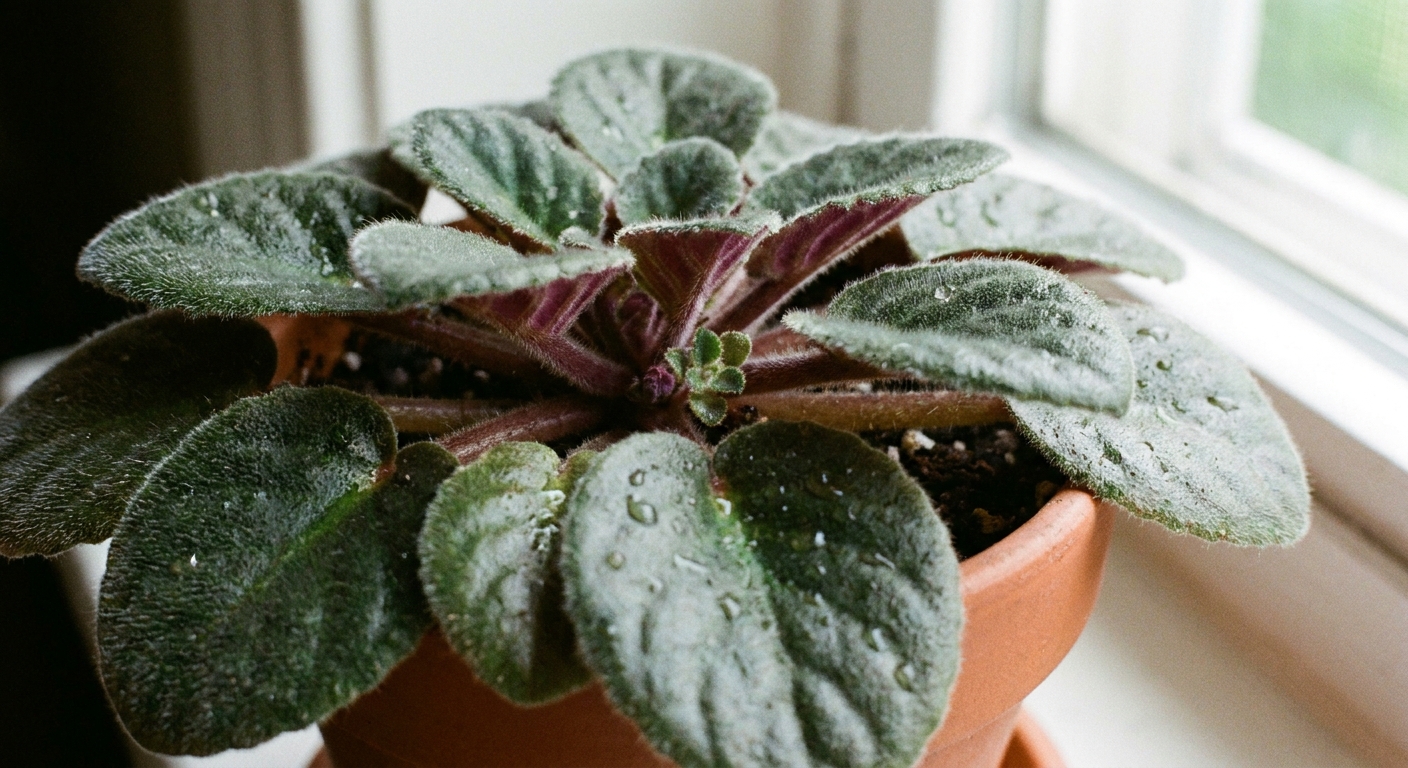
My African violets have taught me one of the gentlest gardening lessons: sometimes the best way to help a plant bloom is to quietly remove what it does not need. Suckers are a perfect example. They are not a disease, they are not a mistake, and they are not you doing anything “wrong.” They are simply extra crowns that steal the spotlight from the main rosette.
If your violet looks crowded, lumpy, or keeps growing leaves but refuses to flower, there is a good chance a sucker is involved. Let me show you how to find them and lift them out with as little drama as possible.

What a sucker is (and why it matters)
An African violet (Saintpaulia and related hybrids) is happiest when it grows as one single crown, meaning one central growing point that forms one tidy, symmetrical rosette.
A sucker is a side crown that sprouts from the plant’s base, usually from a leaf axil (the little “elbow” where a leaf stem meets the main crown). Left alone, suckers eventually turn one plant into a multi-crowned clump.
That clump can look full, but it often brings problems:
- Fewer blooms: energy goes into extra leaf growth instead of flowers.
- Crowding: leaves overlap, trap moisture, and reduce airflow.
- Rot risk: tight centers dry slowly, especially if water splashes into the crown.
- Misshapen rosette: the classic “pinwheel” symmetry disappears.
How to spot suckers
Suckers are easiest to see when you look down into the center of the plant and also when you gently part the leaves near the soil line.
What you are looking for
- A second tiny rosette of leaves that has its own center.
- Leaves emerging at a different angle than the main crown, often sideways.
- Growth coming from a leaf axil rather than from the true center of the plant.
Sucker vs. flower stalk (quick reality check)
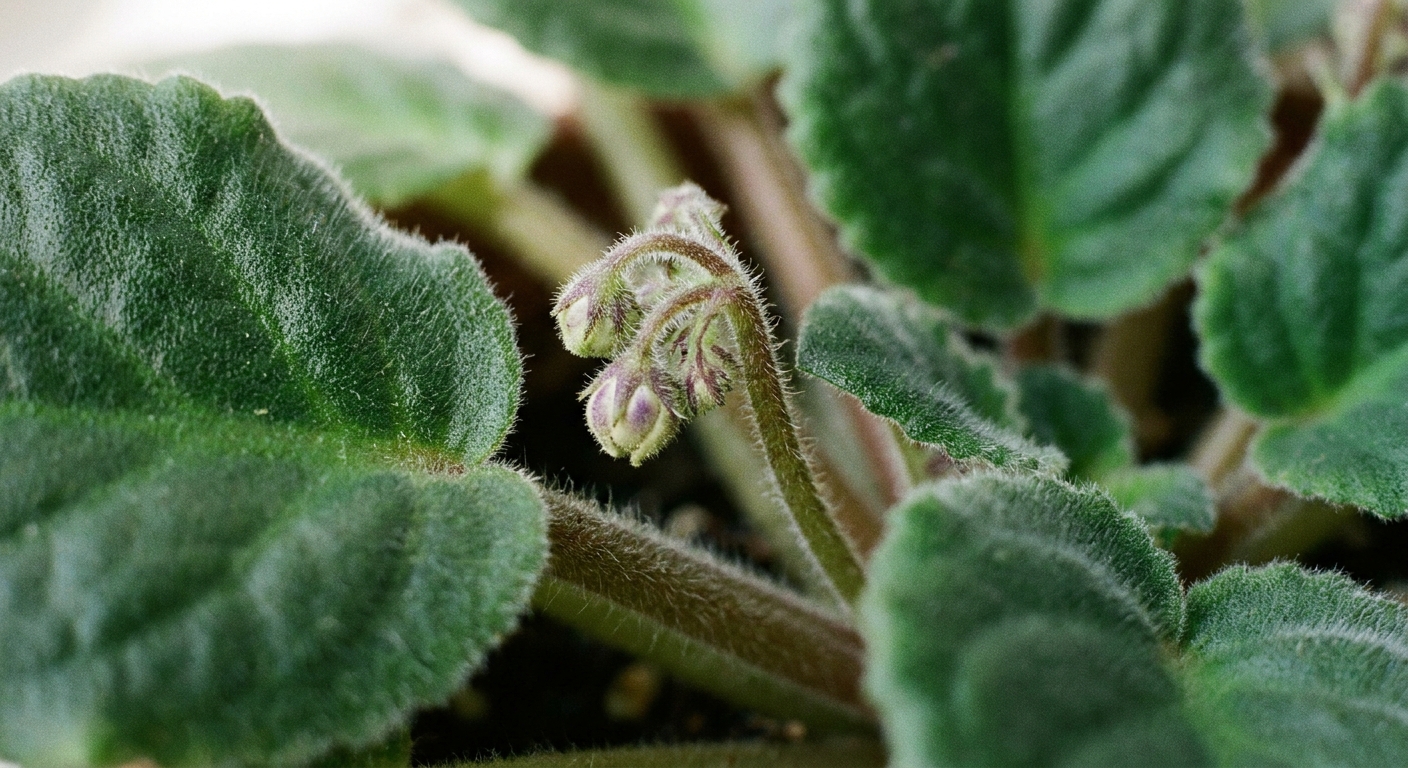
This is where beginners understandably hesitate. A flower stalk can look like “something extra” coming from the plant too.
- Flower stalks are usually thinner, more upright, and may show tiny bud clusters. They arise from leaf axils but look like stems, not a rosette.
- Suckers form baby leaves right away. If you can see a miniature set of fuzzy leaves arranged like a tiny violet, that is your sucker.
When to remove a sucker
The best time is early, when the sucker is still small and has not built a thick attachment to the main crown.
- Remove immediately if you see a tiny rosette forming off-center.
- Wait to pot it up only if you want a new plant and the sucker is large enough to survive on its own (I will walk you through that below).
I like to do sucker checks when I rotate my violets for even light. It turns a “chore” into a calm little inspection ritual.
Tools that work (simple is best)
You do not need fancy equipment. You just need something small enough to work in tight leaf spaces.
- A clean pencil (a classic trick): the eraser end is perfect for nudging and lifting.
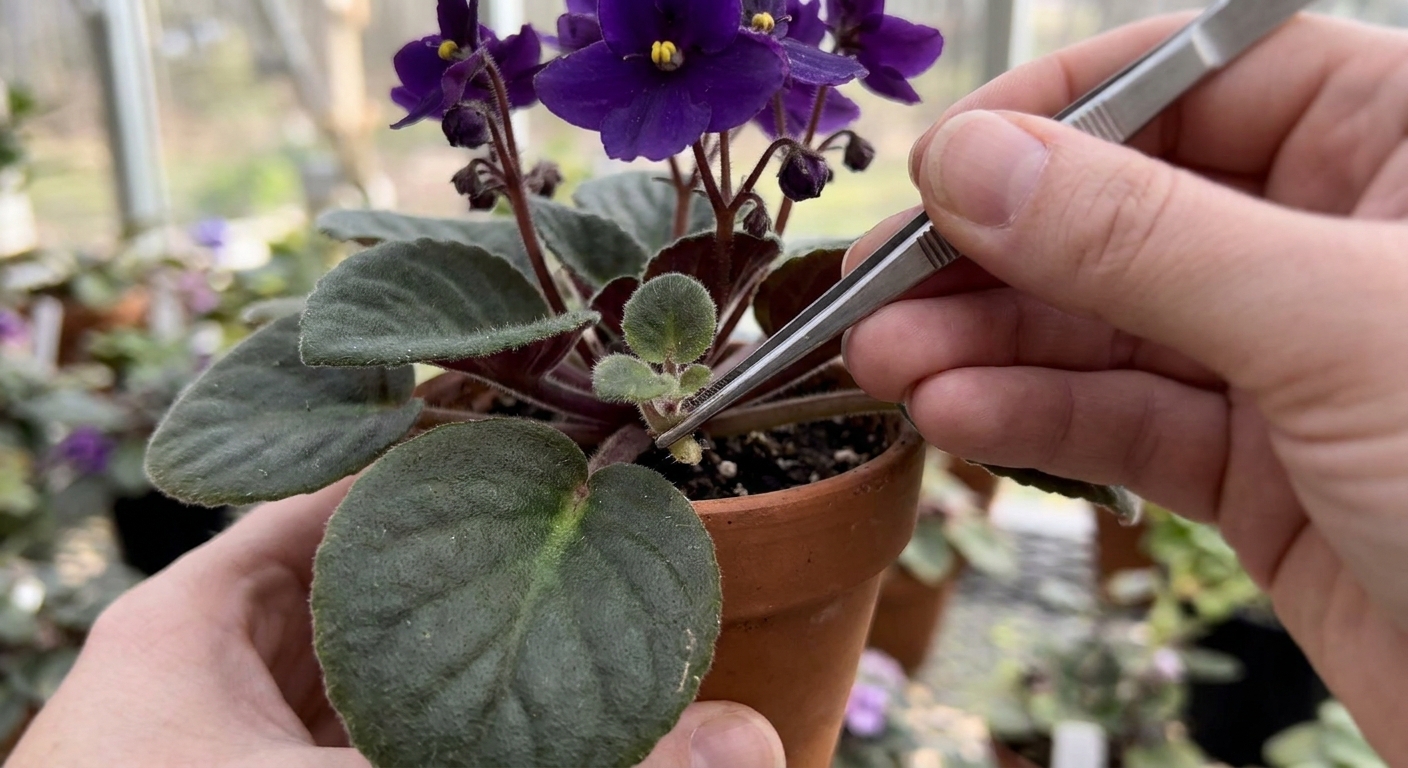
- Pointed tweezers (my preference for precision): great for grabbing a tiny crown.
- A toothpick for very small suckers.
- Rubbing alcohol to wipe tools before and between plants.
If you are prone to loving your violets a little too enthusiastically, take a breath before you start. The goal is gentle pressure, not digging.
Step-by-step: removing a small sucker without harming the main crown
Small suckers can often be removed without unpotting the plant.
1) Choose a good moment
Work when the plant is not bone dry and not freshly soaked. Slightly moist soil keeps the root zone stable while you manipulate the leaves.
2) Find the attachment point
Gently part the leaves and locate where the sucker connects at the base. You want to lift the sucker out from its point of origin, not yank leaves off randomly.
3) Use the pencil (lift, do not pry)
Slide the pencil eraser end into the small gap between the sucker and the main crown. Apply steady, gentle pressure to lift the sucker upward and outward.
- If it releases cleanly, you are done.
- If it resists, stop and try a slightly different angle. Resistance usually means you are pushing against the main crown or the sucker is bigger than a “lift out” job.
4) Or use tweezers (pinch at the base)
With tweezers, grasp the sucker as close to the base as you can. Wiggle it side to side a tiny bit while pulling outward. Think “loosen and lift,” not “rip.”
5) Leave the main crown intact
It is normal to lose one or two tiny leaves in the process. What you do not want is a gouge in the center of the plant. If you accidentally nick the crown, keep the center dry for a few days and avoid overhead watering.
If the sucker is large: how to remove and pot it up
When a sucker has grown several leaves and looks like a baby plant with some heft, you can often turn it into a brand-new violet. This is one of my favorite forms of “plant math” because it feels like getting a gift you did not order.
How big is big enough?
A good rule of thumb: if the sucker has at least 4 to 6 small leaves and you can remove it with a little bit of stem tissue at the base (sometimes with tiny root nubs), it has a reasonable chance of rooting.
If it is still tiny and flat against the crown, remove and discard it. Very small suckers rarely survive as independent plants.
Best method: unpot, then separate
For bigger suckers, I recommend taking the plant out of the pot. It is calmer for you and safer for the violet.
- Slide the plant out of its pot and gently crumble away a bit of mix near the base so you can see what connects to what.
- Stabilize the main crown with one hand.
- Separate the sucker by wiggling it away at the attachment point. If it has its own roots, it may come away easily.
- If needed, use a clean blade (a sharp, sterilized craft knife or razor) to make a small, clean cut. One clean cut is better than repeated tearing.
Potting up the sucker
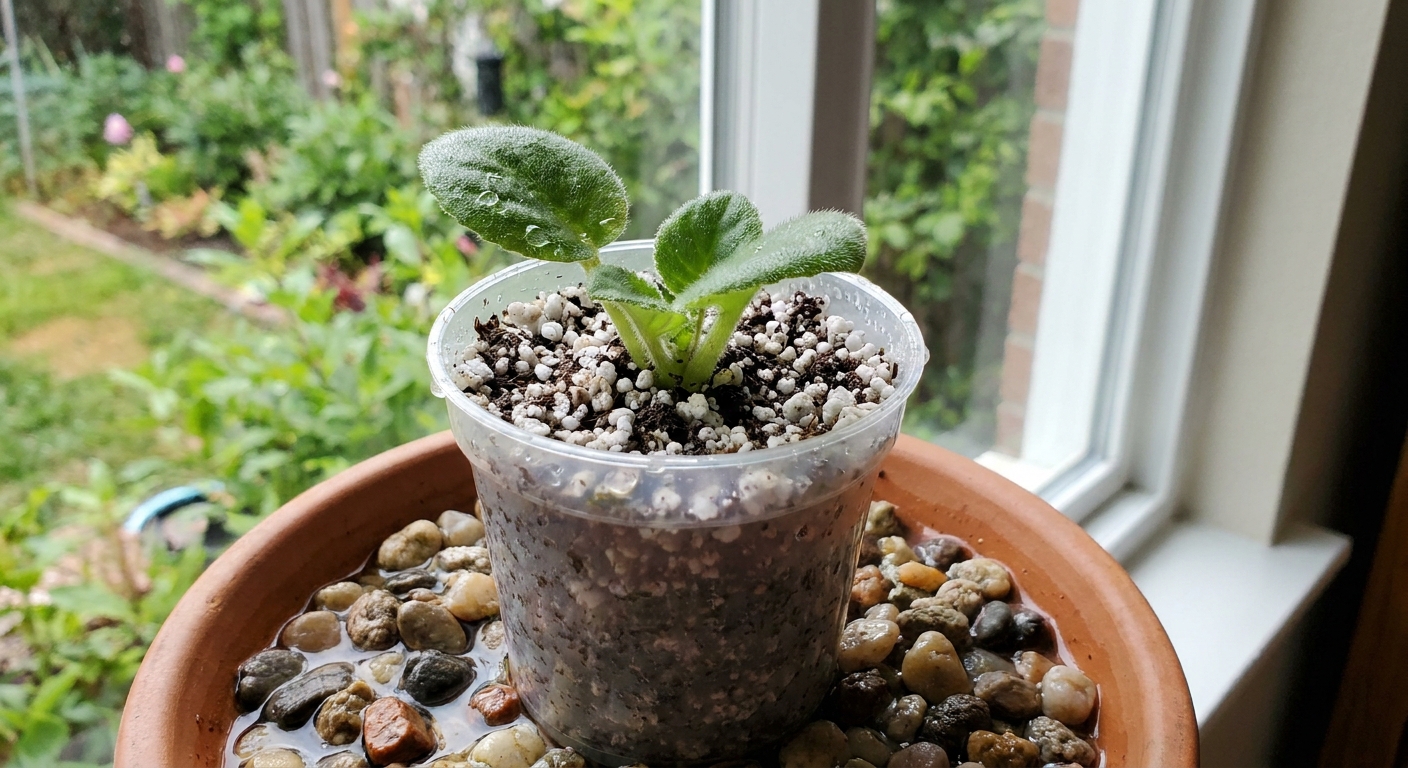
Use a small pot. For most starts, a 2-inch pot is plenty. African violets bloom best when slightly snug, and a too-large pot stays wet too long.
- Soilless violet mix works beautifully. I like it light and airy. If your mix feels heavy, blend in extra perlite.
- Plant shallowly so the tiny crown is above the mix and not buried.
- Water lightly to settle the mix, then stop fussing.
Create gentle humidity while it roots
A newly potted sucker can lose moisture faster than it can take it up. To help it along, cover it loosely with a clear plastic bag or place it in a small humidity dome, leaving a little airflow so it does not turn swampy.
Bright, indirect light and warm room temperatures help. Avoid hot sun on a covered plant.
Aftercare for the mother plant
Once the sucker is out, your main violet will usually look a little more open and balanced. For the next week or two:
- Keep water out of the crown, especially if you disturbed leaves near the center.
- Hold fertilizer for a week if you did major separation. If it was a tiny lift-out, you can keep your normal routine.
- Maintain steady light and do not move the plant to a drastically different spot while it recovers.
If you removed a large sucker and the plant now looks lopsided, simply rotate the pot a quarter turn every week. Violets are surprisingly quick to correct themselves.
How often to check for suckers
In active growing seasons or under strong indoor lights, suckers can appear faster than you would think.
- Check every 2 to 4 weeks during active growth.
- Check monthly in slower winter growth, especially if your home is cooler.
My personal habit is simple: every time I groom an African violet by removing an older outer leaf, I also peek into a few leaf axils near the base. Two minutes now saves a bigger operation later.
Common mistakes (and how to avoid them)
Pulling straight up and tearing the crown
Instead, aim for a gentle outward lift from the attachment point. If you feel strong resistance, change angle or unpot the plant.
Confusing a flower stalk for a sucker
If you see buds or a slender stem, let it be. Suckers look like tiny leafy rosettes.
Potting a tiny sucker and expecting miracles
Very small suckers often collapse. If you want to propagate, wait until it has a bit of size, or propagate from a healthy leaf cutting instead.
Using a big pot for the baby plant
Small pot, airy mix, light watering. That trio prevents rot and encourages rooting.
FAQ
Will removing suckers make my African violet bloom?
It often helps a lot. A single-crown plant can focus energy on flowers instead of competing growth points. Good light and proper watering still matter, but sucker removal removes a very common bloom blocker.
Do suckers mean my plant is unhealthy?
No. Some varieties sucker more than others, and stress can encourage odd growth, but suckers are not automatically a sign of trouble. They are just extra crowns.
Can I root a sucker in water?
You can, but it is riskier because the crown can rot. I get better results potting into a light mix and providing gentle humidity.
What if I accidentally snapped off leaves while removing a sucker?
Your violet will be okay. Tidy away any broken leaf stems so they do not decay against the crown, and keep the center on the dry side for a few days. Then go back to normal care.
A final pep talk from a violet whisperer
African violets are soft, fuzzy, and polite looking, but they are tougher than they appear. The first time you remove a sucker feels like plant surgery. The second time feels like grooming. The tenth time you will be chatting with your fern while you do it, wondering why it ever seemed scary.
Keep your tools clean, your touch gentle, and your plant to one crown. The blooms usually follow.