
Honey Fungus at the Base of a Tree

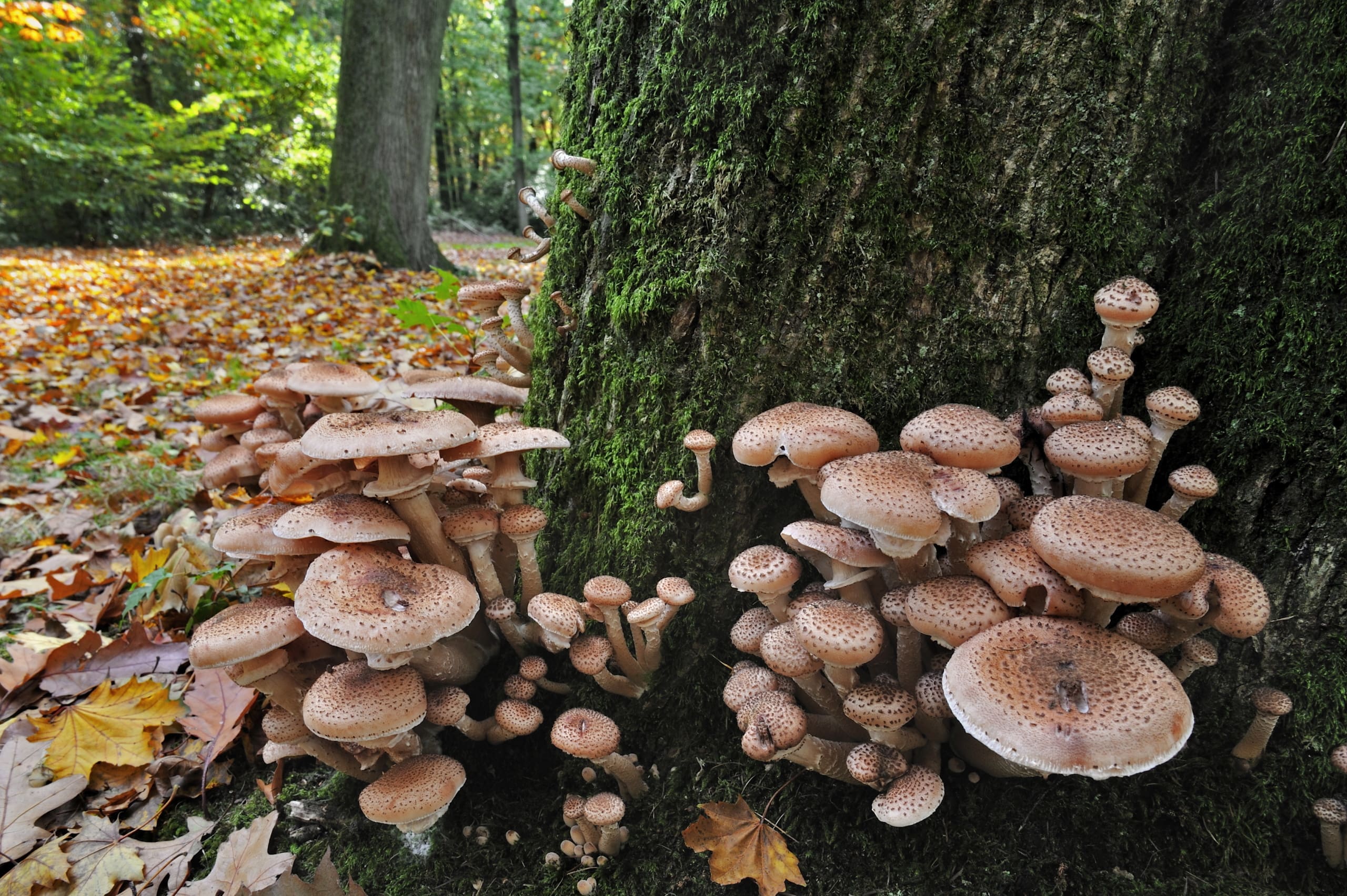
The first time I met honey fungus up close, it was wearing its most charming disguise. A little skirt of honey colored mushrooms around the base of an old ornamental cherry, all clustered like something from a storybook. But when I eased back a loose flap of bark, I found the giveaway: dark, bootlace strands creeping along the wood like tiny cords.
If you are seeing honey colored mushrooms at the base of a tree, especially in tight clusters, it is worth slowing down and taking a closer look. Sometimes mushrooms are simply doing their normal decomposer job on dead wood. But sometimes, these particular mushrooms are the visible fruiting bodies of a root and butt rot disease that can shorten a tree’s life and, in some cases, make it structurally unsafe.

What honey fungus is
Honey fungus is a common name for several species in the genus Armillaria. These fungi live in soil and wood, and they can act as decomposers, pathogens, or both. In a garden setting, the problem is that Armillaria can infect living roots, move into the root crown, and cause a slow decline that looks like “mystery stress” until mushrooms appear.
The mushrooms themselves are not what attacks the tree. They are the fungus’s reproductive structures, most often showing up in fall after rain (timing varies a lot by region and species, and spring fruiting can happen too). The real damage happens below ground and under bark.
Key signs
There are two to three classic clues gardeners can look for. You do not need to find all of them to be concerned, but the more you confirm, the more likely you are dealing with Armillaria.
1) Clusters at the trunk flare or from buried roots
- Growth habit: usually in clusters, often fused at the base, emerging from the trunk flare, buried roots, or old stumps nearby.
- Color: honey tan to yellow brown, sometimes with darker scales on the cap.
- Timing: often fall after wet weather, but it depends on your region and the species present.
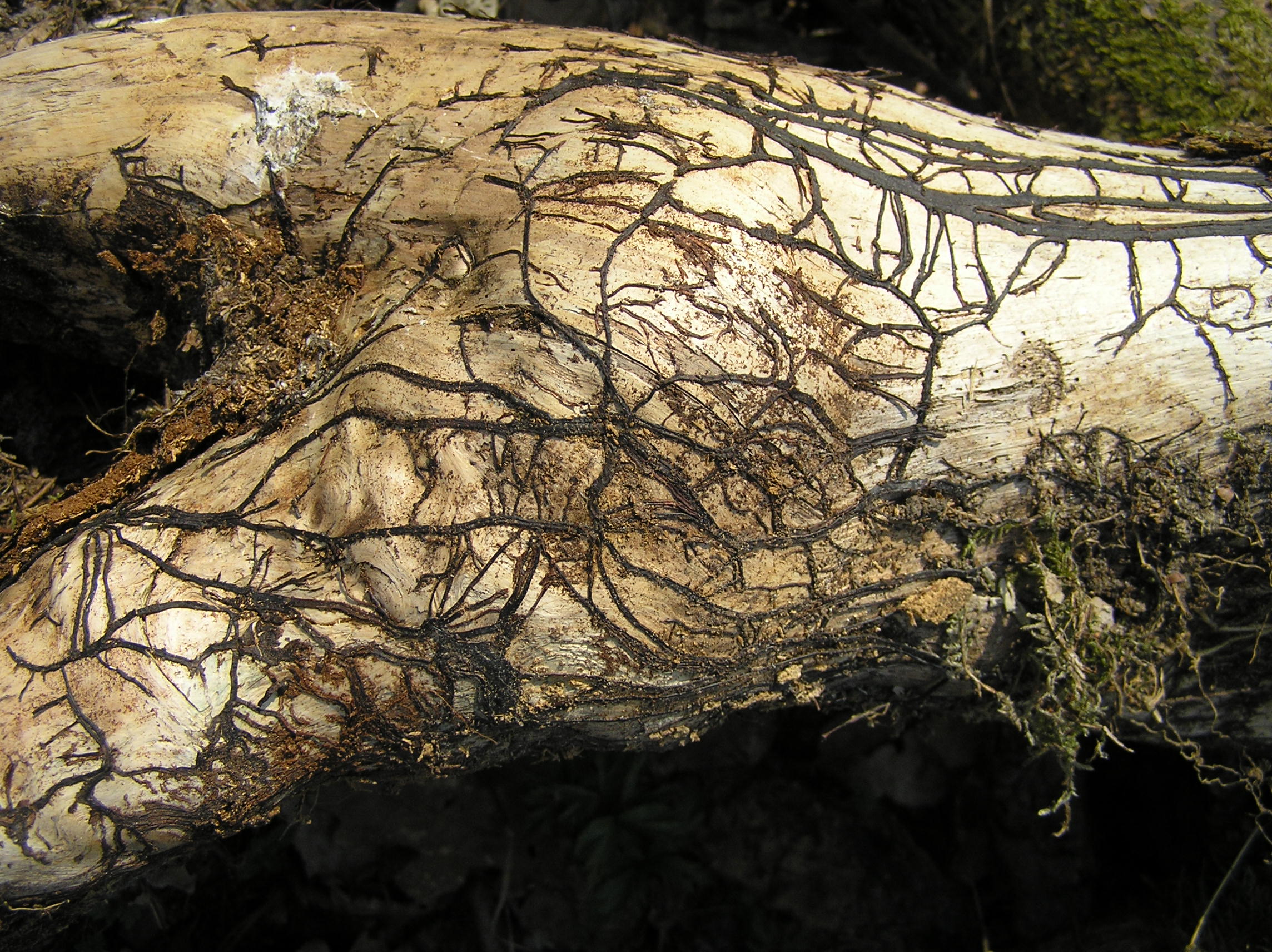
2) Black shoestring strands under bark (rhizomorphs)
This is the detail you mentioned, and it is the one that makes my “uh oh” radar ping.
- What they look like: thin, dark brown to black cords that resemble shoelaces.
- Where to look: under loose bark near the root crown, on dead roots, or in decaying wood in the soil.
- What they mean: rhizomorphs help the fungus spread through soil and across wood, which is one reason honey fungus can move from an old stump into neighboring plants.
3) White, fan-like growth under bark (mycelial fans)
If you can gently lift a small, already-loose piece of bark near the root crown, another classic sign is a white, fan-shaped mat between bark and wood. It can look like a thin sheet of white felt spreading in a fan pattern.
A quick caution: do not peel back healthy, tight bark just to go hunting. And do not taste any yard mushrooms while you are investigating. Some clustered brown mushrooms have dangerous lookalikes in certain regions.
What it means for the tree
Honey fungus can range from “tree is stressed but hanging on” to “tree is failing and becoming hazardous.” The fungus is opportunistic. Trees already struggling from drought, root damage, soil compaction, flooding, or construction disturbance are often hit harder.
Common tree symptoms
- Thinning canopy, smaller leaves, or early fall color
- Dieback at branch tips
- Reduced growth year over year
- Oozing sap at the base on some species
- Loose bark or areas that sound hollow when gently tapped (a general decline or decay clue, not honey fungus specific)
Why you should take it seriously
Armillaria can cause root and butt rot. Once the base of the trunk and major roots are compromised, a tree may be more likely to fail in wind or saturated soil conditions. If the tree could hit a home, fence, play area, or sidewalk, it is time to think beyond gardening and into safety.
Common lookalikes
Not every mushroom near a tree is honey fungus. Here is how I separate the usual suspects in the yard.
Honey fungus vs. a lawn fairy ring
Fairy rings usually show up as a circle in turf, sometimes with a darker green ring of grass or dead patches, and mushrooms can pop up along that circle.
- Fairy ring: a ring pattern in the lawn, not specifically attached to the trunk flare.
- Honey fungus: clusters are commonly right at the flare or emerging from buried roots and wood connected to the tree.
In plain terms, fairy rings are usually a turf management issue tied to moisture and organic matter. Honey fungus is a tree health issue.
Honey fungus vs. stinkhorn
Stinkhorns are the ones that make you think a small animal died in your mulch. They often start as a gelatinous “egg” and then erupt into a strange, upright shape with a slimy spore coating.
- Stinkhorn: strong foul odor, slimy coating, unusual shape, commonly in mulch beds.
- Honey fungus: classic cap and stem mushrooms, clustered, often near wood and roots, no signature carrion smell.
Honey fungus vs. harmless mulch fungus
Mulch fungi can look dramatic and still be harmless, especially when they are clearly feeding on the mulch itself and not connected to the tree’s root crown.
- Harmless mulch fungus: appears in mulch away from the flare, disappears with dry weather, no signs of tree decline.
- Possible honey fungus: mushrooms at the flare or from roots, plus rhizomorphs under bark, plus tree stress.
One practical tip: if the mushrooms are sprouting from a buried chunk of wood or old stump that is not connected to the living tree, you might just be seeing decomposition. But if they are at the root crown and you can confirm rhizomorphs or white mycelial fans, treat it as a potential infection.
What to do next
I know this is the part where people want a simple spray. With honey fungus, the most helpful next steps are about assessment, risk reduction, and tree support.
Step 1: Quick safety check
- Is the tree a hazard target? Over a driveway, play set, patio, or close to the house means you should be more cautious.
- Has the site changed? Recent digging, trenching, grade changes, soil piled over roots, new irrigation patterns, or a wet area can set trees up for infection.
- Are there multiple trees affected? Honey fungus can spread through roots and soil, especially where old stumps or dead roots remain.
Step 2: Document what you see
Before you clean anything up, take clear photos of:
- the mushroom cluster at the base
- the whole tree canopy
- any oozing, cracking, or loose bark
- rhizomorphs or white fan-like growth, if you can safely lift a small loose bark flap
This makes conversations with an arborist or extension office much easier.
Step 3: Get a professional opinion
If it is a large tree, a high value tree, or a tree that could cause damage if it fails, contact an ISA Certified Arborist. Tell them you suspect Armillaria and mention any rhizomorphs or mycelial fans you saw. They can evaluate crown health, root collar condition, structural integrity, and whether removal is the safest option.
In ambiguous cases, a truly firm diagnosis can require lab confirmation through an extension office or plant diagnostic clinic, especially if mushrooms are not present every year.
Step 4: Reduce stress
You cannot un-infect a tree with a quick home remedy, but you can stop stacking stress on top of stress.
- Do not pile mulch against the trunk. Keep the root flare visible. Mulch should be like a donut, not a volcano.
- Water deeply but not constantly. Poor drainage and chronic overwatering can weaken roots. Underwatering stresses the tree too. Aim for steady moisture in the root zone, then allow the surface to dry slightly.
- Avoid root disturbance. No digging, trenching, or heavy traffic over roots.
- Skip high nitrogen “rescue” fertilizing. Forcing lush growth on a stressed root system can backfire. If you suspect nutrient issues, a soil test is the better first step.
- Prune only dead or dangerous limbs. Major pruning is additional stress. If needed, do it with an arborist’s guidance.
Step 5: Plan for replanting
If a tree is removed or dies from honey fungus, the fungus can persist in old roots and stumps for years. That matters when replanting.
- Remove as much infected stump and major roots as practical.
- Consider planting a species known to be more tolerant for your region, and avoid replanting the same susceptible species in the exact same spot.
- Improve drainage and soil structure before replanting, especially if the area stays wet.
Should you remove the mushrooms?
You can pick and dispose of the mushrooms, especially if you have kids or pets who like to sample yard finds. But removing mushrooms does not remove the infection. Think of mushrooms as the apple on the tree, not the tree itself.
If you do remove them:
- wear gloves
- to be safe, bag them and place in the trash rather than compost
- wash hands and tools afterward
Pet and lawn notes
Pets: If you are not 100 percent sure what a mushroom is, treat it as potentially toxic and prevent access. Call your vet or a pet poison hotline if ingestion is possible, even if symptoms are not present yet.
Lawn and drainage: Mushrooms in turf are often linked to buried wood, thatch, or moisture patterns. Improving drainage, aeration, and irrigation habits can help in lawns. With honey fungus near a tree base, drainage still matters because stressed roots are more vulnerable, but the main issue is tree health and structural risk, not turf cosmetics.
When to act fast
Call an arborist promptly if you notice any of the following along with suspected honey fungus:
- rapid canopy decline over one season
- significant lean that is new or worsening
- cracked soil or lifted roots near the base
- large dead limbs dropping
- heavy or recurring mushroom flushes at the flare year after year
FAQ
Are honey mushrooms always honey fungus?
No. Several mushrooms can be honey colored and clustered. The combination of clusters at the base plus black rhizomorphs under bark, and often white fan-like growth under bark, is what raises suspicion for Armillaria.
Can a tree recover from honey fungus?
Some trees live with it for years, especially if they are otherwise vigorous and site stress is reduced. Others decline steadily. Recovery depends on tree species, extent of infection, site conditions, and overall vigor.
Can honey fungus spread to other plants?
Yes. It can spread through soil via rhizomorphs and through root contact, and it can persist in dead wood. That is why old stumps and buried roots can be a long-term source.
Is it safe to eat honey mushrooms from my yard?
I do not recommend foraging from your yard based on an online ID. Honey mushrooms have lookalikes, and even correctly identified Armillaria can cause gastrointestinal upset for some people if not properly prepared. Treat yard mushrooms as a tree health clue, not dinner.
A gentle next step
If you only do one thing today, do this: take a clear photo of the mushrooms at the trunk, step back for a full canopy shot, and check the base for those black shoestring rhizomorphs or white mycelial fans without ripping healthy bark. That little bit of documentation turns a stressful mystery into something you can act on with confidence.
And if you catch yourself feeling guilty, please do not. Fungi thrive where conditions suit them, and trees are living systems that go through seasons of strength and vulnerability. Your job now is simply to decide what support is reasonable, and when it is time to bring in an arborist for safety and peace of mind.