
Coleus Stem Rot at the Soil Line

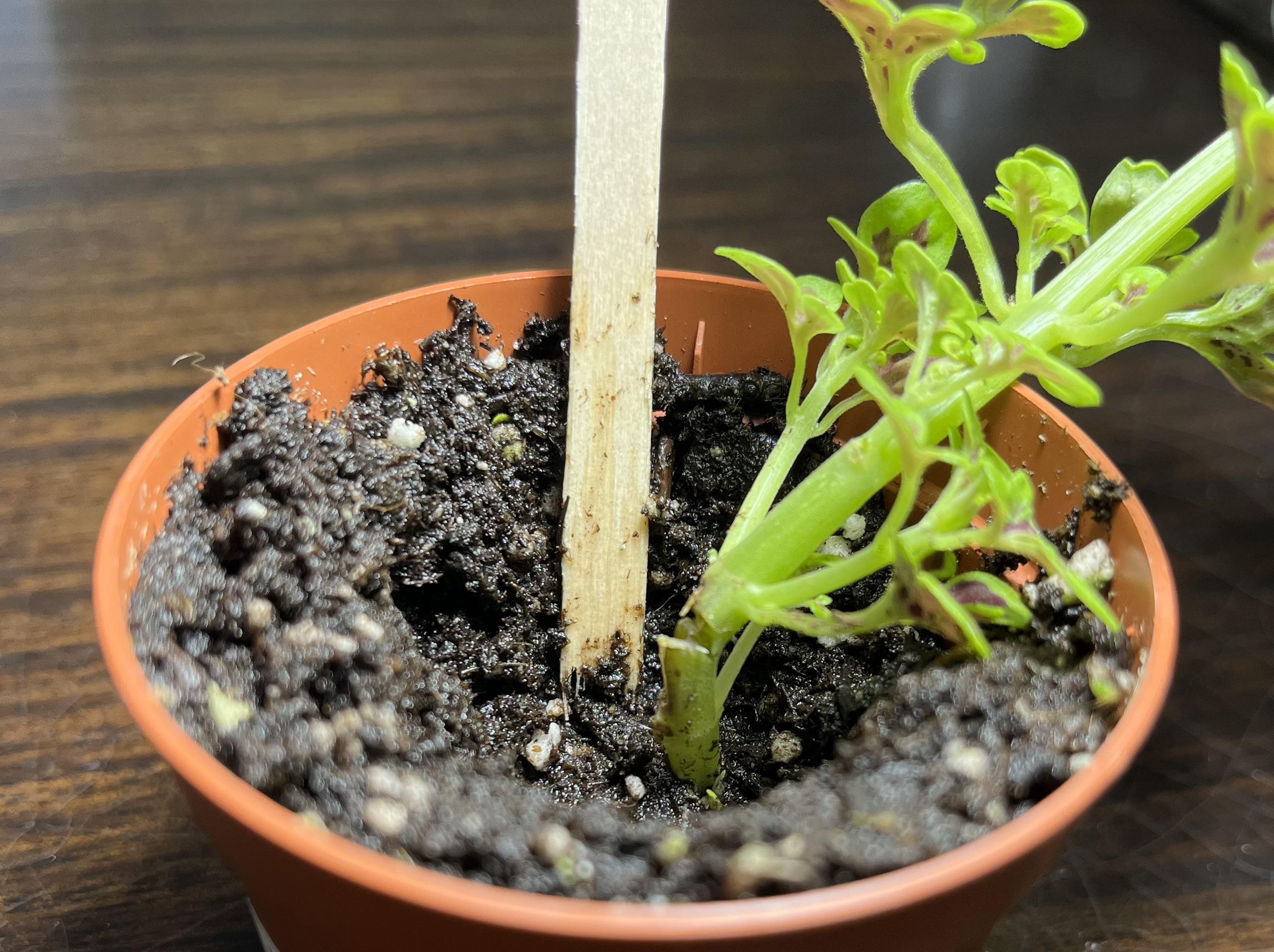
The saddest coleus failure is also one of the fastest. You walk by a pot that looked fine yesterday, and today the whole plant is leaning like it got elbowed in a crowd. When you touch the stem right at the soil line, it is soft, dark, and a little too willing to fold.
That is coleus stem rot at the soil line, and it is most often tied to wet potting mix and low oxygen around the roots and lower stem. (The usual suspects behind the scenes are water molds and fungi such as Pythium, Phytophthora, or Rhizoctonia, but at home we diagnose by symptoms and conditions, not lab tests.)
The good news is you can sometimes save the variety by taking a clean cutting from healthy tissue above the rot. And if you cannot save it, you did not “fail.” Coleus grows quickly and props like a dream (propagates easily) when conditions are right.

What stem rot looks like
Stem rot at the soil line is a base-of-stem problem. It is not subtle once it gets going.
- The stem turns dark at the soil surface. Brown to black discoloration often forms a band where stem meets mix.
- The stem feels soft or hollow. When you pinch it gently, it may collapse, ooze, or peel.
- The plant wilts even though the soil is wet. Leaves can look limp and thirsty, but the potting mix feels damp.
- The whole plant may topple. The upper growth can look decent for a moment, then the base gives out.
If you slide the root ball out of the pot, you may also notice a sour, swampy smell and roots that look tan-brown and fragile rather than creamy and firm.
Why it happens
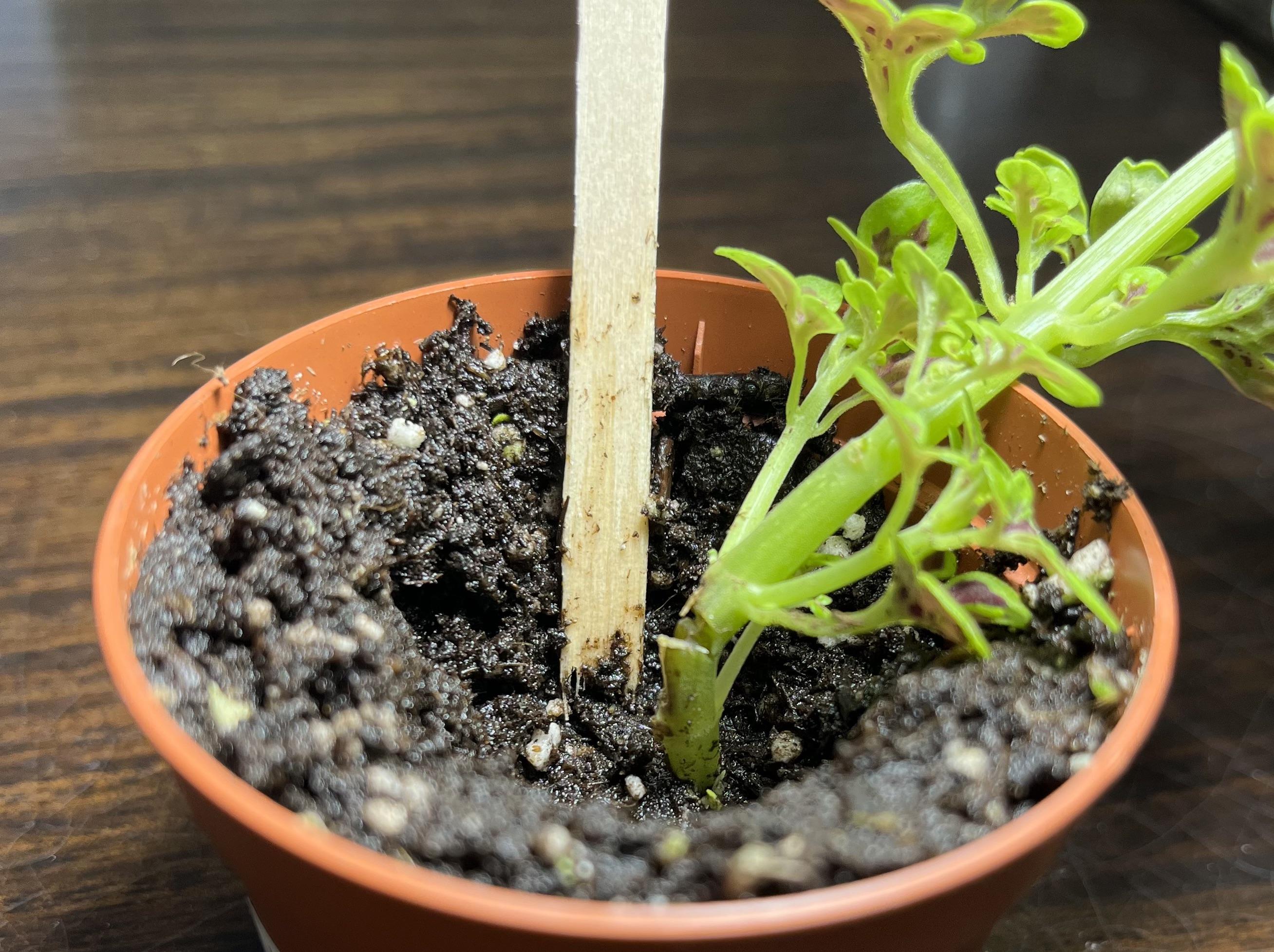
Coleus is tough, but it hates sitting in airless, saturated media. When potting mix stays wet for long stretches, oxygen drops. That stressed tissue at the crown becomes an easy entry point for rot organisms.
Common triggers I see
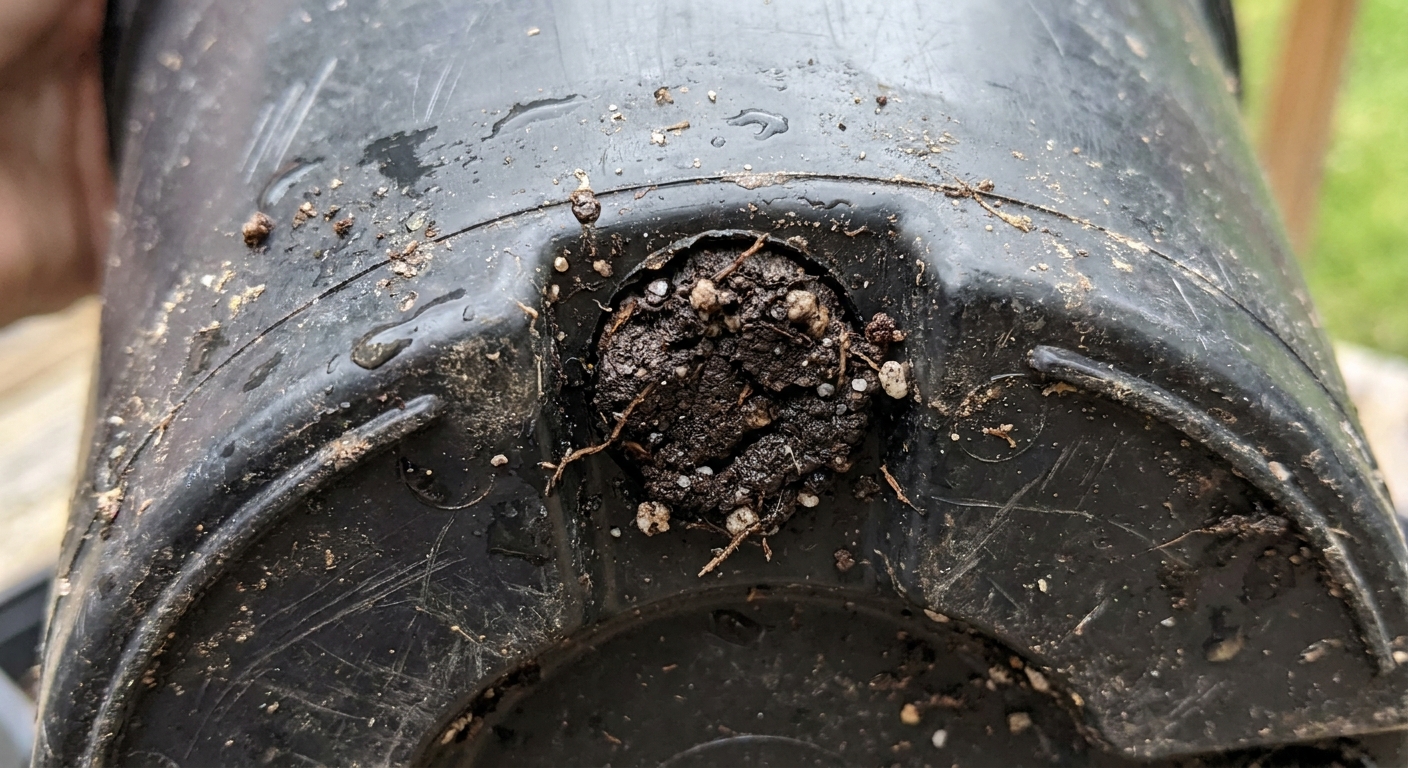
- No drainage, or a blocked drainage hole. Decorative cachepots without drainage are classic culprits.
- Potting mix that holds too much water. Old, compacted mix or heavy garden soil in a container stays soggy.
- Watering on a schedule instead of by feel. Coleus may need frequent water in heat, but not in cool, cloudy weeks.
- Low light indoors. In dim light, plants drink slowly. The mix stays wet longer.
- Overpotting. A small plant in a big pot has lots of unused wet mix around it.
- Cool temperatures. As temps drop into the 50s to low 60s°F range, coleus slows down and wet soil becomes riskier.
One more sneaky factor: if soil or mulch is piled up against the stem, the constant moisture right at the crown can encourage rot. Coleus likes the stem base to breathe.
Decide fast: toss or save
Here is my rule of thumb: if you can find firm, clean stem tissue above the rot, you can often save the variety by propagating it. If the rot has traveled upward or the plant is already compromised throughout, it is kinder to compost or discard.
Discard it if
- Rot has climbed above multiple nodes and most stems feel soft, dark, or watery.
- The crown is gone. If the entire base is mush, there is nothing stable to regrow from.
- Roots are mostly brown and sloughing off. A few damaged roots can recover, but a rotten root system rarely rebounds fast enough.
- There is a foul smell and the potting mix is sour. That often signals widespread anaerobic conditions.
Try to save it if
- You can cut 2 to 4 inches above the soil line into solid stem that is green and firm, not streaked brown.
- The top growth still has healthy leaves. Even if the plant is wilting, crisp, healthy leaves on upper tips can root.
- You have at least one healthy tip with 2 to 3 nodes. Nodes are where new roots will form.
If you are unsure, do both: take cuttings first, then decide whether the mother plant is worth repotting.
Rescue with a cutting
I know this feels dramatic, but think of it as hitting the reset button. Coleus is one of the easiest plants to propagate when the cutting is taken from clean tissue.
Step-by-step
- Snip a healthy tip. Choose a stem that is firm and unblemished. Cut well above any dark, soft area. Aim for a cutting 4 to 6 inches long with at least 2 nodes.
- Make a clean cut and keep it clean. Use sharp scissors or pruners washed with soap and water, then wipe with alcohol if you have it. If you are taking multiple cuttings, wipe between plants and between suspicious stems.
- Strip the lower leaves. Remove leaves from the bottom 1 to 2 nodes so they will not sit in water or soil.
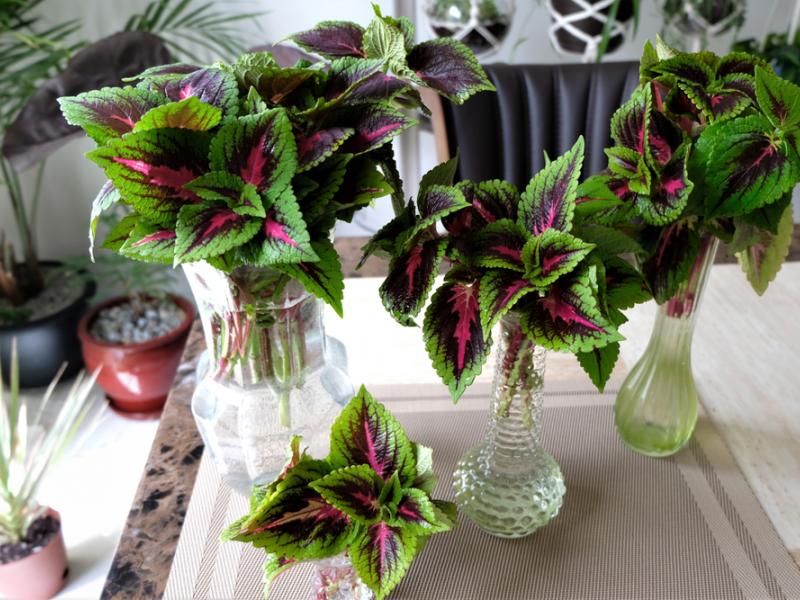
- Root it in water or a light mix. Water rooting is fine for coleus. If you root in mix, use fresh, airy potting soil and keep it slightly moist, not wet.
- Do not reuse the old potting mix. Start cuttings in a clean jar or fresh mix. Re-rooting into contaminated, soggy soil is how you repeat the same heartbreak.
- Bright light, no harsh sun. A bright window or shaded outdoor spot helps it root without stressing it.
In warm, bright conditions you will often see roots in 7 to 14 days. In cooler rooms or low light, it can take longer. Once roots are a couple inches long, pot it up into fresh mix with good drainage.
While it is rooting, go easy on misting and avoid splashing water onto the stem base. Wet stems plus still air is not the vibe.
Try saving the whole plant
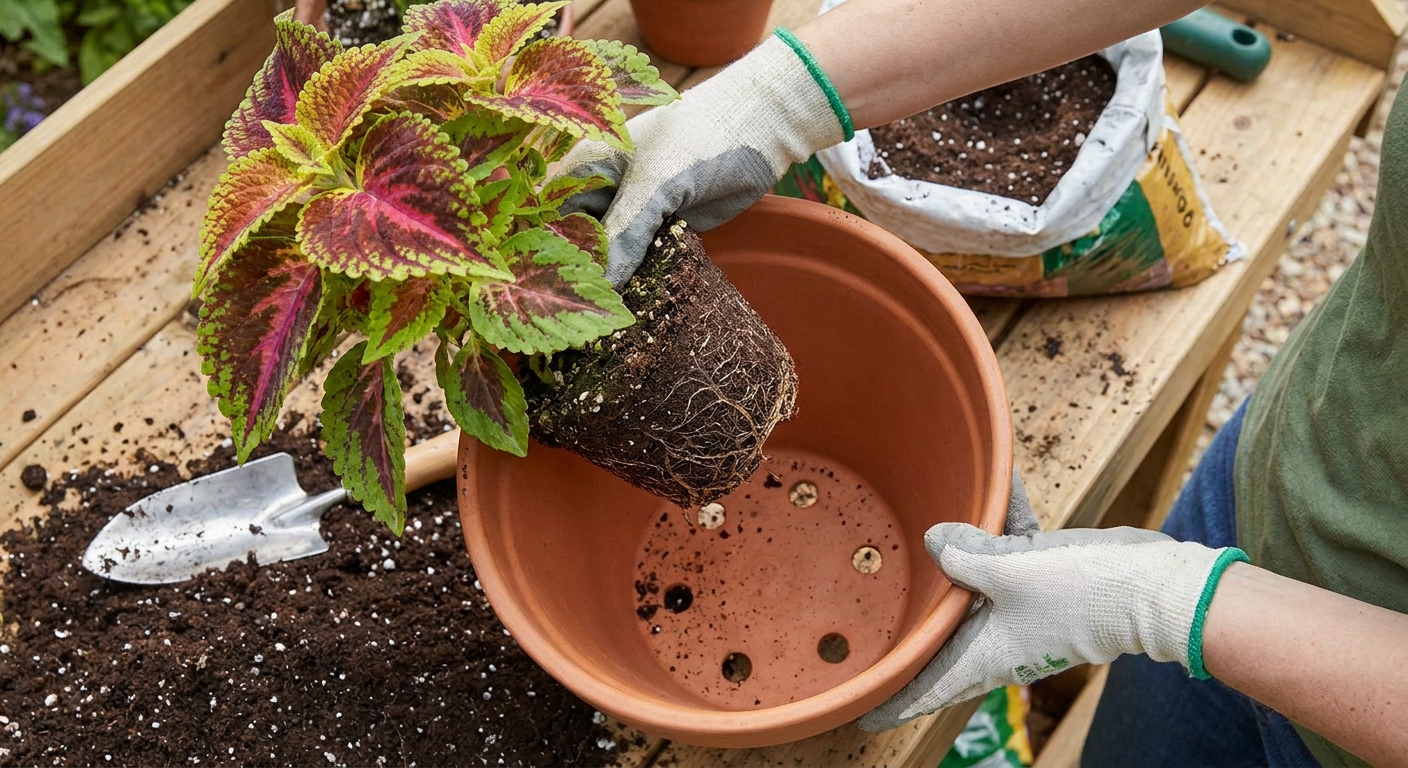
Sometimes the rot is limited to one stem on a multi-stemmed plant, or it is caught early. In that case, you can try a reset repot.
What to do
- Unpot the coleus. Tip it out gently and inspect the crown and roots.
- Cut away any soft stems. Prune back to firm tissue. If the main crown is soft, switch to the cutting method instead.
- Remove soggy, compacted soil. Tease away what you can without shredding roots.
- Wash and sanitize the pot. Soap and water is a good start. If you want to be extra safe, a brief soak or wipe with a diluted bleach solution, then a thorough rinse and dry, helps reduce carryover.
- Repot into fresh, airy mix. Choose a pot with a drainage hole and a mix that does not pack down.
- Water once, then pause. Water thoroughly to settle soil, then wait until the top inch feels dry before watering again.
Even if the plant survives, I still like to take one insurance cutting. Coleus is generous like that.
Prevent it next time
Prevention is mostly about making the root zone boring. Not swampy, not bone-dry, just evenly moist with plenty of air pockets.
- Use a pot with drainage. If you love a decorative pot, keep the coleus in a nursery pot inside it and empty excess water.
- Choose a lighter container mix. Fresh potting mix with perlite or bark drains better than reused, broken-down soil.
- Water by touch. Stick a finger into the mix. If the top inch is dry, water. If it is still cool and damp, wait.
- Give bright light and some air movement. Outdoors, coleus likes morning sun and afternoon shade in many climates. Indoors, a bright window and gentle airflow help the plant use water and keep surfaces from staying wet.
- Do not bury the stem. Keep the crown at the same level it was growing, and avoid piling mulch against the stem.
- Avoid chilly, soggy soil. As nights cool down, water less and keep plants sheltered.
Look-alikes to rule out
When coleus looks rough, it is easy to blame the wrong thing. Here is how I separate the big three in real life: rot at the soil line, downy mildew, and simple light or water stress.
Stem rot at the soil line
- Main symptom: black, mushy, collapsing stem right where it meets the potting mix
- Leaf behavior: wilts even when soil is wet, then the plant may topple
- What you see in the pot: very wet mix, poor drainage, sometimes sour smell
Downy mildew
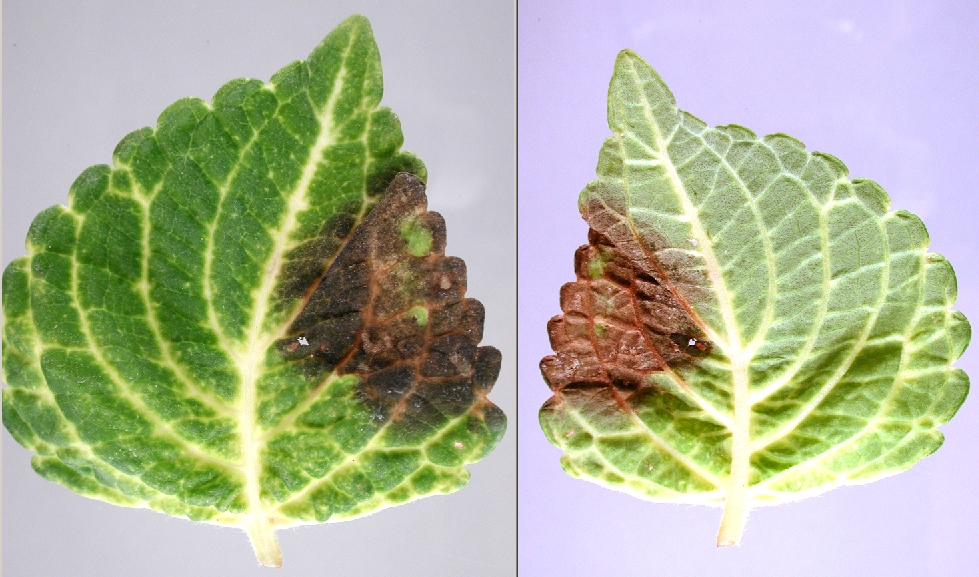
Downy mildew is primarily a leaf issue, not a base collapse issue. It often shows up as yellowing that can look a bit angular between veins, plus a grayish-purple, sooty-looking coating on leaf undersides. Leaves may brown and drop fast.
- Main symptom: leaf yellowing and spotting, leaf drop, gray-purple coating on leaf undersides
- Stem at soil line: usually still firm early on
- Pattern: spreads across foliage, especially in humid, still air
Sun fade or sun scorch
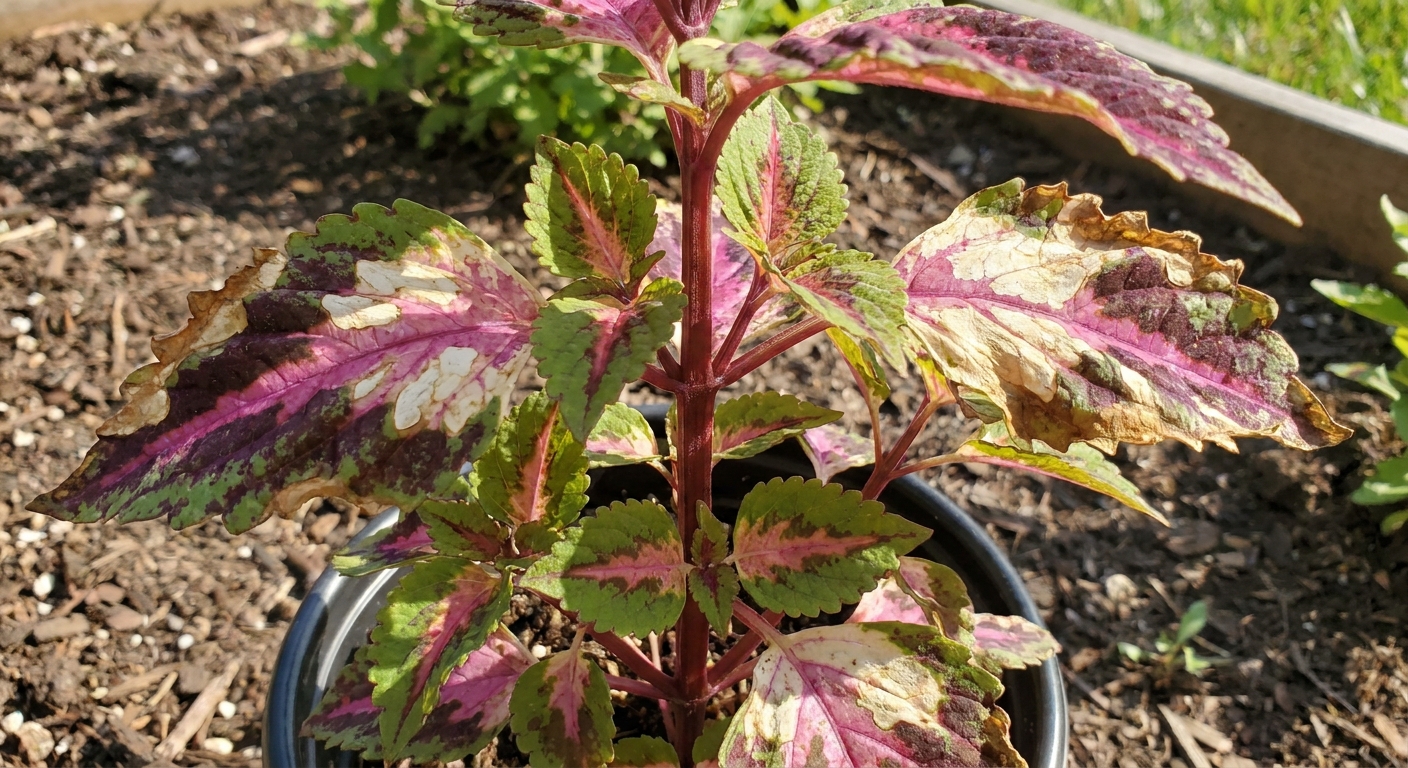
Sun issues show up as color changes and crispy patches, not a mushy stem base.
- Sun fade: vibrant reds and purples wash out to lime or pale tones, leaves remain structurally sound
- Sun scorch: bleached or tan patches that can turn papery, often on the most exposed leaves
- Stem at soil line: firm
Drought wilt
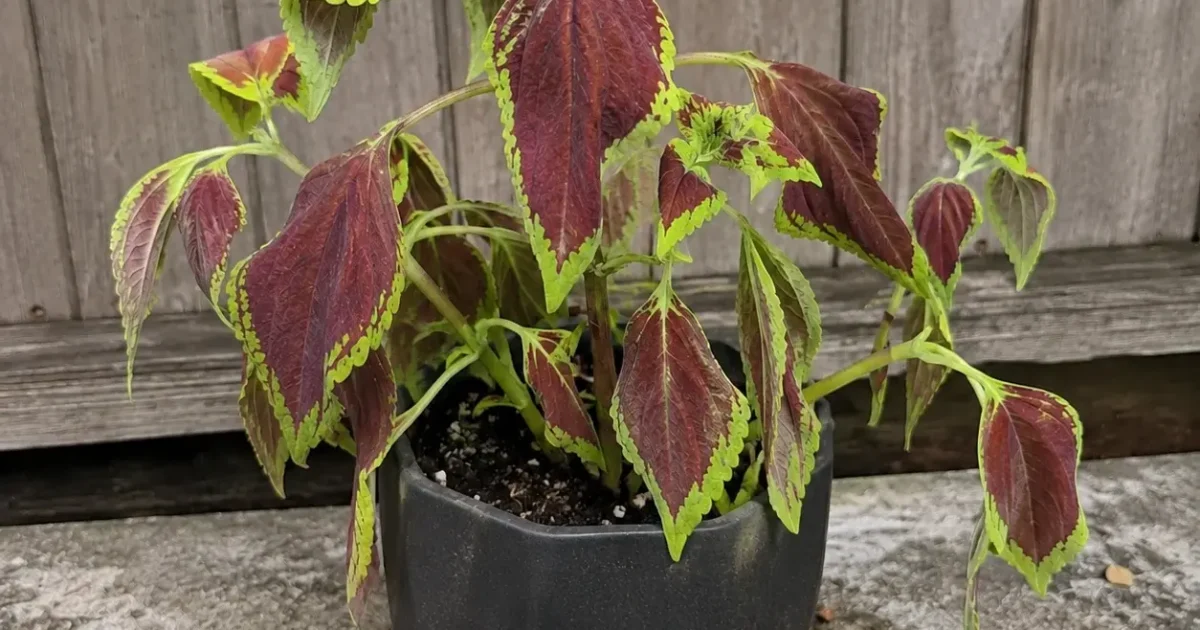
Coleus wilts dramatically when it is thirsty, but it usually perks back up after a deep drink.
- Soil feel: dry and light, pulling away from the pot edge
- Stem at soil line: firm, not dark and mushy
- Recovery: improves within a few hours after watering if caught in time
Quick checklist
- Plant fell over at the base? Check the stem right at the soil line for softness and dark tissue.
- Soil is wet but leaves are limp? Suspect rot, not drought.
- Leaves have gray-purple coating underneath and are dropping? Think downy mildew.
- Leaves are pale or crispy in hot sun? Think sun fade or scorch.
- Stem is firm and soil is bone dry? Likely drought wilt.
FAQ
Can a coleus recover from stem rot?
If the rot is limited and you correct the wet conditions quickly, sometimes. Realistically, the most reliable “recovery” is taking a healthy cutting above the rot and re-rooting it in clean conditions.
Should I treat stem rot with a fungicide?
In home containers, the fix is usually cultural: better drainage, fresh mix, and less frequent watering. Once the crown is mushy, products rarely reverse it. Focus on saving clean cuttings and preventing the next round.
Is it safe to compost a rotted coleus?
If you hot compost and your pile consistently heats up, it is generally safer. If you are not sure your compost gets hot, I prefer discarding heavily rotted plants and the old potting mix to reduce the chance of carrying problems forward into new pots.
Why did it happen right after I brought coleus indoors?
Indoor light is often lower and air movement is calmer, so the plant uses water more slowly. If you kept the same watering rhythm as outdoors, the mix can stay wet long enough for rot to start at the soil line.