
Coleus Care

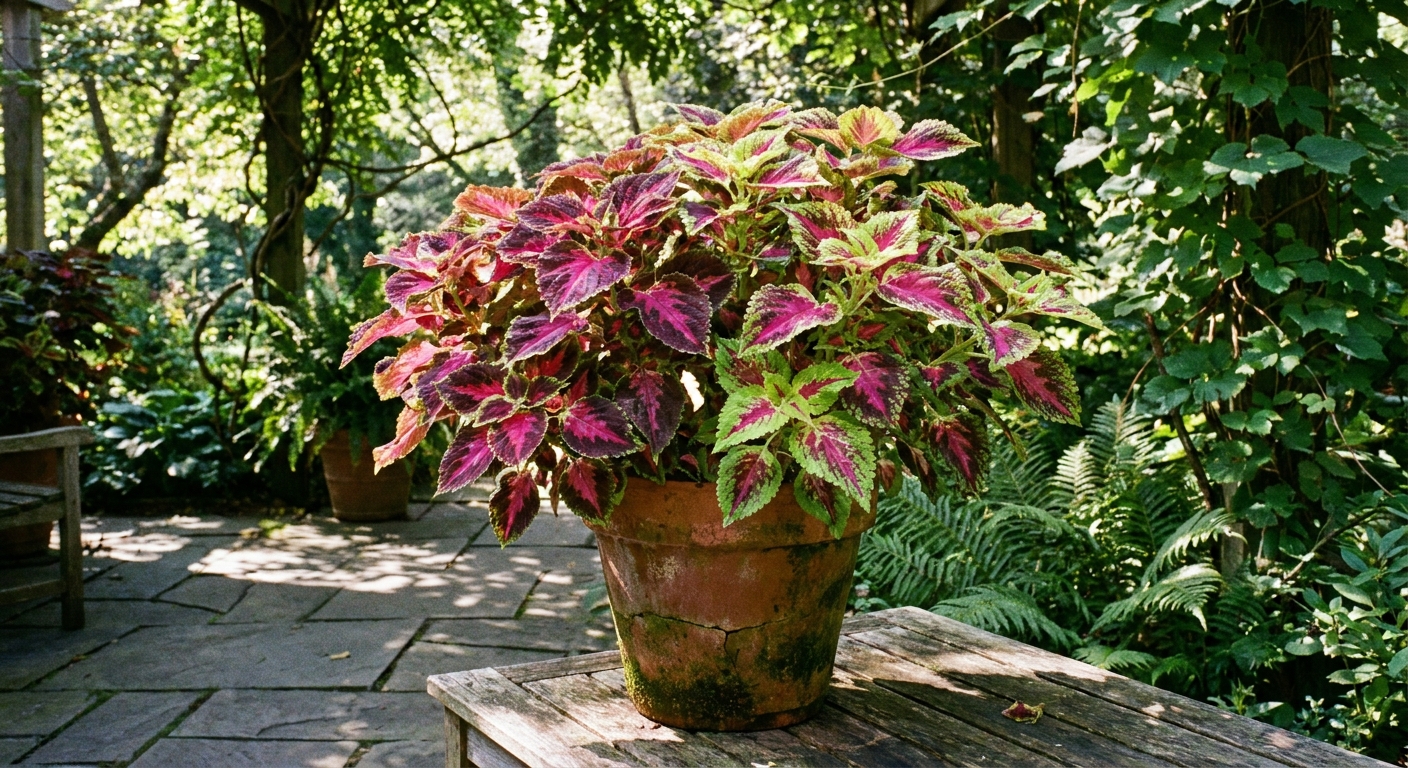
Coleus is my favorite kind of “instant garden confidence.” You buy one little plant, and suddenly your containers look like you know what you are doing. Those painted leaves do all the heavy lifting. The trick is keeping them colorful and lush from May through frost, and that comes down to four things: temperature, light, water, and a little pinching.
Let’s get your coleus growing full, bright, and thriving.

Meet coleus (and why light advice feels confusing)
Coleus (Plectranthus scutellarioides, also commonly listed as Coleus scutellarioides) is typically grown as an annual, prized for foliage that looks hand-painted: chartreuse, burgundy, pink, copper, and almost-black. The reason care advice can sound contradictory is that coleus breeding has changed a lot.
- Older, traditional coleus often prefers part shade and can scorch in hot sun.
- Many newer cultivars are marketed as sun-tolerant and can hold color well with more light.
So yes, coleus can handle shade, and some types can handle more sun. But “full sun” success is always cultivar- and climate-dependent, and intense afternoon sun can still be too much even for sun-tolerant varieties.
Temperature: when to plant outside
Coleus is not a fan of cold. Plant it outdoors after nights are reliably warm, ideally above 50 to 60°F (10 to 15°C). If you plant too early, it may stall, sulk, or get set back for weeks.
Light: sun, shade, and leaf color
The sweet spot
For most varieties, bright shade or morning sun with afternoon shade creates the best balance of growth and color. Think: a spot that feels gentle at 8 a.m. and protective at 3 p.m.
How light changes color
- Too little light: leggy stems, larger spacing between leaves, and colors that fade to green.
- Too much hot sun: scorched, crispy edges and washed-out patches, especially on thinner-leaf types.
- Just right: tight, bushy growth and saturated leaf color.
What “sun-tolerant” means
Sun coleus often performs beautifully with 4 to 6 hours of sun, especially in cooler climates or with morning sun. In very hot regions or during heat waves, even sun varieties usually appreciate afternoon shade and consistent moisture. Sun-tolerant does not always mean “all-day, no-shade sun.”
Quick test: If your coleus looks droopy or dull by mid-afternoon but perks up later, it may be heat or sun stress, not a watering problem. Give it shade for a few days before you change your watering routine.
Watering: keep it simple
Coleus likes evenly moist soil, not swampy soil. In containers, it can go from happy to wilting in one hot day, and repeated dry-downs can make it lanky and less vibrant.
How to water (containers)
- Water when the top 1 inch of potting mix feels dry.
- Water deeply until it runs from the drainage holes, then empty saucers so roots do not sit in water.
- In peak summer, expect to water daily for smaller pots in warm weather.
How to water (in-ground beds)
- Aim for about 1 inch of water per week total, depending on soil type, rainfall, and heat.
- Water at the base in the morning to reduce disease and keep foliage looking pristine.
- Mulch with shredded leaves or fine bark to stabilize moisture and keep the root zone cool.
Overwatering vs underwatering
- Underwatering: droopy leaves that perk up quickly after watering.
- Overwatering: droop plus yellowing, soft stems near the soil line, and a pot that stays heavy and wet.
If you are unsure, check the soil with your finger. It is a lot more accurate than guessing from the leaves alone.
Soil and feeding
For foliage plants like coleus, soil health is the whole game.
Containers
- Use a high-quality potting mix with good drainage.
- Mix in a small amount of compost if you have it, but keep the texture light.
- Feed with a balanced liquid fertilizer at half strength every 2 to 4 weeks during active growth.
In the ground
- Amend with compost before planting.
- If growth stalls midseason, top-dress with compost and water it in.
Note on fertilizer and color: Too much nitrogen can push fast green growth at the expense of intense coloration. Light is still the primary lever for color, so adjust placement first, then fine-tune feeding.
Pinching: the secret to bushy plants
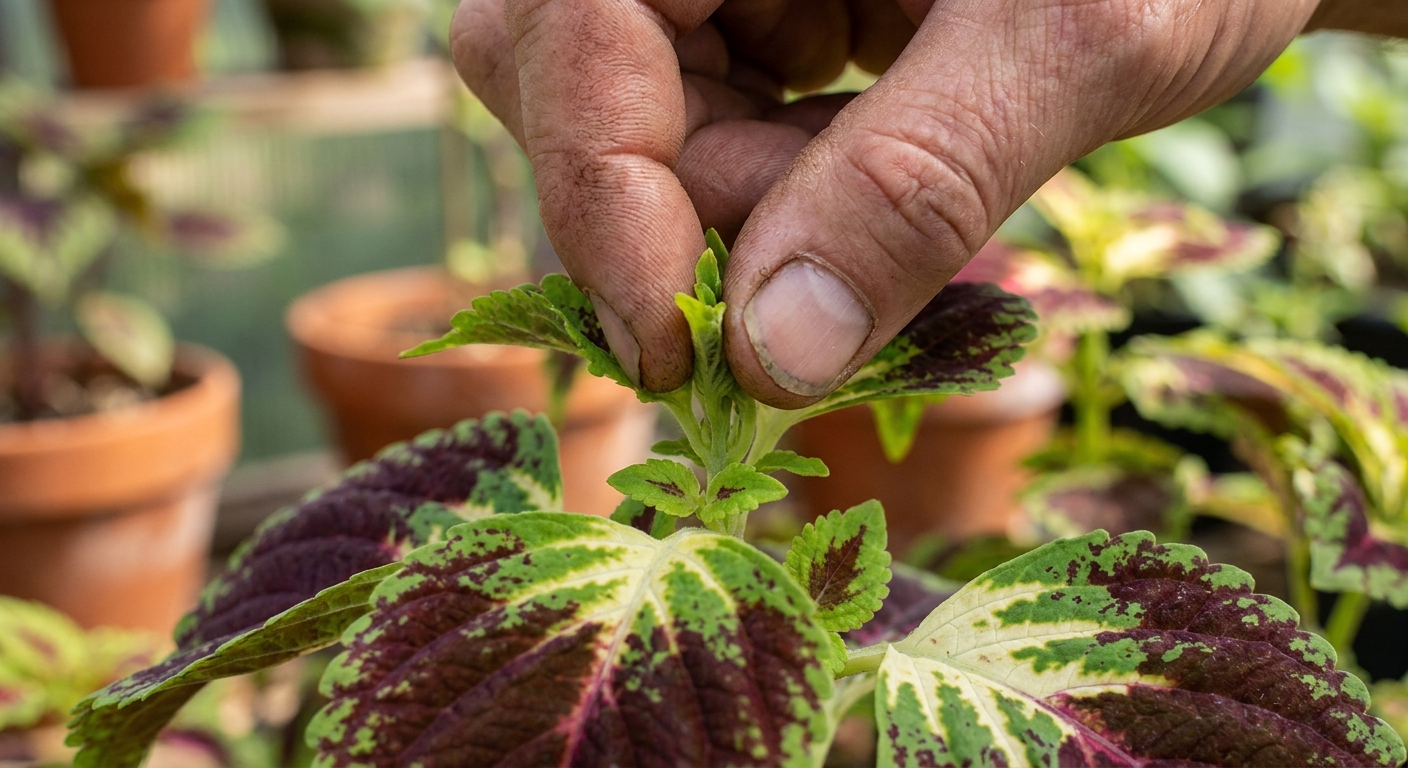
Pinching is basically a gentle haircut. It tells the plant to branch, which means more stems, more leaves, and a fuller shape.
When to start
Start when the plant is about 6 to 8 inches tall, or whenever you see a stem racing ahead of the rest.
How to pinch
- Find a growing tip with a set of leaves below it.
- Use clean scissors or your fingernails.
- Remove the top 1 to 2 inches just above a leaf node.
- Repeat every couple of weeks until the plant has the shape you want.
What about flowers?
Coleus can send up flower spikes, usually later in the season. Flowering is not “bad,” but it can redirect energy away from foliage, and many people prefer the leaf show.
- If you want maximum foliage, pinch off flower spikes as soon as you see them forming.
- If pollinators are a priority, let a few spikes bloom and keep the rest pinched.
Containers vs beds
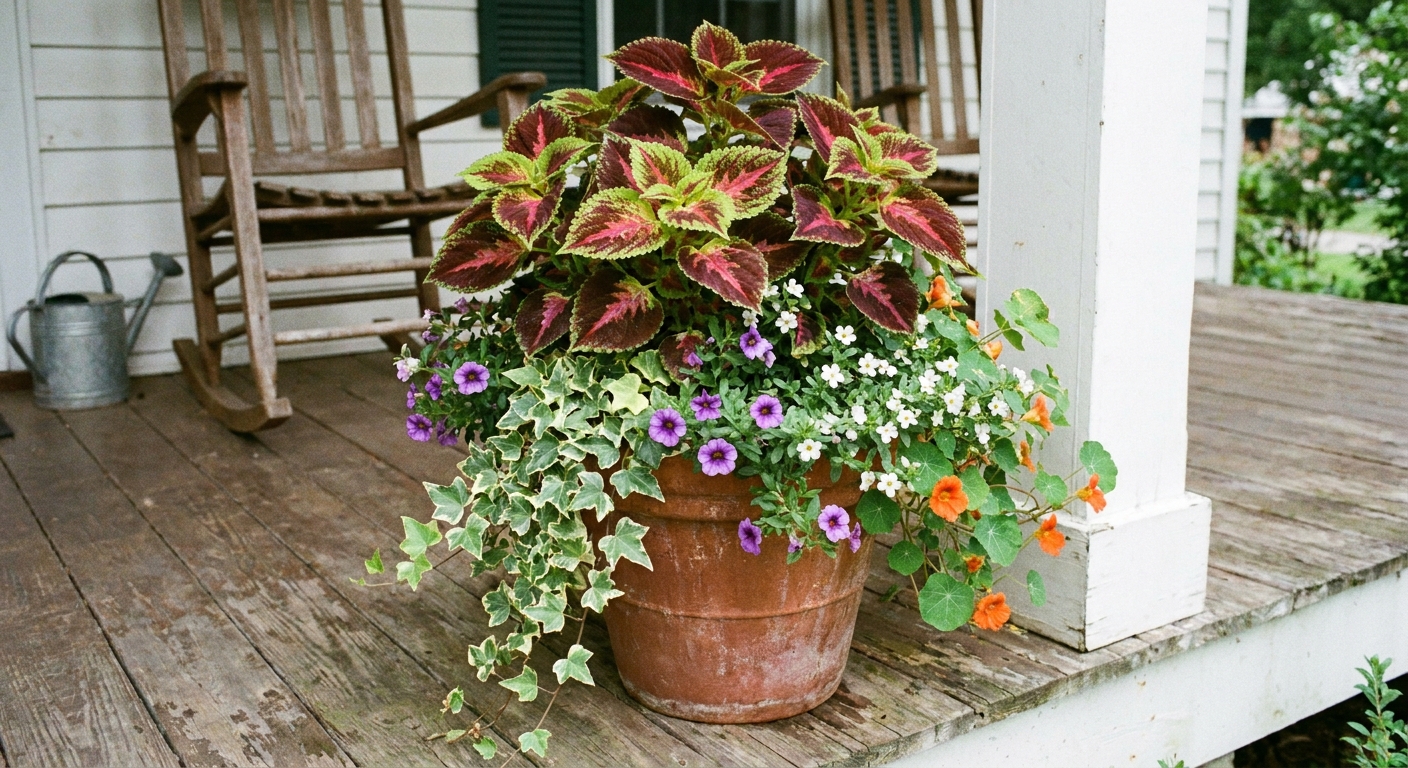
Why coleus shines in containers
- You can move it to chase the best light and dodge heat waves.
- It is easy to pair with spillers and bloomers.
- Watering is simple and controlled.
Pot size tip: Bigger pots stay evenly moist longer. If you want less daily watering, size up.
Why coleus is great in beds
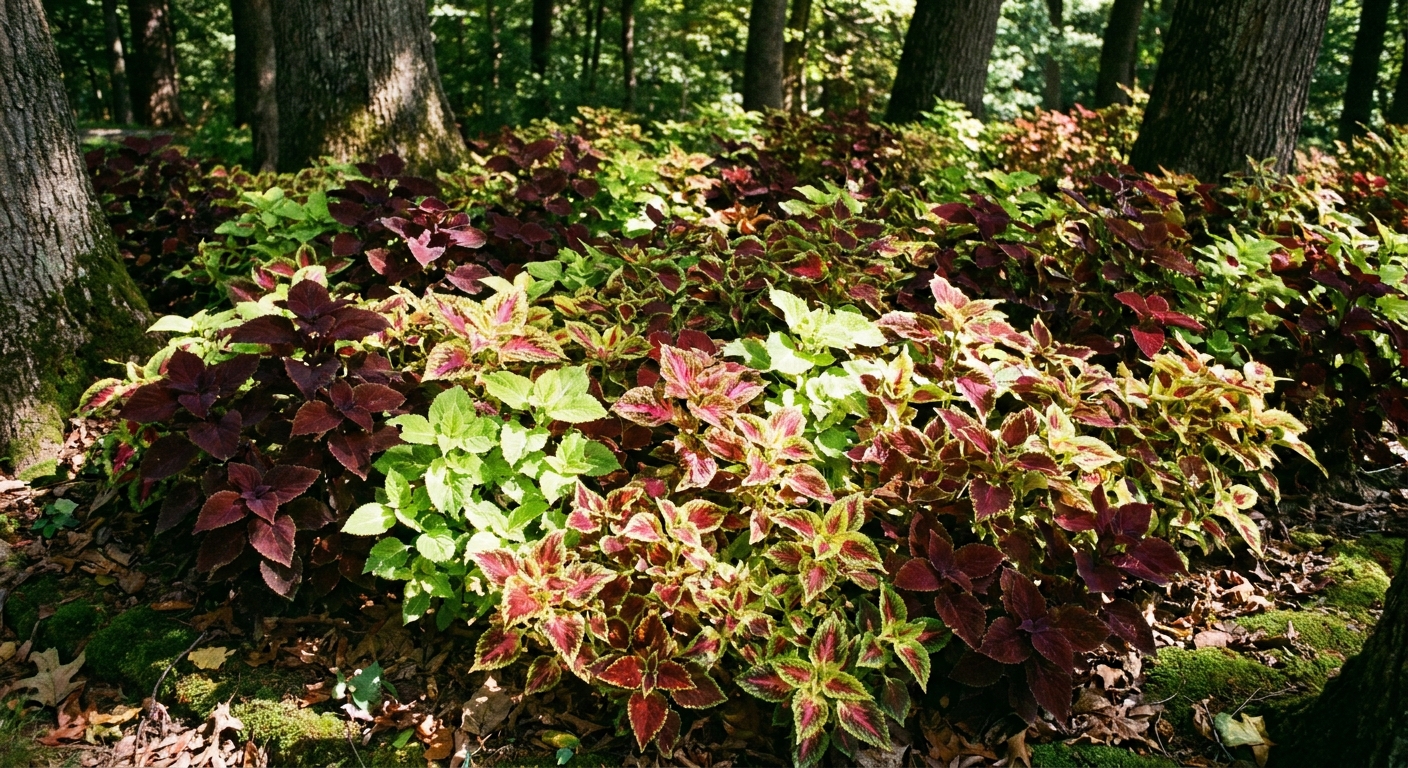
- It fills space fast and blends beautifully with hostas, ferns, caladiums, and impatiens.
- It can create bold color blocks where flowers struggle in shade.
Spacing: Most varieties do well spaced 10 to 18 inches apart, depending on their mature size.
Size note: Some coleus stay compact, while others can reach 2 to 3 feet tall and wide. Check the tag and plan spacing and pot size accordingly.
Overwintering: keep your favorites
If you have ever fallen in love with a particular coleus, you already know the heartbreak of frost. The easiest way to keep that exact plant is to take cuttings before temperatures drop.
When to take cuttings
Take cuttings 4 to 6 weeks before your first expected frost. Choose healthy, vigorous stems.
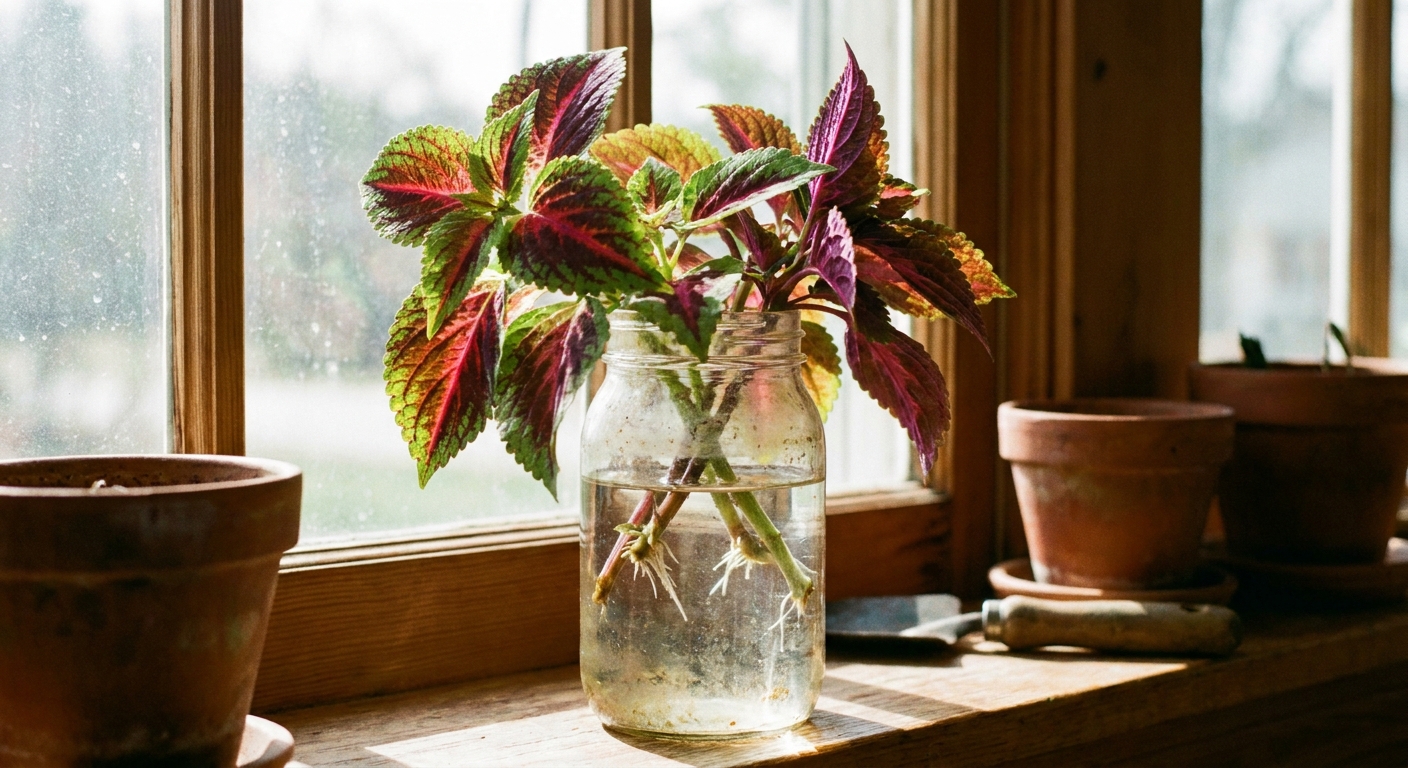
How to root in water
- Snip a 4 to 6 inch stem just below a node.
- Remove the lower leaves, leaving a few at the top.
- Place in a clean glass of water with the nodes submerged.
- Set in bright, indirect light and change the water every few days.
- Pot up when roots are 1 to 2 inches long.
How to root in potting mix
- Prepare a small pot with pre-moistened potting mix.
- Dip the cut end in rooting hormone (optional, but helpful).
- Insert the cutting so at least one node is under the mix.
- Cover loosely with a clear bag to hold humidity, and vent daily.
- Keep evenly moist until you feel resistance when you tug gently.
Winter care indoors
- Give the brightest light you have, like a sunny window or a grow light.
- Water when the top inch is dry.
- Pinch tips occasionally to prevent winter legginess.
Come spring, harden them off and replant outdoors once nights are reliably warm again.
Pests: what to watch for
Coleus is generally easy, but a few sap-sucking pests can move in, especially on stressed plants or indoor overwintered cuttings.
Common coleus pests
- Aphids: clusters of tiny green, black, or tan insects on tender tips.
- Whiteflies: small white insects that flutter up when you disturb the plant.
- Spider mites: fine stippling on leaves and delicate webbing, common in dry indoor air.
- Mealybugs: white, cottony clumps in leaf joints and along stems.
What to do
- Start with a strong spray of water to knock pests off.
- Use insecticidal soap or neem oil, coating the undersides of leaves. Reapply every 5 to 7 days for a few rounds.
- For mealybugs, dab with a cotton swab dipped in rubbing alcohol, then follow with soap spray.
- Isolate indoor plants to prevent pests from spreading.
My prevention rule: Healthy, evenly watered coleus in appropriate light gets bothered less. Stress invites pests.
Troubleshooting
Leggy, floppy stems
- Pinch back by a third.
- Increase light gradually.
- Do not over-fertilize.
Faded color
- Increase light for shade-grown plants.
- Provide afternoon shade for sun-stressed plants.
- Check nitrogen-heavy feeding.
Crispy edges or scorched patches
- Move to morning sun or bright shade.
- Water more consistently, especially in pots.
- Mulch in-ground plantings to cool roots.
Wilting even though soil is wet
- Double-check drainage and make sure the mix is not compacted.
- Remember heat stress can cause wilting even in damp soil, especially in hot afternoon sun.
- If you suspect rot (soft stems at the base, ongoing yellowing), repot into fresh mix and let the soil dry slightly between waterings.
Simple routines for a great season
- Pinch every couple of weeks, especially early summer.
- Rotate pots so plants grow evenly toward the light.
- Water deeply and consistently, not in tiny sips.
- Adjust placement during heat waves.
- Take cuttings before frost so you can keep your favorites for next year.
Pet note: If you garden with curious cats or dogs, place coleus where it is harder to nibble. It is often listed as potentially irritating if pets chew it, and can cause mild stomach upset.
If you do nothing else, pinch and pay attention to light. That combo alone turns coleus from a single pretty plant into a full, leafy showpiece.