
Why Your Rose of Sharon Is Still Bare in Late Spring

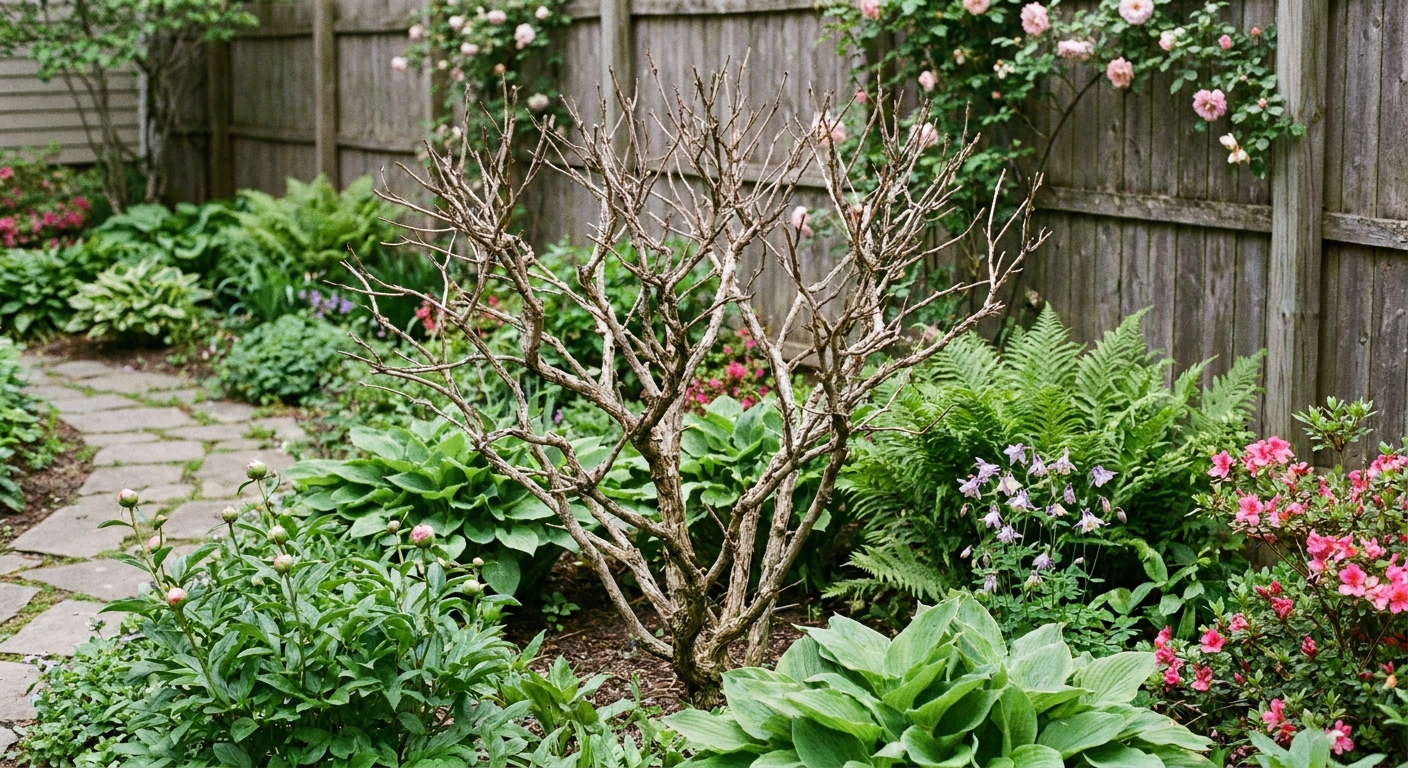
Every spring, I get the same nervous question from friends and neighbors: “My Rose of Sharon is still just sticks. Is it dead?” And I get it. When everything else is leafing out and your hibiscus shrub looks like a bundle of dry twigs, it can feel like you missed the memo that spring arrived.
Here is the reassuring truth: Rose of Sharon (Hibiscus syriacus) is naturally late to leaf out. In many gardens it is among the later shrubs to wake up, even when lilacs and spirea shrubs are already partying.
Before you make any big decisions or reach for the loppers, use the simple checks below to tell the difference between normal late leaf-out and winter dieback.
Know which hibiscus you have
This quick ID saves a lot of worry.
- Rose of Sharon (Hibiscus syriacus) is a woody shrub. It leafs out late and blooms on new growth later in summer.
- Tropical hibiscus (Hibiscus rosa-sinensis) is not reliably cold-hardy in most temperate climates and is often grown as a houseplant or patio plant. If it got chilled, it can behave very differently.
- Hardy hibiscus (Hibiscus moscheutos and hybrids) is a perennial that dies back to the ground each winter and comes back from the roots, often quite late.
If yours has woody stems and stays in place year to year, you are in Rose of Sharon territory.
Late leaf-out is normal
Hibiscus syriacus is a woody hibiscus that loves heat. It tends to wait for consistently warm soil and mild nights before pushing new growth. That means it can stay bare long after you have mentally moved on to summer.
When bare in May can be fine
A Rose of Sharon that is still bare in May can be within normal timing if:
- Your spring has been cool, especially with chilly nights.
- The shrub is in partial shade and the soil warms slowly.
- You are in a colder zone or a windy exposure (north side of the house, open field, hilltop).
- It leafed out late last year too. Many do, year after year.
In my area, leaf-out is often mid to late May. In colder zones and in cold-spring years, it can push into early June. In warmer zones, you may see it wake up earlier. The point is this: calendar anxiety is real, but Rose of Sharon runs on heat.
Do a scratch test first
If your shrub is still bare, the quickest way to check for life is a scratch test. You are looking for living cambium just under the bark.
How to scratch-test (step by step)
- Pick a fingernail-sized spot on a thin twig first.
- Use your fingernail or a clean knife to gently scrape away a tiny patch of outer bark.
- Do not circle the stem or scrape a long strip. You only need a small window, and you do not want to damage the twig.
- Look for color right under the bark.
- Green and moist = that section is alive.
- Tan, brown, or dry = that section is dead.
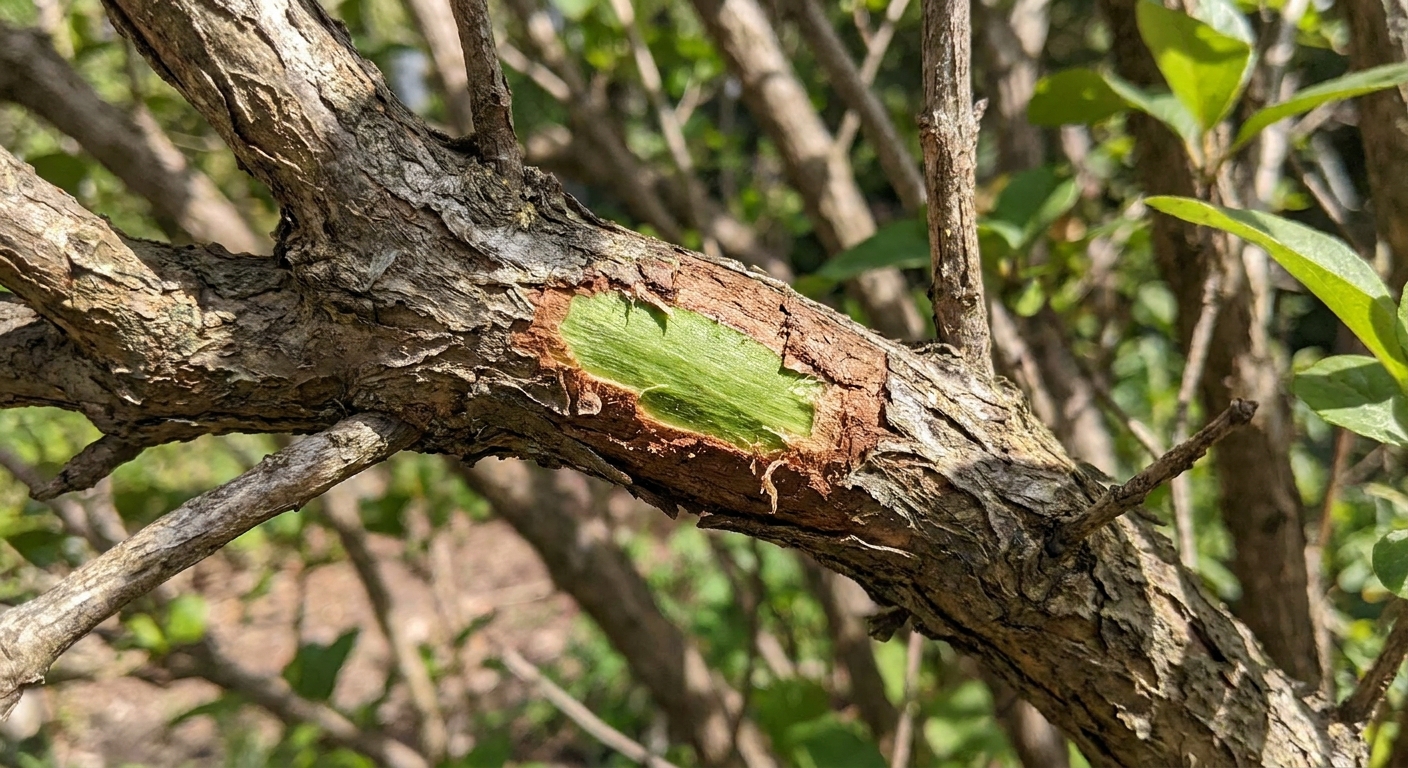
Tip from my own garden: Start near the tips, then work your way down the stem. It is very common for Rose of Sharon to have dead tips but still be alive lower down.
Check more than one branch
Scratch-test several stems around the shrub. Winter damage can be uneven. One side might be alive while the windward side got zapped.
Late leaf-out vs dieback
Late leaf-out and winter dieback can look similar from ten feet away. Up close, the clues are different.
Signs it is just resting
- Scratch test shows green on multiple stems.
- Buds look plump (even if they are not opening yet).
- Stems are flexible, not snapping when bent.
- No obvious splitting, peeling, or sunscald on major stems.
Signs winter dieback is the issue
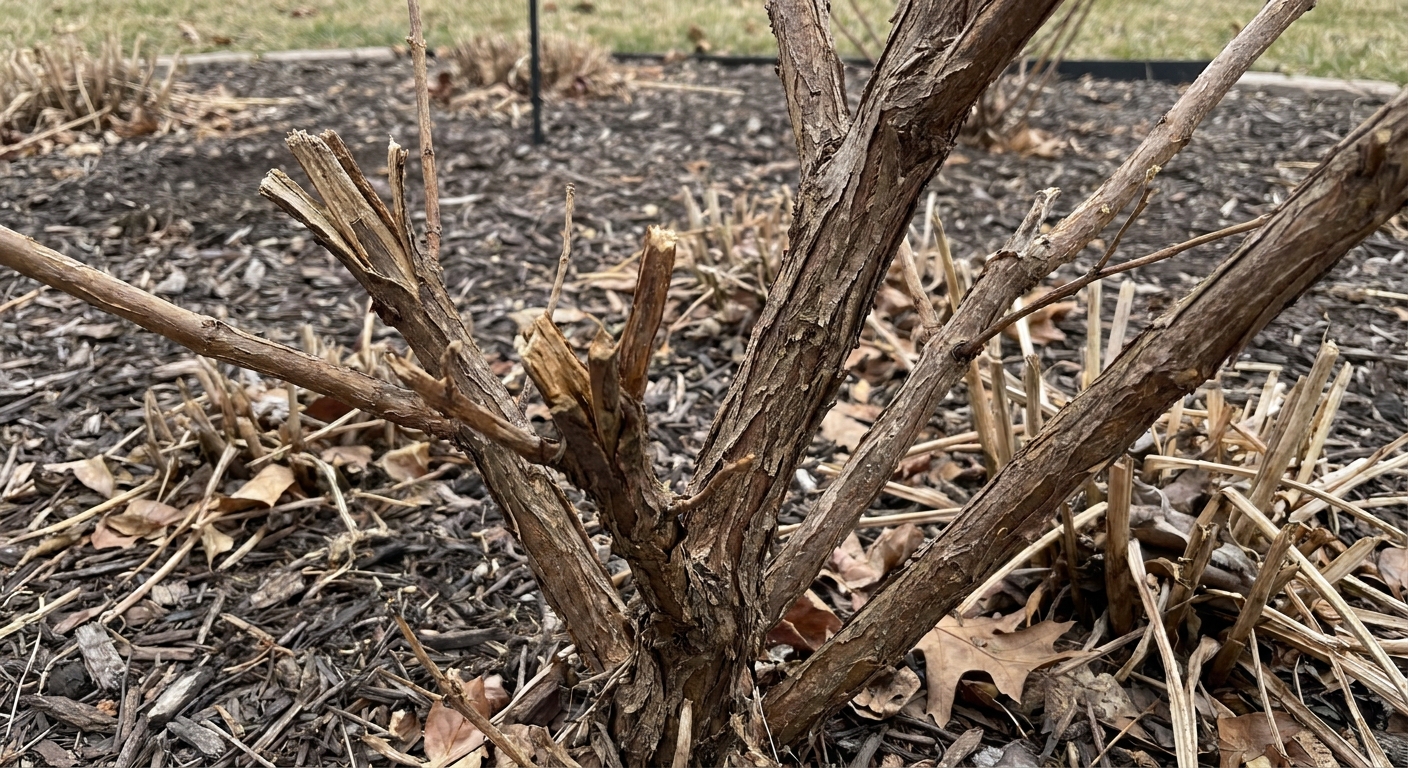
- Scratch test shows brown, dry tissue on many stems, especially at the tips.
- Twigs snap cleanly when bent.
- Sections of stem are shriveled or look sunken.
- You see bark cracking or peeling on exposed sides.
If it is alive but bare
If you found green under the bark, your job is mostly patience, with a little gentle support.
1) Wait for warm nights
Rose of Sharon responds to heat. Once nights are consistently mild, leaf buds usually pop quickly.
2) Water during dry spells
New growth needs moisture, especially if spring has been dry. During a dry stretch, aim for one deep watering per week (more often for sandy soil, less often for heavy clay), soaking the root zone slowly so the moisture actually gets down where roots are.
3) Mulch lightly
A 2 to 3 inch layer of mulch (kept a few inches away from the stems) helps even out moisture swings and supports soil life. I am always cheering for soil life.
4) Go easy on fertilizer
A stressed or late plant does not need a big fertilizer push. If you fertilize at all, keep it modest and wait until you see active growth.
One more spring wildcard: late freezes
If buds start to swell and you get a late hard frost, tender new growth can get knocked back. The shrub usually re-sprouts, but it can delay leaf-out and flowering.
If you find dieback
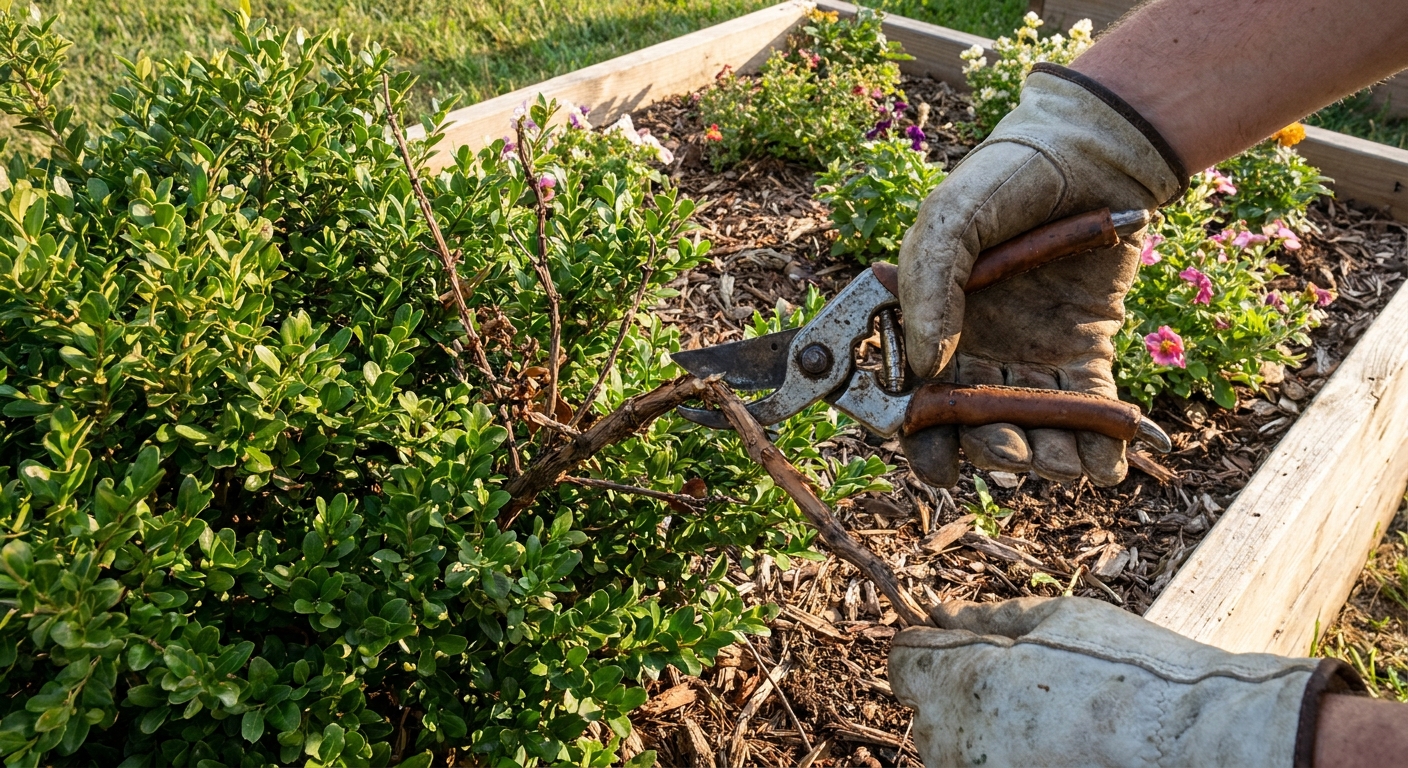
If your scratch test shows dead wood, prune it out. The goal is to remove what is truly dead while keeping any living framework. Some tip dieback is pretty normal after a rough winter.
How to prune out dead wood
- Start at the tip of a dead-looking branch.
- Cut back in small steps until the scratch test shows green, or until you reach a junction where healthy growth is likely to emerge.
- Make clean cuts just above a node or branch union.
If the entire stem is dead all the way down, remove it at the base.
Timing note: Rose of Sharon is often pruned in late winter or early spring, but if yours is a late sleeper, it is completely fine to wait until you see bud swell or you confirm green wood. You will make better decisions when the plant tells you what is alive.
Important: Many Rose of Sharon shrubs that die back will resprout from lower stems or the base once warmth settles in. That can mean a smaller shrub this year, but not necessarily a total loss.
If it leafs out but does not bloom
This is a different diagnosis, and it is an easy mix-up.
If your Rose of Sharon has leaves but does not flower later in summer, that is usually about sun, pruning timing, or stress, not late spring dormancy. Rose of Sharon blooms on new wood, and it often flowers mid to late summer when the heat really settles in.
For a shrub that is already leafy, focus on bloom basics like full sun and avoiding overly aggressive shearing. But for the bare-stick shrub in May, do not jump ahead to “no blooms” yet. First we confirm it is alive.
When to worry
I am a big believer in giving Rose of Sharon plenty of time, but there is a point where it is fair to call it.
Give it more time if:
- Scratch tests show green on any main stems.
- You see tiny buds swelling, even if no leaves yet.
- It is still within your area’s normal late spring window.
Consider replacement if:
- Multiple scratch tests on main stems and near the base are uniformly brown and dry.
- The wood is brittle throughout and there is no sign of swelling buds as warm weather arrives.
- You reach early summer with no sprouts anywhere, including from the base.
If you are on the fence, wait a little longer and keep checking lower down the plant. I have seen “dead” Rose of Sharon surprise people with late basal shoots once the soil finally warms.
A quick red flag check
If you notice oozing, sunken cankers, sawdust-like frass, or obvious borer holes, that is outside the normal “late sleeper” pattern. At that point, I would take photos and check with your local extension office or a trusted local nursery, because the fix is very situation-specific.
Quick FAQ
Is Rose of Sharon dead if it has no leaves in May?
Not necessarily. Hibiscus syriacus is known for late leaf-out, especially in cooler zones and cool springs. Use a scratch test to confirm living wood before pruning hard or removing it.
My shrub has dead tips but green lower down. What now?
That is classic winter dieback. Prune dead tips back to living wood and let the shrub regrow. Expect new shoots and, often, a slightly later bloom season.
Should I fertilize a bare Rose of Sharon to wake it up?
No heavy feeding. If it is alive, warmth and steady moisture will do more than fertilizer. Wait until you see new growth before considering a light feeding.