Why Your Clematis Is Not Blooming

A little green. A lot of curiosity.
If your clematis is climbing politely, leafing out like it means business, and then offering exactly zero flowers, you are not alone. Clematis are famous for dramatic blooms and also for being just picky enough to keep us humble.
The good news is that a living, leafy clematis that is not flowering usually comes down to a handful of fixable issues. Let us walk through the most common culprits and match each one with the right solution.
Quick check
Start with two fast observations. They save a lot of guesswork.
- Is it alive and steadily growing? New shoots and firm stems point to a care or timing issue, not a sudden-collapse disease.
- Is it making buds that fall off, or no buds at all? No buds usually means light, nitrogen, youth, or pruning timing. Buds that shrivel or drop can also point to weather swings (late frost, hot dry wind), watering stress, or occasional pest or fungal damage on the buds.
Cause 1: Too much shade
Clematis are often described as “cool roots, sunny tops.” Many varieties need strong light on the vine to set buds, even if the base is shaded by mulch or nearby plants. How much sun is “enough” depends on the cultivar and your climate, but lack of light is still the most common reason for a leafy, non-blooming vine.
Clues it is a light problem
- Long, stretchy growth with wide gaps between leaf nodes
- Lots of leaves, few side branches
- Vine grows toward the brightest direction and still does not bud
- It gets only a few hours of direct sun, especially if it misses morning to midday sun (many bloom best with around 6 or more hours, though some tolerate partial shade)
The fix
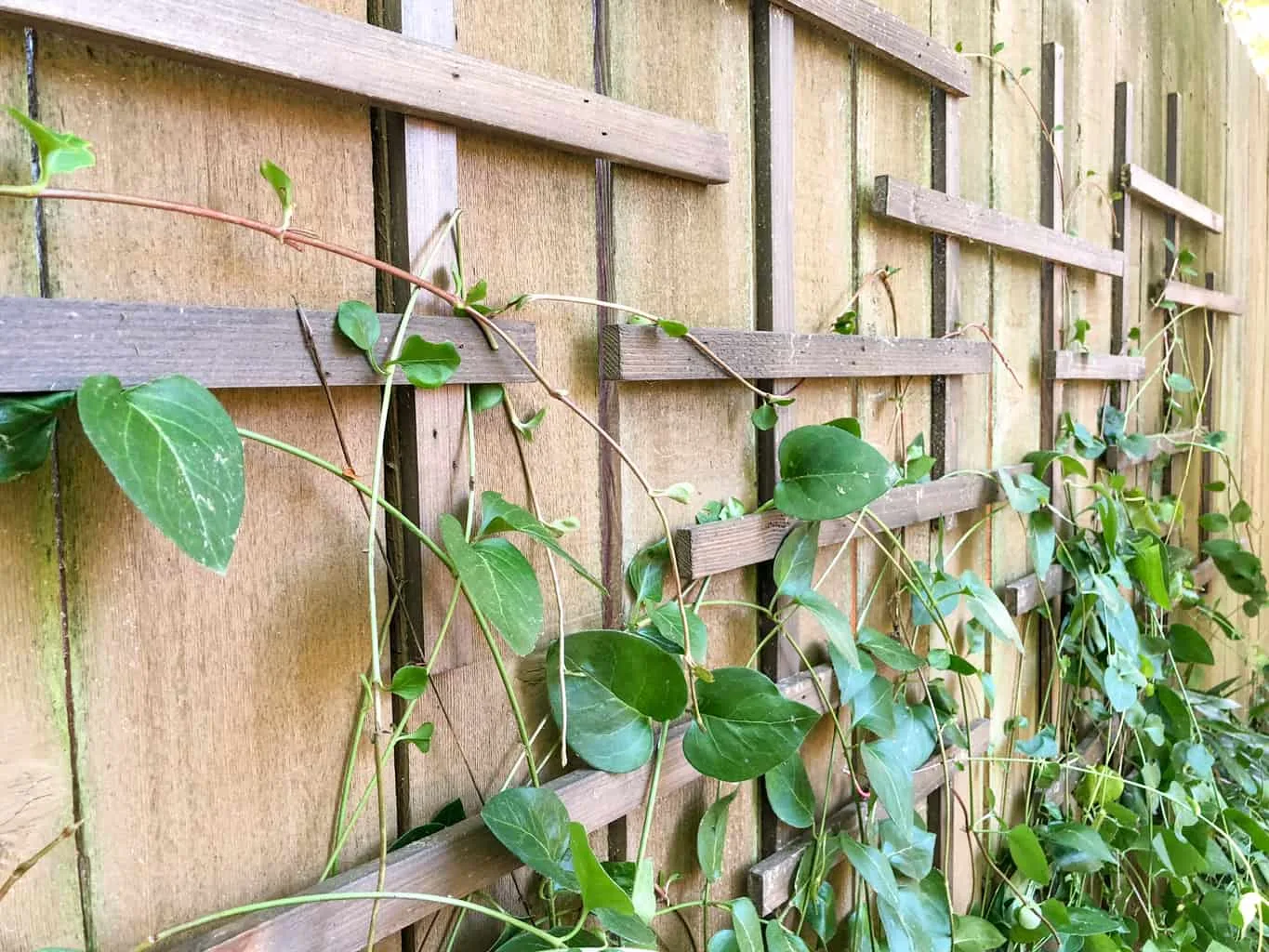
- Increase sun on the upper vine. Prune or thin nearby shrubs or tree limbs that are shading the trellis.
- Give it a brighter support. If it is on the north side of a fence or tucked under an eave, training it to a sunnier panel can help.
- If it is in a pot, move it. Containers make light adjustments much easier. Aim for morning sun and some afternoon protection in very hot climates.
- Keep the roots cool without stealing light. Use mulch or a low groundcover at the base instead of planting it in deep shade.
Cause 2: Excess nitrogen
Nitrogen fuels leafy growth. Too much of it can turn clematis into a beautiful green fountain that forgets why it came to the garden.
Where extra nitrogen comes from
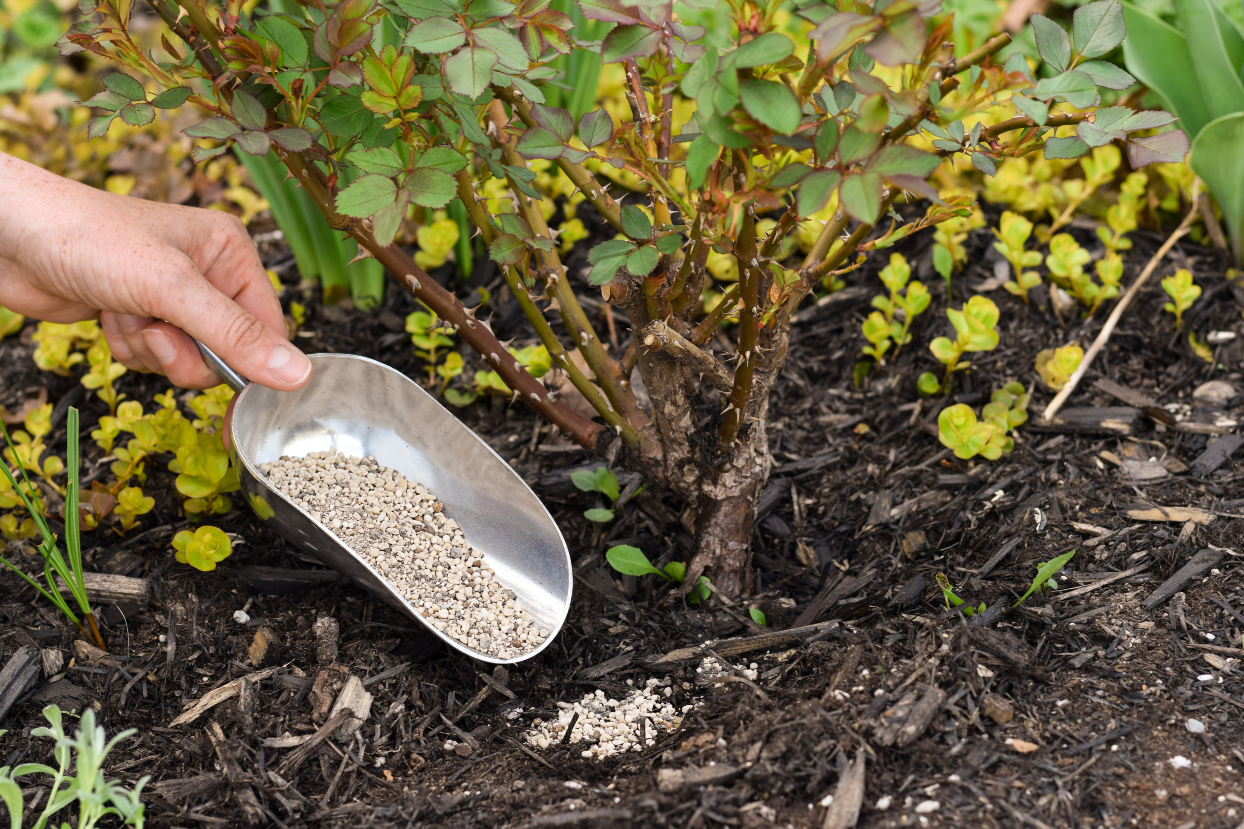
- Frequent feeding with a high-nitrogen fertilizer (the first number in N-P-K is high)
- Lawn fertilizer overspray or runoff near the clematis root zone
- Very rich, fresh manure or heavily amended soil that is still releasing lots of nitrogen
The fix
- Pause high-nitrogen feeding. If you fertilize, use a balanced, gentle feed sparingly. If you have a soil test suggesting low phosphorus or potassium, follow it, but avoid piling on extra phosphorus “just because.”
- Keep lawn fertilizer away. Create a small no-fertilizer buffer zone around the base, or hand-apply lawn feed with care.
- Do not overcompensate. More fertilizer rarely fixes a no-bloom clematis. Steady water, decent light, and patience are usually better.
- Add compost as a gentle baseline. A thin layer of finished compost is generally safer than frequent strong feeding.
Cause 3: A young vine
Some clematis take time to settle in. In the first year especially, a clematis may focus on root growth and framework rather than blooms. Even in year two, flowering can be light while the plant builds strength.
Clues it is mostly age and establishment
- Planted this year, or last year and still relatively small
- Healthy leaves, no major pest or disease damage
- Steady but not explosive growth
The fix
- Stay consistent with water. Deep, thorough watering is better than frequent sips, especially during warm, dry stretches.
- Mulch the root zone. A 2 to 3 inch layer helps moderate temperature and moisture.
- Do not chase blooms with heavy fertilizer. Gentle feeding and good light beat forcing growth.
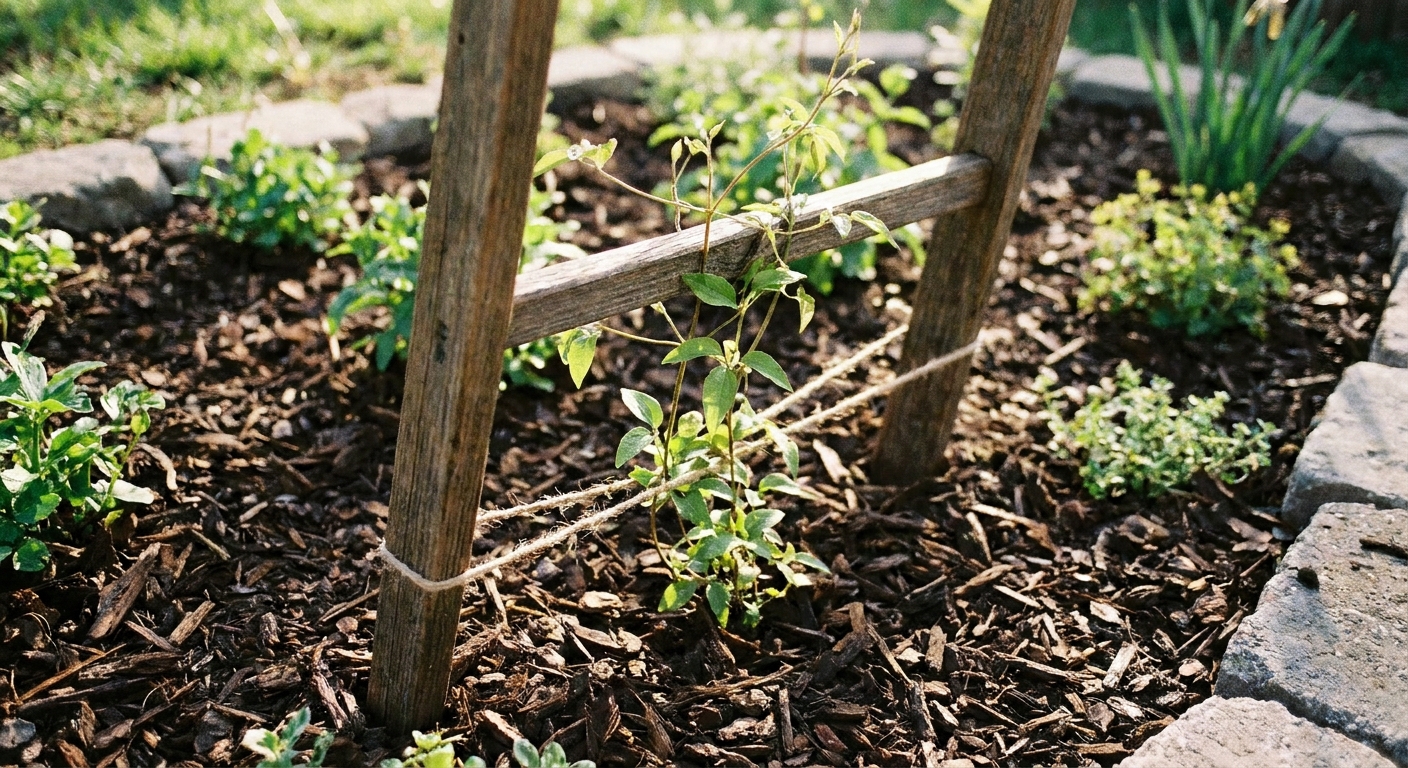
- Train the vine early. Tying in stems encourages branching, and branching gives you more potential bloom points later.
If your clematis is young and otherwise happy, your best tool might be the hardest one to hold: patience.
Cause 4: Wrong pruning time
This is the big one that feels unfair because the plant looks fine. Many clematis set flower buds on stems made the previous season. If those stems were cut back at the wrong time, the plant can grow beautifully and still skip blooms.
Clues pruning timing is the issue
- You cut the vine back hard in late winter or early spring, and now it is leafy but flowerless
- You pruned hard right after a bloom flush, or you pruned without knowing the plant’s group, and flowering dropped the next season
- The plant bloomed in the past, then stopped after a major pruning
The fix
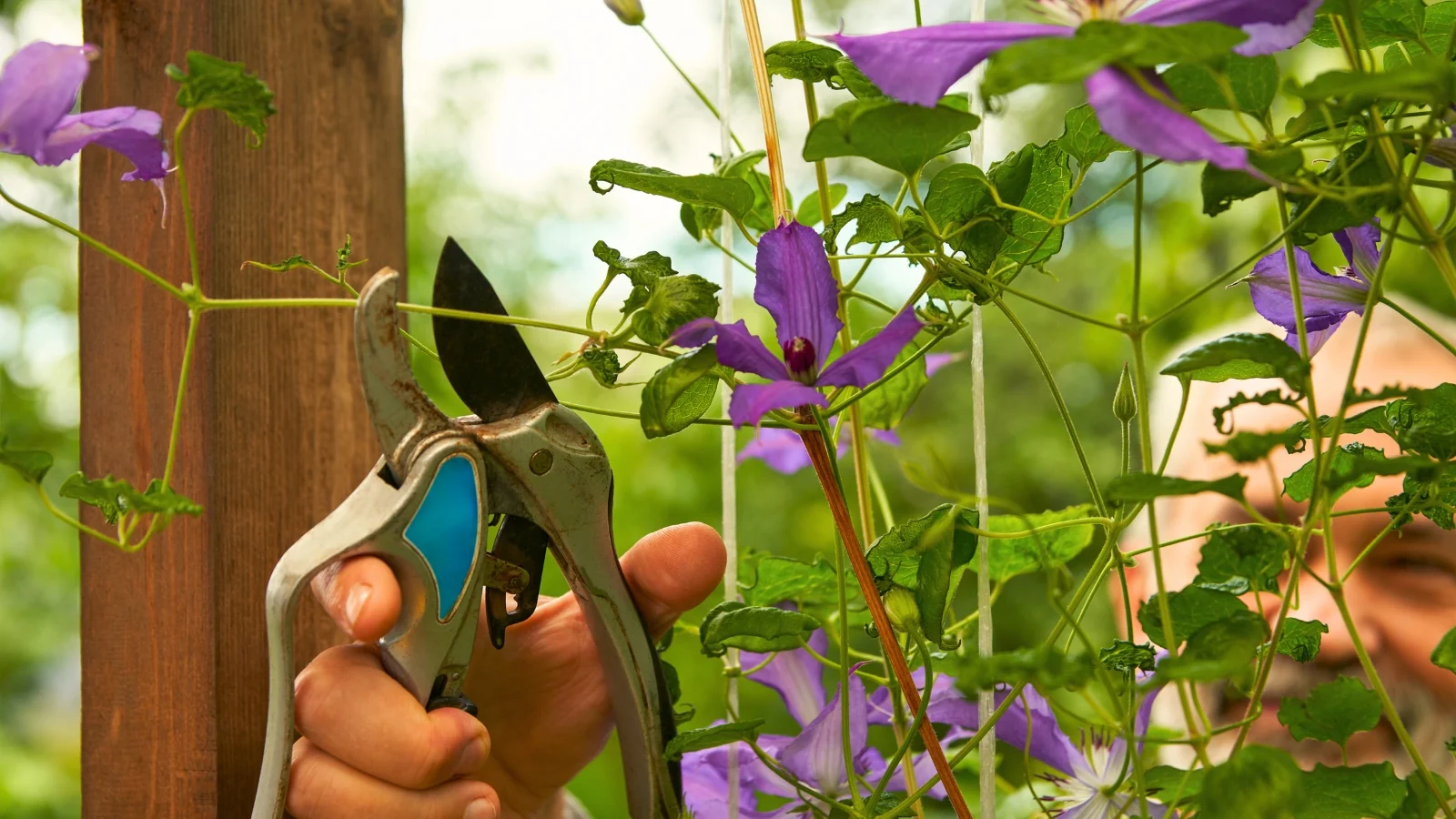
- Identify your pruning group. Clematis are typically managed in groups based on when they bloom and which wood they bloom on.
- Use bloom timing as your clue. If it blooms in spring on older stems, it is usually an old-wood bloomer that hates a hard spring haircut. If it blooms in summer on fresh growth, it usually tolerates or prefers a stronger cutback. Check the plant tag or cultivar name if you still have it.
- Match pruning to the group. Some need only light shaping, while others bloom best after being cut back more firmly.
- When in doubt, prune gently. A light tidy is less likely to remove a season’s worth of buds than a full reset.
If this sounds like your situation, head to our pruning guide for a clear, group-based approach: Pruning Clematis.
Other common blockers
If light, feeding, age, and pruning all look good, these are worth checking. They often show up quietly and delay flowers even on an otherwise healthy-looking vine.
Water stress during bud formation
- Dry soil can reduce bud set and lead to bud drop.
- Waterlogged soil can stress roots and stall flowering.
Fix: Keep moisture even. Water deeply, then let the top inch or two of soil dry slightly before watering again. Ensure drainage is good.
Weather damage to buds
Late frosts can nip developing buds, and hot, dry winds can shrivel them before they open. The vine may look perfectly healthy while the bloom show quietly disappears.
Fix: If a cold snap is forecast during bud season, protect the vine with a lightweight frost cloth overnight and remove it in the morning. In windy heat, water deeply and add temporary wind protection if the plant is in a blast zone.
Heat at the root zone
Hot, bare soil can stress clematis even when the vine is in sun.
Fix: Mulch, add a small shading plant at the base, or use a flat stone to shade the crown while keeping the vine in light.
Bud pests and nibblers
If you see buds but they look scarred, hollowed, or vanish overnight, pests may be the culprits. Thrips, earwigs, and even deer can wreck buds long before you notice the damage.
Fix: Inspect buds closely. Shake the vine over a sheet of white paper to spot tiny insects, and check at dusk for earwigs. Use physical barriers for deer, and consider simple traps for earwigs if you confirm them.
Is it clematis wilt?
A non-blooming clematis is usually not clematis wilt. Wilt is dramatic. A vine or large section collapses suddenly, often with blackened stems or limp growth even when soil moisture seems fine.
If your clematis is leafy and standing tall, this page is the right place. If your plant collapsed quickly, that is when to switch to our wilt help: Clematis Wilt.
No-bloom checklist
- Light: Aim for strong sun on the vine. Many varieties bloom best with around 6 or more hours, though some do fine with partial shade.
- Fertilizer: Avoid high-nitrogen routines and lawn feed drift. Use a balanced feed sparingly, and let a soil test guide any heavier changes.
- Age: New plantings can take a season or two to hit their stride.
- Pruning: Match pruning time and severity to the pruning group. If you do not know the group, use bloom timing and the plant tag as clues, and prune lightly until you are sure.
- Moisture: Even watering and good drainage support bud set.
- Weather and pests: Late frosts, hot winds, and bud pests can sabotage blooms even when the leaves look great.
Work through the list in that order. Light and pruning are the two most common reasons a clematis looks vigorous but refuses to flower.
FAQ
Will a clematis bloom the first year?
Some do, but many focus on establishing roots and stems first. Strong light and steady moisture are the biggest factors that help a young plant produce earlier blooms.
My clematis is huge but has no flowers. What is most likely?
Usually either too much shade or too much nitrogen, followed closely by pruning at the wrong time for its group.
Is Epsom salt good for clematis blooms?
Only if your soil is truly low in magnesium. It is not a reliable bloom booster on its own. Light, correct pruning, and balanced nutrition matter more.
How long after fixing the problem will it bloom?
Light and fertilizer corrections can help within the same season if buds have not already been removed, damaged, or missed. Pruning mistakes often mean waiting until the next appropriate bloom cycle.