
Why Bromeliad Leaf Tips Turn Brown

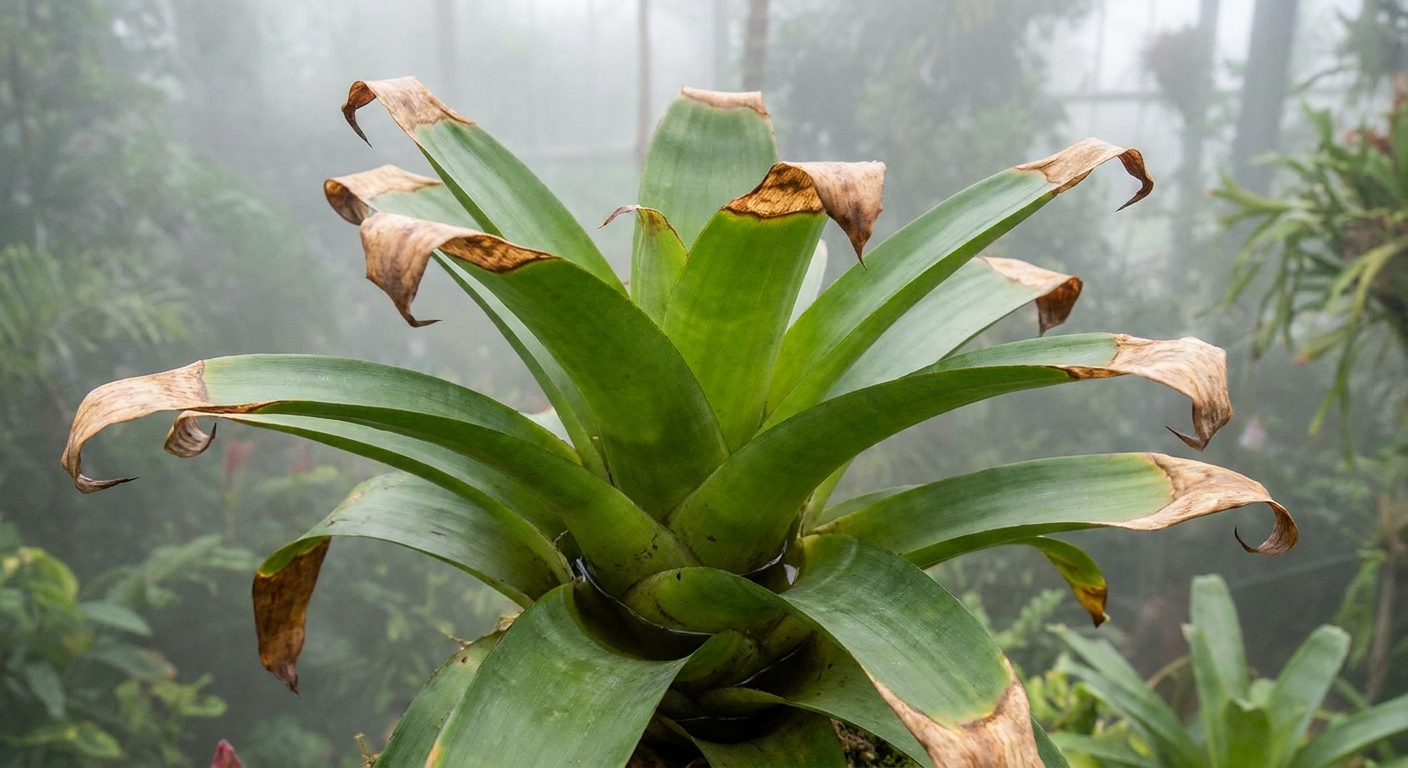
The first bromeliad I ever brought home lived on my tiniest apartment windowsill, right beside the kitchen sink. I loved its tidy rosette and how it looked like it belonged in a rainforest, not a sixth floor studio. Then the leaf tips started turning crispy brown, and I took it personally. I had been watering it, after all. I even told it good morning.
Here is the reassuring truth: brown tips on bromeliads are usually a care mismatch, not a death sentence. Most tank bromeliads can keep growing and even pup happily once you dial in three things: water quality, tank care, and humidity. The tricky part is separating those fixable issues from the normal, slow decline of the mother rosette after flowering.

First, confirm what kind of bromeliad you have
When people say “bromeliad,” they often mean a tank bromeliad, the kind with a central “tank” where water collects. Common houseplant types include Guzmania, Vriesea, Aechmea, and Neoregelia.
Many tank bromeliads take up a lot of water through their tank and leaf surfaces, not like a pothos that wants consistently wet soil. Still, roots matter for stability and some moisture uptake, and care can vary by species and how it is potted. If you are not sure what you have, treat the tank as the main watering point, and keep the potting mix only lightly damp and airy.
What brown tips are really telling you
Brown tips are usually leaf tissue that dried out or got “burned” by salt and mineral buildup. That damaged part will not turn green again, but you can stop the browning from spreading by fixing the underlying cause.
Most common causes
- Hard water and mineral salts drying on leaf edges
- A dry tank, especially in warm rooms
- Stale tank water sitting too long
- Low humidity, often paired with heater or AC airflow
- Too much fertilizer, especially if it ends up in the tank
- Sun scorch from hot direct sun through glass
Tank routine (simple and adjustable)
If your bromeliad has a tank, this routine fixes a lot of brown-tip situations fast.
- Keep a little water in the tank most of the time.
- Refresh regularly so it does not sit and sour.
- Adjust to your home: in warm, bright, fast-drying rooms, you might refresh closer to weekly. In cooler, low-light homes, you may refresh every 10 to 14 days so the plant is not staying cold and wet.
- Use room-temperature water when you can. Very cold water can stress tropical tissue.
My personal baseline is a weekly refresh with a deeper flush about once a month, but I stretch that out a bit in winter if the room is cool and the tank is barely evaporating.
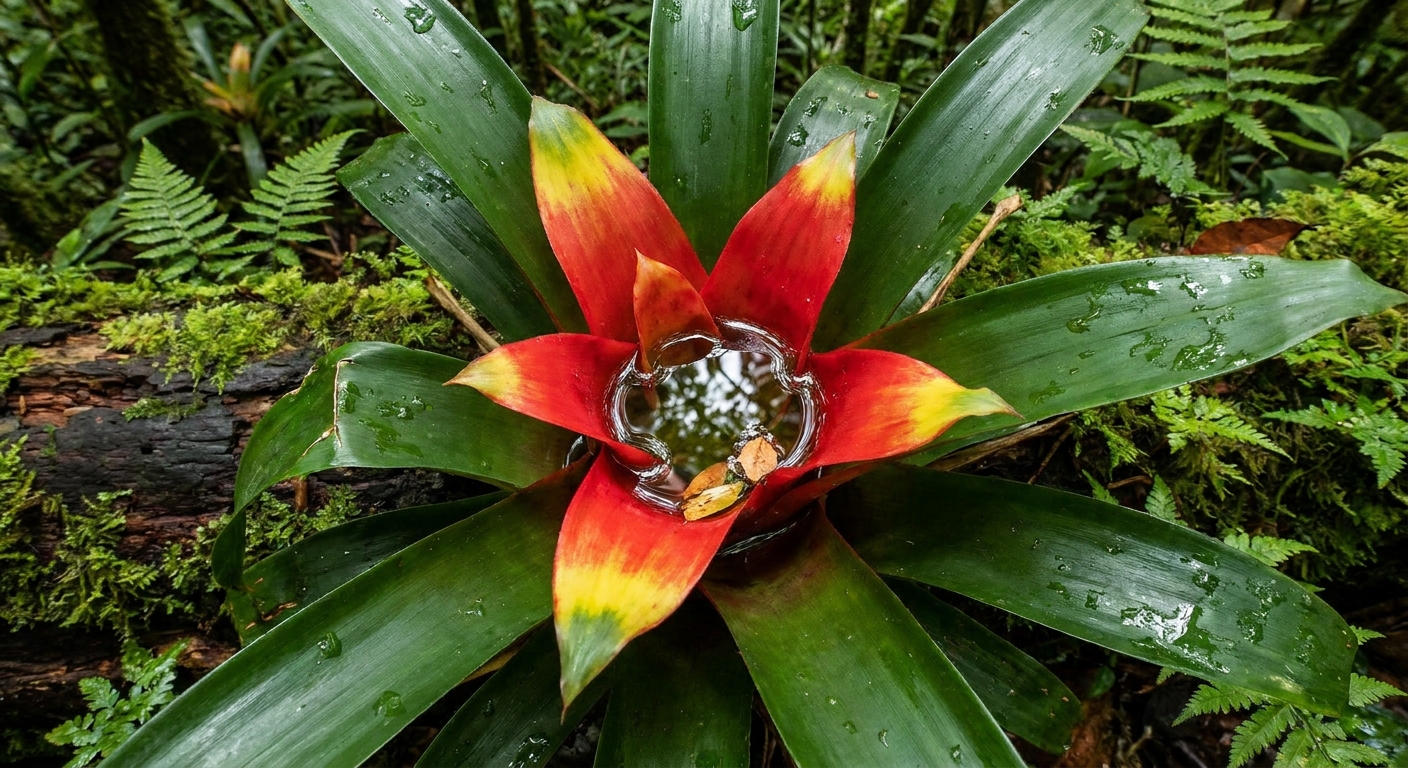
Cause #1: Hard water and mineral buildup
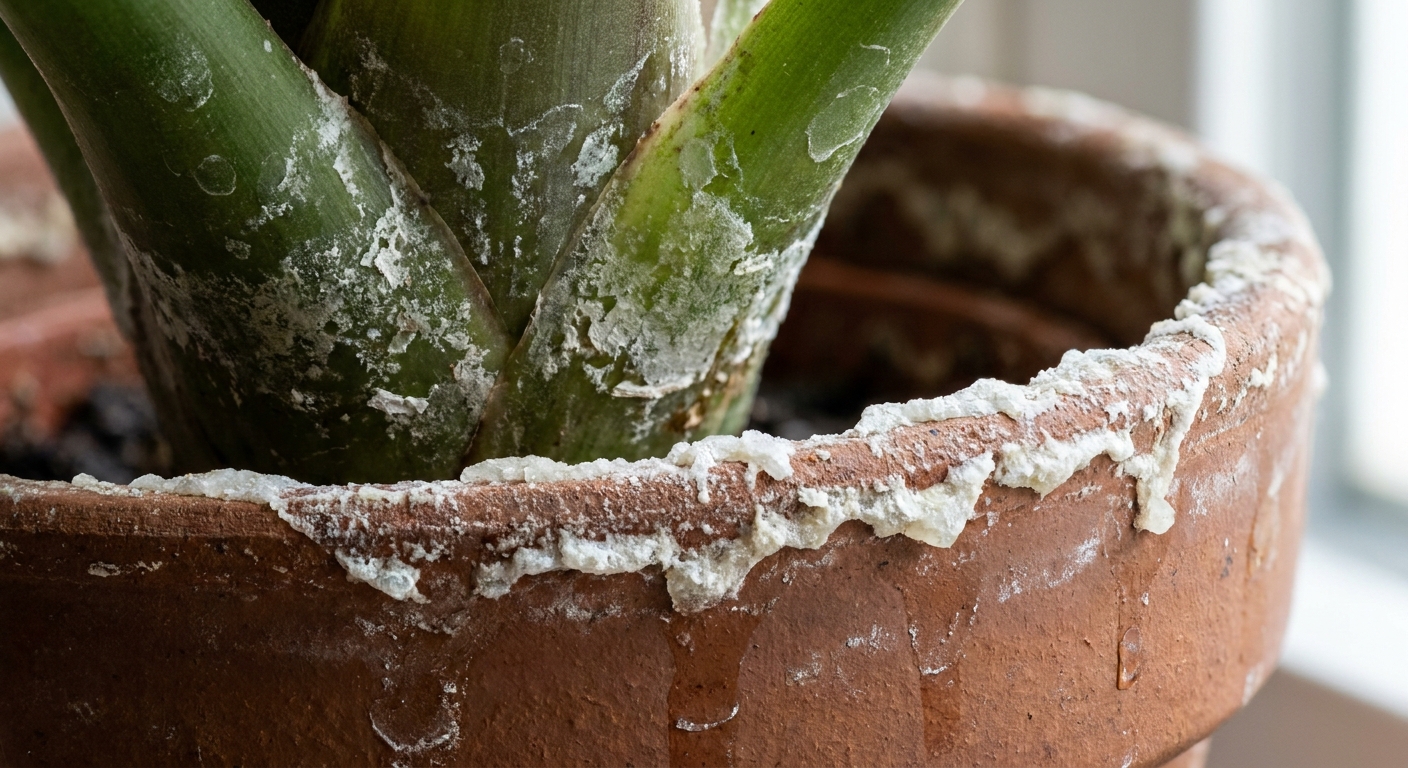
If you water your bromeliad with hard tap water, minerals like calcium and magnesium can accumulate on the leaf surface and in the tank. Over time, leaf tips and margins can dry out and brown, especially on varieties with thinner leaves.
Clues it is water quality
- Brown tips look crispy and dry, not mushy
- You see white crust on the tank, leaves, or pot rim
- Browning appears even though the plant is not in harsh sun
What to do
- Switch your water if possible: rainwater, distilled water, or reverse osmosis water are ideal.
- If you only have tap water, letting it sit out overnight can help if your water system uses free chlorine. If your area uses chloramine, sitting out does not do much. In that case, using filtered, distilled, or RO water is more reliable.
- Flush the tank: pour fresh water through the tank until it overflows, repeating a few times to dilute minerals.
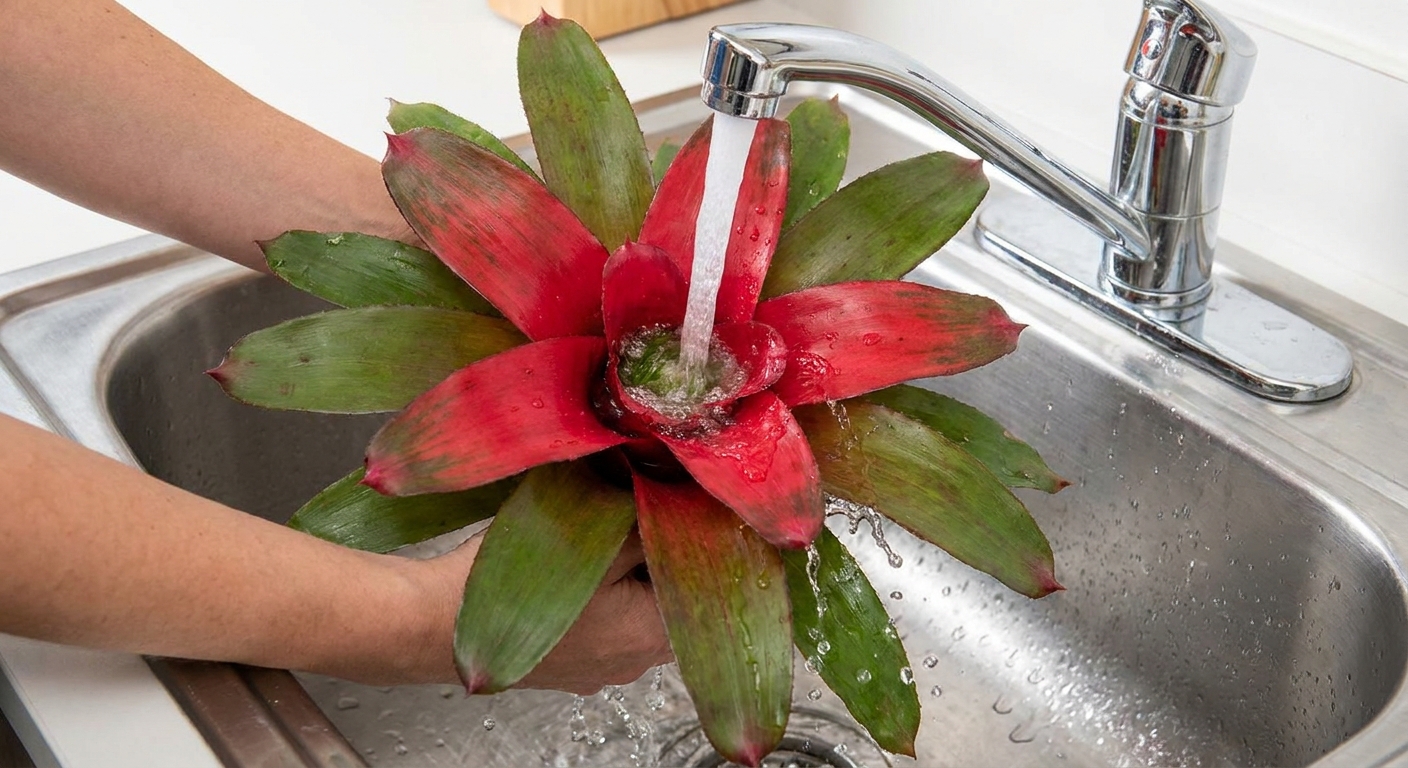
- Rinse the leaves: once every couple of weeks, take the plant to the sink or shower and gently rinse the rosette with lukewarm water to remove residue.
Cause #2: The tank is too dry
Tank bromeliads naturally hold water in their central tank. When that tank stays dry for long stretches, leaf tips are often the first part to crisp up. This is especially common in winter when indoor heat speeds evaporation.
How full should the tank be?
In average indoor conditions, I aim for the tank to be partly filled, not brim-full forever. Think “there is always some water available,” but you still refresh it regularly.
Fix it
- Add clean water to the tank and check it every few days at first until you learn how fast it evaporates in your space.
- Keep the potting mix barely moist, then let it dry slightly toward the top between waterings. You are not trying to grow it like a fern. You are trying to avoid bone-dry stress without creating soggy conditions.
- Adjust for light and temperature: brighter and warmer rooms dry the tank faster.
Cause #3: The tank water is stale
This one surprises beginners because they hear “keep the tank filled” and then leave the same water sitting for weeks. In nature, rain refreshes the tank constantly. Indoors, old water can turn stale, encourage bacterial growth, and stress the plant, sometimes showing up as browned tips and generally dull-looking foliage.
Signs of stale tank water
- Water smells off when you lean in close
- You see debris buildup in the tank
- The plant looks tired even though the tank is technically not empty
Fix it
- Dump and refill on a schedule that matches your conditions. Weekly is great in warm, bright rooms. In cooler homes, every 10 to 14 days can be safer.
- Flush occasionally: take it to the sink and run clean water through the tank for 20 to 30 seconds to wash out residue.
- Keep it mild: aim for room-temperature water.
If you are worried about tipping the plant, you can use a turkey baster to remove old tank water and replace it.
Cause #4: Low humidity and dry air
Bromeliads are tropical plants that evolved in humid air. When indoor humidity is low, leaf tips can dry faster than the plant can keep up, especially if it is near a heat vent, radiator, or a blasting AC unit.
Humidity clues
- Tips brown more quickly in winter
- Leaves feel less supple and more papery
- The plant sits near forced air
How to raise humidity without fuss
- Move it away from vents and drafty doors
- Group plants together so they create a small humid bubble
- Run a small humidifier nearby if your home is very dry
- Use a pebble tray for a small, local boost right around the plant. It is not a whole-room solution, but it can help a bit in still air.
Misting can help briefly, but it tends to be short-lived. I use it as a supplement, not the main plan.
Potting mix and drainage
Brown tips are usually about water quality, tank care, or humidity, but it is worth checking the pot, too. A tank bromeliad sitting in a heavy, stay-wet mix can develop root problems and rot that gets mistaken for “random browning.”
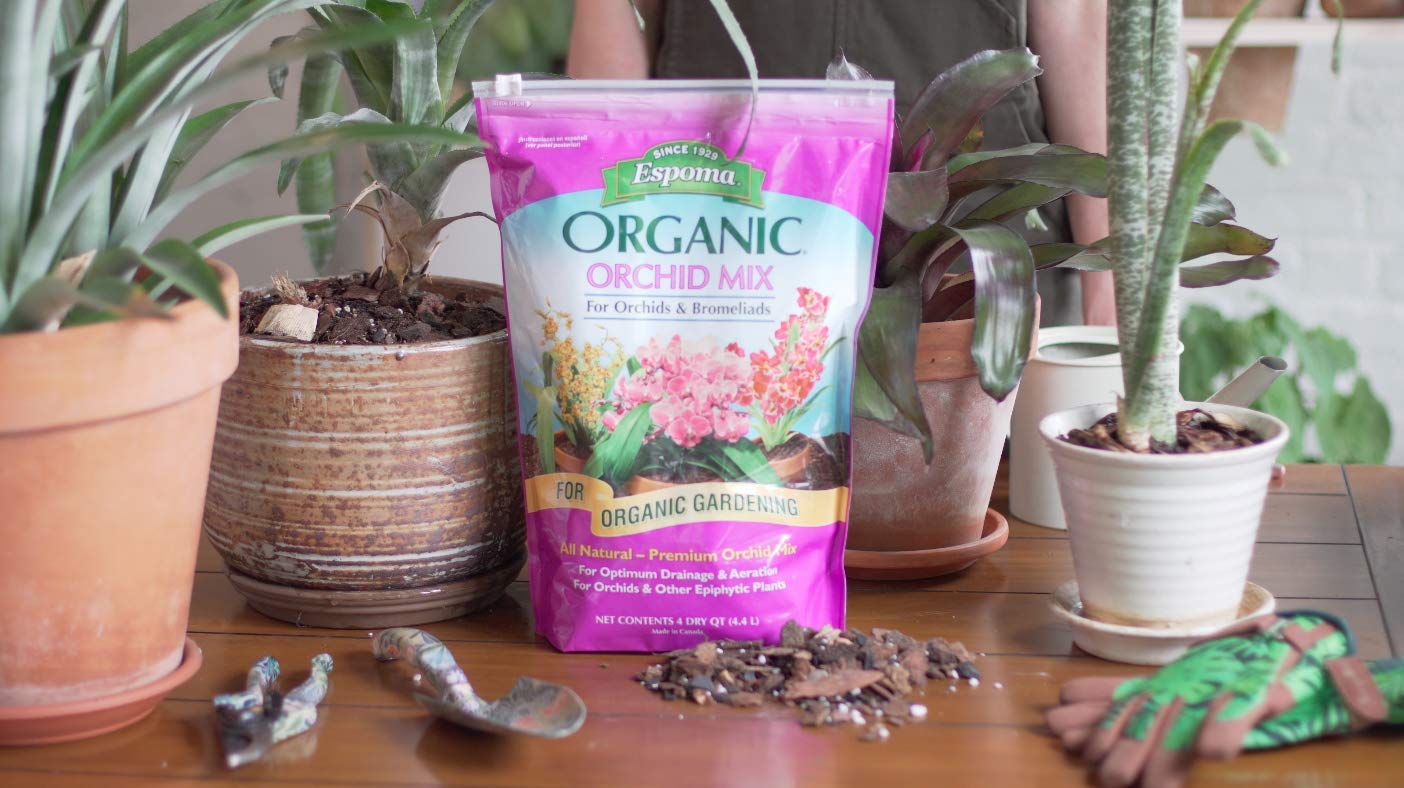
- Choose an airy mix: think orchid bark with perlite, or a bromeliad or orchid-style blend that drains quickly.
- Make sure the pot drains: no standing water in the cachepot or saucer.
- Water the mix lightly: you want damp, not wet, and you want it to breathe.
Other contributors
Too much fertilizer
Bromeliads need very little fertilizer indoors. Overfeeding can cause salt burn at the tips, similar to hard-water damage.
- Use a very dilute fertilizer only during active growth.
- Avoid pouring fertilizer into the tank unless you are experienced and using a bromeliad-appropriate approach.
- If you suspect fertilizer burn, flush the tank and the potting mix with clean water to leach salts.
Sun scorch
Many bromeliads like bright light, but hot direct sun through a window can scorch leaves, especially in summer afternoons. Sun scorch often shows as bleached patches and then browning, not just tidy brown tips.
- Give bright, indirect light for most common tank bromeliads.
- If you want more sun, increase it gradually and watch for bleaching.
Pests
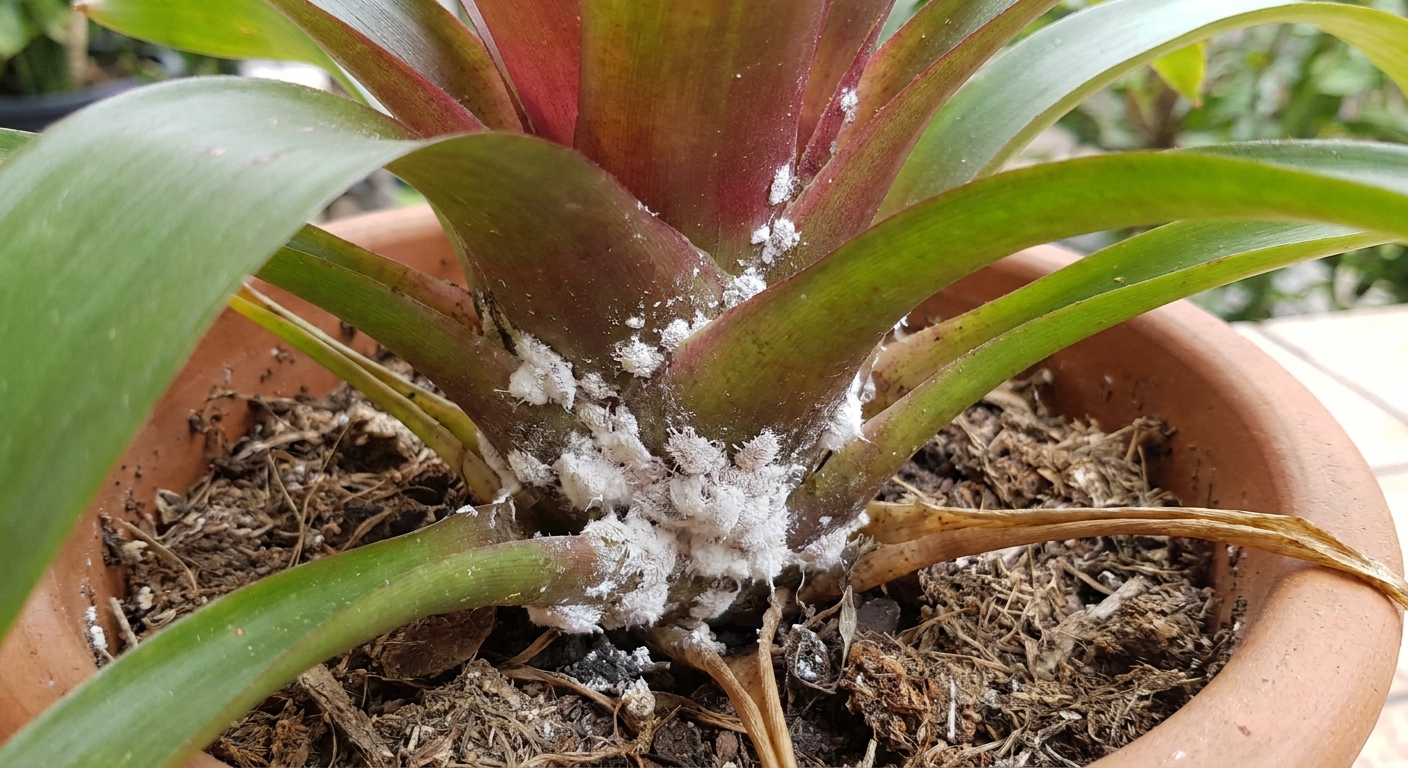
If your plant looks stressed and the browning is paired with sticky residue, speckling, or odd leaf texture, check for scale and mealybugs. They can weaken growth and make tips look rough over time.
Look closely along the leaf bases and undersides. If you spot pests, isolate the plant and treat promptly.
Tip burn or normal post-bloom decline?
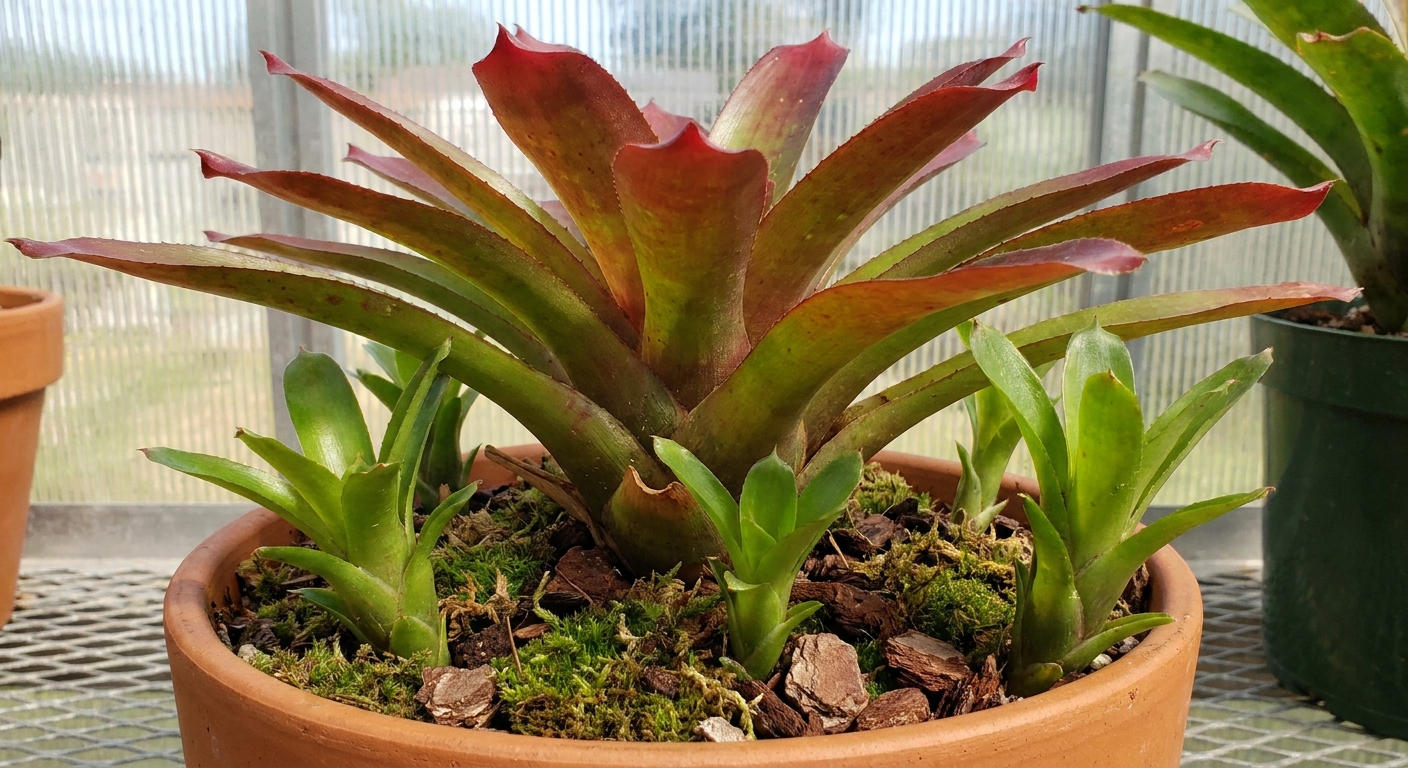
This is the big one. Many bromeliads are monocarpic, meaning the mother rosette blooms once and then slowly declines over months while producing pups. That decline can include browning, starting with older leaves.
How to tell the difference
- Tip burn on a growing plant: the bromeliad is still pushing new leaves from the center, color is decent overall, and the browning is mostly at leaf tips or edges.
- Normal mother rosette decline: flowering is finished (the bloom is fading or gone), the center growth slows, older outer leaves yellow and brown progressively, and you may notice pups forming at the base.
If your plant has recently flowered, a gradual decline is expected. The goal then is not to “save” the mother rosette forever, but to keep conditions steady so the pups grow strong.
Temperature matters
Bromeliads are tougher than they look, but cold drafts and cold, wet conditions can set off problems that look like browning.
- Avoid cold drafts from doors and windows in winter.
- Play it safe with warmth: many common indoor bromeliads prefer typical home temperatures and tend to sulk if kept much below about 55 to 60 F (13 to 16 C), especially if the tank stays wet.
What to do about the brown tips you already have
Once a tip is brown, it will not heal. You have two options: leave it alone, or trim for looks.
How to trim without making it worse
- Use clean, sharp scissors.
- Trim just the brown part, following the natural point of the leaf.
- Do not cut deep into healthy green tissue if you can avoid it.
- If many leaves are tipped, focus more on fixing the cause than on giving the plant a haircut.
I usually trim if the crispy bits snag my fingers when I refresh the tank. Otherwise, I treat brown tips as the plant’s little note to me, and I adjust care.
Quick troubleshooting checklist
- Confirm it is a tank bromeliad: some bromeliads do not hold water the same way, and a few do better without a constantly filled tank.
- Check the tank: Is it dry, stale, or full of debris?
- Refresh the water: dump and refill on a schedule that matches your temperature and light.
- Upgrade the water: rainwater, distilled, or RO if tips keep browning.
- Look at placement: any heater, vent, cold draft, or hot sun?
- Think humidity: especially in winter, especially near airflow.
- Go easy on fertilizer: dilute and infrequent, or skip entirely for a while.
- Check the pot: fast-draining mix, drainage hole, no standing water.
- Inspect for pests: especially along leaf bases.
- Consider bloom timing: if it has flowered, some decline is normal.
FAQ
Should I water the potting mix or the tank?
For many tank bromeliads, the tank is primary, and the potting mix should be lightly damp and airy, then allowed to dry slightly at the top between waterings. Never keep the mix soggy. If your bromeliad is a non-tank type, the approach changes. If symptoms keep coming back, it is worth confirming the genus.
Can I use tap water if it is all I have?
You can, but if your water is hard, you may see recurring brown tips. Letting tap water sit overnight can help with free chlorine, but it does not remove minerals, and it does not reliably address chloramine. If browning persists, switching to distilled or collecting rainwater often makes a noticeable difference.
My bromeliad’s center is turning brown. Is that tip burn?
A browning center can be a bigger red flag than browned tips. It may indicate crown issues, rot, or the natural decline of the mother rosette after flowering. Check whether the plant recently bloomed and whether pups are forming. Also make sure the tank is refreshed regularly and the plant is not sitting cold and wet.
Will the pups get brown tips too?
They can if the underlying conditions are the same. The good news is that once you improve water quality, tank hygiene, and humidity, pups often grow with cleaner, smoother leaf tips.