
What Is Hosta Crown Rot?

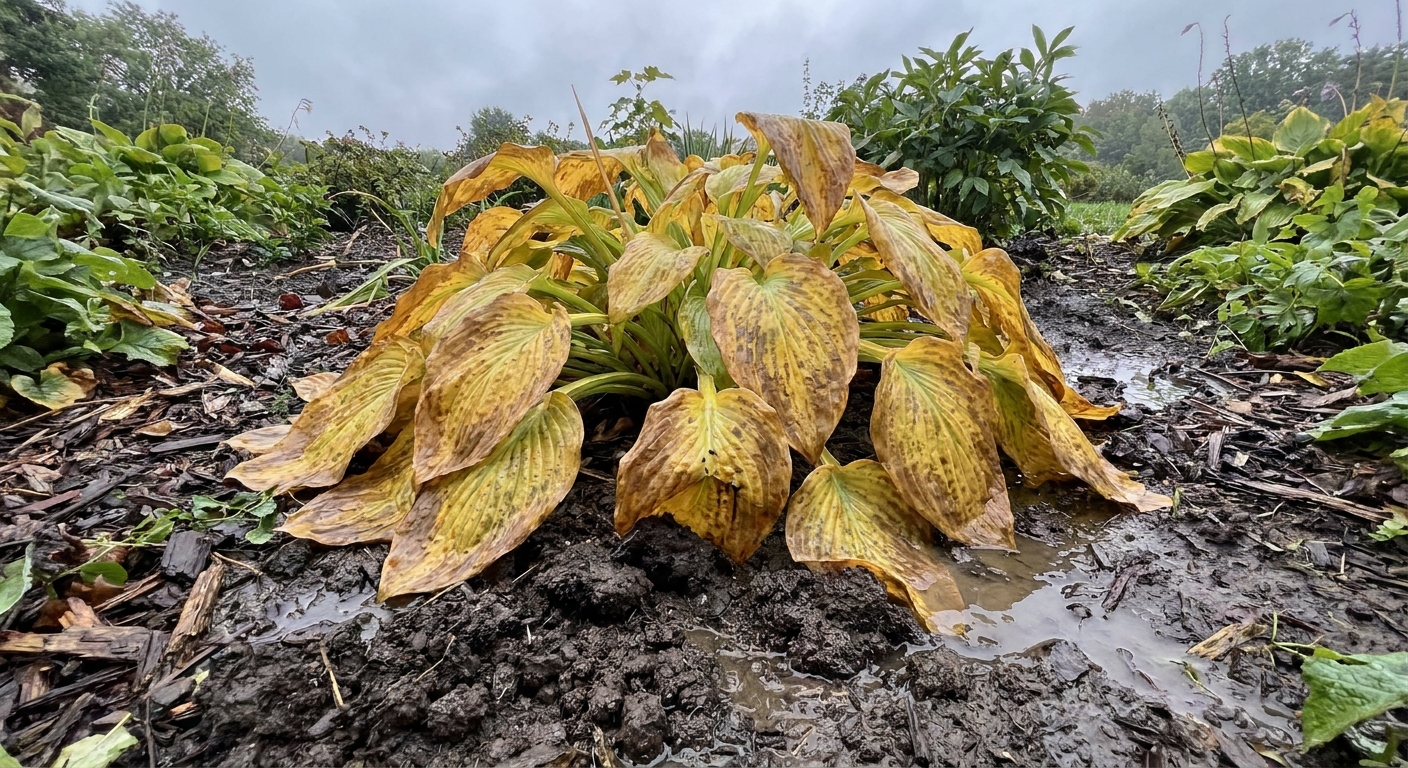
There is a particular kind of hosta heartbreak that shows up right after a stretch of wet weather. One day your plant looks a little tired and yellowed. The next, it is slumping like a popped balloon. When you lean in close, you catch that unmistakable sour, swampy smell that no healthy plant should ever have.
That is usually hosta crown rot, and it is a different problem than leaf scorch, nematodes, or Hosta Virus X. The good news is you can confirm it quickly, and in some cases you can still save part of the plant. The key is acting before the rot travels through the entire crown.

What it is
The crown is the growing hub where the leaves (and future eyes or shoots) connect to the roots, right at soil level. Crown rot happens when that central tissue stays too wet for too long and begins to break down from a mix of fungal and fungus-like organisms, and often secondary bacteria, that thrive in soggy conditions. In hostas, pathogens commonly implicated in crown and root rots can include soilborne organisms such as Phytophthora and Pythium (oomycetes), along with fungi like Rhizoctonia and Fusarium, depending on region and conditions. You do not need a lab name to handle it, but it helps to understand the pattern.
Wet soil plus low oxygen is the real trigger. Hostas like consistent moisture, but they hate sitting in water. When the crown stays damp and airless, it becomes vulnerable, and the plant can go downhill fast.
How it looks and smells
Crown rot often starts with symptoms that look like “general stress,” which is why it gets missed early. Watch for a combination of these clues:
- Leaves turning pale, yellow, or washed out, especially in the center of the clump
- Sudden wilting even when the soil is wet
- Soft, squishy bases where the leaf stems meet the crown
- Foul odor when you part the stems or disturb the soil, often described as sour, rotten, or stagnant (this tends to show up once decay is underway)
- Easy stem pull, where a leaf and its base detach with a gentle tug
If your hosta looks like it melted after a rainy week, trust your nose and your fingers. Healthy crowns are firm. Rotting crowns feel like wet cardboard.
One quick reality check: late-season dieback can make hostas look tired and floppy, too. The difference is that normal senescence does not usually come with a mushy crown or that sour rot smell.
Confirm it by lifting
If you suspect crown rot, the fastest way to confirm is to lift the hosta and inspect the crown and roots. I know it feels dramatic, but it is much better than waiting and losing the whole clump.
Step-by-step check
- Pick a dry window if you can, so you are not handling a mud pie.
- Use a sharp spade or garden fork and dig a wide circle 6 to 10 inches away from the crown (more for large clumps) to avoid slicing through it.
- Lift the clump and gently shake or rinse off enough soil to see the crown and roots.
- Inspect the crown. Healthy tissue is cream to light green and firm. Rot is brown to black, water-soaked, and soft.
- Smell test. A strong rotten odor is common once tissue is breaking down.
- Check roots. Healthy roots are pale and sturdy. Rotten roots slough their outer layer and feel mushy or hollow.
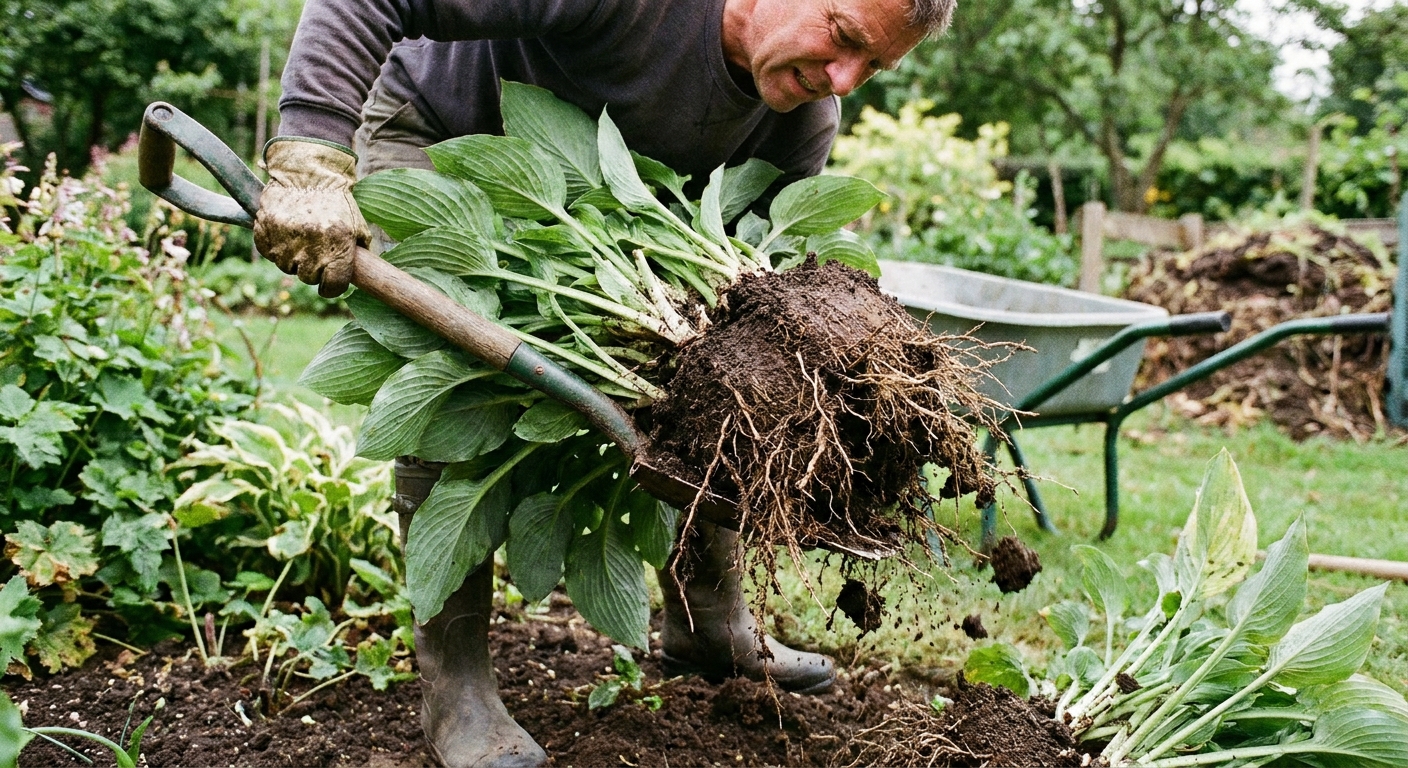
If the crown is mushy through the center, you are dealing with crown rot. At that point, deciding what to discard versus salvage is about how much firm tissue is left.
Discard or salvage?
Think of this like trimming away spoiled fruit. You can sometimes save what is still crisp and clean, but you cannot “heal” tissue that has already turned to mush.
Discard the whole plant if
- The crown is soft in multiple places or collapsing overall
- You see rot traveling into most shoots (many stems pull out easily)
- The roots are largely rotten and slough when touched
- You cannot find any firm, healthy crown sections to divide
Bag and trash severely rotted plants. Do not compost them. Most home compost piles do not consistently reach the temperatures needed to kill these pathogens, and moving that material back into beds can set you up for repeat problems.
If the plant is oozing or dripping, bag it before you carry it through the garden so you are not trail-marking your way to the trash can with contaminated soil.
You can try to salvage it if
- Only one side or a few shoots are affected
- You can clearly identify firm, clean crown tissue with healthy roots attached
- The rot seems localized, not spread through the clump
How to salvage it safely
- Sanitize your tools before you cut, and again between cuts. Practical options include 70% isopropyl alcohol wipes or spray, or a bleach-and-water solution mixed fresh (rinse and dry tools afterward to reduce corrosion).
- Cut away all soft tissue until you reach firm, clean tissue. Be ruthless. Leaving a little rot is how it comes right back.
- Rinse the remaining divisions to remove contaminated soil.
- Let the divisions air-dry in the shade for an hour or two so cut surfaces are not immediately sealed into wet soil.
- Replant in a better spot or on a raised mound with improved drainage. Replanting into the same soggy hole is a rerun.
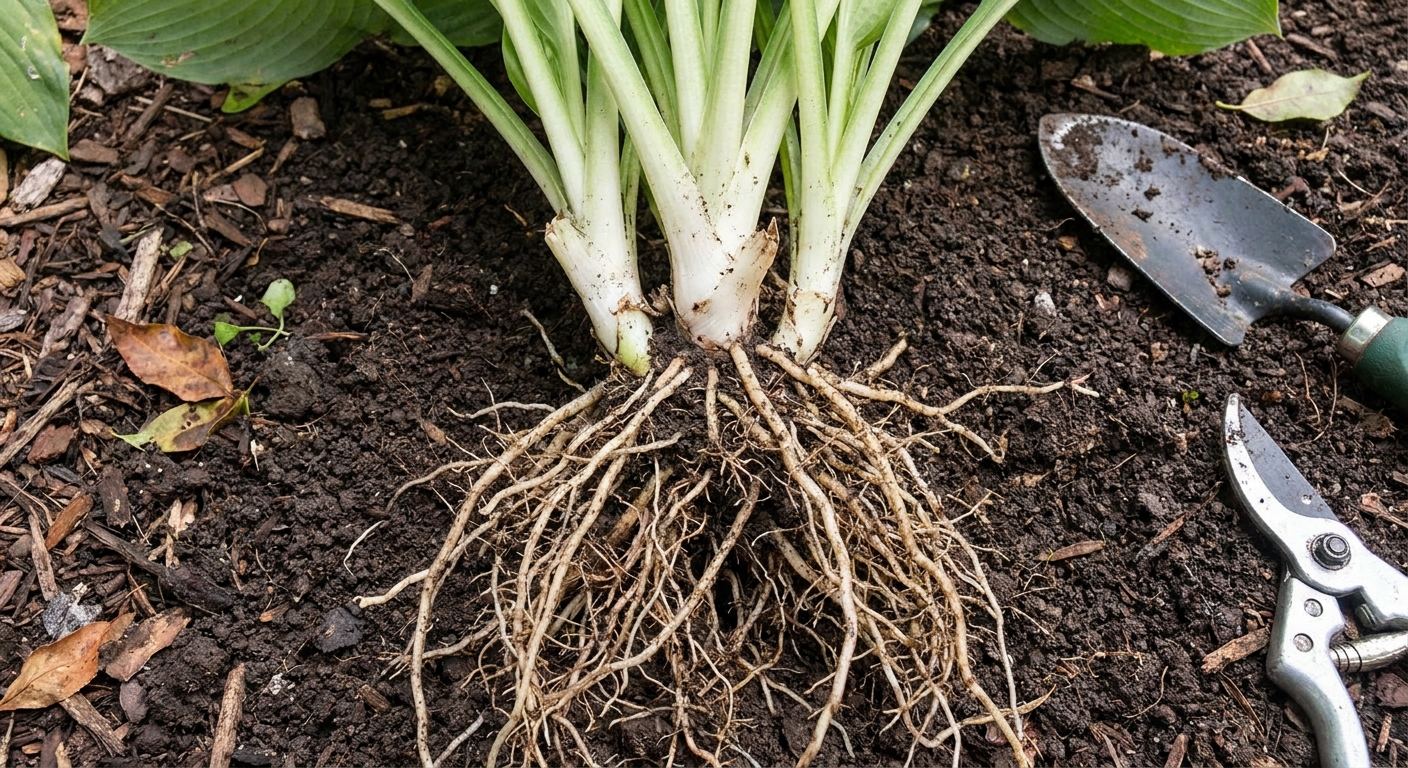
If you salvage, keep the plant under observation for the next few weeks. If it continues to collapse, toss it. Sometimes the rot is already farther along than it appears.
Why it happens
Hostas are famously forgiving, but crown rot usually shows up when several “small” conditions stack together:
- Heavy clay or compacted soil that drains slowly
- Low spots where water collects after storms
- Over-mulching with mulch piled against the crown
- Deep planting where the crown sits below grade
- Frequent watering late in the day, keeping the crown damp overnight
- Dense plantings with poor airflow
Wet weather is often the moment you notice it, but the setup usually starts earlier with drainage and planting depth.
Prevention that works
If you have lost a hosta to crown rot once, you do not need to swear off hostas forever. You just need to make the crown a less welcoming place for rot organisms.
Start with drainage
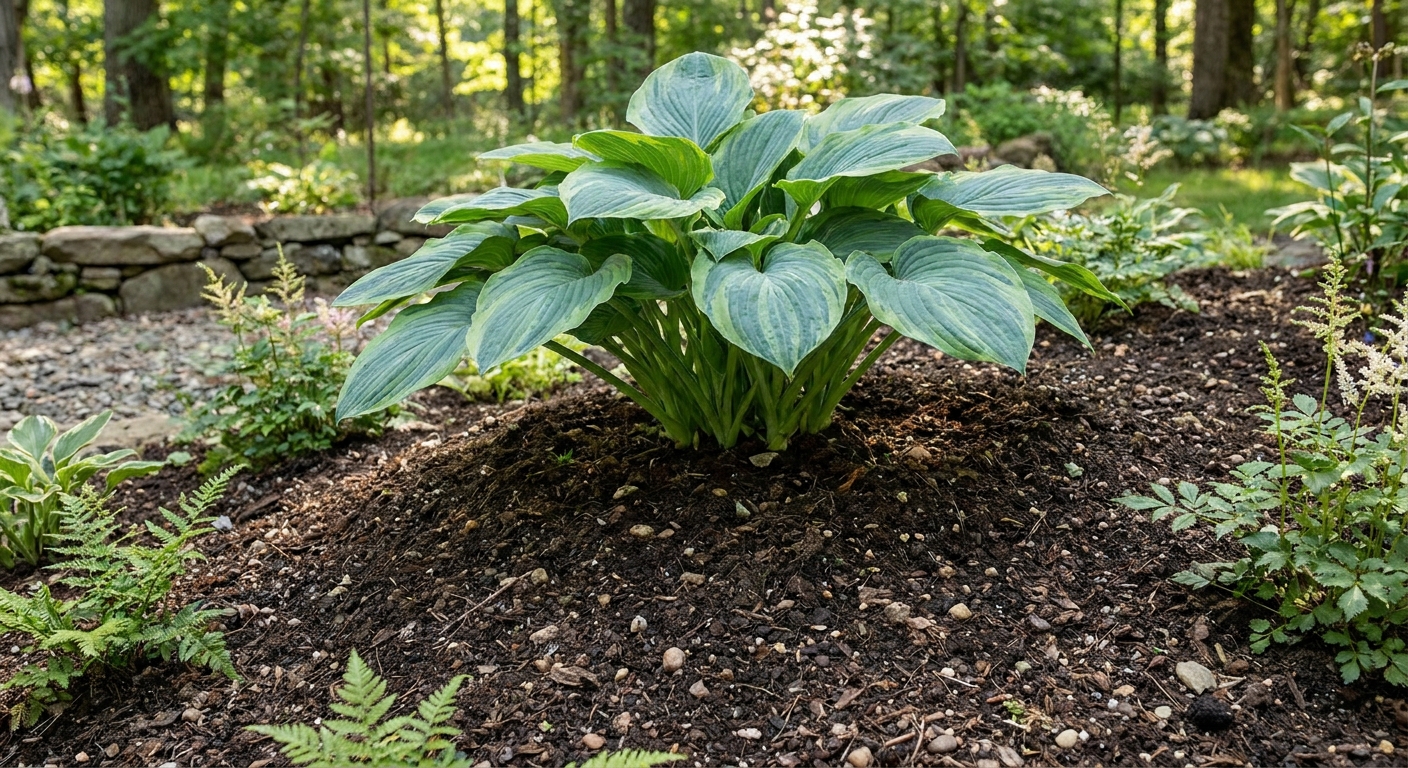
- Plant slightly high: I like the crown just a touch above surrounding soil level, especially in clay.
- Create a gentle mound or use a raised bed in chronically wet areas.
- Loosen and amend the planting area with compost to improve structure.
- Avoid bathtub holes: In heavy soil, rough up the sides of the planting area and broaden it so water does not sit like it is in a bowl.
Mulch without burying
Mulch is wonderful for hostas, but it needs a little breathing room.
- Keep mulch pulled back 1 to 2 inches from the crown so the base can dry.
- Use 2 to 3 inches of mulch around the plant, not a volcano.
- If you use shredded leaves or fine compost as mulch, check that it is not matting down into a soggy blanket at the crown.
Water smarter
- Water in the morning so surfaces dry during the day.
- Aim water at the soil, not the crown, when possible.
- If you are in a rainy stretch, pause irrigation. Hostas can handle a lot of natural rain without extra help.
Keep the bed clean
- Remove collapsing, rotting tissue promptly.
- Space hostas so air can move between clumps.
- Sanitize tools when dividing or cutting away rot.
After you remove a rotted hosta
If you had to discard the plant, treat the spot like a little investigation scene. Scoop out and trash any obviously rotted debris left in the hole, then focus on the underlying issue: drainage.
If that area is chronically wet and you cannot realistically improve it, consider leaving it empty for a while or switching to a plant that tolerates wetter soil better. Otherwise, the next hosta is likely to learn the same lesson.
Crown rot vs. lookalikes
Hostas can look messy for lots of reasons, and the treatment depends on the cause. Here is how crown rot typically differs from a few common lookalikes.
Vs. sun scorch
Sun scorch usually shows up as bleached, tan, or crispy patches on leaves, often on the side facing afternoon sun. The crown stays firm, and the plant does not usually smell bad.
- Scorch: dry, papery damage on leaves, crown is firm
- Crown rot: wilting with wet soil, mushy crown, often a foul odor
Vs. foliar nematodes
Foliar nematodes cause angular brown streaks limited by the leaf veins. Leaves can look striped, scorched, or stained, but the crown typically is not a smelly mush.
- Nematodes: vein-bounded streaks and blotches on leaves
- Crown rot: collapse at the base, stems pull out, crown is soft
Vs. Hosta Virus X
HVX is known for distinctive leaf pattern changes such as mottling, ink-bleed patterns, twisted or puckered leaves, and abnormal color bleeding that follows the veins. HVX does not typically present as a suddenly rotting, foul-smelling crown right after rain.
- HVX: abnormal mottling and distortion, crown is not usually mushy
- Crown rot: soft crown tissue and rot symptoms centered at the soil line
If you are unsure, lifting the plant is the tie-breaker. A firm crown points away from crown rot. A soft crown points straight at it.
FAQ
Will a hosta come back after crown rot?
If the rot is limited and you can salvage a firm division with healthy roots, it can recover. If the central crown is mushy throughout, that plant is unlikely to return.
Should I treat crown rot with a fungicide?
In home gardens, the most reliable fix is removal of rotted tissue plus better drainage and mulch spacing. Fungicides can be tricky to match to the pathogen and timing. If you choose to use one, follow the product label exactly and focus on prevention rather than trying to “cure” already-rotten tissue.
Can I replant a hosta in the same spot?
Only if you address why it rotted there. If the spot stays wet, another hosta can fail the same way. Improve drainage, plant slightly high, and keep mulch off the crown.
Is crown rot contagious to other hostas?
The organisms involved live in soil and water. Rot is more likely to show up in nearby plants if they share the same soggy conditions and contaminated soil is moved around on tools, boots, or during division. Good sanitation and improved drainage reduce the risk.
A calm next step
If your hosta crown turned soft, yellow, and foul-smelling after wet weather, do not waste time guessing from the top down. Lift the clump, check the crown, and decide quickly whether you have firm tissue worth saving.
And if you end up tossing the plant, please do not take it as a personal gardening failure. Crown rot is often a drainage lesson wearing a hosta costume. Fix the wet feet problem once, and your shade garden gets easier for years.