
Train a Panicle Hydrangea Into a Tree

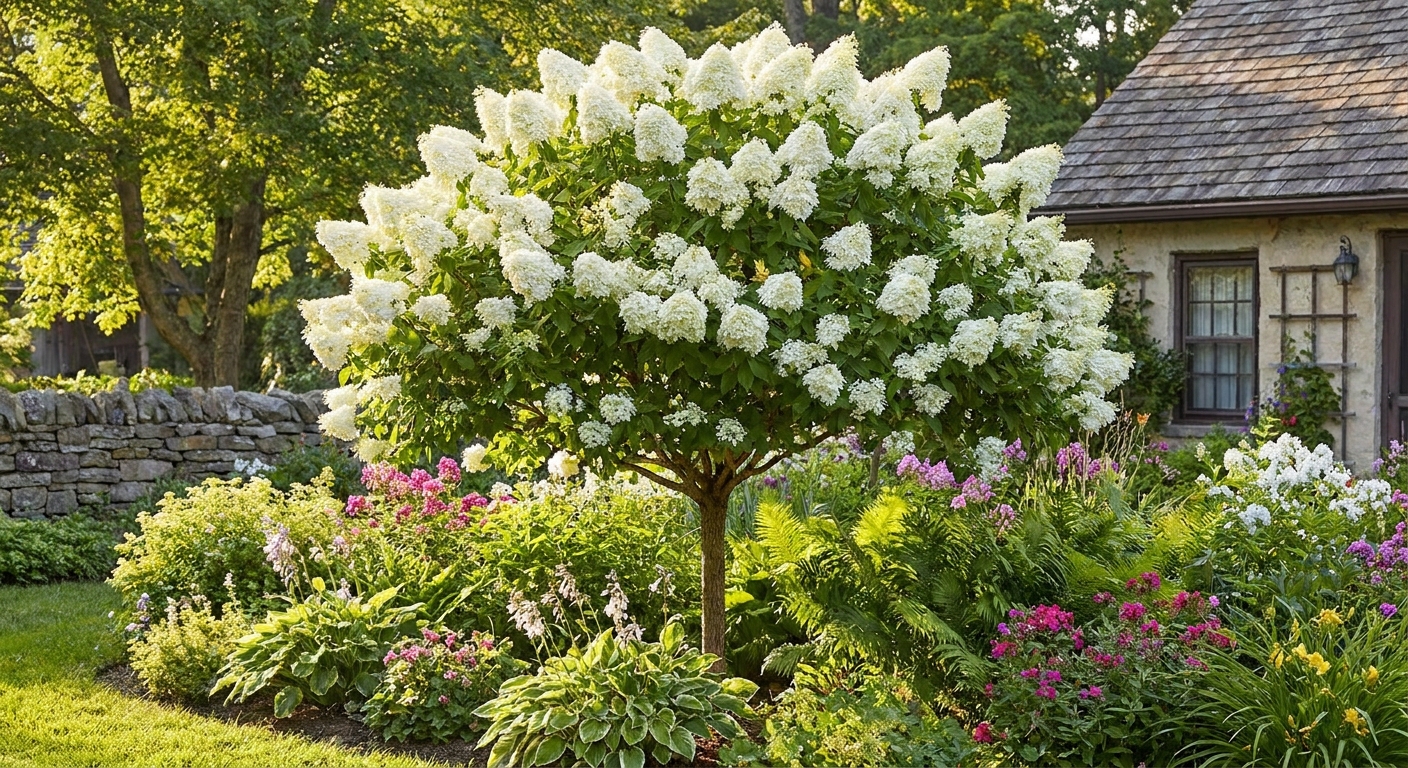
I have a soft spot for plants that can be both wild and well mannered, and panicle hydrangeas are exactly that. Give them a little training and they can look like a blooming lollipop on a stick, all canopy and drama, with a clean trunk underneath. The secret is patience and a willingness to keep making the same small corrections for a few seasons.

Panicle hydrangea (Hydrangea paniculata) is one of the easiest hydrangeas to train into a standard because it blooms on new wood. That means you can prune while it is dormant without sacrificing summer flowers. The tradeoff is structural: you are not just pruning for bloom size, you are pruning to maintain a trunk and a balanced canopy. Also worth noting up front: not all paniculata cultivars hold heavy flower heads equally well, so some varieties will need longer-term staking and gentler pruning than others.
Tree form vs shrub form: what changes
A shrub hydrangea is allowed to be multi-stemmed from the base. A tree-form hydrangea is basically the opposite: one trunk (or a very short trunk that acts like one) supporting a head of branches.
- Shrub goal: lots of stems from the base, renewed regularly.
- Tree goal: one clear trunk, a strong crown at the top, and a canopy that stays proportional.
- Big difference in pruning: you must protect the trunk line and the head of the tree. Heavy pruning is done in the canopy, not down at the base.
If you love the idea of a hydrangea that doesn’t sprawl into your walkway, or you want height over low perennials, the tree form is worth the extra attention.
Start with the right plant
Choose a panicle hydrangea, not a bigleaf hydrangea
This training method is for Hydrangea paniculata. Many bigleaf types (Hydrangea macrophylla) bloom on old wood, so hard spring pruning can mean fewer flowers. Some reblooming varieties are more forgiving, but if your goal is an easy, reliable standard, panicle hydrangea is the straightest path.
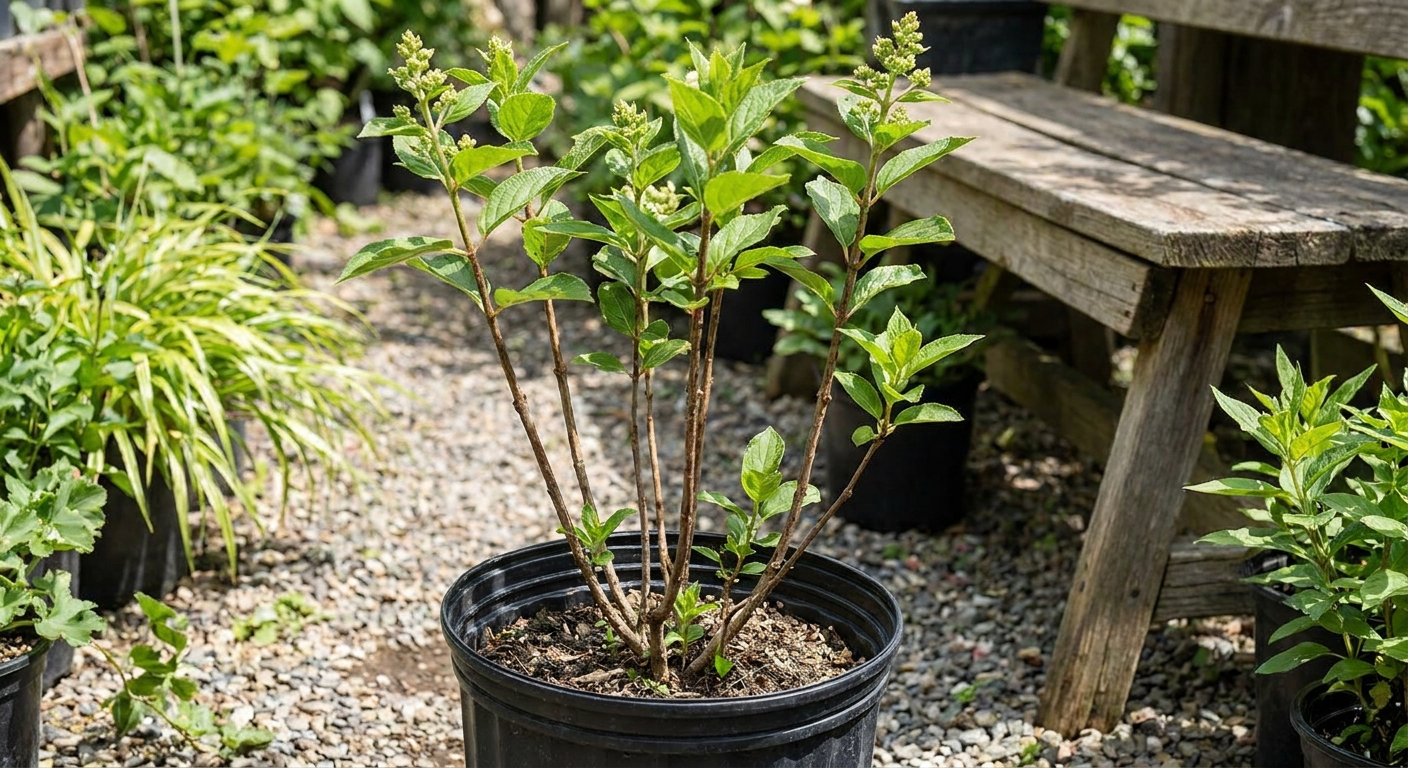
Pick a young plant with strong stems
The easiest time to start is when the plant is young and stems are flexible.
- Look for a plant with one or two upright, sturdy stems that feel thicker than the rest.
- Avoid plants that are already very wide and floppy unless you are willing to reset and train from scratch.
- If you can, choose a variety known for strong stems. Floppy varieties can still be trained, but staking becomes a long-term relationship.
Tools and supplies you will actually use
- Sharp hand pruners (clean, and disinfected between plants, especially if you are removing any suspect stems)
- Loppers for thicker stems as it matures
- 1 sturdy stake (wood or metal, tall enough to reach near your target canopy height)
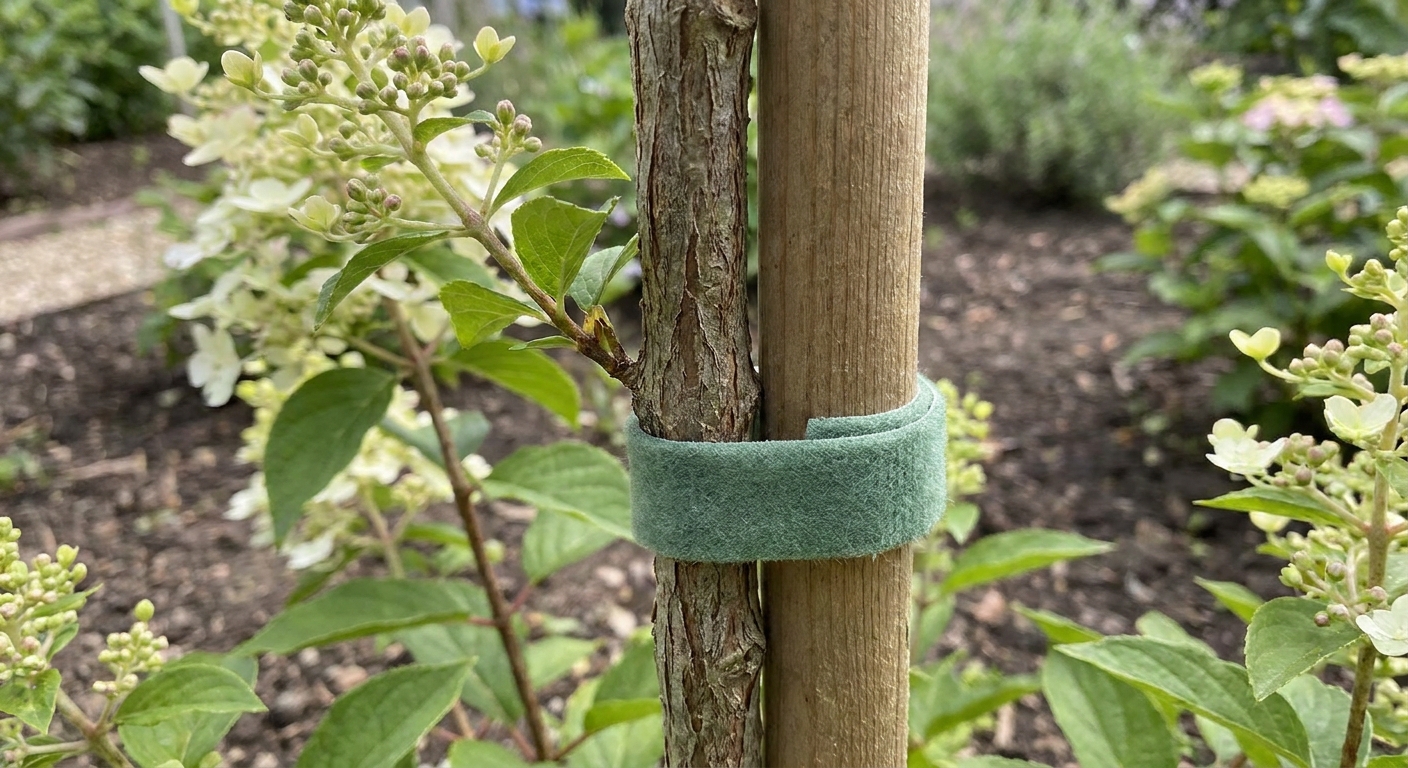
- Soft ties (tree tie, stretchy garden tape, or old stockings)
- Mulch (leaf mold, shredded bark, or composted wood chips)
I like soft ties because stems can be abraded by tight ties, and a rubbed spot is an invitation for trouble later. Think support, not strangling.
Season by season training
Season 1: choose one leader
In late winter or early spring, before buds open, study the plant’s base and pick your single best stem to become the trunk.
- Choose the leader: the straightest, thickest, most upright stem.
- Remove competing stems: cut other stems at the base with clean cuts as close to the crown as you can, without leaving long stubs. (If you are nervous, leave one “insurance” stem for a year and remove it later.)
- Stake immediately: place the stake 2 to 4 inches from the stem, driven firmly into the soil, then tie the leader to it.
Important: if your leader is very thin, do not rush it to canopy height. A spindly trunk carrying a heavy flower head is a recipe for a permanent lean.
Season 1: clear the trunk slowly
As the plant leafs out, you will see side shoots along the leader. Your job is to create a clean trunk up to your chosen height, usually 24 to 48 inches, depending on the look you want.
- Rub off or snip low shoots as they appear on the lower trunk area.
- Leave a few leaves up higher so the plant can photosynthesize and thicken the trunk.
- Do not remove all side growth at once if the plant is weak. Gradual is safer.
In most gardens, I keep removing trunk and basal shoots through mid-summer, then let the plant settle in and harden off for the season.
I tell my own hydrangeas, out loud, “We are building a little tree, not a mop.” It helps me stay consistent when they try to re-sprout from the base.
Season 2: set trunk height and build the crown
By the second dormant season, you can usually decide where you want the canopy to start.
- Pick the head height: 2 to 4 feet is common for a garden standard.
- Top the leader (optional but often helpful): once the leader reaches your head height, prune the tip just above a pair of healthy buds. This encourages branching at the top.
- Select 3 to 5 scaffold branches: these become the main framework of your canopy. Choose ones that radiate in different directions, not all on one side.
If you bought a plant that is already grafted or sold as a standard, you will still use these ideas, but most of your work will be canopy shaping and removing shoots below the graft or head.
Season 3 and beyond: strengthen and shape
Once you have a defined trunk and a starting canopy, your yearly pattern becomes pretty steady:
- Remove all basal suckers (shoots from the soil line) as soon as you see them.
- Keep the trunk clean: remove sprouts on the trunk below the canopy.
- Balance the canopy: if one side grows faster, prune it back a bit more to keep a rounded head.
- Refresh old wood slowly: if a canopy branch gets thick and unproductive, remove it over time and replace with a younger shoot, rather than stripping the whole head at once.
How to stake it safely
Staking is not a failure. It is training wheels. Panicle hydrangeas can get top-heavy when loaded with blooms, especially in rain.
- Stake position: set the stake on the windward side if possible.
- Number of ties: usually 2, one low and one higher, is enough.
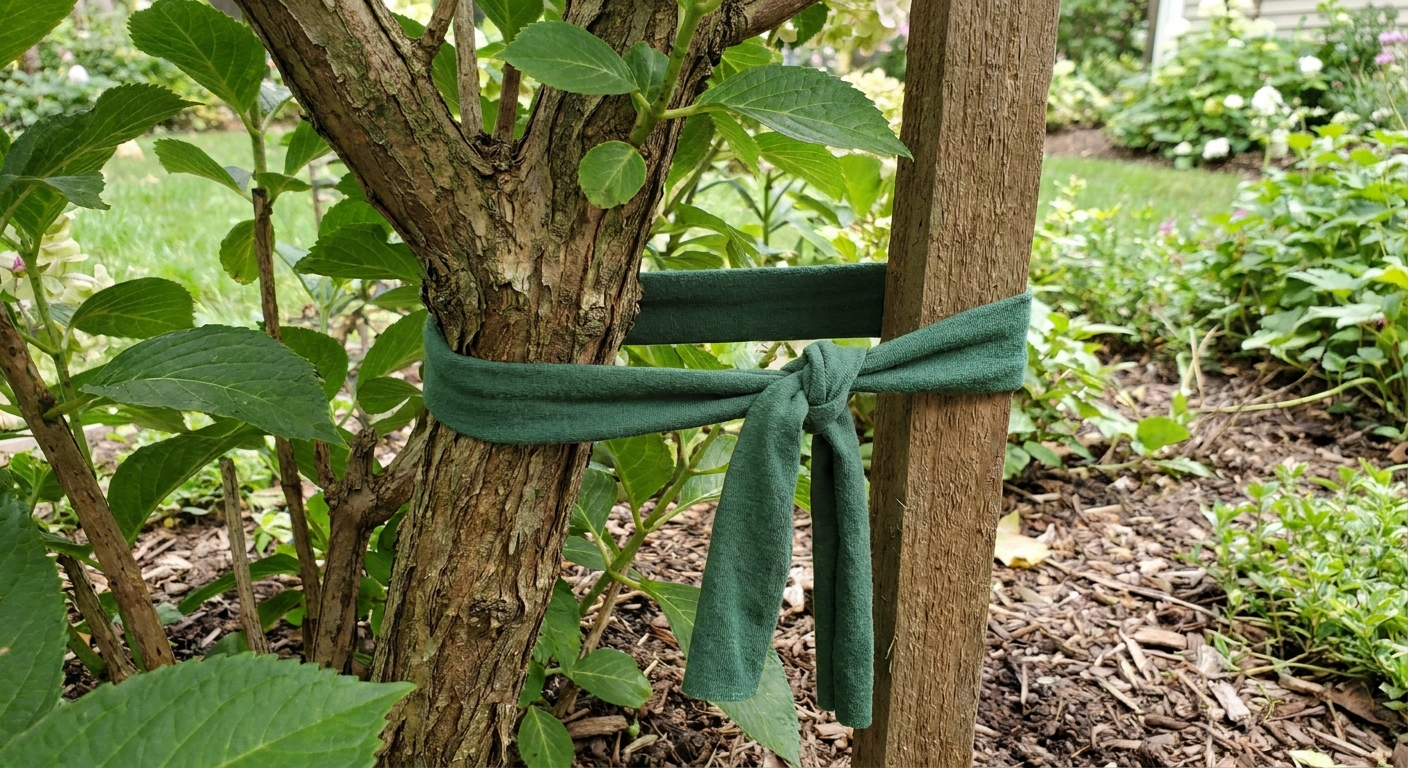
- Tie technique: use a loose figure-eight so the tie does not rub the stem.
- Check monthly: loosen ties as the trunk expands to avoid girdling.
Annual pruning for big blooms
Panicle hydrangeas bloom on new wood, so pruning is done in the dormant window (late winter through early spring). For a shrub, gardeners often cut back many stems hard to get huge blooms. On a tree form, you still prune for bloom size, but you do it while preserving the tree structure.
The simple rule
Prune the canopy, not the trunk. The trunk stays. The head gets shaped.
Canopy pruning steps
- Remove dead, damaged, or crossing branches first.
- Shorten last year’s flowering shoots back to 2 to 4 pairs of buds (roughly 6 to 12 inches), depending on how vigorous your plant is.
- Thin lightly if the canopy is crowded. Better airflow helps reduce mildew and makes blooms easier to display.
- Keep a rounded outline by cutting slightly more from the most vigorous side.
Bloom size vs strength: the harder you prune, the larger the flower heads tend to be, but the floppier the stems can become. Tree forms look best when you aim for a sweet spot: generous blooms on sturdy, well-spaced branches.
What not to do
- Do not cut the trunk back unless you are intentionally restarting the whole project.
- Do not allow new stems from the base to grow “just because they look healthy.” Those are shrub instincts creeping back in.
- Do not shear the canopy like a hedge. Selective cuts give you stronger branches and a more natural, elegant head.
Care that makes training easier
Sun and water
Panicle hydrangeas bloom best with full sun to partial shade. In hotter climates, morning sun and afternoon shade is a kindness.
- Water deeply during dry spells, especially the first two years.
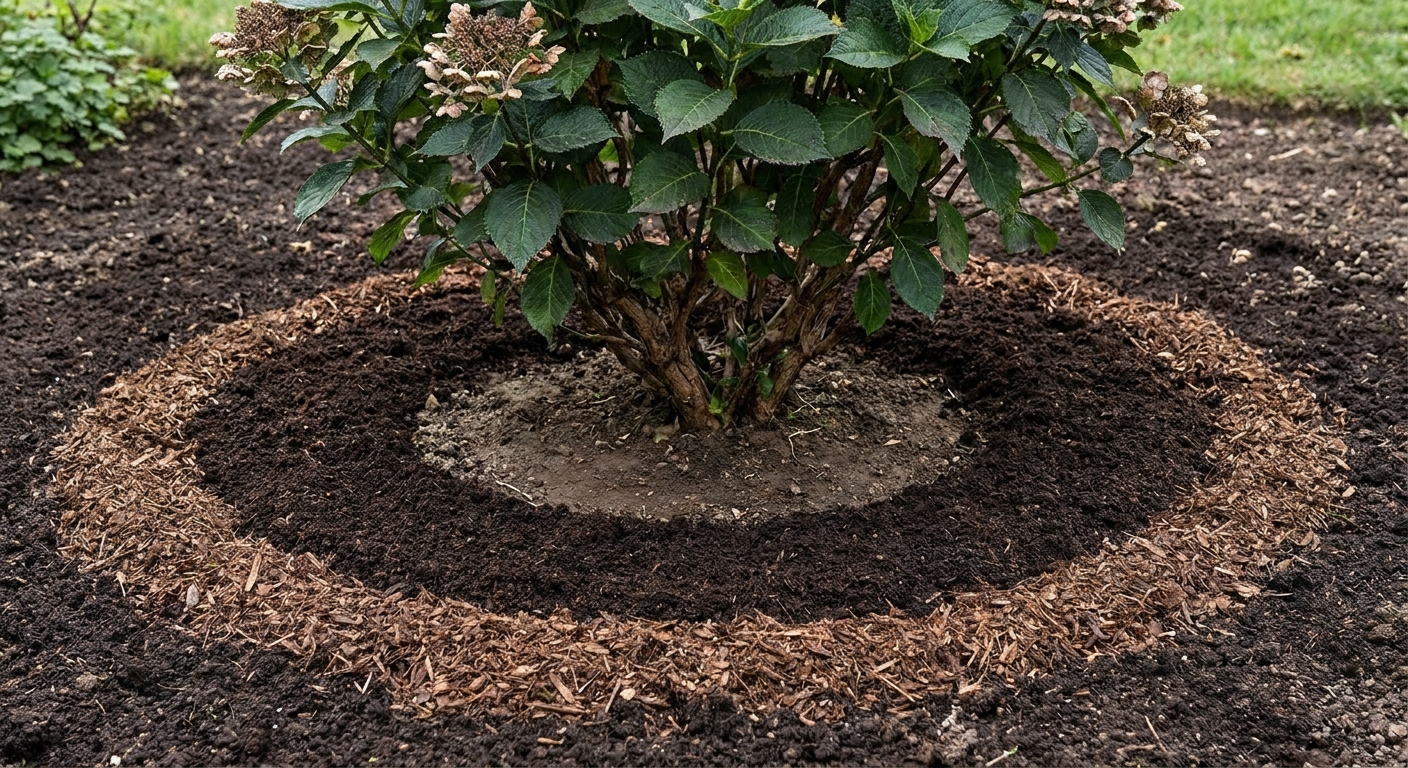
- Mulch 2 to 3 inches to keep roots cool and moisture steady, but keep mulch a few inches back from the trunk.
Fertilizer and soil
Over-fertilizing can create lush growth that flops and makes training harder.
- Focus on soil health: compost top-dressing in spring is usually enough.
- If growth is weak, a light, balanced slow-release fertilizer in spring can help.
Troubleshooting
It keeps sending up shoots from the base
Totally normal. Remove them promptly by cutting as close to the base as you can. The more consistently you remove suckers, the less energy the plant wastes trying.
The trunk is leaning
Re-stake, and correct gradually. If you yank it upright in one day, you can crack the stem at the soil line.
- Adjust ties every couple of weeks.
- Make sure the stake is solid and not wobbling.
The canopy is lopsided
Prune harder on the strong side during the dormant season, and be gentle on the weak side. During the growing season, remove a few vigorous shoots that are stealing the show.
Branches flop when it blooms
This is usually from very hard pruning, too much shade, too much nitrogen, or a variety with naturally softer stems.
- Try slightly lighter pruning next year.
- Consider a discreet support ring in bloom season if rain is a regular issue.
- If your cultivar is a known flopper, plan on ongoing support and aim for smaller, sturdier bloom heads rather than maximum size.
Winter tip damage happened
In cold climates, young standards can get dieback on the canopy tips after a rough winter. Don’t panic. In spring, prune back to healthy buds and treat it like a small rebuild year. Panicle hydrangeas are good at bouncing back.
I accidentally cut my leader
Deep breath. Choose the strongest upright shoot just below the cut to become the new leader, stake it, and keep going. Hydrangeas are forgiving, and so should we be with ourselves.
FAQ
How long does it take to train a panicle hydrangea into a tree?
Expect 2 to 4 years to get a convincing tree form with a defined trunk and a full canopy. You will see progress in the first season, but the “little tree” look takes time.
When is the best time to prune?
During the dormant season, before new growth really gets going. This timing encourages strong new shoots that will bloom in summer.
Can I train an older shrub into a tree?
Yes, but it is a slower reset. You will select a strong stem to be the leader and remove others over time. With a big old shrub, I usually reduce to 1 to 3 stems the first year, then commit to one after you see which stem performs best.
Should I buy one already trained as a standard?
If you want instant structure, buying a standard is convenient. You will still need to remove suckers and prune the head every year. The plant will not stay a tree on autopilot.
A gentle pep talk
Training a hydrangea into a tree is not a one-weekend makeover. It is a relationship built on small, repeated choices: pick the leader, remove the rebels, stake with kindness, and prune with a goal in mind. If you keep at it for a few seasons, you will have a hydrangea that blooms like a cloud and stands like it means it.