Is a Bromeliad Supposed to Die After It Flowers?

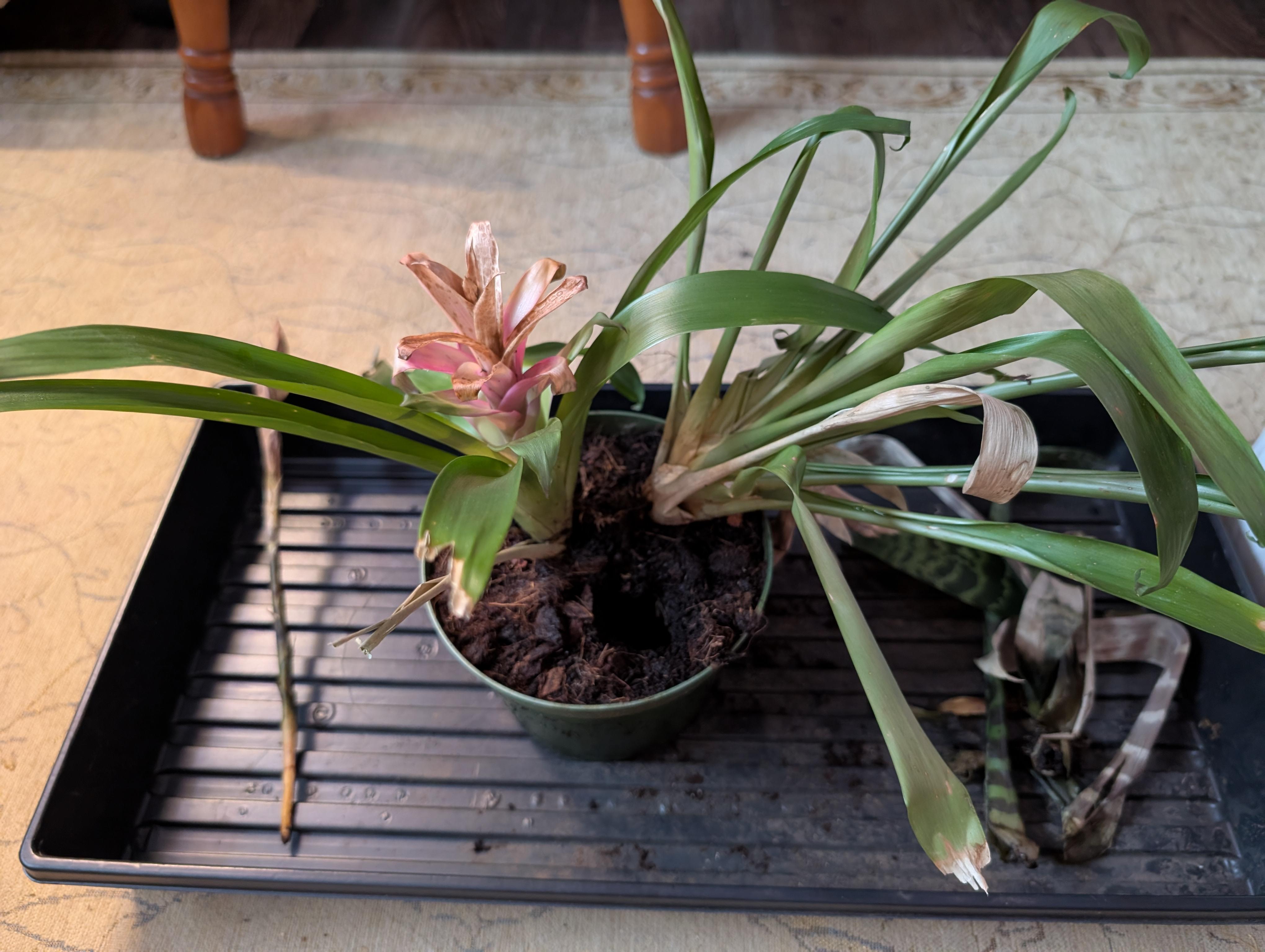
The first time one of my bromeliads bloomed, I celebrated like it had just won a tiny tropical trophy. Then a few weeks later the leaves started looking tired and a little sad. If you are in that exact emotional roller coaster, breathe. For many bromeliads, that slow fade after flowering is not failure. It is the plan.

Yes, many bromeliads bloom once, then the mother rosette declines
Most of the bromeliads people grow as houseplants are tank bromeliads, meaning their leaves form a central cup that holds water. Common genera include Guzmania, Vriesea, Aechmea, and Neoregelia.
These tank bromeliads are typically monocarpic. Each individual rosette (the mother plant) flowers once, then gradually declines. But the story does not end there. While the mother rosette is winding down, she usually puts her energy into making pups (offsets) so the colony continues.
So yes, a bromeliad can be “supposed to die” after it flowers, but it is more accurate to say: the blooming rosette is finishing its life cycle, while the plant continues through its pups.
How long does the mother bromeliad take to fade after flowering?
Post-bloom decline is usually slow. Depending on the type of bromeliad and your growing conditions, the mother rosette may take:
- 2 to 6 months to noticeably decline after the flower spike appears
- 6 to 18 months to fully die back while pups mature
What you often see is a gentle sequence:
- The colorful bracts and bloom begin to dull and dry.
- Older outer leaves gradually yellow or brown.
- The center may look less perky over time.
- Pups start to appear near the base (sometimes several).
That slow pace is good news. It gives you plenty of time to raise the pups into sturdy, independent plants.
Normal decline vs. trouble
Normal, on-schedule decline
- Outer leaves yellowing first, moving inward gradually
- A flower spike or bracts drying and browning over weeks
- The plant still feels firm at the base
- Pups forming at or near soil level
Not normal (red flags)
- Mushy base or a plant that wobbles in the pot
- A foul smell coming from the cup or crown
- Leaves pulling out easily from the center with soft, brown tissue
- Sudden collapse of the center while leaves are still green
- Blackened, water-soaked patches spreading quickly
Normal decline is a slow, drying process. Rot is a fast, soft, smelly process. Your nose and your fingertips are surprisingly reliable tools here.
How to keep pups growing
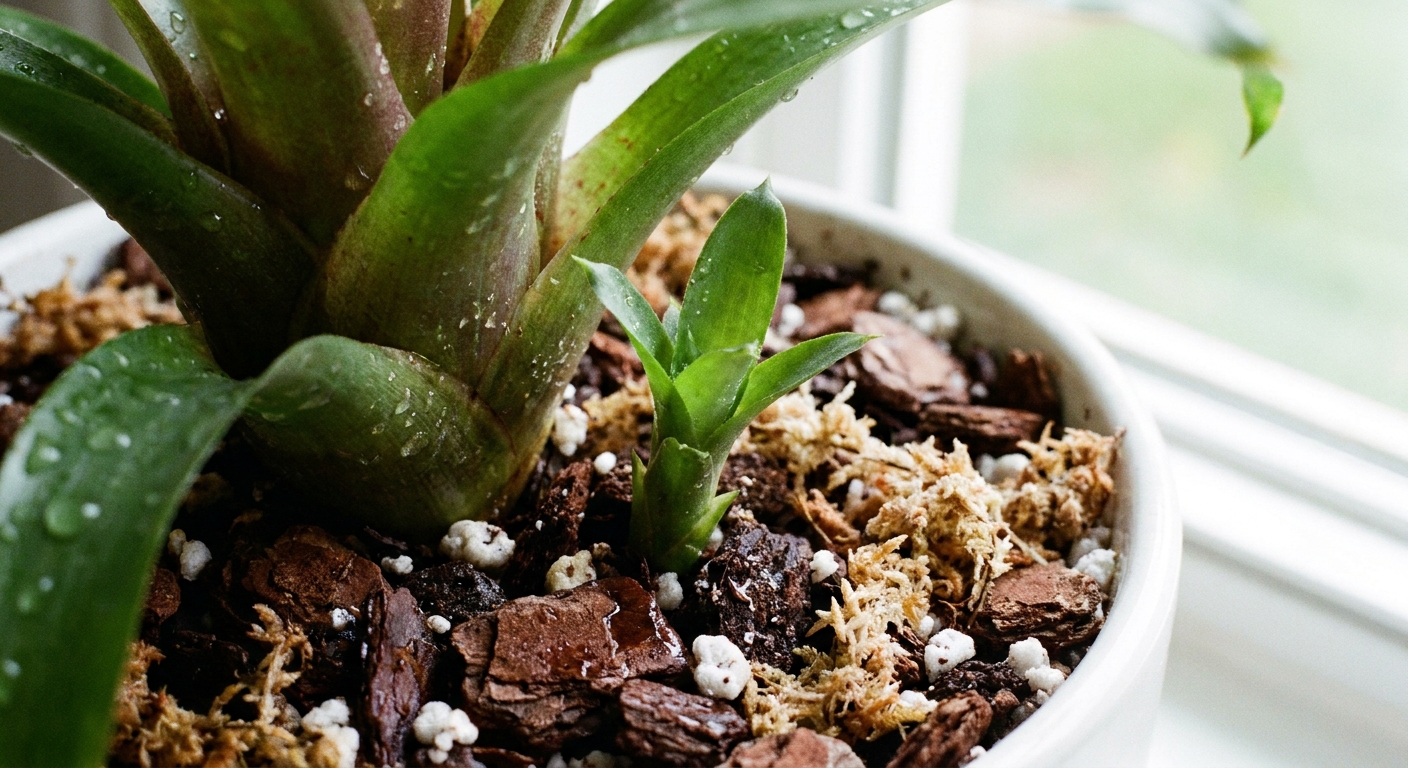
Pups are the next generation. Treat them like teenagers borrowing the family resources while they build their own roots.
1) Keep the light bright but gentle
Most tank bromeliads do best in bright, indirect light. Too little light can stall pup growth. Too much direct sun can scorch leaves, especially indoors behind glass.
- Good: near an east window, or a few feet back from a south or west window
- Not great: deep shade, or hot direct midday sun
2) Water the cup, but do not let it turn into a swamp
For tank bromeliads, the central cup is part of how they drink. My simple routine is:
- Keep a little water in the cup during active growth.
- Flush the cup every 1 to 2 weeks by pouring fresh water through it, then letting the old water drain out.
- Use rainwater, distilled, or filtered water if your tap water is very hard, since mineral buildup can stress the plant over time.
If your home is cool, dim, or very humid, you can run the cup drier. Stagnant water plus low airflow is where trouble starts.
3) Keep the potting mix airy and only lightly moist
Most bromeliads hate dense, wet soil. Use a fast-draining mix and a pot with a drainage hole. Water the potting mix sparingly.
- Water the mix when the top inch feels dry.
- Do not leave the pot sitting in a saucer of water.
4) Feed lightly, if at all
Bromeliads are not heavy feeders. If you want to encourage pup growth, use a very dilute fertilizer (think 1/4 strength) occasionally in spring and summer. Too much fertilizer can burn roots and make leaves floppy.
5) Resist the urge to “fix” the mother plant
Once the rosette has flowered, you cannot make that same rosette bloom again. Your job is simply to keep conditions stable so pups can size up.
When and how to separate pups
You have two good options: leave pups attached to form a fuller clump, or separate them to make new individual plants.
Best time to separate
I like to wait until a pup is about one-third to one-half the size of the mother rosette. At that point, it is usually sturdy enough to handle life on its own. Depending on conditions, this can take several months.
How to separate pups
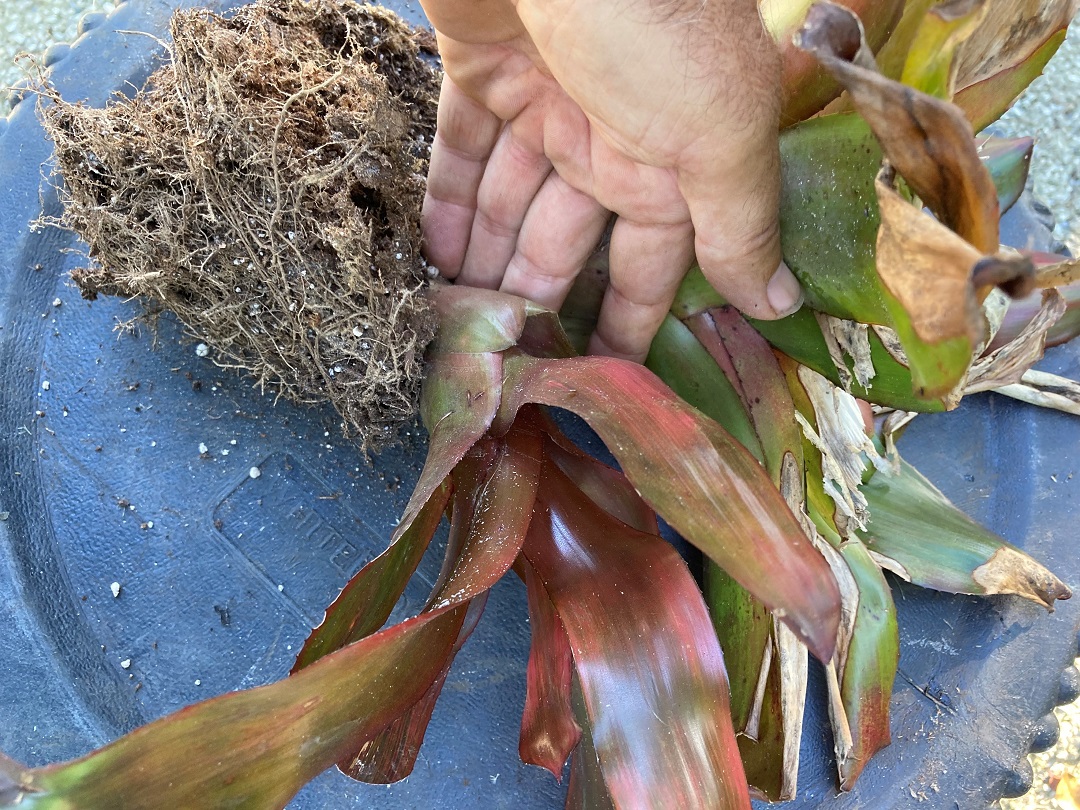
- Gently remove the whole plant from the pot.
- Brush away mix so you can see where the pup connects.
- Use a clean, sharp knife to cut the pup away, aiming to include as much of its base as possible.
- Pot the pup in a small container with a chunky, well-draining mix.
- Keep it warm, in bright indirect light, and lightly moist for the first couple of weeks while it settles.
Some pups come off with tiny roots, some without. Either can work. The key is steady warmth and patience, not extra watering.
Normal decline vs. cup rot
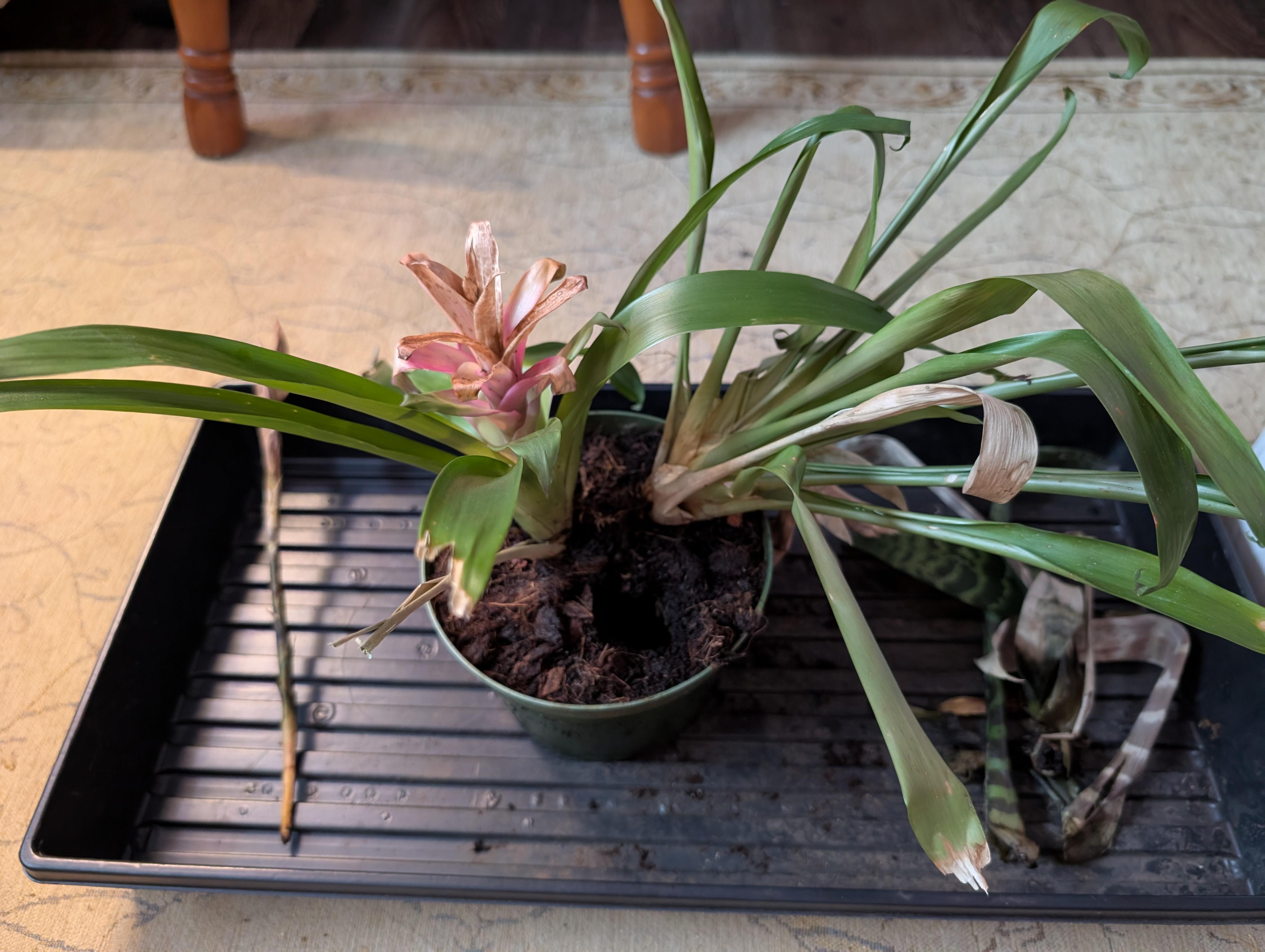
Cup rot (sometimes called crown rot) is the most common reason a bromeliad dies too fast. It often happens when water sits in the crown with poor airflow, especially in cool indoor conditions.
Signs it is probably cup rot
- The center turns brown or black and feels soft.
- Inner leaves pull out with a gentle tug.
- The plant declines rapidly, not gradually.
- The cup smells sour or rotten.
What to do right away
- Dump any water in the cup.
- Place the plant in bright, indirect light with good airflow.
- Remove obviously rotted tissue if it pulls away easily.
- Keep the potting mix on the drier side until you see stability.
If pups are present, focus on keeping them healthy. Even if the mother rosette is lost to rot, pups can often be saved if the rot has not spread into their bases.
What if your bromeliad never flowered?
If your bromeliad is fading but you never saw a flower spike or colorful bracts, it may not be “dying on schedule.” A few common reasons bromeliads fail to bloom indoors:
- Not enough light (the most common culprit)
- Too young (some take years to reach blooming size)
- No temperature swing between day and night
- Stress from chronic overwatering or a suffocating potting mix
Also, what many people call a “flower” on bromeliads is actually colorful bracts that last for weeks or months. The true flowers can be small and short-lived, tucked into those bracts. It is very possible to miss the actual blossoms and only notice the bracts fading later.
Should you cut off the flower spike?
You can, but you do not have to.
- If the spike is still colorful, I usually leave it and enjoy it.
- Once it is fully brown and dry, you can trim it close to the base with clean scissors or pruners.
Removing the spike does not stop the mother rosette from declining. It just tidies the plant and can slightly reduce the chance of trapped moisture around old tissue.
Quick checklist
- It flowered (spike or colorful bracts appeared)
- Decline is gradual, starting with older outer leaves
- Base is firm, not mushy
- No bad smell from the cup
- Pups are present or starting to form
If you check most of those boxes, congratulations. Your bromeliad is doing the most bromeliad thing possible: finishing one beautiful bloom cycle and setting up the next generation.
FAQ
Will the pups flower too?
Yes. Each pup becomes a new rosette, and once it reaches maturity, it can bloom once and repeat the cycle.
How long until bromeliad pups bloom?
It depends on the genus and growing conditions, but indoors it is commonly 1 to 3 years. Faster in bright light and warmth, slower in dim rooms.
Can I keep the mother plant after it browns?
You can leave it in the pot as long as it is not rotting. Many people keep the mother until it is fully dry because it continues to support pups. Once it is crispy and clearly finished, you can remove it to give pups more space.
My bromeliad is turning brown from the center. Is that normal?
Center browning that is soft or fast is usually rot, not normal decline. Normal decline tends to start on the outer leaves and feels dry rather than mushy.