Hard Tap Water and Houseplants

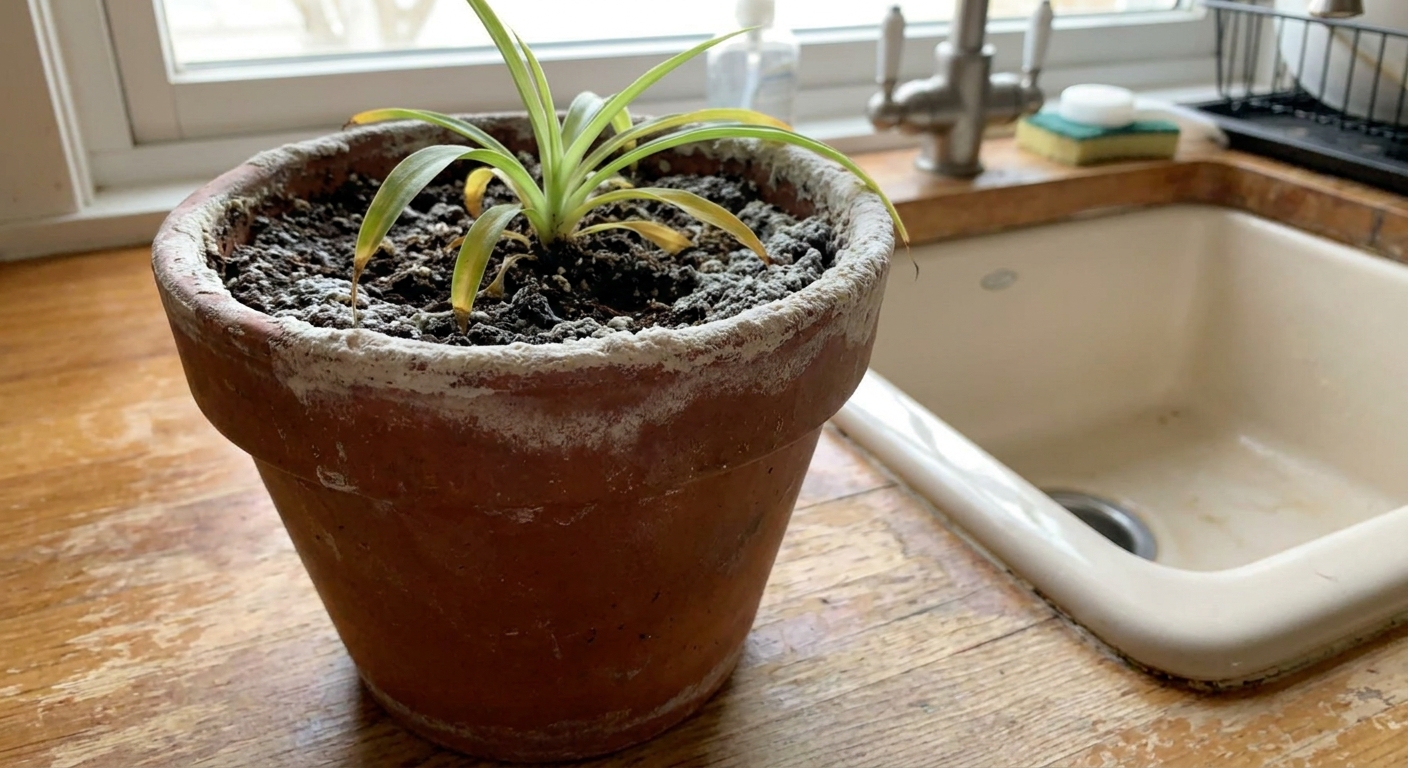
If you live in a hard-water region, you are not imagining things. Tap water can quietly turn a happy houseplant into a picky roommate. One week it is thriving, the next you are staring at crunchy tips, sad growth, and a mysterious white crust that looks like someone sprinkled salt on the pot.
The good news: most hard-water problems are fixable with small routine tweaks. You do not need fancy gadgets or a shelf full of specialty bottles. You just need to understand what is in your water, what it does in a pot with limited soil and limited ability to flush itself, and how to reset the soil once in a while.

What hard tap water is doing in your pot
Hard water usually means your tap water contains higher levels of dissolved minerals, mainly calcium and magnesium. Those minerals are not toxic, but they build up over time. In a container, water leaves (through plant use and evaporation), but most dissolved solids stay behind unless you regularly flush them out.
On top of minerals, many municipalities disinfect water with chlorine or chloramine. Some communities also add fluoride for dental health. None of these are guaranteed plant killers, but sensitive plants can react, especially when everything is concentrated in a pot.
- Chlorine can often be reduced by letting water sit out, especially in an open container. How much it drops depends on time, temperature, and airflow.
- Chloramine is more stable and usually does not “gas off” much. It typically needs activated carbon, reverse osmosis, or a neutralizer to be meaningfully reduced.
- Fluoride can contribute to tip burn in some plants. It is not reliably removed by basic carbon pitcher filters.
Finally, even if your water is not “hard,” it can carry salts from water softeners or from fertilizer buildup. The result is similar: a slow rise in dissolved solids inside the pot.
Signs of mineral and salt buildup
I always tell new plant parents to look for a pattern rather than a single symptom. Water chemistry issues tend to show up as a cluster of small clues that keep repeating after watering.
On the pot and soil
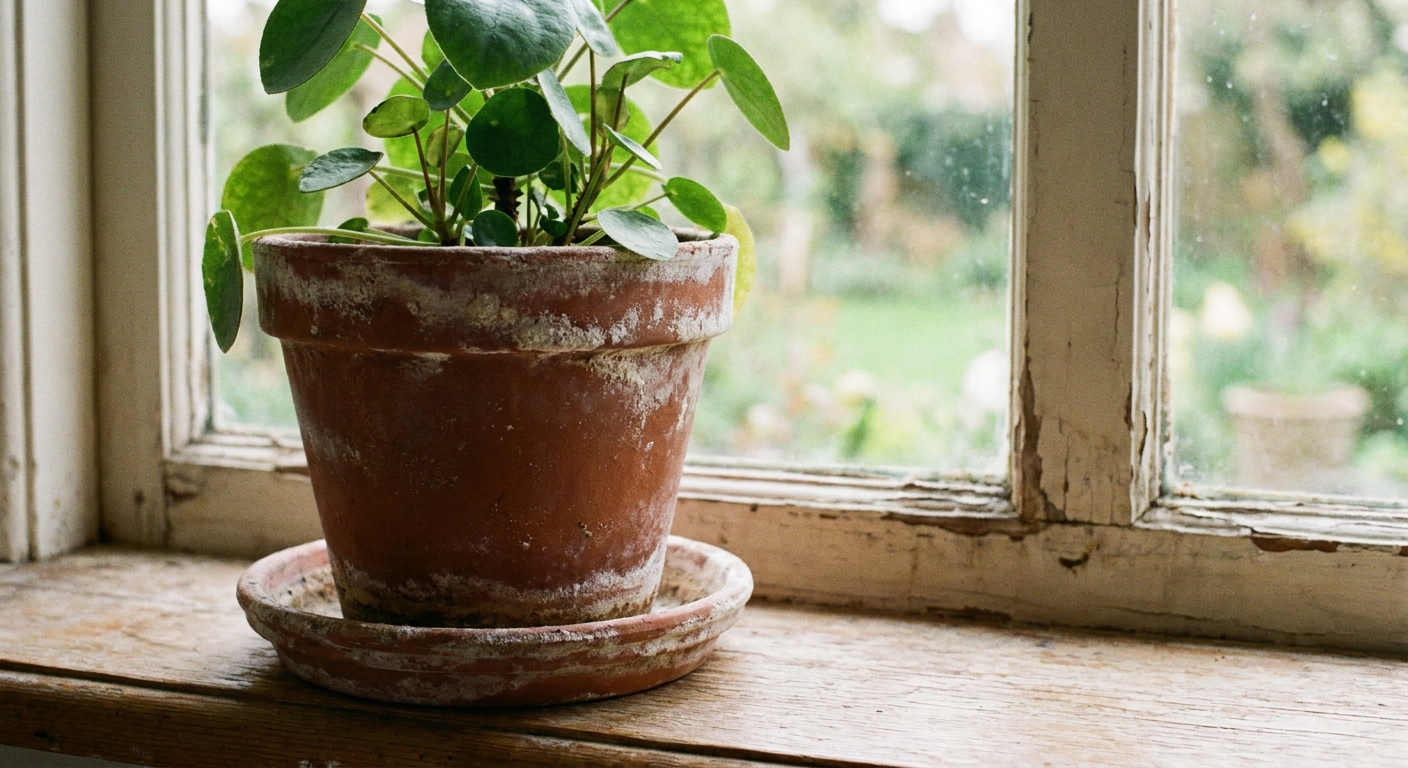
- White crust on the soil surface or the rim of terracotta and ceramic pots.
- Soil that wets unevenly, where water runs down the sides and the center stays dry. Buildup and hydrophobic peat can team up and make watering frustrating.
- Hard, compacted top layer that looks dusty or cement-like.
On the plant
- Brown, crispy leaf tips or edges, especially on spider plants, dracaena, calathea, and peace lilies.
- Leaf spotting after overhead watering, especially if water dries on leaves and leaves mineral marks.
- Slowed growth even when light seems fine and you are feeding occasionally.
- Wilting that does not match the moisture, for example the soil is damp but the plant looks thirsty. Excess salts can make it harder for roots to take up water.
One gardener to another: these symptoms can also come from low humidity, too much fertilizer, underwatering, or root issues. But if you see crust plus tip burn plus stubborn soil, water and salt buildup jumps to the top of my suspect list.
Know your water (it helps a lot)
If you want to skip weeks of guesswork, pull up your local water quality report online. Look for:
- Hardness (often listed as mg/L CaCO3 or grains per gallon)
- Alkalinity, which is the water’s buffering power (how strongly it resists pH change). High alkalinity can slowly push soil pH up over time.
- Disinfectant type (chlorine vs chloramine)
- Fluoride (if listed)
Think of it like reading the ingredient label on your watering can. It makes the fixes way more obvious.
Overnight sitting: when it helps and when it does not
Letting tap water sit out overnight is one of the simplest habits you can adopt, and yes, it can help. But it has limits.
What sitting out can do
- Reduce some free chlorine in many water supplies, especially if the water is in a wide, open container with lots of surface area.
- Warm the water to room temperature, which is kinder to roots than ice-cold water straight from the tap.
What it will not fix
- Hardness minerals do not evaporate. Calcium and magnesium stay.
- Chloramine usually stays, too.
- High alkalinity (water that keeps nudging pH upward) is not solved by sitting out.
- Fluoride does not disappear by sitting out.
How to do it well
- Fill an open pitcher, bowl, or watering can.
- Let it sit 12 to 24 hours on the counter.
- If you want to be extra effective, give it a stir once or twice.
If your plants are sensitive and your city uses chloramine, overnight water may still feel gentler than straight-from-the-tap water, but you will usually see bigger improvements from filtering, rainwater, periodic flushing, or a true low-mineral water source.
Filtering vs distilled: what makes sense
There is no single “best” water for every plant. The goal is to lower the stuff that accumulates and stresses roots, while keeping your routine doable.
Filtered water
A basic household filter can improve taste and often reduces chlorine and some organics. Whether it helps with hardness depends on the filter type, and this is where plant people get tripped up.
- Standard carbon pitcher filters (the common ones) are great for chlorine and taste, but they generally do not meaningfully remove dissolved minerals (hardness), do not lower alkalinity much, and usually do not remove fluoride reliably.
- Ion-exchange “softening” pitchers can reduce some calcium and magnesium, but capacity varies and they still may not solve very hard water.
- Under-sink reverse osmosis (RO) systems reduce total dissolved solids dramatically and can help with chloramine and fluoride, depending on the setup.
If a carbon filter is easy for you to keep up with, it can still be a great middle path for many homes. Just do not expect it to stop white crust if your water is truly hard.
Distilled (or reverse osmosis) water
Distilled water is very low in dissolved minerals. RO water is similar in practice for houseplants. This is the cleanest reset when your tap water is extremely hard, very alkaline, or you keep seeing buildup no matter what.
- Often helpful for: calatheas, marantas, dracaenas, spider plants, some orchids, and any plant showing repeated tip burn.
- Watch-outs: because distilled and RO water have almost no minerals, your plant will rely more on what is in the potting mix and fertilizer. Stick to a normal, balanced feeding routine in the growing season rather than “extra strong” fertilizer, which can recreate the salt problem fast.
My personal rule: if the only way your plant looks decent is distilled water forever, that is fine. But I also check whether the soil needs flushing or replacing. Sometimes the plant is reacting to the pot’s history, not just today’s water.
Rainwater: a quiet upgrade
Rainwater is naturally soft and typically lower in dissolved minerals than hard tap water. For many indoor gardeners, it is the easiest upgrade that feels almost magical.
Rainwater helps most when
- You see white crust returning quickly after watering.
- You grow sensitive foliage plants that spot, crisp, or stall.
- Your tap water is very alkaline and you keep fighting rising soil pH.
How to use it safely indoors
- Collect cleanly: Use a clean container. Avoid questionable roof runoff if you are concerned about contaminants. If you do use outdoor collection, pick a clean system and do not collect the first runoff after long dry spells.
- Consider your location: If you live in a high-pollution area, near heavy industry, or where collection is regulated, rainwater may not be your best option. When in doubt, use RO or distilled.
- Store smart: Keep it covered and use it within a week or so. Stagnant water can get funky.
- Use for your fussiest plants first: If you only have a little, prioritize calatheas, prayer plants, and any plant that keeps getting crispy tips.
The simplest fix people forget: flush the soil
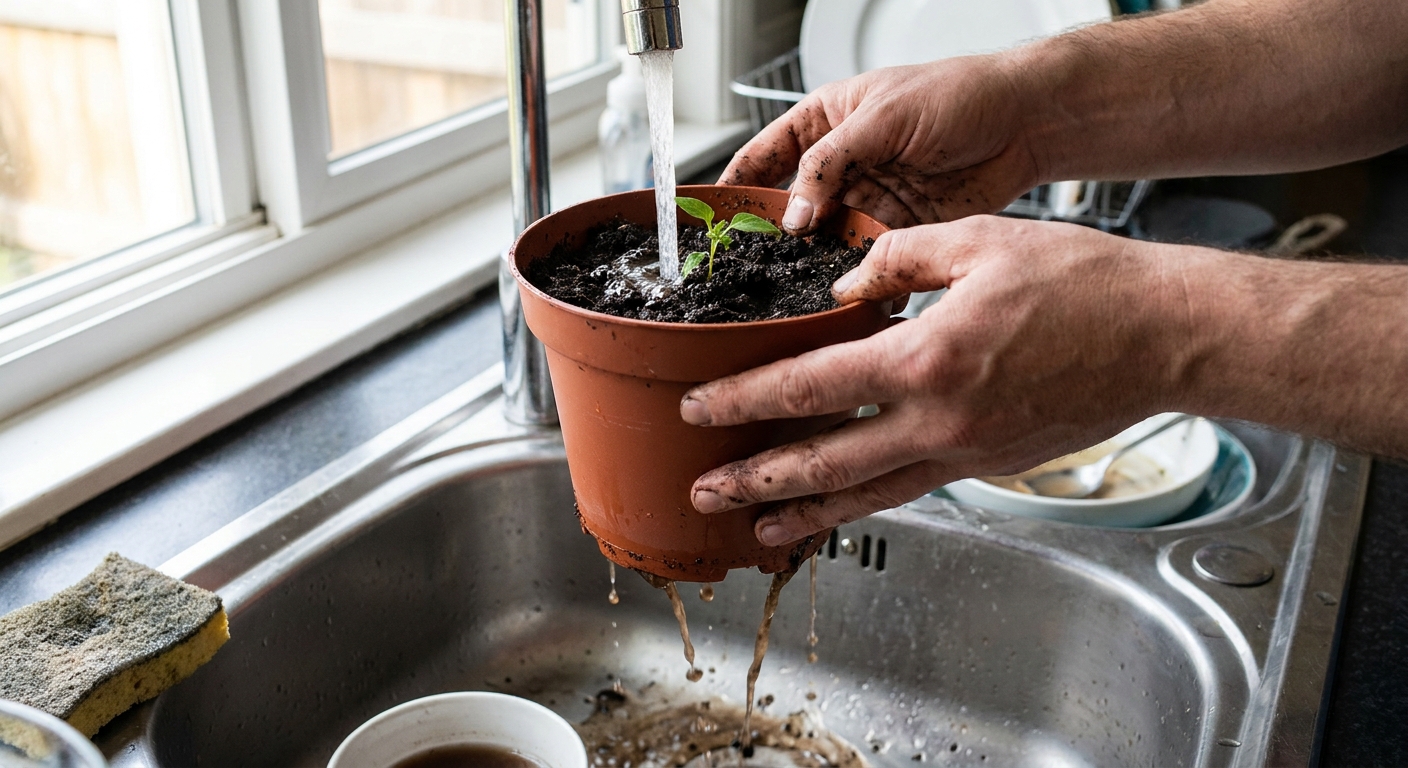
If mineral, fluoride, and fertilizer salts are building up, the fastest way to help is not a new product. It is a good, old-fashioned flush. Think of it as rinsing the potting mix so the roots can drink normally again.
Before you flush
- Make sure the pot has drainage holes. Flushing a pot with no drainage just traps the problem.
- Do not flush a plant that is already waterlogged or showing signs of root rot. Fix drainage and root health first.
- Do this when the plant is due for a watering, not when the soil is already soggy.
How to flush without drowning your plant
- Move the pot to a sink, tub, or shower.
- Use room-temperature water.
- Slowly water the soil until water runs freely out the drainage holes.
- Keep going until you have pushed through about two to four times the pot’s volume in water. This is a rule of thumb, not a strict law.
- Let it drain thoroughly. Empty the saucer so the pot does not reabsorb salty runoff.
How often to flush in hard-water regions
- Most houseplants: every 4 to 8 weeks if you are watering with hard tap water and fertilizing sometimes.
- Heavy feeders or fast growers (monsteras, pothos, philodendrons in bright light): every 4 to 6 weeks during spring and summer.
- Slow growers (snake plant, ZZ plant): every 8 to 12 weeks, and go lighter on fertilizer.
- Very sensitive plants (calathea, prayer plant): flush monthly if you must use tap water, or switch to softer water and flush less often.
If flushing feels like it makes the soil worse, for example water still runs off and will not soak in, that is usually a sign the potting mix is old, compacted, or peat-heavy and hydrophobic. In that case, a refresh or repot can be more effective than repeated flushing.
Quick troubleshooting
If you see white crust and the plant looks fine
- Wipe the pot rim.
- Flush every 6 to 8 weeks.
- Consider switching to filtered water for routine watering, or rotate in rainwater or RO sometimes.
If you see crispy tips on repeat
- First, consider fertilizer. Overfeeding can leave the same salty crust as hard water. Try reducing strength or frequency for a month.
- Try letting water sit out overnight if your supply is chlorine-treated.
- If it continues, move sensitive plants to rainwater, distilled, or RO water.
- Flush the soil once, then reassess after 2 to 3 waterings.
If the soil pH keeps creeping up
- Hard, alkaline water may be the driver.
- Use rainwater, distilled, or RO for a few weeks.
- Consider repotting if the mix is old and crusty, then keep up a gentle flush routine.
If you use a water softener
Many softeners swap calcium and magnesium for sodium. That sodium can be rough on plants and can build up as salts. If your home has softened water, try using an unsoftened tap (if available), filtered water, rainwater, or distilled for your plants.
Plant-by-plant notes
Some plants are just more vocal about water quality. Here are common “tell me you have hard water without telling me” houseplants.
- Spider plant: classic brown tips often associated with fluoride and salt buildup. Flush regularly and use softer water if you can.
- Dracaena: often sensitive to fluoride and salts. Distilled, RO, or rainwater is often the easiest fix.
- Calathea and prayer plant: they want consistency and softer water. If they crisp while everything else looks fine, change the water first.
- Pothos and philodendron: usually tolerant, but they can still sulk in old, salty soil. A flush can bring them back fast.
- Succulents and cacti: they can handle minerals better than many tropicals, but they hate soggy roots. Flush less often, and only when the soil is dry and the plant is ready for a deep watering.
Your gentle routine
If you want a simple, sustainable plan that works in most hard-water homes, here is what I recommend:
- Default: let water sit out overnight when practical, especially if your water is chlorinated.
- Monthly-ish: flush pots that get frequent watering and fertilizer, and back off fertilizer if you see crust forming.
- Seasonal: check the soil surface. If it is crusty, compacted, or smells off, consider a repot or at least a top-layer refresh.
- For the divas: use rainwater, distilled, or RO water for the most sensitive plants, even if everything else gets tap.
Your plants do not need perfection. They need a root zone that stays breathable, balanced, and not slowly pickled in minerals and salts. Once you get that part right, the rest of houseplant care gets so much calmer. That is the kind of quiet, grounding peace I want for your home, and for your pothos.