
How to Root Fig Tree Cuttings

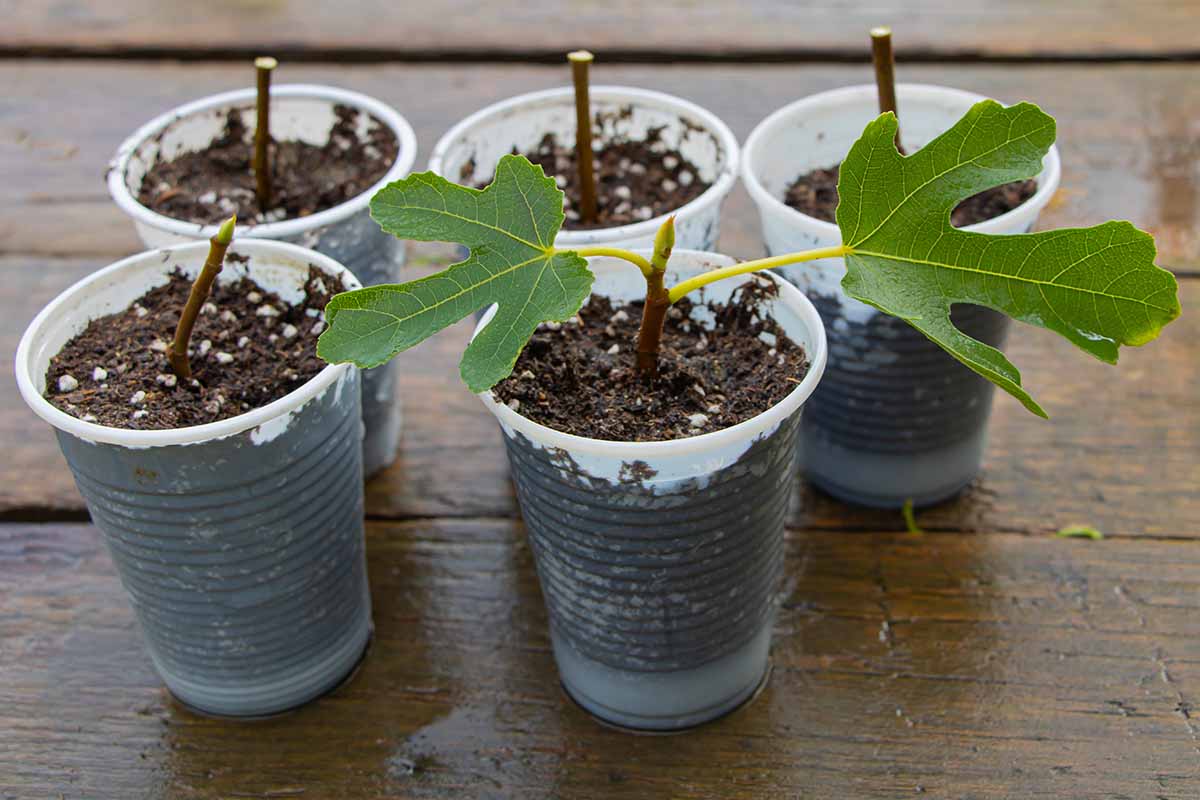
A little green. A lot of curiosity.
Fig trees are wonderfully willing to become more fig trees. Give them the right kind of cutting, steady warmth, and evenly damp rooting media, and they often respond by sending out roots like they have been waiting for permission.
This guide walks through hardwood and softwood fig cuttings, how to root them in soil or water, what timelines to expect, and the most common ways cuttings fail (plus how to avoid the heartbreak compost pile).

Quick timeline
Rooting speed varies by variety, temperature, and how woody the cutting is. If you keep cuttings warm and evenly moist, these are common ranges, though some cultivars or cooler rooms can take longer.
- Hardwood cuttings: callus in 1 to 3 weeks, roots in 3 to 8 weeks, strong rooting in 6 to 12 weeks (sometimes longer in cool conditions).
- Softwood cuttings: roots in 2 to 6 weeks, but need higher humidity and gentler light.
- Potting up: usually once roots are 2 to 4 inches long or the cutting resists a gentle tug.
- First growth flush: often after rooting, not before. Some cuttings push leaves using stored energy and still have no roots yet.
When to take cuttings
Hardwood cuttings
Take hardwood cuttings when the tree is dormant, typically late winter through early spring before buds break. This is the low-drama route because the cutting has no leaves to lose moisture.
Softwood cuttings
Take softwood cuttings in late spring through early summer when the tree is actively growing and stems are still flexible. These can root quickly, but they dry out fast unless humidity is managed.
Skip cuttings during extreme heat unless you can keep conditions steady. High heat plus low humidity is a quick path to limp, crispy stems.
Choose the right wood
Rooting success starts with what you snip. Aim for healthy, disease-free growth from a productive tree.
- Thickness: about pencil-thick is a sweet spot, but slightly thinner or thicker can work.
- Length: 6 to 10 inches is ideal for most home setups.
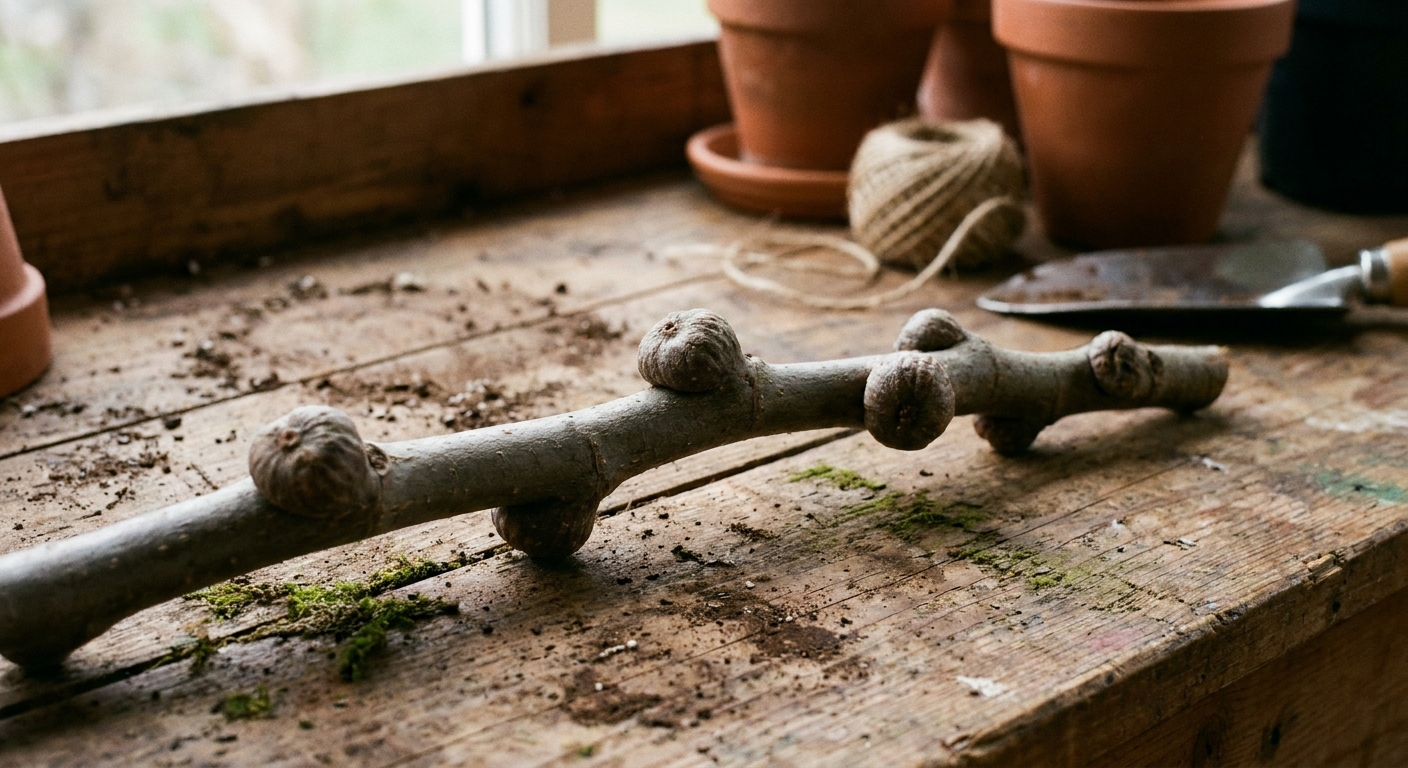
- Nodes: include at least 3 to 4 nodes. On dormant wood, nodes are the slightly raised rings where leaf scars and buds sit, and where roots often form.
- Health: avoid stems with cankers, dark lesions, oozing sap patches, or obvious pest damage.
Tools and supplies
- Clean, sharp pruners
- Small pots with drainage holes (3 to 6 inch)
- Rooting medium (options below)
- Labels (fig varieties multiply fast, and memory does not)
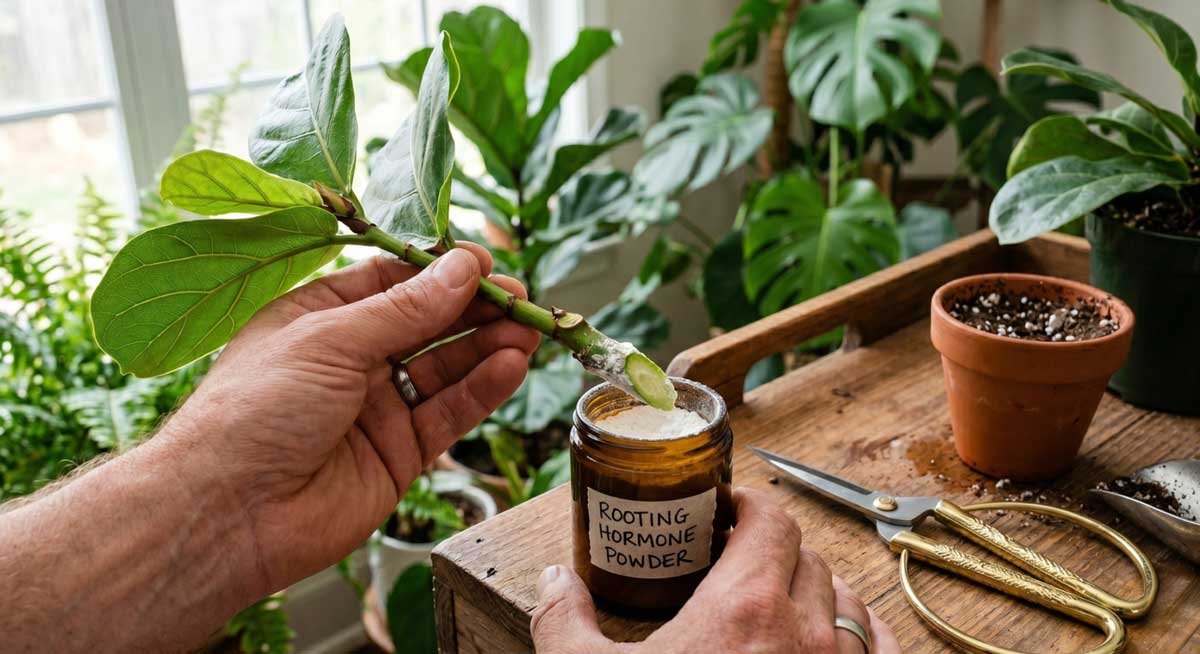
- Optional: rooting hormone powder or gel
- Optional: humidity dome, clear bag, or propagation box (especially for softwood)
- Optional: seedling heat mat (for more consistent rooting)
Clean cuts matter. Wipe blades with rubbing alcohol between trees, and if you are working with many cuttings, between batches.
Quick sap note: figs bleed a milky latex sap that can irritate skin. If you are sensitive, wear gloves and wash hands after handling cuttings.
How to prep cuttings
A cutting is a tiny battery. Your job is to help it spend energy on roots, not on surviving dehydration.
Make the top and bottom obvious
- Make the bottom cut straight just below a node.
- Make the top cut angled above a node. The angle helps you keep orientation correct.
How many buds to leave
For hardwood cuttings, leave 2 to 3 buds above the soil line. For softwood cuttings, remove lower leaves entirely and leave 1 to 2 small leaves at the top. If leaves are large, cut them in half to reduce moisture loss.
Optional: wound the base
On thicker hardwood cuttings, gently scrape a thin sliver of bark on one side of the bottom inch to expose green cambium. This can encourage callusing and rooting, but keep it light. You are not carving a canoe.
Rooting hormone
Not required, but it can improve consistency. If you use it:
- Dip only the bottom 1 to 2 inches.
- Tap off excess powder. Heavy applications can irritate tissue and increase rot risk, so aim for a light dusting.
Rooting in soil
If I had to choose one method for steady success, it is soil or a soil-like medium. It reduces transplant shock and lowers the risk of rotting that often happens in water.
Best rooting mixes
You want something that holds moisture but still breathes.
- Perlite + potting mix: roughly 50:50 is a common, forgiving blend.
- Perlite + coco coir: airy and consistent.
- Perlite + vermiculite: good moisture holding, but monitor for staying too wet.
- Straight perlite: very airy and great for rot prevention, but needs attentive watering.
Containers and drainage
Use a pot with real drainage holes. Taller nursery pots can be helpful because they drain more reliably than very shallow cups, which tend to stay wet at the bottom.
Planting depth
- Bury at least 2 nodes under the surface.
- Keep 1 to 2 nodes above the surface.
Firm the mix around the cutting so there is good contact, then water thoroughly and let excess drain.
Light and temperature
- Light: bright indirect light, or gentle morning sun. Avoid harsh midday sun until rooted.
- Warmth: root growth is often fastest around 70 to 80°F. Colder conditions slow everything down.
If you want to nudge rooting along, a heat mat set around 75 to 80°F can make conditions more consistent, especially in a chilly house.
Humidity
Hardwood cuttings usually do fine without a dome, as long as the medium stays evenly moist. Softwood cuttings often need higher humidity to prevent wilt.
Rooting in water
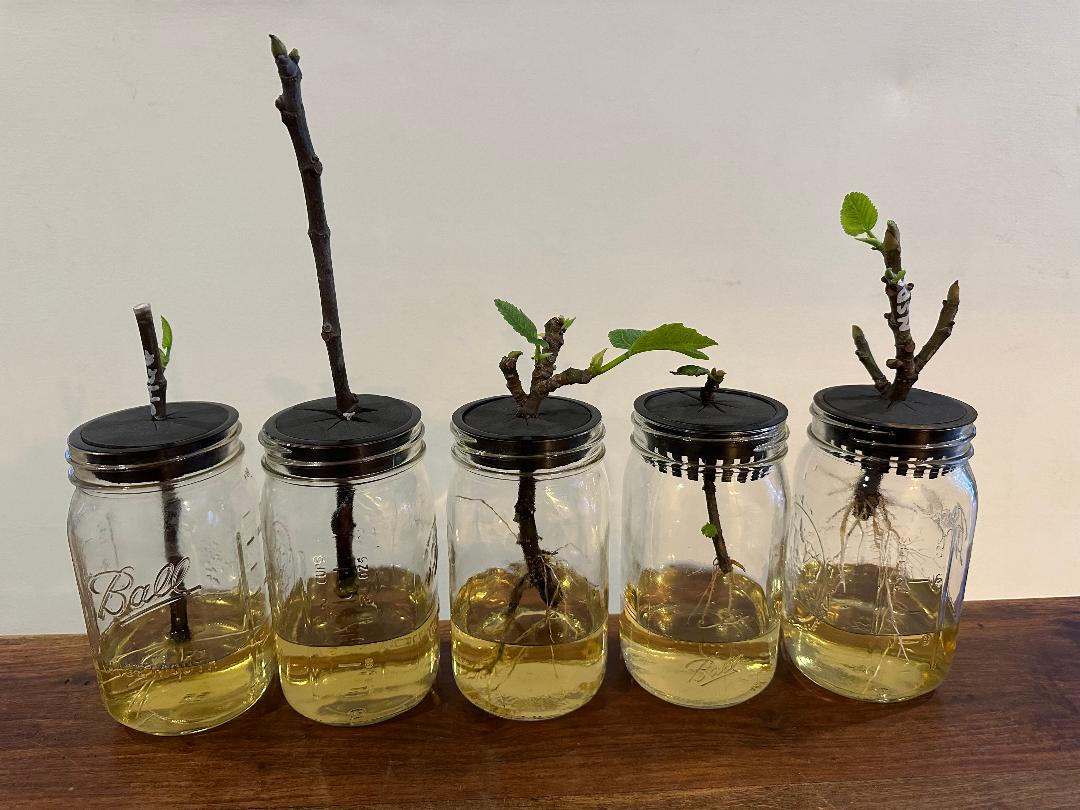
Water rooting is popular because you can watch roots appear. The catch is that water roots are adapted to water. When moved to soil, they can struggle unless you transition carefully.
How to water-root
- Use a clean jar and room-temperature water. Wash with hot soapy water first, or sanitize with a mild bleach solution and rinse well.
- Submerge only the bottom 1 to 2 nodes. Keep the rest above water.
- Change water every few days, or at least weekly, to keep oxygen levels up and reduce funk.
- Keep in bright indirect light, warm conditions.
When to move to soil
Move the cutting when roots are about 1 to 2 inches long, not when the jar looks like a bowl of ramen. Very long water roots break easily and adapt more slowly.
Transition tip: pot into a very airy mix (perlite-heavy helps), then keep humidity a bit higher and the mix evenly moist for 7 to 14 days while it adjusts. Avoid strong sun until you see new growth.
Hardwood step by step
- Cut: take 6 to 10 inch dormant pieces with 3 to 5 nodes.
- Prep: straight cut at the base, angled cut at the top, optional light bark scrape.
- Plant: place into a well-draining rooting mix, burying 2 nodes.
- Water: saturate, then allow excess to drain.
- Place: warm spot with bright indirect light.
- Wait wisely: keep medium lightly moist, never swampy.
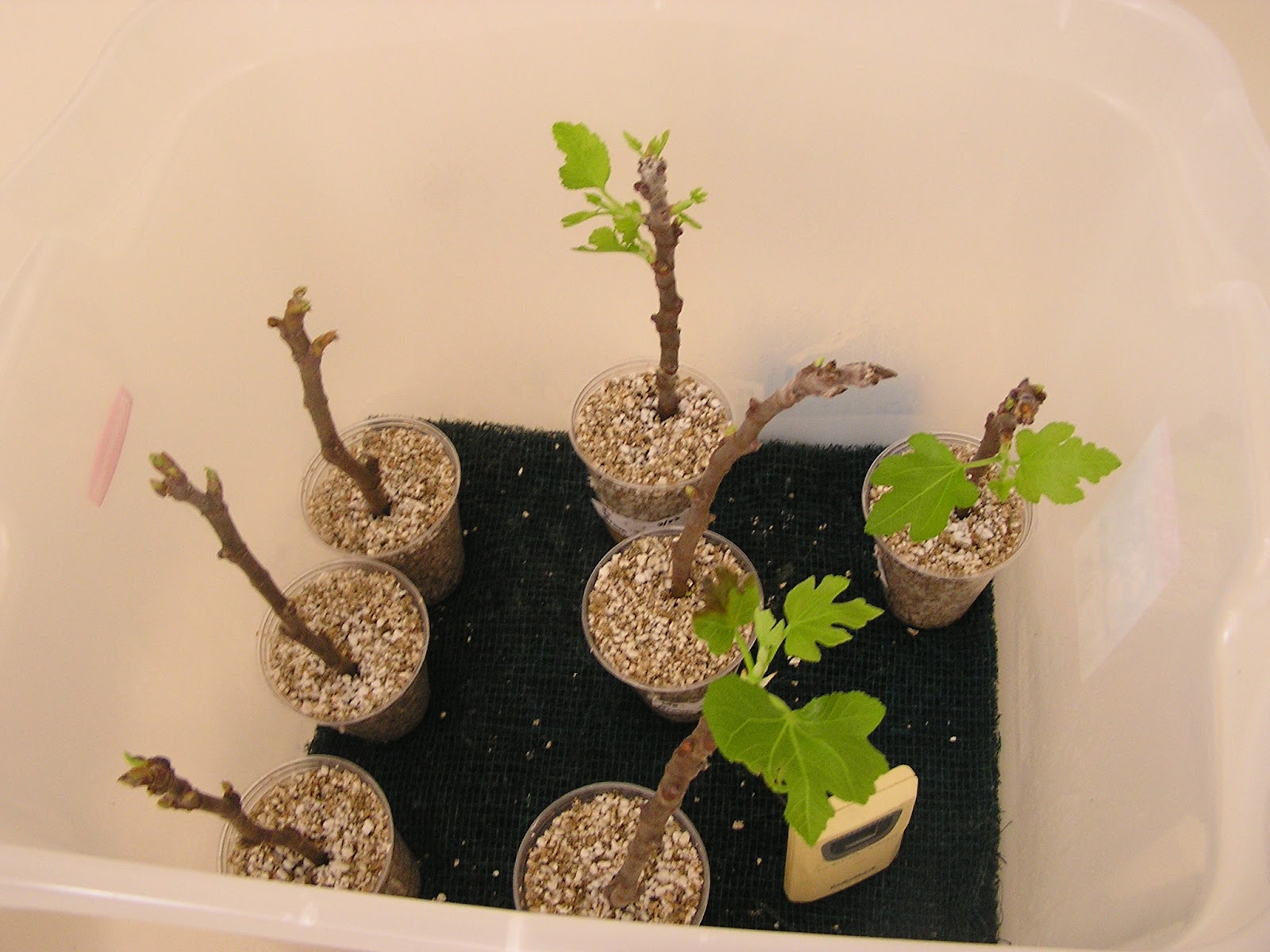
Patience note: buds can swell and even leaf out before roots form. Do not assume success until the cutting has resistance when gently tugged, or you see roots at drainage holes.
Softwood step by step
- Cut: choose flexible, green stems that are not floppy-soft and not fully woody.
- Trim: 4 to 6 inches long, with 2 to 3 nodes.
- Defoliate: remove lower leaves. Keep 1 to 2 small top leaves, trimmed if large.
- Hormone (optional): dip the base lightly.
- Stick: insert into a very airy mix (perlite-heavy is helpful).
- Humidity: cover with a clear bag or dome, but keep air moving. Vent daily.
- Light: bright shade. Too much sun under a dome can overheat fast.
If the cutting repeatedly wilts even with humidity, it is usually telling you the balance is off: too warm, too sunny, or not enough moisture in the air.
First-season care
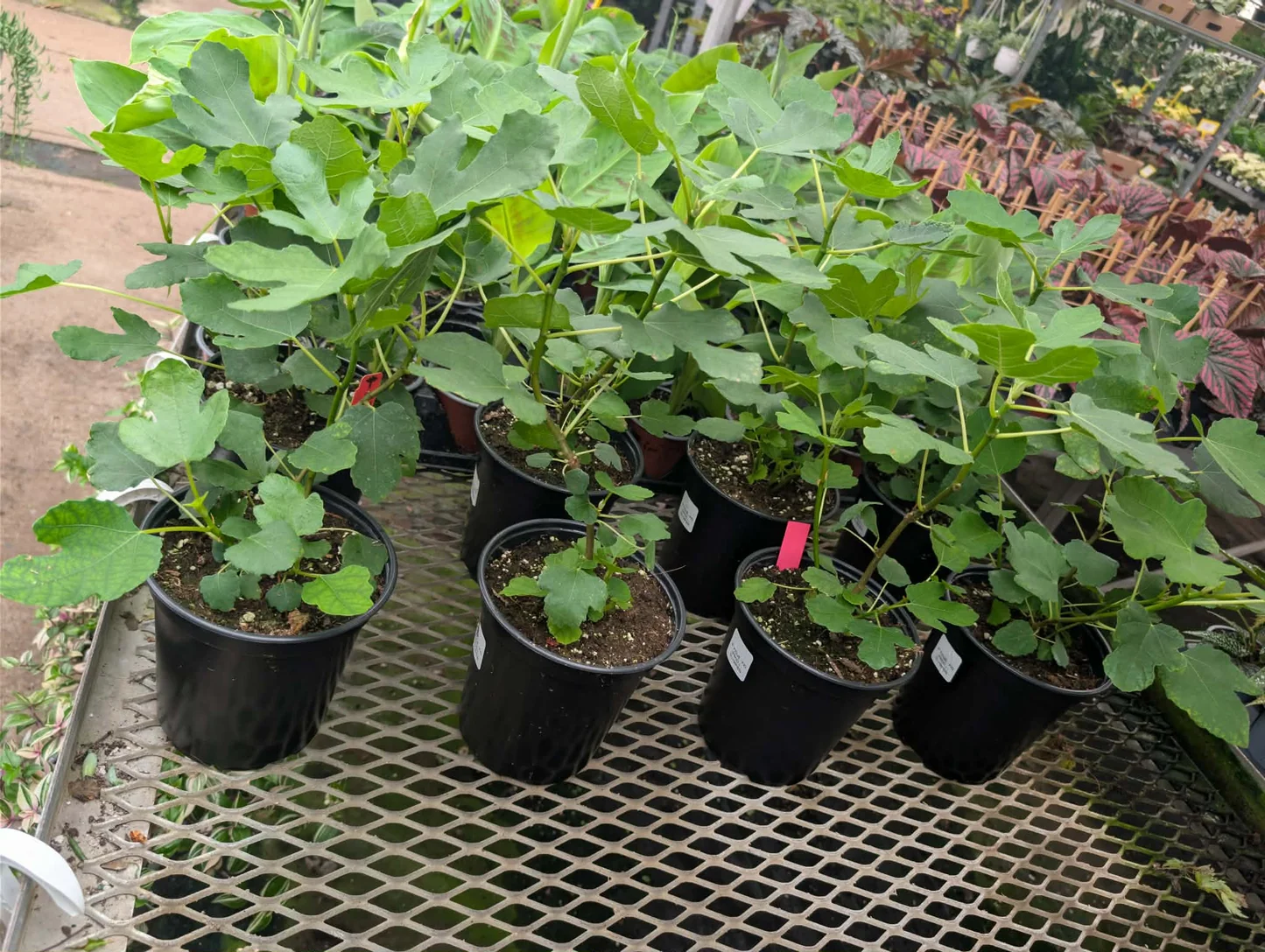
Rooted does not mean ready for a full fig life yet. New cuttings need a gentle first season so they can build a root system that supports future fruiting.
How to tell it is rooted
- New growth that keeps going for weeks (not just one burst)
- Resistance to a gentle tug
- Roots visible at drainage holes or along the pot edge (in translucent pots)
Potting up
Move up one pot size at a time. A small plant in a big pot stays wet too long, which invites rot.
Sun
Harden off slowly. Start with bright shade or morning sun for a week, then increase sun exposure gradually. Sudden full sun can scorch tender new leaves.
Water
Keep moisture consistent. Let the top inch of mix dry slightly, then water thoroughly. Avoid the extremes: bone-dry and boggy.
Fertilizer
Hold off until the cutting is clearly growing and rooted. Then feed lightly with a balanced fertilizer at reduced strength. Overfeeding early can burn young roots.
Winter protection
First-year rooted figs are less cold-hardy than established plants, and pots expose roots to colder swings.
- If you are in a cold-winter area, consider overwintering potted young figs in an unheated garage, shed, or protected spot where temperatures stay around 35 to 45°F. Avoid repeated hard freezes in a pot, especially below about 25°F, though exact tolerance varies by variety and exposure.
- Water sparingly during dormancy, just enough to keep roots from fully drying.
Common problems
1) Leafed out, then collapsed
Usually means: it used stored energy to push leaves before it had roots, then dried out.
Fix: reduce leaf area (softwood), increase humidity, keep the medium evenly moist, and keep light bright but not hot.
2) Black or mushy base
Usually means: rot from excess moisture, poor drainage, or cool temperatures.
Fix: switch to an airier mix (more perlite), use pots with good drainage, water less frequently, and keep warmer. Recut above the rot into clean tissue and restart.
3) Mold on the surface
Usually means: stagnant air and consistently wet conditions, especially under a dome.
Fix: vent daily, increase airflow, and let the surface dry slightly between waterings. Surface mold is not always fatal, but it is a warning sign.
4) No roots after 8 to 10 weeks
Usually means: it is too cold, the cutting was weak, or the medium is cycling between too wet and too dry.
Fix: add bottom warmth if possible, keep conditions steady, and try fresh cuttings. Hardwood can be slow, and some varieties can take longer than the averages.
5) Water-rooted, then stalled in soil
Usually means: transplant shock from water roots adjusting.
Fix: transplant earlier (shorter roots), pot into a very airy mix, keep humidity a bit higher for 7 to 14 days, and avoid strong sun until you see new growth.
Mini FAQ
How long should a cutting be?
Most home growers have good luck with 6 to 10 inches for hardwood. Softwood can be shorter, often 4 to 6 inches.
Is rooting hormone necessary?
No, figs can root without it. Rooting hormone can improve consistency, especially for hardwood cuttings or when conditions are less than perfect.
Can I root a cutting in the ground?
In warm climates with steady moisture, sometimes yes. In many gardens it is riskier due to drying winds, fluctuating moisture, and pests. Starting in a pot gives you control, then you can plant out once it is established.
Should I remove all the leaves?
For hardwood cuttings there are no leaves anyway. For softwood cuttings, remove lower leaves and keep a small amount of leaf area at the top so the cutting can photosynthesize without losing too much moisture.
When is it a normal tree?
After it has a well-developed root system and has grown steadily for a season. The first year is about building roots. Future you will thank you for taking it slow.