
How to Prune Mandevilla for More Blooms

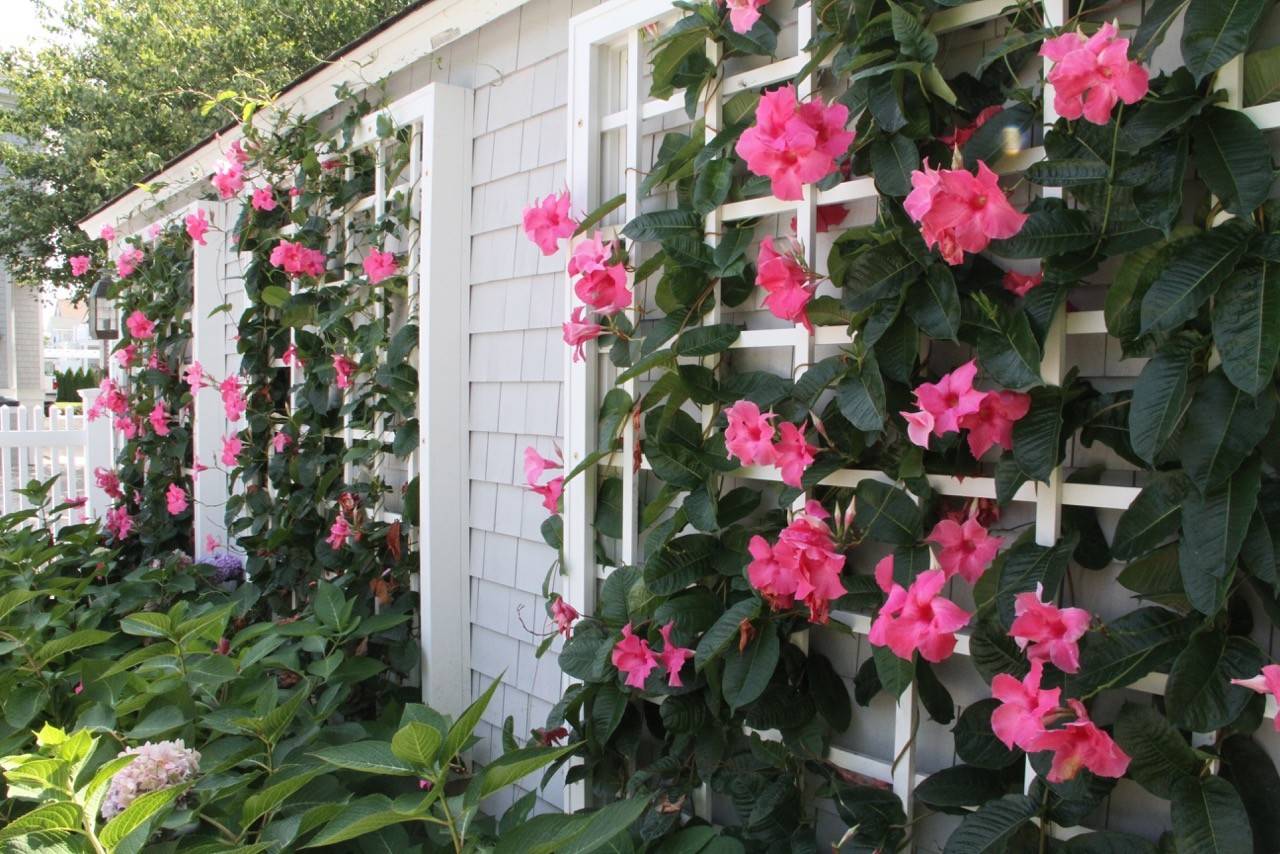
My grandmother used to say tomatoes respond to a gentle scolding and a sharp pair of pruners. Mandevilla is a little like that too. When it gets leggy and stingy with blooms, it is not being “difficult” as much as it is waiting for you to tell it where to branch.
The good news is pruning mandevilla is more about timing and a few well-placed cuts than any fancy technique. Do it right, and you trade a tangle of green for a vine that throws flowers like it has something to prove.

Why pruning means more flowers
Mandevilla mostly blooms on current season’s growth. That is the whole secret.
When you pinch or prune, you interrupt the plant’s urge to race forward on one long stem. In response, it pushes new side shoots from the leaf nodes. More side shoots means more growing tips, and growing tips are where buds form.
- Pinching equals more branching during the growing season.
- An end-of-winter cut back resets shape and encourages a strong flush of new, bloom-ready growth.
- Selective trimming keeps blooms coming by steering energy into fresh, bud-producing growth.
Tools and a quick safety check
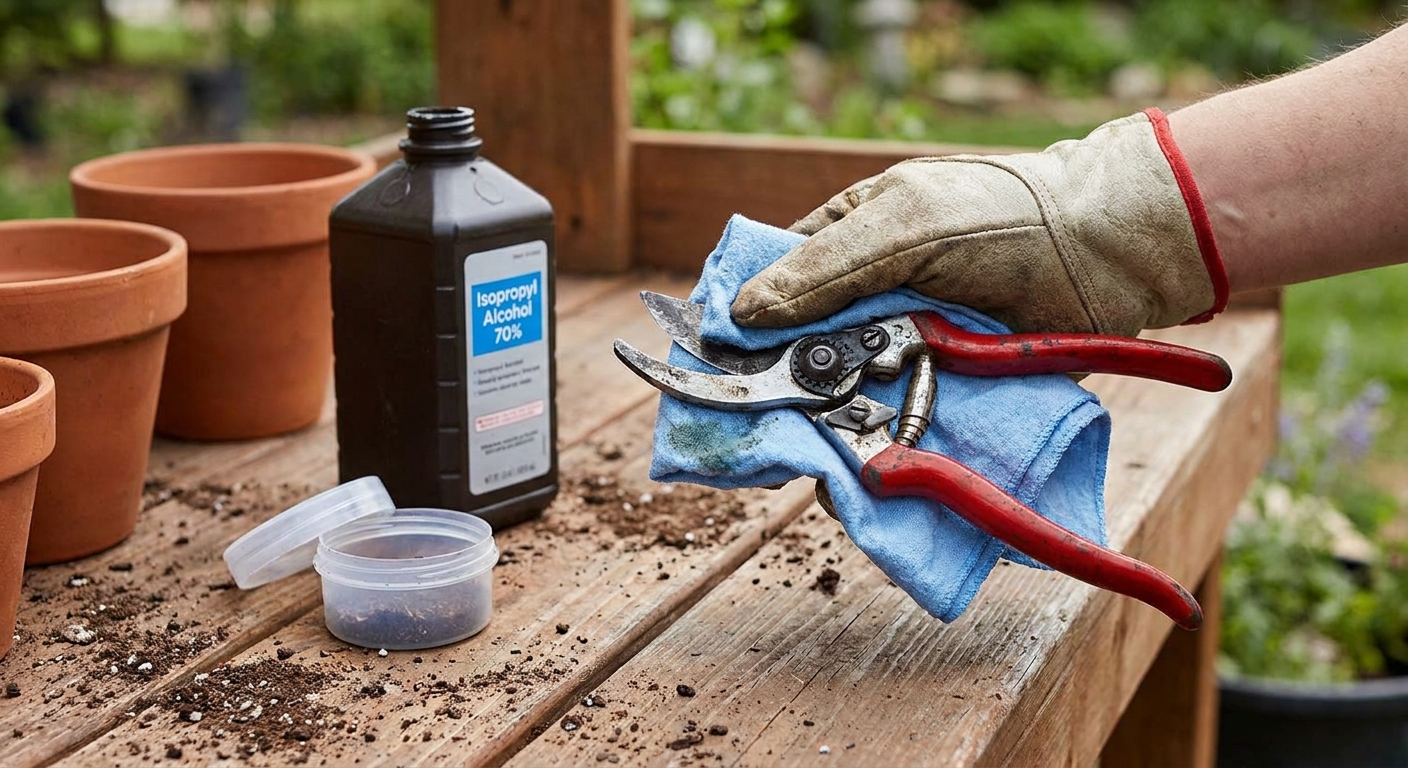
You do not need much, but you do want clean cuts.
- Sharp pruners for stems thicker than a pencil.
- Snips for soft green tips.
- Rubbing alcohol to wipe blades before you start and between plants.
- Gloves if you have sensitive skin. Mandevilla sap can irritate skin for some people.
Before you cut, look for any stems that are clearly dead. Dead stems are brittle and brown all the way through when you scratch the surface with a fingernail.
When to pinch for a fuller plant
Pinching is your best move for more blooms in the same season, especially on young plants that want to shoot upward and skip the bushy phase.
Best time
- Spring through mid-summer, once you see active new growth.
- Avoid pinching late in the season if your plant is slowing down and you are heading toward cooler weather. You want those last new shoots to have time to mature.
- If a cold snap is in the forecast, hold off. Fresh new tips are the first to sulk in sudden chill.
How to pinch
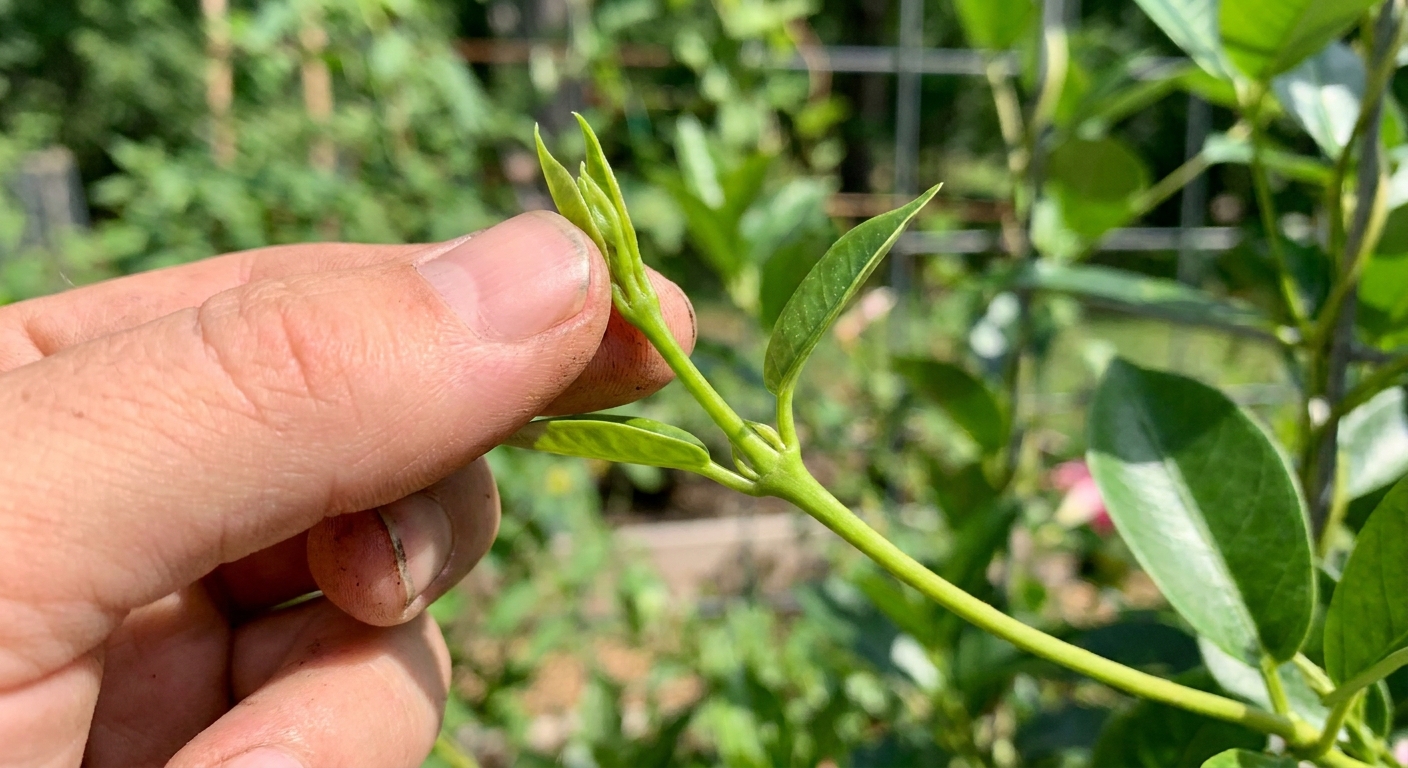
Find a soft, green growing tip and follow it down to a pair of leaves. Pinch just above that leaf node, removing about 1 to 2 inches of tip.
- Use your fingers for tender growth.
- Use snips if the stem resists and wants to tear.
How often
Pinch every 2 to 3 weeks in spring if you want a dense plant. Each pinch usually triggers two new shoots below the cut, sometimes more.
If you are training a vine up a support, pinch the tips of overly long runners, but leave a few leaders to climb.
Deadheading vs pruning
If your goal is nonstop bloom, you will do a little of both.
- Deadheading means removing the faded flower and its little stem back to the nearest leaf or junction. This tidies the plant, and on varieties that do set seed, it can reduce seed formation.
- Pruning means cutting back stems to shape the plant and encourage branching.
On mandevilla, I deadhead whenever I notice faded trumpets. For stems that are getting long and bare, I prune back to a node instead of just popping off the old bloom.
How hard to prune in late winter
Late winter pruning is the confidence move. It looks dramatic for about ten minutes, and then the plant thanks you with fresh, bloom-ready growth.
The right window
Prune in late winter to very early spring, right as the plant is preparing to grow again.
- Warm climates (where mandevilla stays outside): prune after the coolest stretch passes and nights are reliably mild.
- Cold climates (where it is treated as an annual): focus on pinching and in-season shaping. If you overwinter it indoors, do your bigger prune in late winter or early spring before it goes back outside.
Either way, avoid pruning right before a cold snap. Tender new growth is easily damaged.
How far back to cut
For most mandevilla vines, a solid rule is:
- Reduce overall length by about one third to one half.
- On very leggy plants with long bare sections, you can go a little harder, but keep at least 2 to 4 healthy nodes on each main stem.
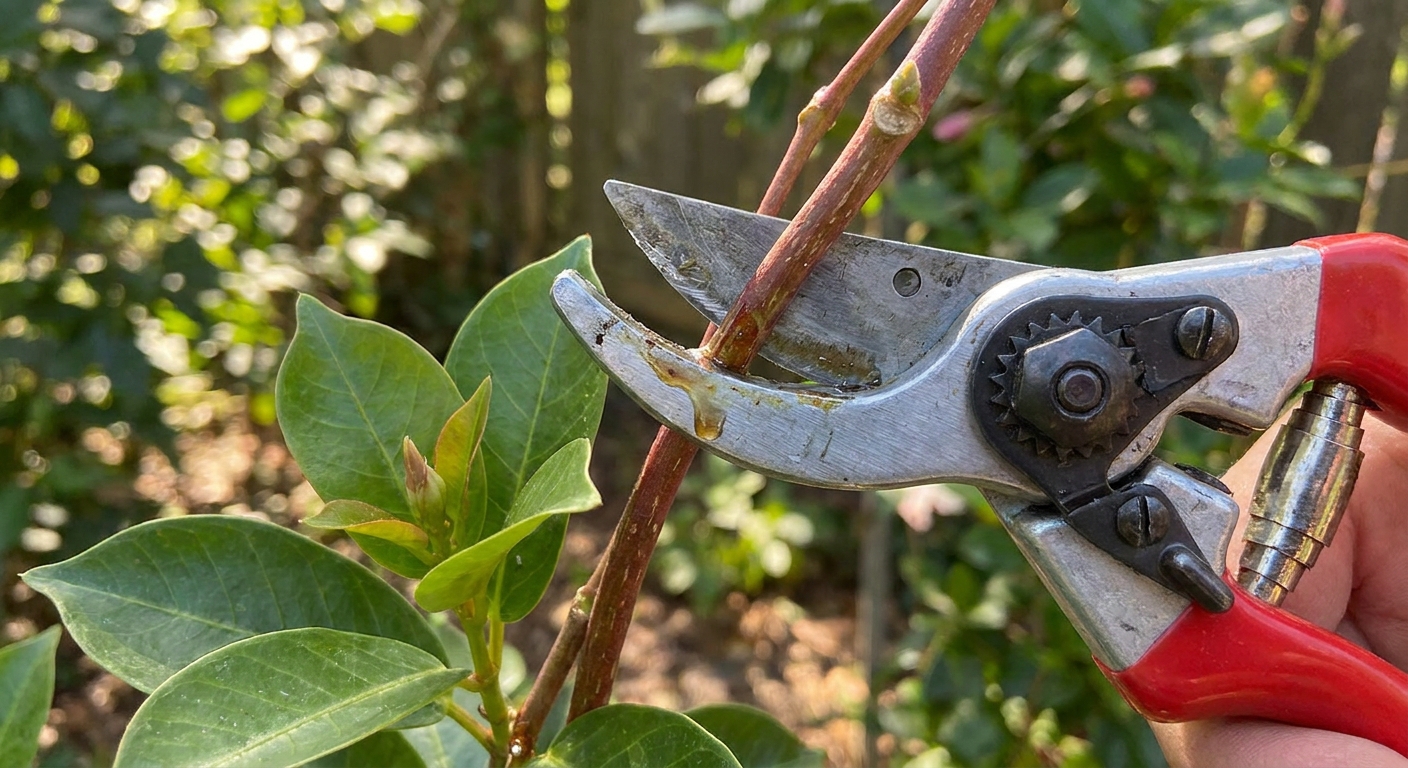
Make each cut just above a leaf node. Nodes are the little bumps where leaves attach and where new shoots will emerge.
Step by step
- Remove dead wood first. Cut dead stems back to living tissue.
- Thin for airflow. If stems are crossing, rubbing, or growing inward, remove the weaker one at its base.
- Shorten the remaining vines. Cut back long runners by one third to one half, always finishing above an outward-facing node.
- Tidy the top. If you want more branching near the top of the support, shorten the leaders slightly to force side shoots.
If you are nervous, start with one third. You can always take more. Mandevilla is forgiving, but your confidence grows faster when you prune in two passes.
Where to cut
When someone tells me their mandevilla never fills out after a haircut, it usually comes down to one thing. They cut in the middle of a long internode instead of at a node.
Here is what to aim for:
- Cut about 1/4 inch above a node so the node can push a new shoot.
- Angle the cut slightly so water does not sit on the stub.
- Choose outward-facing nodes when you want a wider, airier plant.
Those tiny choices add up. You are not just shortening the vine. You are picking the direction of its next burst of growth.
Mandevilla vs dipladenia pruning
Some plants sold as mandevilla are the bushier types often called dipladenia. You do not need a deep ID dive to prune well, but you do want to match the cut to the growth habit in front of you.
If your plant grows like a vine
Treat it like a classic mandevilla: encourage branching by pinching tips and shorten long runners at the end of winter.
If your plant stays compact
That bushier dipladenia habit responds best to light shaping and tip pruning rather than a severe chop.
- Pinch regularly in spring to keep it dense.
- At the end of winter, shorten stems by about one quarter to one third to refresh growth without stripping the plant.
- Thin crowded interior stems at the base to open the center.
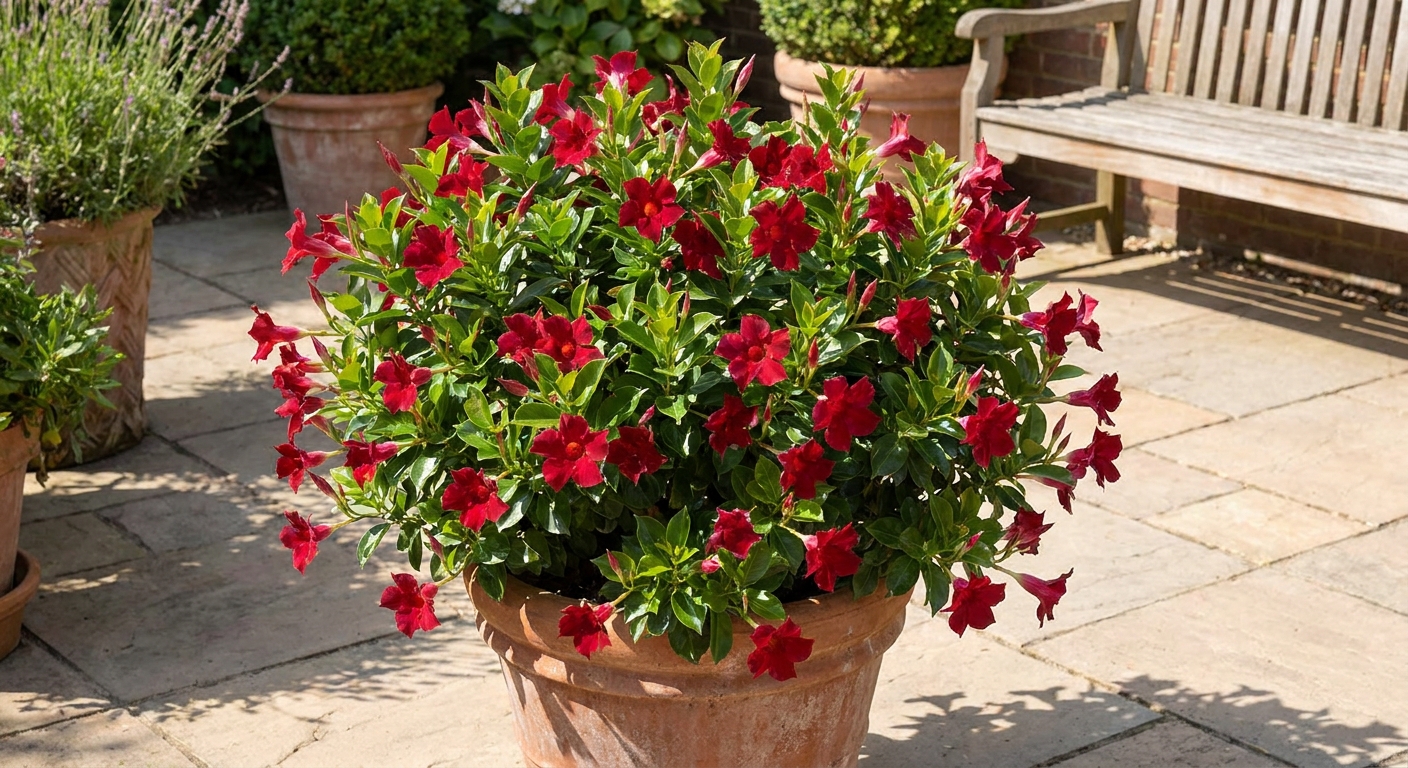
The goal with the compact types is a rounded, full canopy with lots of tips. With the vine types, the goal is controlled length plus plenty of side shoots along the way.
Training cuts on a trellis
If your mandevilla is on a trellis or obelisk, pruning and training go hand in hand. The trick is to keep a few strong stems to climb, while nudging everything else to branch.
- Keep 2 to 4 main leaders to form the structure.
- Shorten side shoots when they get long and bare, cutting back to 2 to 3 nodes.
- Pinch leaders once they reach the top to encourage lateral growth and more flowering points near eye level.
When I want a trellis covered faster, I have to remind myself that a leader that never gets pinched stays a leader, not a bloomer. A little interruption creates a lot more flowers.
Common pruning mistakes
- Pruning at the wrong time. A hard cut during active bloom can pause flowering while the plant regrows. Save the big haircut for the end of winter or very early spring.
- Never pinching. Long, leafless legs happen when the plant is allowed to run.
- Cutting too far above a node. Long stubs die back and look messy, and they do not branch well.
- Leaving a snarl of crossing stems. Dense tangles shade interior growth, which reduces flowering tips.
- Panicking and stripping it. Removing most of the foliage in mid-season forces recovery mode instead of bloom mode.
FAQ
Will pruning delay mandevilla flowers?
A light pinch might pause blooms on that one stem, but it usually leads to more flowers overall once the new branches form. A hard prune can delay flowering briefly because the plant has to regrow first, which is why the end of winter is the best time for the big cut.
Can I prune mandevilla in summer?
Yes, but keep it gentle. Pinch tips, shorten a runaway stem, or thin a few crowded shoots. Avoid cutting the whole plant back hard during peak bloom season.
How do I know if a stem is alive before I cut?
Do a scratch test. Lightly scrape the outer layer with a fingernail. Green underneath means the stem is alive. Brown and dry means cut lower until you reach green tissue.
My mandevilla is all vine and no flowers. What should I do?
Start with tip pinching on the longest runners and shorten overly long stems back to a node so they branch. Also check the basics: mandevilla needs plenty of sun to bloom well, and too much nitrogen fertilizer can buy you lots of leaves and not many flowers.
Is it okay to prune back to bare stems?
If those stems are alive and have nodes, they can regrow, but do not remove everything at once. Aim to leave multiple healthy nodes on each main stem so the plant has plenty of places to push new shoots.