Mandevilla vs. Dipladenia: How to Tell Them Apart

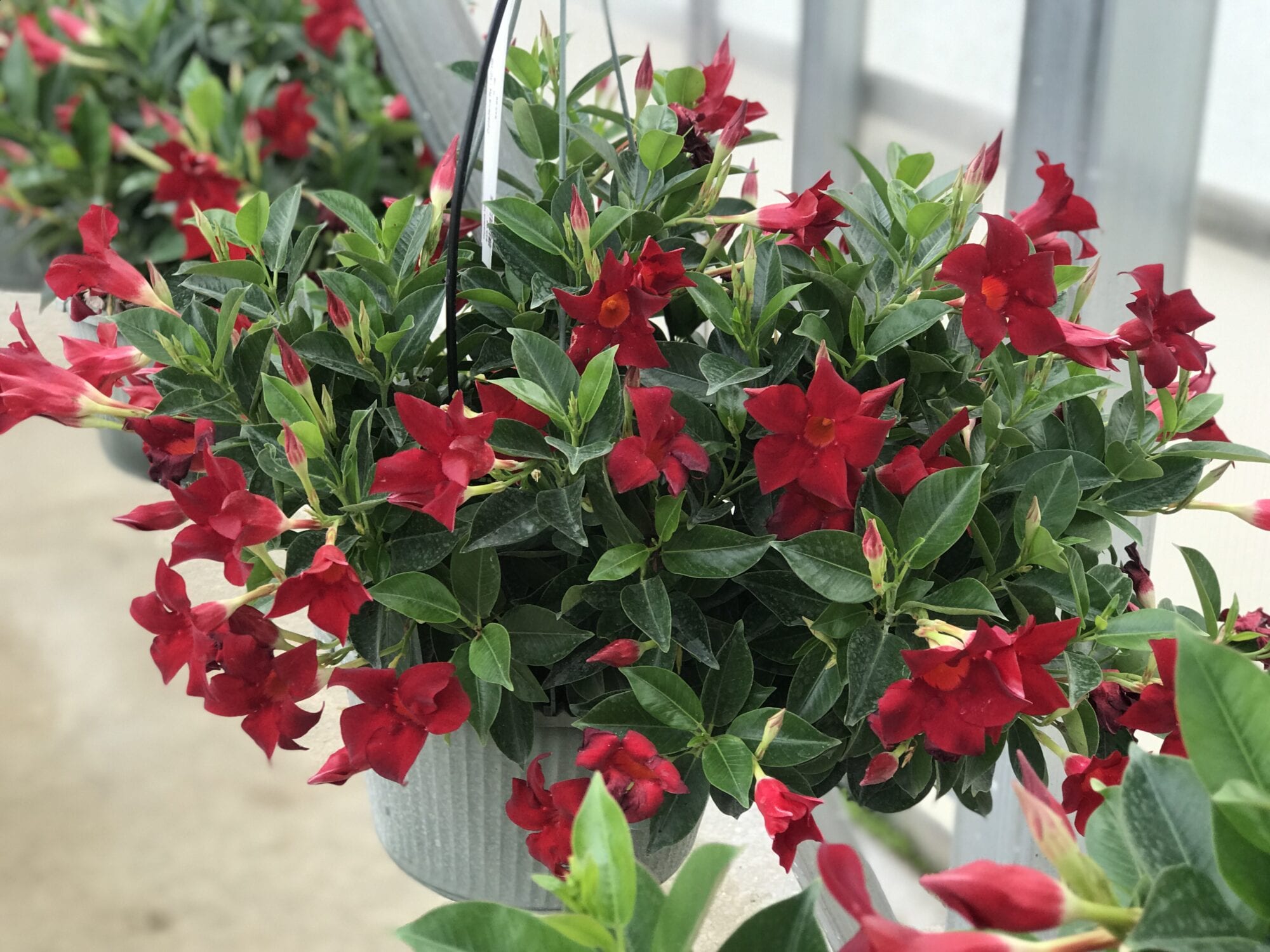
The first time I brought one of these home, I did what any reasonable plant person does. I set it on the porch, admired the glossy leaves, and immediately started talking to it like it could confirm its own identity. Was it a mandevilla or a dipladenia? The tag was vague, the flowers were equally trumpet-shaped, and my trellis plans depended on getting it right.
Here is the good news: you can usually tell them apart in under a minute by looking at how the plant grows, how the leaves feel, and whether it is trying to climb your nearest chair leg.

First, the simplest truth: they are close cousins
Both plants are tropical members of the dogbane family (Apocynaceae) and are sold under overlapping names in garden centers. You will often see them marketed together as “mandevilla” even when the plant behaves more like a dipladenia.
In everyday shopping terms, think of it like this:
- Mandevilla is usually the more vigorous climber with longer, twining stems.
- Dipladenia is usually the more compact, mounding plant that drapes nicely and needs less support.
Now let us get you confidently picking the right pot and support.
Quick ID checklist (30 seconds in the nursery)
- If it is reaching and wrapping around anything nearby, it is probably a mandevilla.
- If it is staying bushy and holding a neat shape, it is probably a dipladenia.
- Bigger leaves and longer internodes (more space between leaves) point to mandevilla.
- Smaller, thicker leaves and a denser look point to dipladenia.
If you have time for one extra step, gently feel a leaf. That texture clue is surprisingly reliable.
Growth habit: vine vs. mound
Mandevilla: a true climber most of the time
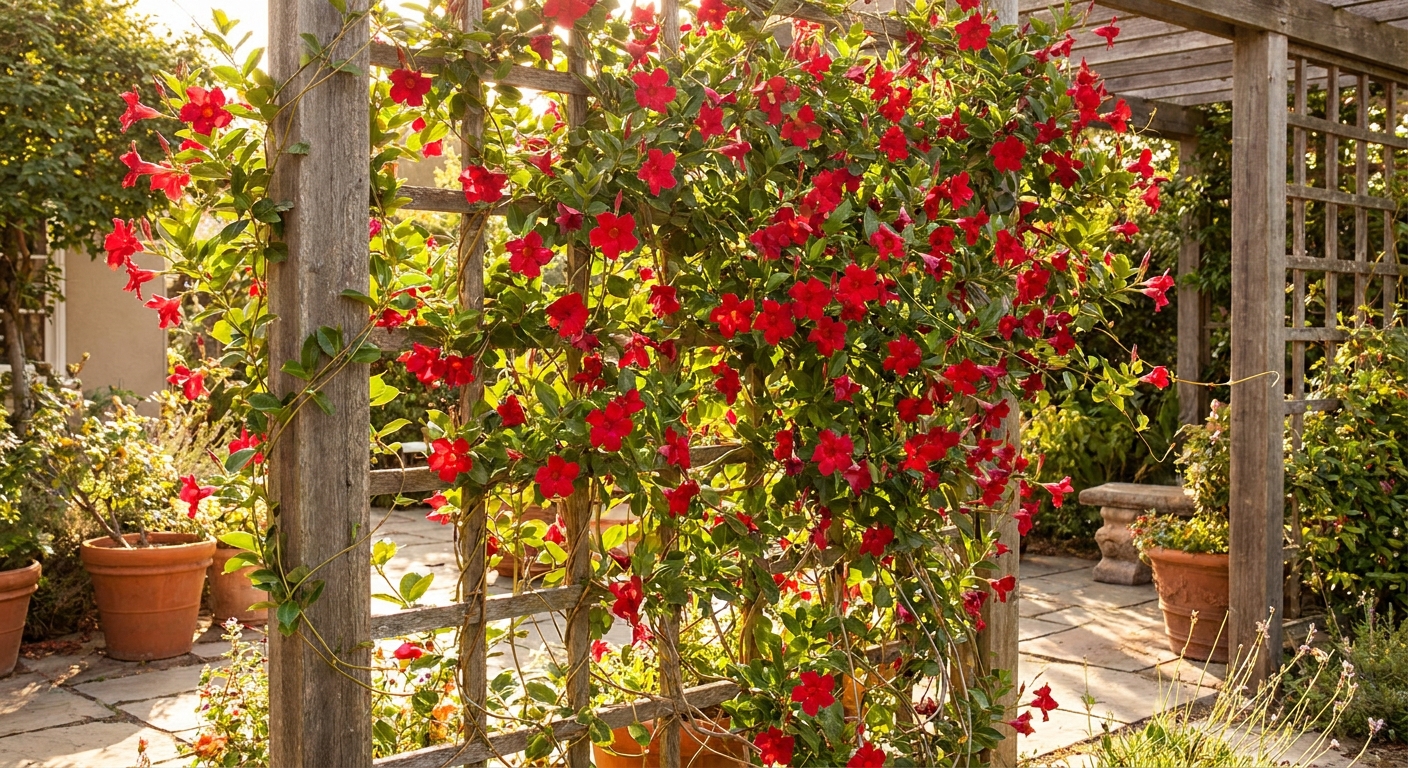
Mandevilla typically grows as a long vine. Stems elongate quickly in warm weather, and the plant naturally wants to climb. Given something to grab, it will start winding and leaning upward.
What you will notice visually:
- Long, flexible stems that keep extending
- A more “open” look as the plant stretches
- New growth that flops outward until it finds support
Dipladenia: compact, bushier, and more self-contained
Dipladenia is commonly sold in pots as a mounded plant. It can trail, but it tends to do it politely, like it is trying not to inconvenience you. Many varieties hold a fuller shape without constant training.
What you will notice visually:
- Shorter stems and a denser plant overall
- A rounded, shrub-like silhouette
- Stems that spill over a pot edge rather than climbing up and away
Leaf clues: size, shape, and texture
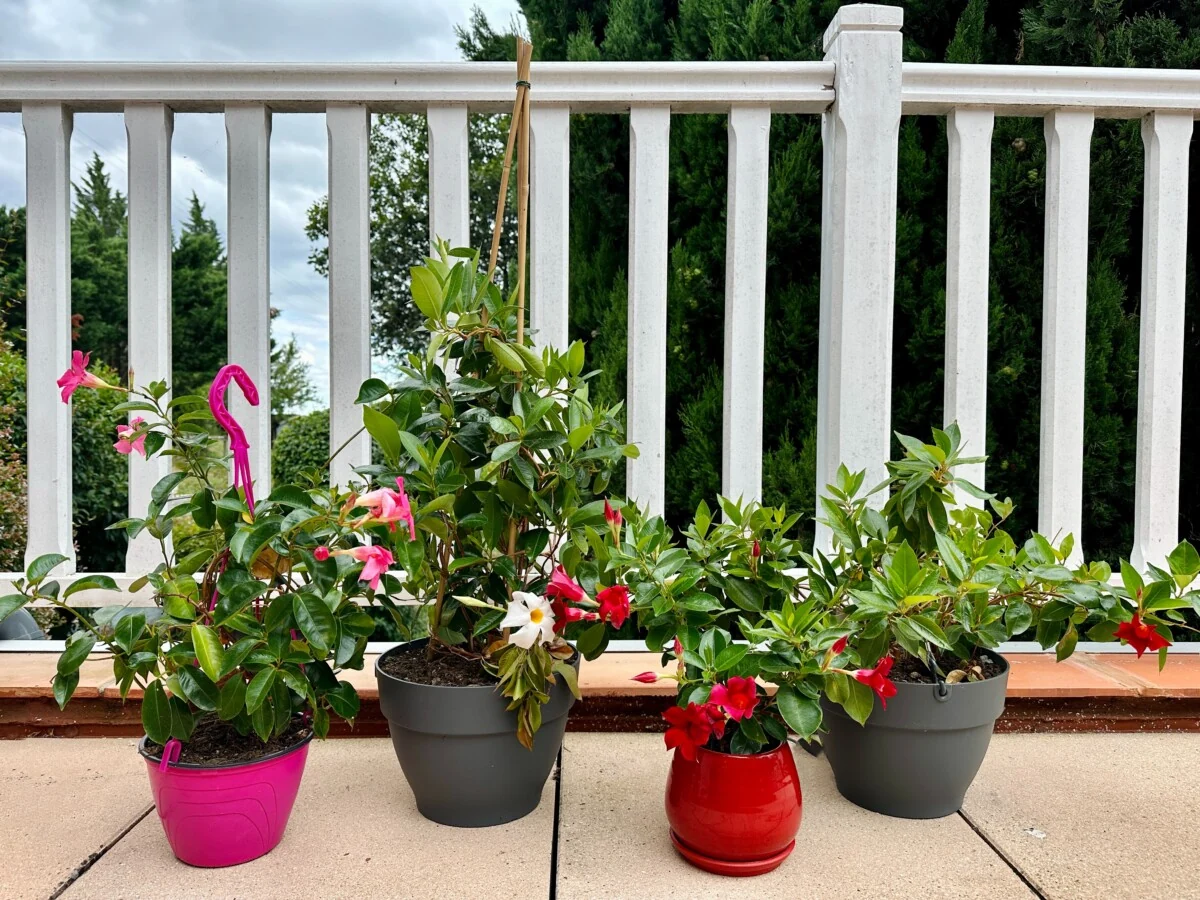
Flowers can be deceiving because both plants bloom in similar trumpets. Leaves are usually more helpful.
Mandevilla leaves
- Generally larger and longer, often more elongated
- Glossy surface is common
- Thinner feel compared with dipladenia
Dipladenia leaves
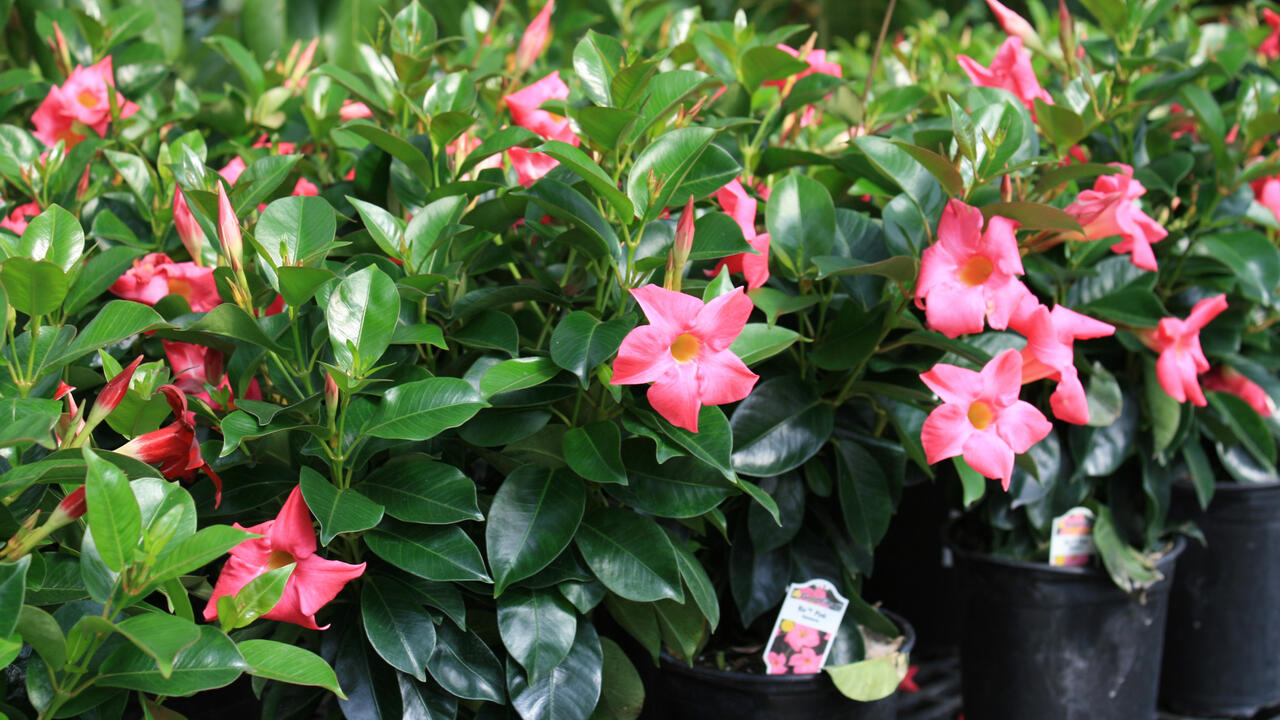
- Generally smaller and a bit broader relative to length
- Thicker, slightly leathery feel, almost succulent-like compared with mandevilla
- Dense leaf spacing that makes the plant look fuller
My favorite “shopping test”: gently pinch a leaf between your fingers. If it feels noticeably thick and sturdy, you are likely holding a dipladenia. If it feels thinner and more flexible, you are more likely in mandevilla territory.
Do you need a trellis?
This is the question that matters when you are standing in the aisle holding a plant and mentally measuring your porch railing.
Mandevilla: usually yes
If you want a mandevilla to look its best, plan on giving it something to climb.
- Best supports: small trellis, obelisk, bamboo teepee, fence panel, or railing wires
- Best look: trained upward, creating a column or screen of blooms
- If you skip support: it will sprawl and tangle, and you will eventually have to decide what it is allowed to grab
Dipladenia: optional, and often no
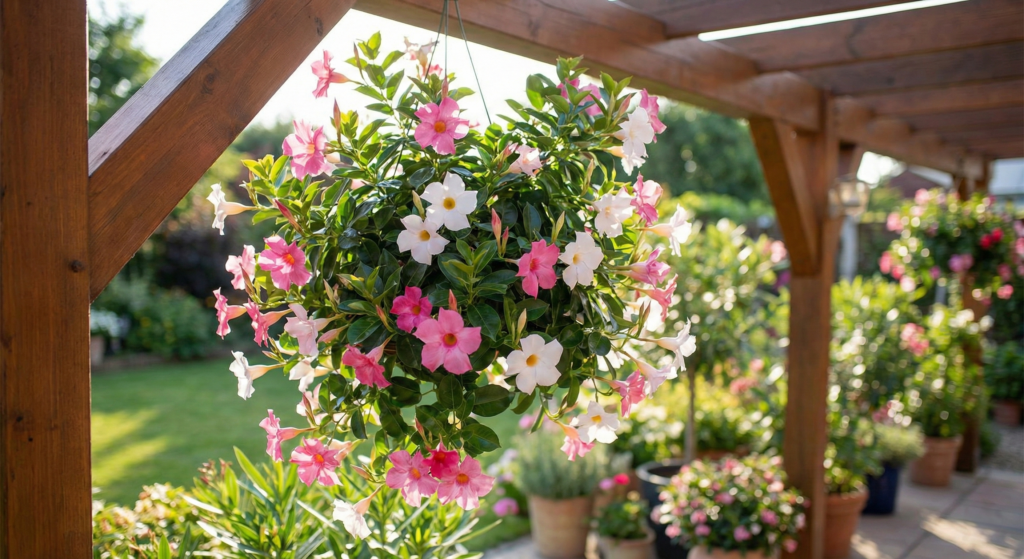
Dipladenia is usually happy without a trellis. It is a great choice if you want a fuller plant in a patio pot, window box, or hanging basket where a climbing vine would be annoying.
- Best supports: none, or a small hoop or short trellis for gentle shaping
- Best look: mounded or lightly trailing, with blooms held close to the foliage
- If you add a trellis: it may climb a bit, but it will not usually race upward like a classic mandevilla
Stem behavior: what the plant is trying to do
If you already own the plant and it is mid-season, watch what the stems do over a week or two.
- Mandevilla stems elongate quickly and lean outward, then twist and wind when they find support.
- Dipladenia stems stay shorter, branch more readily, and keep the plant looking tidy.
If your plant is constantly throwing out long exploratory shoots that need tying in, you almost certainly have a mandevilla or a very vining hybrid sold under that name.
Common buying mix-ups (and how to not get fooled)
“It says mandevilla on the tag, but it is compact”
Many compact varieties and hybrids are labeled as mandevilla because it is the more familiar marketing name. If it is mounding and has smaller, thicker leaves, treat it like dipladenia for pot choice and support needs.
“Mine is in a hanging basket, so it must be dipladenia”
Not always. Garden centers sometimes hang young mandevillas that have not started reaching yet. Look for leaf size and stem length. If you see long, searching stems already, it will want a trellis soon.
“The flowers look identical”
Exactly. Color ranges overlap heavily: pinks, reds, whites, and bicolors can appear on both. Let the plant’s structure and leaves do the talking.
Pick the right pot and support based on what you have
If it is mandevilla
- Pot style: a heavier container helps keep a tall trellis from tipping
- Support: add a trellis at planting time to avoid wrestling stems later
- Placement: where it can climb without snagging foot traffic
If it is dipladenia
- Pot style: looks great in bowls, window boxes, and hanging baskets
- Support: usually none, or a small support for gentle structure
- Placement: edges and railings where a soft drape is welcome
I like to decide this before I even pull out the potting mix. It saves so much mid-summer rearranging.
FAQ
Are mandevilla and dipladenia the same plant?
They are closely related and often sold interchangeably, but they are generally different growth types: mandevilla tends to be more vining, dipladenia more compact and mounding.
Can dipladenia climb if I give it a trellis?
Some will climb a little, especially if you tie stems up, but most stay relatively compact compared with a typical mandevilla.
What if mine seems like both?
Hybrids and new cultivars can blur the lines. Use the practical approach: if it keeps sending long, twining shoots, treat it like a mandevilla and provide support. If it stays dense and rounded, treat it like a dipladenia and skip the big trellis.
Where do I find watering, feeding, and overwintering details?
Those basics are shared between the two and are best handled like a single care routine. Head to Leafy Zen’s existing care page for the full growing and overwintering steps.