
How to Grow Pansies from Seed
I still remember the first time I tried to start pansies from seed in a too-warm apartment. I was so proud of myself for being “ahead of the season”… until I realized pansies are not impressed by enthusiasm. They want it cool, steady, and a little dark, like a tiny springtime cave.
If you have ever bought pansy packs and thought, I want a whole bowl of these for the price of one six-pack, starting from seed is absolutely worth it. It just comes down to nailing three things: temperature, light (or rather, light exclusion), and timing.

Know your goal: fall or spring bloom
Pansies are cool-season bloomers. That means your seed-starting calendar is backwards from summer annuals like zinnias.
For fall and winter color
This is the “pansies look their best” season in many climates. To have sturdy transplants ready for fall planting, you generally start seeds in mid to late summer.
- Aim to transplant outdoors about 6 to 8 weeks before your typical first frost date, or when daytime temperatures are consistently cooling.
- Count backward about 10 to 14 weeks from your desired outdoor planting date to decide when to sow.
For early spring blooms
If you want pansies ready to plant out as soon as the weather allows, you will start seeds indoors in late winter.
- Aim to transplant outdoors 2 to 4 weeks before your last frost date, once seedlings are hardened off and the soil can be worked. In colder zones or where late freezes are common, some gardeners wait until closer to the last frost for less risk of setbacks.
- Count backward about 10 to 12 weeks from that transplant date to pick your sowing date.
Clara’s Tip: If you are not sure which season to target, start with spring. Indoor conditions tend to be easier to control than late-summer heat, and you will learn the pansy rhythm.
What pansy seeds need to germinate
Pansies can be a little slower than many flowers, and they are picky about their comfort. Give them what they want up front and they behave beautifully.
Cool sowing temperatures (matters most)
Pansy seed germinates best in cool conditions. The sweet spot is:
- Soil temperature: 60 to 65°F (15 to 18°C)
- Acceptable range: roughly 55 to 70°F (13 to 21°C)
Once your seed-starting area creeps into the low to mid 70s°F, germination often gets spotty or stalls, especially if the surface dries quickly. If your home is warm, you may need to get creative:
- Set trays in a cool basement, spare room, or on a north-facing windowsill.
- Run an air conditioner nearby during the germination window.
- Avoid heat mats for pansies unless your space is truly cold.
Do pansy seeds need light or darkness?
They usually do best with light exclusion. Many pansy and viola seeds germinate more reliably when lightly covered and kept out of bright light.
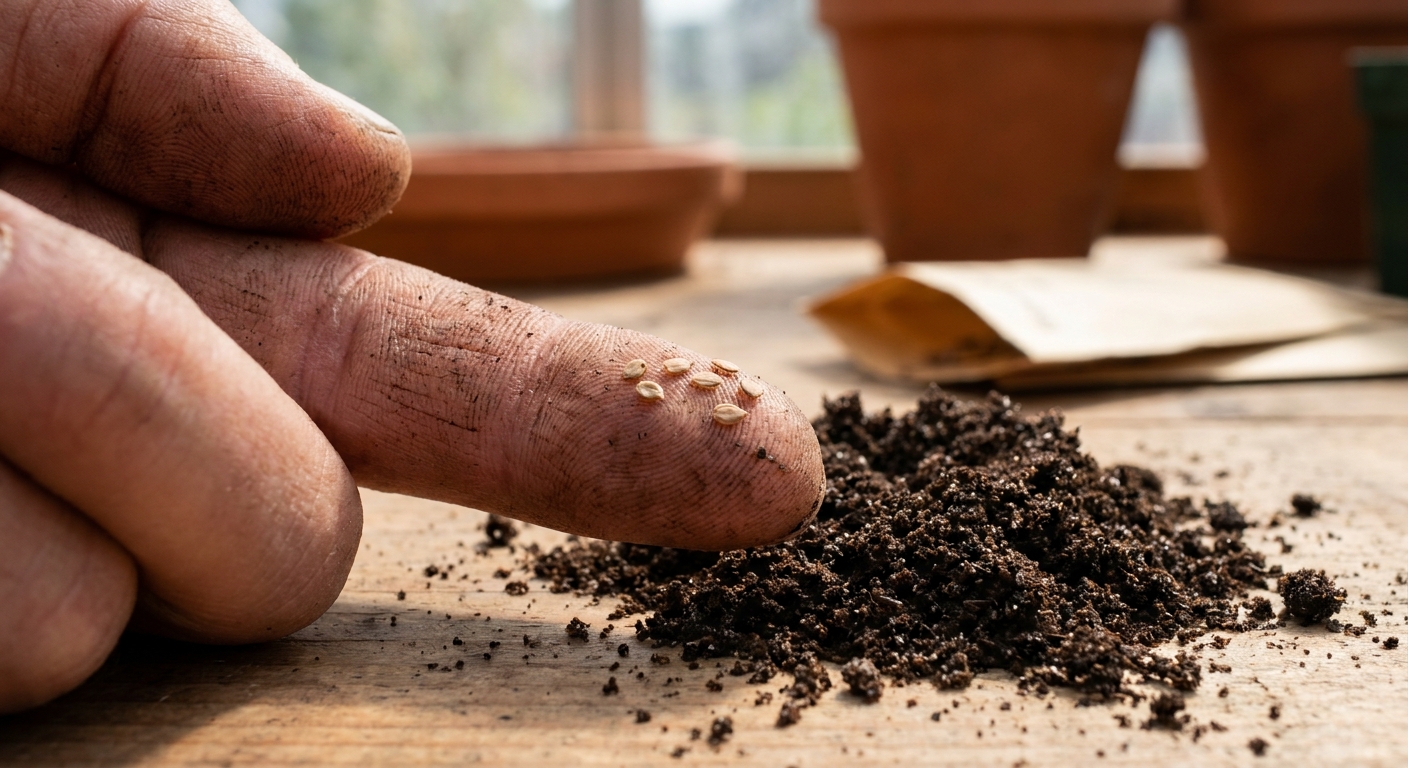
- Sow on the surface, press the seed in for good contact, then cover with about 1/8 inch of fine seed-starting mix or vermiculite.
- Alternatively, cover the tray with a piece of cardboard or an upside-down tray for the first week to keep it dim.
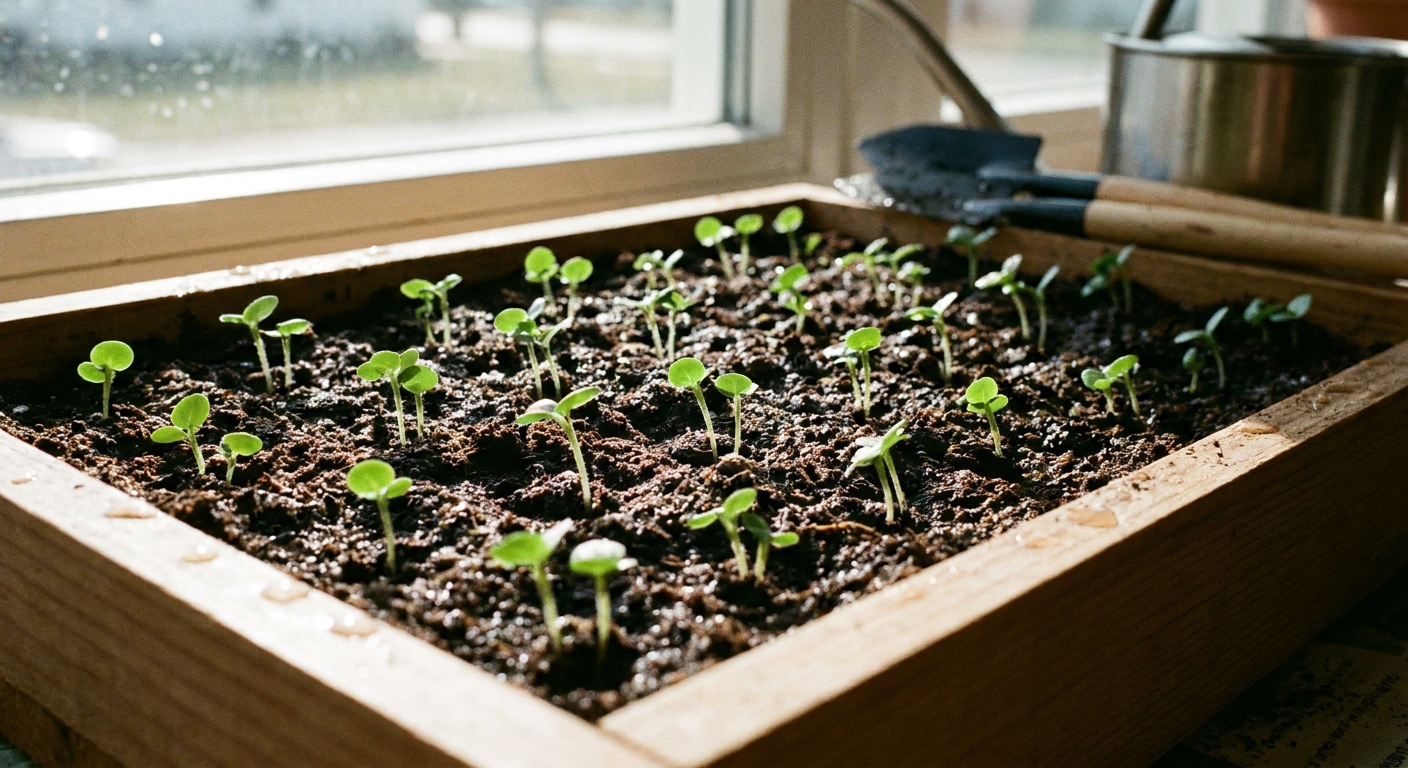
Once you see sprouts, remove any cover immediately and move them under strong light.
How long do pansy seeds take to germinate?
Expect germination in 7 to 21 days. Ten to fourteen days is common with good temperature control, but do not panic if they take their time. Keep the mix lightly moist, not soggy.
Step-by-step: sowing indoors
1) Use the right containers
Cell packs, plug trays, or small pots all work. Pansies do best when you can avoid disturbing roots too much later, so individual cells are my favorite.
2) Choose a fine, sterile mix
Use a light seed-starting mix, not heavy garden soil. Pre-moisten it so it feels like a wrung-out sponge.
3) Sow and cover
- Place 1 to 2 seeds per cell.
- Press gently for contact, then cover lightly with 1/8 inch of mix or vermiculite.
- Mist the top so the cover layer settles.
4) Keep it evenly moist
The goal is consistent moisture, not a swamp. Bottom watering helps: set the tray in a shallow pan of water for 10 to 20 minutes, then remove.
5) Keep it cool and dim until sprouting
Cover the tray if needed to block light, and keep temperatures near 60 to 65°F.
6) Move seedlings to bright light after emergence
As soon as you see green, give them bright light for 14 to 16 hours per day.
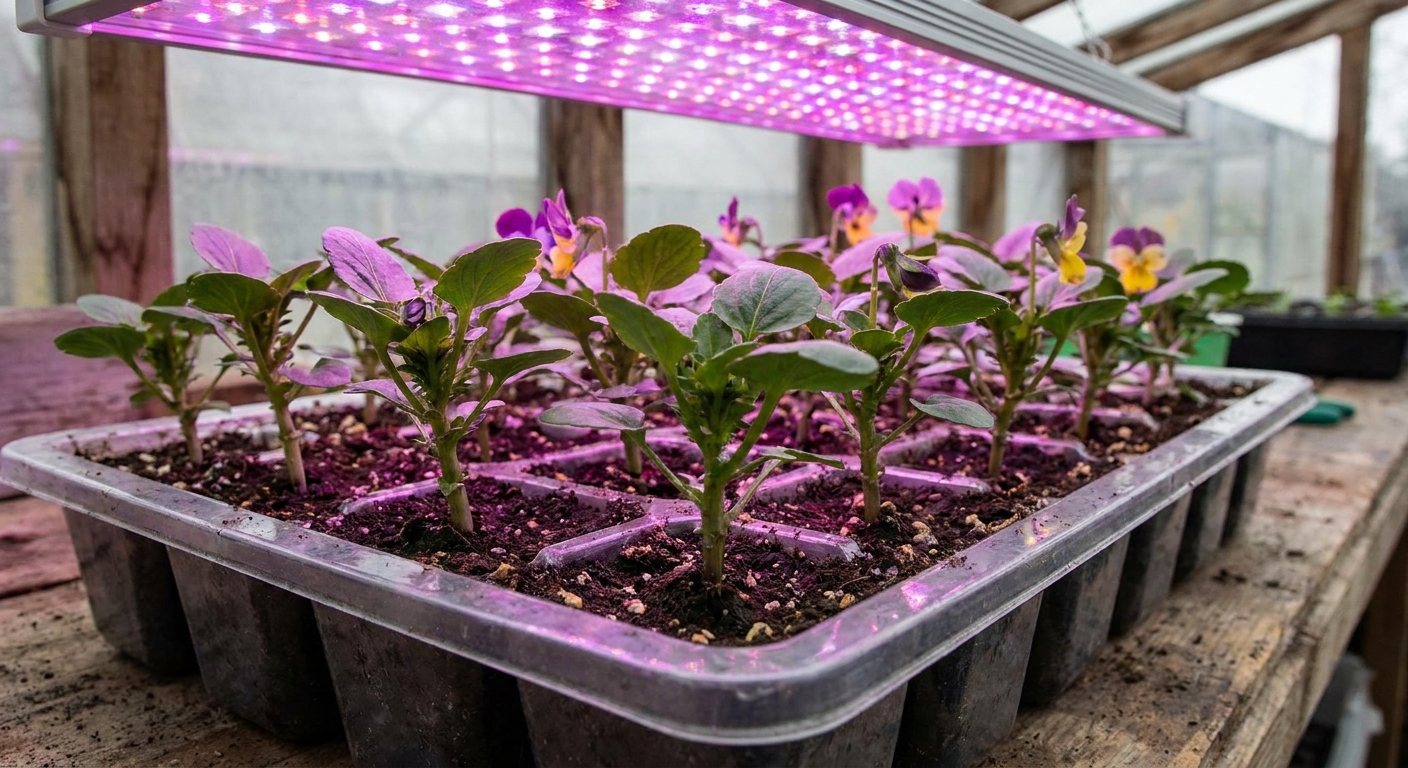
Sunny windows rarely provide enough intensity in winter. A simple LED or shop light positioned a few inches above the seedlings keeps growth compact. Adjust the height as they grow.
How to stop leggy seedlings
If there is one heartbreak in seed starting, it is the lanky, leaning seedlings that look like they are reaching for a bus that will never come. Legginess is fixable, and even better, preventable.
Top causes
- Not enough light: the number one culprit.
- Too much warmth: warm air makes seedlings stretch.
- Too crowded: seedlings compete and elongate.
Make them stocky and strong
- Lower the light: Keep grow lights about 2 to 4 inches above the seedlings (adjust for heat and manufacturer guidance). Raise as they grow.
- Cool them down after germination: Once sprouted, aim for 55 to 65°F if possible, especially at night. Cooler temperatures encourage compact growth.
- Add gentle airflow: Run a small fan nearby on low for a few hours a day. The stems respond by thickening.
- Thin early: If you sowed two seeds per cell and both sprout, snip the weaker one at the soil line.
Can you bury leggy pansies deeper?
You can set pansy seedlings a little deeper at transplant time, but do not bury them excessively like tomatoes. Focus on correcting light and temperature first. When potting up, you can cover a portion of a stretched stem, but keep the crown and leaves above the soil line and ensure good airflow.
Pot up, feed, transplant
When to pot up
If seedlings are in small cells and you see roots filling the cell, it is time to move them into 3 to 4 inch pots.
A practical cue: when they have 2 to 3 sets of true leaves and are growing steadily, they are ready for more room.
Fertilizing young pansies
Once seedlings have true leaves, start feeding lightly:
- Use a balanced liquid fertilizer at 1/4 strength every 7 to 10 days, or
- Use an organic seedling-friendly option, diluted well, and watch for overfeeding.
Too much nitrogen can push soft, floppy growth. Think “snack,” not “feast.”
Transplant timing outdoors
The best transplants are sturdy, dark green, and slightly compact.
- For spring planting: transplant after hardening off, when the garden is workable and your forecast is not showing a brutal cold snap. Hardened pansies handle light frosts well, but prolonged freezes can set them back.
- For fall planting: transplant when daytime highs are trending down and nights are cooling. If it is still hot where you are, wait for a temperature break so seedlings do not struggle.
One quick note on varieties: pansies, violas, and different series can vary a bit on timing and heat tolerance, so check your seed packet if it gives a preferred schedule.
Hardening off
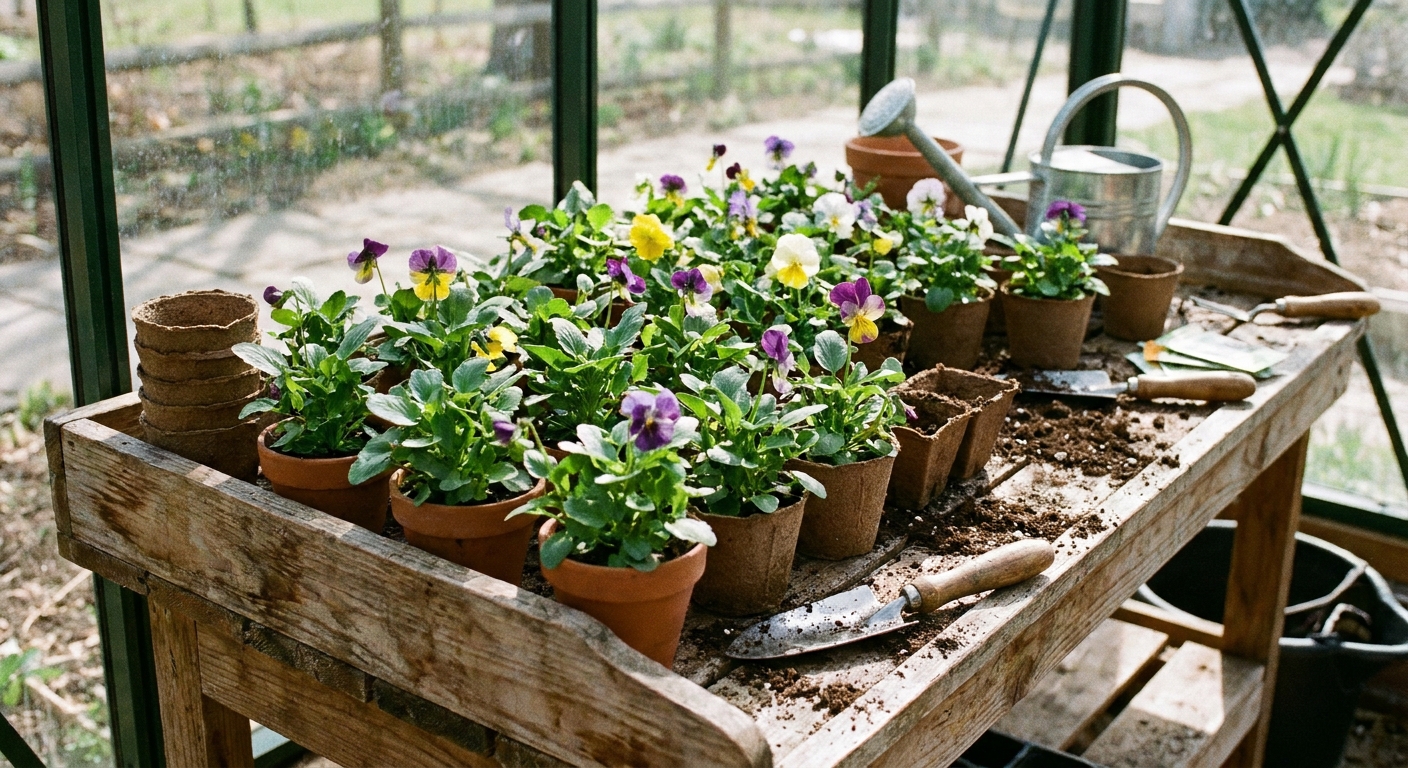
Indoor-grown seedlings need a gradual introduction to sun, wind, and temperature swings. Hardening off usually takes 7 to 10 days.
- Day 1 to 2: 1 to 2 hours outdoors in bright shade, sheltered from wind.
- Day 3 to 5: Increase outdoor time and introduce gentle morning sun.
- Day 6 to 10: Work up to half a day, then most of the day outside, including a bit more direct sun.
Keep the soil evenly moist during hardening off. Seedlings in small pots dry out fast, especially in breezy weather.
After you plant
This is the part people skip because the hard work feels “done,” but the first week in the garden is when pansies decide whether they are going to thrive or sulk.
- Water well at planting and keep moisture steady for the first 7 to 10 days.
- Choose the right light: full sun in cool weather is ideal, but in warmer spring or fall stretches, part sun or afternoon shade can help them last longer.
- Pinch or deadhead: pinch early buds if plants are still small and you want more branching, and deadhead spent blooms to keep flowering going.
- Mulch lightly in fall to buffer temperature swings and help the soil hold moisture, keeping mulch off the crown.
Troubleshooting
No sprouts after 2 to 3 weeks
- Too warm: Move trays to a cooler spot. Temperature is often the issue.
- Too bright: Pansies often germinate better with light excluded. Cover the tray.
- Seed dried out: Even one dry-out can stop germination. Keep moisture consistent.
- Old seed: Pansy seed viability drops with poor storage. Buy fresh seed and store extra in a cool, dry place.
Patchy germination
- Check that your sowing depth is consistent and light, about 1/8 inch.
- Make sure moisture is even across the tray. Edges dry faster.
- Use a thermometer to confirm your setup is actually staying in the 60 to 65°F zone.
Seedlings fall over at the soil line
This is often a damping-off issue linked to overly wet conditions and poor airflow. Let the surface dry slightly between waterings, bottom water when possible, and add gentle air movement.
Quick timeline
- Sow: 10 to 14 weeks before your target planting date
- Germinate: 7 to 21 days at 60 to 65°F, with light excluded
- Grow on: Bright light 14 to 16 hours daily, cooler temps after sprouting
- Pot up: when roots fill cells and plants have multiple true leaves
- Harden off: 7 to 10 days
- Transplant: for spring 2 to 4 weeks before last frost, for fall 6 to 8 weeks before first frost (adjust for your local climate)
FAQ
Should I soak pansy seeds before planting?
It is not necessary. The bigger levers for pansy germination are cool temperatures and keeping light off the seed. If you do soak, keep it brief (a few hours) and sow immediately, but most gardeners skip this step.
Can I direct sow pansies outdoors?
You can, but it is less reliable because pansies want cool soil and consistent moisture for germination. Direct sowing can work best in early fall or very early spring in mild climates, but indoor starting gives you much better control and earlier blooms.
Do pansies need light once they sprout?
Yes. As soon as you see sprouts, give them bright light. Weak light is the fastest route to leggy seedlings.
How big should seedlings be before planting outside?
Aim for plants with several sets of true leaves, a sturdy stem, and a well-filled root ball that holds together when gently slipped from the pot. Bigger is not always better, but strong and compact is.