
Pansy Care: Planting, Deadheading, and Heat Survival

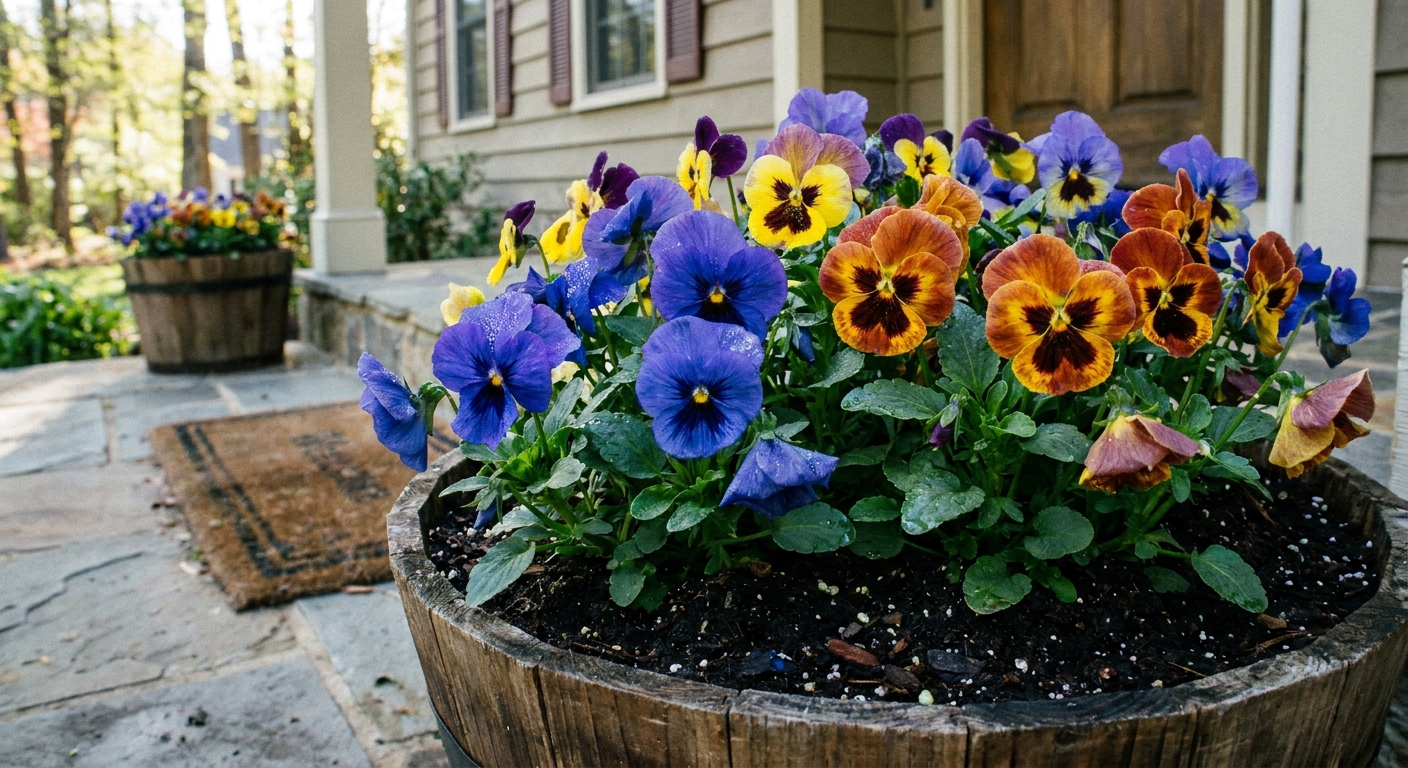
Pansies are the cheerful little overachievers of the cool seasons. When most flowers are still deciding whether they feel like waking up, pansies are already dressed, outside, and blooming. Give them the right timing, decent drainage, and a little regular grooming, and they will keep your porch pots and beds bright through chilly days and into early warmth.

Meet the pansy: what it wants
Pansies (Viola × wittrockiana) are cool-season annuals that prefer bright light and mild temperatures. Think crisp mornings, sweater weather, and that in-between season vibe where the sun is warm but the air still has a bite.
- Best temperatures: typically 45–65°F for peak blooming (they can handle colder, but may pause in extremes)
- Cold tolerance: light frosts are fine, and short dips below freezing are usually survivable once established
- Light: full sun in cool weather, part shade as temperatures rise
- Soil: loose, fertile, and well-draining
- Moisture: evenly moist, never soggy
If pansies struggle, it is almost always one of three things: heat, waterlogged roots, or exhaustion from making seeds instead of flowers. The good news is that all three are fixable.
Fall vs spring planting
Planting time is the secret handshake for pansy success. You can plant in both fall and spring, but the goal is always the same: get them established while temperatures are still friendly.
Fall planting (my favorite in many gardens)
Fall-planted pansies often bloom, rest a bit in deep cold, then explode with flowers again in late winter and early spring.
- When to plant: about 6 to 8 weeks before your first hard freeze
- Why it works: roots grow in cool soil, so plants go into winter sturdier
- Overwintering zones: often most reliable in USDA Zones 6 and up (and especially 7 to 9); in Zones 5 and colder, they may overwinter only with protection or not at all, depending on exposure and snow cover
- Best for: mild to moderate winter climates, sheltered beds, and containers you can protect
If you are in a very cold zone with prolonged deep freezes, fall pansies may not overwinter reliably. You can still enjoy them as a fall color annual, then replant in spring.
Spring planting (great for cold-winter areas)
Spring pansies shine when planted early. The later you plant, the faster heat will rush them toward legginess and burnout.
- When to plant: as soon as the soil can be worked, often a few weeks before the last frost
- Frost note: if a hard freeze is forecast right after planting, cover them overnight (a frost cloth or even an upside-down bucket in a pinch)
- Why it works: you capture the longest stretch of cool weather for blooming
- Best for: colder climates, exposed containers, and gardeners who prefer a fresh spring display
Clara tip: If your garden center is selling pansies and you can comfortably stand outside without regretting your life choices, it is probably pansy weather.
Where to plant
In-ground beds
Choose a spot with at least 4 to 6 hours of sun in the cool months. In warmer regions, morning sun with afternoon shade helps pansies keep their color and shape longer.
- Spacing: 6 to 8 inches apart for a full look without crowding
- Planting depth: set the crown level with the soil surface
- Mulch lightly: a thin layer helps stabilize moisture and temperature, but keep mulch off the crown
Containers and window boxes
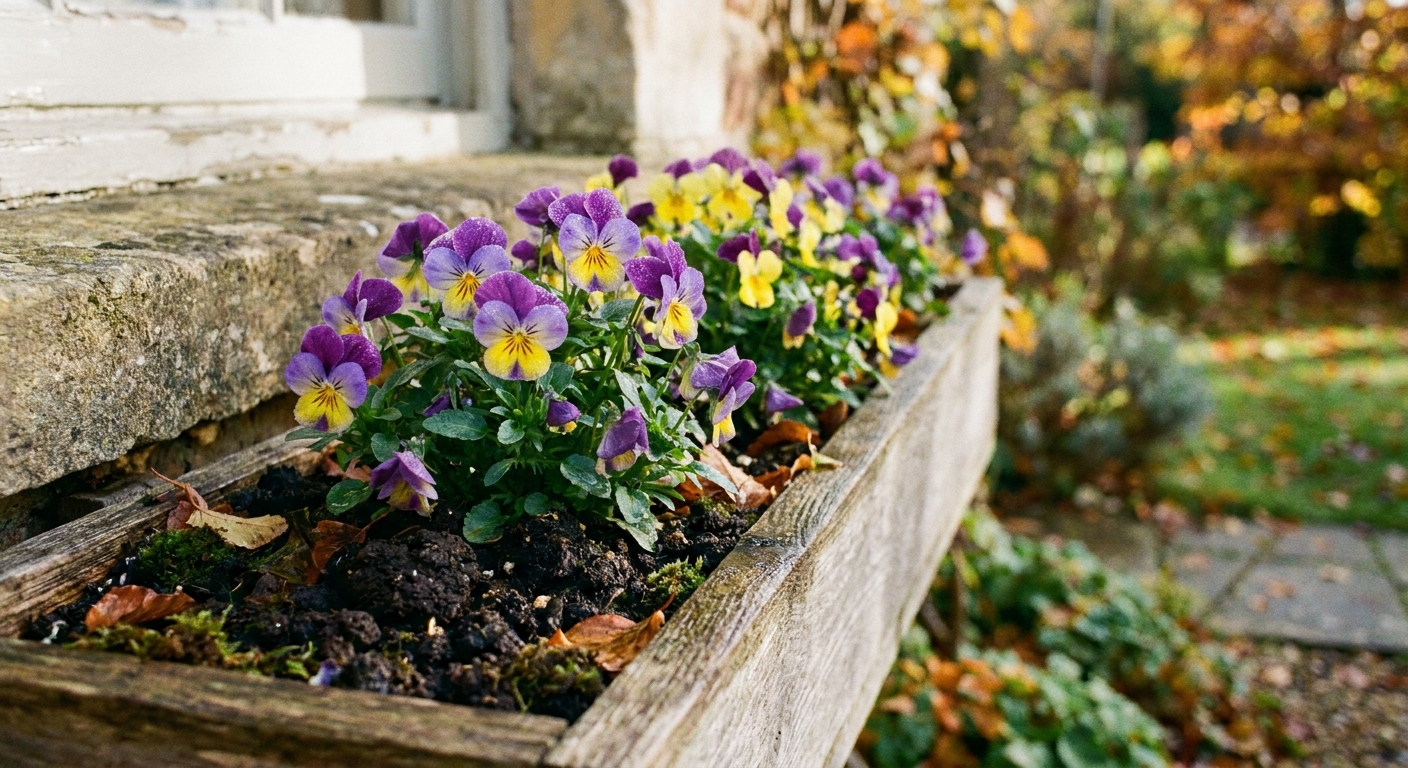
Pansies are container superstars, especially in fall and early spring porch planters.
- Pot must have drainage holes: this is non-negotiable
- Use quality potting mix: not garden soil, which compacts in pots
- Add compost: a small scoop boosts bloom power without making plants floppy
Cold snap container tip: If you get a stretch of severe cold, move pots close to the house, out of wind, and off bare concrete if possible (a couple boards under the pot helps). This is less about babying and more about preventing freeze-thaw stress.
Soil and drainage
Pansies can handle cold. What they cannot handle is sitting in water. Poorly drained beds and heavy clay soil are where root rot starts, especially during rainy spells or freeze-thaw cycles.
Signs they are too wet
- Plants wilt even though the soil is damp
- Lower leaves yellow, then collapse
- Stems look soft or dark at the base
- The soil smells sour or stagnant
Fix drainage in beds
- Amend generously: mix in compost to improve structure and air pockets
- Create a slight mound: even 2 to 4 inches of lift helps water move away from roots
- Avoid low spots: if water puddles there after rain, it is a pansy no-go
Prevent root rot in containers
- Use fresh potting mix each season if possible
- Skip rocks in the bottom of pots, they do not improve drainage the way we were all told
- Empty saucers after watering or rain so pots do not sit in water
Watering in cold weather
Cold weather watering is the part people overthink. Here is the simple goal: keep soil slightly moist so roots do not dry out, but never waterlog them when evaporation is slow.
In the ground
- Water deeply after planting: then let the top inch of soil dry slightly before watering again
- During winter dry spells: water on a day above freezing so moisture can soak in
- After heavy rain: check drainage and pull mulch back if the crown stays wet
In containers
Containers dry out faster in wind, but they also stay cold longer. Check moisture with your finger.
- Water when the top 1 inch feels dry
- Water earlier in the day so foliage dries before night
- After a freeze, wait until the potting mix thaws before watering again
Quick rule: if the soil is cold and wet, do not add more water just because the leaves look sad. Leaves can flop temporarily in cold wind and bounce back once the sun returns.
Deadheading
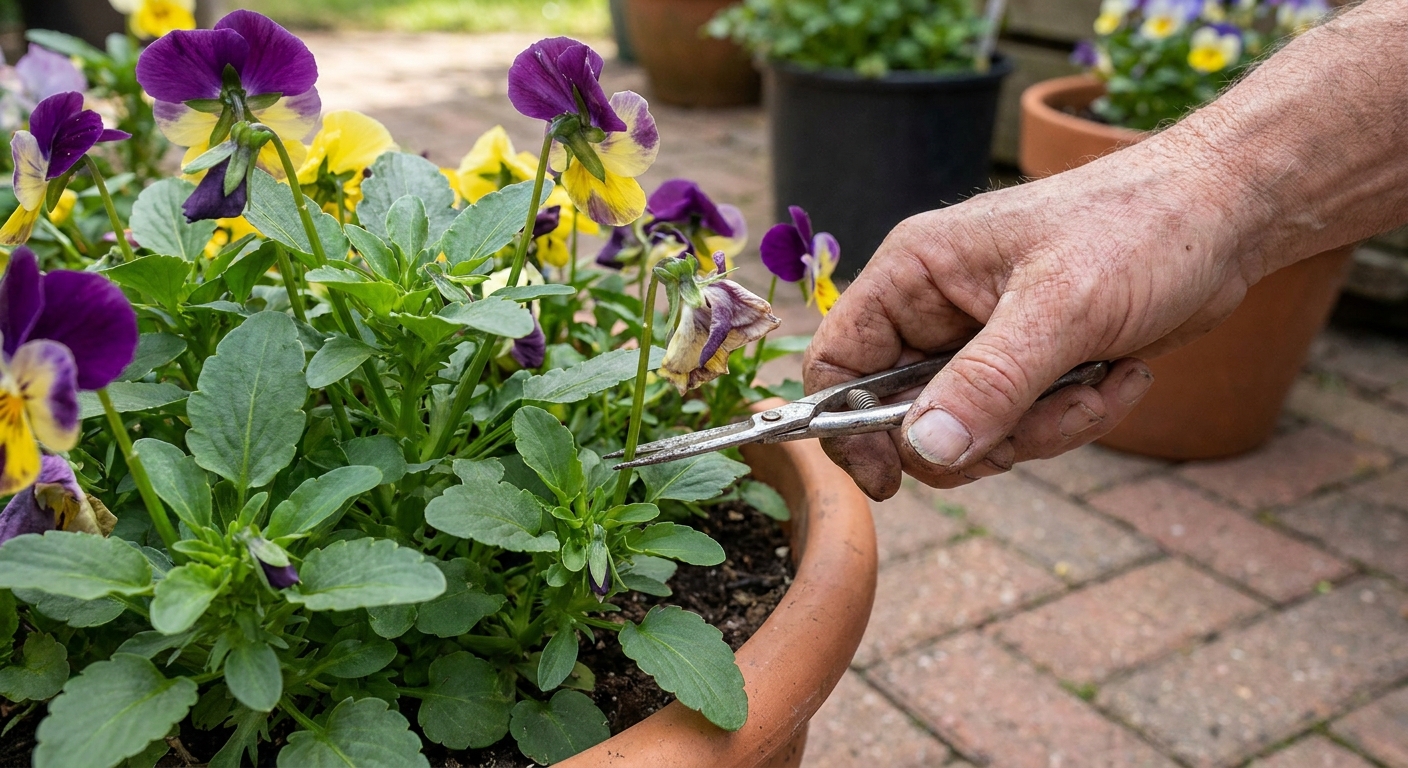
Pansies are generous bloomers, but they will happily switch from flowers to seed production if you let spent blooms linger. Deadheading nudges them back into bloom mode
Where to pinch
Follow the spent flower stalk down and snip it off at its base, right where that stalk meets the main plant or a leaf node. The goal is to remove the whole stalk (and the seed pod) so you do not leave a little stub behind to sulk.
- Frequency: 1 to 2 times per week in peak bloom
- Tools: fingers work, but small snips are satisfying and tidy
- Bonus: remove any yellowing leaves while you are there to improve airflow
Fertilizer
Pansies like steady, moderate nutrition. Too much nitrogen can push lots of leaves and fewer flowers, especially in rich soil. In containers, overfertilizing can also lead to fast, floppy growth and salt buildup, so lighter and consistent tends to win.
- In beds: mix compost into planting area, then use a balanced slow-release fertilizer at planting if your soil is lean
- In containers: use a slow-release fertilizer in the potting mix, or feed with a diluted liquid fertilizer every 2 to 3 weeks
What I reach for: a balanced fertilizer or a gentle “bloom” formula used lightly and consistently (something like 10-10-10, or a slightly bloom-leaning mix)
Leggy pansies
Legginess is that stretched, floppy look where stems get long and flowers sit far above the foliage. It is pansy body language for: not enough light, too much heat, or they have been blooming hard without a haircut.
Common causes
- Warm weather: pansies stretch as temps climb
- Too much shade: they reach for sun
- Overcrowding: airflow and light drop, plants elongate
- Not deadheading: energy shifts into seed production
How to fix it
- Shear lightly: trim back about one-third of the growth
- Deadhead thoroughly: remove old blooms and seed pods
- Feed and water: after trimming, give a light feeding and consistent moisture
- Give more light: move containers to brighter exposure if you can
They usually respond within a week or two, especially if the weather cools again. Pansies are surprisingly forgiving when you give them a little reset.
Heat survival
Pansies are not summer annuals, but you can keep them looking good longer with a few heat-smart moves. Exact limits depend on variety and your microclimate, but once days are regularly warm, you will see them start to stretch and slow down.
Best strategies
- Shift to morning sun and afternoon shade: especially once days regularly hit 70–75°F
- Water earlier: a deep morning watering helps plants handle a warm day
- Mulch beds: keeps roots cooler and moisture steadier
- Increase airflow: thin crowded clumps and remove tired leaves
- Keep deadheading: heat plus seed-making ends the show faster
When to call it
Once nights stay warm and the plants stop reblooming even after a trim, it is okay to let pansies bow out gracefully. I like to replace them with heat lovers, then tuck a few pansies back in when fall cool weather returns.
Pests and diseases
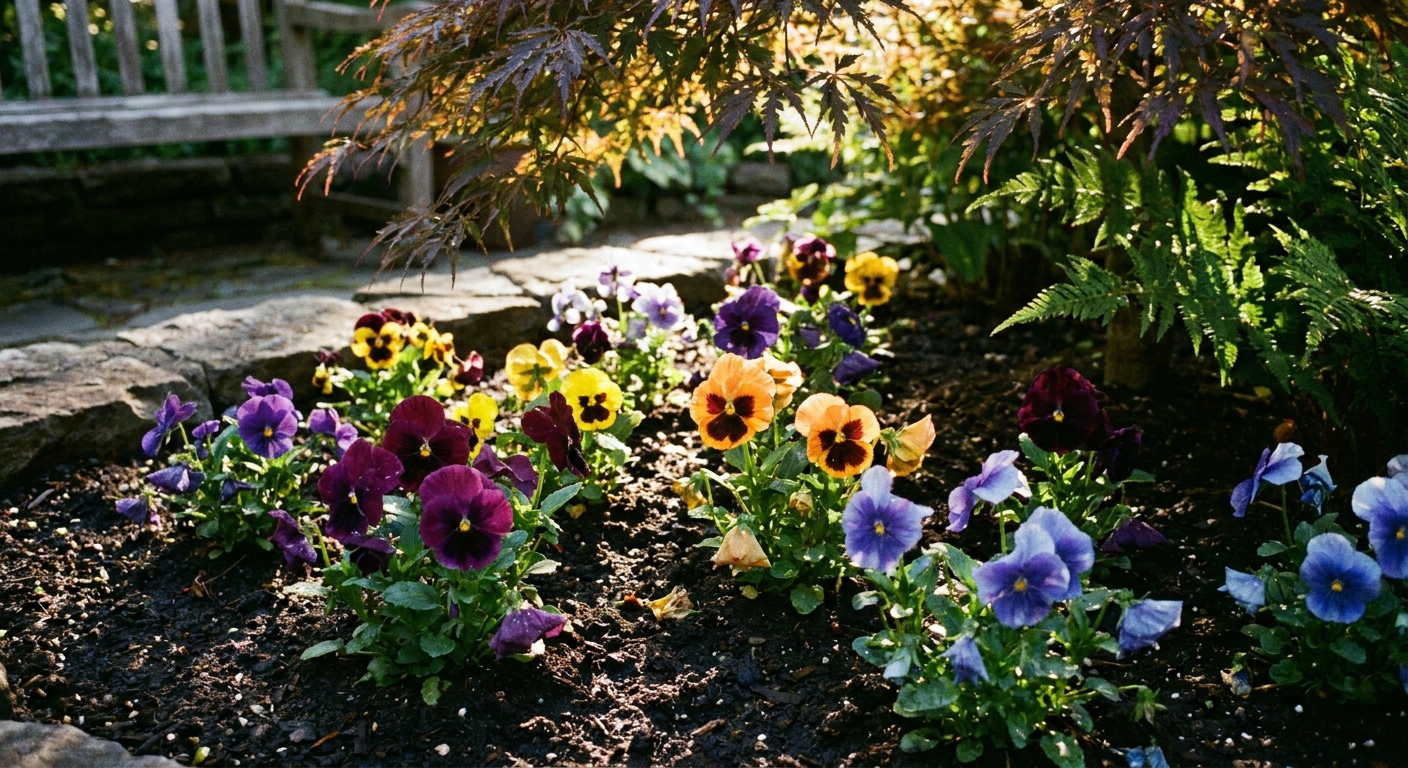
Pansies are generally easy, but cool, damp weather can invite a few persistent visitors. A quick weekly check (flip a few leaves, look at new growth, notice any chew marks) saves a lot of hassle later.
Common pests
- Slugs and snails: ragged holes, especially in wet weather. Hand-pick at dusk, use iron phosphate bait if needed, and keep mulch from swallowing the crowns.
- Aphids: clustered on tender stems and buds. Blast off with water, or use insecticidal soap if they keep coming back.
- Spider mites: more common in warm, dry spells (fine webbing, stippled leaves). Increase humidity, rinse foliage, and treat if populations build.
Common diseases
- Powdery mildew: pale, dusty coating on leaves. Improve airflow, avoid overhead watering late in the day, and remove badly affected leaves.
- Botrytis (gray mold): fuzzy gray growth on fading flowers in cool, wet stretches. Deadhead promptly and thin crowded plants.
- Root rot: usually from soggy soil. Fix drainage first, then replace plants that have collapsed.
Quick troubleshooting
Wilting in cool weather
- Check soil moisture: dry pots can wilt fast in wind
- Also check drainage: constant wet soil can cause root stress that looks like thirst
- Cold wind: temporary flop is normal, plants often rebound
Flowers getting smaller or fewer
- Deadhead more often
- Give a light feeding
- Trim back leggy growth to encourage fresh branching
Mushy stems at the base
- Suspect root rot from soggy soil
- Improve drainage immediately, reduce watering
- Replace severely affected plants, especially in containers
A simple routine
- Plant: in cool weather, in well-draining soil
- Water: when the top inch dries, not on a schedule
- Deadhead: once or twice a week
- Trim: one-third back when they get leggy
- Shade: protect from hot afternoon sun as spring warms
Pansies reward attention in the most satisfying way: with flowers that look like tiny painted faces nodding at you every time you walk by. If you miss a week, do not worry. They are not judging you. I talk to my ferns, and even they do not judge me.