
How to Cut Back Itoh Peonies in Fall

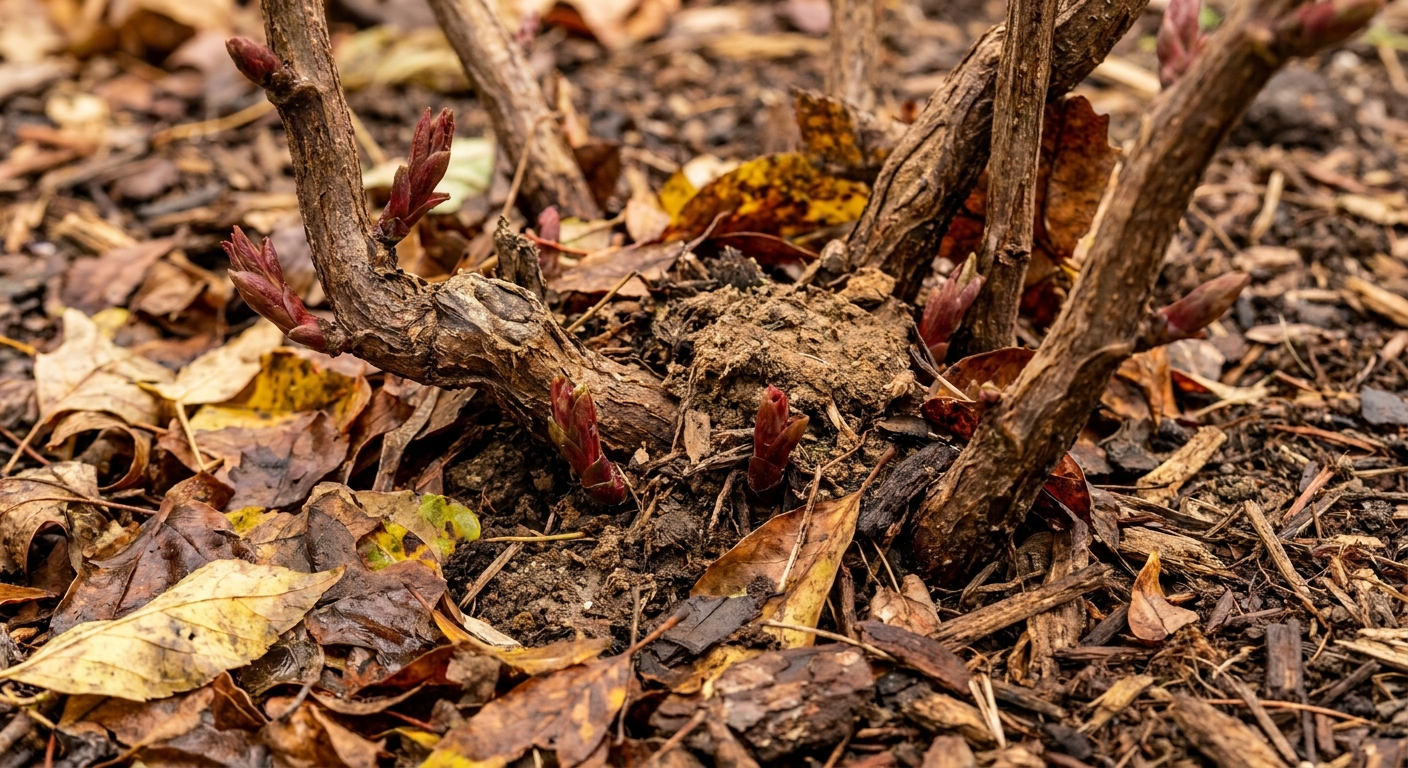
The first time I grew an Itoh peony, I did what I had always done with my old-fashioned herbaceous peonies. I waited for a hard frost, took my pruners, and confidently headed for the “cut it all down” moment. Then I paused and really looked. Down near the soil line, the stems were not all soft and green. There was a short, woody framework holding tight to the crown like a little bonsai skeleton.
That woody base is the whole trick with many Itoh peonies in fall. You clean them up, but you do not scalp them. Think of it as a two-texture plant: a soft top that dies back and a low crown area where next year’s buds live.

What is different in fall
Itoh peonies, also called intersectional peonies, sit right between herbaceous peonies and tree peonies.
- Herbaceous peonies die back completely and are typically cut close to the ground.
- Tree peonies are woody shrubs that keep their above-ground structure year-round.
- Itoh peonies often keep a low, firmer crown area (sometimes with short woody stem bases), while the upper growth is softer and dies back with frost.
So the goal in fall is simple: remove the dead top growth without cutting into the crown and basal buds. If your plant has a little woody “stubble,” you generally leave it. If it does not, you still avoid nicking the crown.
When to cut back
Timing is less about the calendar and more about what the plant is doing.
- Wait until foliage yellows and collapses, usually after a hard frost.
- Avoid pruning too early while leaves are still working. Late-season photosynthesis helps recharge the crown for next spring.
- If disease is present (blackened stems, leaf spots, blighted buds, or heavy blotching), you can tidy earlier, but be careful around the crown and do a thorough cleanup.
If you are standing out there in a sweater with cold fingers, you are probably in the right season.
How to cut back (step by step)
1) Gather tools and take a quick look
- Sharp hand pruners
- Gloves
- A bucket or tarp for debris
- Disinfectant if you saw disease during the season
Before you cut, look at the base of the plant and sort what you are seeing:
- Soft: green to tan stems that collapse easily and feel somewhat hollow.
- Firm: brown, stiff stem bases or a dense crown area right at the soil line where buds may be visible.
If you had botrytis blight or peony leaf blotch this year, disinfect pruners as you go (especially between plants). 70% isopropyl alcohol works well. A diluted bleach solution also works, but rinse and dry tools afterward to prevent corrosion.
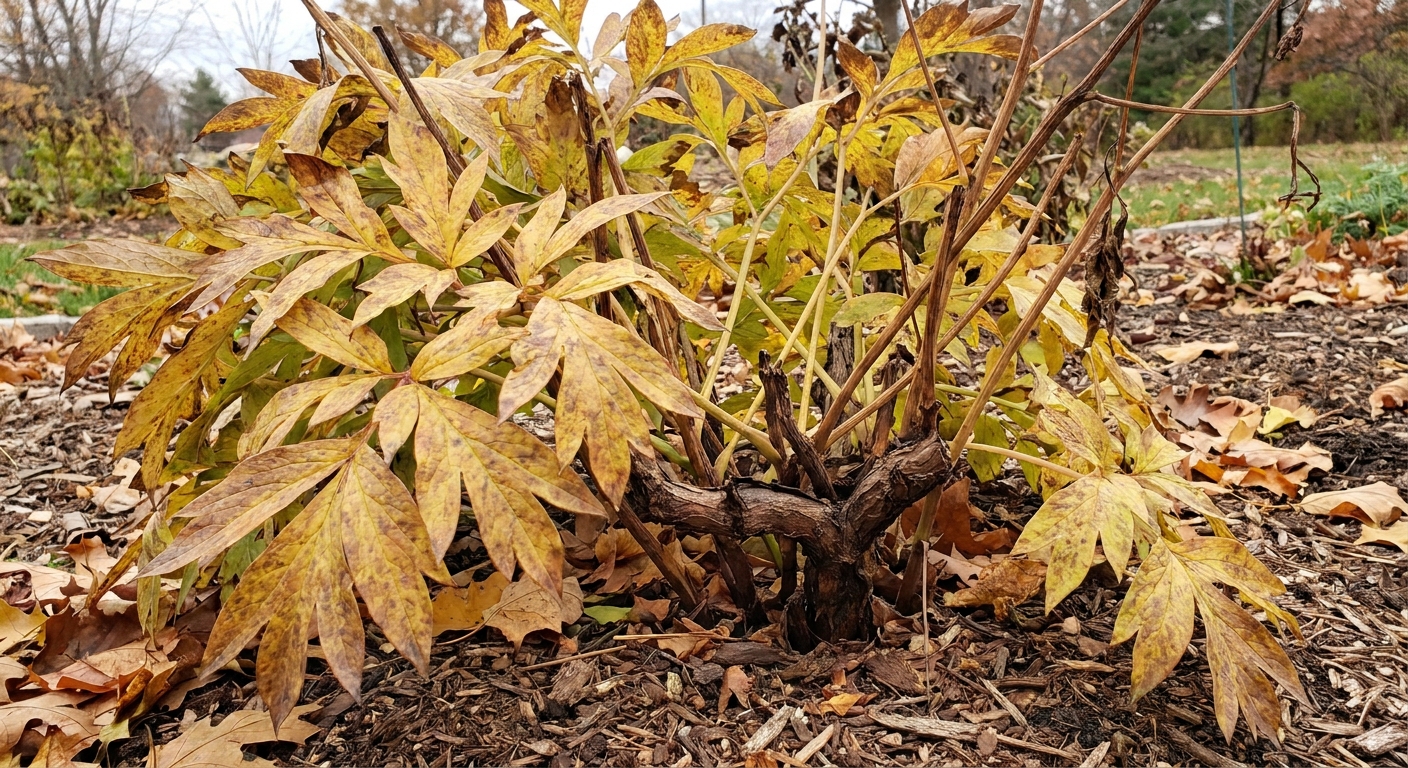
2) Remove the dead top growth
Start by removing dead and dying leafy stems. Cut them down close, but not into the crown.
- Trace each stem down with your fingers.
- Stop where the stem meets the crown or where it turns firm and woody on some plants.
- Make your cut just above that point rather than flush into the crown tissue.
You are aiming for a tidy plant base, not gouged crown tissue.
3) What to do with the woody base (and when there is none)
This is where people get tripped up, because Itohs do not all look identical.
If you see a short woody framework, leave it. It is not there for looks. More importantly, cutting too low risks slicing into the crown where next year’s buds sit.
If your Itoh looks mostly herbaceous and you do not see obvious woody stubble, do not force the issue. Cut stems back to about 2 to 4 inches above ground, taking care not to nick any basal buds (they often look like small pinkish or reddish nubs at the crown).
Leave:
- Firm crown tissue right at soil level
- Visible basal buds
- Short, firm stem bases (if present)
Remove:
- Floppy, dead stems and all spent foliage
- Stems that snap or crush easily
- Leaf litter packed into the crown pocket
4) Clean up the ground
Peony foliage can carry fungal spores into next season, especially with botrytis and leaf blotch.
- Rake up fallen leaves and stem pieces from around the crown.
- Do not compost visibly diseased foliage. Bag it or dispose of it off-site.
- If everything looked healthy, hot composting is fine, but I still prefer to keep peony debris out of my small compost pile.
5) Mulch lightly, and keep the crown dry
If you mulch, keep it gentle.
- Add 1 to 2 inches of mulch after the ground starts to cool.
- Keep mulch pulled back an inch or two from the crown so it stays dry and airy.
Heavy mulch packed against the crown can trap moisture, and that is what encourages crown problems in winter, especially in poorly drained spots.
The big mistake
If you treat an Itoh peony like an herbaceous peony and cut everything right to the soil line, you may cut into the crown or remove buds that were set for next year.
What can go wrong if you cut too low:
- Fewer shoots in spring because you damaged viable buds at the crown.
- Delayed growth as the plant has to recover before it can focus on flowering.
- More stress on the crown, which can show up as weaker stems or fewer blooms next season.
Itoh peonies are tough, and many recover, but that recovery can cost you a year of peak performance. I would rather leave a little extra at the base than gamble with the crown.
Do not treat it like a tree peony
On the flip side, an Itoh is not a tall, permanent shrub. You do not need to shape it into a framework of branches the way you would with a tree peony.
What goes wrong when Itohs are pruned like tree peonies:
- Too much dead top growth left standing, which turns into a tangle and can shelter pests and disease.
- Messy spring emergence, since new shoots have to push through last year’s rigid leftovers.
- Higher risk of breakage when winter winds catch tall dead stems.
The sweet spot is in-between: tidy off the dead growth, protect the crown.
Quick checklist
- Cut: dead stems and all spent foliage
- Cut: spotted, blackened, or blighted leaves and stems (then clean up fallen debris)
- Leave: firm crown tissue and visible basal buds
- Leave: short, firm woody stem bases if your plant has them
- Do not do: cut so low you slice into the crown
- Do not do: leave tall dead stems standing all winter
FAQ
How far down do I cut my Itoh peony?
Cut dead stems down close to the base while staying above the crown. If your plant has a firm, woody stubble, leave it. If it looks mostly herbaceous, cutting to about 2 to 4 inches is a safe target as long as you avoid the basal buds.
Should I deadhead Itoh peonies in fall?
If you did not deadhead after bloom, you can remove remaining seed heads during fall cleanup along with the dying stems.
Do Itoh peonies need to be cut back every year?
Yes. A basic fall cleanup reduces disease carryover and keeps spring emergence cleaner. It does not need to be fussy, just consistent.
Can I cut back in spring instead?
You can, especially if winter arrived early and you did not get to it. But fall cleanup is usually better for sanitation, and it keeps you from snapping tender new shoots when they start to push up in spring.
What if I already cut mine to the ground?
Leave it alone for now and let it rest. In spring, watch for new shoots and be patient. Keep the area weed-free, avoid piling mulch directly on the crown, and resist the urge to dig around for signs of life.