
Crepe Myrtle Bark Scale: White Crust on Branches

A little green. A lot of curiosity.
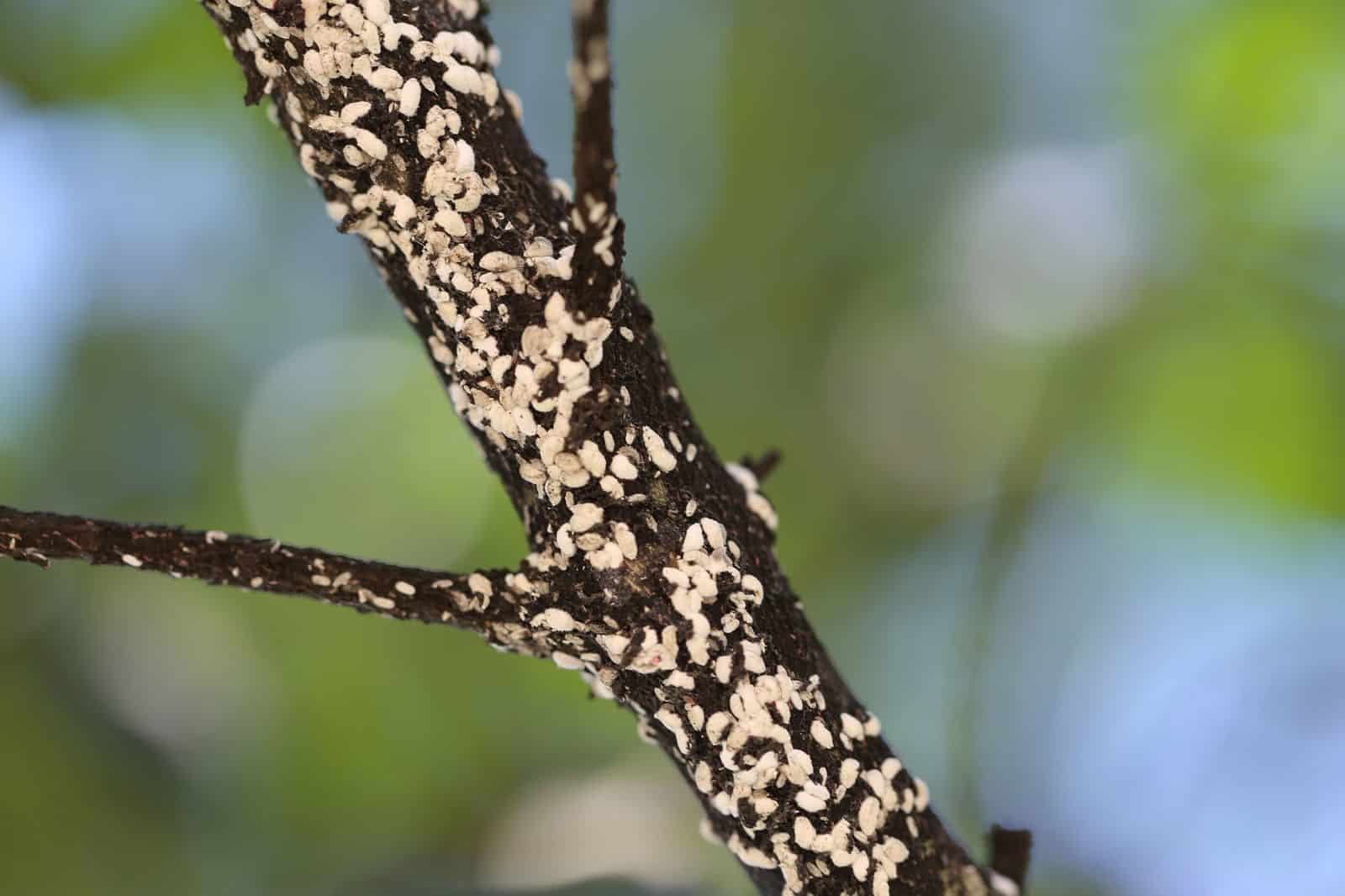
If your crepe myrtle branches look like someone dabbed them with white candle wax or crusty popcorn, you are probably not looking at “interesting bark.” You are likely looking at crape myrtle bark scale, a sap-sucking insect that leaves behind sticky honeydew and invites black sooty mold.
The good news is that you can usually get ahead of it with the right timing and a few targeted steps. The trick is knowing what you are actually seeing.

What it looks like
Crape myrtle bark scale (often shortened to CMBS) typically shows up first as:
- White to grayish, crusty bumps stuck to bark, especially on twigs, branch crotches, and pruning wounds
- Clusters that can look like felted patches or a thin white crust
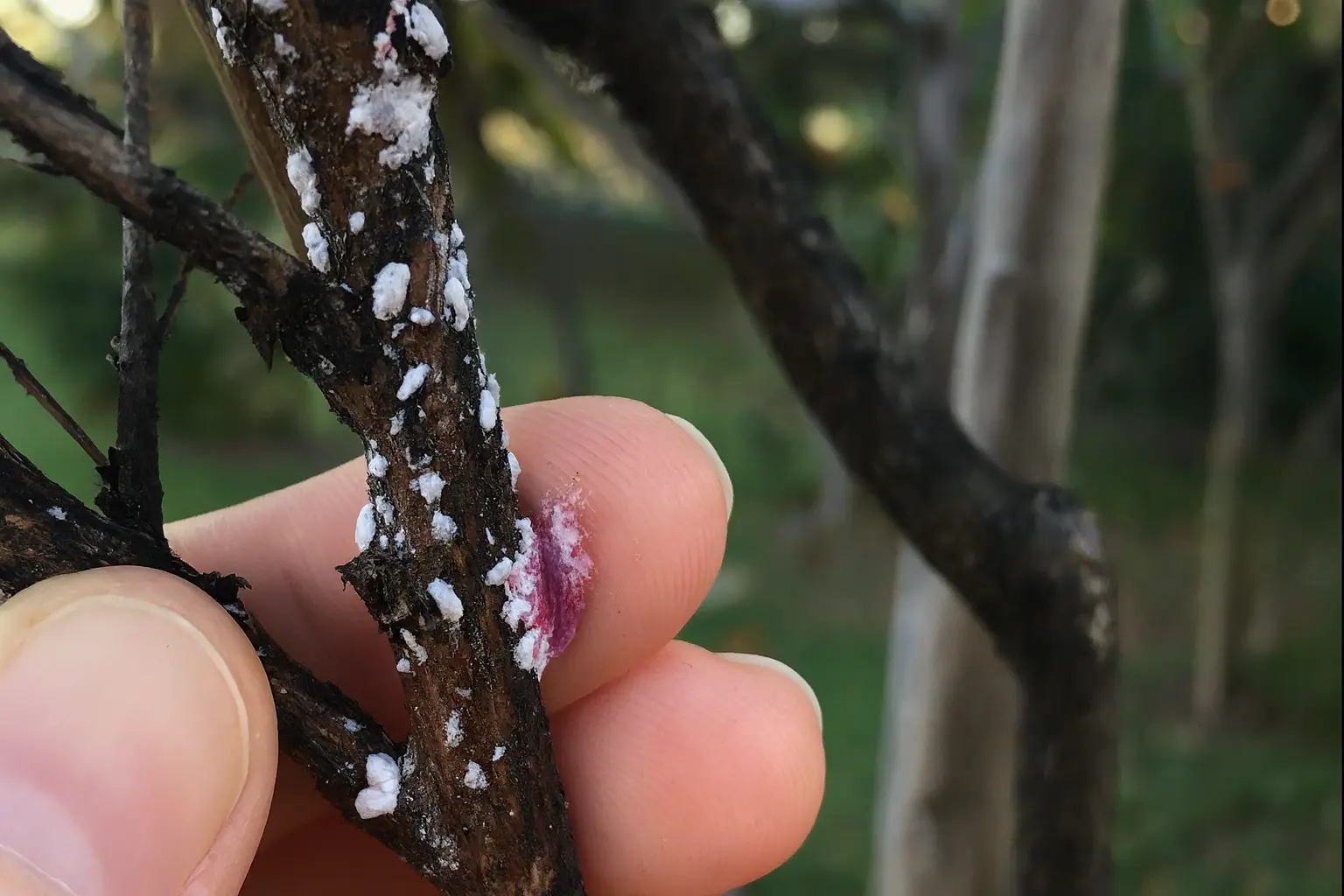
- Reddish or pink smear if you gently squish one with a fingernail or damp paper towel (that is a helpful clue)
On heavy infestations, the white crust can spread along branches and the trunk, and you may notice the plant looking dull or stressed.
Why things turn black
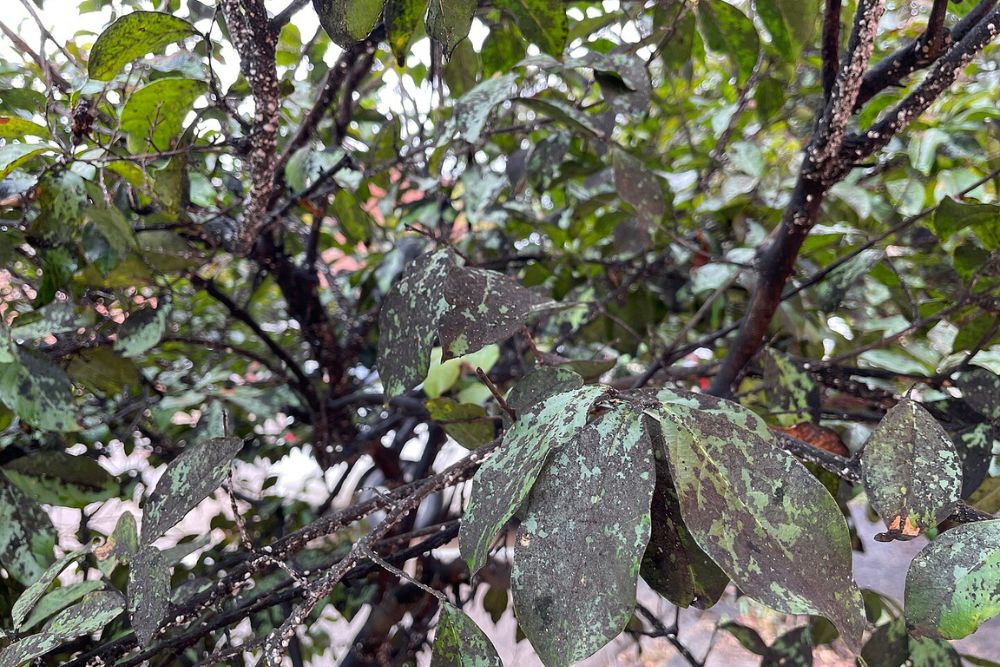
CMBS feeds on plant sap and excretes honeydew, a sugary, sticky liquid. That honeydew coats bark, leaves, and anything underneath the plant. Then sooty mold, a dark fungus, grows on the honeydew.
Sooty mold looks alarming, but it is mostly a surface problem. The real damage comes from:
- Loss of sap and vigor from scale feeding
- Reduced photosynthesis when leaves are coated
- Branch dieback in severe, long-running infestations
Scale vs lichen vs bark
This is where a lot of gardeners get stuck, because crepe myrtle bark can be mottled and beautiful all on its own.
Crape myrtle bark scale
- Looks like stuck-on white crust or felted bumps
- Often concentrated in branch crotches and around pruning cuts
- Commonly paired with sticky honeydew and black sooty mold
- May smear pink when crushed
Lichen
- Looks like flat, flaky, or leaf-like patches in greens, grays, or pale blue
- Usually not sticky and does not cause sooty mold
- Does not smear pink and does not come off as “bugs”
- More common on older wood in humid or shaded areas
Lichen is generally harmless on crepe myrtle. It can be a sign of slower growth or shadier conditions, not a pest outbreak.
Normal peeling bark
- Crepe myrtles naturally peel and shed bark in smooth patches
- You will see cinnamon, tan, gray, and cream colors underneath
- It is not crusty, not bumpy, and not concentrated in tight clusters
If you are still unsure, look for the combination: white crust + stickiness + black soot. That trio points strongly to bark scale.
What is happening
CMBS hides in plain sight. Adult females tuck themselves against bark under a waxy coating, where they lay eggs. When the eggs hatch, the tiny young called crawlers move to find fresh spots to feed.
Crawlers are the stage that spreads the infestation, and they are also the most vulnerable to contact treatments. In warm climates, there can be multiple waves of crawlers through the growing season, which is why follow-up matters.
How it spreads
CMBS spreads in a few real-world ways:
- Crawlers (the tiny mobile young stage) move to new bark and branches
- Wind and animals can help crawlers relocate short distances
- New plants brought home already infested can introduce it to a yard (this is a common route)
- Pruning tools can occasionally move crawlers or infested bits if you go from plant to plant without cleaning, though this is usually a smaller risk than moving an infested plant
It can also show up on other plants, depending on region. Besides crepe myrtle, CMBS has been reported on ornamentals and fruiting plants like beautyberry, pomegranate, and persimmon, along with others in some areas. Host lists vary, so local guidance matters.
When to treat
Most control works best when you match it to the insect’s life stages and the plant’s season.
- Late winter to early spring: A good time for dormant-season cleaning and, where appropriate, dormant horticultural oil.
- Spring through summer: Crawlers can be active in repeated waves. This is when targeted contact sprays (like oils and insecticidal soaps) can be useful against crawlers, and when systemic options are commonly used.
- After flowering: Many gardeners and extension recommendations favor timing certain insecticide applications after bloom to reduce pollinator exposure.
- Fall: In some regions, there is another window where certain treatments can work because the plant is still moving sap. Not all systemics are advised in fall everywhere, so follow local extension timing for your area.
Exact timing varies by climate. If you have a local extension office calendar for crape myrtle bark scale, it is worth following because it is tuned to your region.
How to treat bark scale
I like to think of CMBS control as a three-part plan: remove what you can, treat what you cannot reach, and reduce reinfestation.
1) Start with cleanup
Physical removal can make every next step work better, especially on small trees and light infestations.
- Put on gloves.
- Use a soft brush or an old rag with soapy water to scrub reachable scale clusters off bark.
- Rinse gently with a hose.
- Dispose of heavily infested fallen bits.
Avoid aggressive scraping that gouges bark. Wounds can become new hiding spots.
2) Use oils and soaps for crawlers
Horticultural oil (including dormant oil in the dormant season) and insecticidal soap are contact options that work best on exposed stages, especially crawlers. Adults tucked under wax are harder to kill with contact sprays.
- Spray on a calm day so you can coat surfaces evenly, especially branch crotches and old pruning cuts.
- Follow the label closely for dilution and temperature limits.
- Avoid spraying stressed plants during extreme heat.
- For heavy infestations, expect that repeat applications may be needed to catch new crawler waves.
Coverage is the whole game here. If you cannot reach the trunk and main limbs safely, move to the next step or call in help.
3) Consider systemics carefully
Many homeowners and landscapers use systemic insecticides to control CMBS because the insects feed by sucking sap. Systemics can be effective, but they require careful use, and some active ingredients work better than others.
- Follow the product label for permitted plants, application method (soil drench, basal bark, etc.), and timing.
- Protect pollinators. Crepe myrtles bloom, and pollinators visit them. Avoid applications that could expose bees to residues during bloom, and consider timing after flowering when local recommendations support it.
- Systemics take time to move through the plant, so they are not instant.
If you are unsure what is appropriate in your area, your local extension office is the best place to confirm current recommendations, including which products and timing are most effective where you live.
4) Manage ants
Ants love honeydew. They will sometimes protect sap-sucking insects from predators, which can make infestations feel extra stubborn.
- Reduce honeydew by controlling the scale.
- For heavy ant activity, a sticky barrier on the trunk can help, but keep it off tender bark and follow product directions.
What not to do
- Avoid blasting the trunk with a pressure washer. It can damage bark and create fresh injury sites.
- Avoid over-fertilizing to “push growth.” Tender flushes can attract pests and make monitoring harder.
- Avoid indiscriminate, broad-spectrum sprays that can knock back beneficial insects and make scale problems worse over time.
Cleaning up sooty mold
Once scale pressure drops, sooty mold slowly weathers away. If you want to tidy things sooner:
- Rinse leaves and branches with a firm spray of water.
- On reachable sections, wipe with mild soapy water and rinse.
- Wash outdoor furniture or hardscapes underneath, since honeydew drips.
Do not obsess over perfection. The key is stopping the honeydew source.
Pruning and care tips
Pruning does not cure bark scale, but good structure and airflow make monitoring easier.
- Prune out dead wood any time you see it.
- Avoid heavy topping that triggers dense, tender growth that pests can love.
- Keep the tree well watered during drought and mulched with a thin layer, pulled back from the trunk.
- Clean pruning tools between plants if you suspect infestation.
A vigorous crepe myrtle handles pests better than a stressed one. That is not a cure, but it is a helpful advantage.
When to call a pro
If the infestation is high in the canopy, the trunk is too big to reach safely, or you are looking at multiple large trees with heavy buildup, it can be worth calling a licensed arborist or reputable tree care company. Getting the right product and timing is important, and safety matters more than a spotless trunk.
Will it kill my tree?
It can contribute to decline, especially when infestations are heavy and ignored for years, or when the plant is already stressed by drought, poor soil, or improper pruning. Most established crepe myrtles can recover with consistent control and better overall care.
FAQ
Is the white crust always bark scale?
No. Lichen and natural bark patterns are common lookalikes. Bark scale is most likely when you also see sticky residue and black sooty mold, and when the white areas are bumpy clusters that can smear pink when crushed.
What time of year is it worst?
Many gardeners notice it most in summer because honeydew and sooty mold build up during active growth. The insects can be present across seasons, so dormant-season inspection is useful too.
Can I just wash it off?
You can remove some with a gentle scrub and rinse, and that is a great first step. But because crawlers can reappear and adults are protected by wax, cleanup usually works best when paired with season-appropriate treatments and follow-up monitoring.
Should I treat during bloom?
Be cautious. Blooms attract pollinators, and some insecticides can pose risks when used at the wrong time or in the wrong way. If you plan to use a pesticide product, choose one labeled for the job and time it to reduce pollinator exposure. When in doubt, ask your local extension office for guidance.
A quick check
If you want a simple, steady approach, try this:
- Confirm: Look for white crusty bumps plus stickiness or sooty mold. Check branch crotches, old pruning cuts, and the lower trunk.
- Clean: Gently scrub what you can reach.
- Treat: Use season-appropriate control methods and follow labels.
- Monitor: Recheck branch crotches and new growth every couple of weeks during the growing season, and keep an eye on anything sticky underneath the canopy.
Crepe myrtles are tough. Once you recognize bark scale for what it is, you are already most of the way to getting your tree back to cleaner bark and brighter leaves.