
Can You Plant Cyclamen Outdoors? Hardy vs Florist Cyclamen

A little green. A lot of curiosity.
Cyclamen looks like it was designed by a tiny woodland florist. Those swept-back petals. Those marbled leaves. And then comes the big question when you’re holding a gift plant in winter: can I plant cyclamen outdoors?
Sometimes yes, sometimes absolutely not, and the difference usually comes down to which kind of cyclamen you have. Let’s sort out hardy garden cyclamen vs florist cyclamen, then walk through identification, outdoor planting, timing, naturalizing, and what really happens when an indoor pot goes outside.

Hardy vs florist cyclamen
“Cyclamen” is a whole genus, but two groups show up most in everyday life.
Hardy cyclamen (garden cyclamen)
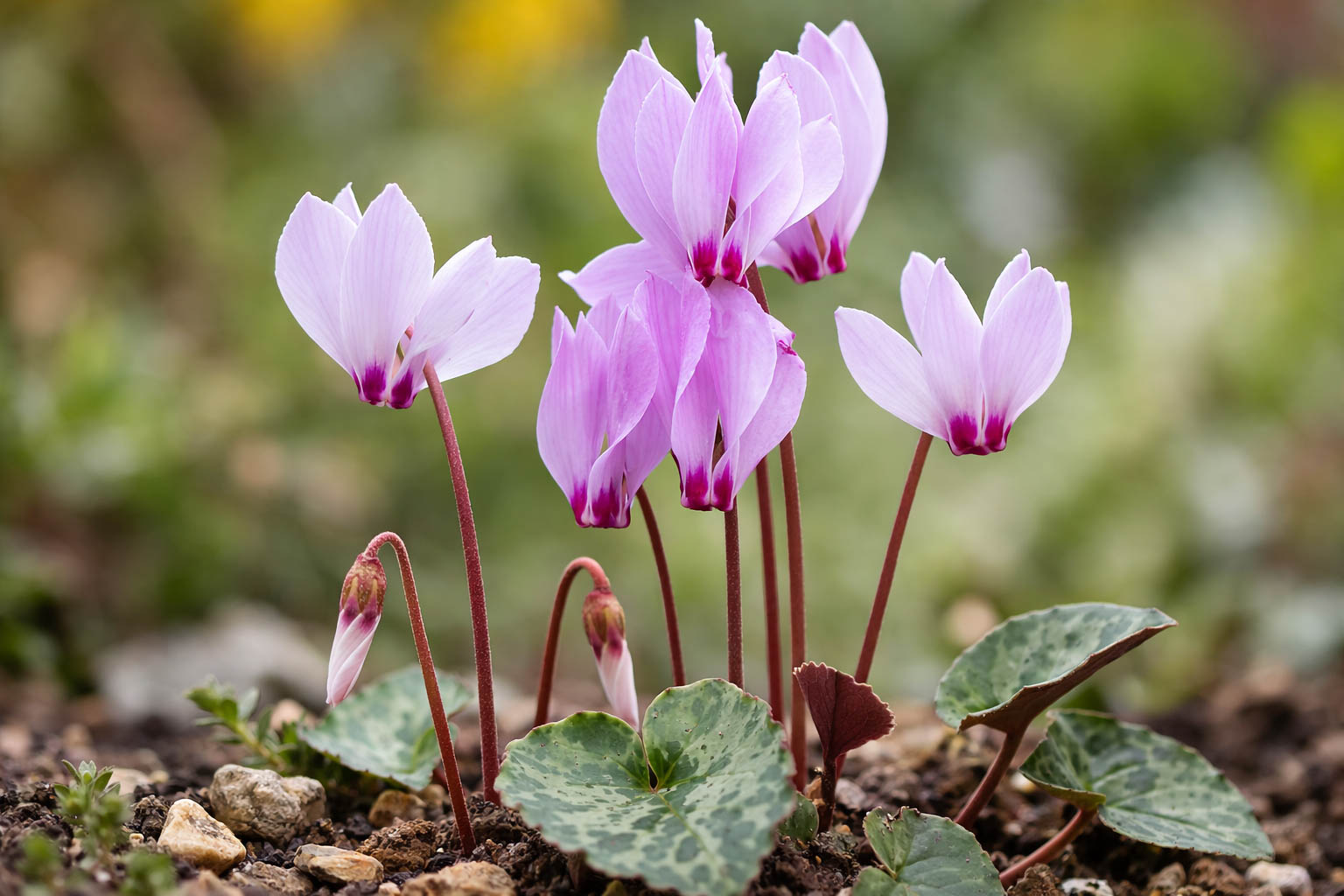
These are the cyclamen you can grow outdoors long-term in many temperate climates. They are usually sold as tubers (or small starter plants) and are happiest in a shady, well-drained garden bed.
- Common hardy species: Cyclamen hederifolium (often fall blooming), Cyclamen coum (often late winter to early spring blooming)
- Growth style: Perennial from a tuber, with a strong seasonal rhythm
- Big charm: They can naturalize by self-seeding in the right conditions
Florist cyclamen (indoor gift cyclamen)
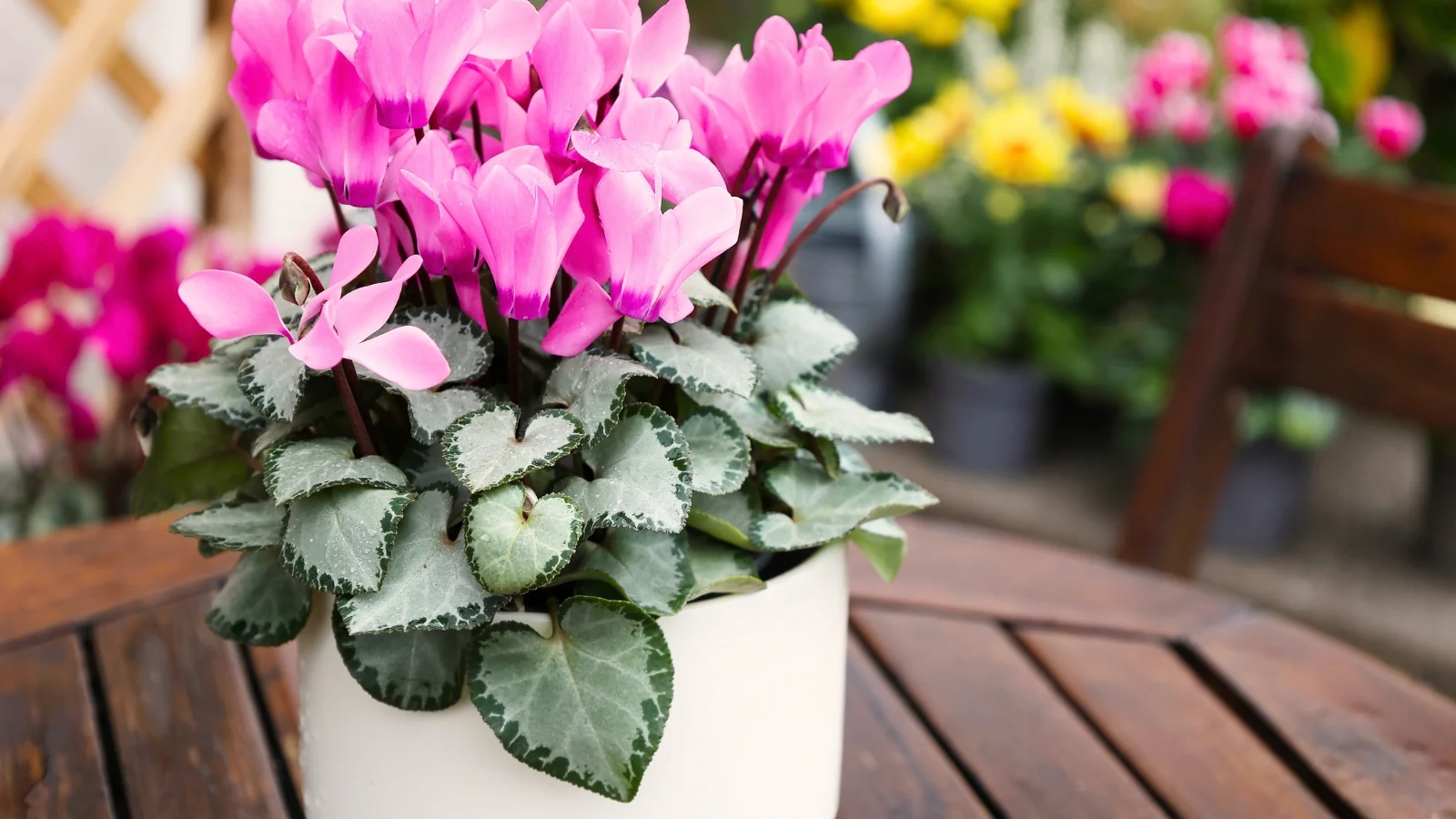
This is the one you see in grocery stores, garden centers, and as winter gifts: Cyclamen persicum and its hybrids. It’s bred to bloom heavily in pots, indoors, during the cool season.
- Common name on tags: “Florist cyclamen”
- Cold tolerance: Poor. Frost can damage or kill it
- Best use: Houseplant for bright light and cool indoor temperatures
Quick takeaway: If you want an outdoor patch that comes back year after year, you are usually shopping for C. hederifolium or C. coum, not the typical gift cyclamen.
How to tell what you have
If your plant arrived as a winter gift and you have no tag, you are not alone. Here are a few quick clues that can help you make an educated call.
- Check the label first: If it says Cyclamen persicum, “florist cyclamen,” or has big showy blooms on a compact potted plant, treat it as an indoor type.
- Look at the size: Florist cyclamen usually has larger flowers and a fuller, “bouquet-in-a-pot” look.
- Notice the season: Hardy cyclamen are often planted as tubers and bloom outdoors in fall (hederifolium) or late winter to early spring (coum) depending on species and climate.
- Leaf shape can hint: C. hederifolium leaves are often ivy-like. C. coum leaves tend to be rounder. Patterns vary wildly, so do not treat this as a fingerprint test.
When in doubt, assume a gift plant is florist cyclamen and protect it from frost. If it turns out to be hardy, it will forgive your caution. Florist cyclamen will not forgive your optimism.
Can cyclamen survive outside?
Hardiness varies by species and even by strain, so plant labels matter. Still, these are the usual outdoor expectations.
Typical hardiness ranges
- Cyclamen hederifolium: often grown outdoors in about USDA Zones 5 to 9, depending on form and microclimate
- Cyclamen coum: often listed around USDA Zones 5 to 8, with hardiness that can shift with provenance and site conditions
- Cyclamen persicum (florist cyclamen): generally not frost hardy; outdoors year-round only in very mild, mostly frost-free conditions
If you garden on the edge of a zone, think like a leaf-lurking realist: microclimates decide everything. A sheltered north or east side bed, under deciduous trees, can be dramatically kinder than an open, windy spot.
What “hardy” cyclamen needs
- Excellent drainage (winter wet is often worse than winter cold)
- Shade or dappled shade, with protection from harsh afternoon sun
Where to plant hardy cyclamen
Hardy cyclamen shines in the kind of places that stay quietly attractive without constant fuss.
Choose a woodland-style site
- Under deciduous trees and shrubs (sun in winter, shade in summer)
- Along shady paths where you’ll notice blooms up close
- Rock gardens with gritty, fast-draining soil and light shade
- At the base of hedges where soil stays cooler
Soil: drainage first, fertility second
Think “leaf litter over well-drained soil,” not “rich, soggy compost.” Hardy cyclamen tolerates average soil if water does not sit around the tuber.
- If your soil is heavy clay, improve drainage with grit and organic matter, or consider a raised bed.
- A mulch of shredded leaves is often perfect. It mimics their natural habitat and helps keep tubers insulated.
When to plant cyclamen
Timing depends on what you are planting: a tuber, a potted hardy cyclamen, or an indoor florist cyclamen you are experimenting with.
Planting hardy cyclamen tubers
- Best time: late summer into early fall is a classic window for many regions
- Why it works: soil is still warm enough for roots to establish, and seasonal moisture often increases
Planting depth matters. Hardy cyclamen tubers are generally planted shallow, but depth varies by species. Many growers plant C. coum a bit shallower than C. hederifolium. A common ballpark is:
- C. coum: about 1 to 2 inches deep
- C. hederifolium: about 2 to 3 inches deep
Follow your supplier’s directions and adjust for your soil. In heavier soils, err slightly shallower and focus on drainage.
Orientation tip: Cyclamen tubers can be confusing. If yours has a clear “top” (a concave side or small buds), plant that side up. If you cannot tell, plant it on its side. Many will sort themselves out, but you may get faster results with the right side up.
Planting hardy cyclamen from pots
If you bought a small hardy cyclamen plant, you can plant it in the ground when conditions are cool and the soil drains well. Avoid the extremes of midsummer heat or frozen ground.
Moving a florist cyclamen outside
If it’s warm enough to sit outdoors for a few hours, it can enjoy a break outside. But “outside permanently” is a different story. Florist cyclamen dislikes:
- frost
- hot sun
- warm nights
- waterlogged soil
Will hardy cyclamen naturalize?
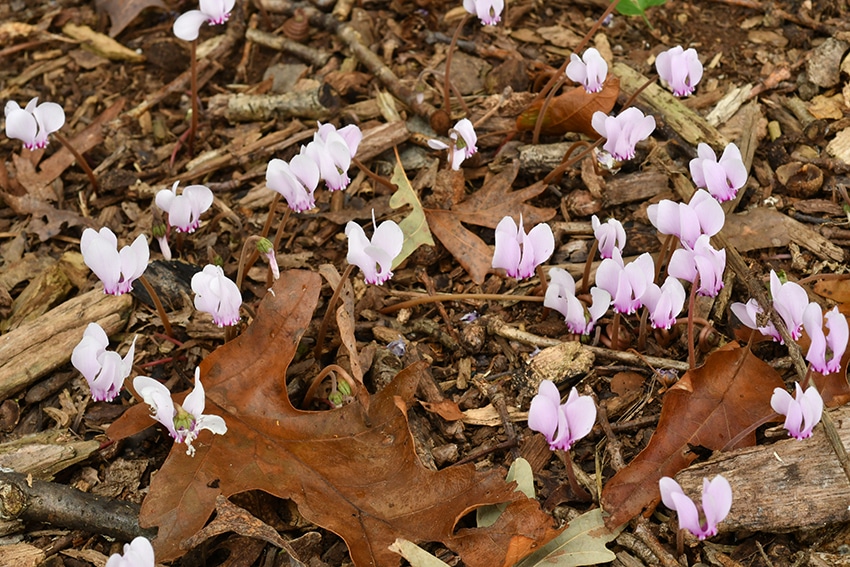
In a happy spot, hardy cyclamen can become one of those plants that quietly shows up again and again, like a polite guest who always brings flowers.
How naturalizing happens
- Tubers persist and expand slowly over time.
- Seeds drop after flowering. Ants sometimes help move the seed, which is part of why colonies can appear in small drifts.
What naturalizing looks like
Naturalizing is usually gentle, not aggressive. You might see a few more plants each year, especially in leaf-mulched shade with minimal digging. If you keep the area heavily cultivated, you interrupt the cycle.
Care that helps a colony thrive
- Let leaves die back naturally.
- Keep a light leaf mulch over the area.
- Water only during prolonged drought once established, and only if the soil dries out significantly.
- Avoid heavy, wet winter mulches that trap moisture directly on the crown.
Planting a gift cyclamen outside
This is the part where many good intentions go to compost.
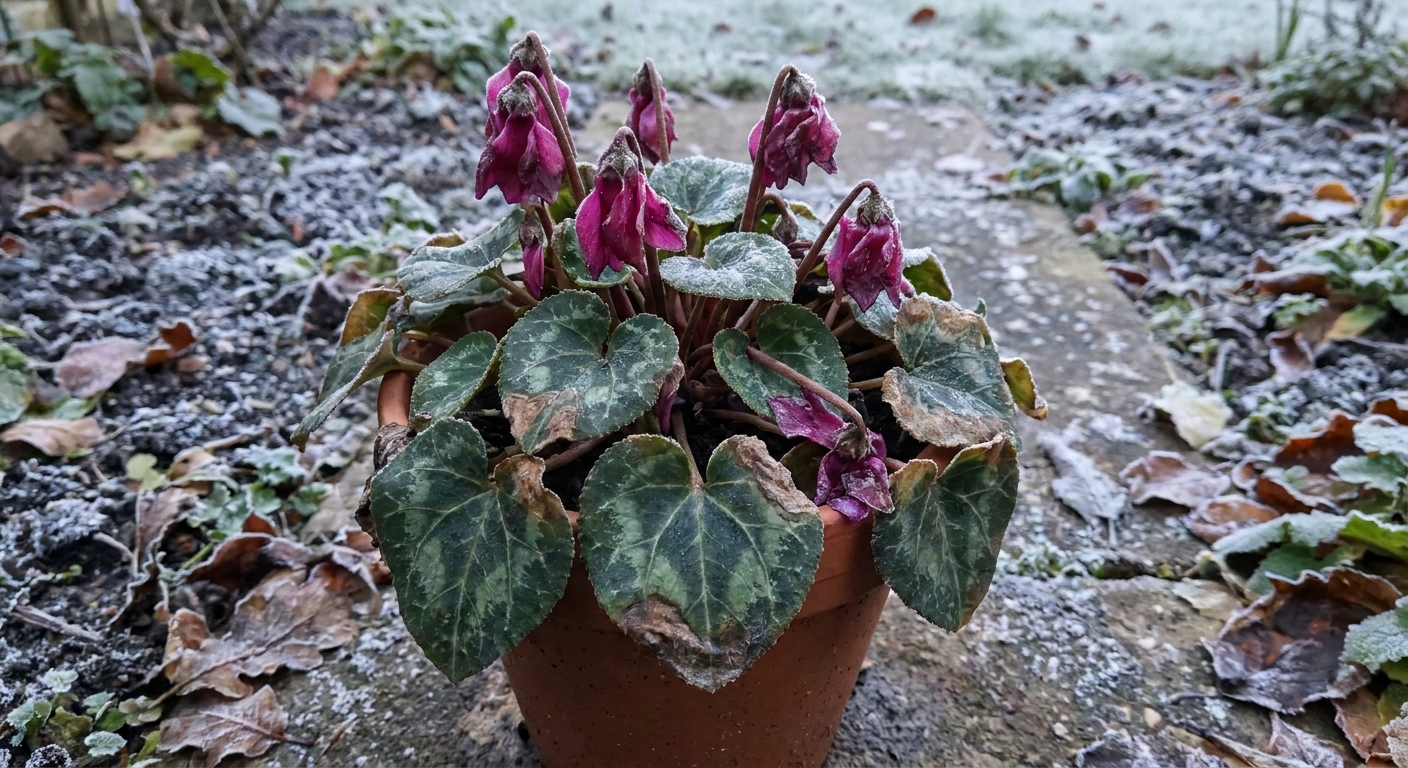
A typical gift cyclamen is florist cyclamen (Cyclamen persicum). If you plant it outdoors in a climate with freezing temperatures, it will usually:
- decline after even a light frost (flowers and foliage often collapse first)
- struggle in warm weather once spring and summer heat arrives
- rot in poorly draining soil, especially if the tuber sits wet
That said, you can still enjoy it and even try to carry it over year to year, just with realistic expectations.
A smarter plan for a gift cyclamen
- Keep it as a houseplant in bright light and cool temperatures.
- In spring, expect a rest period. Many florist cyclamen naturally slow down as temperatures rise.
- If you want it outdoors: treat it like a cool-season patio plant in a sheltered spot, then bring it back in well before frost.
Outdoor care basics
Once established, hardy cyclamen is refreshingly low-drama. Most issues trace back to soil moisture and sun exposure.
Water
- First season: water during dry spells to help rooting.
- Established plants: water only when the soil is unusually dry.
- Avoid: frequent watering in cool weather, especially in clay. Tubers can rot.
Fertilizer
Often unnecessary in a leaf-mulched bed. If growth is weak, a light topdressing of compost in fall can help, but keep it airy and do not bury crowns under heavy, wet material.
Summer dormancy is normal
Depending on the species and your climate, hardy cyclamen may go quiet in summer. Leaves can yellow and disappear. The tuber is not gone. It is waiting for the season it likes.
Slugs and snails
In damp shade, slugs and snails can treat cyclamen leaves like an all-you-can-eat salad bar.
- Keep mulch light and airy, not soggy and piled against crowns.
- Water in the morning so the surface dries by evening.
- If damage is consistent, use simple traps or targeted, pet-safe slug controls appropriate for your garden.
Quick decision guide
- I want cyclamen in the garden every year: choose hardy cyclamen tubers or plants labeled C. hederifolium or C. coum.
- I have a winter gift cyclamen in a pot: assume florist cyclamen (C. persicum) and protect it from frost.
- My outdoor spot is wet in winter: cyclamen may struggle. Improve drainage or use a raised bed.
- I have dry shade under trees: hardy cyclamen is right at home.
FAQ
Can hardy cyclamen handle snow?
Many hardy cyclamen can tolerate snow cover in appropriate zones, especially when planted in well-drained soil. The bigger threat is often waterlogged ground during freeze-thaw cycles, not the snow itself.
Do cyclamen come back every year outdoors?
Hardy cyclamen can, when matched to the right zone and planted in a suitable site. Florist cyclamen usually does not return outdoors in cold-winter climates.
Can I plant cyclamen in pots outdoors year-round?
Hardy cyclamen can grow in outdoor containers, but pots freeze and thaw faster than garden soil. In colder zones, container plants may need extra protection, excellent drainage, and a sheltered placement.
Is cyclamen toxic to pets?
Cyclamen is generally considered toxic if ingested, with the tuber often cited as more concerning than foliage. If pets like to nibble, keep cyclamen out of reach and contact a vet or pet poison hotline if ingestion is suspected.