
Why Schefflera Leaf Edges Turn Brown and Crispy

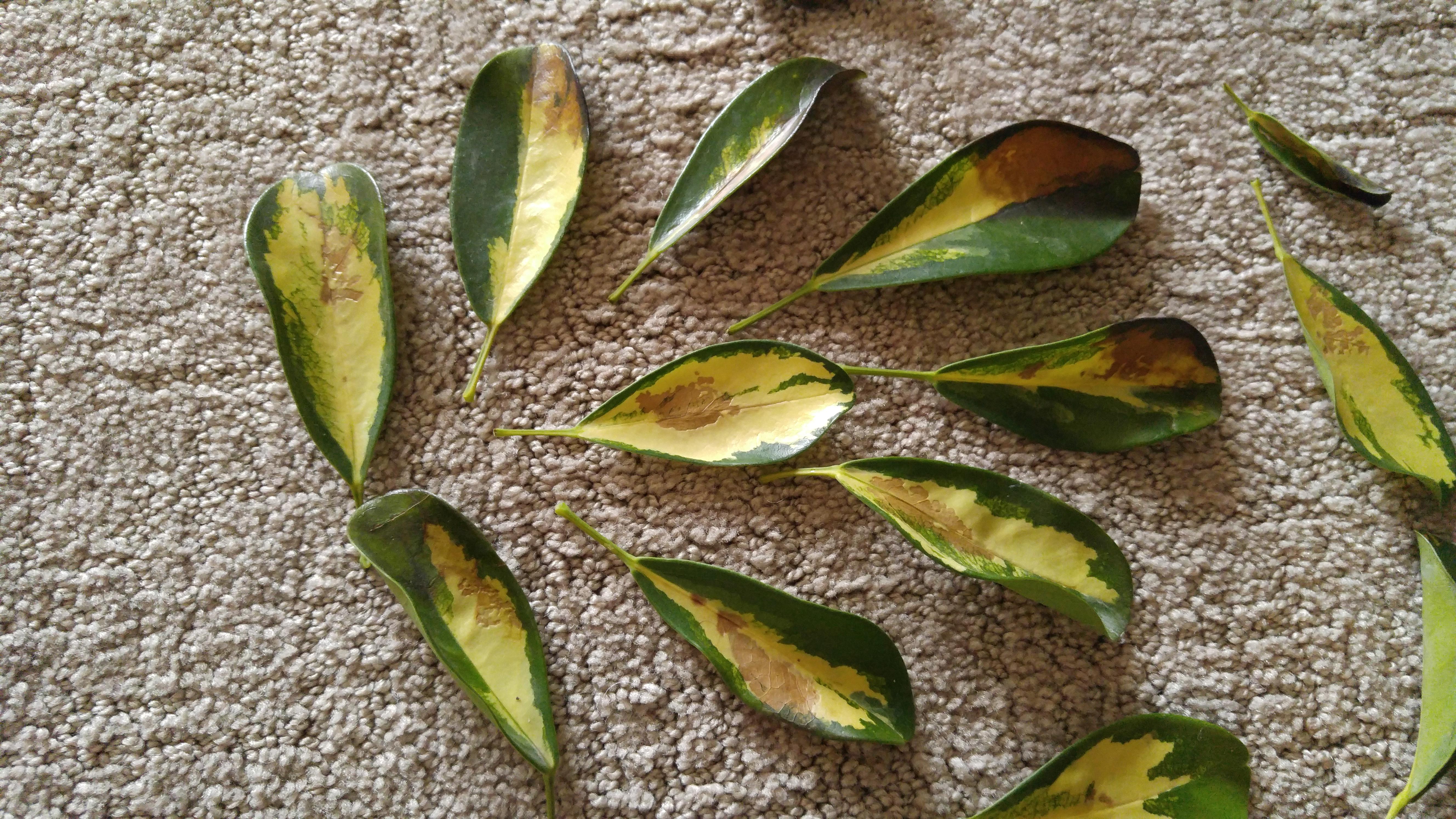
When my umbrella plant (schefflera) gets brown, crispy leaf edges, I know it is not being dramatic. It is giving me a very specific clue. Edge burn is different from “my whole leaf fell off” tantrums after a move, and it usually points to dry air, mineral and fertilizer salts, or a water routine that swings between too dry and too wet.
The good news is this: damaged edges do not turn green again, but you can absolutely stop the problem so the next set of leaves comes in smooth, glossy, and uncrunchy.
First: brown edges or leaf drop?
These look similar from across the room, but they are different problems.
- Brown, crispy edges: the leaf stays attached, the center often stays green, and the browning starts at the margins or tips.
- Whole leaves dropping: leaves yellow first or drop green after a sudden change (moving, cold draft, new light level, missed waterings, or overwatering).
If your plant recently changed locations and started dropping leaves, focus on stabilizing light, temperature, and watering rather than chasing humidity alone. Schefflera can sulk for a few weeks after a move.
Quick diagnosis
Use this like a little detective game. I literally hold the leaf up to the light and talk it through with my plant. My ferns have heard worse.
1) Dry air and heat vents
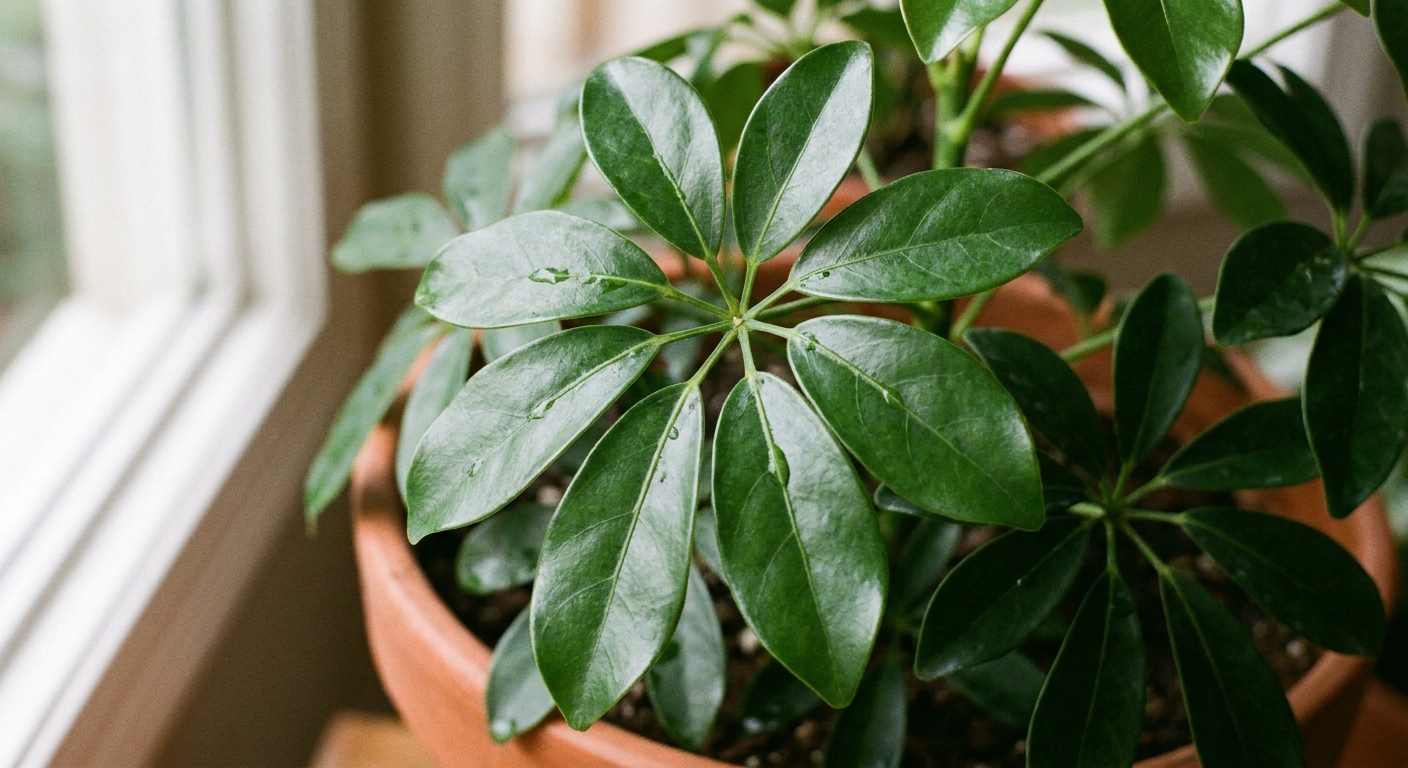
What it looks like: thin, crunchy brown edges or tips, often worse on newer growth or leaves closest to a heat source. The plant otherwise looks firm, not limp.
Most common triggers: winter heating, AC blasts, being perched above a radiator, or living near a sunny window that also has a vent below it.
What helps the next leaves:
- Move it away from airflow (even 2 to 4 feet from a vent makes a difference).
- Aim for steadier humidity. Schefflera is not as fussy as calatheas, but it is happier around typical household comfort levels.
- Try a pebble tray (water below the pot, not touching the base) or cluster plants together.
- If you use a humidifier, keep it nearby, clean it regularly, and avoid fogging the leaves constantly.
Skip this: frequent misting rarely fixes crispy edges for long, and wet leaves can invite spotting if air circulation is poor.
2) Fertilizer salt buildup
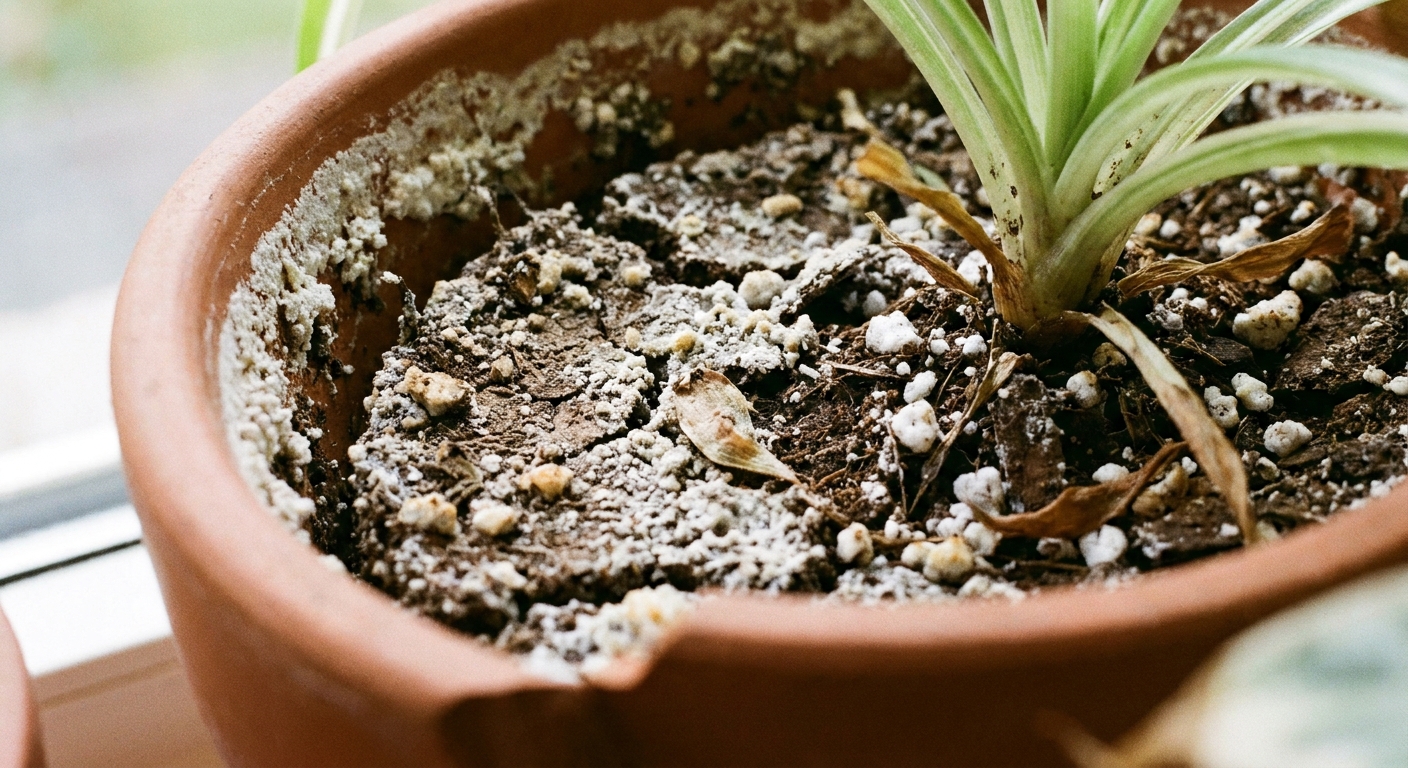
What it looks like: browning that starts at tips or edges, sometimes with a yellow “halo” before the crisping. You may see white crust on the soil or pot rim. This is especially common if you fertilize often or your potting mix is older and compacted.
Why it happens: salts accumulate in the pot over time. When the soil dries, salts concentrate and can scorch delicate leaf tissue at the margins.
Fix it:
- Flush the pot: take it to a sink or shower and run room-temperature water through the soil for several minutes. Let it drain completely.
- Pause fertilizing for 4 to 6 weeks.
- Resume gently: feed at a lighter rate and only during active growth (usually spring through early fall indoors).
- Repot if the mix is tired: if water sits on top or the soil smells sour, a refresh into airy potting mix can be a reset button.
3) Fluoride or hard water
What it looks like: repeating brown tips or margins, often on otherwise healthy-looking leaves, and it keeps happening even when your watering feels consistent.
Why it happens: some schefflera are sensitive to minerals and fluoride in tap water. Over time, those compounds can build up in soil and show up as leaf-edge burn.
What helps:
- Switch water for a while: rainwater, distilled, or reverse osmosis water is the simplest test.
- If you only have tap water, let it sit out overnight (this helps chlorine dissipate but does not reliably remove fluoride).
- Flush monthly to reduce buildup, especially if you must use hard water.
4) Underwatering and uneven watering
What it looks like: leaf edges crisp up, and the plant may droop or feel a bit limp before watering. You might notice the soil pulling away from the pot sides or becoming hard and hydrophobic.
Why it happens: when the root ball gets too dry, fine feeder roots can die back. Even after you water, the plant may struggle to deliver moisture evenly to leaf edges.
What helps:
- Water deeply until water runs out the drainage holes, then empty the saucer.
- Do not “sip” water in small amounts. That leaves dry pockets and concentrates salts.
- Use the finger test: water when the top couple inches feel dry, not on a strict calendar.
- If the soil is repelling water, bottom-water for 20 to 30 minutes once to rehydrate the root ball, then return to normal deep watering.
5) Too much sun or heat
What it looks like: crispy browning paired with lighter, washed-out areas, especially on the side facing the window. This is more common in hot afternoon sun.
Fix it:
- Bright, indirect light is the sweet spot.
- Sheer curtain or pull the plant back from the glass if the sun is intense.
- Rotate weekly so one side is not always taking the hit.
6) Pests
Schefflera can host spider mites, scale, and mealybugs. Pests do not always cause neat brown margins, but they can stress leaves enough that tips and edges crisp.
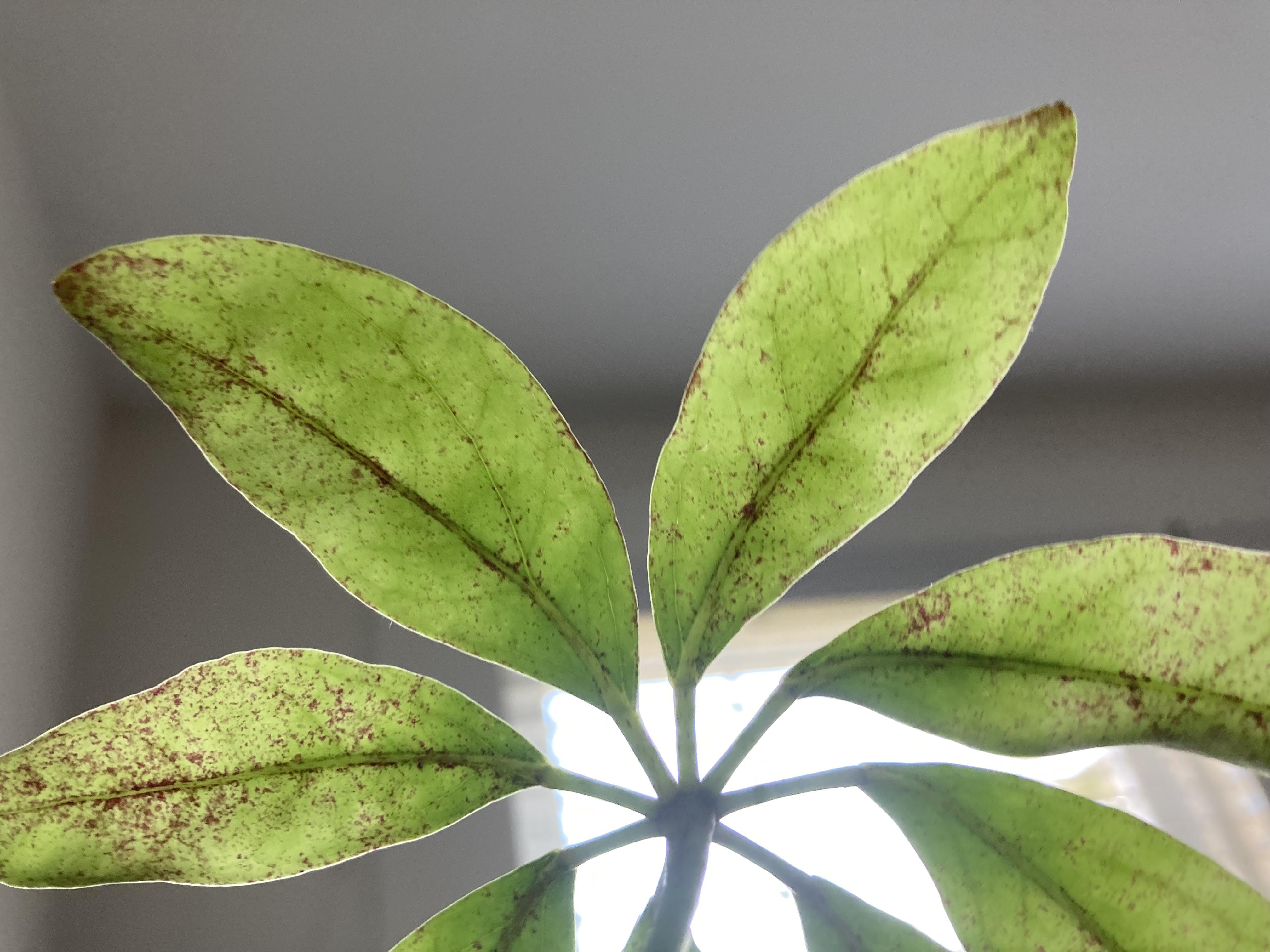
Check for: fine webbing (mites), tiny brown bumps along stems (scale), cottony clusters in leaf joints (mealybugs), or sticky residue (honeydew).
- Rinse the plant in the shower.
- Wipe both sides of leaves with a soft cloth.
- Follow with insecticidal soap or horticultural oil as needed, repeating weekly for a few rounds.
Can you trim brown edges?
Yes, if the look bothers you. It is cosmetic, and trimming will not harm the plant when done neatly.
- Use clean scissors.
- Follow the natural leaf shape, snipping just the brown, leaving a thin sliver of brown if needed to avoid cutting into living green tissue.
- Do not remove too many leaves at once if the plant is already stressed. A little haircut is fine, a full buzzcut is not.
If a leaf is more than half crispy, I usually remove the whole leaf at the base of its stem. That helps the plant redirect energy into new growth.
Watering tweaks
Most schefflera edge problems calm down when watering becomes steady and thorough.
- Drainage is non-negotiable: always use a pot with a drainage hole.
- Water fully, then let excess drain. Sitting in water invites root damage, which can show up as leaf decline.
- Empty cachepots: if your nursery pot sits inside a decorative pot, dump any collected water after watering.
- Refresh the top layer: if you see crusty buildup, scrape off the top inch of soil and replace with fresh mix, then flush.
Humidity, not a rainforest
To help new leaves emerge with clean edges, focus on consistent, gentle humidity rather than daily misting.
- Group plants together to create a small humid microclimate.
- Use a pebble tray under the pot (again, pot base not sitting in water).
- Consider a small humidifier in winter if your indoor air gets very dry.
Also, keep the plant out of drafty doorways and away from heating vents. Dry moving air is often the real villain.
Leggy growth and pruning
If your schefflera is getting tall and bare with leafy tufts at the ends, a simple prune can encourage branching. Snip a stem just above a leaf node during active growth, and it will usually push new shoots below the cut. Keep it modest if the plant is already stressed from crispy edges.
Is it safe for pets?
Schefflera is considered toxic to cats and dogs if chewed, commonly causing oral irritation and drooling. If you have a curious nibblers-in-residence situation, place the plant out of reach.
When to worry
Brown edges are common. These situations deserve a closer look:
- Soft, blackening stems or a sour smell from soil, which can point to rot.
- Rapid leaf drop plus consistently wet soil.
- Widespread spotting that looks water-soaked or spreads quickly.
In those cases, check roots, improve drainage, and consider repotting into fresh, airy mix.
FAQ
Will the brown edges turn green again?
No. Once leaf tissue is crispy, it is dead. The goal is to correct the cause so new growth comes in healthy.
Should I cut off every leaf with brown edges?
Not necessarily. If most of the leaf is still green, keep it. It is still photosynthesizing and helping the plant recover. Trim just the brown if you want it to look tidier.
Why did it start after I fertilized?
That is a classic sign of salt stress. Flush the soil, pause fertilizer, and resume at a lower rate once growth stabilizes.
Why did it start after I moved the plant?
A move changes light, airflow, and humidity. Whole-leaf drop is common after relocation, and crispy edges can follow if the new spot is drier or closer to a vent. Stabilize the environment and avoid extra changes for a few weeks.