Why Figs Turn Sour on the Tree

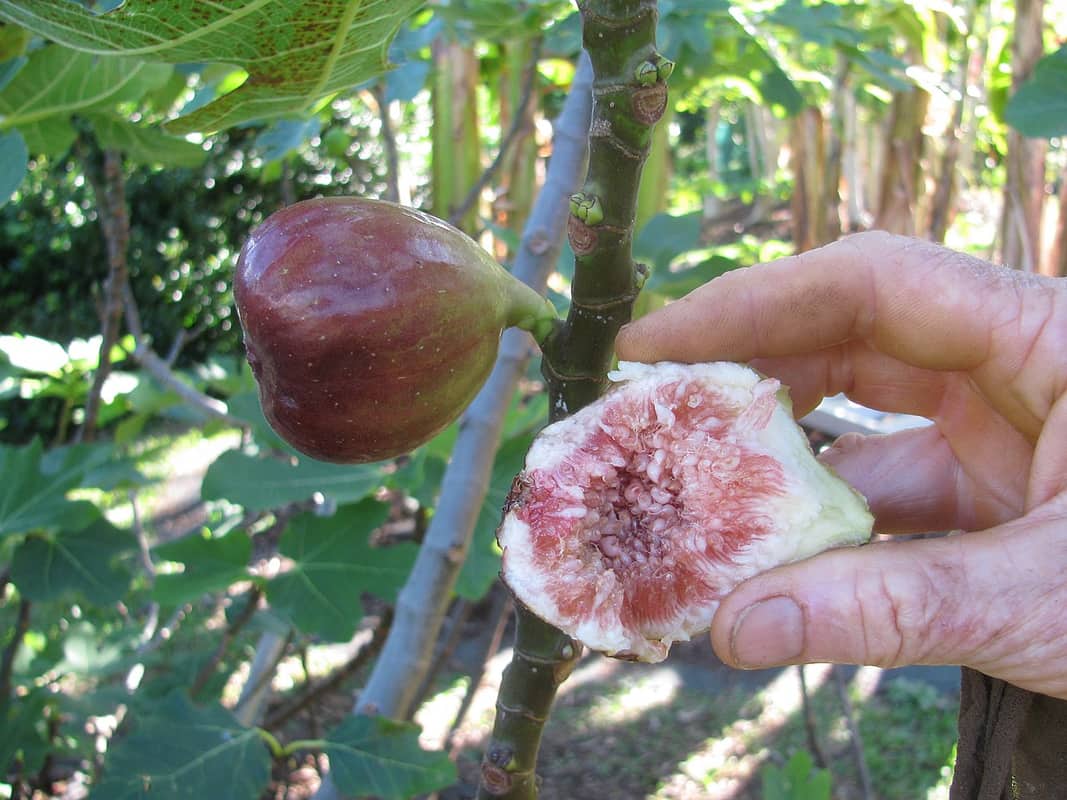
The first time I met a truly sour fig, I thought my tree was mad at me. The fruit looked perfect from a few steps away, but when I picked it, it felt oddly soft and left a sticky smear on my fingers. Then came the smell. Not the honeyed, jammy perfume a ripe fig should have, but something closer to wine, vinegar, or old fruit salad left in the sun.
If that sounds familiar, take a breath. This is a common ripe-fruit problem, especially when warm weather, humidity, and insects line up just right. Most of the time, sour figs are not “bad genetics” or a fertilizing issue. They are figs that started fermenting (or rotting) while still on the tree.
What souring is
When figs turn sour on the tree, what you are tasting and smelling is usually fermentation. Figs are basically little sugar packets. Once yeasts get inside the fruit, those sugars start converting into alcohol and acids. That is when a fig shifts from sweet and luscious to sharp, boozy, or vinegary.
Sometimes, what gardeners call “souring” also includes a sour-rot mix: yeasts plus bacteria plus molds that move in after the fruit is cracked or wounded. The result can look the same from the outside: soft fruit, off smell, and a flavor you do not want to finish.
Two things make figs especially prone to this:
- The fig “eye” is an opening. The little hole at the bottom of the fig is called the ostiole, often nicknamed the “eye.” It is a natural entry point for tiny insects and microbes.
- Softening fruit is vulnerable. As figs ripen, they soften and their skin becomes easier to puncture. Any tiny crack plus a bit of yeast can snowball fast in warm weather.
Common culprits
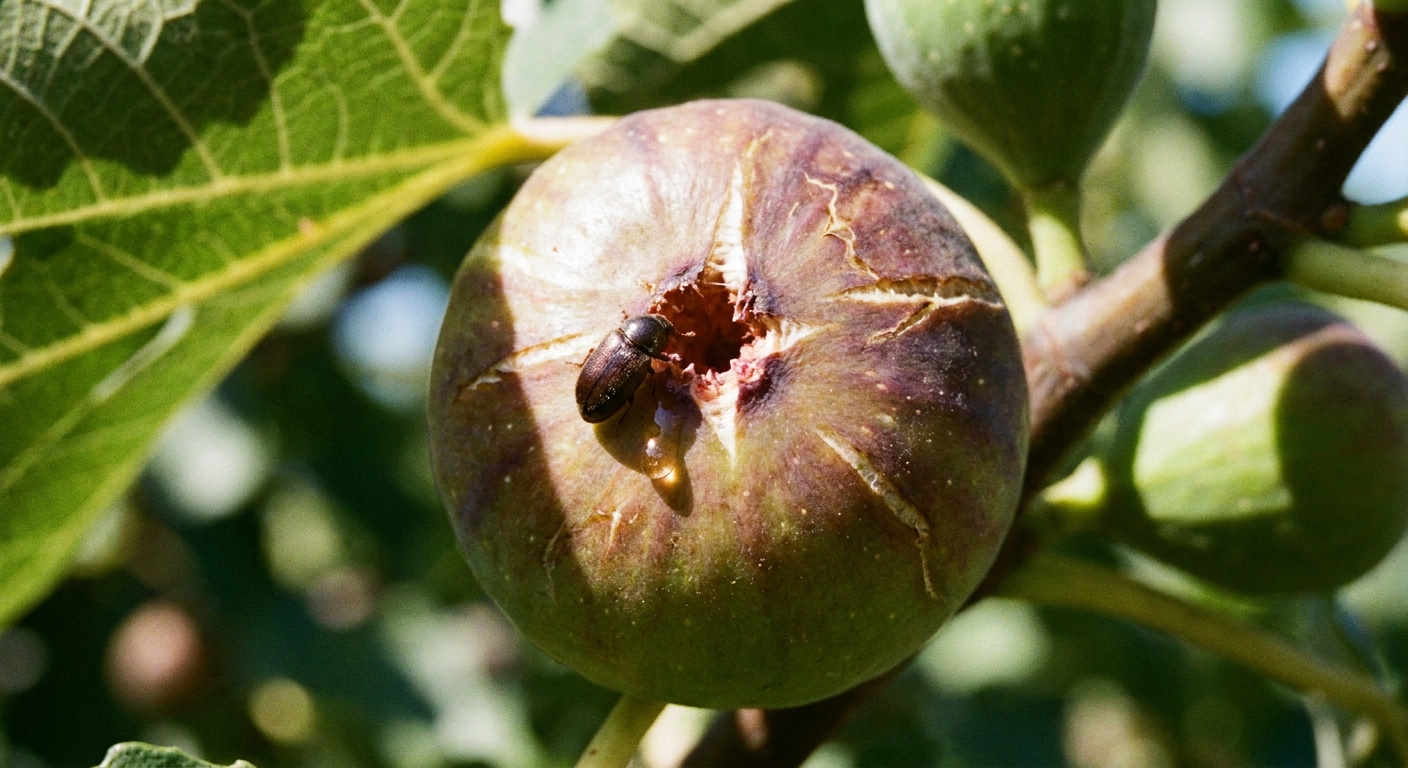
In many home gardens, souring ramps up when insects start visiting ripening fruit. Small fruit beetles (often called sap beetles) are frequent players, but they are not the only ones. Vinegar flies (Drosophila), ants, wasps, earwigs, and even birds can all create openings or carry microbes from fruit to fruit.
These visitors are drawn to sugar and damaged fruit, and they tend to crawl right where trouble starts: around the fig eye, under the fruit, and into any tiny splits.
Insects can carry yeasts and other microbes on their bodies. Once those microbes are introduced inside the fig through the eye, a crack, or a puncture, the fruit can turn:
- Weepy (sugary juice oozing out, especially near the eye)
- Mushy (collapsing texture, sometimes watery)
- Strong-smelling (wine, beer, vinegar, or “off” sweetness)
- Off-flavored (sour, sharp, fermented)
Warm days and humid nights speed this up. A fig that seemed fine yesterday can be a sticky, fermented mess today, especially after rain, heavy dew, or a sudden watering that triggers splitting.
Unripe vs sour
This is the part that saves the most heartbreak, because an unripe fig can taste unpleasant in a totally different way. Unripe is not the same as souring.
Signs a fig is unripe
- Firm and upright. Many varieties soften and droop at the neck when ripe. Unripe figs tend to stand more upright and feel tight.
- Latex sap. When you pick an unripe fig, you often see milky white sap where the stem breaks. That sap can irritate skin.
- Bland, starchy, or “green” flavor. Unripe figs are not usually vinegary. They are more watery, vegetal, or just not sweet.
- Little aroma. Ripe figs smell fruity and rich. Unripe figs smell like almost nothing.
Signs a fig is fermenting or rotting
- Very soft too early. The fruit feels squishy or collapsing, sometimes before it has good color for that variety.
- Sticky oozing. Syrupy juice beads near the eye or runs down the skin.
- Wrinkled plus wet. Some ripe figs wrinkle a bit, but souring often looks like wrinkling plus damp, tacky spots.
- Fermented smell. If it smells like alcohol, vinegar, or overripe fruit, trust your nose.
- Sour bite. The inside may look overly wet or partly broken down, and the flavor is sharply sour or “boozy.”
If you are on the fence, do a gentle test: cup the fig in your palm and lift slightly. A ripe fig usually gives easily and feels heavy for its size. A souring fig often feels too soft and sometimes leaves a sticky residue on your fingers.
Why it happens on-tree
Gardeners often ask, “Why would it ferment before I even pick it?” A few practical reasons:
- Figs do not really ripen off the tree. They can soften a little after picking, but they generally will not get sweeter or more flavorful the way a peach can. So we tend to leave figs hanging longer, which increases the window for insects and microbes to get in.
- Ripe figs are fragile. Once a fig hits peak softness, it is on a short timer, especially in heat.
- Cracks happen fast. Rain, heavy dew, humid nights, or irregular watering can swell the fruit and cause tiny splits. Those splits are open doors.
- Any wound invites microbes. A slightly open eye, a puncture from an insect, or a peck from a bird is enough.
Do this this week
There is no spray that un-ferments a fig. In home gardens, prevention and fast cleanup are the workable tools. You are trying to reduce the amount of damaged fruit, insect traffic, and microbial buildup around the tree.
If you only do three things: pick promptly, pull the leakers, and keep the ground clean.
1) Pick promptly
During peak season, check your fig tree daily or every other day. Harvest figs as soon as they are truly ripe for your variety. Waiting for “one more day of sweetness” is often what turns a good fig into a weepy one.
2) Remove souring fruit
Any fig that is leaking, smells fermented, is split wide open, or has obvious insect activity should come off the tree.
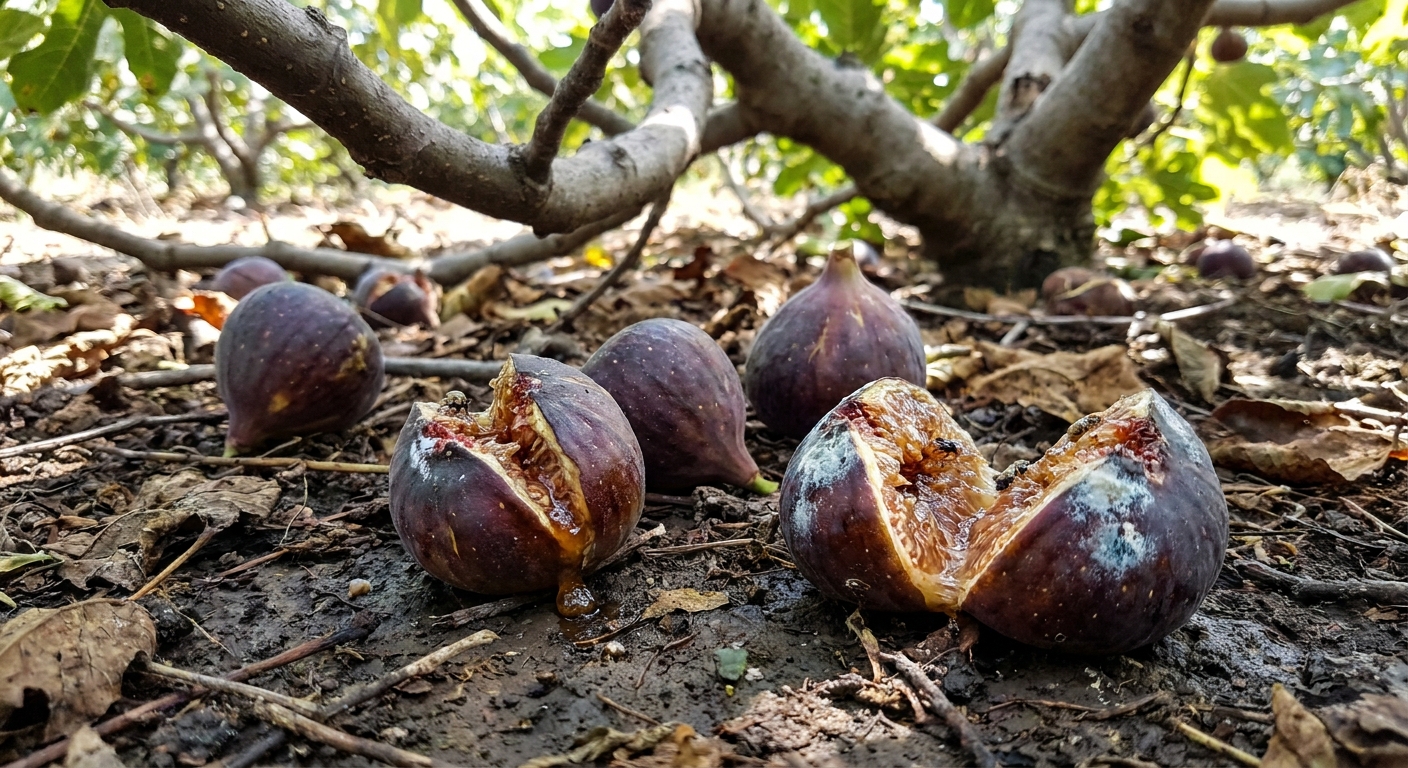
- Do not leave drops on the ground. Fallen figs are basically an invitation letter to every fruit-loving bug in the neighborhood.
- Be picky about compost. A hot, active compost system may handle some fruit waste, but heavily fermented, insect-filled figs in a typical backyard pile tend to attract and feed pest populations (and sometimes shelter larvae). If you are battling souring, it is usually better to bag and trash the worst ones or send them to municipal green waste.
3) Clean under the canopy
Pick up fruit daily during ripening season. If you mulch, gently lift and check for hidden fallen fruit that is turning into a little fermentation factory.
Reduce it next crop
Souring is one of those problems where the next crop benefits most from what you do consistently. Fewer fermented fruits around the tree means fewer insects congregating and fewer chances for microbes to get a free ride into the next wave of ripening figs.
Keep a simple routine
- Harvest often. In hot weather, daily is ideal.
- Carry two containers. One for good figs, one for “nope” figs (leaking, split, sour-smelling).
- Remove mummified fruit. Dried figs still hanging can shelter pests.
Avoid extra moisture on fruit
- Skip overhead watering late in the day during ripening if you can. Wet fruit plus warm nights is a classic setup for rot.
- Water steadily during fruit swell. Inconsistent watering can increase splitting in some varieties. Aim for even soil moisture while fruit is sizing up, especially during heat waves.
If your figs tend to split after a sudden heavy watering or summer storm, that is a clue to focus on steadier moisture earlier so the fruit is less likely to crack when conditions change.
Consider simple exclusion
If you have a manageable-sized tree or you are protecting a small number of special figs, fine-mesh or organza fruit bags can help reduce insect access to the eye and protect against bird pecks. It is a little fiddly, but for some trees it is the difference between “almost” and an actual harvest.
Clean tools and containers
This sounds fussy, but it helps when you are dealing with sticky residues and repeated handling.
- Rinse picking shears, bowls, and buckets after use.
- Let them dry fully before storing.
Can you eat sour figs?
If a fig tastes fermented or smells like vinegar, I treat it like food that has started to spoil. A tiny hint of tang in an otherwise ripe fig can happen, but strong sourness, boozy odor, visible mold, or insect infestation means it is best to discard it.
When in doubt, toss it. There will be other figs, and your stomach deserves kindness.
FAQ
Why are my figs leaking clear sticky liquid?
Leaking or “weeping” is often a sign the fruit is overripe, damaged, split, or fermenting. The stickiness is mostly sugary juice escaping, sometimes helped along by micro-cracks near the eye or by insect feeding.
My figs are soft but not sweet. Are they souring?
Not always. Softness plus bland flavor can mean the fig was picked a little early, ripened unevenly, or got waterlogged. Souring usually includes a noticeable fermented smell and a sharp, unpleasant taste, not just a lack of sweetness.
Do some fig varieties sour more easily?
Yes. Varieties with a more open eye can be more vulnerable because it is easier for insects and microbes to enter. Even tight-eyed varieties can sour in the right conditions, but open-eyed types often show it sooner.
Will cleanup stop it this season?
Cleanup helps immediately by reducing the attraction zone around your tree, but you may still lose some fruit during peak heat, humidity, rain, or heavy insect pressure. The real win is that consistent sanitation makes the next flush of ripening fruit less likely to get overwhelmed.
Takeaway
Figs teach patience in the most humbling way. They go from unripe to perfect to over the line in what feels like a single afternoon. If your figs are turning sour on the tree, you are not failing. You are seeing what happens when sugar-rich fruit meets a tiny opening, a little damage, and the wild world of insects and microbes.
Pick promptly, pull off the leakers, keep the ground clean, and you will usually notice a real difference as the season continues and again next year. Your fig tree is still your friend. It just needs a little help keeping the party out of its fruit.