
Watering Bromeliads With No Central Cup
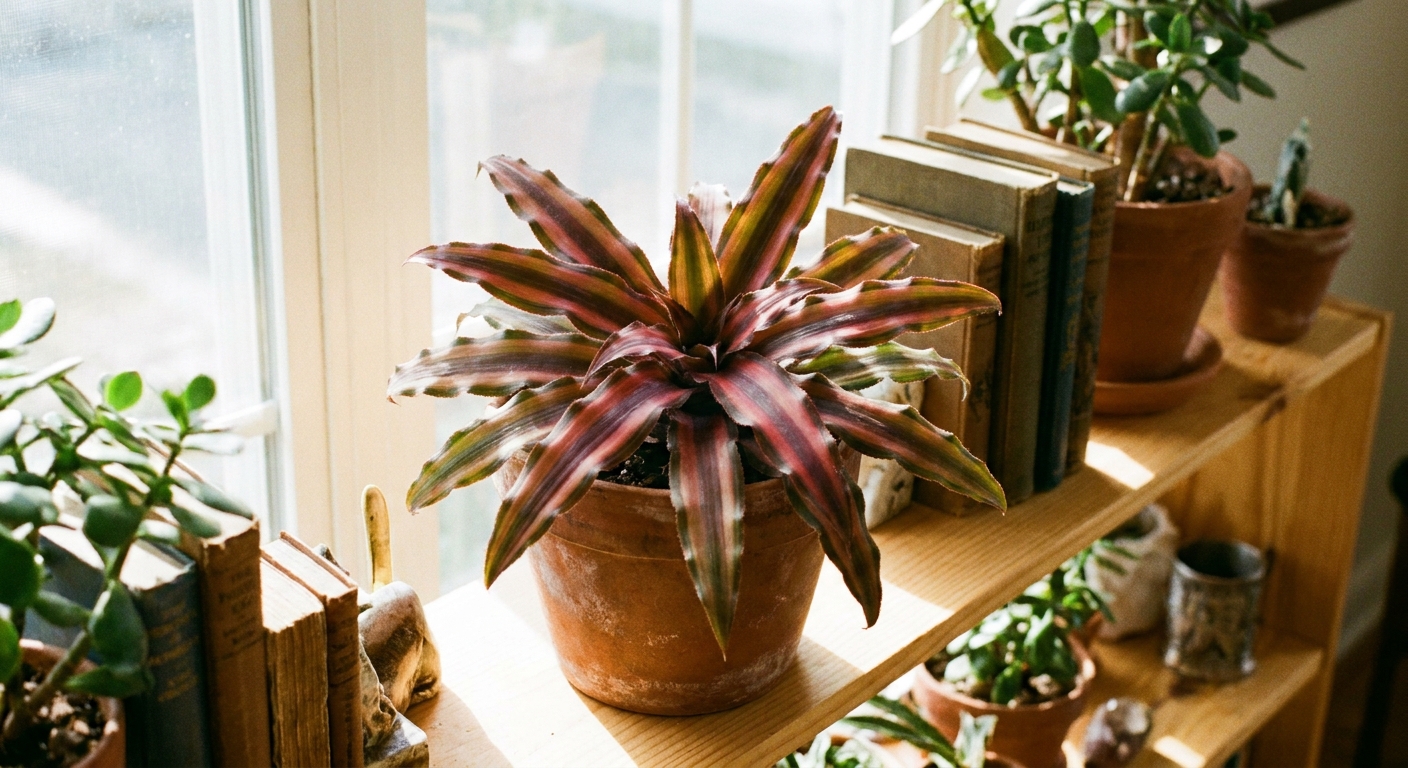
When I first fell for bromeliads, I watered every single one the same way: a cheerful little pour right into the center, like filling a tiny birdbath. Tank bromeliads loved me for it. My earth star did not. Within a week it looked insulted, soggy, and a little tragic.
Here is the simple truth: some bromeliads have a “tank” (central cup) designed to hold water, and some do not. If your bromeliad has no real cup or has a tight, layered center that traps moisture, you will keep it happier by watering the potting mix instead of the rosette.
What counts as no cup?
Most beginner bromeliad advice focuses on tank types that form a visible reservoir in the middle. Cup-less bromeliads are different. They may have a slight depression, but it is not meant to stay filled.
Common non-tank bromeliads
- Earth stars (Cryptanthus): low, starry rosettes, often striped or pink. These are classic soil-watered bromeliads.
- Dyckia and Hechtia: mostly terrestrial, spiky, and typically grown like drought-tolerant houseplants. Water the mix, not the center.
- Other tight rosettes grown terrestrially: some plants look a little “cuppy,” but the center is layered and stays wet too easily indoors.
Quick ID help
If you are standing in front of a mystery bromeliad at the plant shop, this is my fast sorting trick.
- Usually tank bromeliads: Guzmania, Vriesea, Aechmea, Neoregelia. They form an open cup you can actually fill and flush.
- Usually soil-watered terrestrials: Cryptanthus, Dyckia, Hechtia. No functional tank, and they do best with water at the soil line.
If you are unsure, use this cue: if the center is tight and layered and you cannot see an open basin that can be flushed and refreshed, treat it like a soil-watered bromeliad.
Why the center can rot
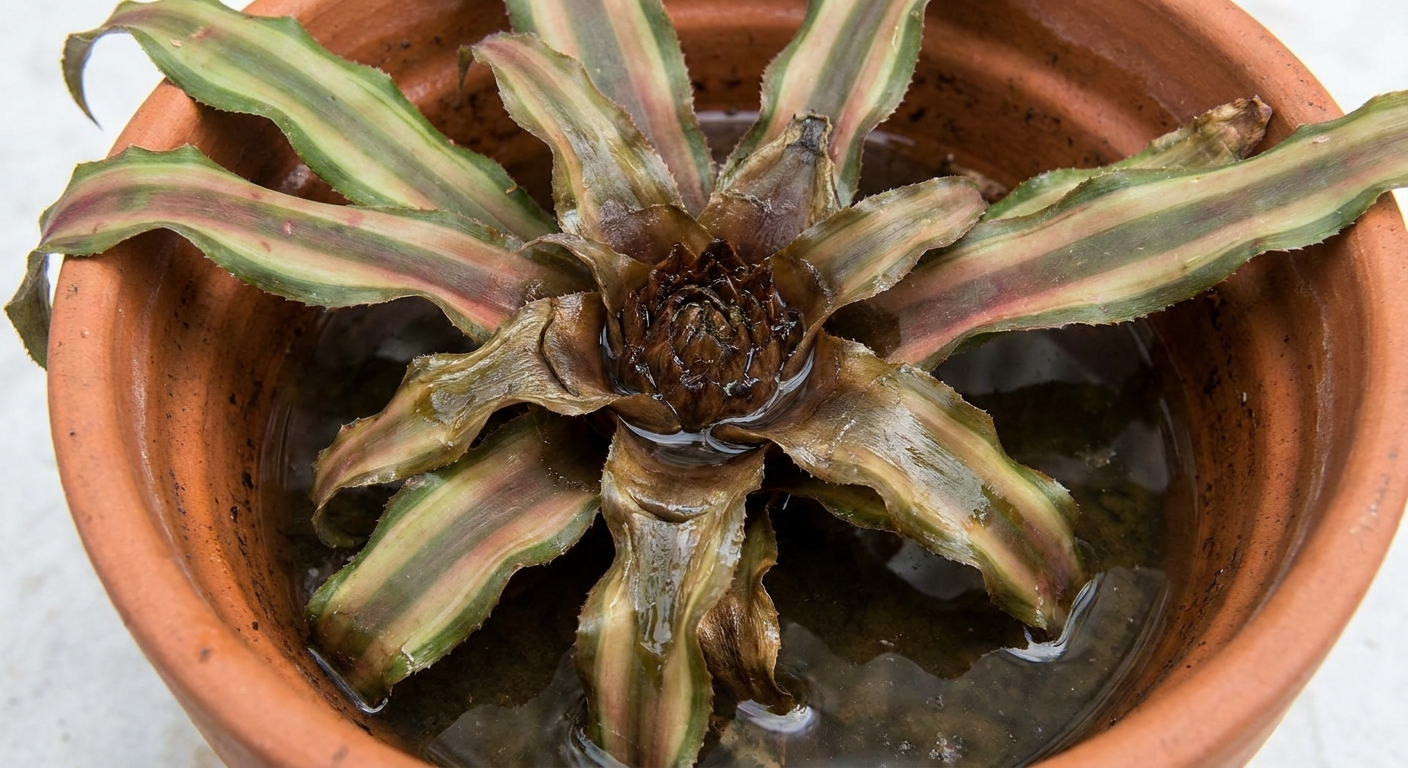
In cup-less bromeliads, the base of the leaves overlaps so closely that water can get stuck where air cannot circulate. That trapped moisture turns into a perfect little rot factory. In plain terms, this is crown rot, and it can be fatal because it attacks the growing point.
What happens at the crown
- Stagnant water sits in a tight center rather than being used and replaced.
- Low airflow inside the rosette means it dries slowly, especially indoors.
- Cool temperatures and low light make drying even slower.
- Fungi and bacteria love constantly damp leaf bases and can move into the plant.
For plants like Cryptanthus, that central growing point is everything. Once it rots, the plant often collapses quickly.
How to water the right way
Think of cup-less bromeliads as plants that want even moisture with excellent drainage. Not bone-dry for weeks. Not swampy. Just a steady rhythm of wet to nearly dry.
Step by step
- Check the mix first. Stick a finger in about 1 inch. If it feels cool and damp, wait.
- Water at the soil line. Aim your watering can or squeeze bottle at the potting mix, not into the plant’s center.
- Water thoroughly. Keep watering until you see water drain from the bottom. Good drainage helps re-oxygenate the root zone.
- Let it drain completely. Never leave the pot sitting in a saucer of water.
- Keep the crown dry. If you accidentally splash into the center, tip the plant gently and blot with a tissue.
If your plant is mounted or in a very airy setup, you can also water by running water through the medium briefly and letting it dry back again.
How dry should it get?
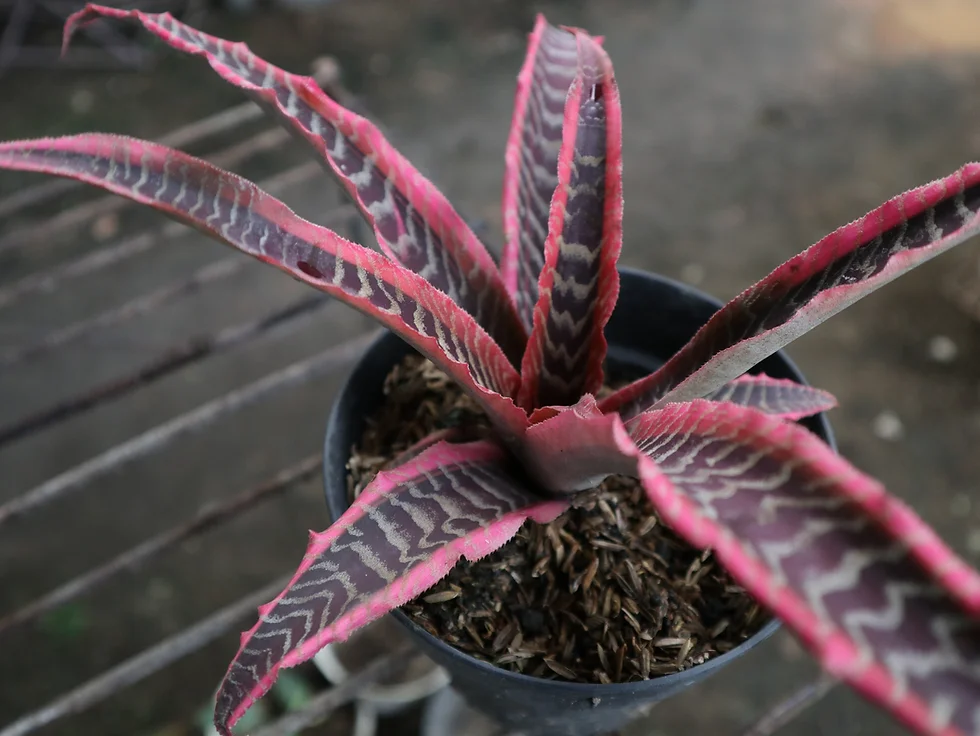
This is the part that actually keeps most cup-less bromeliads thriving: they want a partial dry-down, not constant wetness and not extended drought.
A good rule
- Let the top 1 to 2 inches of the mix dry before watering again.
- Deeper in the pot, the mix should feel slightly moist, not soggy.
For many homes, that works out to roughly about once a week in brighter, warmer months and every 10 to 14 days in winter. Treat that as a starting point, not a promise. A small pot in a bright window can need water sooner, while a bigger pot in low light may need much less. I would rather you trust the soil than the calendar.
Adjust for conditions
- Bright light, warmth, airflow: dries faster, water a bit more often.
- Low light, cool rooms: dries slower, water less often.
- Terrariums or very humid rooms: water sparingly and prioritize airflow.
- Very small pots: dry quickly, check more often.
Light and temperature help
If watering feels weirdly hard, check the light. Most earth stars do best in bright, indirect light, and many cultivars can take some gentle sun (especially morning sun) once acclimated. Warm rooms help too.
- More light usually means steadier growth and a healthier dry-down between waterings.
- Low light usually means slow drying and higher rot risk, especially if the mix is heavy.
- Cold drafts plus wet mix is a bad combination for most terrestrials.
Pot and mix matter
If you are fighting frequent rot or constantly soggy soil, it is almost never because you are a hopeless plant parent. It is usually the container or mix holding water too long.
Pick a draining pot
- Drainage hole required. Non-negotiable for soil-watered bromeliads.
- Terra cotta helps the mix dry faster if your home is on the humid side.
- Plastic is fine if your mix is airy and you are careful with frequency.
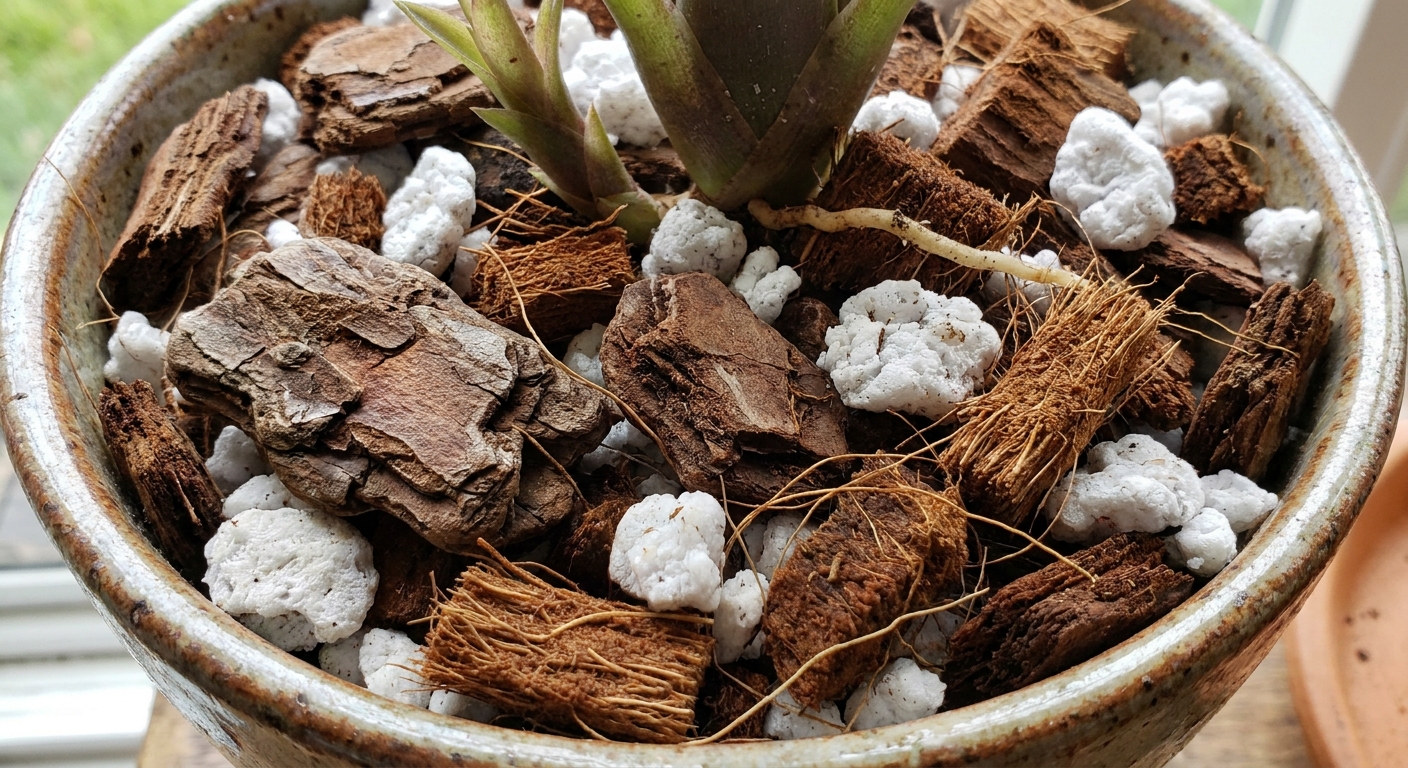
Use a fast-draining mix
A good bromeliad mix should drain quickly and keep lots of oxygen around the roots. Look for ingredients like:
- Orchid bark
- Coco coir or peat in small amounts
- Perlite or pumice
- A little compost or worm castings for houseplant-friendly nutrition
Heavy garden soil or straight peat-based potting soil tends to stay wet too long for many cup-less bromeliads, especially indoors.
Overwater or underwater?
Cup-less bromeliads communicate pretty clearly once you learn their language.
Signs of too much water
- Center stays damp or smells musty
- New leaves pull out easily or look mushy
- Brown or black soft patches near the base
- Soil stays wet for many days after watering
Signs of too little water
- Crispy tips and edges
- Leaves look thinner or less plump
- Overall droop and dull color
- Pot feels very light and soil is dry throughout
One note: crispy tips can also happen from low humidity or mineral-heavy tap water. If your watering rhythm seems reasonable, consider switching to filtered or rainwater and increasing humidity gently.
Water quality tips
Many bromeliads are sensitive to salts and chemicals that build up over time.
- Best: rainwater, distilled, or reverse osmosis water.
- Good: filtered water.
- Okay sometimes: tap water, especially if it is not very hard. If your tap water is hard, you may see leaf tip browning and mineral crust on the soil.
If you do use tap water, flushing the pot thoroughly once in a while helps rinse excess salts out of the mix.
Quick FAQ
Should I mist an earth star instead of watering the soil?
Misting is fine for humidity, but it is not a reliable way to water roots. For Cryptanthus and other non-tank terrestrials, water the potting mix when the top layer dries, and mist only if your air is very dry.
Can I bottom-water a cup-less bromeliad?
You can, especially as an occasional method. The catch is that bottom-watering does not flush the mix as well as top-watering can. If you bottom-water, let it soak briefly, drain well, and do a thorough top-water now and then to rinse out buildup.
Do I ever put water in the center?
For Cryptanthus, Dyckia, Hechtia, and other true non-tank terrestrials, avoid keeping water in the center. If your plant forms a true open tank (a real cup you can fill and refresh), then tank watering and regular flushing can be appropriate. When in doubt indoors, soil watering is the safer choice for tight-centered rosettes.
How can I be sure mine is not a tank type?
If you cannot see a clear, open “cup” that can hold water and be refreshed, treat it as soil-watered. Tight centers that stay damp are where most people get into trouble.
A calm routine
If you want a simple rhythm to start with, here is what I tell new bromeliad growers (and what I tell myself when I am tempted to over-love my plants with a watering can):
- Water the mix deeply.
- Let the top 1 to 2 inches dry.
- Keep water out of tight centers.
- Prioritize drainage and airflow.
Do that, and cup-less bromeliads like earth stars become wonderfully low drama. They just sit there looking like living stained glass, quietly proving you never had a black thumb at all.