
Notched Hosta Leaves: Slugs or Vine Weevils?

A little green. A lot of curiosity.
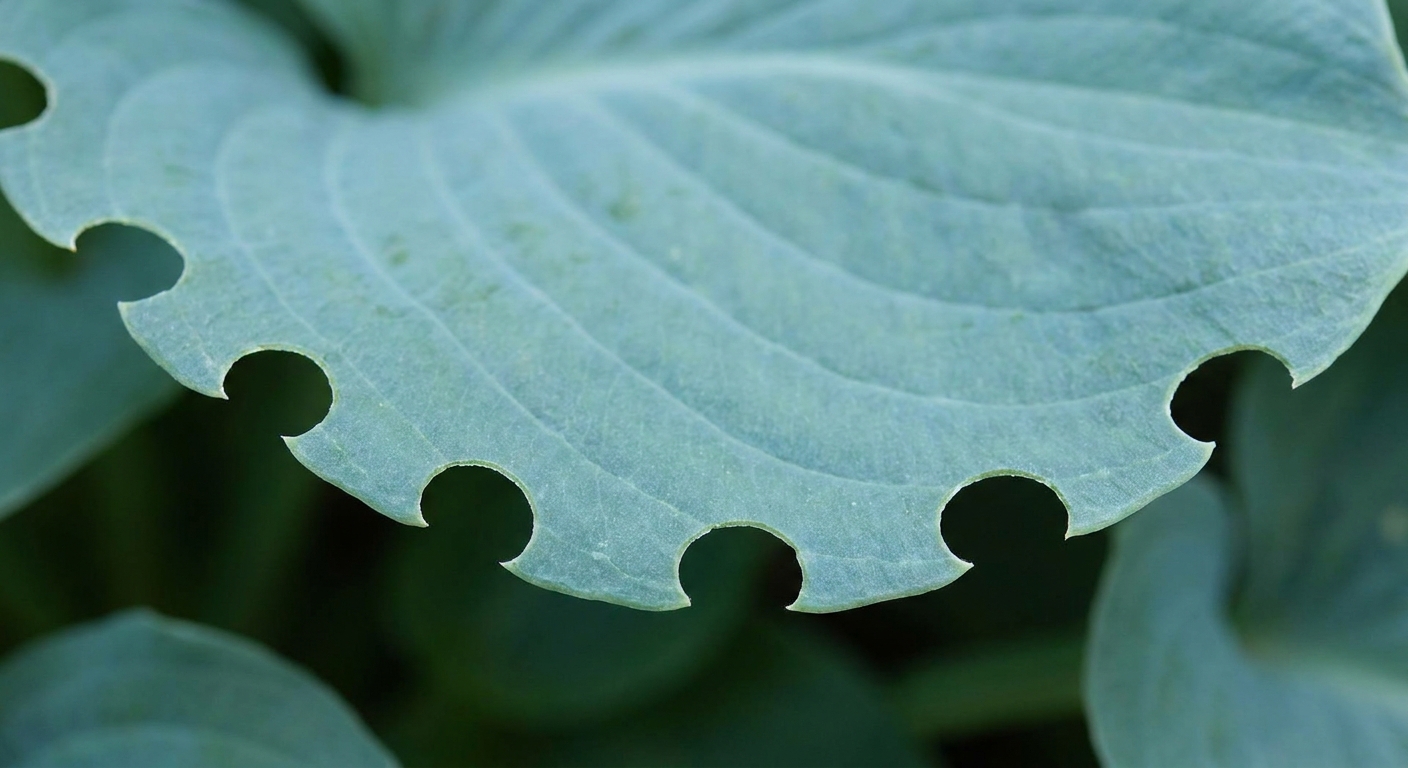
If your hosta leaves look like someone took tiny bites out of the edges, you are not imagining it. The pattern matters. Ragged holes often point to slugs and snails, but a few other nighttime nibblers can do something similar too. Neat, scalloped notches along the margins often point to weevils (and black vine weevil is a common one). And if vine weevils are involved, the biggest problem may be in the soil, not on the leaf.
Quick ID: holes vs notches
Before you treat anything, slow down and look closely at the shape of the damage. This one step can save you from using the wrong control method.
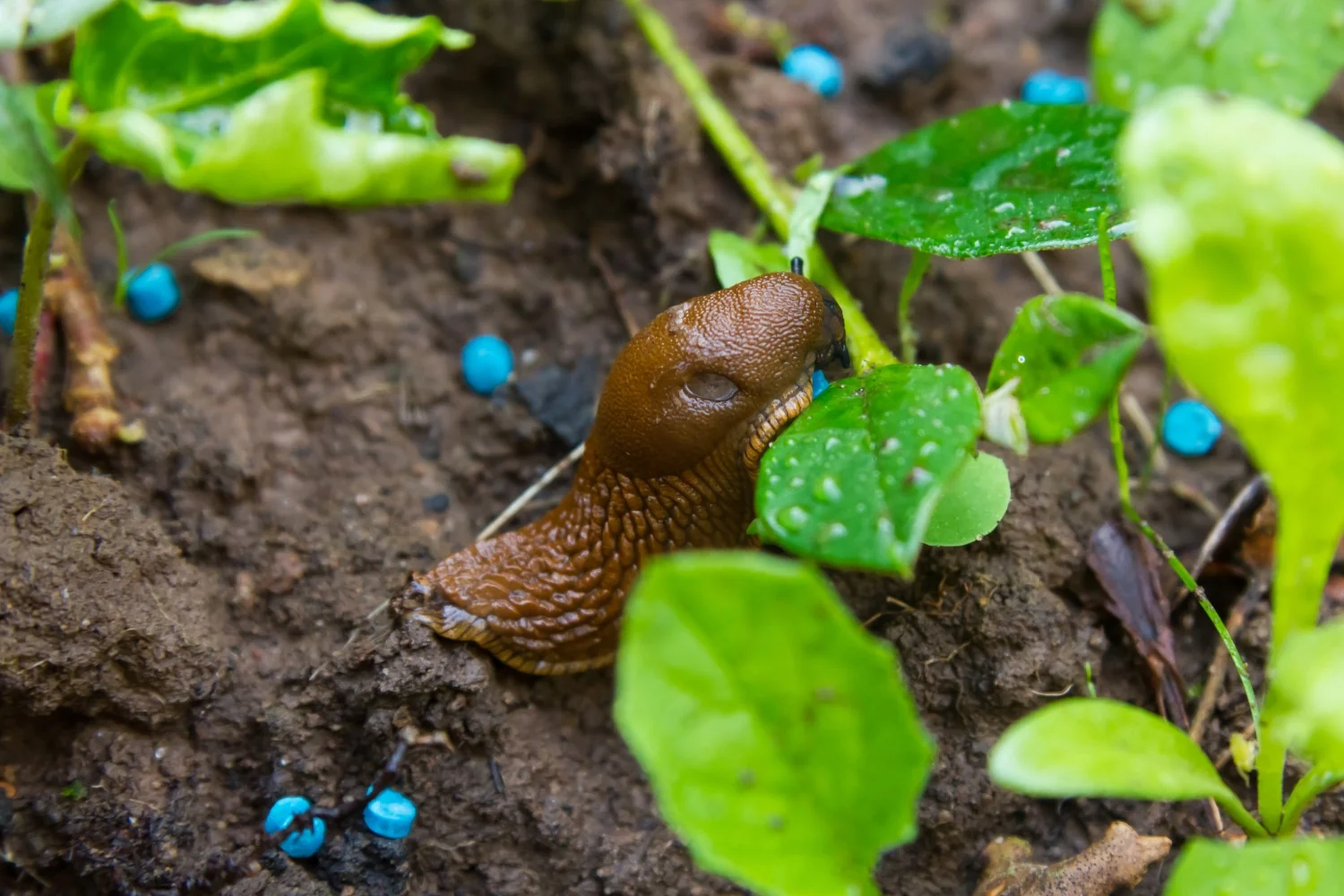
Most likely slugs or snails
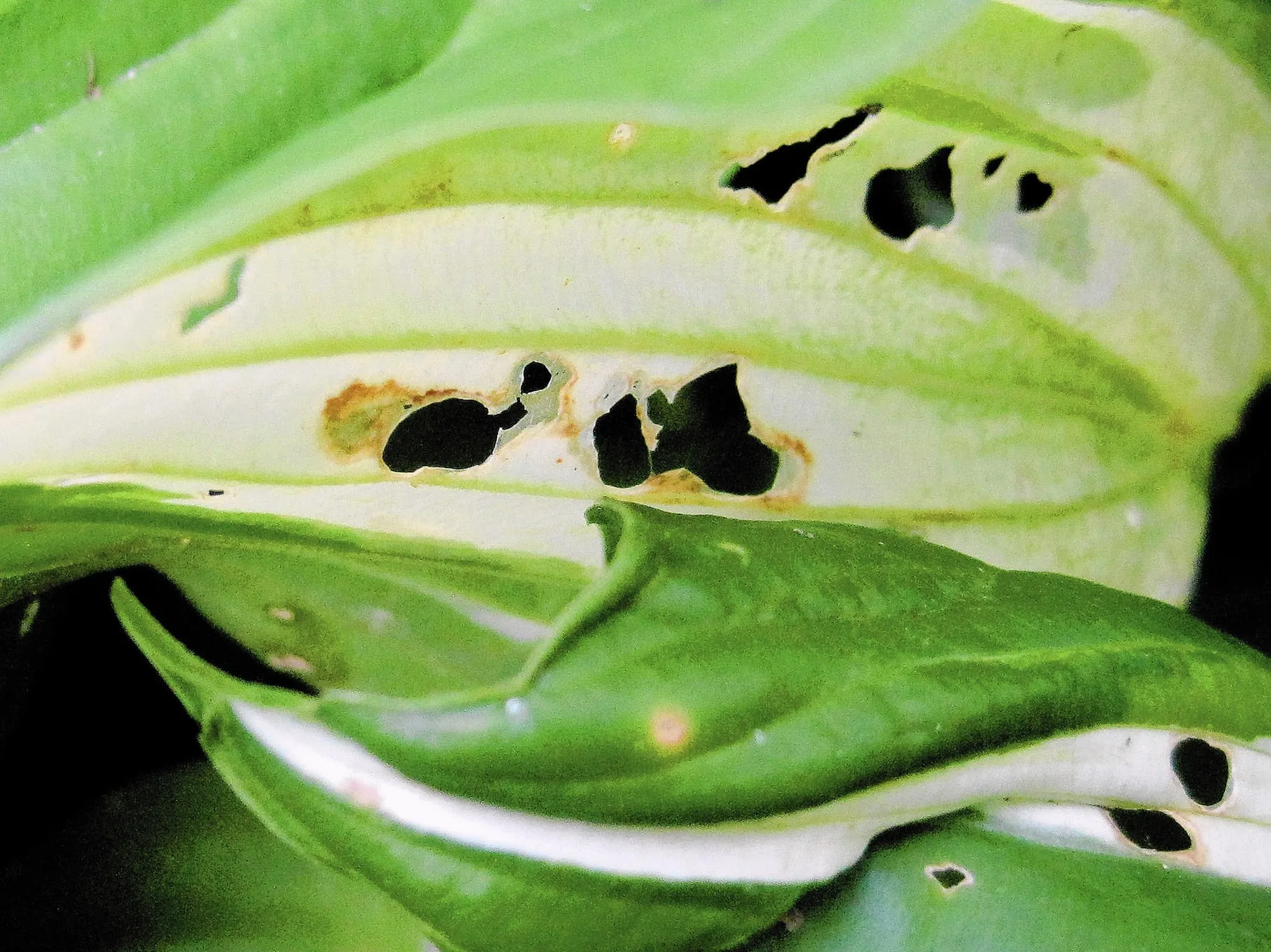
- Holes are irregular, often in the middle of the leaf, not just the edge.
- Edges look shredded or “melted,” not cleanly cut.
- Shiny slime trails may be visible on leaves or mulch in the morning.
- Damage is often worse on tender new leaves and during wet, mild weather.
Quick caveat: Earwigs, some beetles, and caterpillars can also make irregular holes. Slime and nighttime activity in damp weather are the extra clues that push the needle toward slugs and snails.
Most likely weevil adults
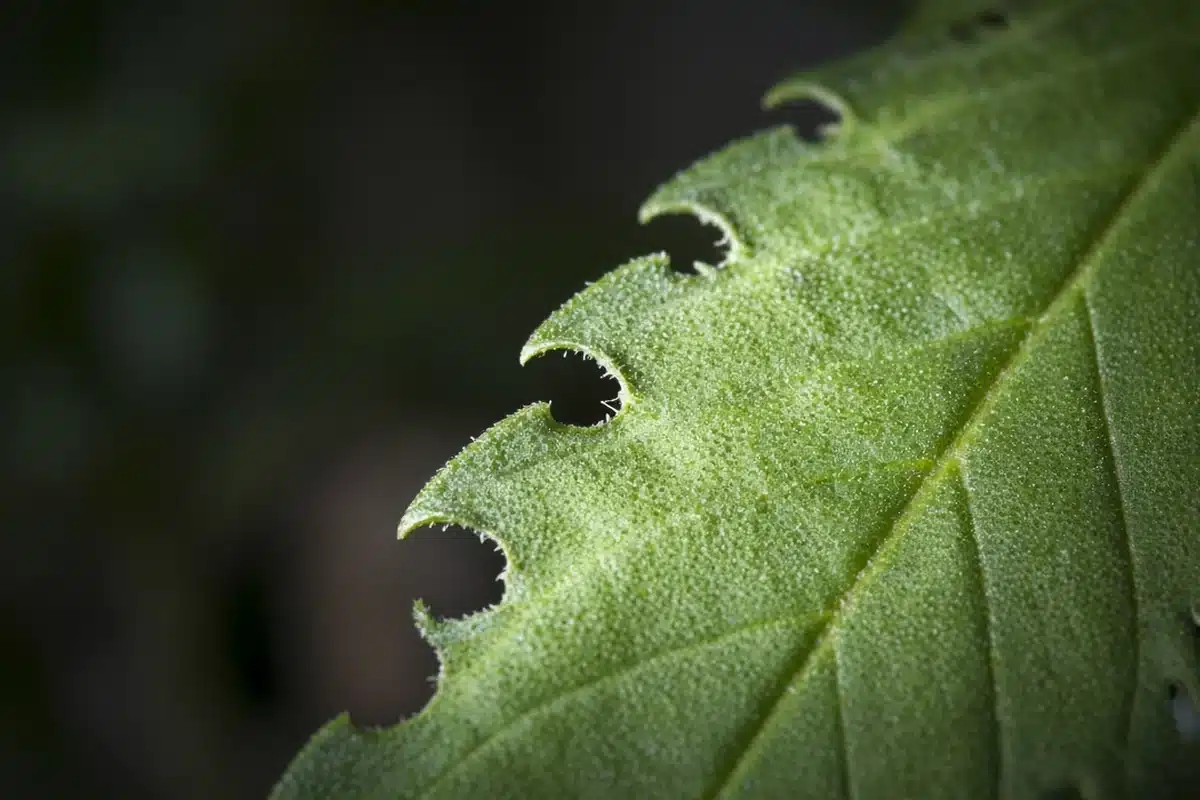
- Notches are neat, usually semicircular, like a tiny hole punch.
- Damage is mostly on the leaf margins, creating a scalloped outline.
- Feeding is usually nighttime. Daytime inspections often show nothing.
- Notching may look cosmetic at first, but it can be a clue that larvae are in the soil.
Another gentle caveat: Black vine weevil is a classic cause of scalloped notches, but other weevils (and occasionally other chewers) can do edge-notching too. Use the notch pattern as a strong hint, then confirm with a nighttime check and, if the plant is struggling, a root inspection.
Meet the black vine weevil
With vine weevils, the notches on leaves are the adult calling card. The more serious damage is often caused by the larvae, which live in the soil and feed on roots and the crown area.
Adult black vine weevils are small, dark, and often matte-looking. They are generally flightless, and they hide during the day in mulch, crevices, pots, and dense groundcover. At night, they climb and feed, leaving those tidy notches.
When to suspect larvae
- Your hosta looks wilting or stunted despite adequate moisture.
- Leaves are notching and the plant seems to struggle overall.
- The plant rocks loosely in the soil because roots have been chewed back.
- Nearby plants in pots or beds are also declining in a similar way.
Check roots for grubs
If you suspect vine weevil larvae, the goal is to confirm what is in the soil. The larvae are typically white to creamy, legless grubs with a brown head, often curved into a C-shape. They are usually found in the root zone, especially in pots, along the crown, and in moist organic soil.
Step-by-step
- Pick the right time. Early morning is fine, but any time you can work calmly is better than rushing at night.
- Choose one plant to inspect. Start with the worst-looking hosta.
- Lift and look. For in-ground hostas, gently dig a ring around the clump and lift a section. For container hostas, slide the root ball out.
- Inspect the outer root zone and crown area. Break apart the soil carefully with your fingers and look for grubs.
- Check for root damage. Healthy roots should be plentiful and firm. A grub problem can leave them sparse, chewed, or shortened.
- Put the plant back quickly. Replant, water in, and keep the plant shaded and evenly moist for recovery.
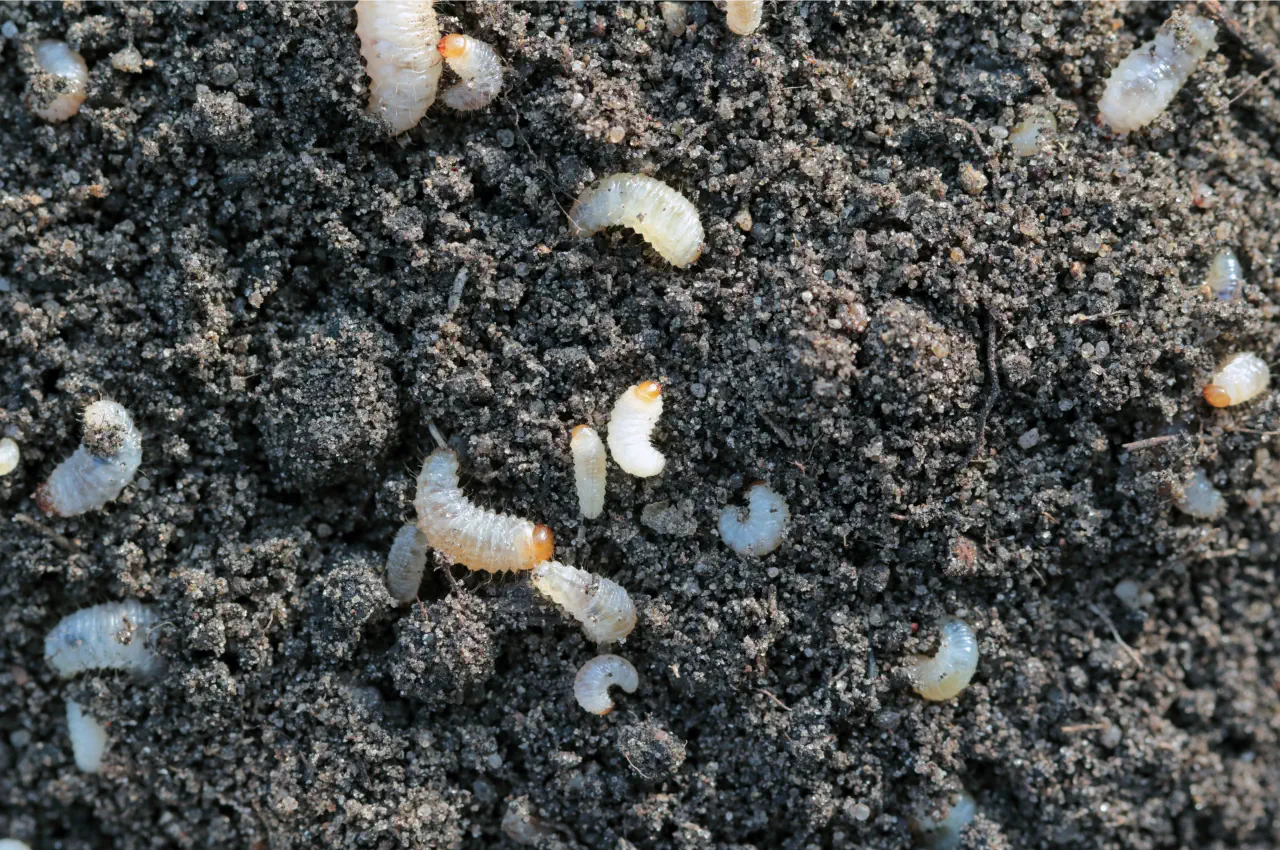
Note: Not every white grub is a vine weevil. If you find larger, thicker grubs deeper in turf-like soil, you could be looking at a different beetle larva. The context matters: vine weevil larvae commonly show up in containers and rich mulched beds, right where roots are.
What works: leaf vs soil
Here is the key, Leafy Zen takeaway: leaf damage does not always mean you should treat the leaf surface. Slugs are on the surface. Vine weevil larvae are in the soil. The best control matches the pest’s hiding place.
If it is slugs or snails
- Focus on evening and morning control. Hand-picking at dusk can be surprisingly effective in small gardens.
- Reduce hiding spots. Keep mulch from piling directly against the crown, and clear dense debris where slugs shelter.
- Use targeted baits if needed. Slug baits labeled for garden use can reduce pressure when applied according to the label.
- Avoid pointless leaf sprays. Most sprays do very little to stop night-feeding mollusks.
If it is black vine weevil adults
- Night scouting helps. Go out after dark with a flashlight and check hosta leaves and nearby hiding places.
- Shake and trap. Place a board or rolled damp cardboard nearby so adults hide under it by day, then check and remove them.
- Know the limit. Stopping adults can reduce notching, but it does not automatically solve a larval problem already in the soil.
If larvae are present
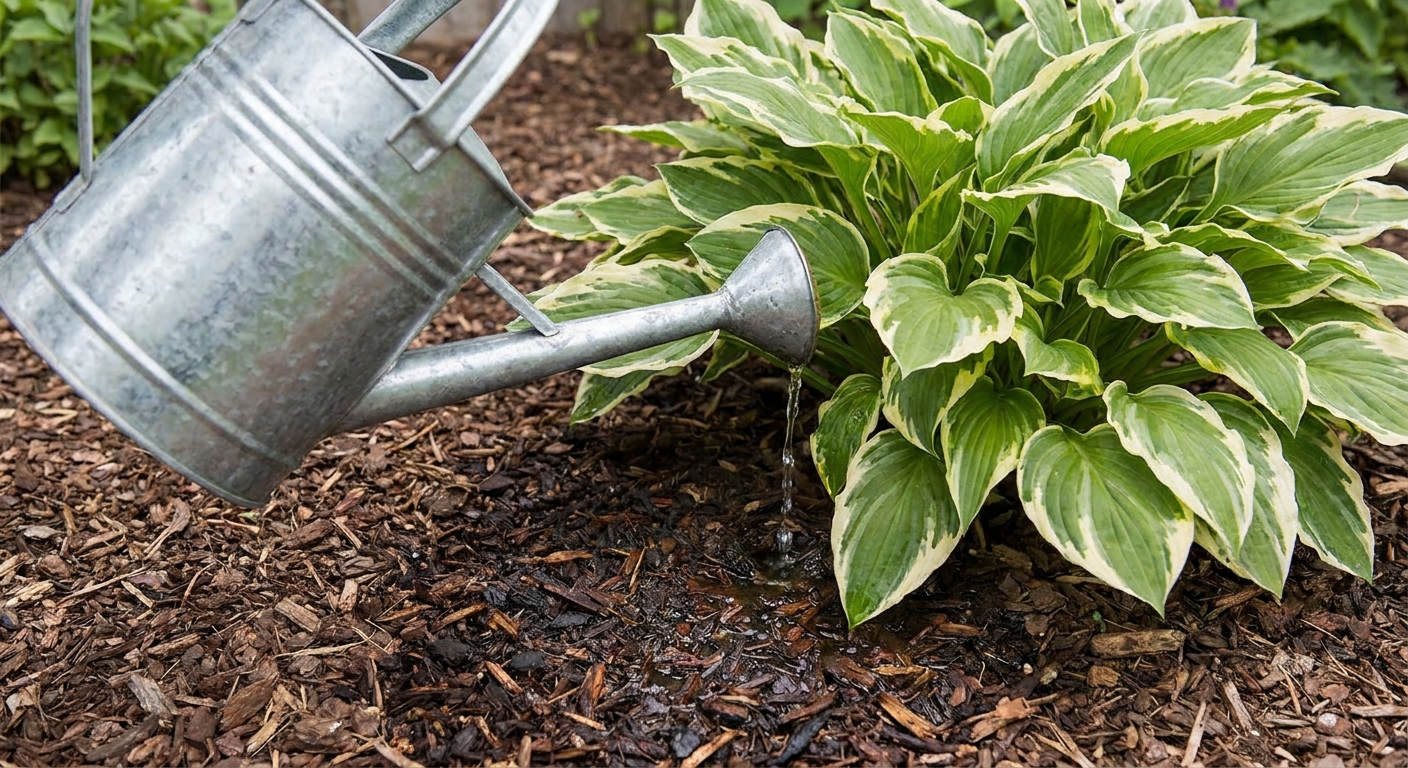
When you find vine weevil grubs, think below ground. Cultural steps like reducing constantly soggy mulch and cleaning up dense hiding spots are supportive, but they will not undo root feeding that is already happening. Confirmed larvae usually call for a targeted soil approach.
In containers, a practical move is often to remove the plant, shake or rinse off old mix, remove any visible larvae, and repot with fresh potting soil. In beds, you can hand-remove grubs you find during inspection, then focus on a soil treatment strategy.
Some gardeners use beneficial nematodes labeled for vine weevil larvae, applied as a soil drench when soil temperatures are suitable for the product and the soil can be kept evenly moist. Timing, moisture, and storage all matter for live biological controls, so follow the label closely and use local guidance.
Timing note: Vine weevil life cycles vary by region, but larval control is usually most effective when larvae are actively feeding and soils are warm enough for the nematodes you are using. If you can, match your application to the product’s recommended window rather than a calendar date.
Other possible culprits
If your damage does not fit the slug or weevil pattern, keep a wide lens for a moment.
- Earwigs: ragged holes, often on tender growth, hiding in tight, damp spaces.
- Caterpillars: holes and chunks missing, sometimes with frass (little dark pellets) nearby.
- Rabbits or deer: larger bites and torn leaves, often higher up and more dramatic.
- Hail or physical tears: splits and shredded patches that show up suddenly after weather or yard work.
Not pests: sun scorch
Sun scorch can look dramatic, but it has a different vibe than chewing damage.
- Scorch looks burned. You see tan, papery patches, often between veins or at the leaf edges.
- No missing tissue. The leaf is discolored, not cut out in chunks.
- Pattern follows exposure. The most exposed side of the clump gets hit hardest, especially after hot afternoons.
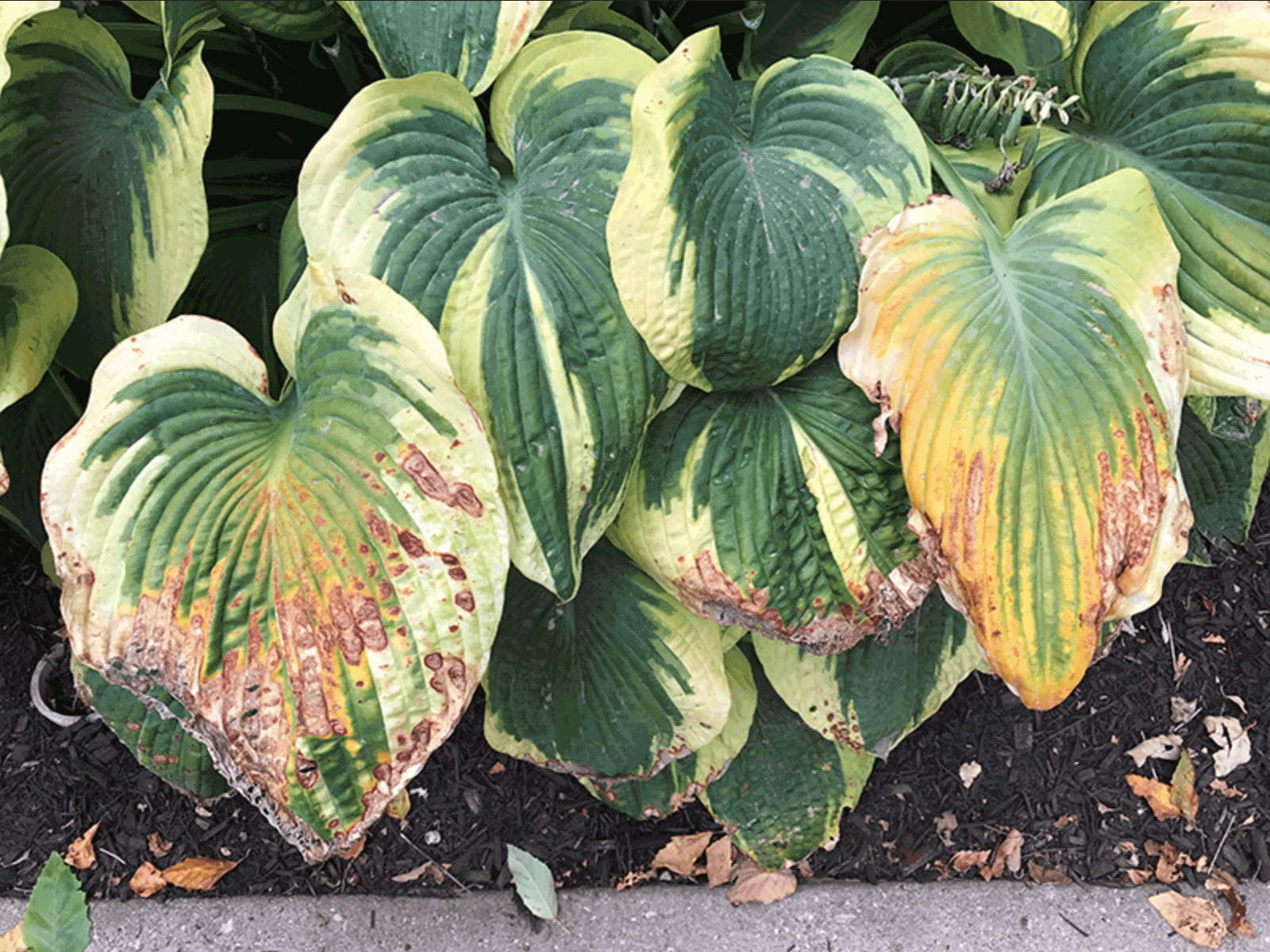
If your hosta is scorched, your best fix is usually cultural: more shade, consistent moisture, and a little protection from reflected heat.
Not pests: HVX
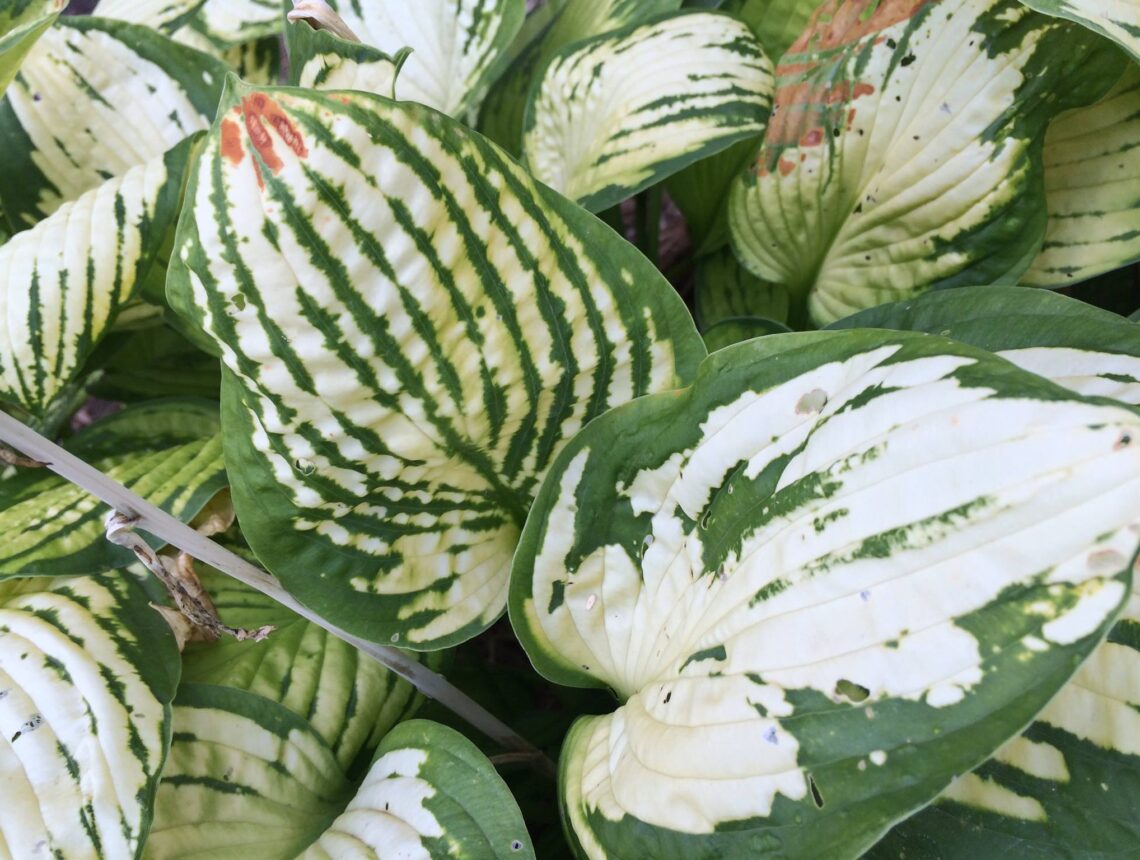
HVX is not a chewing problem. It is a virus, and it tends to show up as color and pattern changes rather than missing leaf pieces.
Common red flags
- Ink-bleed patterns where green looks smeared or feathered into lighter areas.
- Mottling or unusual patchwork that does not match the cultivar’s normal variegation.
- Persistent distortion across multiple leaves and over time (distortion alone can also come from weather or pests).
Important nuance: a hosta can have some chewing damage and still be perfectly healthy. Chewed leaf edges do not diagnose HVX. If you suspect HVX, avoid dividing and sharing that plant. Sanitize tools, avoid moving sap from plant to plant, and consider removal to prevent spread. If you want certainty, seek local confirmation resources before you destroy a beloved plant, because HVX can be confused with sports, normal variegation, and other stress patterns.
Calm checklist
- Are pieces missing? If yes, think pests or physical damage. If no and it looks crispy or bleached, think scorch.
- Is the damage neat and scalloped on the edge? If yes, suspect weevils and scout at night.
- Is it ragged with holes and slime? If yes, suspect slugs or snails.
- Is the plant weak overall? If yes, check roots for larvae and root loss.
- Are you seeing odd color bleeding or persistent mottling? If yes, consider HVX and avoid spreading sap.
FAQ
Will a hosta recover from notched leaves?
Yes. Notches are mostly cosmetic. The bigger concern is whether the plant is also being weakened at the roots by larvae. A well-rooted hosta usually grows through leaf damage just fine.
Should I cut off the damaged leaves?
If the leaves are still mostly green, they are still feeding the plant. You can remove the worst-looking leaves for appearance, but do not strip the plant bare. If you do remove foliage, use clean snips and avoid spreading sap from plant to plant.
When is the best time to look for vine weevil adults?
After dark with a flashlight. Adults hide during the day and feed at night, so nighttime checks are far more revealing than daytime leaf inspections.
If I only see notches, do I automatically have grubs?
Not automatically, but it is a good reason to check. Adults can wander in and nibble, and sometimes the plant is fine. If you also see wilting, poor growth, or a loose crown, that is when a root inspection becomes more important.