
Why Anthurium Flowers Turn Green

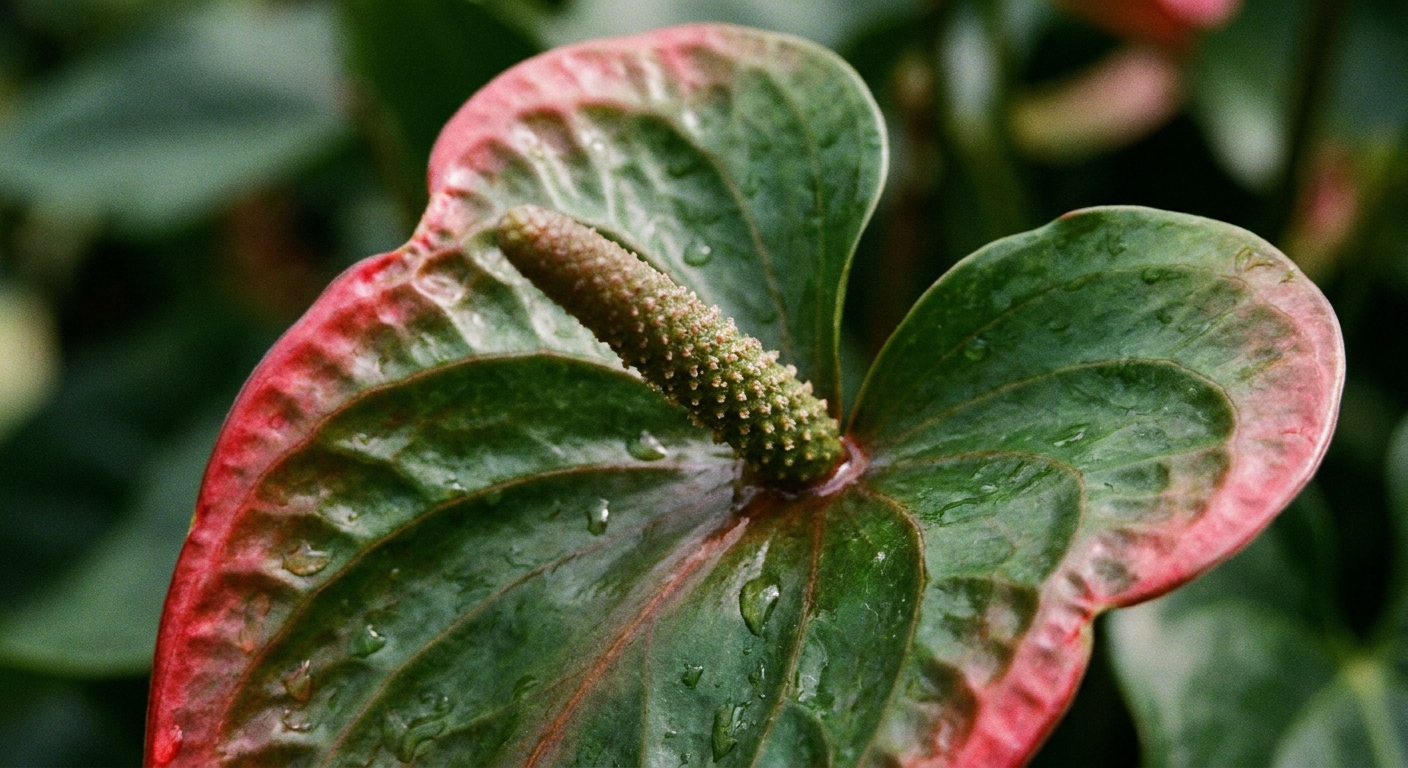
The first time my anthurium’s glossy red “flower” started blushing green, I panicked and assumed I’d done something terrible. Then I remembered what plants love to do best: change, adapt, and quietly keep going. With anthuriums, green is often part of the bloom’s normal life cycle. Other times, it is your plant responding to its environment, especially light and fertilizer.
Let’s separate the totally normal green-at-the-end from the “it came out green” situation, and then I’ll walk you through the gentle tweaks that usually bring those jewel tones back.

Quick anatomy: what is turning green?
On an anthurium, the colorful part most of us call the flower is actually a modified leaf called a spathe. The true flowers are tiny and packed along the finger-like spadix in the center.
Because the spathe is leaf tissue, it can produce chlorophyll. That is why green can show up as the bloom matures or as conditions shift.
Most common reason: the spathe is aging (and that is normal)
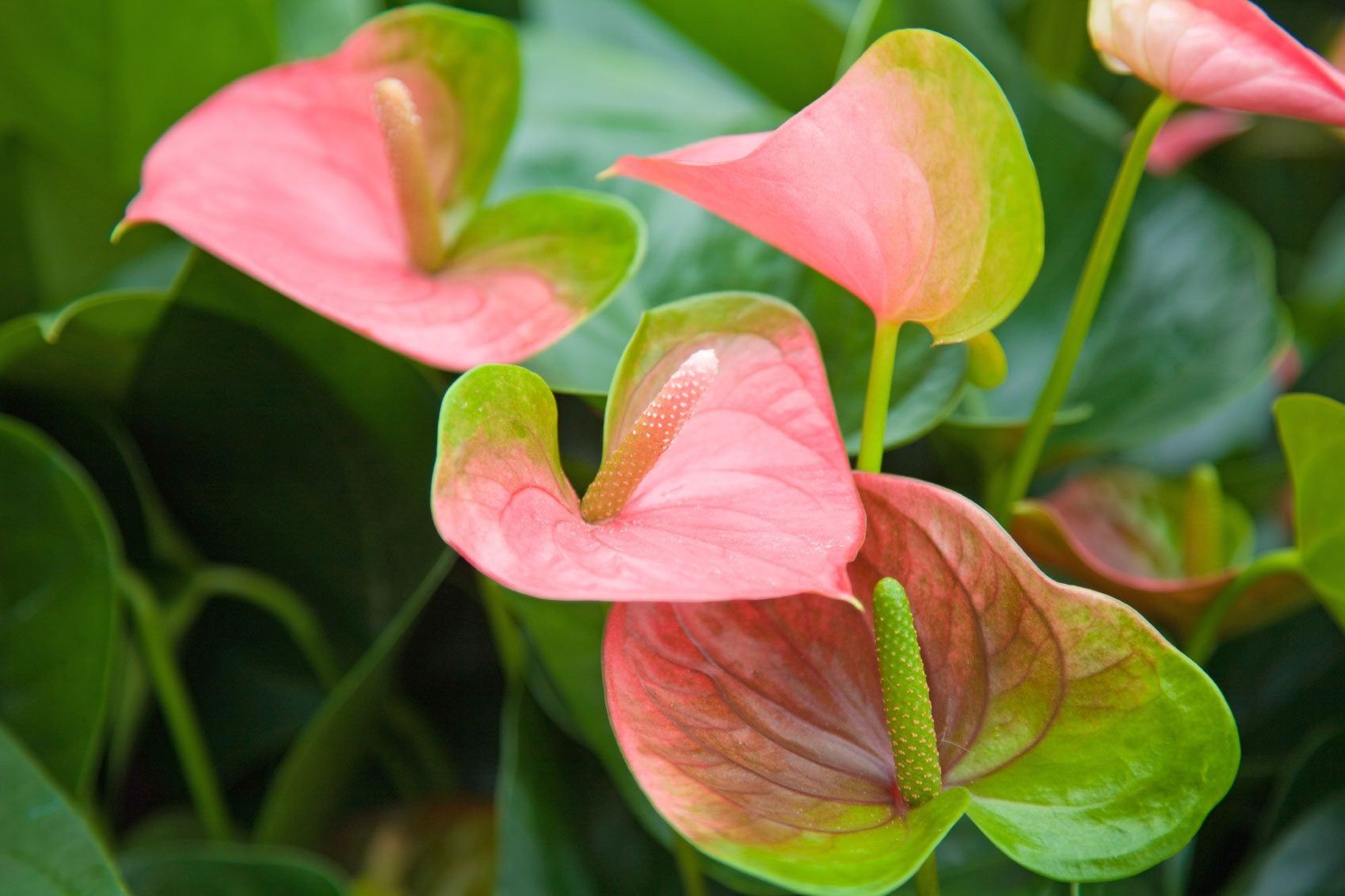
If your anthurium opened in a strong color (red, pink, white, purple) and slowly turned green over weeks, you are usually seeing a normal, end-of-bloom transition. Many anthuriums keep a bloom for a long time, often 6 to 10 weeks and sometimes longer in great conditions. As the bloom ages, the plant starts reclaiming resources. The spathe may thicken, lose shine, fade, and then green up as it behaves more like a leaf.
Signs it is simple aging
- The bloom started out brightly colored and gradually dulled.
- Green begins at the veins, edges, or near the spadix, then spreads.
- The spadix looks older too, often duller or less textured.
- The plant otherwise looks healthy and is producing new leaves.
What to do
You can leave the bloom on until it looks tired, or you can snip it once the color is mostly gone.
- To remove: use clean scissors and cut the flower stem near the base without nicking the main crown.
- Why remove at all? It tidies the plant and can encourage energy to shift toward new growth and future blooms.
If the bloom emerges green: what your anthurium is telling you
When a spathe opens green right from the start, or when multiple new blooms are consistently green, I treat it like a clue. The big three are light, cultivar traits, and fertilizer balance.
Cause #1: Light that is too low (the plant leans on chlorophyll)
Anthuriums bloom best in bright, indirect light. In lower light, the plant often produces more chlorophyll in the spathe, which can mean greener, smaller, or less vivid blooms.
How to spot low-light greening
- New spathes open pale or green instead of richly colored.
- Blooms are smaller than usual, with longer stems reaching toward light.
- Growth is slow, and leaves may look darker and more spaced out.
What to do (simple adjustments)
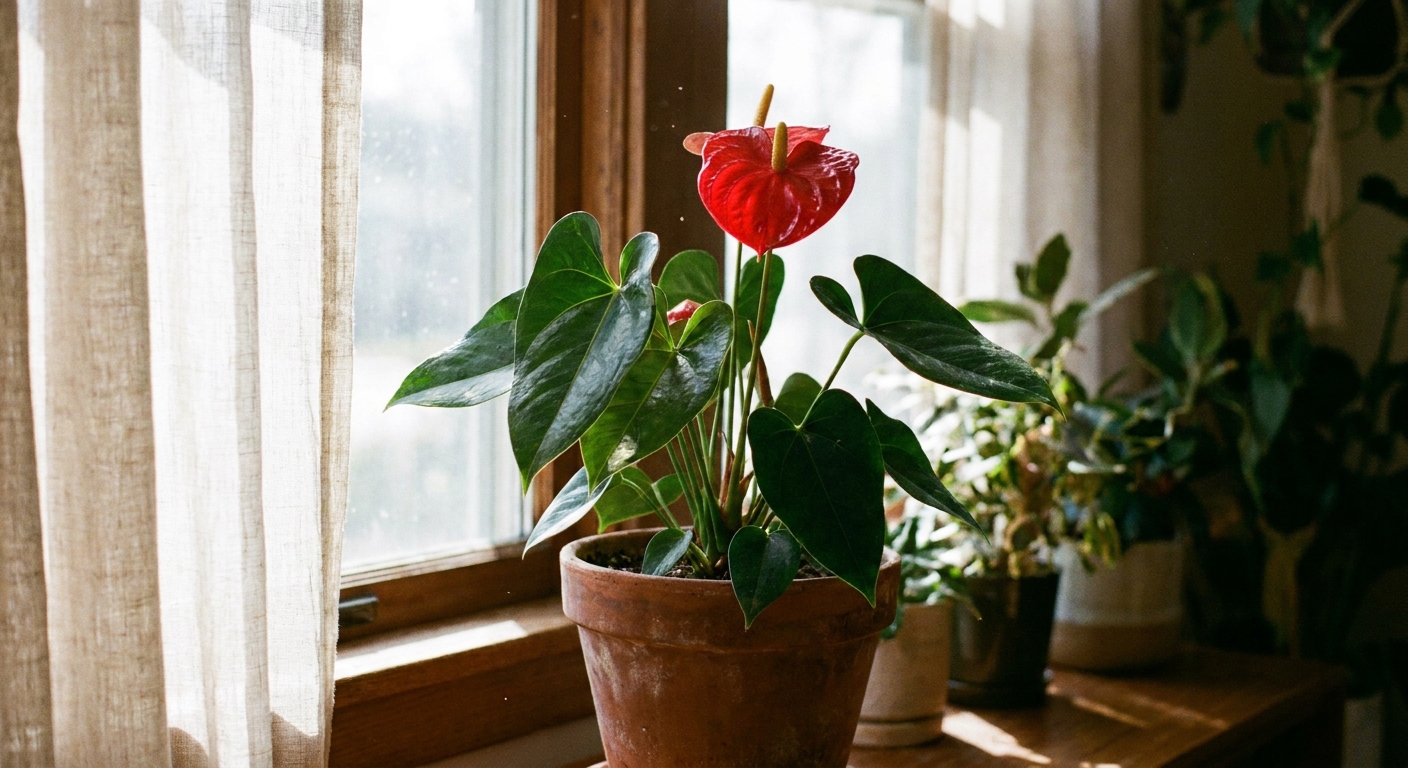
- Move the plant closer to an east window, or a few feet back from a bright south or west window with a sheer curtain.
- Rotate the pot weekly so one side does not hog the light.
- If natural light is limited, add a grow light for 10 to 12 hours a day.
Give it time. A bloom that has already opened green rarely “turns” fully red later, but future blooms often improve after a few weeks of better light.
Cause #2: Too much direct sun (bleaching, then greening)
Strong direct sun can bleach a spathe, especially lighter colors. Sometimes a spathe will look washed out, develop pale patches, and later green as it toughens up and produces chlorophyll.
Clues it is sun stress, not normal aging
- Color fades quickly, within days of opening.
- Pale, papery spots or browning appear on the spathe.
- Leaves may show sunscald, often tan patches that do not heal.
What to do
- Shift the plant out of direct afternoon rays.
- Use a sheer curtain to soften the light.
- Keep humidity steady so stressed tissue does not crisp up faster.
Cause #3: Excess nitrogen fertilizer (more leaf energy, less color)
Nitrogen is wonderful for leaves. Too much of it can push the plant toward lush greenery and away from vibrant bracts, so spathes may open greener and stay greener. This often happens when anthuriums are fed frequently with a high-nitrogen houseplant fertilizer.
Signs nitrogen may be the issue
- Leaves are large, deep green, and the plant grows fast.
- New blooms are green or dull, even in decent light.
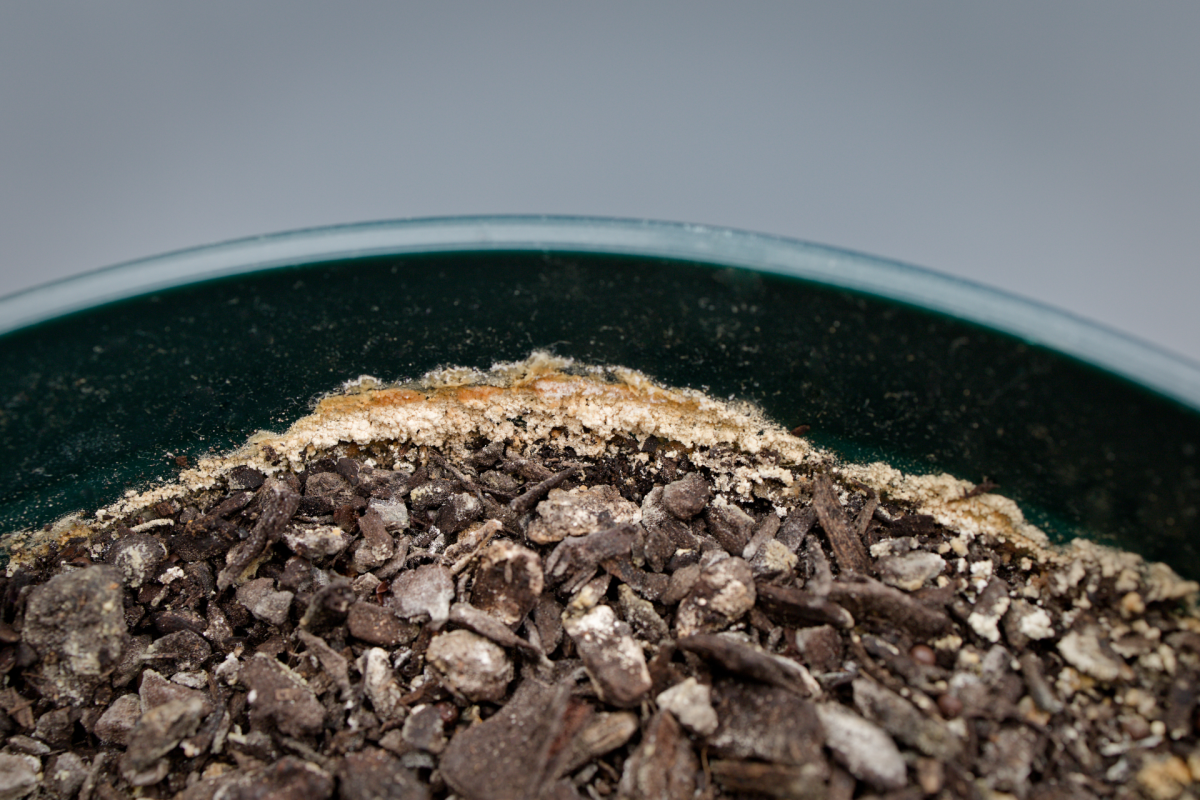
- White crust on soil or pot edges suggests fertilizer salts building up.
What to do (without starving your plant)
- Pause fertilizing for 4 to 6 weeks.
- Flush the pot with room-temperature water until it runs freely from the drainage holes, repeating once or twice to rinse excess salts.
- When you resume, use a balanced fertilizer at a lower dose, and feed only during active growth.
If you love organic options like I do, go slow. Anthuriums prefer light, consistent nutrition over big meals.
Cause #4: It is just the cultivar (some anthuriums are naturally greenish)
Not every anthurium is meant to be lipstick red. Some cultivars are intentionally lime, chartreuse, creamy green, or shift color dramatically as they mature. Others, especially some pale pinks and whites, can open with a green cast that is normal for that variety.
How to check if it is genetic
- Look at the original plant tag, listing, or photos from the grower.
- Notice whether the spathe is evenly green and glossy, not patchy or stressed.
- If the plant consistently blooms green across seasons and conditions, it is likely its natural coloring.
If you bought it in bloom and it is suddenly acting different now, environment is the more likely suspect. If it has always been greenish, congratulations, you may have a cultivar that is doing exactly what it was bred to do.
Cause #5: Temperature swings and stress can mute color
Anthuriums prefer steady warmth. Chilly nights, blasts from AC vents, or heat from a radiator can stress developing buds. Stress does not always equal disaster, but it can dull pigment production, so you end up with blooms that look greener or less saturated.
What helps
- Aim for roughly 65 to 80 F (18 to 27 C), avoiding cold drafts.
- Keep the plant away from vents and exterior doors in winter.
- Maintain moderate humidity, especially while buds are forming.
Is a green anthurium flower bad for the plant?
Usually, no. A green spathe is rarely a sign of disease by itself. Think of it as either a normal aging step or a cultural hint. The important question is whether the plant looks healthy overall: firm leaves, steady growth, and no mushy stems or foul odors in the pot.
If the plant is struggling and blooms are greening fast, address the basics: light, watering rhythm, and fertilizer habits. Those three solve most “mystery” color shifts.
What not to do (common fixes that backfire)
- Do not blast it with stronger fertilizer to “force” color. This often makes the greening worse and can burn roots.
- Do not move it repeatedly from dim corners to full sun. Sudden light jumps stress the plant and can scorch leaves and spathes.
- Do not overwater to compensate. Anthuriums like evenly moist soil, not soggy soil. Overwatering can cause root issues that reduce bloom quality.
FAQ
Will a green anthurium flower turn red again?
If a bloom has already matured and turned green from age, it will not go back to red. If it opened green due to low light or fertilizer imbalance, that specific spathe typically stays greenish, but new blooms can return to richer color once conditions improve.
Should I cut off green flowers?
If the bloom is old and mostly green, yes, you can cut it to tidy the plant. If it is a fresh bloom that opened green, you can leave it. It is still photosynthesizing and it will not harm the plant.
Why is my white anthurium turning green?
White varieties commonly develop green tones as they age, and some open with a green cast. It can also happen with low light. Check whether the greening is gradual (often normal) or whether every new bloom opens green (more likely light or fertilizer related).
Why is the spathe green but the spadix looks fine?
The spathe is leaf-like tissue and responds strongly to light and nutrition. The spadix can remain fairly consistent even when the spathe shifts color, especially during aging.
A calm troubleshooting rhythm
When I’m trying to bring anthurium color back, I change only one thing at a time and then wait through at least one bloom cycle. Usually my first move is to nudge the plant into brighter, gentler light, then ease up on nitrogen-heavy feeding. Plants do not do instant makeovers, but they are wonderfully honest over time.
If you tell me what color your anthurium used to be, where it sits in your home, and what fertilizer you use, I can help you narrow down the most likely cause.