
Should I Kill Tomato Hornworms?

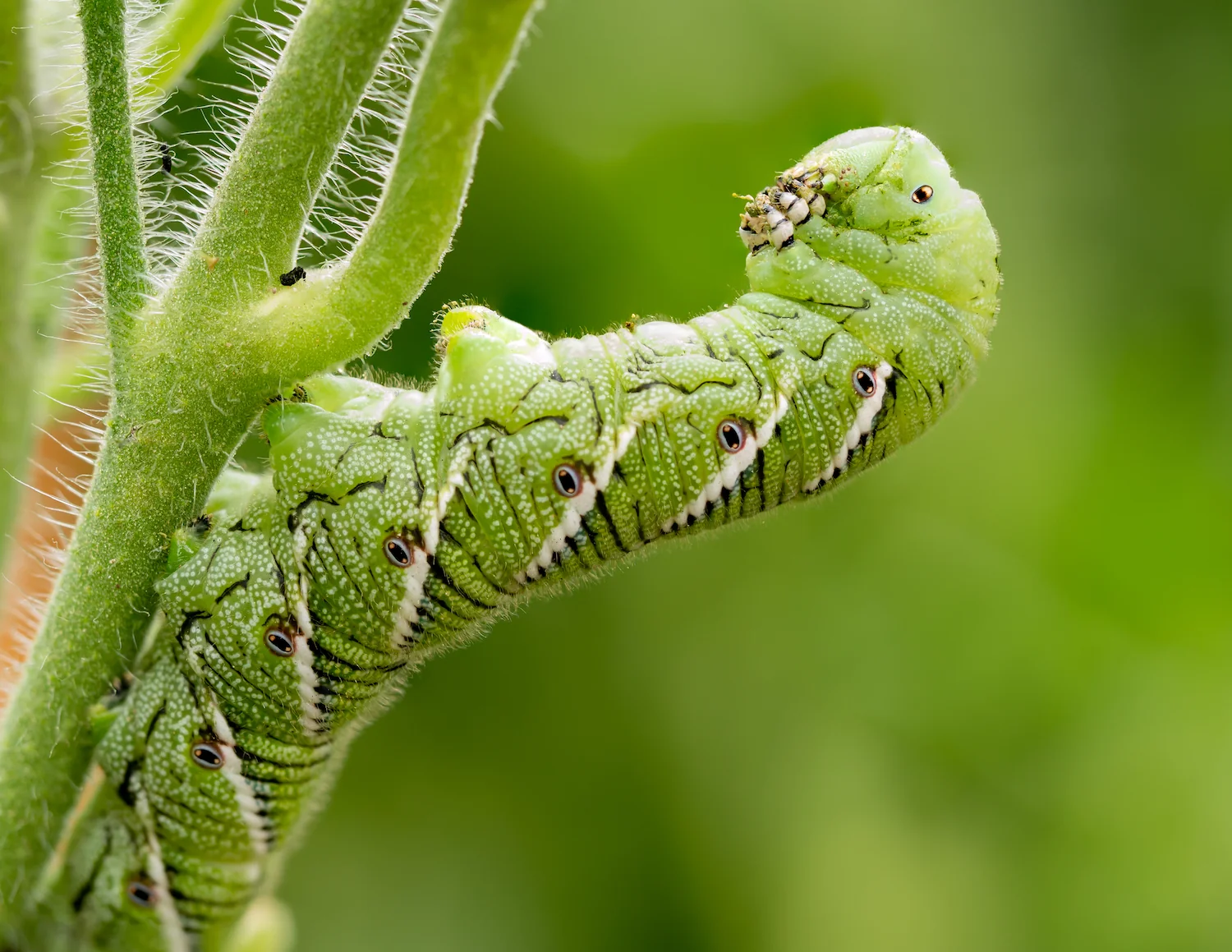
If you have ever walked out to your tomatoes feeling proud and then suddenly thought, Why does my plant look like it went through a paper shredder? you have probably met the tomato hornworm. They are chunky, green, weirdly impressive, and capable of stripping a plant fast.
So, should you kill tomato hornworms? Sometimes yes. Sometimes no. The goal is not to be ruthless. It is to protect your harvest while keeping your garden ecosystem humming.

The quick answer
Yes, remove hornworms when you see active defoliation or more than one or two worms per plant. One large hornworm can chew through a surprising amount of foliage quickly, especially on smaller plants.
No, you do not always need to kill them. If damage is light and you are comfortable sacrificing a little foliage, you can relocate them on your own property or even leave a few, especially if they are already hosting beneficial parasitoid wasps (more on that in a minute).
How much damage is too much?
Tomatoes are tough plants. A healthy, established tomato can tolerate some leaf loss and still produce beautifully. What they cannot tolerate is rapid, repeated defoliation that robs them of the solar panels they need to size up fruit.
A simple rule of thumb
These percentages are approximate and will vary by variety, growth stage, weather, and how quickly the chewing is happening. Use them as a gut-check, not a grading rubric.
- Mature, vigorous plants: Often tolerate about 10 to 20 percent foliage loss with minimal impact, as long as they still have plenty of healthy leaves and the damage stops.
- Young transplants or small plants: Even 5 to 10 percent loss can set them back, because they do not have extra leaf area to spare.
- Plants in heat, drought, or poor soil: Treat them like “young plants” in terms of tolerance. Stress makes leaf loss more costly.
Damage that needs action now
- Multiple bare stems where leaves used to be
- Fresh, wet-looking chew marks appearing daily
- Large green droppings (frass) on leaves or the soil, especially if you see a pile under one branch
- Fruit chewing (less common than leaf chewing, but it happens)
If your plant looks like it is being skeletonized, that is not “natural pruning.” That is a hungry caterpillar party.
Confirm it is hornworms
Before you go to war, make sure you are blaming the right culprit. Shredded tomato leaves can also come from other caterpillars, beetles on small seedlings, or general chewing pests.
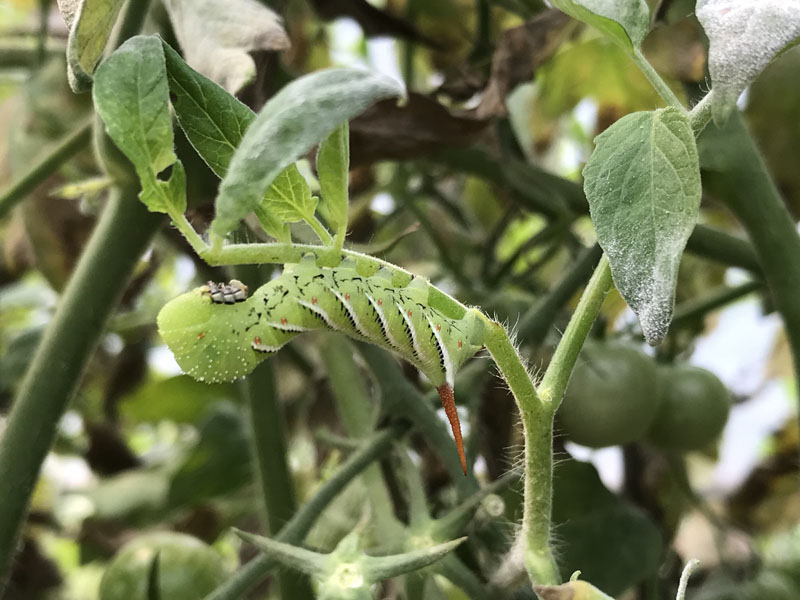
Hornworm clues: big green droppings, clean-looking bites, and the actual caterpillar tucked inside the canopy. If you see frass, you are usually close.
Tomato vs tobacco hornworm
Gardeners lump them together (I do too), but you will see two common culprits:
- Tomato hornworm: white V-shaped marks along the body.
- Tobacco hornworm: diagonal white stripes along the body.
Horn color is often mentioned (tomato tends to be darker, tobacco often red), but it can vary. If you want the most reliable ID, trust the side markings more than the horn.
They are controlled the same way, and both can mow down tomatoes, peppers, and eggplant.
When to spare a hornworm
This is where my inner organic horticulturist gets a little soft-hearted. There are situations where leaving a hornworm can actually help you.
If it has rice on its back
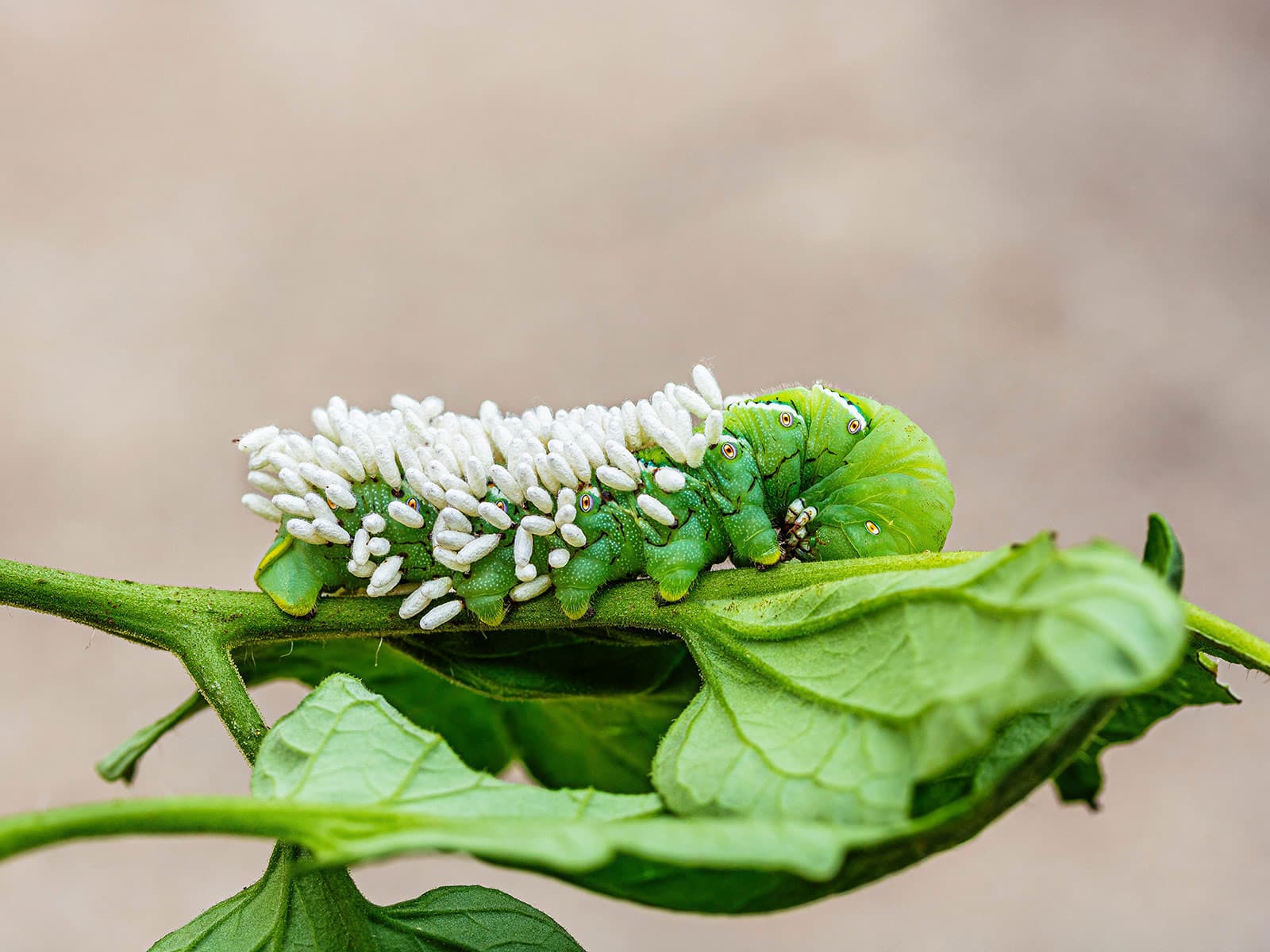
If you see a hornworm covered in little white, grainy spikes, those are parasitic braconid wasp cocoons. The wasps have already done the hard work of controlling the pest for you. That hornworm is basically a nursery for beneficial insects.
One nuance: the hornworm may keep nibbling for a bit before the wasps finish the job.
Recommendation: If your tomato can handle a little more chewing, leave that hornworm in place. If your plant is already stressed or getting hit hard, move the parasitized hornworm to a non-valuable “sacrifice” tomato or other nightshade on your property and let the wasps complete their life cycle. You will likely see fewer hornworms later.
What to do next
I like to keep pest decisions simple. Ask yourself two questions: (1) How many worms? (2) How fast is damage happening?
Small problem
One to two hornworms, light damage.
- Best choice: Hand-pick and relocate on your own property, or hand-pick and dispatch quickly if you prefer.
- When to spare: If the worm is parasitized (white cocoons), or if you are okay with a little leaf loss and want to support natural predators.
Moderate problem
Several worms across plants, damage spreading.
- Best choice: Hand-pick daily for several days, plus consider Bt as backup if you keep finding new, small caterpillars.
- When to spare: Keep the parasitized ones. Remove the healthy, actively feeding ones.
Big problem
Plants stripping fast.
- Best choice: Use Bt promptly and re-check plants every evening. Hand-pick any you find.
- Note: In heavy outbreaks, relocation usually just moves the problem to another gardener’s yard, or back into yours.
Option 1: Hand-picking
Hand-picking is oddly satisfying once you get over the initial “that is a lot of caterpillar” feeling.
How to find them
- Go out at dusk or early morning. They are easier to spot then.
- Look for missing leaves and black-green droppings on lower leaves or the soil. Follow the mess upward.
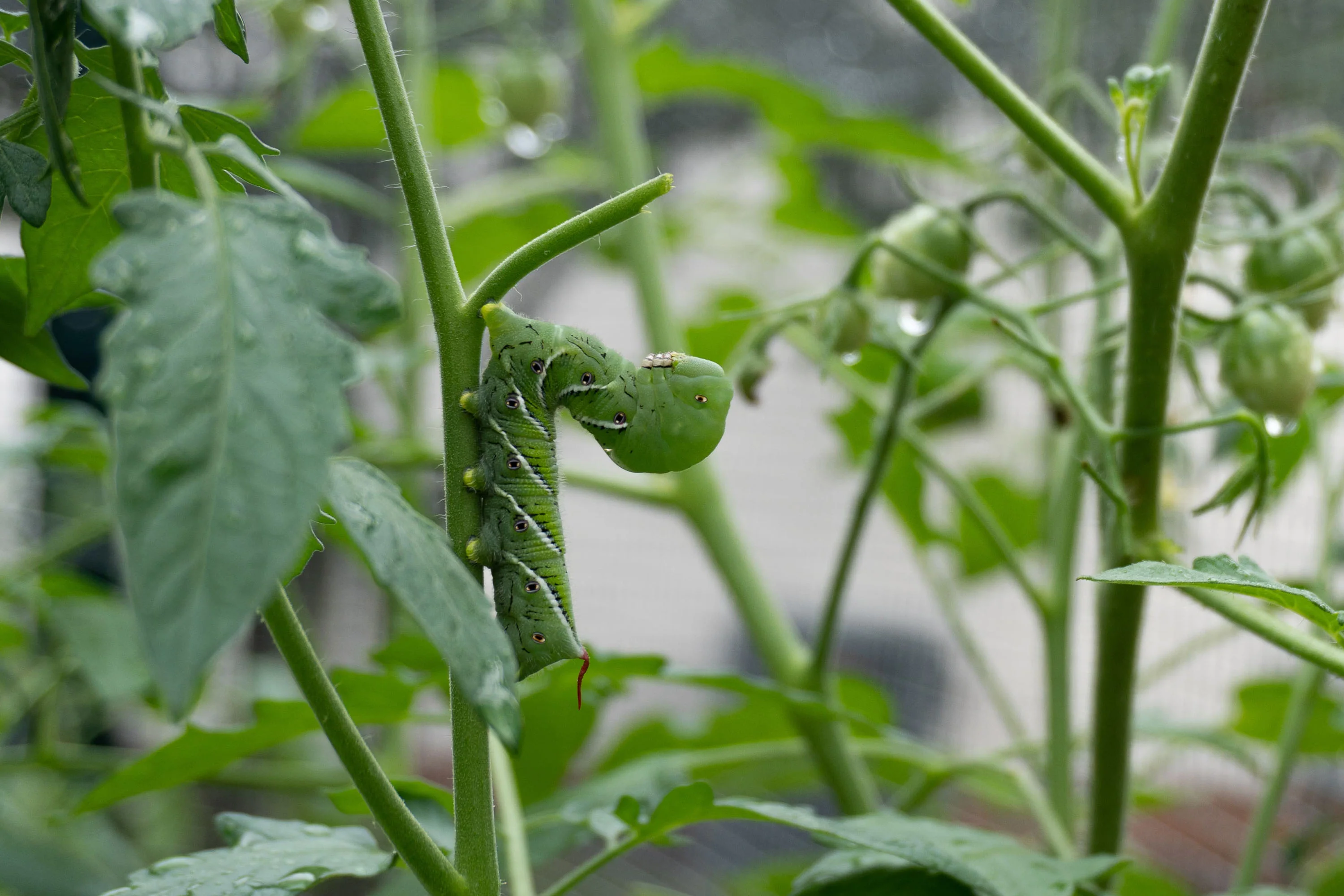
- Check the inside canopy. Hornworms blend in like little green ninjas.
- Try a UV flashlight at night. Many gardeners report hornworms seem to glow under UV, which can make them stand out.
What to do after you pick them
- Relocate: Only if you can move them far away from tomatoes and related crops on your own property. Realistically, many home gardeners cannot.
- Dispatch humanely: If you choose to kill them, do it quickly. A common garden method is dropping them into a bucket of soapy water.
- Feed the birds or chickens: If you keep poultry, many chickens consider hornworms a delicacy.
Wear gloves if it makes you feel braver. I do sometimes, and I have been gardening forever. If you handle them bare-handed, just wash up afterward. Tomato plant sap can irritate sensitive skin.
Option 2: Bt spray
If you want an organic spray that targets caterpillars without wiping out your whole garden’s insect community, Bt (Bacillus thuringiensis var. kurstaki), often sold as Bt-k, is the gold standard.
Why Bt works
- It is highly targeted to caterpillars that eat treated leaves.
- It is not a broad-spectrum insecticide.
- It is excellent for small, young hornworms, which are easier to control than the giant ones.
How to use it
- Spray in the evening so it lasts longer (sunlight breaks it down).
- Coat the tops and undersides of leaves, especially where you see fresh chewing.
- Reapply after heavy rain and as directed on the label.
- Keep checking plants. You may still need to hand-pick big worms.
Important: Bt can also affect caterpillars of butterflies and moths that feed on treated plants. Use it only where needed, and avoid spraying nearby host plants for butterfly larvae.
Option 3: Let nature help
This option is for the gardener who can tolerate a little cosmetic damage and wants to lean into ecology.
Leaving a small number of hornworms can provide food for:
- Braconid wasps and other parasitoids
- Predatory bugs
- Birds
My boundary: I only “let nature handle it” when plants are large, healthy, and fruit is already set, and when I am seeing signs of predator activity (parasitized worms, lots of beneficial insects, birds working the bed). If your tomato is a spindly teenager, it does not need a life lesson in resilience.
Will they come back?
Often, yes. Hornworms are most noticeable mid to late summer, and in warm areas you can see more than one round in a season. They pupate in the soil and emerge as moths, so it is normal to have a “quiet week” and then suddenly find fresh chewing again.
Sphinx moths and the garden
Hornworms turn into big, beautiful sphinx moths (also called hawk moths). Many sphinx moths are pollinators, especially at dusk and night. They can contribute to pollination in ornamental gardens and for certain night-blooming plants.
Here is the practical truth for a tomato grower: tomatoes are mostly self-pollinating, and they do not rely heavily on sphinx moths. So if you remove hornworms to protect your crop, you are not “ruining” tomato pollination.
If you want to support moths and pollinators overall, plant a diverse garden with nectar sources and reduce broad-spectrum pesticide use. You do not have to sacrifice your tomato patch to do that.
My guidance by situation
Early season or small plants
- Do not tolerate much chewing. Hand-pick immediately.
- If you keep finding more, use Bt in the evening to catch the small ones.
Big in-ground tomatoes
- Hand-pick what you see.
- Spare parasitized hornworms when your plants can take the extra nibbling.
Container tomatoes
- Treat them like stressed plants. Containers dry out fast and leaf loss hits harder.
- Hand-pick and consider Bt sooner if damage is accelerating.
Plants stripping fast
- Use Bt promptly.
- Hand-pick what you can right away.
- Water deeply and mulch, because a stressed plant bounces back slower from defoliation.
Prevention that helps
1) Check for eggs
Hornworm eggs are tiny, pale green, and often laid singly on the underside of leaves. If you are already out there deadheading basil or tying tomatoes, take 30 seconds to flip a few leaves and rub off any eggs you see.
2) Encourage beneficials
- Plant small-flowered nectar plants nearby (sweet alyssum, dill, fennel, yarrow).
- Leave a little “wild” corner if you can, even if it is just a pot of flowers on the patio.
- Avoid broad-spectrum insecticides that knock out predator populations.
3) Rotate nightshades
If you have the space, do not plant tomatoes, peppers, eggplant, or potatoes in the exact same spot every year. It is not a magic shield, but it helps interrupt pest cycles.
4) Till less, watch more
Hornworms pupate in the soil. Heavy tilling can disrupt pupae, but it also disrupts soil life. My preference is to focus on observation and quick hand removal during the season, plus a light spring cultivation if you already do that as part of your routine.
FAQ
Will my tomato plant recover?
Usually, yes. If the plant still has a decent canopy and you stop the chewing quickly, tomatoes can push new growth. Keep water consistent, add a thin layer of compost around the root zone, and avoid heavy nitrogen fertilizing late in the season (it can create a leafy plant that delays ripening).
Do hornworms bite or sting?
No. The “horn” is not a stinger. They can wriggle dramatically, but they are not dangerous to handle.
Is soapy water okay?
Many gardeners use a bucket of soapy water for quick dispatch after hand-picking. Keep it away from pets and wildlife, and do not dump it near garden beds where it could affect soil life. If you use this method, dispose of the water responsibly.
Can I relocate hornworms?
You can, but it is tricky to do ethically and effectively. If you move them nearby, they will likely find tomatoes again. If you move them far away, you may be moving a pest to someone else’s garden. Relocation makes the most sense when you have a non-valuable host plant area on your own property, or when the worm is already parasitized and you want to keep the wasps around.
A gentle bottom line
You are allowed to protect your tomatoes. Hornworms are part of nature, and so is a gardener making choices.
If your plant can spare a little foliage and you spot those white braconid cocoons, let that drama play out. If your tomatoes are getting stripped, step in quickly with hand-picking and Bt. Either way, you are not failing. You are learning the rhythms of your garden, one chewed leaf at a time.