
Rose Slugs on Roses

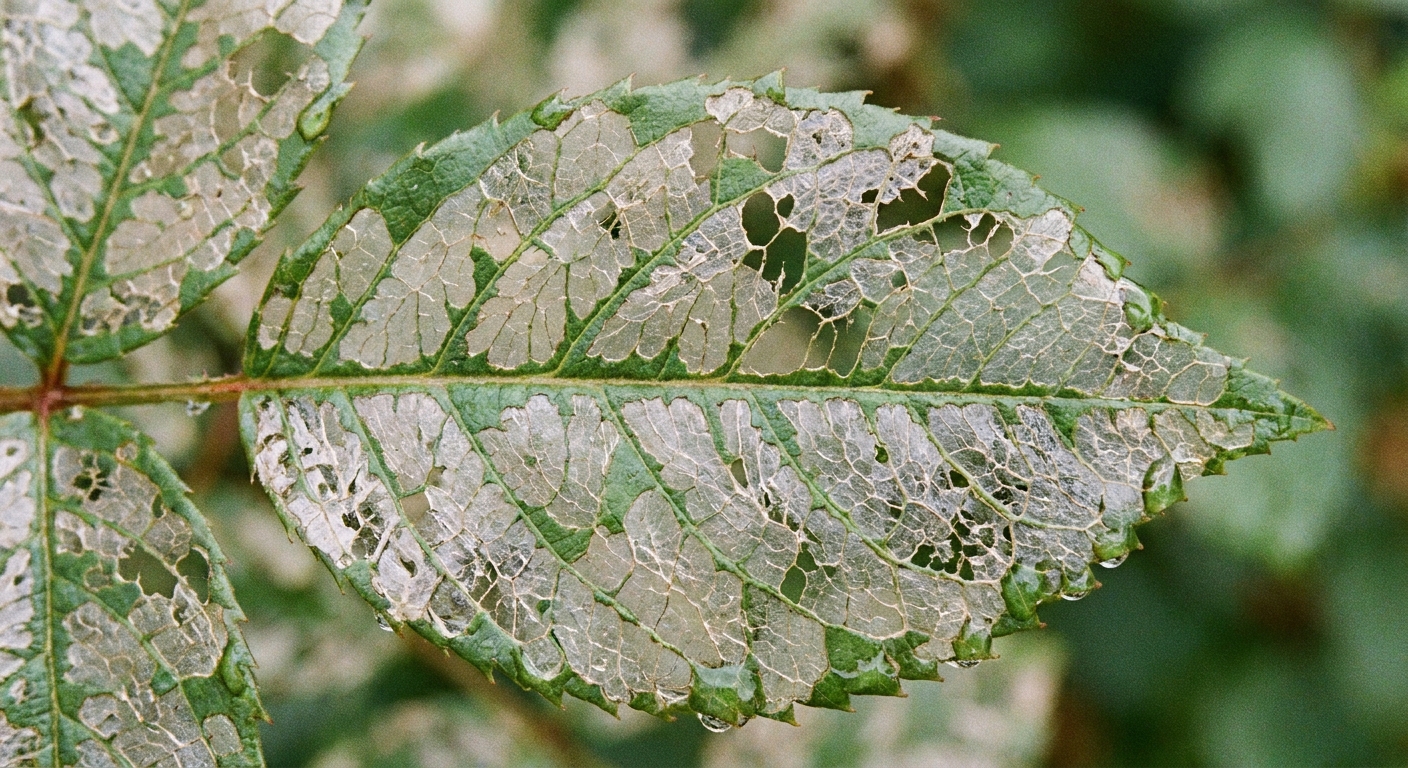
The first time I met “rose slugs,” I blamed myself. I had just finished fussing over my roses like a proud parent, only to notice leaves that looked scrubbed thin, almost like someone had taken sandpaper to the green surface. No obvious beetles. No black spots. Just that eerie, see-through windowing and a lacy look that spreads fast.
If that sounds familiar, you are probably dealing with rose slug sawfly larvae, not a true slug and not a caterpillar either. The good news is that once you know what to look for, they are fairly straightforward to manage, especially if you catch them early.

What rose slug damage looks like
Rose slugs feed on rose leaves in a very specific way. Instead of chewing clean holes, they often scrape away the soft leaf tissue and leave the veins behind.
Windowpane leaves
This is the classic early sign. Parts of the leaf look thin, translucent, and papery, as if the “skin” of the leaf remains but the green flesh is gone. When sunlight hits it, it can look like stained glass.
Skeletonized leaves
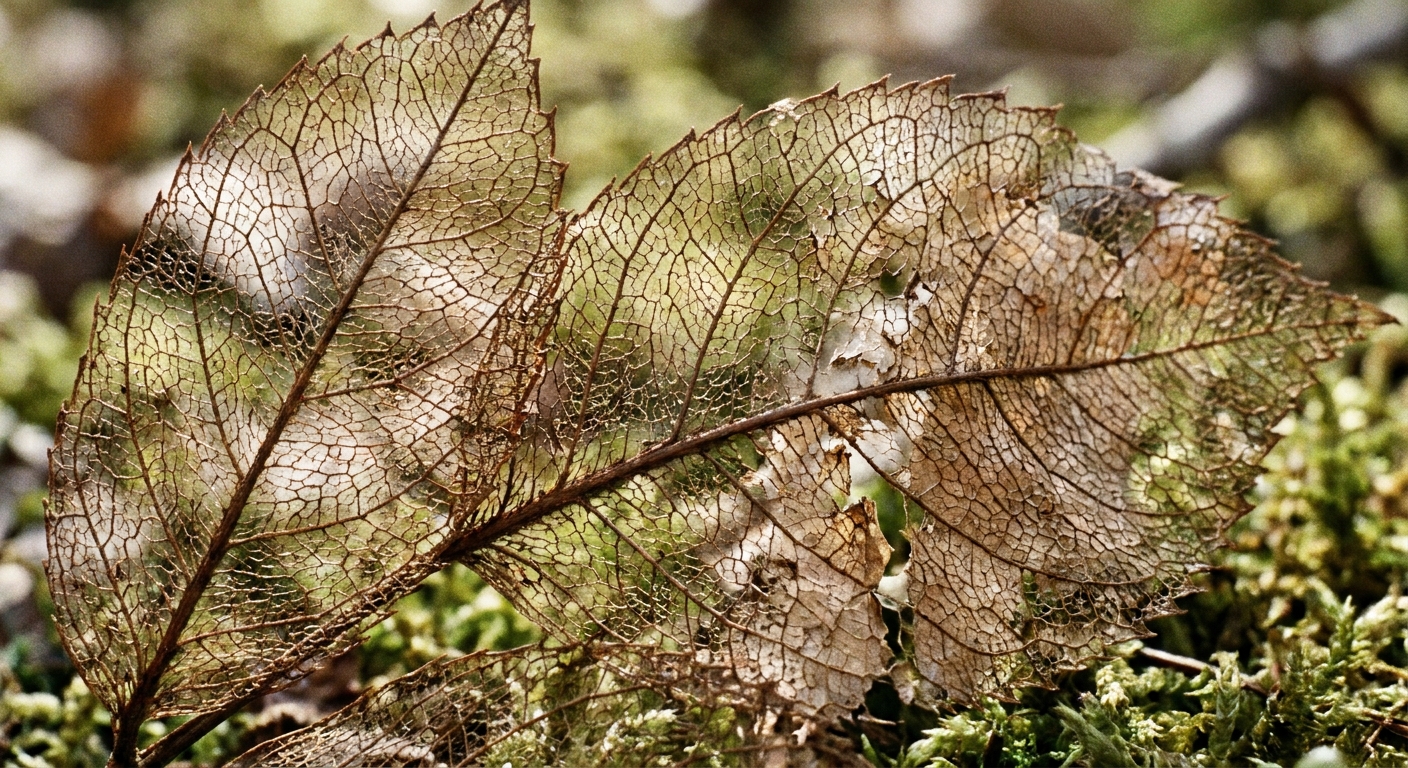
As feeding continues, the leaf can become lacy. The veins remain and much of the green tissue disappears. Severely damaged leaves may brown at the edges, curl, or drop early.
Damage is often worst on lower and inner foliage first, which is one reason people miss the problem until it has momentum.
Meet the culprit: rose slug sawfly larvae
Despite the nickname, rose slugs are the larvae of sawflies, which are related to wasps, not flies. Depending on where you live, you may encounter a few species commonly lumped together as “rose slugs.” Their behavior and damage are similar enough that the same approach works well for home gardens.
What they look like
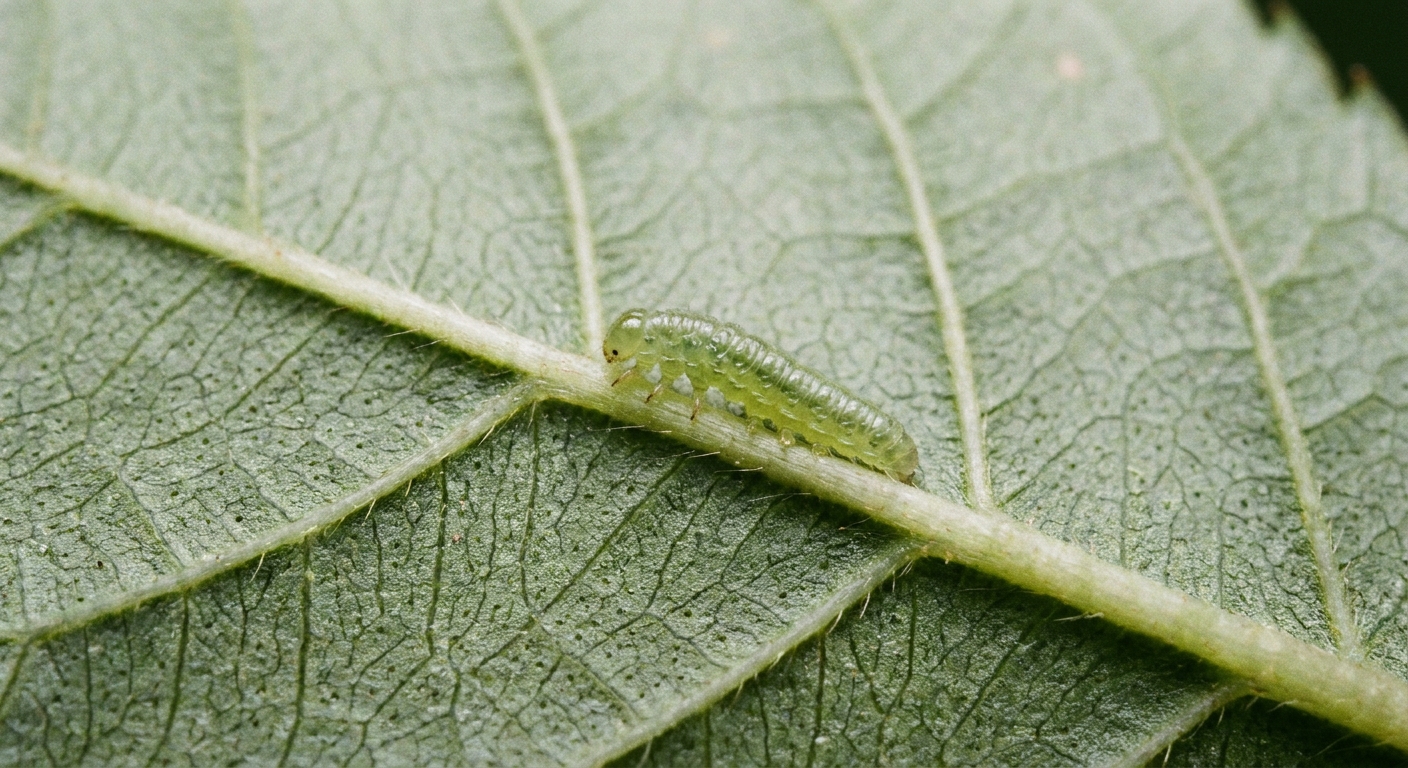
- Small, soft-bodied larvae, usually pale green to yellow-green
- Slug-like and a bit shiny or translucent
- Often curled slightly against the leaf surface when resting
- Size varies by age, roughly from a few millimeters up to about 1/2 inch
You may also see dark-headed, caterpillar-like sawfly larvae on roses in some regions. Either way, the tell is where they hang out.
Where they hide
Most rose slug larvae feed and rest on the undersides of leaves. If you only inspect from above, you can have significant damage with “no bugs in sight.”
When to look under rose leaves
Rose slug activity tends to show up in late spring into summer, often in waves. In many gardens there is an early flush when roses are putting on lots of tender new foliage, and then another round later in summer depending on species and weather.
My habit is to do a quick check during prime rose growth periods:
- Late spring: flip a few leaves on each rose once a week, especially on the lower half of the plant
- After a growth spurt: new leaves are easier for larvae to rasp and skeletonize
- Right after you notice windowpane patches: check immediately, because larvae can strip leaves quickly
How to check: Choose 5 to 10 leaves from different parts of the plant, flip them over, and look for tiny green larvae hugging the underside. If you see damage but no larvae, check early in the morning or early evening when many pests are more active and the light angle helps you spot that glossy body against the leaf.
Rose slugs vs Japanese beetles vs leaf diseases
Roses can look “chewed up” for several reasons, and it matters because the fix is different. Here is how I separate the usual suspects in the garden.
Rose slugs vs Japanese beetles
- Rose slugs: start with windowpaning and progress to skeletonizing. Often begins on leaf undersides. You may not see insects from above.
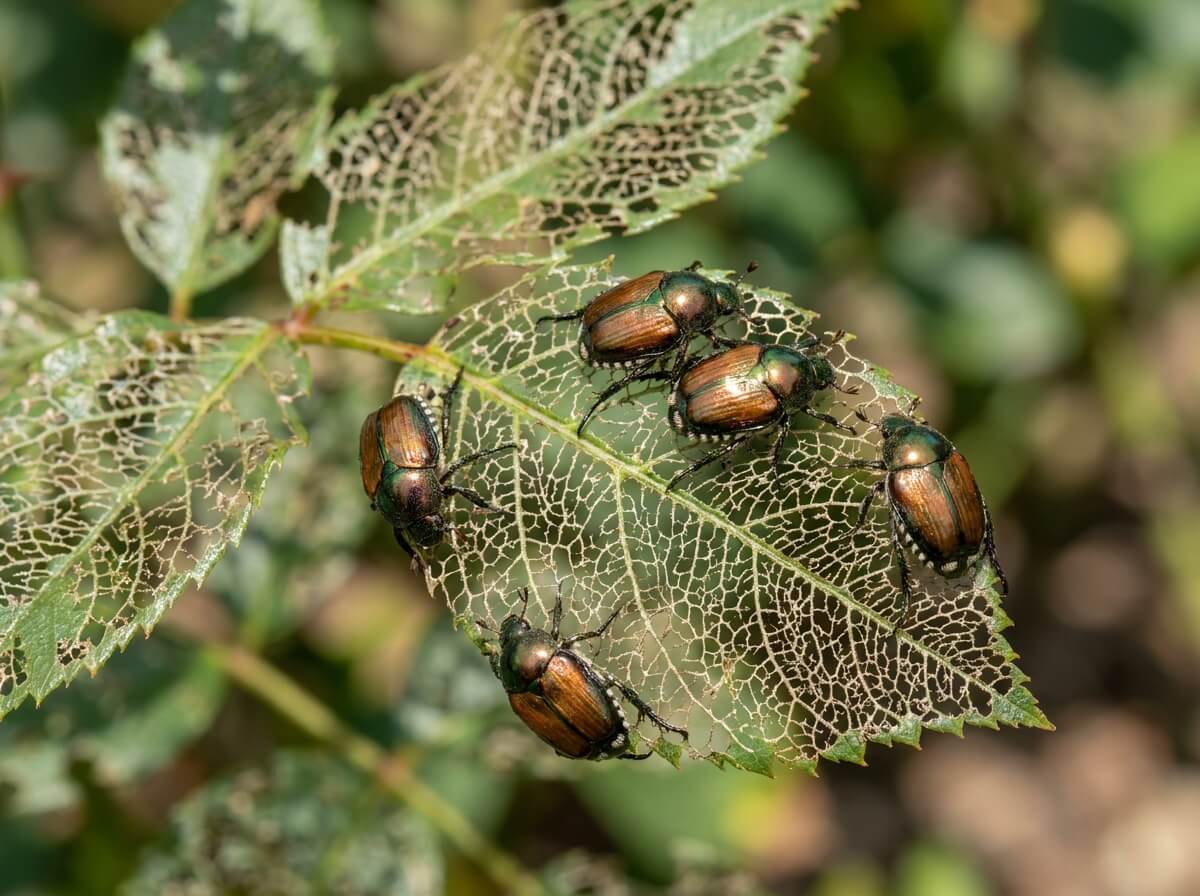
- Japanese beetles: make ragged holes and chew from the top, often leaving leaves looking torn and uneven. You typically see metallic green and copper beetles feeding in groups, especially in sun and heat.
If the leaf looks lacy but you also see big, irregular holes and you catch shiny beetles actively feeding, you can have both problems at once. Roses are popular for a reason.
Rose slugs vs black spot
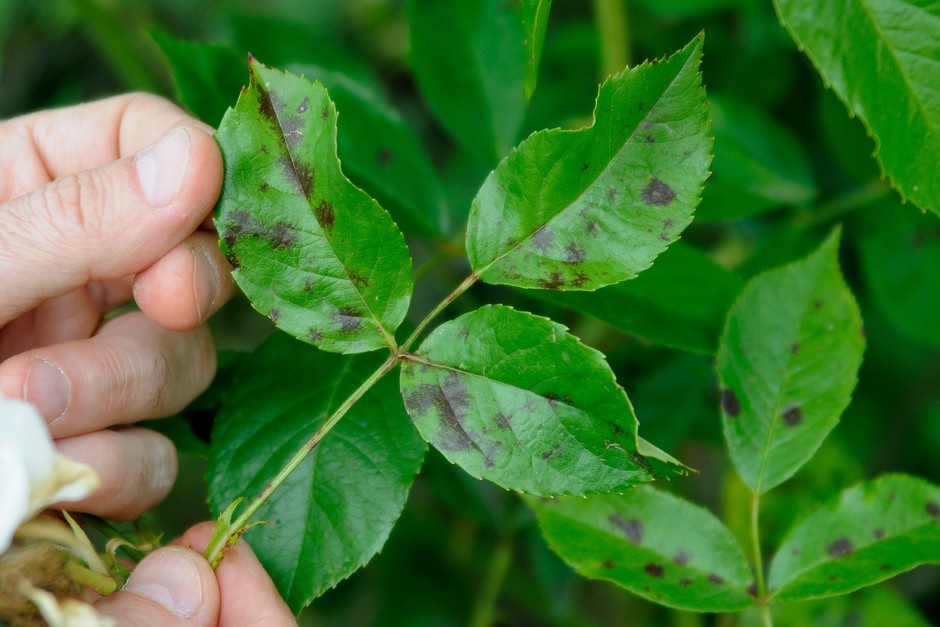
Black spot is a fungal disease, not chewing damage. The leaf tissue is still there, it is just infected.
- Black spot symptoms: round to irregular black spots with feathery edges, often with yellowing leaves and defoliation starting from the bottom of the plant.
- Rose slug symptoms: missing leaf tissue or scraped-thin areas that turn papery and then lace-like.
If you can hold a leaf up to the light and see transparent “windows”, that points strongly to rose slugs rather than black spot.
Rose slugs vs rose rust
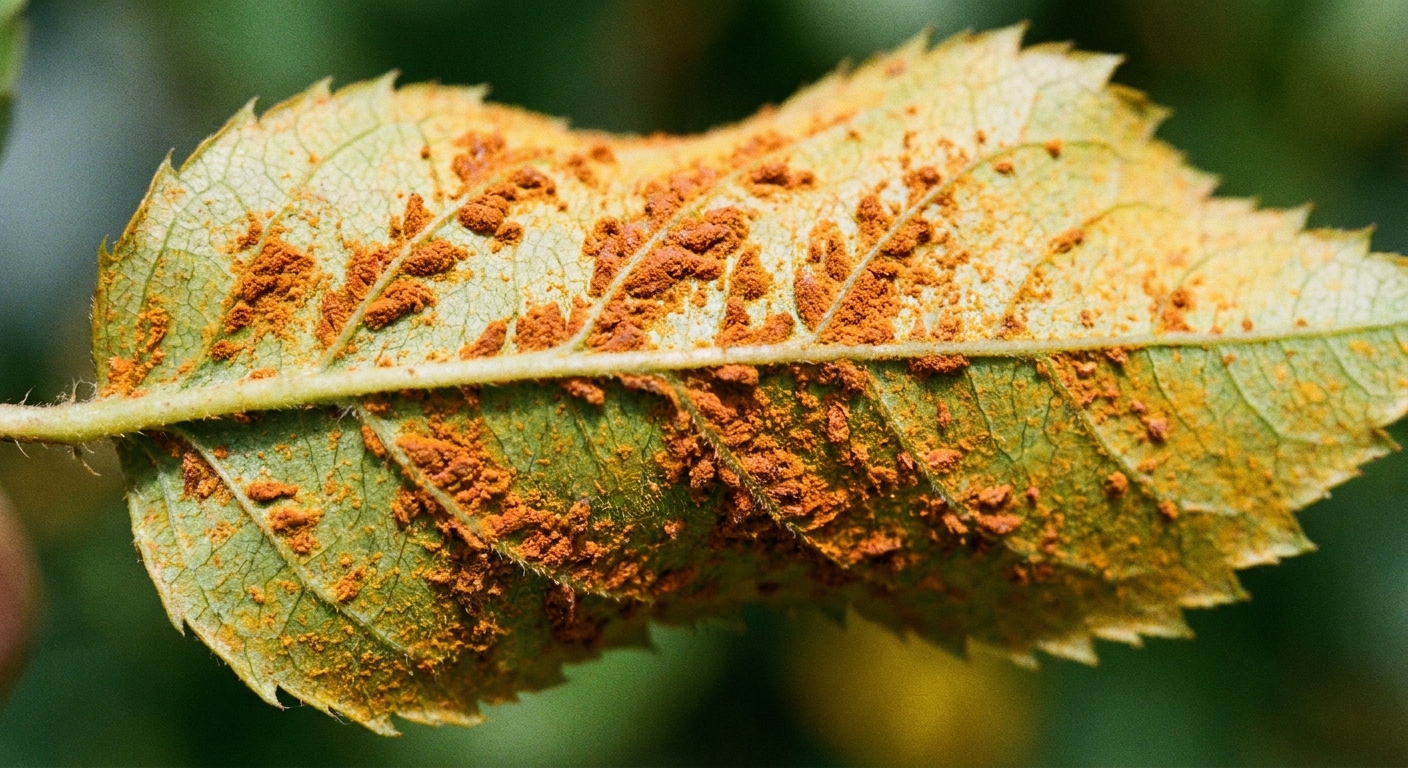
Rose rust is another fungal issue that can confuse people because it changes leaf color and texture.
- Rust symptoms: orange, rusty, or yellow powdery pustules, often most visible on leaf undersides, plus leaf yellowing and drop.
- Rose slug symptoms: scraped tissue, windowpanes, and skeletonizing, usually without orange powder.
A simple test is the fingertip swipe. Rust often leaves orange dust on your finger. Rose slug damage does not.
What to do if you confirm rose slugs
I always start with the gentlest effective step and work up only if needed. Roses can handle some leaf loss, but heavy infestations can stress plants and reduce flowering, especially during hot spells.
1) Hand removal and a strong rinse
If your infestation is light to moderate, this is often enough.
- Flip leaves and rub larvae off with gloved fingers.
- Or use a firm spray of water aimed at leaf undersides to dislodge them.
- Repeat every few days for a couple of weeks, since you may be catching different hatch times.
2) Prune out heavily damaged leaflets
If a leaflet is mostly skeleton, it is not doing much photosynthesis anyway. Snip it off, especially if it is making it hard to inspect the plant. Keep pruning modest so you do not over-stress the rose.
3) Consider low-impact sprays if damage is escalating
For organic home gardens, insecticidal soap can help when sprayed thoroughly on leaf undersides, directly contacting larvae. Horticultural oil may also provide some suppression when used appropriately for your temperatures and plant conditions.
Important note: Bt (Bacillus thuringiensis kurstaki), the common “caterpillar control,” is often not effective for sawfly larvae because sawflies are not caterpillars. This is a really common frustration point, so if Bt is not working, you are not imagining it.
4) Save the beneficials
Sawflies have natural enemies, and broad-spectrum insecticides can disrupt the garden balance. If you must treat, target the larvae carefully, avoid spraying blooms, and follow label instructions closely. I treat my roses like a little ecosystem, not a battlefield.
Preventing repeat outbreaks
You cannot completely “prevent” rose slugs forever, but you can make your roses less of an easy snack and catch problems early.
- Inspect weekly in late spring and early summer: a 60-second leaf flip beats a month of damage control.
- Keep roses vigorous: consistent watering, mulch to moderate soil moisture, and balanced feeding supports recovery after pest pressure.
- Avoid excess nitrogen: super soft, lush growth can invite more chewing insects.
- Encourage predators: diverse plantings, shallow water sources for beneficial insects, and minimal pesticide use help keep sawflies in check.
Quick checklist: is it rose slugs?
- Leaves look see-through in spots, like “windows”
- Leaf surface looks scraped, then turns lacy
- Damage shows up even when you do not see pests from above
- You find small green larvae on the underside of leaves
- Not a pattern of round black spots or orange powdery pustules
If you are still unsure, take a photo of the damaged leaf from above and the underside, then check for larvae early in the morning. In most gardens, the answer reveals itself the moment you finally flip the right leaf.
FAQ
Will rose slugs kill my rose?
It is uncommon for them to kill an established rose outright, but heavy defoliation can weaken the plant, reduce blooms, and make it more vulnerable to heat stress and disease. Young or already-stressed roses can suffer more.
Do rose slugs only attack roses?
The common rose slug sawflies strongly prefer roses. If you are seeing similar skeletonizing on other plants, you may be dealing with a different pest.
Why do I only see damage and never the “slugs”?
Because they are usually on the underside of leaves, and they can be very small. Flip leaves in the damaged area and check along the midrib and veins where larvae like to rest.
Should I remove damaged leaves?
If the leaf is mostly skeletonized, removing it is fine. If damage is light, you can leave it and focus on stopping active feeding. Those partially damaged leaves still contribute energy to the plant.