
Rose Rust on Roses

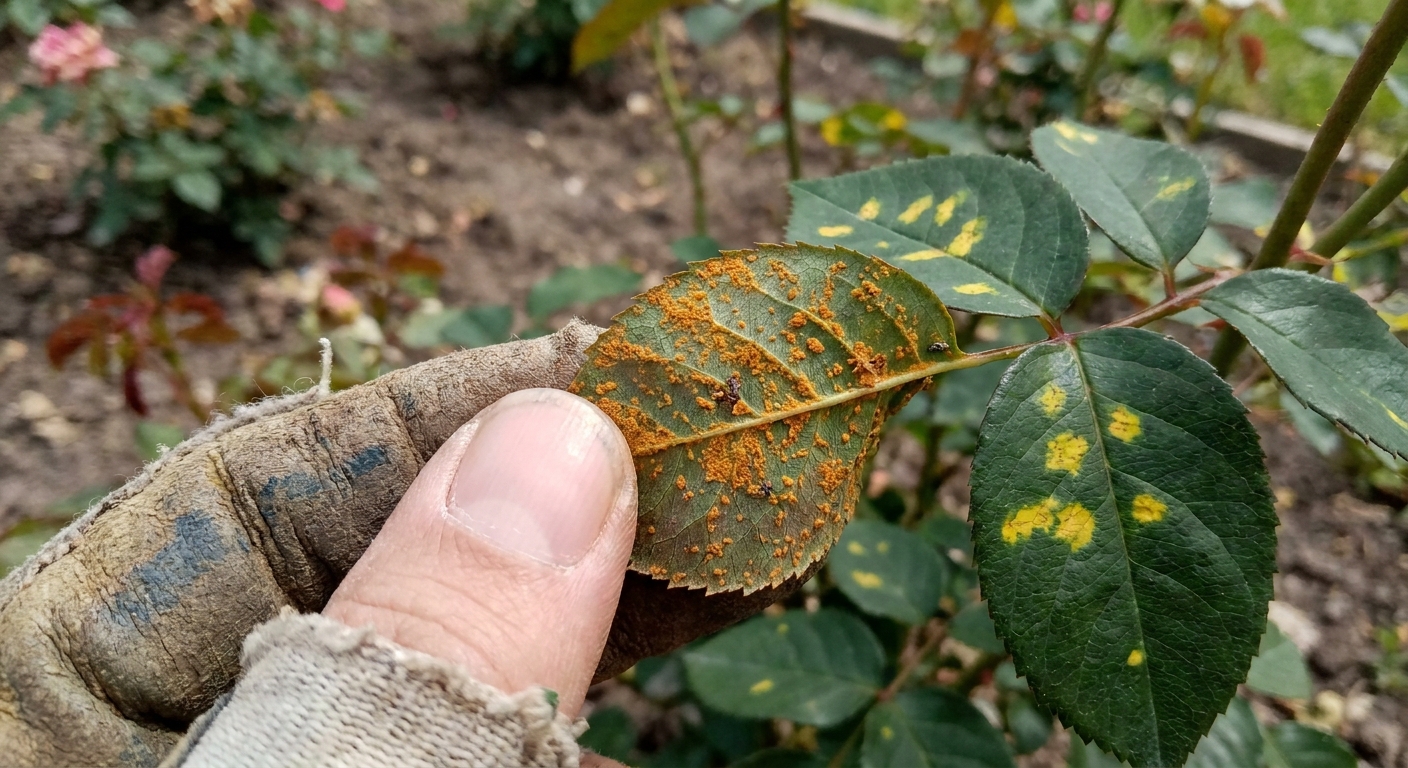
Rose rust looks like your rose has been lightly sprinkled with paprika on the underside of its leaves. It is unsettling the first time you see it, but it is also manageable. With a little detective work and some very unglamorous cleanup, you can stop the cycle and get your plant back to making flowers instead of fungal spores.
This guide will help you identify rose rust quickly, understand its life cycle, and choose the right next step, from simple sanitation to targeted sprays.

What rose rust is
Rose rust is a fungal disease caused by several Phragmidium species that specialize in roses. Like many plant fungi, it thrives when leaves stay damp and air circulation is poor. Unlike black spot, rust often announces itself first on the underside of leaves with orange, powdery pustules that can rub off on your fingers.
Life cycle
Rust is persistent because it can move through multiple spore stages in a season and it can overwinter on infected plant material. Details vary a bit by species and climate, but the pattern is consistent enough to plan around.
- Spring: Overwintered spores infect new growth when moisture and mild temperatures line up.
- Early to mid-season: The fungus produces orange powdery spores (the classic “rust dust”) that spread primarily by wind and splashing water, and can also be carried on hands, tools, and clothing.
- Late season: You may see darker pustules as the fungus shifts to survival mode.
- Overwintering: Spores persist on fallen leaves, and depending on your climate and the rust species, sometimes on infected canes or persistent foliage. Next spring, the cycle restarts.
Takeaway: if you only spray but do not clean up infected leaves, you often treat symptoms while leaving the spore factory behind.
Rust vs black spot vs mildew
These three are the “big names” in rose disease, and they behave differently. When you match the symptoms to the right culprit, you avoid wasting time and money on the wrong approach.
Rose rust
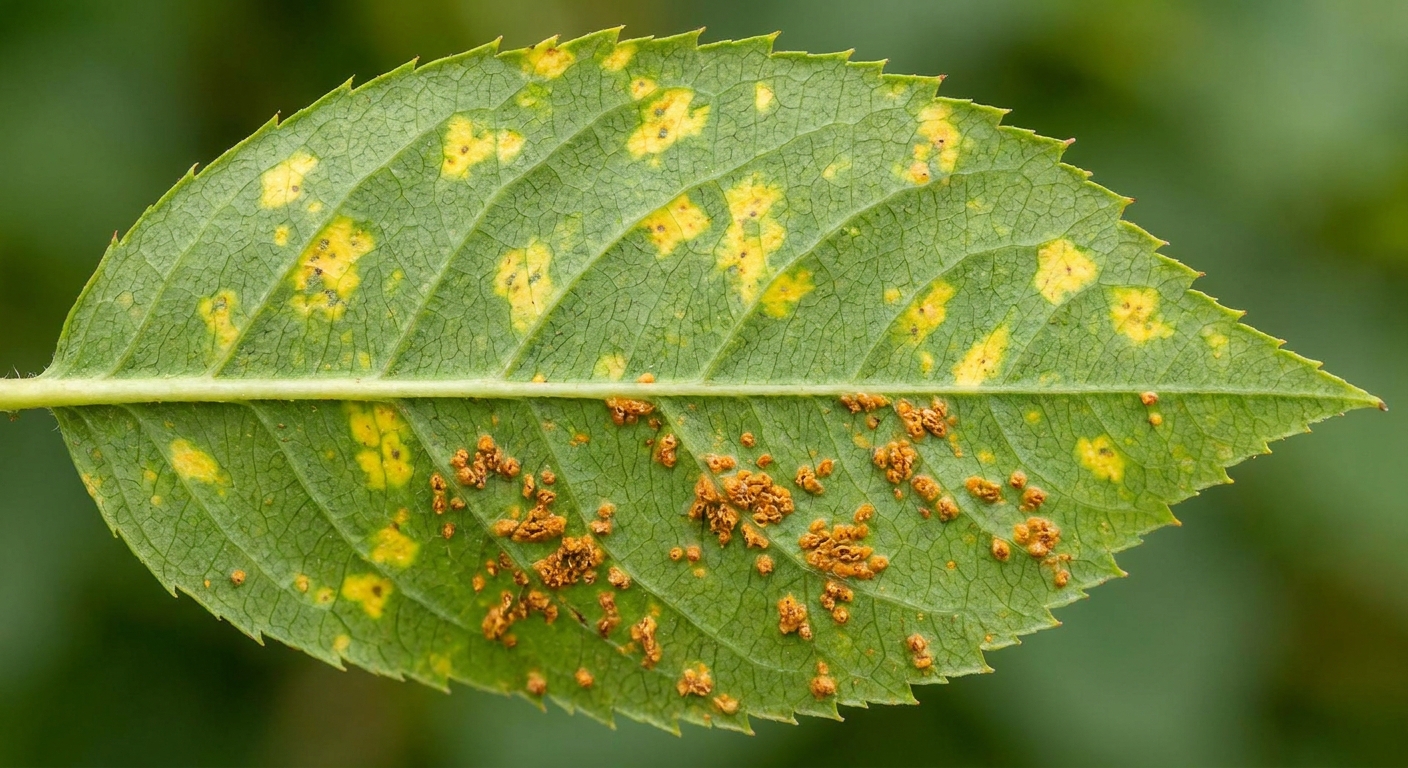
- Top of leaf: yellow spotting or mottled yellow patches, sometimes with slight distortion.
- Underside of leaf: orange to rusty powdery pustules that can smear when touched.
- Common weather: cool to mild temps with moisture and prolonged leaf wetness.
Black spot
- Top of leaf: roundish black spots with fringed edges, often surrounded by a yellow halo.
- Underside of leaf: not typically orange or dusty.
- Common behavior: rapid yellowing and leaf drop from the bottom upward.
Powdery mildew
- Leaf and buds: white to gray powdery coating on the surface, often on new growth.
- Common weather: warm days, cool nights, and humidity swings (often humid nights with drier days). Mildew can show up even when leaves are not wet.
Quick check
Use this simple check in the garden. Bring your phone flashlight and look at both sides of the leaf.
- Step 1: Do you see yellow spots, mottling, or pale patches on the top of leaves?
- No: It may be nutrient stress, sun scorch, mites, or early black spot. Keep investigating.
- Yes: Go to Step 2.
- Step 2: Flip the leaf over. Do you see orange, rusty, or cinnamon-colored bumps or powder that rubs off?
- Yes: Orange pustules that rub off almost always means rose rust. Go to Step 3.
- No: No orange usually means it is not rust. If the spots on top are black and fringed, suspect black spot. If there is white powder on new growth, suspect powdery mildew.
- Step 3: Are multiple leaves affected, especially in the interior of the plant where airflow is tight?
- Yes: Treat as an active rust outbreak: prune, sanitize, and consider a fungicide plan.
- No: You may have caught it early. Remove the few infected leaves and tighten prevention.
What to do now
If you remember one thing, let it be this: remove spores first, then protect new growth. Sprays work best as prevention and early intervention. They struggle when the plant is already covered in infectious material.
1) Remove infected leaves
- Choose a dry time of day so spores are less likely to spread via splashing water.
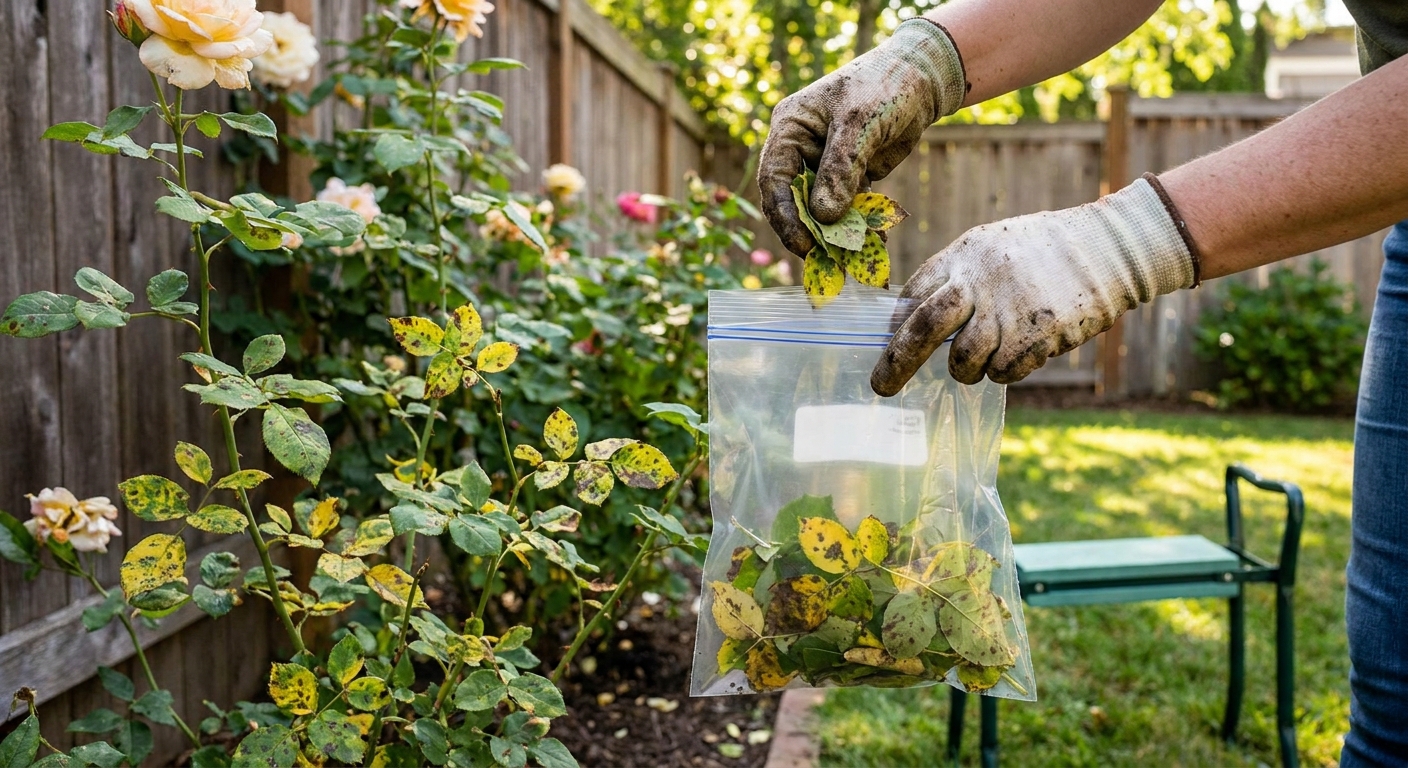
- Snip off heavily infected leaves and any leaves that are dropping.
- Avoid shaking the plant. Rust spores are made to travel.
2) Dispose of infected material
Here is my rule from years of doing the “just compost it” gamble: if it is actively sporulating, do not give it a cozy place to overwinter.
- Remove it from the garden: leaves with obvious orange pustules, fallen infected leaves, and any prunings coated in spores.
- Do not return it to rose beds: avoid home composting unless you run a reliably hot compost system that reaches pathogen-killing temperatures.
- Dispose according to local rules: some areas prefer green waste diversion; others allow bagged trash. The key is keeping infected debris from cycling back into your garden.
3) Clean up under the rose
- Rake up fallen leaves and petal debris.
- Consider a fresh layer of mulch to reduce soil splash onto foliage.
- Clean tools after pruning with alcohol wipes or a disinfectant, especially if moving from plant to plant.
Prevention that works
Rust loves still, damp foliage. So the best prevention is about changing the microclimate around your rose.
Growing conditions
- Sun: Aim for at least 6 hours of direct sun. Morning sun is especially helpful because it dries leaves early.
- Airflow: Give roses room. Crowding creates that humid pocket rust adores.
- Watering: Water at the soil line, not over the leaves. If you must overhead water, do it early in the day so foliage dries fast.
- Mulch: A 2 to 3 inch layer reduces splash and protects soil biology. Keep mulch a few inches away from the crown to avoid rot issues.
Pruning for airflow
You do not have to prune like a rose show judge. Your goal is simply to let light and air move through.
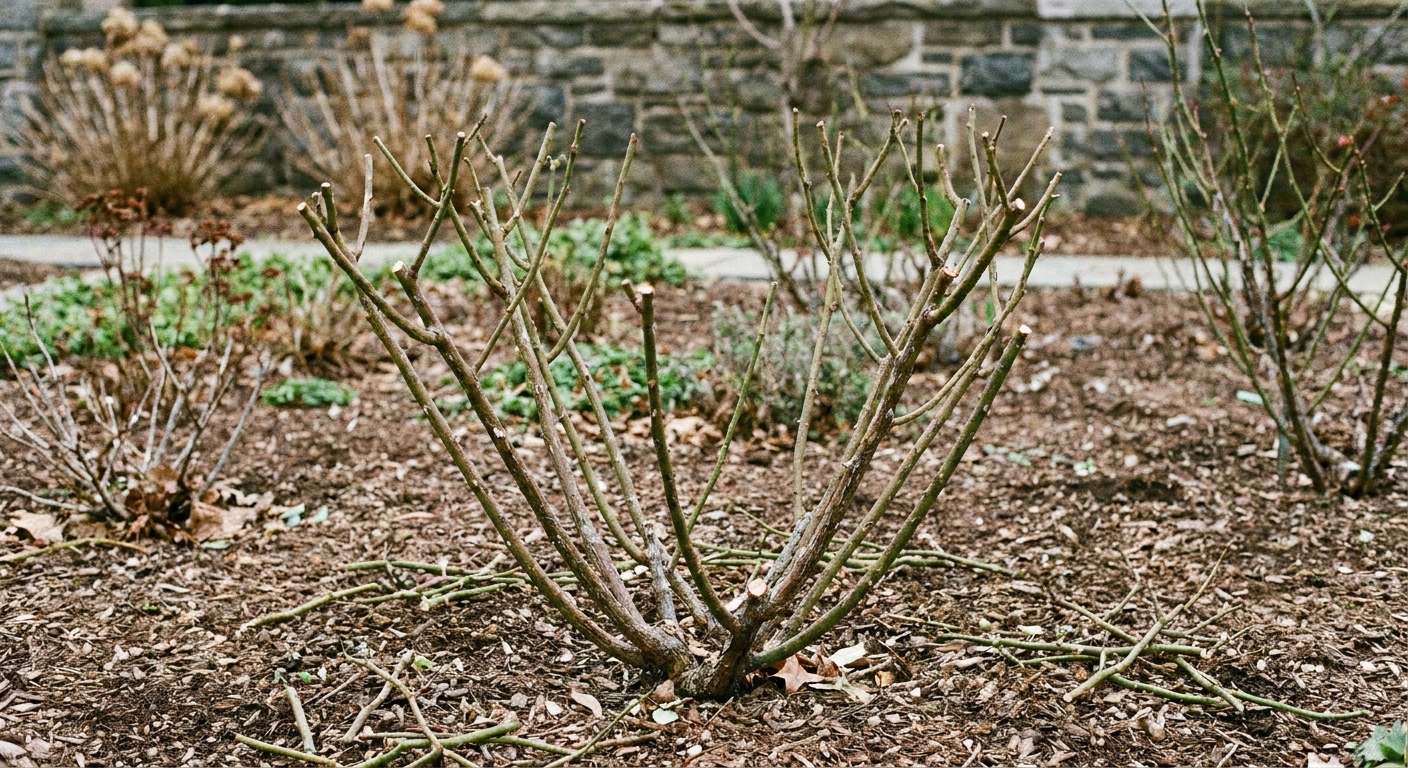
- Remove crossing canes and thin out dense interior growth.
- Strip leaves that touch the soil.
- Clean up suckers and crowded stems near the base.
Soil and feeding
Over-fertilizing with quick nitrogen can push soft, tender growth that is more disease-prone. I prefer slow, steady feeding.
- Use compost and an organic rose fertilizer according to label directions.
- Water consistently. Drought stress followed by heavy watering can weaken plants.
- Avoid heavy evening watering that keeps foliage damp overnight.
Resistant roses
If you are planting new roses or replacing a chronic problem plant, resistance is worth prioritizing. No rose is “immune,” but some varieties and series are noticeably less fussy in real gardens.
What to look for
- Labels that mention disease resistance and strong performance in your region.
- Roses bred for low-spray landscapes, often shrub types.
- Local recommendations from your extension office, a nearby rose society, or a trusted nursery. Rust pressure varies by climate.
If you are unsure what thrives where you live, start with locally recommended lists for your USDA zone and your area’s typical disease pressure.
Treatment options
Let’s be honest: rust treatment is rarely one-and-done. The goal is to protect new leaves and break the reinfection cycle. Start with sanitation and pruning, then decide if spraying is necessary.
Organic options
These are most effective when applied early and repeated as directed, especially after rainy periods. Always follow label directions for rates and timing.
- Sulfur (wettable sulfur): can help prevent fungal diseases, but avoid using it in very hot weather and do not apply close to horticultural oils. Check compatibility warnings on labels.
- Copper-based fungicides: can suppress rust, but copper can accumulate in soil over time. Use thoughtfully and only as needed.
- Biological fungicides (for example, Bacillus-based products): best as preventatives and can be part of a gentle, repeatable routine.
Conventional fungicides
In severe or recurring cases, a targeted fungicide can be the difference between a rose that limps through the season and one that actually rebounds.
- Look for products labeled for rust on roses. Labels vary by country and region.
- Many rust programs combine a systemic option (often a DMI, FRAC 3) with a contact protectant, depending on what is permitted where you live. Rotate modes of action when possible to reduce resistance risk.
- Fungicides are typically protectants, not erasers. They work best when started at first symptoms and continued at label intervals, especially during wet weather.
- Follow all label instructions, including reapplication intervals and safety precautions.
A practical spray plan
- Light infection: remove infected leaves, improve airflow, then use a preventative on new growth during wet periods.
- Moderate to heavy infection: sanitize aggressively, prune for airflow, then consider a labeled fungicide program for several weeks during weather that favors rust.
If diagnosis is uncertain, take clear photos of both sides of the leaves and bring them to a local nursery, or contact your local extension office for confirmation before you commit to a spray schedule.
Common mistakes
- Skipping cleanup: spraying without removing infected leaves is like mopping with the faucet still running.
- Watering foliage at night: long leaf wetness is rust’s favorite setup.
- Recycling infected debris into beds: avoid dropping prunings under the plant or using questionable compost as topdressing around roses.
- Overcrowding: tight spacing and dense interiors create the damp pocket rust needs.
When to reset
Sometimes rust becomes a yearly battle because the plant is stressed, crowded, or simply not a good match for your climate.
Consider a hard reset if:
- The rose defoliates repeatedly despite sanitation and prevention.
- Multiple nearby roses are reinfecting each other every season.
- The plant is planted in deep shade or a tight corner where leaves never dry.
Dispose carefully when:
- You see active orange pustules on many leaves.
- You are doing a major cleanup in late season.
- You are removing a rose that has been chronically infected.
Think of it like this: every infected leaf left behind is a tiny time capsule of next year’s problem.
FAQ
Will rust kill my rose?
Rust rarely kills a healthy, established rose quickly, but it can weaken the plant by reducing photosynthesis. That weakness can snowball into poor blooms, winter damage, and more susceptibility to other pests and diseases.
Can rust spread to other plants?
Rose rust fungi are specialized to roses. They spread readily from rose to rose, but they do not typically jump to unrelated ornamentals.
Should I remove all leaves?
If the infection is severe, stripping the worst leaves can help, but do not leave the rose completely bare in intense heat. Focus on removing the most infected foliage and improving conditions so new leaves stay cleaner.
Is it safe to touch rust?
It is not dangerous to you, but it is very transferable. Wash hands and clean tools so you do not “help” it spread across your garden.
Seasonal plan
Early spring
- Clean up old leaves and debris under roses.
- Prune for airflow before the canopy gets dense.
- If rust is a yearly issue, start prevention early, following label directions.
During wet spells
- Check the underside of leaves weekly.
- Remove a few infected leaves immediately and dispose of them.
- Keep mulch topped up to reduce splash.
Late season and fall
- Do a thorough rake-out of fallen leaves.
- Remove infected debris from the garden and dispose of it according to local rules.
- Make notes on which varieties stayed clean. Your future self will thank you.
If you are staring at yellow spots right now and wondering what you are dealing with, flip a leaf over. If you see orange powdery pustules, you have your answer. Then take a deep breath, grab a bag, and start with cleanup. Your rose can absolutely come back from this.