
Lilac Borer: Wilted Canes, Sawdust, and What to Do

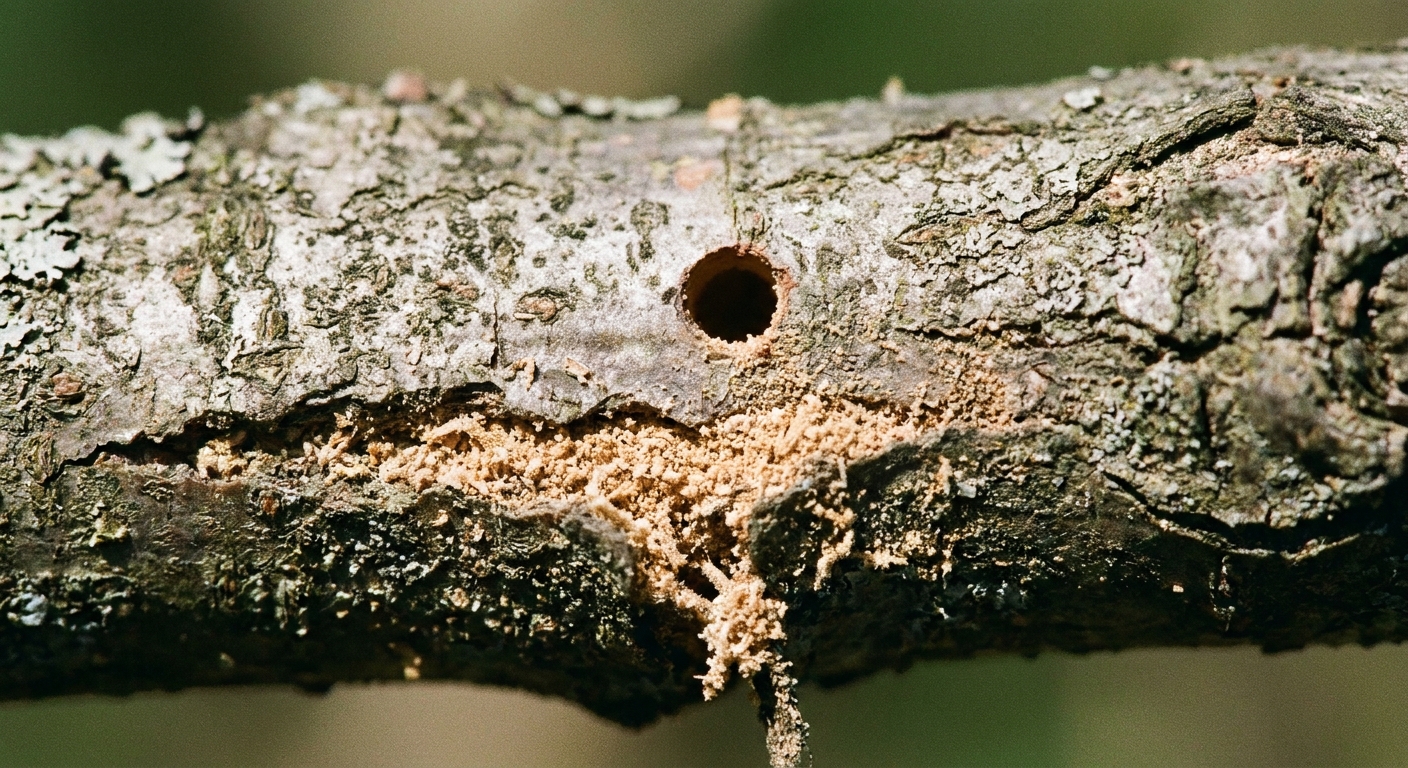
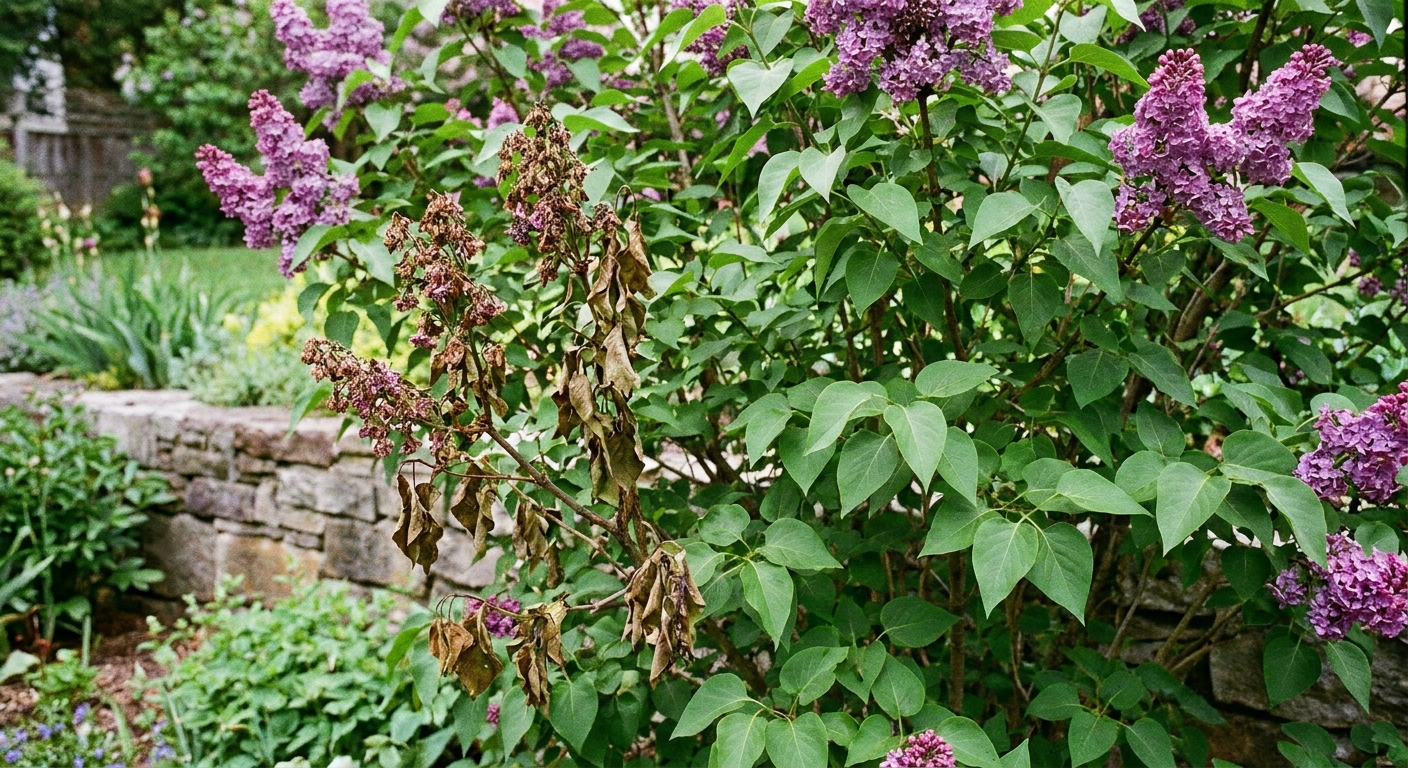
The first time I met lilac borer in my own yard, I blamed myself. One cane on an otherwise healthy lilac suddenly wilted like it had been unplugged from the plant. The leaves went limp, then crispy, while everything around it looked perfectly fine. When I finally snapped the cane, there it was: a little pile of sawdusty crumbs tucked into the bark crevice, like someone had been whittling inside my shrub.
That "sawdust" is a big clue. Lilac borer is one of those pests that feels sneaky because you rarely see the insect itself. What you see is the aftermath: a single-cane collapse, tiny holes, and crumbly frass that looks like tan sawdust. The good news is that most lilacs can recover if you cut out the right wood at the right time.

What lilac borer is and why it causes sudden wilt
Lilac borer is the larva of a clearwing moth (a moth that mimics a wasp). In many areas, the lilac borer is Podosesia syringae, sometimes also called the ash borer.
The adult moth lays eggs on lilac bark, often on older, thicker canes and around wounds or rough bark. After eggs hatch, the larvae tunnel under the bark and into the wood, feeding as they go.
That tunneling disrupts the plant’s plumbing. A cane can look normal one day and be dramatically wilted the next because water transport gets cut off. Unlike many other lilac problems, borer damage is often very targeted, affecting one cane or a small cluster while the rest of the shrub keeps chugging along.
How to tell it is lilac borer
You do not need to catch the moth in the act. In practice, diagnosis comes down to these three signs.
1) Single-cane wilt
A classic pattern is one cane wilting hard while neighboring canes look fine. Leaves may droop, then scorch, then brown out. Sometimes the cane dies back from the tip downward.
2) Frass that looks like sawdust
Look for tan to light brown sawdust-like crumbs in bark cracks, at the base of a cane, or on the ground right under the shrub. That material is frass, a mix of insect waste and chewed wood.
3) Small holes or split bark
You may see small round holes in the bark, or areas where bark looks roughened, swollen, or split. Holes can be easy to miss until you get close and look at the lower 2 to 3 feet of affected canes and the crown area.
Confirm it with a simple cut test
If you have a suspect cane, do a careful inspection and a test cut.
- Choose the worst-looking cane and follow it downward.
- Check the lower cane and crown area for frass, holes, and loose bark.
- Make a cut a foot or two below the wilted section.
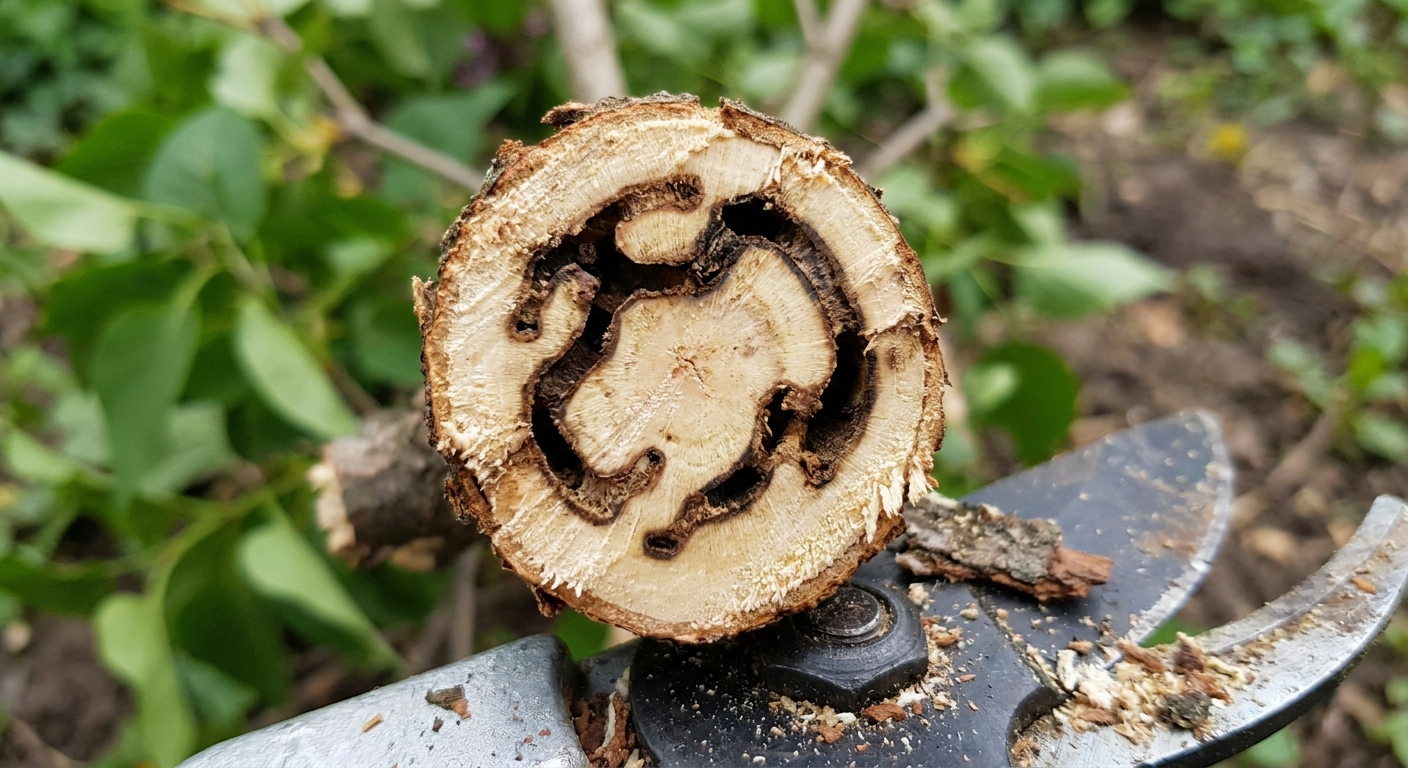
- Look at the cross-section: tunneling, darkened galleries, or hollowed pith strongly suggests borer activity.
If you split a cut section lengthwise (carefully, on a stable surface), you may find the larva itself: a pale, creamy caterpillar-like grub with a darker head tucked inside the tunnel.
What to do now: prune, do not pamper
With lilac borer, the most effective home-gardener move is direct and decisive: remove the infested wood. Once a cane is badly tunneled, it does not knit itself back together. Cutting it out protects the rest of the shrub and removes larvae before they can continue developing.
Step-by-step pruning
- Pick a dry day so cuts dry quickly.
- Use sharp loppers or a pruning saw. Borers are often in thicker, older canes.
- Cut the affected cane as low as you can, ideally right at the base where it emerges from the crown. Avoid leaving a tall stub.
- If you see tunneling in the cut, keep stepping down with additional cuts until the wood looks clean and solid.
- Remove and dispose of the cane promptly. Do not leave it lying nearby.
Disposal matters because larvae can continue living in cut wood for a while. I treat infested canes like contraband: out of the garden and gone.
Tool hygiene: Borers are not something you spread from shrub to shrub on your blades, but clean tools are still good practice (and more important for disease prevention). I use soap and water to remove sap and debris, then a quick wipe with rubbing alcohol.
Timing: when to cut
You can prune out a clearly dead or collapsing cane any time, and I do not wait if a cane is actively failing. The longer an infested cane stays in place, the longer the larva has to feed and mature.
For planned removal and the cleanest results:
- Late winter to early spring is an excellent time to inspect lilacs for old damage and remove questionable canes before the growing season ramps up.
- During the growing season, remove any cane that suddenly wilts and shows frass or holes as soon as you identify it.
The goal is simple: get larvae out of the shrub before they finish their development and add to the next cycle of moths.
Life cycle in plain English
You do not need to memorize the life cycle to handle this, but it helps explain why timing matters.
- Adults fly and lay eggs in late spring through summer (timing varies by region).
- Larvae tunnel into canes and feed inside the wood where most sprays cannot reach them.
- Larvae overwinter in stems, then continue developing when conditions warm up.
This is why pruning out infested canes is so powerful: you are physically removing the pest from the place it is protected.
Lookalikes to rule out
Because lilac borer often shows up as “one cane suddenly gives up,” it can be confused with other problems. A few quick separators:
- Drought stress: usually affects more of the shrub at once. You see widespread droop and dullness, not one isolated cane with frass.
- Bacterial blight: tends to show leaf spotting, blackened shoots, and a more general “ugly” look after cool, wet weather. Not typically sawdust at the base.
- Verticillium wilt: can cause wilting and dieback, sometimes in sections, but you will not find frass or tunneling. It is a vascular disease, not an insect.
- Winter injury: dieback often shows up at tips or on the windward side in spring, without holes and frass.
- Other borers: possible depending on what else is planted nearby, but the practical takeaway is the same: frass plus tunneling means remove the affected wood.
Can you save the shrub?
Most established lilacs can take the loss of a few canes and bounce back. The deciding factor is how much healthy structure is left.
Usually salvageable
- Only one to a few canes show wilt and frass.
- The shrub still has multiple strong, leafy canes with no holes or sawdust near the crown area.
- After cutting, you can find clean wood below the damaged area.
Borderline
- Many canes show holes or frass, especially low on the plant.
- The crown area looks weak, with repeated dieback.
- You keep cutting down and tunneling continues in multiple canes.
Probably time to replace
- More than half the main canes are compromised and dying back.
- The shrub has extensive damage at the crown where canes originate.
- New growth is sparse and repeatedly collapses.
If you are on the fence, here is my gentle rule: if you can remove the worst canes and still be left with a decent framework of healthy stems, it is worth rehabilitating. If you are left with a few struggling sticks and a damaged base, replacing often brings faster peace.
Prevention that actually helps
You cannot make your lilac invisible to a clearwing moth, but you can make it a harder target.
- Keep the shrub vigorous with deep watering during long dry spells and reasonable spacing for airflow.
- Avoid wounding canes (string trimmers, mower bumps, careless staking). Clearwing borers love damaged bark.
- Thin out the oldest canes over time. A lilac with a mix of younger stems is often less inviting than a shrub full of aging, rough-barked canes.
- Inspect the lower canes in late spring and summer so you catch fresh frass early.
What not to do
- Do not just clip the wilted top. The larva is usually lower, and the cane will keep failing until the tunnel is removed.
- Do not seal cuts with wound paint. Lilacs heal best on their own. Sealants can trap moisture and make surfaces less friendly for natural drying.
- Do not compost infested wood. It is not worth the risk of moving a living larva around your yard.
- Do not assume every wilt is drought. With lilac borer, the rest of the shrub often looks fine, which is a huge clue.
Aftercare: help it bounce back
Once you remove infested canes, your lilac needs time more than anything else.
- Water during dry spells so remaining canes do not get stressed while the shrub reallocates energy.
- Keep the base area tidy so you can spot fresh frass quickly.
- Recheck every couple of weeks in the active growing season for new sawdust or fresh wilt.
I also like to make a little note in my garden journal about which shrub had borer damage and which side of the plant it showed up on. It sounds nerdy, and it is, but it helps you notice patterns earlier next year.
FAQ
Are lilac borers the same as ash borers?
Sometimes, yes. “Lilac borer” and “ash borer” are both common names used for the same clearwing moth species, Podosesia syringae, because it attacks lilac and ash (and a few other hosts). What people often mean when they say “ash borer” these days, though, is emerald ash borer (Agrilus planipennis), which is a very different insect (a beetle) with a different management playbook.
Will the wilted cane green back up?
If the cane is truly girdled or heavily tunneled, it usually will not recover. If the wilt is mild and you catch it early, you might see partial recovery, but the underlying tunnel is still there. I treat confirmed borer canes as removals.
What if I cannot find an exit hole?
You can still have lilac borer. Holes can be tiny, hidden in rough bark, or higher than you expect. If you have single-cane wilt plus frass, that is enough to act.
Should I use an insecticide?
Once larvae are inside the wood, most sprays do not reach them well. For most home gardens, pruning out infested canes is the most effective, least complicated approach.
That said, in areas with chronic infestations, some gardeners use preventive treatments timed to adult flight and egg hatch to reduce new attacks. Timing and product choices are region- and label-dependent, so if you are considering this route, your local extension office or a licensed arborist can help you match the approach to your area.
A calm way forward
Lilac borer feels personal the first time you find it, like your shrub is being eaten from the inside. But this is one of those garden problems where a clean cut is genuinely powerful. Find the wilted cane, follow the clues, cut low, and remove the evidence. Then let the lilac do what lilacs do best: push fresh growth and keep showing up every spring, perfume and all.