How to Stake and Cage Tomatoes
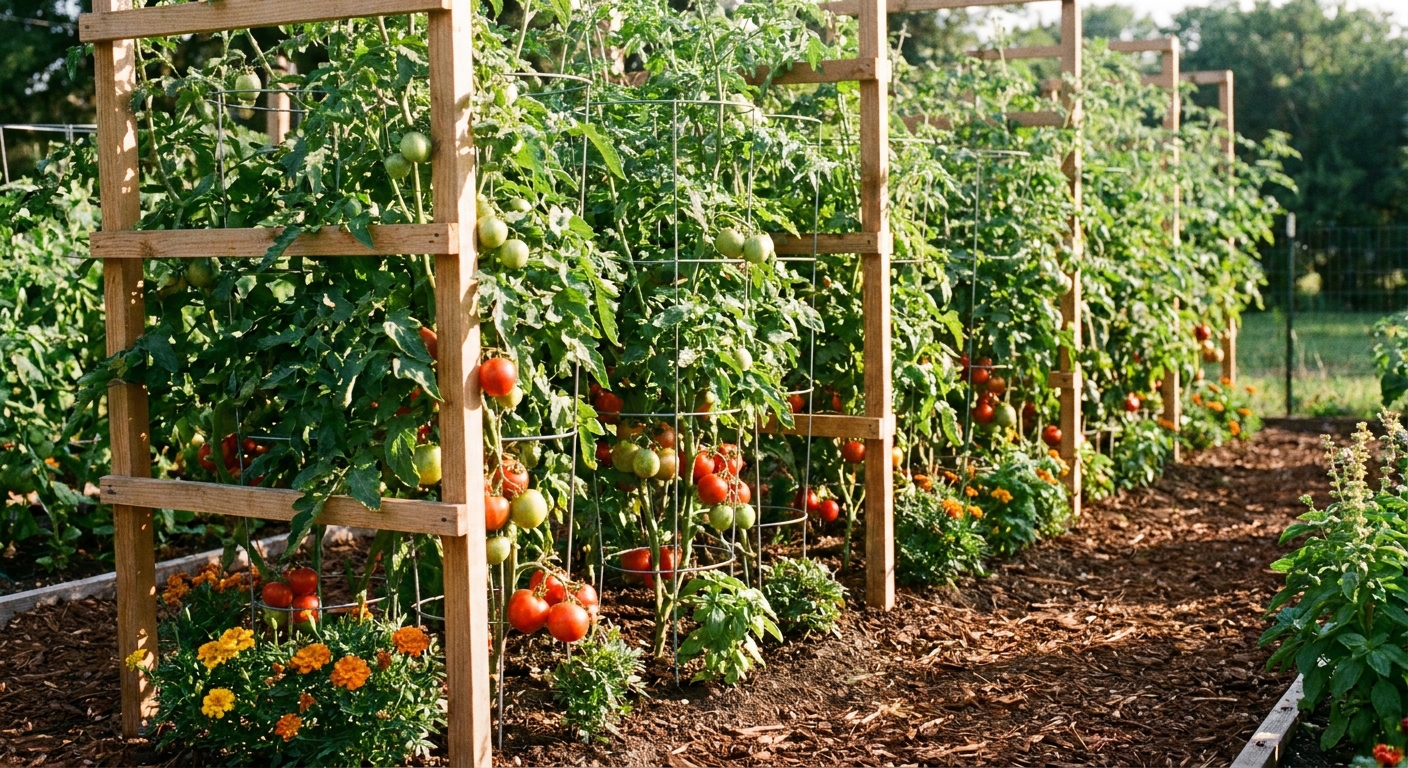
My grandmother could spot an unsupported tomato plant from the kitchen window like it was a minor emergency. If a vine started leaning, she would set down her iced tea, head outside, and give that plant a sturdy backbone before the next summer storm could snap it. Years later, after my own apartment windowsill tomato experiments and now a real garden bed of my own, I can tell you this: supporting tomatoes is not about being “fancy.” It is about keeping stems from cracking, fruit from rotting on the soil, and your harvest within reach.
In this guide, we will compare single stakes, tomato cages, and the Florida weave, with clear recommendations for determinate and indeterminate plants. I will also cover when to install supports, what to use as ties, and spacing so your plants have room to breathe.

First, know your tomato type
Support is easiest when you match the method to the plant’s growth habit. If you are not sure what you have, check the seed packet or plant tag.
Determinate tomatoes
- Growth pattern: Bushier plants that reach a set height (often 2 to 5 feet, depending on variety), then focus on flowering and fruiting over a shorter window.
- Support goal: Keep heavy, fruit-loaded branches from flopping, and keep fruit off the ground.
- Great fits: Cages (especially sturdy ones) or short to medium stakes.
Indeterminate tomatoes
- Growth pattern: Vines that keep growing and fruiting until frost, often 6 to 10 feet or more with good conditions.
- Support goal: Strong vertical support that can handle height, wind, and ongoing tie-ups.
- Great fits: Tall stakes, trellis systems, or the Florida weave (especially in rows).
Quick rule I use in my own beds: if the variety name is a slicer or heirloom type and the plant tag says “indeterminate,” do not trust a flimsy cone cage. It will lose the wrestling match by midsummer.
When to install tomato supports
The best time is at planting or within the first week or two after transplanting. Tomatoes grow fast, and their roots spread wider than most people expect. Installing supports early means:
- You avoid stabbing a stake through established roots later.
- You can guide the plant upward from the start, which reduces stem kinks.
- You have less chance of snapping a vine while “trying to be careful.”
If your tomato is already a floppy teenager, you can still add support. Just go slowly, install supports a few inches away from the main stem, and tie the plant up in stages over several days instead of forcing it upright all at once.
Option 1: Single stakes
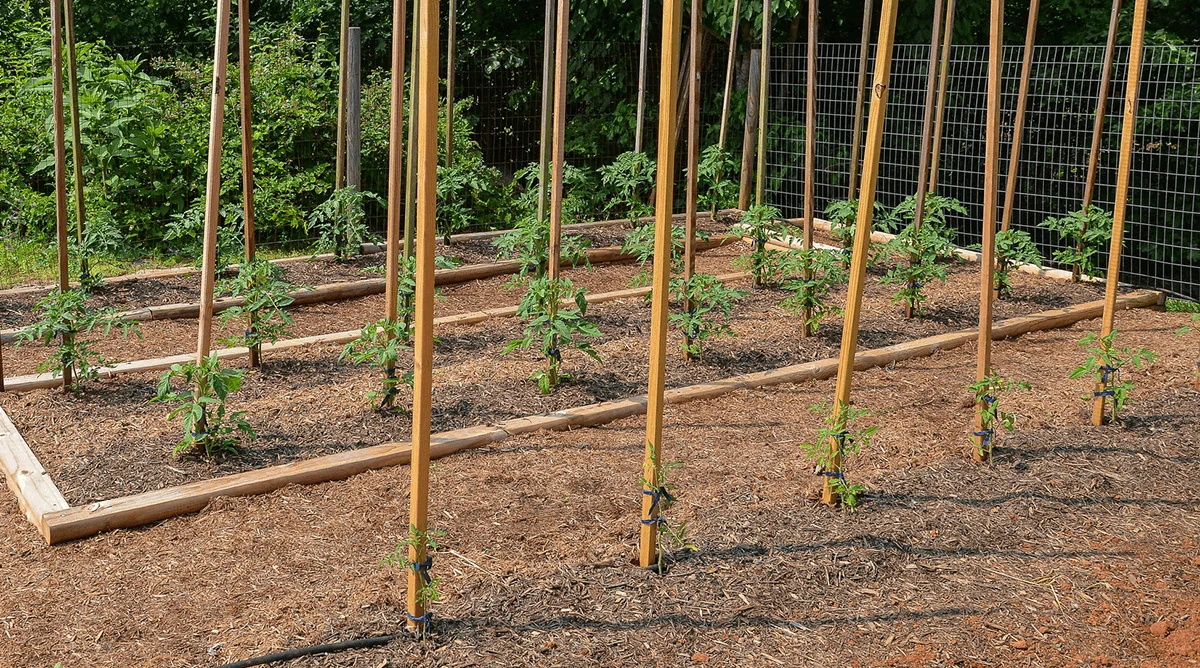
Staking is the simplest method for individual plants, and it works beautifully when done early and maintained with regular tie-ups.
Best for
- Indeterminate tomatoes when you want a tidy, vertical plant
- Determinate tomatoes if you use a shorter stake and do not mind a bit of sprawl
- Small gardens where you want narrow plants and easy pathways
What to use for stakes
- Metal T-posts: Extremely sturdy for windy spots and big plants.
- Wood stakes (hardwood is best): Classic, but replace as they weather.
- Bamboo: Works for smaller determinates, but can snap for vigorous indeterminates.
- Rebar: Very strong, but use caps for safety and choose plant-friendly ties.
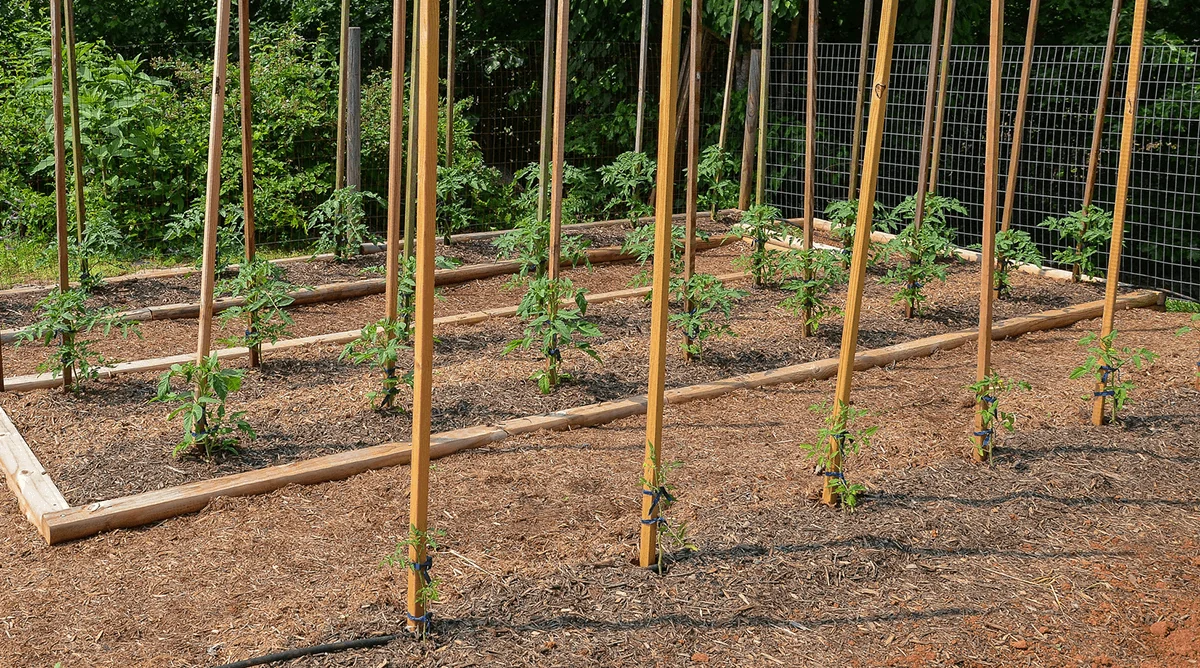
Height guidance: For indeterminates, I aim for a stake that gives me about 6 to 7 feet above ground. That often means an 8-foot stake with 18 to 24 inches in the soil (go deeper in loose soil or wind). For determinates, 4 to 5 feet above ground is often enough.
How to stake tomatoes
- Place the stake 3 to 5 inches from the transplant, ideally on the windward side (so the plant leans into the stake, not away from it).
- Drive it deep so it does not wiggle. A wobbly stake becomes a stem rubbing machine.
- Start tying once the plant reaches about 10 to 12 inches tall or begins leaning.
- Add new ties every 8 to 12 inches of growth, checking after storms.
Staking shines when you are consistent. Think of it like brushing your teeth. Small, regular care prevents the big drama later.
Option 2: Tomato cages
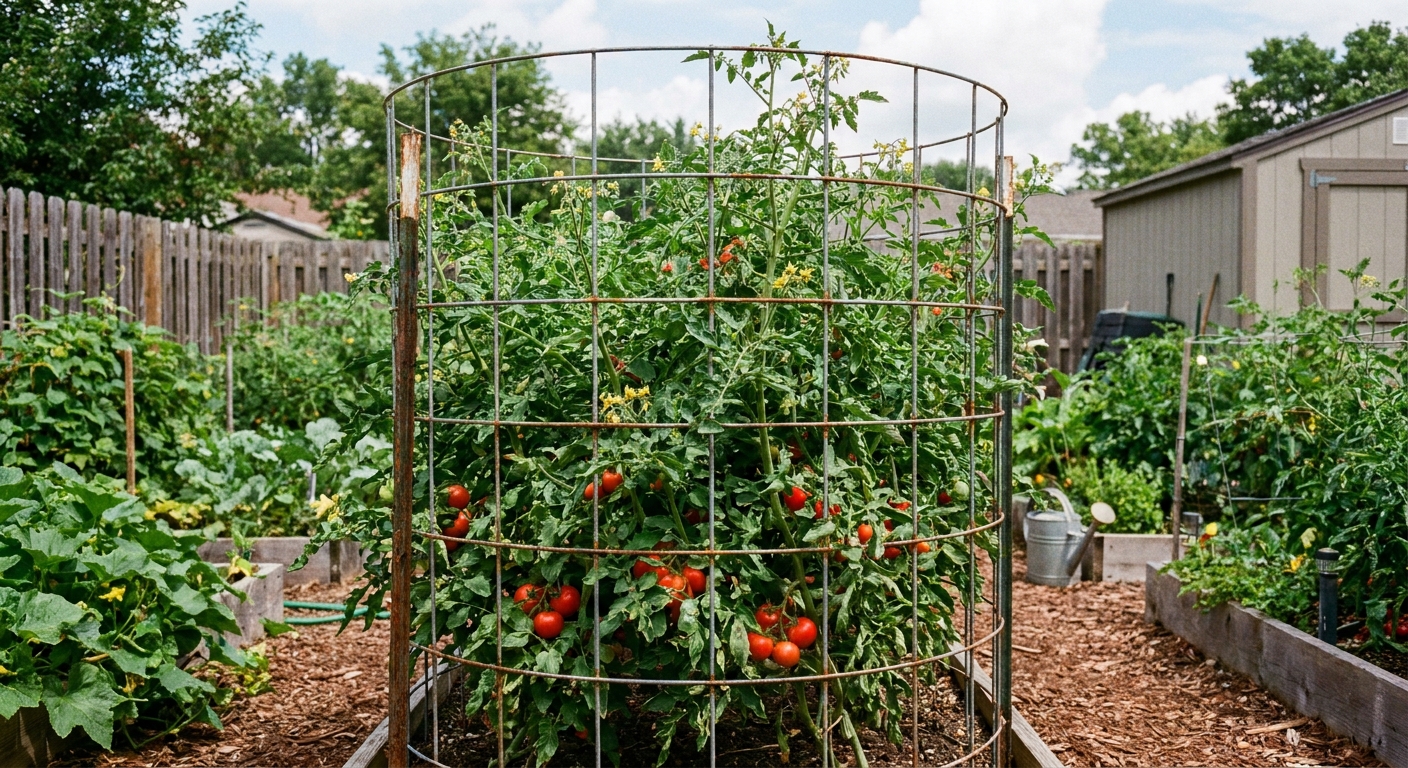
Cages are popular because they feel “set it and forget it.” The catch is that not all cages are built for real tomato season. Many store-bought cone cages are too short and too light for vigorous varieties.
Best for
- Determinate tomatoes (often an excellent match)
- Cherry tomatoes if you use a tall, sturdy cage
- Gardeners who prefer minimal tying
Choose the right cage
- Height: 42 to 54 inches for determinates, and at least 60 inches for indeterminates (taller is better, and many indeterminates will still outgrow standard cages).
- Material: Heavy-gauge wire or concrete reinforcing mesh cages hold up best.
- Openings: Large enough to reach through and harvest without scraping your arms raw.
How to cage tomatoes
- Place the cage centered over the transplant right after planting.
- Anchor it with two stakes or landscape pins if you get strong wind or heavy storms. A cage can act like a sail.
- Gently guide stems back inside the cage as they grow outward.
- Optional ties: If a heavy branch leans out, use a soft tie to pull it back toward the cage.
If you have ever tried to wrestle a cage over a tomato that is already 3 feet wide, you know why I am so insistent about installing cages early.
Option 3: Florida weave
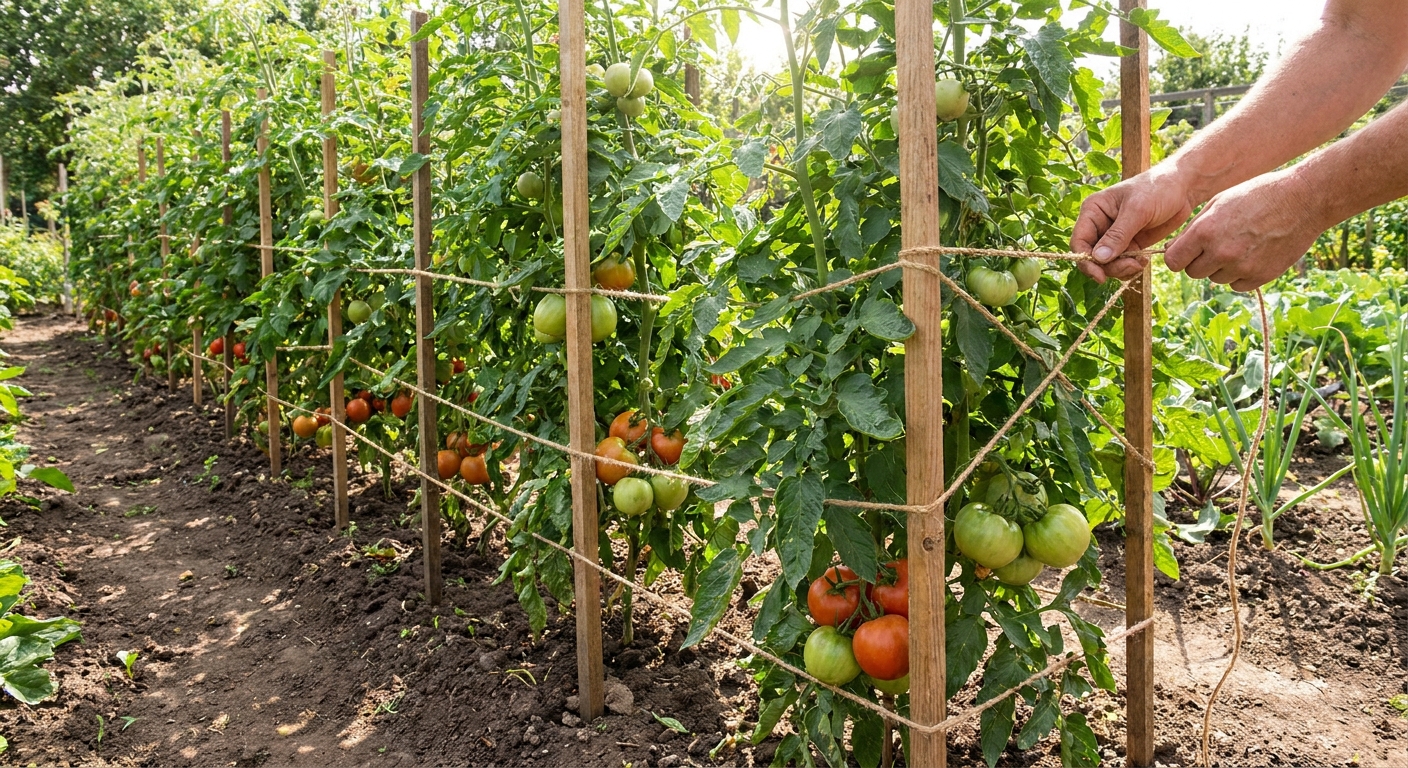
The Florida weave is my favorite for tomatoes planted in rows. It uses stakes and twine to create a supportive “sandwich” that holds plants upright without individual cages.
Best for
- Rows of determinate tomatoes (a classic pairing)
- Rows of indeterminate tomatoes if you are willing to keep weaving higher through the season
- Gardeners growing several plants who want a clean, efficient system
What you need
- Strong end posts or stakes (and sturdy interior stakes)
- Tomato twine or strong garden twine
- A way to tension the line: a good knot and strong stakes usually do it
Spacing for the weave
- Stake spacing: About every 4 to 6 feet is common in lighter loads. For large-fruited varieties, heavy growth, or windy sites, go closer, around 2 to 3 feet, and use stout stakes and solid end posts.
- Plant spacing: Generally 18 to 24 inches for determinates, and 24 to 30 inches for indeterminates in a woven row, depending on variety vigor and your airflow needs.
How to do the Florida weave
- Install stakes at planting time, with extra strong stakes at the row ends.
- Wait until plants are 12 to 18 inches tall and starting to lean.
- Tie twine to an end stake, then run it down the row, looping around each stake so the twine passes on alternating sides of each plant.
- Return back up the row on the opposite side of the plants, creating a supportive corridor.
- Add a new weave every 8 to 12 inches of growth.
The weave works because it distributes weight across a whole row. It is also easier on your budget if you are supporting six or more plants.
Pruning and training
This is the missing ingredient in a lot of “support” advice: the support system and the pruning plan should match. Otherwise, you end up with a plant that is technically supported, but still chaotic.
Indeterminates on stakes or weave
- Prune to 1 or 2 main stems for the cleanest, easiest-to-tie plants.
- Pinch suckers (the small shoots that grow where a leaf meets the main stem) when they are small and tender.
- Keep the bottom tidy by removing lower leaves that touch the soil.
Determinates in cages
- Go easy on pruning. Determinates set a lot of their fruit over a shorter time, and heavy pruning can reduce yield.
- Do the basics: remove damaged leaves, anything touching soil, and any foliage that is clearly diseased.
What to use as tomato ties
The right tie is soft, flexible, and wide enough not to cut into stems as they thicken. Tomatoes grow like they mean it, so a tie that seems fine in June can strangle a stem in July.
Best tie options
- Soft cloth strips: Old cotton T-shirts cut into 1-inch strips are my favorite sustainable option.
- Jute twine: Works well if you tie loosely and check often. It can get abrasive if pulled tight.
- Tomato clips: Handy for staking or trellising, especially for indeterminates.
- Soft plant tape: Flexible and gentle, great for quick tie-ups.
Avoid these troublemakers
- Thin wire or twist ties: Too narrow and can cut stems.
- Fishing line: Strong but slices like a knife when plants move in wind.
- Tying directly with rough string tightly around stems: causes rubbing, pinching, and weak points.
How to tie: Use a loose figure-eight tie, with one loop around the stake or twine and one loop around the stem. Leave space for growth. If you can fit a finger between tie and stem, you are usually in the safe zone.
Spacing that helps supports
Supports do not replace spacing. They work together. Crowded tomatoes are harder to tie, harder to harvest, and more likely to stay damp after rain or watering.
General spacing guidelines
- Determinate: 18 to 24 inches apart, with 3 to 4 feet between rows.
- Indeterminate (staked or woven): 24 to 30 inches apart, with 4 feet between rows.
- Indeterminate (large cages): 30 to 36 inches apart, with 4 to 5 feet between rows.
If you live somewhere humid, lean toward the wider end. More airflow makes everything easier, including support maintenance.
Which support to choose
If you are standing in the garden holding a tomato tag in one hand and a cage in the other, here is the decision shortcut I wish every new gardener had.
Choose single stakes if:
- You are growing indeterminate tomatoes and want a narrow footprint.
- You like doing quick weekly tie checks.
- You have individual plants scattered through beds or containers.
Choose cages if:
- You are growing determinate tomatoes, especially paste types.
- You want fewer tie-ups and easy containment.
- You have sturdy cages, not the lightweight cones that tip over.
Choose the Florida weave if:
- You plant tomatoes in rows.
- You are growing several plants and want an efficient system.
- You do not want to store bulky cages in the off-season.
My quirky, honest gardening confession: I talk to my ferns, but I lecture my tomatoes. “Stay in your lane,” I tell them, guiding stems back inside the support. It helps. The tomatoes do not listen, but it helps me show up and keep them upright.
Common problems
My cage keeps tipping over
- Anchor it with two stakes, one on each side.
- Switch to a heavier-gauge cage or a mesh style cylinder.
- Make sure the cage legs are pushed deep, especially in loose, amended soil.
My tied stems look pinched
- Replace ties with wider, softer material.
- Retie looser and check weekly during fast growth.
- Place ties below a leaf node or sturdy section of stem, not on a thin, tender point.
My stakes wobble in wet soil
- Drive stakes deeper and tamp soil firmly around them.
- Use a thicker stake, or upgrade end posts for the Florida weave.
- Add a second stake for extra stability in windy sites.
My plant is outgrowing the support
- Add an extension stake, or transition to a taller support next season.
- For cages, add a stake inside the cage and tie tall leaders to it.
- For Florida weave, keep weaving higher as needed.
Clean habits
- Sanitize supports between seasons. A quick scrub and disinfecting soak can help reduce disease carryover.
- Avoid tying and pruning when foliage is wet. It is an easy way to limit disease spread, especially in humid weather.
FAQ
Can I stake tomatoes after they have grown?
Yes. Do it gently and as soon as you can. Place the stake a few inches away from the stem, slide it down carefully, and bring the plant upright over a few days with loose ties so you do not crack the main stem.
Do determinate tomatoes need cages?
Many do, especially when the fruit sets and branches get heavy. A sturdy cage or a short stake keeps fruit off the ground and reduces broken stems.
Is the Florida weave only for determinate tomatoes?
No. It works for indeterminates too, but you will likely need more rounds of twine as the plants keep growing through the season. It is most convenient when tomatoes are planted in straight rows.
What is the safest tie for tomato stems?
Soft cloth strips are hard to beat, especially for beginners. They are gentle, adjustable, and easy to remove or retie as the stem thickens.
How far apart should I space tomatoes if I use cages?
Plan on wider spacing than staked plants because cages create a larger footprint. A good starting point is 30 to 36 inches between plants with large, sturdy cages.