
How to Control Sweet Autumn Clematis

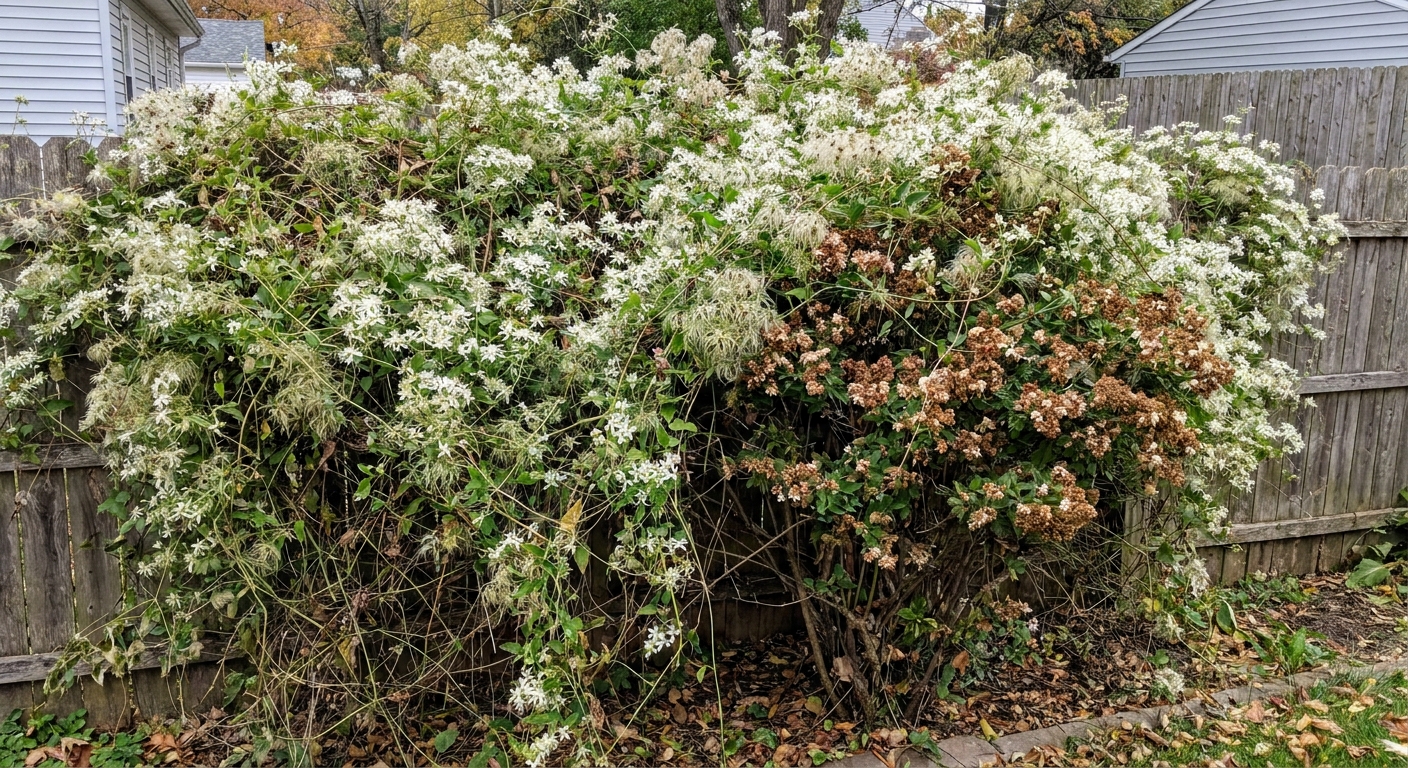
Sweet autumn clematis (Clematis terniflora, often sold under the name C. paniculata in the nursery trade) is one of those plants that can feel like a garden miracle the first year. Then it flowers, it seeds, and suddenly it is everywhere. I have a soft spot for vigorous vines, but this one can turn into a smothering blanket that climbs shrubs, fences, and small trees, then reseeds into every crack and bed edge like it is paying rent.
This page is about control and removal. It is not the same thing as pruning clematis varieties you are growing on purpose for showy blooms. Sweet autumn is managed mainly by preventing seed, pulling seedlings early, and exhausting or killing the root crown.

Why it spreads so fast
Sweet autumn clematis spreads in two big ways:
- Self-seeding: After the fragrant white flowers fade, it forms lots of fluffy seed heads that mature into seeds that move easily. Wind helps, but so do gravity, runoff, and the classic gardener move of dragging vines to a brush pile.
- Relentless growth: The vine grows quickly, climbs anything it can grab, and makes a thick mat of stems and leaves. That mat blocks light and can weigh down shrubs, bending branches and shading out foliage.
The combination is what makes it such a bully. It is not just “a vine that needs a haircut”. It is a seed factory with a climbing habit.
How to identify it
Correct ID matters, because you do not want to treat a well-behaved clematis the same way. Names can be inconsistent in the trade, so lean on traits, photos from trusted local sources, and your local invasive plant list.
Quick ID clues
- Vining habit: It scrambles and climbs by wrapping leaf stems (petioles) around supports.
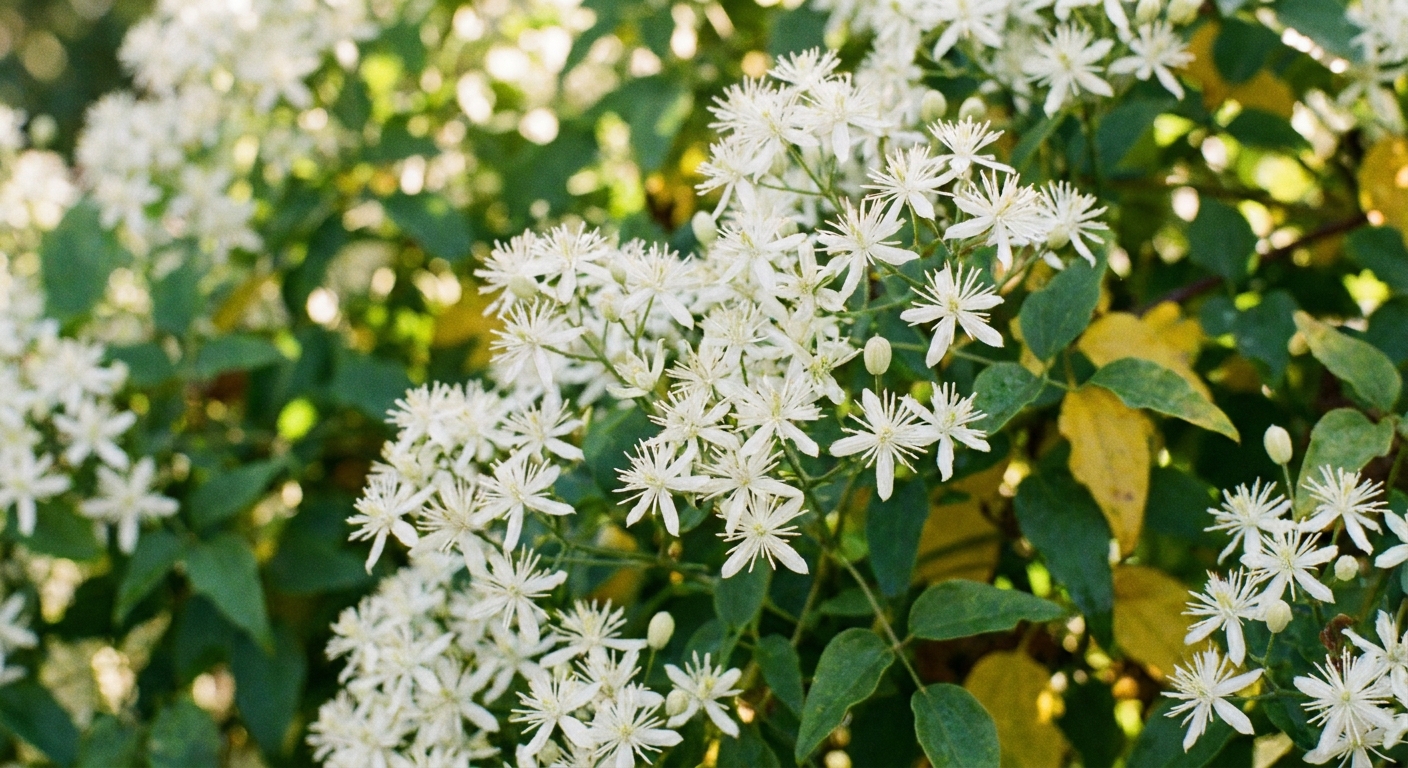
- Leaves: Opposite leaves along the stem. Leaves are typically compound, often with 3 to 5 leaflets. Leaflets are oval to somewhat heart-shaped with pointed tips.
- Late-season bloom: Masses of small, starry white flowers in late summer to fall, usually in big clouds.
- Strong fragrance: The blooms often smell sweet, especially in the evening.
- Fluffy seed heads: Silvery, feathery clusters after flowering.
- Fast, blanketing growth: It races over shrubs and along fence lines.
If you are unsure, wait for either the flower clusters or the unmistakable fluffy seed heads. Take clear photos of leaves, flowers, and how the vine attaches and compare to a trusted local extension resource.
Look-alikes (do not remove the wrong vine)
- Native clematis: Depending on where you live, there may be native clematis (sometimes also called virgin’s bower) with white flowers. They can look similar at a glance. If you are near natural areas, double-check with a local native plant group or extension office before you go full scorched-earth.
- Other white-flowering vines: Honeysuckles, wild cucumber, and bindweed can all create “white flowers on a mess of green” situations. The fluffy clematis seed heads are one of the best tells.
Cut it back before seed
If you only do one thing this season, do this: do not let it set seed.
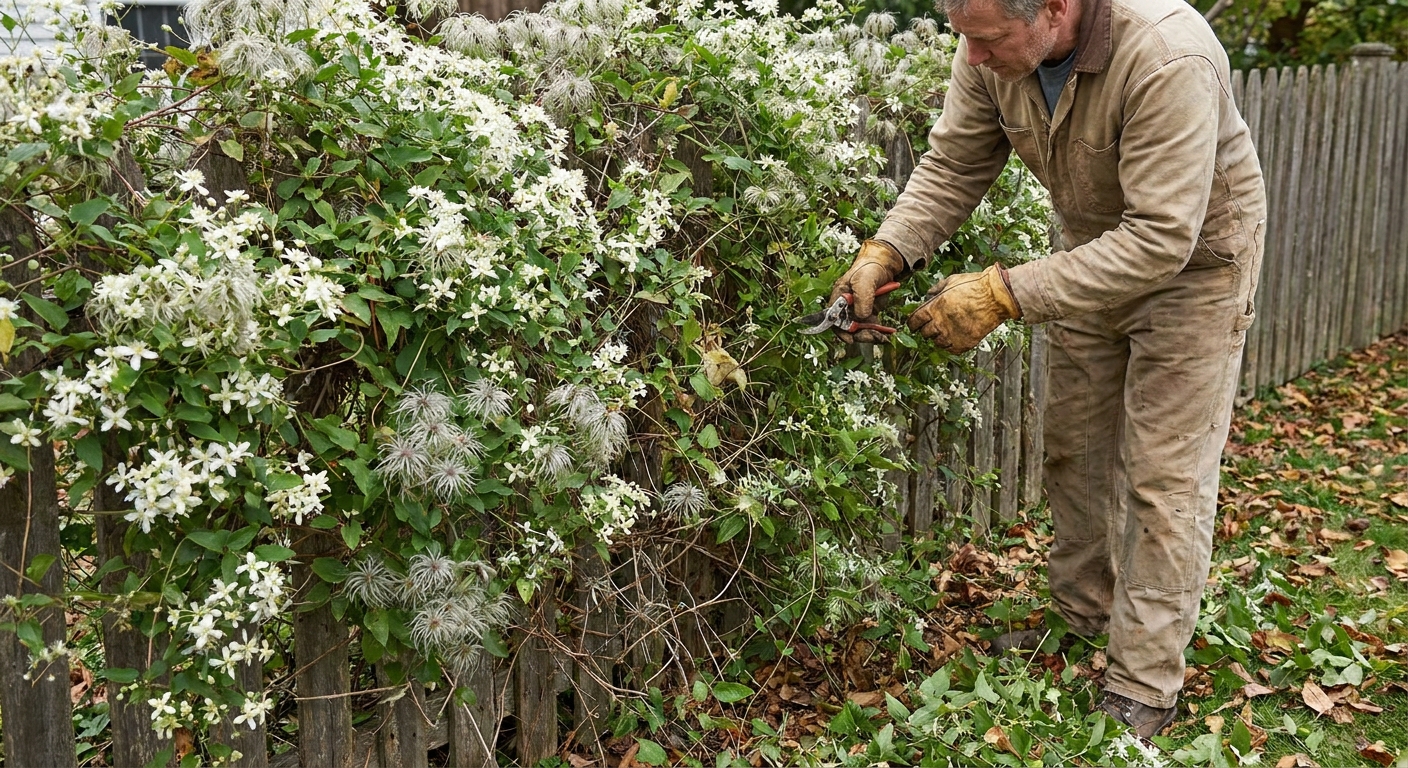
The best timing is as soon as flowers start to brown and drop and you spot the first developing tufts where seed heads will form. Do not wait for “full fluff”. By then, you are already late.
How to do a seed-prevention cut
- Wear gloves and long sleeves. Clematis sap can irritate skin for some people.
- Cut the vine down hard to keep it from finishing seed. For control purposes, you can cut it back to a manageable height, even close to the ground.
- Bag all flowering and seed head material. Do not toss it loosely into the garden or onto an open compost pile where seed can continue to mature.
- Check again in 1 to 2 weeks. Sweet autumn clematis can rebound quickly and may try to flower again.
This kind of cutback is not about encouraging blooms. It is about stopping the next generation.
How to pull seedlings
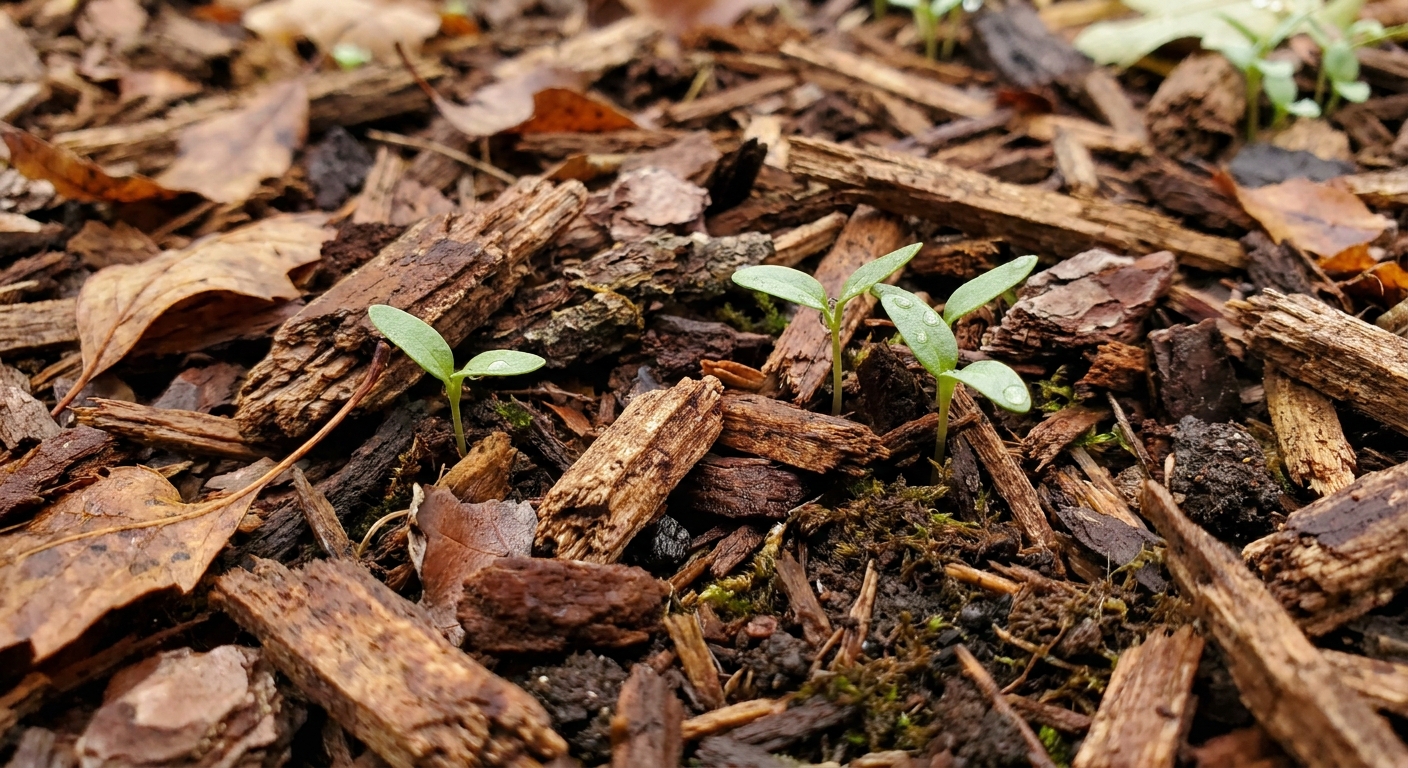
Seedlings are your easiest win. The sooner you pull them, the less likely you are to snap stems and leave roots behind.
When seedlings show up
Most pop up in spring, but you can see them any time conditions are mild, especially after a wet spell. They often appear in:
- Mulch beds
- Along fences and foundations
- At the base of shrubs the vine climbed last year
- Edges of woods or hedgerows
Step-by-step: pulling seedlings cleanly
- Water first or pull after rain. Damp soil releases roots.
- Grab low, right at the soil line, and pull slowly.
- Use a narrow hand fork if the seedling resists. Loosen the soil around the root before pulling.
- Patrol weekly for a month in spring. You will get most of the cohort if you stay consistent.
If you have dozens, treat it like a calming ritual. Coffee in one hand, hand fork in the other, and pretend you are evicting tiny green squatters.
How to remove it completely
Full removal is absolutely doable, but it is rarely a one-and-done project. The goal is to stop seed, then eliminate the established root crown and any resprouts.
Option 1: Dig out the crown
This is the most organic, direct approach when the plant is not intertwined through a prized shrub.
- Cut the vine down to 1 to 2 feet so you can handle it.
- Find the crown where stems emerge from the ground.
- Dig a wide circle around the crown. Clematis roots can be stubborn and fibrous.
- Lift and remove as much root mass as possible.
- Watch for resprouts for the next season and pull or dig them immediately.
Pro tip: I like to do this when the soil is moist and my patience is high. Dry, hard soil turns it into a wrestling match.
Option 2: Cut-stump treatment
If the vine is massive, wrapped through shrubs, or growing up into trees, digging can cause more damage than it solves. A cut-stump approach can be more practical.
- Cut all stems at the base.
- Immediately treat the fresh cut surface with an appropriate systemic herbicide labeled for woody vines and cut-stump use, following the label exactly.
- Protect nearby plants. Avoid drift and splash, and consider a shielded applicator or a sponge dauber if you are working in tight quarters.
- Leave the top growth to die back, then remove it gradually from shrubs and trees to avoid breaking branches.
If the vine is high in a tree, focus on killing it at the base and let the canopy portion die and loosen before you try to pull it down. If access is unsafe, call a pro. No vine is worth a ladder accident.
If you garden organically, you may choose to skip herbicide and rely on repeated cutting instead. Just know it usually takes longer.
Option 3: Repeated cutting
This method works by starving the roots over time.
- Cut it to the ground.
- Return often during active growth and cut any regrowth as soon as you see it. In practice, that is usually every 1 to 3 weeks depending on how fast it is growing.
- Keep it seedless the entire time.
Think of it as denying the plant any chance to recharge its batteries. Eventually, it runs out of stored energy.
Disposal: do not spread the problem
- Seed heads and flowering vines: bag and trash, or dispose per local guidance for invasive plants.
- Stems without seed: when in doubt, bag and trash. Composting is risky unless you are confident the material is truly seed-free and fully killed, because pieces can sometimes survive and move around with finished compost.
- Do not dump vines in woods or on brush piles where seed can finish maturing.
When it is in a shrub
This is the situation that makes gardeners feel stuck, because yanking can damage what you are trying to save.
A gentle approach
- Cut all vines at ground level first. Do this in several spots if there are multiple stems.
- Wait for the vine to wilt and dry in the canopy. This can take a couple weeks.
- Unwind carefully, lifting the dead vine off branches rather than pulling downward.
I know it is tempting to rip it off immediately, especially when you are mad at it. But patience here prevents snapped branches and bark damage.
Not the same as pruning
A quick but important note: sweet autumn clematis control is not the same as pruning your beloved large-flowered clematis, montana clematis, or other garden varieties grown for bloom display.
- Hybrid clematis pruning is about bloom timing and encouraging healthy flowering wood.
- Sweet autumn control is about stopping seed, reducing smothering growth, and removing an aggressive vine.
If you have both types in your yard, label them. I have learned the hard way that “I will remember which is which” is a lie we tell ourselves in spring.
Aftercare
Even after removal, you may have a seed bank in your soil for a while. Plan on checking for seedlings for at least a couple seasons, and longer if the vine was allowed to seed freely year after year. Nature loves a sequel.
My simple prevention checklist
- Mulch bare soil with 2 to 3 inches of leaf mold, shredded leaves, or wood mulch to make seedlings easier to spot and pull.
- Patrol edges of fences, hedges, and woodland borders monthly in spring and early summer.
- Plant densely with groundcovers or perennials you like. Nature hates bare soil, and sweet autumn clematis is happy to fill it.
- Do one last fall scan for any vines trying to flower.
What to plant instead
If you loved the late-season flowers and scent but not the chaos, replacing it helps keep you from replanting the problem out of nostalgia.
- Native clematis (where appropriate): Ask a local native plant nursery what is truly native to your region and garden conditions.
- Well-behaved vines: Consider non-invasive options sold specifically as garden cultivars for your area, and check local invasive lists before buying.
- Fall bloomers that are not vines: Fragrant shrubs and late-blooming perennials can scratch the same itch without trying to climb your hydrangea.
FAQ
Is sweet autumn clematis invasive everywhere?
It is considered invasive in many parts of the United States, especially in the East and Midwest, but not every region treats it the same. If you are unsure, check your state or county invasive plant list. Regardless, if it is self-seeding heavily in your yard, it deserves “invasive-level” management.
Can I just mow it?
Mowing can control seedlings and repeatedly cut back regrowth in open areas, but it will not solve vines climbing shrubs and fences. Also, mowing only works if you keep up with it frequently enough to prevent flowering and seed set.
Will it come back if I cut it to the ground?
Often, yes. Cutting hard is a great first step, especially to stop seed, but established plants commonly resprout from the crown. Pair hard cuts with crown removal, repeated cutbacks, or a cut-stump treatment if you are aiming for full eradication.
What is the best time of year to remove it completely?
For digging, I like spring or fall when soil is moist and workable. For cut-stump treatment, the best timing depends on the herbicide label and plant activity. No matter the method, the most urgent seasonal task is preventing seed in late summer and fall.