
Gardenia Shrub Care Outdoors

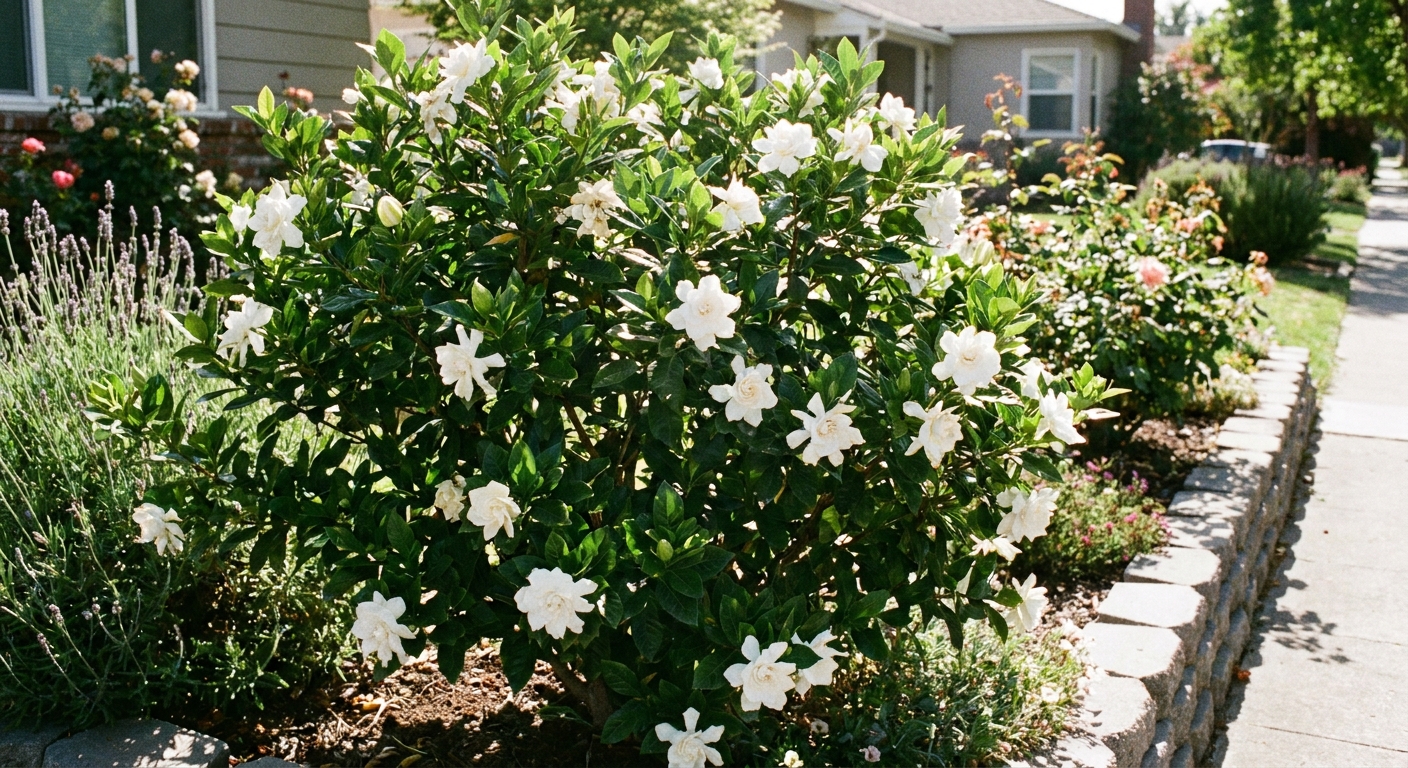
Gardenias outdoors are the kind of plant that makes you slow down. One warm evening and that creamy perfume in the air will have you hovering near the shrub like it is telling secrets. The catch is that gardenias are picky in the most predictable ways: they want acidic soil, even moisture, bright light with some protection, and gentle timing when it comes to pruning.
This page focuses on gardenias in the ground and in large outdoor containers used in landscapes, patios, and entry plantings. If you are growing one inside as a houseplant, hop over to our indoor-focused guide: Gardenia Care Indoors .

Pick the right gardenia for your yard
Most gardenias sold for home gardens are Gardenia jasminoides. What matters for outdoor success is not just the name, but the cold hardiness of the specific variety and your microclimate.
- Warm climates: In USDA Zones 8 to 10, many gardenias can live happily in the ground with minimal winter fuss.
- Borderline climates: In Zones 7 to 8, choose a hardier variety and plan on winter protection during cold snaps.
- Hot tropical climates: In Zone 11, cold is not the issue. Heat, sun intensity, and irrigation consistency are. Afternoon shade and steady moisture are often the difference between thriving and constant bud drop.
- Cold climates: In Zones 6 and colder, treat gardenias as patio shrubs in large containers you can move to shelter, or grow them as seasonal outdoor plants.
If you are unsure of your zone, check your local extension office or the USDA Plant Hardiness Zone map. Your gardenia does not need you to be perfect, but it does need you to be realistic about winter.
Hardier picks (Zones 7 to 8)
If you are pushing the edges, start with cultivars sold specifically for better cold tolerance, like ‘Kleim’s Hardy’, ‘Frost Proof’, or ‘Chuck Hayes’. Local availability varies, but a “hardy gardenia” label from a reputable nursery is usually a good sign.
Where to plant: sun, shelter, and airflow
Outdoor gardenias bloom best with plenty of light, but their leaves can scorch in intense afternoon heat, especially in hot inland areas.
Best light exposure
- Ideal: Morning sun with afternoon shade.
- Cooler regions: Full sun can work if the soil stays evenly moist.
- Hot regions: Bright filtered light or light shade after lunchtime prevents stress and bud drop.
Choose a protected microclimate
If winter is part of your reality, plant near a south or east-facing wall (not right up against it, but close enough to benefit from reflected heat). A spot sheltered from harsh wind keeps leaves from drying out and protects flower buds.
Airflow and spacing
Gardenias like humidity, but they do not like stagnant air. Give the shrub enough breathing room to reduce fungal issues.
- General spacing: Plan for 3 to 6 feet apart depending on the mature size of your cultivar.
- Hedges: Space so mature branches will not be jammed together. You want a living screen, not a mildew factory.
Soil acidity: the non-negotiable
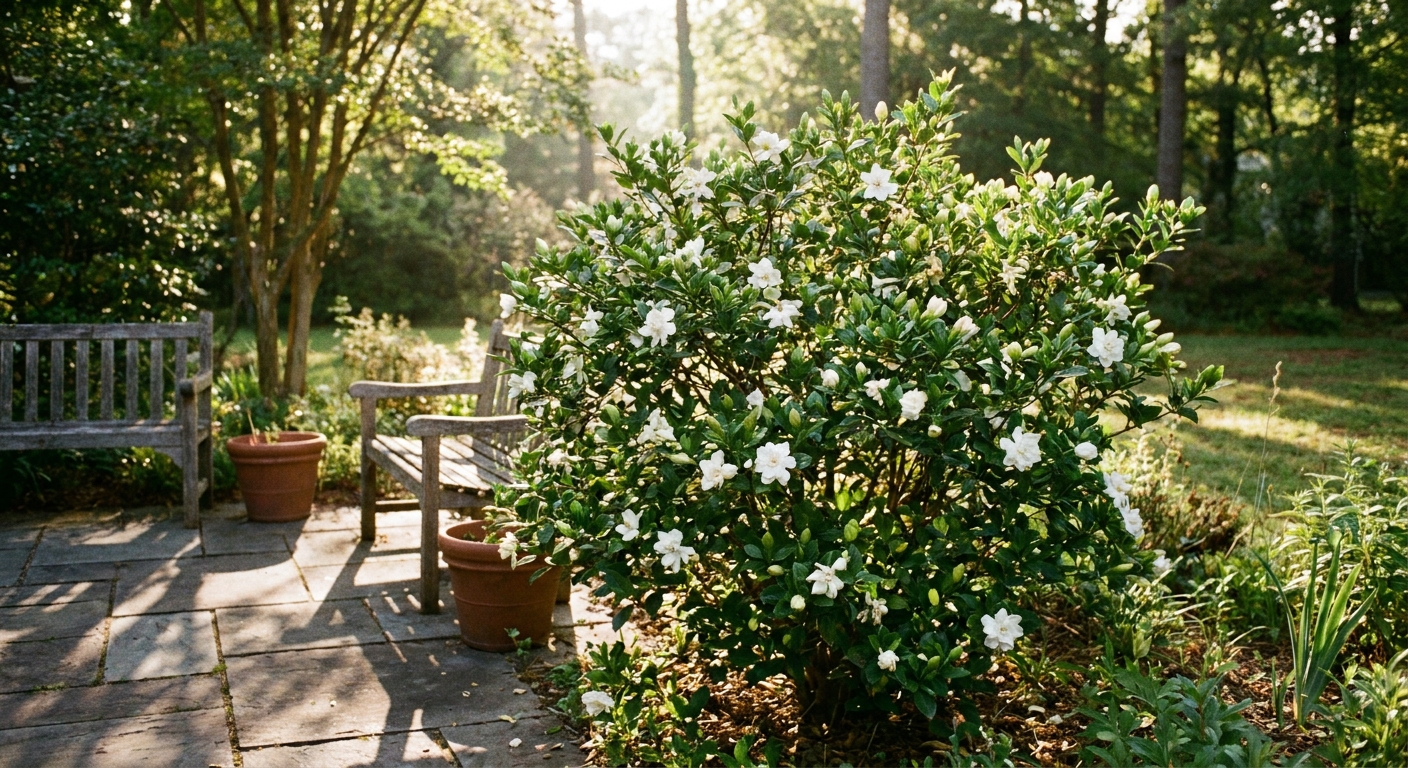
If gardenias had a love language, it would be pH. Outdoors they want acidic soil , with an ideal range around pH 5.0 to 6.0 (up to about 6.5 can still work in some soils, but it is more likely to flirt with iron problems). When the soil drifts alkaline, gardenias often respond with yellow leaves (especially yellowing between veins) and stubborn, stingy blooms.
How to check your soil
- Use a simple home test kit for a quick read.
- For best accuracy, get a lab soil test through your local extension office.
How to acidify and keep it steady
- Amend before planting: Mix in organic matter like pine bark fines, leaf mold, or well-aged compost. These improve structure and help support a slightly acidic environment over time, but they are not a fast fix for high pH.
- For meaningful pH change: Elemental sulfur is the standard amendment when you truly need to bring pH down. Use soil test recommendations and do not overapply.
- Use an acid-lover fertilizer: Look for blends labeled for azaleas, camellias, rhododendrons, or gardenias, ideally with micronutrients like iron and magnesium.
- Mulch like you mean it: A 2 to 3 inch layer of pine needles, shredded pine bark, or oak leaves buffers moisture and gently supports acidity over time.
- Go easy with lime and ash: Avoid adding lime to beds where gardenias live, and keep wood ash away since it raises pH.
Water quality counts too
One sneaky cause of chlorosis is alkaline irrigation water . Even if your soil test looks decent, hard tap water can push pH upward around the roots over time. If you can, use rainwater for containers, or stick with acid-forming fertilizer and refresh potting mix periodically.
Tip from my own garden: if you are on naturally alkaline soil, it is often easier to grow gardenias in large containers where you can control the potting mix.
Planting gardenias in the ground
Planting is where you set the tone for everything that follows. A gardenia installed thoughtfully will root in and become far more resilient.
When to plant
- Spring: Best for most regions. The shrub gets a full growing season to establish.
- Fall: Great in warm climates where winters are mild. Avoid fall planting where hard freezes arrive early.
Step-by-step planting
- Dig a wide hole: Make it 2 to 3 times wider than the root ball, but no deeper than the root ball height.
- Check drainage: After filling the hole with water, if it is still standing after about 4 to 6 hours, drainage is poor. Consider raised planting or a different site. Gardenias dislike wet feet.
- Set the height: Plant so the top of the root ball sits level with the surrounding soil, or slightly higher in heavy soils.
- Backfill gently: Use your native soil amended with organic matter if needed. Avoid creating a sharp pocket of different soil that can hold water like a bathtub.
- Water deeply: Soak thoroughly to settle soil around roots.
- Mulch: Keep mulch a couple inches away from the main stem to prevent rot.
Newly planted gardenias are like new housemates. They need consistency while they learn the place.
Growing gardenias in large outdoor containers
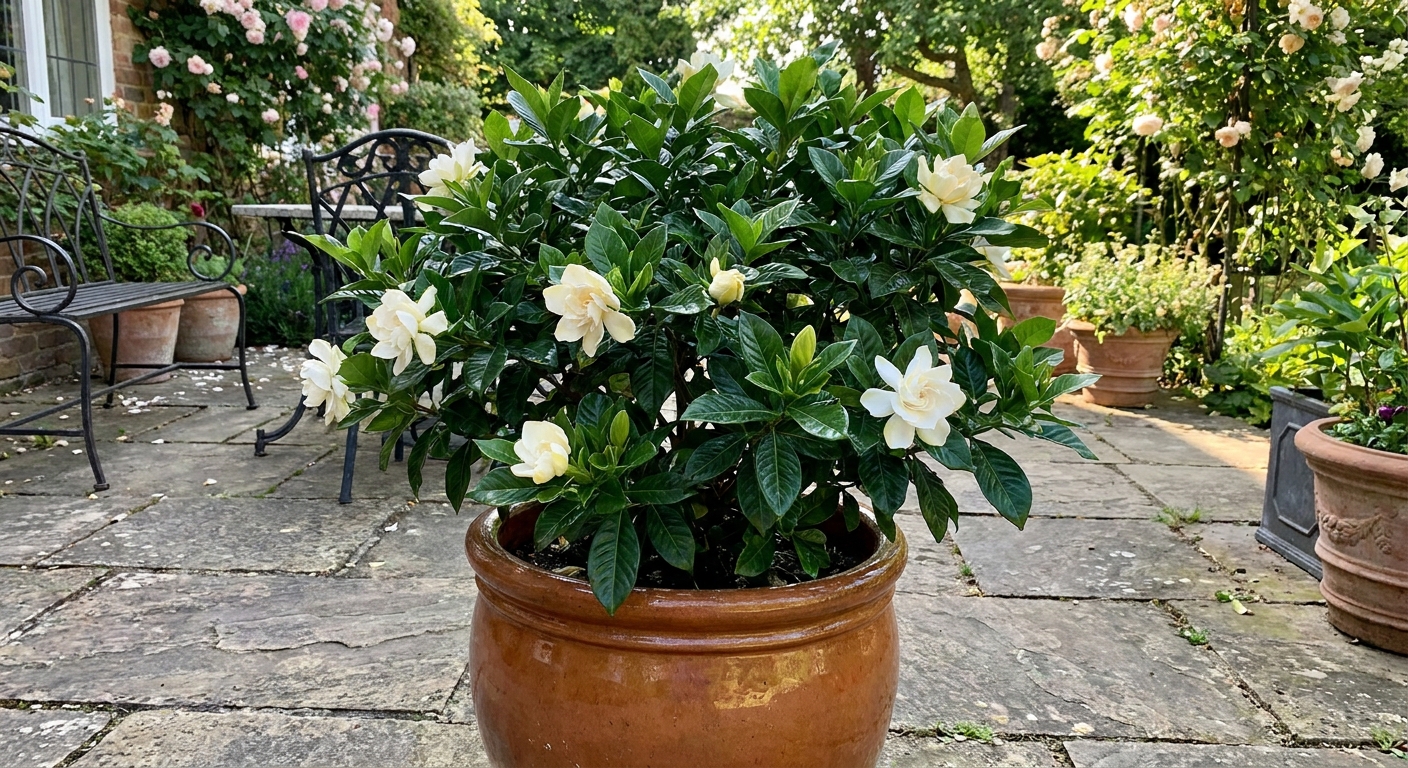
Big pots are a fantastic option for patios, entryways, and anywhere your native soil is too alkaline or too heavy. They are also your best friend if winter temperatures get dicey.
Container must-haves
- Size: Go bigger than you think. A 16 to 24 inch wide container gives roots room and reduces moisture swings.
- Drainage holes: Non-negotiable.
- Potting mix: Use a high-quality mix labeled for acid-loving plants, or blend a peat-based mix with pine bark fines for structure.
Watering container gardenias
Containers dry out faster than in-ground beds, especially in wind and sun. Check moisture often in summer. Aim for soil that is consistently damp like a wrung-out sponge, not soggy and not bone-dry.
Note: if you water with hard, alkaline tap water, container mix can drift toward neutral over time. Acid-forming fertilizer, occasional flushing, and refreshing the top few inches of mix can help keep pH from creeping up.
Watering: consistency beats quantity
The fastest way to make a gardenia grumpy is to swing between drought and a flood. Outdoors, gardenias do best with deep, consistent watering .
General watering guidelines
- New plantings: Water deeply 2 to 3 times per week for the first 2 to 4 weeks, adjusting for heat and rain. The goal is steady moisture while roots establish.
- Established shrubs: Typically need about 1 inch of water per week from rain or irrigation, more during hot spells.
- Morning watering: Helps leaves dry faster and reduces disease pressure.
Easy moisture check
Stick your finger 2 inches into the soil. If it feels dry at that depth, water. If it is still moist, wait a day and check again.
If buds form and then drop, inconsistent watering is one of the first culprits I investigate, right alongside heat stress, sudden cold snaps, and abrupt environmental changes (like moving a container from shade to full sun).
Feeding outdoor gardenias without overdoing it
Gardenias are not heavy feeders, but they do appreciate regular nutrition, especially in sandy soils or containers.
What to use
- Acid-lover fertilizer (often includes sulfur and micronutrients like iron and magnesium).
- Slow-release products work well outdoors for steady feeding.
When to fertilize
- Start: Early spring as new growth begins.
- Continue: Every 4 to 6 weeks through mid-summer, depending on your product label.
- Stop: Late summer. Feeding too late can push tender growth that is easily damaged by cold.
Yellow leaves can also be a pH or water quality problem, so if feeding is not helping, circle back to soil acidity, drainage, and alkaline irrigation water.
Pruning: light and well-timed
Gardenias do not need constant haircutting. What they do need is correct timing. Many classic gardenias set next season’s flower buds in late summer into fall (on what gardeners call “old wood”). That is why pruning too late can quietly erase next year’s bloom.
Some newer or reblooming types can also flower on newer growth, but the safest, most widely successful approach is still the same: prune right after the main bloom flush.
When to prune
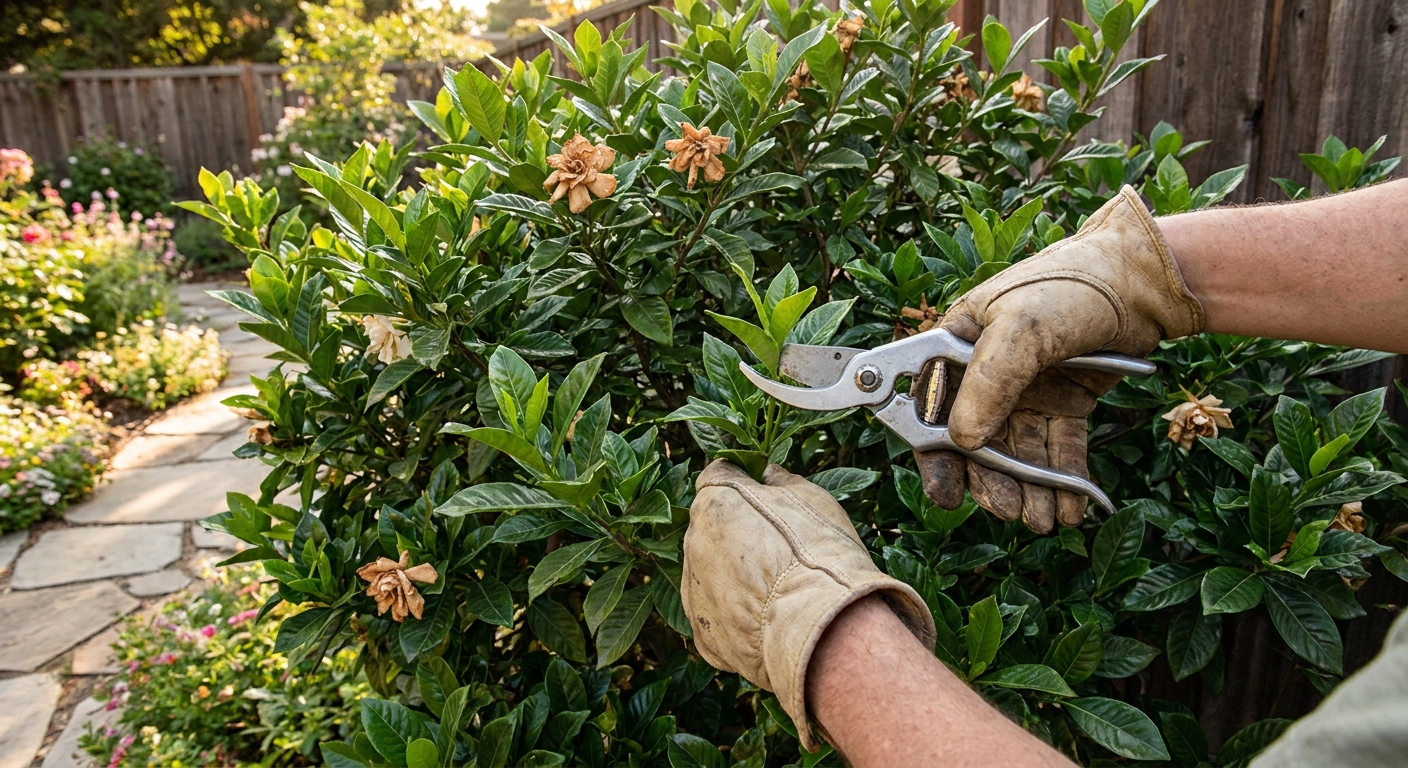
- Best window: Right after the main flush of blooms fades.
- Avoid: Pruning in fall or late winter in colder regions, since it can reduce flowering and increase cold damage.
How to prune
- Use clean, sharp pruners.
- Remove dead, damaged, or crossing branches first.
- Lightly shape the plant by trimming a few inches off long shoots.
- Open the center slightly if airflow is poor.
Deadheading
You can snip off spent blooms to keep things tidy and reduce the chance of fungal problems on decaying petals. I also like to pick fading blossoms for a small bowl indoors. It is the easiest luxury you will ever grow.
Winter protection: keep roots and buds safe
Gardenias suffer most from sudden freezes , drying winter winds, and repeated thaw-freeze cycles. Your strategy depends on whether the plant is in the ground or in a container.
In-ground winter protection
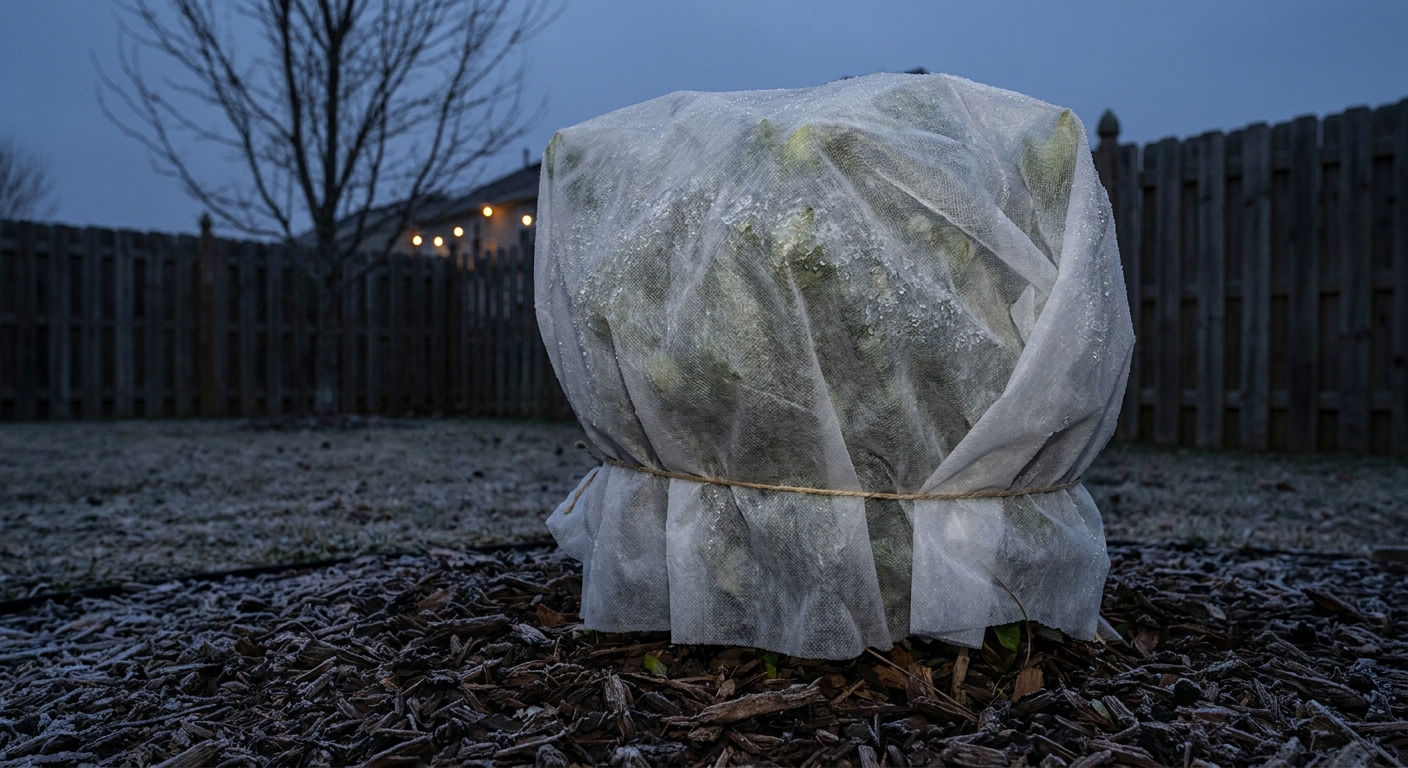
- Mulch deeply: Add 3 to 4 inches of mulch over the root zone before hard freezes. Keep it off the trunk.
- Water before a freeze: Moist soil holds heat better than dry soil.
- Cover during cold snaps: Use frost cloth or a breathable blanket, especially overnight. Support the cover so it does not crush branches, and remove it during the day when temperatures rise.
- Wind protection: Burlap screens can help in exposed sites.
Container winter protection
- Move to shelter: An unheated garage, enclosed porch, or protected spot close to the house often works best.
- Insulate the pot: Wrap the container with burlap, frost cloth, or bubble wrap covered by burlap to protect roots from freezing solid.
- Reduce watering: Water less in winter, but do not let the root ball fully dry out.
If a freeze causes leaf drop, resist panic-pruning. Wait until spring to assess what is truly dead. Gardenias can surprise you with their comeback skills when the roots are healthy.
Common outdoor gardenia problems and quick fixes
Yellow leaves
- Likely causes: Soil too alkaline, alkaline irrigation water, poor drainage, inconsistent watering, or nutrient deficiency.
- Try this: Test pH, check water quality if you suspect hard water, improve drainage, switch to acid-lover fertilizer with micronutrients, and mulch to stabilize moisture. If your soil test calls for it, use elemental sulfur at recommended rates.
No blooms or bud drop
- Likely causes: Too much shade, drought stress, temperature swings, sudden changes (moving containers or changing light), late pruning, low humidity, or over-fertilizing with high nitrogen.
- Try this: Ensure morning sun, keep watering consistent, give afternoon shade in hot regions, protect from sudden cold, and prune only after flowering.
Brown leaf edges
- Likely causes: Dry wind, underwatering, salt buildup in containers, or heat stress.
- Try this: Deep water, mulch, provide afternoon shade, and flush containers with clean water occasionally to reduce salts.
Sticky leaves or black soot
- Likely causes: Scale, aphids, or whiteflies producing honeydew, followed by sooty mold.
- Try this: Treat the insects first (horticultural oil or insecticidal soap in the cool part of the day), then rinse leaves. Improve airflow and avoid overfeeding with nitrogen.
Sudden decline or constantly wet soil
- Likely causes: Root rot from poor drainage or overwatering.
- Try this: Improve drainage, plant slightly high, and let the top couple inches dry slightly between waterings. In containers, confirm free drainage and do not let pots sit in saucers of water outdoors.
If pests show up outdoors, they are often the usual suspects: scale, aphids, whiteflies, and spider mites (especially in hot, dry weather). A strong spray of water plus insecticidal soap can help, but focus first on making the plant less stressed. Stressed gardenias are basically wearing a neon sign that says “snack bar.”
Outdoor gardenia care checklist
- Light: Morning sun, afternoon shade in hot areas.
- Soil: Well-draining and acidic, about pH 5.0 to 6.0 (test to confirm).
- Water: Deep and consistent, avoid extremes.
- Mulch: 2 to 4 inches to buffer moisture and protect roots.
- Fertilizer: Acid-lover feed from spring to mid-summer.
- Prune: Lightly, right after the main bloom flush.
- Winter: Protect roots, cover during freezes, shelter containers.
Pet safety note
Gardenias are considered mildly toxic to dogs and cats if chewed or eaten. If you have a determined nibbling pet, place containers out of reach and skip using fallen flowers as chew toys (even if they smell like dessert).
Once you dial in those basics, gardenias stop feeling fussy and start feeling like a ritual. If you want to keep learning, you might also like our soil-focused reads on LeafyZen, plus the indoor page if you overwinter a potted plant inside: Gardenia Care Indoors.