
Fig Rust: Yellow Spots and Orange Dust Under the Leaves

A little green. A lot of curiosity.
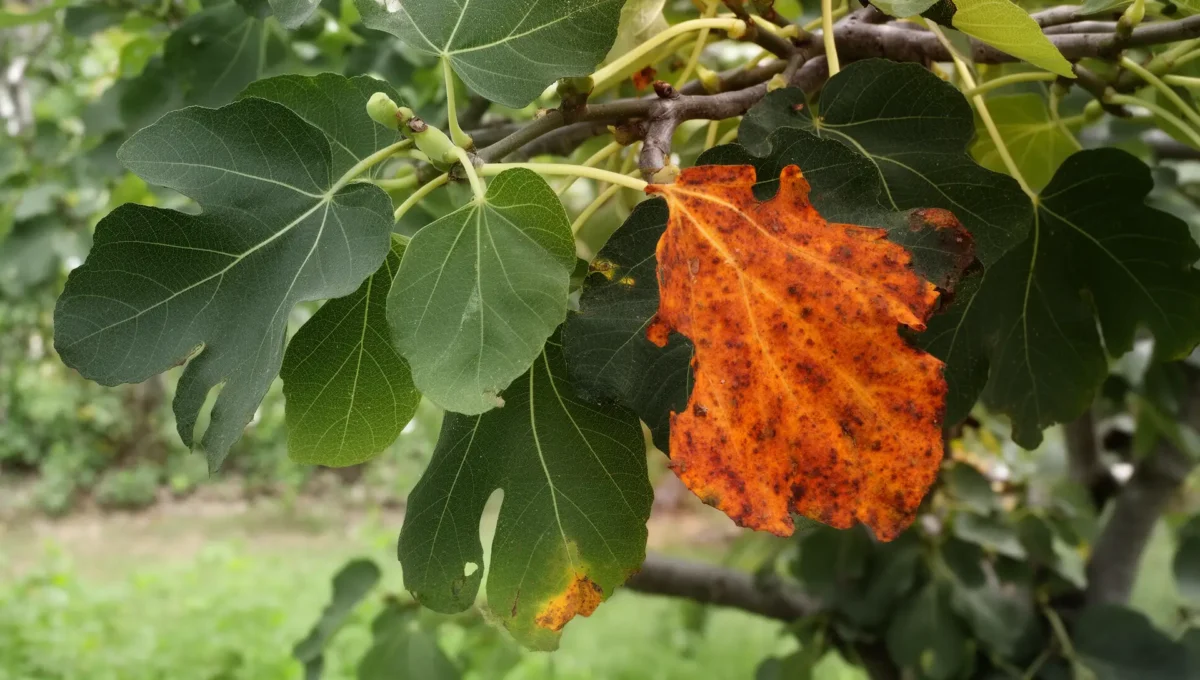
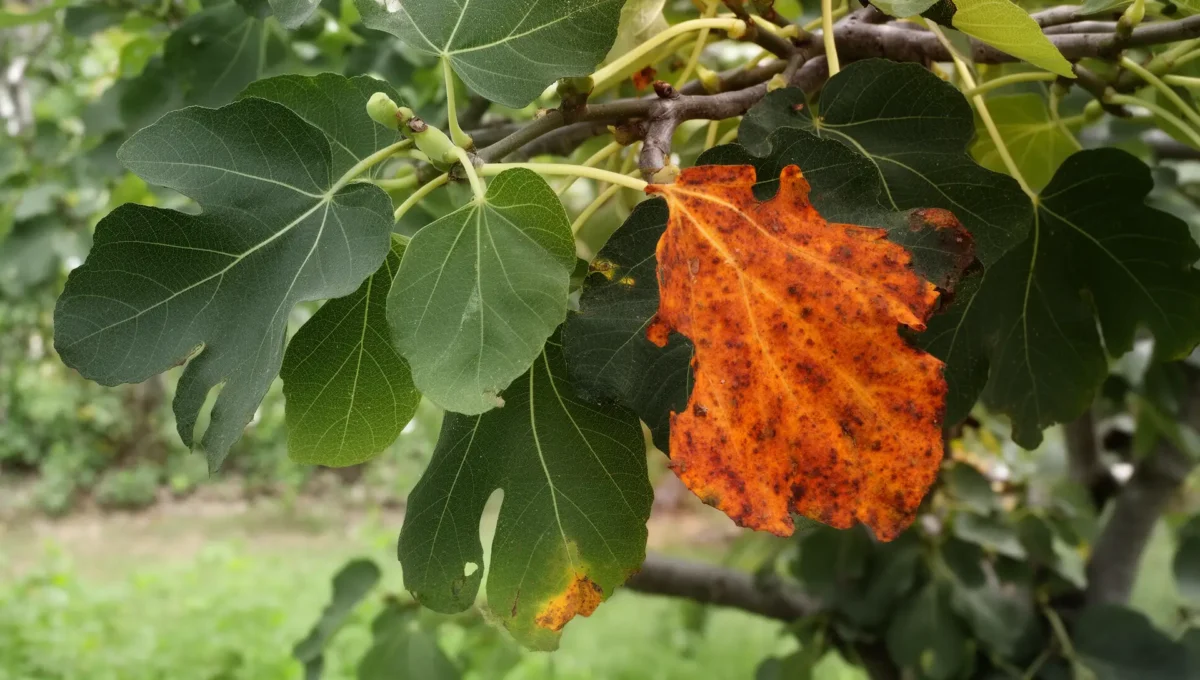
If your fig tree leaves have yellow spots on top and a rusty orange powder underneath, you are not imagining things. That orange dust is often made of spores, and it can turn a leafy, happy fig into a premature leaf drop situation if it spreads unchecked.
What fig rust looks like
Fig rust is a fungal disease that commonly shows up in warm, humid stretches of weather, especially when leaves stay wet for long periods. It often starts subtly, then spreads leaf by leaf.
The disease is most often attributed to Cerotelium fici (you may also see older or regional references using Physopella names). Either way, the practical ID clue is the same: raised rust-colored spore patches on the underside that can rub off.
Classic signs
- Yellow spots on the upper leaf surface, sometimes with soft-edged or slightly angular blotches.
- Orange, cinnamon, or rusty brown dust under the leaf. This dust can look like someone tapped paprika onto the underside.
- Pustules or raised patches on the underside where the spores form. As they mature, they release more orange powder.
- Progressive yellowing and leaf drop, often starting on older leaves first and moving upward.
A quick, gentle test: rub the underside of a spotted leaf with a fingertip or a white tissue. If you get orange staining, rust moves higher on the suspect list.
One small caveat: a few other leaf-spot fungi can cause yellowing or blotches on figs. The orange, dusty underside is what makes rust stand out.
Rust or something else?
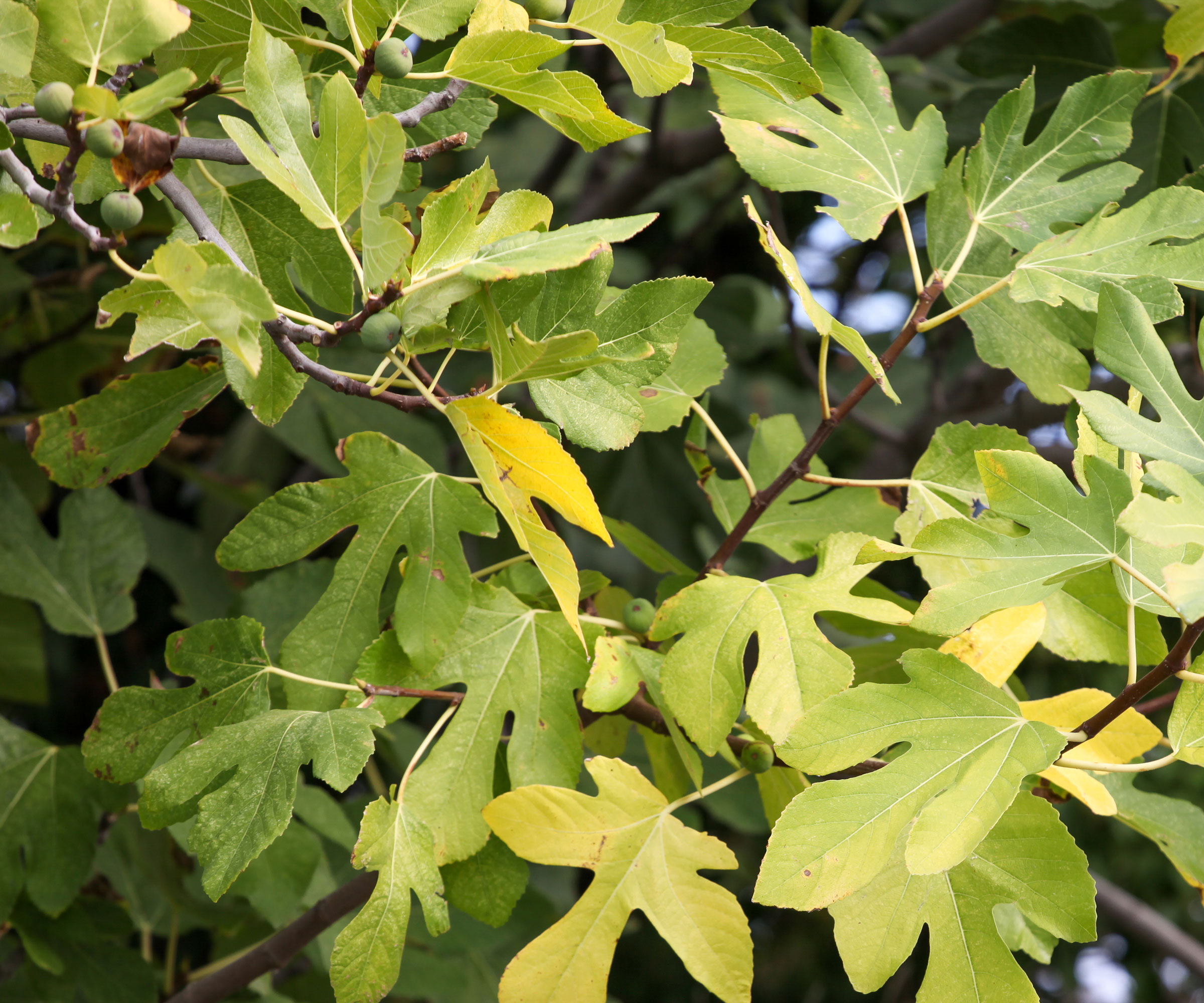
Figs collect leaf blemishes the way a garden collects opinions. The key is matching the pattern and checking whether there is a true spore layer underneath.
Sunscald
What it looks like: bleached, tan, or crispy patches, usually on the most exposed leaves. Damage often appears suddenly after a heat wave, pruning that opened the canopy, or moving a potted fig into stronger sun.
How it differs from rust:
- Sunscald spots are more like dry, papery burns than round yellow lesions.
- You will not see orange powdery spores on the underside that rub off.
- Leaves may look scorched along edges or in broad patches rather than dotted with many small lesions.
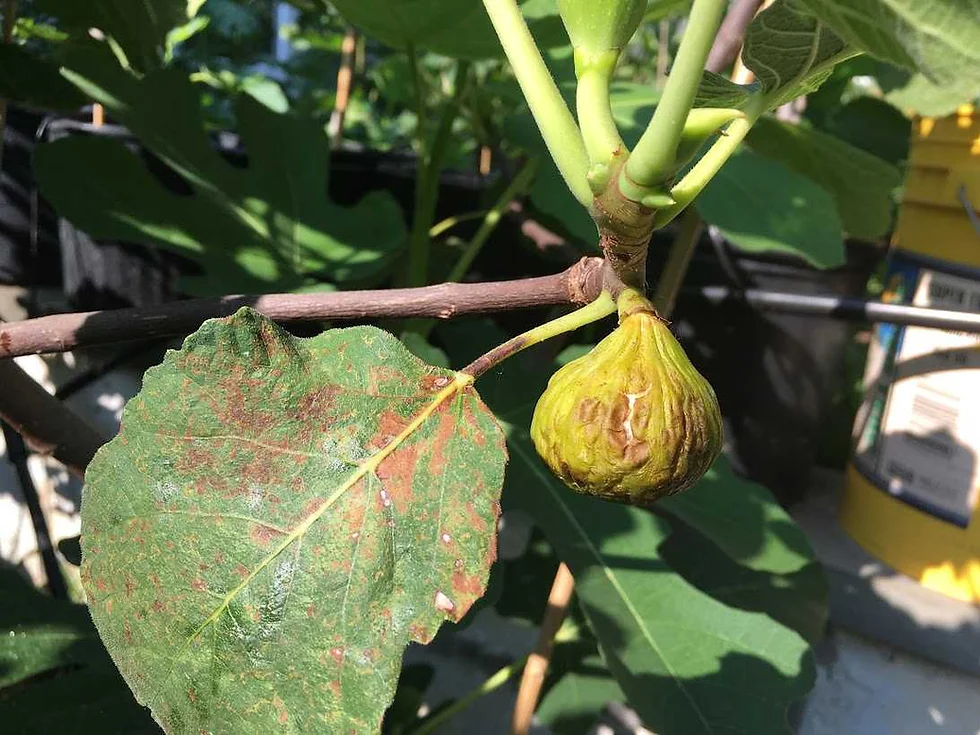
Fig mosaic and other mottling
What it looks like: irregular mottling, marbling, ring spots, or patchy light and dark green patterns. Sometimes the leaf looks like it has a stained-glass effect.
How it differs from rust:
- Mottling patterns usually do not produce orange dust on the underside.
- The discolored areas do not rub off onto your finger or tissue.
- Symptoms can show up as patterning more than discrete lesions that expand and shed spores.
Why rust leads to leaf drop
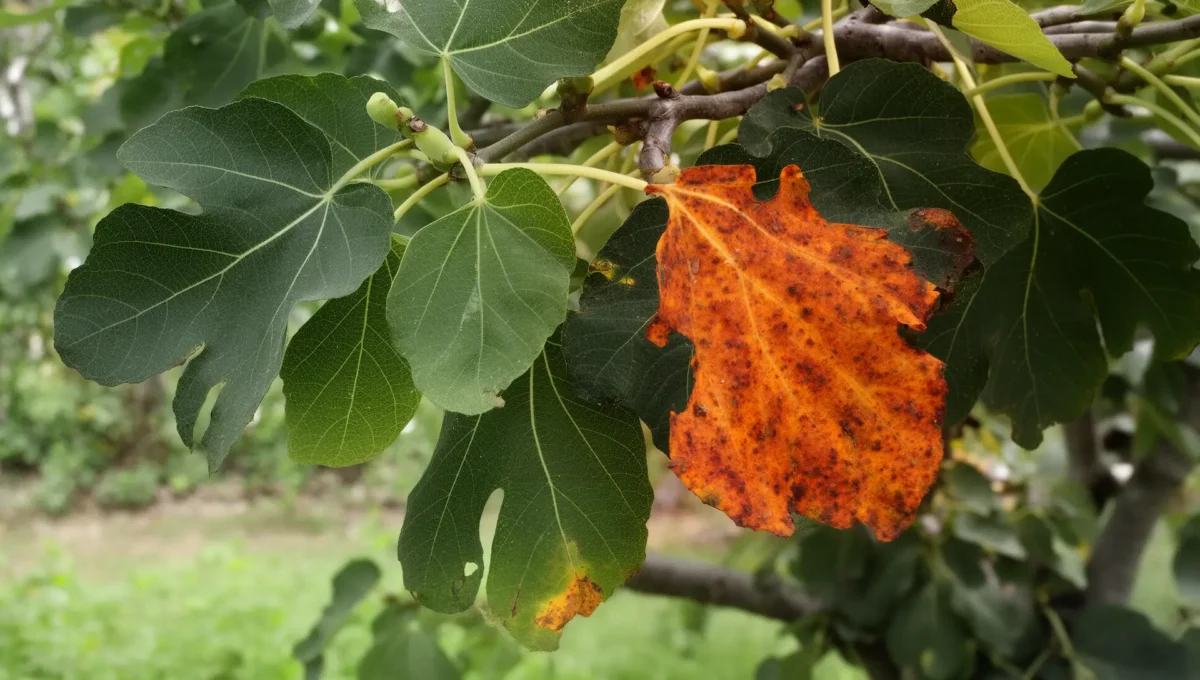
Rust lesions interfere with how the leaf photosynthesizes. As more leaf tissue is affected, the tree gets less value from keeping that leaf. Many figs respond by shedding infected leaves, especially later in the season when disease pressure is high.
How serious it gets depends a lot on your climate and timing. A late-season flare-up can be mostly cosmetic. An early, fast-moving outbreak can thin the canopy enough to slow fruit sizing and ripening.
The goal is not perfection. The goal is slowing the spread so your fig keeps enough leaves to finish out the season without a dramatic mid-summer defoliation. The good news is that established figs often bounce back with better conditions and a little cleanup.
What conditions favor outbreaks
Rust loves the kind of weather that feels like a heavy towel.
- Warm temperatures with humidity, especially warm nights.
- Long leaf-wetness periods from rain, fog, dew, or overhead irrigation.
- Dense growth and poor airflow that keeps leaves damp longer.
- Splash and close contact where lower leaves stay wet and spores move upward.
What to do when you find fig rust
Think in two buckets: remove what is actively making spores, and make the canopy a less cozy place for the fungus.
1) Sanitation
- Pick off the worst leaves first, especially those heavily dusted underneath. Do not strip the tree bare in one go. Take the most infected, then reassess in a few days.
- Collect fallen leaves from the soil surface. Old infected leaves can keep the cycle going when conditions are right.
- Bag and trash infected foliage if you can. Avoid shaking leaves around, which can puff spores into the canopy.
- Skip the casual compost pile for infected leaves unless you run a reliably hot compost that fully breaks down disease material. When in doubt, trash is the cleaner choice.
- Clean tools after pruning as good general garden hygiene. Rust is mainly spread by airborne spores and splashing water, not by pruners, but clean tools help prevent other problems from hitchhiking between plants.
2) Airflow
- Thin crowded interior growth so light and air can move through the canopy.
- Avoid leaves pressed against fences or walls when possible. Stagnant air equals longer leaf-wetness time.
- Space potted figs apart if you have a cluster. A little breathing room helps more than it gets credit for.
3) Watering habits
- Water at soil level rather than overhead when possible.
- Water earlier in the day so any splashed leaves dry quickly.
- Focus on leaf dryness, not a magic schedule. Deep and infrequent can be great for figs when applied at the soil, but the rust lever is really how long the leaves stay wet.
4) Mulch thoughtfully
Mulch can reduce soil splash, which helps, but keep it from touching the trunk and do not pile it thickly enough to trap humidity right under the canopy. A neat, even layer is the calm middle path.
Should you spray?
This page stays in the diagnosis and practical containment lane, so here is the simplest, most honest answer: many home growers manage fig rust primarily with sanitation and airflow, especially when the infection shows up later in the season.
If rust returns early, spreads fast, or repeatedly defoliates your tree, it is reasonable to look into fungicide options labeled for edible fruit trees in your area and follow the label precisely. Recommendations vary by region, and what is legal for home use also varies.
When people do treat rust on fruit trees, the common categories you will hear about include copper-based products, sulfur, and in some regions chlorothalonil (often restricted and not labeled for all uses). Consider these examples of categories, not a one-size-fits-all recommendation. Your label is the rulebook.
Whenever you spray anything, remember the goal: protect new leaves. Fungus-damaged leaf tissue does not turn back into healthy green.
How to keep rust from coming back
- Do a fall cleanup: remove and discard fallen fig leaves rather than letting them sit under the tree.
- Start the season with airflow: a light, sensible prune can prevent the dense, humid canopy that rust loves later.
- Keep leaves dry when you can: soil-level watering and spacing help more than most people expect.
- Feed and water steadily: stressed trees tend to show problems more dramatically. Keep care consistent, not extreme.
- Watch the lower leaves: rust often starts low and inside the canopy where humidity lingers.
Quick checklist
- Yellow spots on top? Often yes.
- Orange dusty spores underneath? Often yes.
- Orange residue rubs off on your finger or tissue? Strong clue.
- Leaf drop ramps up as spotting spreads? Common with rust.
If the leaf has mottled patterns that do not rub off, or crisp bleached patches on the sunniest side, you may be dealing with a different issue.
When to get a second opinion
If your fig is dropping most leaves quickly, has widespread dieback, or the spotting is paired with other symptoms like severe distortion, stunting, or unusual fruit issues, it is worth reaching out to a local extension office or plant clinic with a few sharp photos.
A good set includes: the whole plant, a typical affected leaf (top and underside), and a close-up of the orange dust if present.